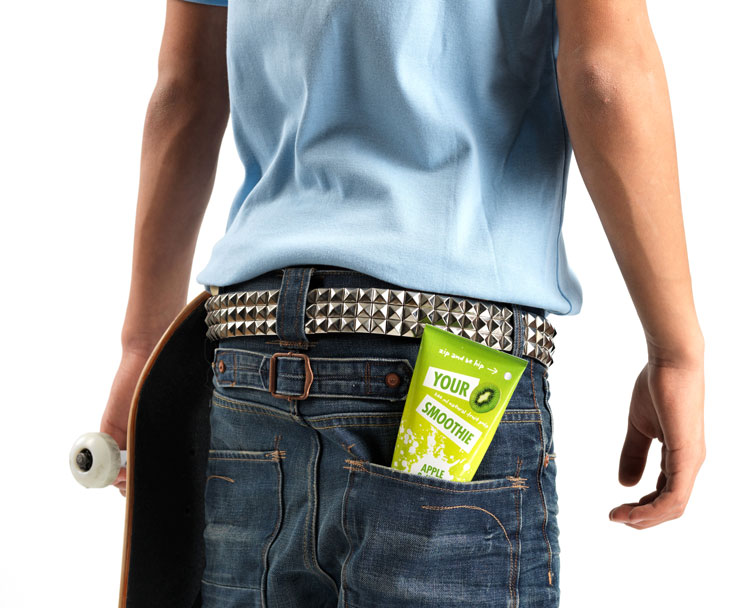
What Millenials expect from packaging

was-millenials-von-einer-verpackung-erwarten-mk-marketing-kommunikation
Millenials have high expectations of packaging.Millenials are currently the largest, most influential and therefore probably also the most sought-after consumer generation. According to an estimate by Goldman Sachs, they spend almost 600 billion US dollars a year. So it's hardly surprising that this generation has become the most important target group for major brands. Their needs are also changing the development of the food and beverage industry. But how exactly?Bye Burger, hello Health-FoodA look at consumer habits provides answers: Millenials are increasingly paying attention to a health-conscious and environmentally friendly lifestyle. In short, this means: Bye, bye Big Mac, hello healthy. 51 percent of Millenials say they avoid fast food on principle. Instead, they are concerned with the origin and quality of their food. Enjoyment also plays an important role for them. They cook several times a week, often with friends. They experiment with exotic foods, different ingredients and flavors. Nevertheless, eating at home is becoming less important. That's because fixed meals don't fit into the flexible lifestyle of 20- to 35-year-olds, as the Roper Reports Worldwide showOnce Breakfast to goMillenials are on the go a lot, both professionally and privately. Instead of breakfast, they have a smoothie. Convenience products are particularly popular. This also opens up new opportunities for companies, from innovative packaging sizes and design to new products. In addition to ease of handling, what counts most for customers at the POS is appearance.One example of a product tailored to customer needs is the Tetra Prisma Aspetic with DreamCap closure.Tetra Prisma Aspetic packaging offers:

  • Packaging sizes between 125 and 1,000 ml
  • Ergonomic design due to octagonal shape
  • Various closure options

In this way, the packaging meets the central needs of Millenials. They want, for example:

  • practical portion packaging for direct consumption on the go
  • resealable packaging
  • easy handling

The example shows: companies have to transform themselves to keep up with the changing needs of demanding, young consumers. Whoever has too much "merkelt" is guaranteed to no longer be "bamboo" in the eyes of Millenials.".For more information on Millenials, their needs and the resulting opportunities for companies, Tetra Pak has published a report in the Whitepaper "Success with Millenials summarized.
First programmatic platform for classic radio advertising

Automated, more dynamic and enriched with additional data, the audio broker srw will be handling radio campaigns from 2017. The buzzword here is "programmatic. For Managing Director Ralf Brachat, however, the focus is on the benefits for the customer. Theoretically, weather-based campaigns or spots with reference to sports results are already possible today - but only with enormous personnel effort. "In the future, the customer places a budget for a hail campaign, for example. The connected weather server then automatically ensures that the spot for the hail protection insurance is broadcast in the right place on time," says Brachat.srw is already implementing the first implementation step in the form of an SSP together with the private radio stations by the end of 2016. This is a first at the national level in Europe. The technical platform automates manual processes between advertisers and broadcasters and lends itself as a playground for innovative audio products: From short-term, sports result-dependent subject changes to dynamic bookings, new possibilities open up for all parties involved.aprile consulting GmbH (acg) from Hamburg is responsible for the technical implementation, implementing systems from amily GmbH, Munich and adremes GmbH & Co KG, Hamburg here. Managing Director Nico Aprile is pleased about the cooperation with the Swiss partner: "The swiss radioworld is known for a dynamic development. We are united by the conviction to transfer radio into the programmatic world. Together with our technological view, we form a strong team for the future-oriented further development of the radio market."
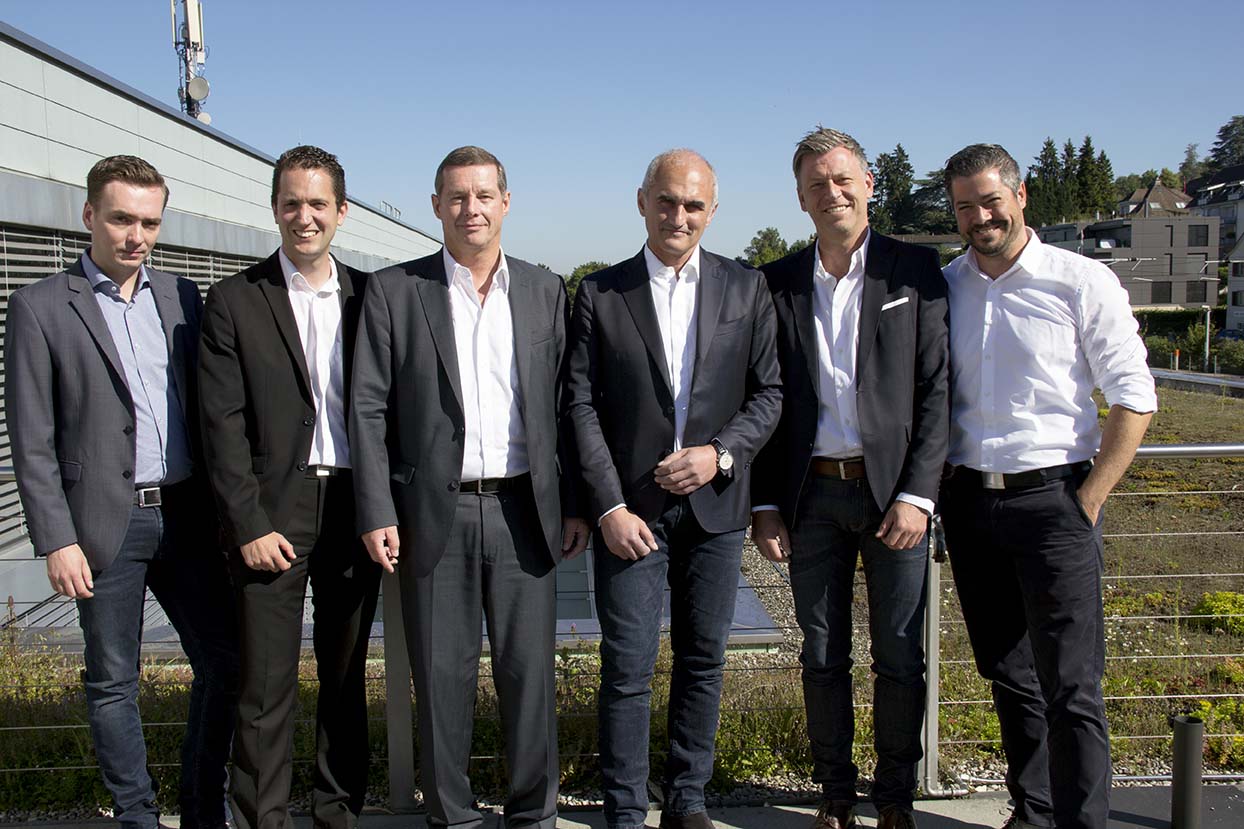
jan-poelmann-daniel-tschudi-jochen-richter-nico-aprile-mk-marketing-kommunikation
Jan Poelmann, Project Manager Strategy & Innovation adremes GmbH & Co. KG Daniel Tschudi, Project Manager swiss radioworld AG Jochen Richter, Sales Director aprile Consulting GmbH Nico Aprile, Managing Director aprile Consulting GmbH, amily GmbH and adrem

The ten most credible and strongest Swiss media brands

Since 2013, Publicom has been investigating the qualitative assessment of media brands in Switzerland as part of the MediaBrands study. For the current study, over 4,800 people were asked how they rate the quality of the media they consume. This results in a differentiated brand profile for each of the media brands surveyed. Credibility of a media brand in both the consumer and advertising markets. In German-speaking Switzerland, the New Zurich Newspaper The company received the highest marks for credibility. It has even improved slightly compared to the previous year. It is closely followed by Radio SRF 1. The NZZ am Sonntag and SRF 1 (TV) were also rated highly in terms of credibility by respondents. Some regional media brands are also held in high esteem by their audiences. For example, the Bernese Confederation and Zentralschweiz am Sonntag, but also the small Local radio station Radio BeO as particularly credible.
die-zehn-glaubwuerdigsten-und-staerksten-schweizer-medienmarken-liste-1-mk-marketing-kommunikation
The ten most credible and strongest brands in German-speaking Switzerland with regional distribution.Amazing development of WatsonEven if the overall qualitative performance (brand strength) is considered, the SRF and NZZ brands share the top places ahead of the Tage-Anzeiger, as in the previous year. An astonishing development is experienced by the Online portal watsonwhich has continuously improved its brand image in recent years and made it into the top ten media brands in German-speaking Switzerland this year. With its infotainment mix, Watson manages the balancing act between serious information and palatable entertainment, especially for a young mobile audience.The newcomer of the year among regional media brands is Bernese Oberland radio station BeO, which immediately took first place among the ten strongest regional media brands. Its local roots are reflected in the high esteem in which it is held by the public. Zentralschweiz am Sonntag also made strong gains and was able to significantly sharpen its brand profile. In the Zurich area, Planet 105 is experiencing a marked upswing. The youth radio station is much more popular with audiences than in the previous year.
die-zehn-glaubwuerdigsten-und-staerksten-schweizer-medienmarken-liste-2-mk-marketing-kommunikation
The ten most credible and strongest media brands in German-speaking Switzerland with regional distributionDigital use of media brands increases stronglyIn addition to the qualitative impact of media brands, MediaBrands also examines their use. This shows that digital use via the internet and smartphones is becoming increasingly important. Almost three quarters of German-speaking Swiss now use mobile internet. However, this does not mean that traditional use is being displaced by digital use. Rather, the various channels are being combined. Complementary use, i.e. print and digital, is already standard for daily newspaper brands. More than half of German-speaking Swiss now also use newspaper brands on their smartphone. Nevertheless, a generational shift is emerging: for the under-30s, traditional (analog) media are only of minor importance; social media such as Facebook, Twitter, Instagram, etc. are much more important to them than newspapers, radio and television.MediaBrands is conducted annually by the media consultancy Publicom. The study provides media companies with the basis for successful brand management and creates transparency for advertising clients and media agencies regarding the qualitative communication performance of the most important Swiss media brands.further information: www.publicom.ch

Types of programmatic media buying

Based on discussions with agency colleagues and advertising clients, it can be assumed that private deals account for the largest share of media spending in programmatic media buying in Switzerland. This model also corresponds to the classic planning method of traditional media agencies, but also to the qualitative thinking of many large advertising clients. This does not mean that other types of programmatic media buying are of inferior quality. It is much more about thinking and hedging, but one thing at a time. First of all, we want to find out for our readers what types of programmatic media buying are known today.
arten-von-programmatic-media-buying-mk-marketing-kommunikation
Source Illustration: IAB Switzerland.The illustration "Inventory Buying Layers" shows just how diverse programmatic marketing already is. For those advertisers or agencies that already use programmatic marketing, it is therefore important to be aware of what you are already doing, what you are not doing and why. The first step is to realize what is already possible in programmatic marketing. Above-average success is achieved by those who know how to experiment. Provided the campaign allows success to be measured. However, this is never a problem with performance-oriented campaigns - and programmatic marketing is ultimately predestined for this - because the measurement of things such as clicks, conversions, click-to-conversion rates, assisted conversions, cross-selling conversions, etc. is always a given.

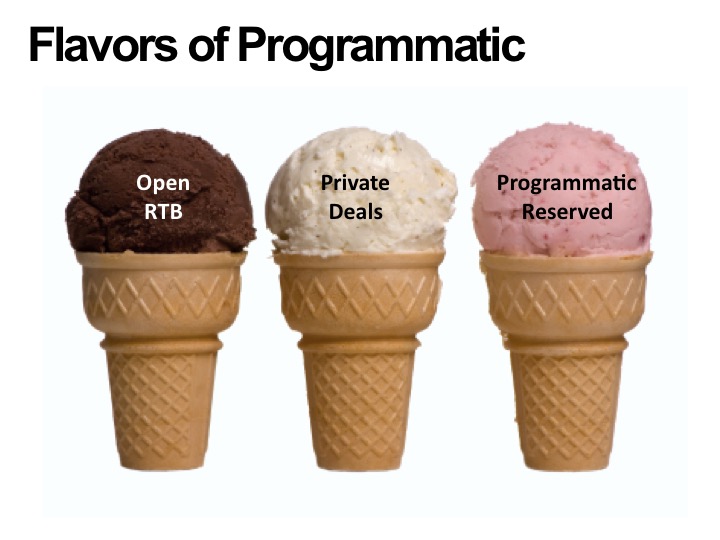
  • Open RTB
  • Private deals
  • Programmatic Reserved
arten-von-programmatic-media-buying-flavours_programmatic-mk-marketing-kommunikation
Definition of termsWhat does Open RTB, Private Deals, Programmatic Reserved, Premium Guaranteed, Self-Serve Guaranteed mean?ContinuationIf you like, you can find the Definition of all programmatic media buying types. Author:Ivano Celia is the founder and managing director of media BROS. He is a proven online marketing expert with over 16 years of professional experience

Programmatic advertising: the future of digital marketing?

programmatic-advertising-die-zukunft-des-digitalen-marketings-mk-marketing-kommunikation
The infographic is available as a PDF here to download.

The nominees for the Swiss Award Communications 2016

die-nominierten-des-swiss-award-communications-2016-mk-marketing-kommunikation
Who will win the CC award?The nine-member, independent and honorary expert jury has met and selected the nominees for the 12th Swiss Award Corporate Communications. The honorary committee, chaired by Peter Stücheli-Herlach, Head of the Organizational Communication & Public Relations Research Unit at the Zurich University of Applied Sciences (ZHAW), honored the following entrants for their outstanding corporate communications projects:

  •    AXA Winterthur for the "AXA Newsroom" project
  •    Credit Suisse AG for the "EURO 2016 campaign" project
  •    Hotz Brand Consultants for Swiss Post with the "Post Offices & Sales Mission Statement" project
  •    Jung von Matt/Limmat AG for Swiss Post with the project "The Yellow Tour"
  •    City of Winterthur, Department of Social Affairs for the project "A Winterthur Christmas Story"
  •    Swiss International Air Lines for the project "Fleeting in of the Boeing 777 / C Series"

Which of these nominees will also win the main prizes and thus the award trophies will be announced and explained at the twelfth award ceremony on Thursday, September 8, 2016 from 5.30 pm at the escherwyss club in Zurich. Program and registration at Award-CC.com

Controversial campaigns: successful provocation or bad taste?

kontroverse-kampagnen-gelungene-provokation-oder-schlechter-geschmack-mk-marketing-kommunikation
The eight campaigns to be evaluated are: Calvin Klein, Stop Aids, Bund: Every 60 Seconds, There is no God, The Sex of the Future, Benetton: Unhate, Project Graham, #ManBoobs4BoobsMK has selected eight campaigns that have caused a great deal of controversy in recent years. Which campaign has left a lasting impression on you? And where have the boundaries of good taste been clearly crossed? Take a look now our survey participate. The best comments will be published in the next issue of MK and online: https://de.surveymonkey.com/r/ZXQMBSY

Swiss Media Association changes its president

Hanspeter Lebrument, publisher of Somedia, is stepping down as President of the SWISS MEDIA ASSOCIATION. He celebrated his 75th birthday in June of this year. "I took over the presidency of the Publishers Association from Dr. Hans Heinrich Coninx 13 years ago and am delighted to now be able to hand it over to a successor. The most important thing for me was that I was able to convince Dr. Pietro Supino to take over this office. I consider it a stroke of luck for the importance of the publishers' associations that Axel Springer CEO Dr. Mathias Döpfner in Germany and Tamedia publisher Dr. Pietro Supino in Switzerland could be won as presidents of the publishers' associations," says Hanspeter Lebrument on his retirement.the executive committee of the SCHWEIZER MEDIEN association unanimously proposes to the members the current vice president Dr. Pietro Supino, publisher of Tamedia, as successor to Hanspeter Lebrument as president. Peter Wanner, publisher of AZ Medien, is to become the new Vice-President, thus ending Hanspeter Lebrument's long, extremely active and influential involvement in the SCHWEiZER MEDIEN association. Lebrument's presidency included the creation of a legal basis for indirect press subsidies and the ban on online advertising for the SRG.Pietro Supino has been a member of the Executive Committee since 2008 and Vice President of the SWISS MEDIA Association since 2010. "A diverse range of media is central to a direct democracy like Switzerland," says Dr. Pietro Supino. "Good framework conditions for private media, be it specialist journals, national daily newspapers or news apps, are therefore in everyone's interest. As I already did as Vice-Chairman, I will continue to campaign for this and for media freedom. "Two representatives of medium-sized and smaller media companies are also to be added to the Executive Committee. Dr. Beat Lauber, who is a member of the boards of directors of Meier + Cie. in Schaffhausen, the Mengis Group in Visp and Zürichsee Medien Gruppe AG, and Andrea Masüger, CEO of Somedia, will be put forward for election.

Christoph Marty becomes CEO of Clear Channel

christoph-marty-wird-ceo-von-clear-channel-mk-marketing-kommunikation
Christoph Marty is moving from Publicitas to Clear Channel.Christoph Marty, currently CEO of Publicitas Switzerland, has been appointed as the new CEO of Clear Channel Switzerland.Christoph Marty, 48, joined Publicitas in 2013 as Sales Director and was appointed CEO in 2014. During this time, he transformed the division and repositioned the company in challenging market conditions. From 2003 to 2013, he held various management positions at AZ Medien AG. Prior to that, he worked at Tamedia from 1993 to 2003.William Eccleshare, CEO & Chairman Clear Channel International, said of the appointment: "I am delighted that Christoph Marty will be joining Clear Channel Switzerland as its new CEO. He has extensive knowledge of the media industry and a broad understanding of the strength of Out of Home and Clear Channel's great assets. With his excellent leadership skills and experience in driving digital media development, I am convinced that he is the right person to continue our journey in Switzerland and take our company forward. "Christoph Marty said: "I am excited to become part of the Clear Channel Switzerland team and help take the company to the next level - always close to the market and customers. Winning the VBZ contract, the ongoing digital expansion plans and the strength of Out of Home in Switzerland make me even more excited about this great opportunity. "Christoph Marty will take up office as the new CEO by November 2016 at the latest.Stefan Lameire, CEO a. i. since April 2016, will return to his role as Chief Customer and Revenue Officer Clear Channel International, but will remain President of Clear Channel Switzerland: "I would like to use the experience I have gained over the last few months in this great country and look forward to supporting Christoph and the Swiss management team at this crucial point in the digital expansion strategy."

Native ads as a threat to the credibility of the media

Native advertising, content marketing, brand journalism. The new buzzwords all essentially mean the same thing, namely advertising that looks like journalism but is not. It's about using a trick to draw readers/users to the commercial message. You don't advertise the product or service directly, but tell a story around it. A story that at first glance gives the impression that you are dealing with a classic editorial article. This is also known as "storytelling". Yes, I know, publishers have guidelines according to which native ads (for the younger ones: they used to be called public reports or advertorials) should be clearly differentiated from editorial articles in terms of layout. But let's put it this way: this is handled quite differently in practice.Born out of necessityBut it seems to be working for the time being. Especially in the USA, but increasingly in Europe too, as a recent study by the Content Marketing Forum CMF on German-speaking countries shows. These new forms of advertising owe their upswing to the problems facing traditional advertising in both the print and online sectors. Declining circulation figures are putting pressure on advertising revenues, and online doesn't seem to be really taking off either, especially as technology offers workarounds such as the increasingly popular adblockers. The irony, by the way, is that it is precisely in the print media sector, which has been predicted to decline for years, that advertisements receive the most attention. However, given these developments, it is understandable that media companies are on the lookout for new sources of income, but is native advertising the egg of Columbus in the fight against the decline in revenue from traditional advertising? For Christian Lüscher from Tamedia, this seems to be the case. In any case, he recently spoke out eloquently in favor of this advertising variant in "Schweizer Journalist" (6-7/2016), which his company apparently defines as "paid advertising" (?). The following sentence is remarkable: "But paid advertising does not differ significantly from conventional journalistic content in terms of either its content or its form". And further: "In contrast to a classic publicity report, the native ad is not produced by the client, but by its own internal native editorial team". With respect, this is window dressing. Of course a native ad - in contrast to a purely editorial article - only contains content in the interests of the client, which is what he is paying for after all. And then the icing on the cake: "Native advertising is the next supreme discipline in journalism." I tend to agree with Rainer Stadler, who recently summed up the dilemma in the NZZ: "Both publishers and the advertising industry must be interested in preserving the credibility of independent journalism for economic reasons. But at the same time, the aim is to undermine it by minimizing the creative difference to commercial messages."Credibility put up for grabs? It may come as a surprise that a PR person of all people is watching the development of native ads & co. with unease. Doesn't this open up an interesting, revenue-generating field for our industry, because we PR professionals have always been much more likely to work with journalistic stylistic devices than advertisers? At first glance and in the short to medium term, this may seem to be the case. But it's not quite that simple. Despite all the changes in the media, professional and efficient PR still relies on credible (whether traditional or non-traditional) media to convey its messages - which are also guided by interests. For their part, the media lose credibility when the boundaries between editorial contributions and advertising messages become increasingly blurred. Both should actually be pulling in the same direction. In addition, journalists and PR professionals are aware of ethical codes to which they (should) feel obliged. After all, the PR Code of Lisbon (binding for members of the professional association pr suisse, by the way) reads: "Any attempt to deceive the public or its representatives is not permitted." And: "PR activities must be carried out openly. They must be easily recognizable as such, bear a source designation and must not mislead third parties." There are good reasons why the industry itself has drawn up such codes, as not only the credibility of the media but also that of the PR industry is being put to the test in the long term.A Don Quixote ride in view of current market developments? If native ads and the like become more prevalent, it can be assumed that the resistance of readers and users to such more or less concealed forms of advertising will increase and, at the same time, the effect will decrease. The intelligence and attention of the audience should not be underestimated. All those involved in the game would therefore do well to think carefully about whether and how they use such instruments. Whatever the case, the topic will certainly occupy us even more intensively in the future than it has to date.Source: www.prsuisse.ch
peter-eberhard-ist-gruender-und-inhaber-von-pepr-peter-eberhard-public-relations-mk-marketing-kommunikation
Peter Eberhard*Peter Eberhard is the founder and owner of PEPR Peter Eberhard Public Relations and has been working in communications/PR for around 30 years. After studying economics at the University of Zurich (lic. oec. publ.), he initially worked in associations, including seven years as head of the press and information office of the largest industry association Swissmem, and then in a market-leading Swiss PR agency with a global network.Peter Eberhard is an accredited professional member of the Zurich Public Relations Association ZPRG.

Somexcloud and Digicomp join forces

Business presentationBoth companies will remain independent after the acquisition, with Somexcloud GmbH operating as a 100% subsidiary of Digicomp Academy AG. In future, Somexcloud will offer a comprehensive and practical course portfolio for digital corporate communication and collaboration. Somexcloud's previous focus on social media seminars will be expanded to include courses for Adobe Creative Cloud, collaboration tools such as SharePoint, web technologies, e-business, knowledge management, networked working with Office 365/Google Apps, wiki in corporate use, Skype for Business and mobile working. companies today not only communicate with external stakeholders via digital channels, but with the digital transformation, the digitalization of communication, collaboration and processes is also making its way internally. "Thanks to the collaboration with Digicomp, Somexcloud can offer around 100 seminars and training courses in one go with the joint pool of experts, equipping employees in companies for the challenges of digital transformation," says David Schäfer, founder and former Co-Managing Director of Somexcloud. "We would probably not have been able to achieve this market presence at the required speed on our own. "Digicomp will take over or provide the organization, administration and premises for the Somexcloud courses in future. "With Zurich, Bern, Basel, Lucerne, St. Gallen, Lausanne, Neuchâtel and Geneva as new locations and a customer base of 20,000 small, medium-sized and large companies, Somexcloud will gain market access throughout Switzerland. With our almost forty years of experience in corporate training for companies and our digital software solution for the organization of personnel development measures, we can take Somexcloud to the next level in terms of administration," says Peter Kupper, CEO and owner of Digicomp, on the advantages of the acquisition. He continues: "In return, the strong relationships of Somexcloud and its experts will open up the world of media, advertising and communication to us. Our existing customers will gain knowledge about digital communication and transformation, which can give them a decisive competitive advantage in the future." "Thanks to the administrative relief, we can once again focus on what we do best: teaching, coaching and consulting," says Andreas Gedenk, the second former Co-Managing Director of Somexcloud. Somexcloud will continue to offer consulting services for digital transformation and communication in the future. The extent to which cloud consulting of a technical nature will also be included in the services is currently still open. "This acquisition offers Digicomp many strategic options. With the innovative power of Somexcloud, we can now increasingly tackle new forms of corporate training that integrate informal and formal training in one approach with on-the-job learning, performance support, coaching, consulting and training," says Oliver Müller, Business Development Digicomp, who is delighted with the new opportunities.The previous managing directors Andreas Gedenk and David Schäfer will remain with the Digicomp management team as lecturers and strategy consultants. The operational business will be managed by Digicomp in the future and talks with the current employees are ongoing. The parties have agreed not to disclose the sale price.

Book tip: the proactive salesperson

Hardly any sales organization today can do without a sophisticated CRM system. Knowledge about the market and customers has never been more tangible than it is today. But does this upgrading with IT systems also lead to better performance in sales? Not at all, says consultant and trainer Karl Pinczolits. On the contrary, "blind performance" has increased, i.e. the workload for system work and administration. What has fallen by the wayside, however, is the salesperson's power of initiative. Pinczolits subsumes five competencies under this term, which he identifies as the true drivers of sales success.In contrast to many other books on selling, Pinczolits does not praise just any old method. He stays very close to the practical sales process and clearly reveals what helps and what hinders. Strong initiative is not necessary in every profession. However, the success of salespeople, the self-employed, founders and entrepreneurs depends crucially on the ability to take the initiative. In this respect, the book may be written for salespeople, but it also highlights skills that are interesting for other entrepreneurial players.getAbstract recommends the book to anyone who builds and maintains customer relationships, especially salespeople and sales managers.getAbstract rating: 7Feasibility: 7Degree of innovation: 8Style: 7
buchtipp-der-initiative-verkaeufer-mk-marketing-kommunikation
Publisher: Campus VerlagYear of publication: 2016Pages: 195ISBN: 9783593505091
get_footer();