Ten steps to the optimal shopping cart

When it comes to optimizing shopping baskets, it is important to take a close look at all stages of the shopping process related to the purchase. The Internet World Fair has compiled the most important steps for online retailers towards an optimal shopping cart.1. generate buying impulsesIf you offer an uninspired and user-unfriendly online store, you should not be surprised if the shopping baskets remain empty. A well-filled shopping cart is the result of all store optimization measures. These include the attractive design of the product pages with well-founded descriptions and high-quality item images, an accurate search function with a carefully selected hit list and transparency regarding shipping costs, return options and store certifications.2. address customers in a targeted mannerThe online equivalent of advice in bricks-and-mortar retail is the personalization of online stores. Those who know their customers, guide them unerringly through the range and recommend the right items do everything they can to make filling the shopping basket much easier.3. upselling - knowing howIf you succeed in convincing the customer of a higher-quality alternative to the item they are looking for, the consumer and retailer will ideally be equally pleased. There are a number of levers available for upselling. These range from the comparative presentation of alternative products on the item page to the sensible setting of shipping costs limits and the design of the hit list in the store search.4. set psychological incentivesConsumers act on impulses of all kinds: a voucher for the next purchase arouses desire, quantity discounts attract savers and the creation of an artificial shortage ("only 2 left in stock") awakens "must-have" instincts.5. supreme discipline of cross-sellingWhen it comes to optimizing shopping baskets, there is no way around cross-selling. This begins on the detail page, where product-related supplementary items or product bundles can be displayed, continues in the shopping cart, where the customer can be asked to complete their order with corresponding products, and remains an option in the after-sales process: anyone who receives an email a few days after the purchase with the offer to buy any missing accessories may appreciate this as a special service from the retailer.6 Don't lose focusUpselling and cross-selling are a good way for retailers to increase the number of orders and the size of the shopping basket. However, the customer, who may only be looking for a very specific product, must not be unnecessarily annoyed or even confused. Measures that increase the basket size should be perceived by the customer as added value and should never cause the consumer to lose focus.7. simple is effectiveProcesses and usability play a major role in bringing a well-filled shopping cart to completion. The customer should be able to check out in just a few steps, order as a guest and not be tortured with unnecessarily long loading times. The simpler and more user-friendly, the better! Features such as a cross-device shopping cart can also score points.8. prevent shopping cart abandonmentNothing is more annoying for a retailer than a customer who abandons their shopping cart shortly before making a purchase. If preventative measures are not enough, the purchase can ideally still be saved with exit-intent technology, for example.9. always give a second chanceA shopping cart abandonment does not have to be the last word. If you send the customer a reminder email a few days later, you may be able to revive the impulse to buy. Special discounts, vouchers or product recommendations can also be used to turn an abandoned shopping cart into a successful purchase after all.10 After the purchase is before the purchaseThe customer has successfully completed the shopping cart and the order is on its way. Now is the perfect time to create incentives for filling the next shopping cart. The retailer now knows their customer a little better and can address them with even more tailored offers. Additional accessories, consumables or corresponding products often meet the consumer's needs now.

Great cinema for the movies

The entire communication presence - from the logo and corporate identity to the microsite - was newly developed and implemented by the FCB Zurich agency. All relevant media channels were used as part of the orchestrated campaign. In addition to classic print subjects, radio spots, online films and lots of digital content are used. FCB Zurich was also responsible for the entire content planning and production, with a special highlight being the 60-second cinema spot, which can currently be seen in all major cinemas for three months. This is not a classic commercial, but a trailer that announces the day of the movie in the best blockbuster style. The trailer shows how an everyday story is transformed into great cinema through cinematic staging. The production was carried out by FCB Zurich and further information on the Day of Cinema can be found at tagdeskinos.chhttps://www.youtube.com/watch?v=y5zgmeUxIok

20 years of smartphones

20-jahre-smartphone-mk-marketing-kommunikation
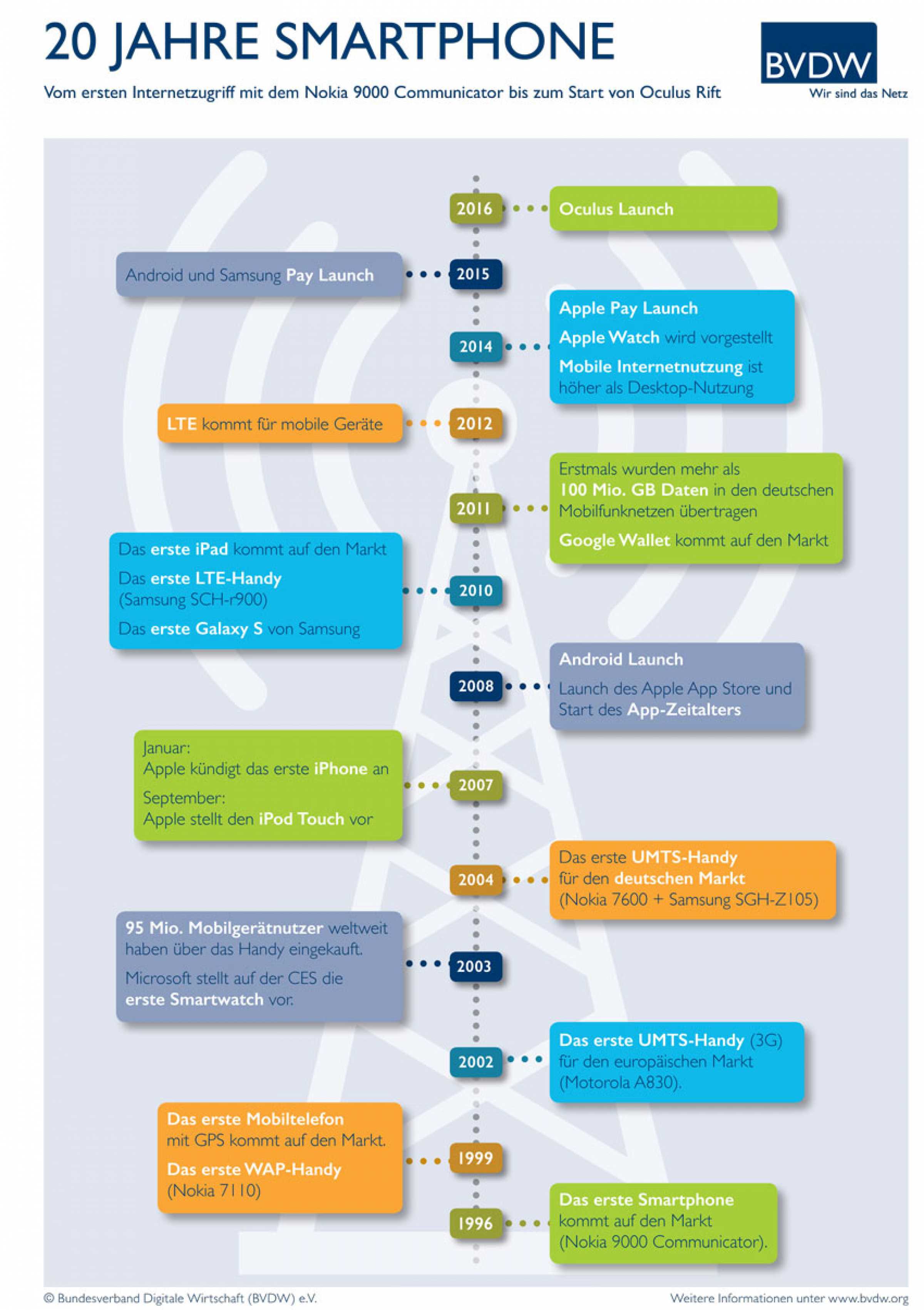
The first smartphones: The Nokia 9110 on the left and the 9000 on the right.In 1996, the first smartphone - the Nokia 9000 Communicator - ushered in a new era of communication. 20 years later, we can no longer imagine life without this device, and the German Digital Economy Association has summarized the development in an infographic:
quelle-bundesverband-digitale-wirtschaft-bvdw-mk-marketing-kommunikation
Source: German Digital Industry Association (BVDW).

Technical Chinese: Storytelling and Compliance

Categories

Uncategorized

Lead generation during the summer break?

4 reasons why prospects (leads) never take a break or vacation

  1. Prospects/leads never all go on vacation together and are all suddenly gone at the same time.
  2. Inbound marketingwhich is ideally suited to lead generation, is not only effective at the time of publication and promotion, but also in the medium and long term.
  3. Every prospective customer has their own timing as to when they are open to which content and want to consume it. Sometimes even during or after the vacations. There are many people who don't want to break off completely during the vacations and are "always online" thanks to mobile and Global Connection.
  4. The level of suffering of prospective customers/leads is always different and is one of the biggest drivers in the buying process. Information on the relevant/correct topic is therefore never equally important for all leads, depending on their prioritization. This means that vacation time or not, you will always reach leads.

But OK, there are usually seasons in which more or fewer leads are generated. Sometimes this can be explained logically. For example, interest in credit cards, which increases dramatically before and during vacation periods, only to normalize again afterwards.

kreditkarten-sind-in-der-ferienzeit-gefragt-mk-marketing-kommunikation
Credit cards are in demand during the vacation season.Sometimes - rather more often - there is no logical explanation for the behavior (interest or disinterest) of leads. Especially when companies develop new or unknown portfolios and products, markets/segments. For example Inbound marketing as a lead generation method.Use any vacation lulls for analysis, strategy and optimizationLulls can be used very well to analyze, rethink and optimize strategies. Those who use inbound marketing as a method for generating and nurturing leads receive very good indications and feedback in the form of results, behavioral patterns, successes and failures. This makes it easier to focus on the right areas.The user decides. Online marketing must adapt to this. Dynamically and in real time.Users have long decided when they want to consume which content. During work, on the way to or from work, in their free time or on vacation. Modern communication has long taken this into account and automatically adapts to the rhythm and timing of the individual user. Anyone who is familiar with such mechanisms (Marketing Automation), there is no need to worry too much about summer or vacation breaks in lead generation. And that is also the key to success for all companies and brands."Success belongs to those who can conduct a qualitative dialog with each individual potential customer (lead) at the right time and in the right context." Ivano Celia, owner of media BROS.where does your company stand in the modern dialog with leads and customers? To the online check.

The most important tips for managers

Benjamin Spycher, Director of Studies CAS Leadership at the Bern University of Applied Sciences:

  • Leadership must be visible: Because leaders are very busy, visibility is often the first thing to suffer. Visibility is constantly maintained through the interplay of communicative, symbolic and organizational actions.
  • Leadership must know itself: Regularly examining oneself, how one is influenced by and how one affects the environment prevents leaders from isolating or losing themselves.
  • Leadership must be consistent: in setting and pursuing goals, in giving feedback, in being a role model. In short, in every leadership action.

Claude Wagner, focus leader and lecturer for communication at the ICC of the FHNW:

  • Active listening: If you talk, you don't learn. That is why it is important to place the employee at the center of the discussion Only those who know the fears and concerns of their employees can react adequately in the event of mistakes, and those who know the wishes, interests and needs of their employees can also use them appropriately and thus also motivate them.
  • Delegate: Many managers hesitate to delegate work because they then lose control over these tasks. If managers delegate partial tasks according to the principle of subsidiarity without relinquishing decision-making power, they gain more time for the really important and urgent tasks that are also in their job specifications. At the same time, employees' motivation increases because their tasks become more varied and they also experience trust and appreciation through delegation.
  • Composure: Especially when developing strategies and visions, managers often confuse the terms "truth" and "certainty". Managers must use argumentation techniques to convince their employees of the meaningfulness of a strategy in order to "move" them. This also requires composure and patience.

Silvio Anesini, Director of Studies at the Institute for Management and Continuing Education (IMW) at HTW Chur:

  • Think disruptively. Think the impossible. Today's impossible becomes tomorrow's standard.
  • Break the rules in the market and be different.
  • Don't think in plans, create customer value.

Kuno Ledergerber, Head of the Center for Human Capital Management, ZHAW:

  • Continuously reflect on one's own leadership behavior, motivation for the leadership task and personal goals.
  • Allowing employees freedom and scope for decision-making, controlling as little as possible and only where necessary.
  • Clearly communicate expectations and goals to employees and be personally approachable.

René Wirz, Head of Management and Leadership at KV Zurich Business School:"The most important three tips for managers, which are generally applicable, do not exist for me. We often observe that managers take over a team and then immediately start with the expectations. In today's world, a patriarchal leadership style is not very promising. Today, it is much more the case that a manager must create trust. Trust is not given, it has to be earned. Moreover, leadership is a maturing process - a personal maturing process and also a process with the team. My most important tips for a good start are:

  • Establish a basis of trust.
  • Listening to employees.
  • Individual goal setting, leadership and employee development."

Literature tips"Stepping into the leadership role"Practice book for the first 100 days, by Helmut Hofbauer and Alois Kauer."Shackleton's Art of Leadership "What Managers Can Learn from the Great Polar Explorer" by Margot Morrell, Stephanie Capparell."The way to the best"Seven Management Principles, by Jim Collins."Positive Leadership"By Ruth Seliger"Kraftfeld Unternehmen. Leading people - awakening energies"By Peter Grupper"Quick Knowledge Leadership"by C.C. Schermuly

Snapchat as a marketing tool: Areas of application and problems

The instant messaging service Snapchat is booming and is particularly popular with young people. In July, MK asked almost 70 marketers which marketing measures Snapchat is best suited for and where the biggest problems lie.
snapchat-als-marketingtool-anwendungsbereiche-und-probleme-mk-marketing-kommunikation
Event marketing and Snapchat go well together.Almost 64 percent of respondents believe that Snapchat is particularly well suited for event marketing. For 52.9 percent, a company's image cultivation and a look behind the scenes are also sensible marketing measures that can be realized with Snapchat. Half of those surveyed believe that live streams and Snapchat go well together.Influencer marketing (45.5 percent), product presentations (40.9 percent), photo and video contests (36.7 percent) and promotions/discounts/betting contests (29.6 percent) are also possible areas of application for Snapchat. Only 11.4 percent, on the other hand, believe that in-app advertising or video advertising with Snapchat is worthwhile.
die-kurzlebigen-inhalte-von-snapchat-bereiten-den-marketers-kopfzerbrechen-mk-marketing-kommunikation
Snapchat's ephemeral content is causing headaches for marketers.The respondents consider the short-lived content of the messaging service to be the biggest problem (62.8 percent). On Snapchat, photos are only visible for a certain number of seconds. The narrow target group of mostly young people also posed a headache for 52.2 percent of marketers. Other challenges frequently cited include creating suitable content (39.5 percent) and too little expertise (37.2 percent). Other problems include poor measurability of the advertising impact (30.2 percent), low acceptance of advertising and insufficient targeting (23.3 percent each). By contrast, only 18.6 percent see legal uncertainties and data protection problems.Comments: What do you think of Snapchat as a marketing tool?"It is another digital channel and touchpoint that, like others, has target group-specific characteristics or constraints and frameworks, which can and/or should be taken into account accordingly in marketing resource and digital asset management, provided it appears to be efficient and purposeful in this respect (in terms of overarching marketing/branding/communication objectives)."MorPedro. P. R. Mor Consulting Ltd."Snapchat is a good companion medium for influencer marketing campaigns that you run on YouTube or Instagram. Influencers document their lives on Snapchat using short videos that are only available for 24 hours. Often, the Snaps become real online diaries or behind-the-scenes. Companies can use this type of real-time storytelling for themselves and place themselves in the Snapchatters' stories in return for compensation. Be it beauty, fashion, food or entertainment - the influencers document their lifestyle in great detail and authentically, which makes it particularly easy and discreet to include brands and products."Björn Wenzel, Lucky Shareman"For the target group of young people: great potential. For the other target groups, it won't catch on as a marketing tool, no potential."Kohler Yvonne"Not of great importance at the moment. In the medium term, weigh and monitor the development and potential in order to derive measures afterwards."Steiner Roger, Hagen-Glas"Currently, there are extremely limited opportunities. But because of the size, it's no longer just hype and we'll see what the founders make of it in the next 2-3 years."Chris Schroedi"Snapchat represents another opportunity to reach its (currently still rather younger) target group. In my opinion, integrating the tool into the marketing mix is definitely worth considering or analyzing." Arnold Myriam,Webtech AG"Not yet used. However, use for the target group up to 25 years is planned and considered very important!"Krieger Pascal, Weisse Arena Group AG"Snapchat's privacy policy is "problematic". It is probably better to refrain from using it for privacy reasons."Zurflüh Fredy, cce-partner

"Consumerization" in B2B

konsumerisierung-im-b2b-mk-marketing-kommunikation
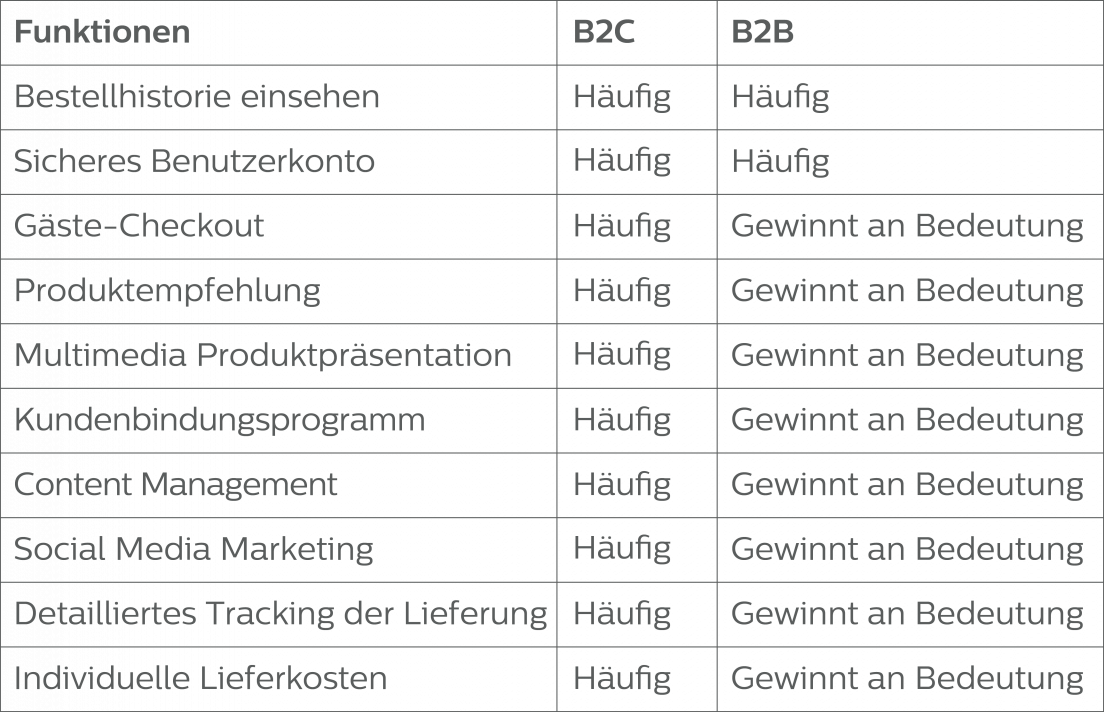
B2C and B2B content marketing measures compared. How effective are they?When tapping into B2B markets in e-commerce, it is common to initially rely on software solutions for the B2C sector and then subject these to extensive adjustments. In most cases, various course corrections are necessary in order to differentiate between private and commercial visitors. This also applies if both target groups visit the same online store and pursue the same goal - the purchase of physical products or services.ConsumerizationA central e-commerce platform can only generate positive feelings and thus a willingness to buy if the customer approach and functions are tailored to the respective target group. If you consider the different needs of corporate and private customers, the distinction between B2B and B2C, which is common in marketing, makes perfect sense. The term "consumerization of B2B" describes the increasing use of empirical values from the B2C sector in B2B e-commerce. Functions in the areas of customer loyalty, multimedia product presentation, product recommendations, interest recognition and personalization are increasingly becoming standard in B2B online stores.B2B versus B2C: more similar than expectedOnline store, website, service counter or showroom - today's customers expect the same user experience across all touchpoints. Equipped with smartphones, tablets or even wearables, they are ready to interact with the company anytime and anywhere. As sales and marketing continue to gain in importance in B2B, the similarities between B2B and B2C are increasing. Functions such as viewing the order history or high security standards when logging in are already a matter of course. However, fast guest check-out, recommendation algorithms for suitable products, multimedia product presentations, customer loyalty programs and professional content management are also becoming increasingly popular.Decisive differencesDespite all the similarities, it is important to know the needs of users in B2B e-commerce and to align marketing measures accordingly. Compared to B2C, several decision-makers (ETPs) are often involved in the purchasing process: A customer places an order, their manager wants to check the order, while the accounting department is only interested in the invoice. A good B2B online store must meet all of these needs.B2B platforms usually deal with informed, knowledgeable users with very specific needs. They usually take a more planned and logical approach than classic B2C users, who like to be guided by emotions. Analyses also show that B2B users log in more often to see individual prices and payment options. They are therefore in the online store more often than B2C customers and are interested in a relationship with the company. Conversely, this means that it can be particularly worthwhile for B2B e-commerce retailers to invest in a close customer relationship and make this the focus of their marketing efforts.Content marketing measuresThe measures used in B2B in the area of content marketing also differ considerably in some cases from the usual practice in the B2C sector. The Content Marketing Institute and MarketingProfs recently conducted a survey on the effectiveness of content marketing measures. As part of the 2016 B2B Content Marketing Trends - North America, 1521 companies in North America responded, of which 1334 stated that they actively engage in content marketing. The B2C percentages in this article are taken from the same study.B2B marketers allocate an average of 28 % of the total marketing budget to content marketing - the same figures as in 2015. The most effective companies expect to spend 42 % and the most advanced companies 46 % in this area. Many companies see lead generation (85%) and sales (84 %) as the most important goals for their B2B content marketing in the next twelve months.Trends in B2B e-commerce - compactly packaged.On October 5, 2016, Origammi is hosting an event in Zurich on the topic: Trends in B2B and B2C e-commerce - compactly packaged. Readers of Marketing and Communication can register free of charge! (Regular admission price CHF 190)
multimedia-produktepraesentation-kundenbindungsprogramm-content-management-tracking-mk-marketing-kommunikation
There are many similarities between B2B and B2C e-commerce functions: Product recommendation, multimedia product presentation, customer loyalty program, content management, delivery tracking and individual delivery costs to name a few.
im-vergleich-zu-b2c-findet-man-bei-b2b-ganz-andere-eigenschaften-bezueglich-benutzerzielen-kaufprozess-rabattstufen-zahlungsmoeglichkeiten-wiederbestellungen-mk-marketing-kommunikation
Compared to B2C, B2B has completely different characteristics in terms of user goals, purchase process, discount levels, payment options, repeat orders or fulfillment and logistics.

TV distributors threaten the existence of Swiss TV stations

Time-shifted television is being used more and more every year and accommodates the individualization of television consumption. Among viewers aged 15 to 59, time-shifted television rose from 8% in the first quarter of 2013 to 20% in the first quarter of 2016. It has more than doubled within three years and will continue to rise in the future. Time-shifted television was made possible by offers such as those from Swisscom or UPC, which allow viewers to skip commercial breaks. And online TV platforms such as Zattoo, Wilmaa or Teleboy with names like "Replay", "Recall" or "Comeback" offer their users the opportunity to watch all programs for up to seven days without having to record the individual programs themselves. As a result, 59% less advertising is seen on time-shifted television than on live TV. This destroys advertising revenue and the broadcasters lose money. In 2014, the loss of revenue from advertising amounted to CHF 45 million and in 2015 even CHF 67 million. A loss of CHF 123 million is expected in 2017.The survival of TV stationsAndrea Werder, Deputy Managing Director of the IRF Interessengemeinschaft Radio und Fernsehen association, explains: "This means that advertising-financed TV stations will lose important income that they need to produce their programs. In the long term, this means that the free TV stations financed by advertising cannot survive."Negotiate conditionsSwitzerland is the only country in which cable network operators and TV platforms can acquire the copyrights for these archive services with the entire program of all TV channels from a collecting society at a regulated price. The TV broadcasters do not negotiate their TV rights with the TV distributors themselves, as is the case abroad. Instead, the collecting societies negotiate the conditions and the tariffs must be approved by the Swiss Federal Arbitration Commission (ESchK). Time-shifted television is regulated in the so-called Common Tariff 12 (GT 12), which is valid until the end of 2016 and stipulates that TV broadcasters pay CHF 1.50 per month and customer if they allow them to watch the programs freely for seven days and skip the advertising. Digital TV distributors are free to set their own prices for customers. The major telecommunications providers such as Swisscom, Sunrise and UPC sell time-shifted television as part of their bundle offers. Payments for the rights to catch-up TV go to the collecting societies and amounted to CHF 18.9 million in 2015; a small proportion of this is passed on to the TV broadcasters. "For 2015, the broadcasters received CHF 5.4 million from the collecting societies, which is disproportionate to the loss of revenue of CHF 67 million," explains Andrea Werder. The associations of TV distributors and the collecting societies have agreed on a new proposal for the new tariff, which is to apply from 2017, which they have submitted to the ESchK for approval. The proposal provides for a minimum increase of 10 centimes per user per month.Party status requiredThe broadcasters have tried to include their conditions for catch-up TV in the negotiations between the collecting societies and the associations of TV distributors. They have not succeeded with a single demand. They are demanding a partial abolition of the rewind option, the retransmission of their own interactive offerings to viewers, a restriction of the search and find functions as well as remuneration in line with the market.The advertising-financed TV broadcasters of the Interessengemeinschaft Radio und Fernsehen (IRF) have therefore joined forces and want to assert their rights better against the TV distributors and make themselves heard before the ESchK. They include all major German private broadcasters such as RTL, Pro7 and Sat1, SRG as well as 3 Plus Group, AZ Medien TV and the regional and local private TV broadcasters in Switzerland. With their submission of August 19, 2016, they demanded party status in the proceedings.

Value Selling

Marketing professor Christian Belz and his co-authors conclusively demonstrate to the reader that customers do not want to buy a product, but a benefit. This approach demands a lot from salespeople: you have to put yourself in the shoes of each individual customer and then enrich your offer with customized added value. Instead of working towards closing the deal, you actively accompany the customer through the entire sales process. Belz and his co-authors shed light on every aspect of their compelling concept, but unfortunately load their explanations with unnecessary academic baggage and jargon. getAbstract recommends this well-founded book to all managing directors, marketing and sales managers, key account managers and B2B salespeople who want to get to the bottom of the proven value selling approach.getAbstract rating: 6Implementability: 7Innovation level: 5Style: 6Publisher: Schäffer-PoeschelPublication year: 2016Pages: 214

Content marketing: impact of publication formats

Vector online conference concept in flat styleWhich content formats are used for the content design of the messages depends entirely on which technological possibilities the company has and which preferences can be assumed based on the buyer personas. Information in the form of text content is still very popular with internet users, e.g. articles or editorial contributions, which are among the most popular content marketing formats.my last article was about content creation and how concise content can be structured and precisely aligned and adapted to the reading behavior of users. However, the content can also be packaged in various publication formats in order to present it clearly and give the customer added value to download. That's what content marketing is all about. When planning your own website or blog, it is worth considering the integration of whitepapers or infographics, for example, and a study by Copypress shows that editorial articles and videos are the most effective content formats in terms of ROI for the majority of respondents. Nowadays, however, readers not only demand the kind of journalistic expertise that editorial articles require. Authentic and problem-solving content in various downloadable formats often scores highly with users, and publication formats include white papers, infographics, e-books, email newsletters, webinars, wikis, research and market reports, infographics, blogs, video content etc. I will discuss a few of these in the following sections, but each content format has its own rules on how the content should be prepared. These rules are explained below:Whitepapers contain influencing content with added value for the user and represent a certain position or describe the solution to a problem without any advertising content. In addition, the content goes beyond that of the website. The tone of the whitepaper is often formal and impressive, allowing the company to present itself as an expert and demonstrate forward thinking. A tech-savvy audience or involved B2B decision makers can be perfectly addressed. In most cases, users need to register and leave their email address to download a whitepaper. It is a great way to generate valuable leads that can be contacted further. Experience shows that this publication format tends to be used in the final phase of the purchasing process. It is definitely worth investing time in the creation of a white paper.e-books: An e-book appears as a PDF and identifies a problem in the market and at the same time describes the associated solution to this problem in an entertaining and well thought-out way. It is easier to read in landscape format with exciting graphics, images, lots of white space and a stylistically lighter text. E-books are described as lead generators per se, which are also offered free of charge and, of course, in digital form.E-mail newsletter: Although the email newsletter may seem somewhat outdated, it is still very effective for regularly disseminating thought leadership content. With this format, the focus is also not on the company's products and services but, as with the whitepaper and e-book, on the problem-solving aspects. The subject line is important for the click rate. However, it must be ensured that it is not misleading. Recipients must be able to identify the sender company.Webinars: Webinars are online seminars, so to speak, that contain audio, video or graphics, usually in the form of PowerPoint slides. They convey the feeling of a classroom or conference room. Webinars combine voice, images and sound to create a lively atmosphere. The social interaction between the participants and the moderator of the webinar is particularly important. It is a very effective way to get in touch with new customers without having to actively address them. Some people feel more comfortable this way. On the other hand, webinars are also very well suited to maintaining existing customer relationships by offering complementary services without geographical dependency.Infographics are entertaining, visual representations. A distinction is made between static and dynamic graphics. The latter can contain links, animations or video streams that can be called up with the computer mouse. In any case, the infographic should make sense, be fun, convey knowledge in a vivid way and, if possible, encourage the user to forward and share it. as I said, each format has its own characteristics which are worth dealing with before creating it. the own tonality, which must be reflected in the content, must not be forgotten.AuthorMartina Garcia is a media consultant at Mediaschneider AG and has written a Master's thesis at HSLU on the subject of "Successful content marketing in B2B".

Wanderlust thanks to Pokémon GO

im-wanderfieber-dank-pokemon-go-reto-baumgartner-mk-marketing-und-kommunikation
Reto Baumgartner is the owner and member of the management board of MySign AG and is primarily involved in digital branding.As a digital enthusiast, I wanted to test the phenomenon behind the Pokémon GO hype. And what better time for such a test than a two-week family hiking vacation. It didn't take long for the first Pokémons to get in our way and want to be caught. My children immediately took over and hunted the Pokémons. They had no problem making detours if it meant they could catch something. They soon realized that there was a Pokestop at almost every sight, so they were constantly on the lookout for chapels, stops and fountains. Our first hike went off without a murmur and with extra kilometers. And in the evening, the 9-year-old son said he wanted to go for an evening walk in the village!In the days that followed, the children fetched croissants early in the morning, went shopping voluntarily - as long as they were allowed to take my cell phone with them, of course. And they enjoyed going for walks and other hikes.Teachers are sure to argue that hiking is so tied to an incentive that children don't really see the point and are always looking at their cell phones instead. But how much did we like hiking back then? Didn't we have to be lured with ice cream at the end of the trail or distracted with some kind of guessing game? Nevertheless, we still noticed the beauty. That's exactly how we experienced it: a Pokémon made itself known by vibrating the cell phone. The rest of the time, the cell phone remained in our pockets, giving us plenty of time for discoveries and entertaining conversations. What's more, the children were very aware of their surroundings because they didn't want to miss a Pokestop.My conclusion is consistently positive. It is an excellent game for motivating children to move.
get_footer();