Content Moments: Inspire at the right moment

Internet users consume less content in the morning than in the evening.The "Content Moments" are intended to provide advertisers with a guide to help them find out how to address their target group with the right content at the right moment. To do this, advertisers have to evaluate more and more data and draw the right conclusions. This includes socio-demographic data, historical information about previous user behavior and much more, but why exactly do consumers interact with certain content in the first place? The study by AOL investigates this question and has uncovered the motivations and motives of consumers. In today's world, consumers often make their purchasing decisions very spontaneously within a few seconds and it is therefore important to reach them with the right content at the moments when they are most receptive to it.To understand the motivation of users in the various moments, advertisers need to look at more than just the content itself - namely the specific situations in which consumers find themselves at the time of interaction. Each content moment consists of four elements before, during and after the interaction: (1.) the motivation to trigger the content experience in the first place, (2.) the emotions that play a role during it, (3.) the results that are achieved by consuming the content, and (4.) the topic of the content.Depending on the constellation of the four components, the following eight Content Moments are created:

  • Inspire - look for new ideas, try something new
  • Be in the Know - be up to date, find relevant ideas
  • Find - search for answers or advice
  • Comfort - Looking for support or insights
  • Connect - Learn something new, be part of a community
  • Feel Good - Improve your mood, relax
  • Entertain - Take a time-out or a mental break, laugh
  • Update Socially - stay up to date, take a mental break

How Internet users consume contentInternet users spend an average of twelve minutes in a content moment consuming content. A content moment lasts the longest between 11 a.m. and 2 a.m. - 18 minutes on average - while a content moment lasts only eight minutes on average between 5 a.m. and 9 a.m. and is therefore the shortest. The variations by age and gender are only slight. However, there are differences depending on the mobile device: the larger the screen size, the longer the time spent in a Content Moment, and the more emotional the Content Moment, the longer consumers linger. The content moments "Entertain" and "Find", in which the motivation for content consumption is relaxation, therefore usually last longer - 16 and 14 minutes on average for Germans - than the moments "Be in the Know" (average duration of seven minutes) or "Comfort" (average duration of ten minutes), which are primarily about absorbing information. In addition, the content varies depending on the moment and the action following the content moment.Inspire14% of Content Moments fall into the "Inspire" category. Product searches and photo galleries or slideshows on the topics of travel, fashion and food are primarily consumed in this content moment. 25% discover a service or product that they are thinking about buying.Be in the KnowEleven percent of content moments fall into the "Be in the Know" category. Consumers primarily use online information and articles about current events, the weather and politics for this purpose. 34 percent of consumers come directly via an app or a landing page.Find17 percent of Germans' content moments fall into the "Find" category. Top content includes products and online information, articles and blogs on technology, weather and health/wellness.ComfortThree percent of Germans' content moments fall into the "comfort" category: in these moments, users consume content primarily via social networks. It is therefore hardly surprising that the sharing rate is highest following this content moment: 27% of respondents stated that they share the content online after the interaction.ConnectFive percent of Germans' content moments fall into the "Connect" category. Online videos from the areas of comedy, entertainment and fantasy are consumed in particular. Following these moments, consumers increasingly click on ads or download an app.Feel Good16 percent of content moments from Germans fall into the "Feel Good" category. Top content includes photo galleries and slideshows as well as social networks. In terms of content, these moments are characterized by the topics of music, sport and games. This moment is the most likely of all to lead to the purchase of a product.Entertain18% of German content moments fall into the "Entertain" category - making it the most common content moment. Consumers mainly engage with online games or online videos and nine percent of consumers then share their experiences with a person.Update Socially17% of content moments from Germans fall into the "Update Socially" category. The top content includes social media, short videos and galleries or slideshows. The topics are mainly sports, friends & family and games.AOL has also developed a four-step approach that serves as a guide for creating content marketing campaigns:1. the consumer's needs determine the brand attributes, because the story should come to the user and not be expected to come to the brand.2. the topics and formats of the content as well as the content moments in which they are played out should vary. This allows advertisers to reach more users.3 The desired result should be precisely defined in advance. To do this, advertisers should know the mindset of users and make it easy for them to interact.4. data and creativity should go hand in hand and complement each other: To achieve the greatest possible campaign effectiveness, insights from the eight content moments help to inspire with creative, in line with the consumer's needs.

What is contextual advertising?

Contextual advertising shows online advertising based on keywords within editorial environments. With this method, advertising is placed according to the occurrence of certain words that are defined in advance. If this occurs on an individual website, the corresponding ad is placed. For example, advertisements for a car manufacturer are placed next to "Formula 1" reports. If the user reads an article on a certain topic, they are confronted with the appropriate advertisement. The method is problematic if the keywords appear in a negative context: For example, the word "Formula 1" may appear in connection with a dramatic racing accident. This misplacement of the ad can trigger a rather negative reaction from the potential customer.

How to bring people into the video age

Companies are also increasingly using video for sport.On September 23, communication, marketing and IT managers will meet at the FIFA Museum to usher in the video age. With the "Video 2.0" event series Yoveo The event is dedicated to the focus topic of sport & sponsorship. On the one hand, it will shed light on how events, associations and clubs can use video to their advantage. On the other hand, it will show how sponsors can use video to gain access to their target groups and thus make their sponsorship commitment more effective. Visitors will also have the opportunity to try out the mixed reality innovation HoloLens and the Moving Chair (further development of VR glasses) on site.SpeakerSpeakers will be: Oliver Beyer (CEO DOSB New Media / German Olympic Sports Confederation / subsidiary ProSiebenSat1), Björn Wäspe (Head Brand Activation, Sponsorship & Events UBS), Pascal Jenny (Spa Director Arosa) and Jürgen Krucker (Managing Director Swiss Handball Federation) Further information at www.yoveo.ch/video20

New website for learners

neue-website-fuer-lernende-mk-marketing-kommunikation
The new landing page for learners of Alpig InTec.The campaign was implemented by Lacher-Dumas Communications. The idea was to move the various communication tools away from the general Alpiq InTec site to a landing page created specifically for apprenticeship marketing. On www.jetztlehrstelle.ch is all about making the application process as simple and fast as possible. The focus is on the advantages of a basic training in building technology.The website is responsive, so that the display is also optimal on the smartphone. The campaign images and icons appeal more to the young target group than long passages of text. Therefore, the career opportunities and advantages of an apprenticeship were graphically presented.In addition to the landing page, online banners as well as posters at train stations were used for the campaign. Furthermore, the Facebook profile of the energy service provider is reactivated.

Only five seconds to assess the relevance of mailings

Many people decide within five seconds whether an email is relevant.The survey shows that consumers are willing to disclose some personal data if this results in a targeted communication approach. For example, half of those surveyed would disclose information about their interests, place of residence or birthday if they were addressed more individually in return. For half of the companies surveyed, the future lies above all in the area of personalized video communication, and the results with regard to the use of mobile technologies are also remarkable:

  • 74 percent consider it impolite to check emails in meetings and discussions, 28 percent do it anyway.
  • 78 percent are bothered by phone calls in public, 39 percent of those surveyed admitted to making phone calls in public.
  • 82 percent refuse to check text messages such as SMS or WhatsApp during business lunches - 26 percent do it anyway.

For the study leaders, it is clear that the key to more intensive interaction with consumers and customers lies in a personalized, target group-oriented approach. Companies need information to ensure a targeted approach with suitable tools. This applies equally to content and to digital or analog channels.The survey was conducted in May 2016 by Coleman Parkes Research in Germany, France and the UK. A total of 234 companies were surveyed.

Credit card very popular for online shopping

kreditkarte-beim-online-shopping-hoch-im-kurs-mk-marketing-kommunikation
Almost one in three (29%) already make contactless payments. Men twice as often as women.Around half (47%) of all men shop several times a day. The figure is significantly lower for women, where only just over a quarter (28%) make several purchases per day. Men in particular like convenience and always or occasionally pay by credit card (67% versus 55% for women). And around a quarter (23%) could imagine doing without cash altogether. This is why only one in seven people do without a credit card when shopping online, according to the findings of a national study by Demoscope that is representative of the population.Contactless payment on the risePeople who buy something several times a day use their credit card many times more often. Convenient and fast - that seems to be the motto for many. It is therefore not surprising that people who use their credit card regularly often (61%) pay with a "tap" (contactless). Just under one in three of all respondents (29%) already make contactless payments. Men are twice as likely as women and German-speaking Swiss around 50% more likely than French-speaking Swiss. Nevertheless, not everyone seems to be aware that almost every credit card (around 90%) can be used for "tapping", i.e. contactless payment - at two out of three payment terminals.credit cards are used most frequently for online shopping (84%). Men slightly more frequently than women (87% versus 81%). Vacation and flight bookings (77%) and spending abroad (76%) are also preferably paid for by credit card. And almost half of all respondents with a higher income want to benefit from bonus programs.If payment is not made by credit card, the debit card comes with73 percent still prefer cash (71%). Around a quarter (23%) of all respondents can imagine doing without cash altogether, especially 18-34-year-olds and men compared to 50-65-year-olds and women.About the studyThe population-representative online survey was conducted by DemoSCOPE between July 6 and 17. A total of 921 people aged between 18 and 65 from all over Switzerland were surveyed on behalf of the Swiss Card Providers Interest Group.

The first impression counts

In personal conversation, the first perception of a person leaves a lasting impression that is difficult to correct in the medium term. In science, this effect is substantiated as the theory of thin slices (Ambady & Rosenthal, 1993; Stros & Möslein-Tröppner, 2014). In one experiment, Nalini Ambady (1993) tasked students with judging lecturers based on a short video sequence, each lasting 30 seconds. These evaluations were later compared to the actual evaluation forms of students who attended the corresponding lecture with the evaluated lecturers for one semester. The agreement was amazingly high and impressively shows the influence of the unconsciously formed first short impression on the later assessment.Der erste Eindruck zählt-mk-marketing und kommunkationConsequently, the first impression has a measurable influence on the perception of the salesperson. According to Carney (2007), judgment formation occurs during the fifth second of a face-to-face interaction. John Wood (2006) has shown that in the first phase of a personal conversation, the trustworthiness of the sales person is judged by non verbal signals. In another study, Nalini Ambady (2006) examined the influence of first impressions on sales closure. Several 30-second short video sequences of various sales calls were presented to subjects. The potential of the sales calls for a successful closing could clearly be assessed significantly by the test participants. Consequently, it is possible to assess a sales talk and its closing potential by analyzing the first impression.Authenticity as a success factor in personal sellingThe positive perception and success of a sales conversation is based on the authenticity of a sales person (Algera & Lips-Wiersma, 2012; Diddams & Chang, 2012). Hennig-Thurau (2006) describes authenticity as a measure of the emotional state of discomfort as a central component of interpersonal interaction.Sigmund Freud (1938) described the ideal state of inner balance. He distinguishes between the emotional ("feeling" [affect]), physical ("acting" [behavior]), and the rational expressions ("thinking" [cognition]), which, when there is balance between internal and external influences, lead to the ideal mental state and result in authentic appearance.Der erste Eindruck zählt-das abc-modell-mk-marketing und kommunkationThree levels: Feeling, acting and thinkingLevel 1: Feeling" (affect) includes emotions such as fear, affection, and joy. Buyers are therefore very quick to judge the salesperson, and vice versa is likely to be the case. In his study, Ayres (2001) examined in detail the sales pitch approach of Chicago car salesmen. He was particularly struck by Bob Golomb, a car salesman who generated twice the sales revenue of the average. Ayres found that Bob Golomb was able to assess his clientele's intentions well and quickly, without being fooled by their appearances.Level 2: The level of "acting" ("behavior") has only limited influence on the sales interaction for the isolated elements such as facial expressions, gestures, posture, and laughter (Hari, 2007). Individual elements such as the often cited "smile" have little to no influence on the mutual judgment of buyers and sellers on their own, especially if it is not authentic (Williams, 2001).Level 3: The third level, "thinking" (cognition), refers to the content of the conversation, i.e., what is said in words, and could also be in written form. According to Lynch (2007), emotional factors may be of greater importance than cognitive criteria in decision making in face-to-face selling. The effect of the content of a sales presentation on the lasting impression was studied by Donald Naftulin (1973) in his "Dr. Fox Experiment." Michael Fox, an actor unfamiliar with the content, gave a rhetorically brilliant lecture to a university audience on "mathematical game theory in the education of physicians." Despite the fact that the content was contradictory and partly wrong, even experienced listeners felt they had learned something. Consequently, the content of a speech may account for only a small part of the positive perception.These findings are confirmed by Mehrabian's (1972) research. According to this study, 55 % of interpersonal interaction consists of body language, 38 % consists of tone, and 7 % consists of the spoken word.What does this mean for sales practice?For sales practice, it is important to be aware of these findings. Firstly, the decisive impression is formed in the first few seconds, and secondly, according to the ABC model, there are three channels of interpersonal interaction that significantly influence the authenticity of a sales person as a central factor. Of particularly large importance is thereby the body language and likewise the emotional connection. The spoken content is secondary.Taking these circumstances into account, the authentic appearance can be trained. On the one hand, this could be done by means of role-playing, alternatively you could acquire acting techniques as it is already practiced in the United States. Furthermore, it should go without saying that you should never go into a sales meeting unprepared. And, of course, an adequate appearance is important.Fernfachhochschule https://www.ffhs.ch/SienceDirect http://bit.ly/2c7qwSLPDF http://stanford.io/2bTvvuuPDF http://bit.ly/2cjMMMK

Brand Sense

We are surrounded by brands. Some we see, some we hear, some we recognize by taste, smell or shape. Very few brands manage to make their mark on all five fronts at the same time. But this is becoming increasingly important, says Martin Lindstrom, because on the conventional brand battlefield, the visual arena, a hopeless battle is already raging that is causing consumers to turn away. The author concludes that upgrading brands in terms of sensory perception is therefore the order of the day and backs this up with convincing case studies. The book amuses with witty analogies and snappy sayings. The fact that Brand Sense is a more entertaining kind of guide is illustrated by a special chapter that invites readers to test the sensory qualities of their own brand. But even if you don't manage a brand yourself, getAbstract believes that this innovative work will certainly be useful and recommends it to marketing experts, entrepreneurs and advertisers as well as anyone interested in advertising and marketing.getAbstract rating: 8Implementability: 7Innovation level: 8Style: 9Publisher: Campus VerlagPublication year: 2011ISBN: 9783593394473

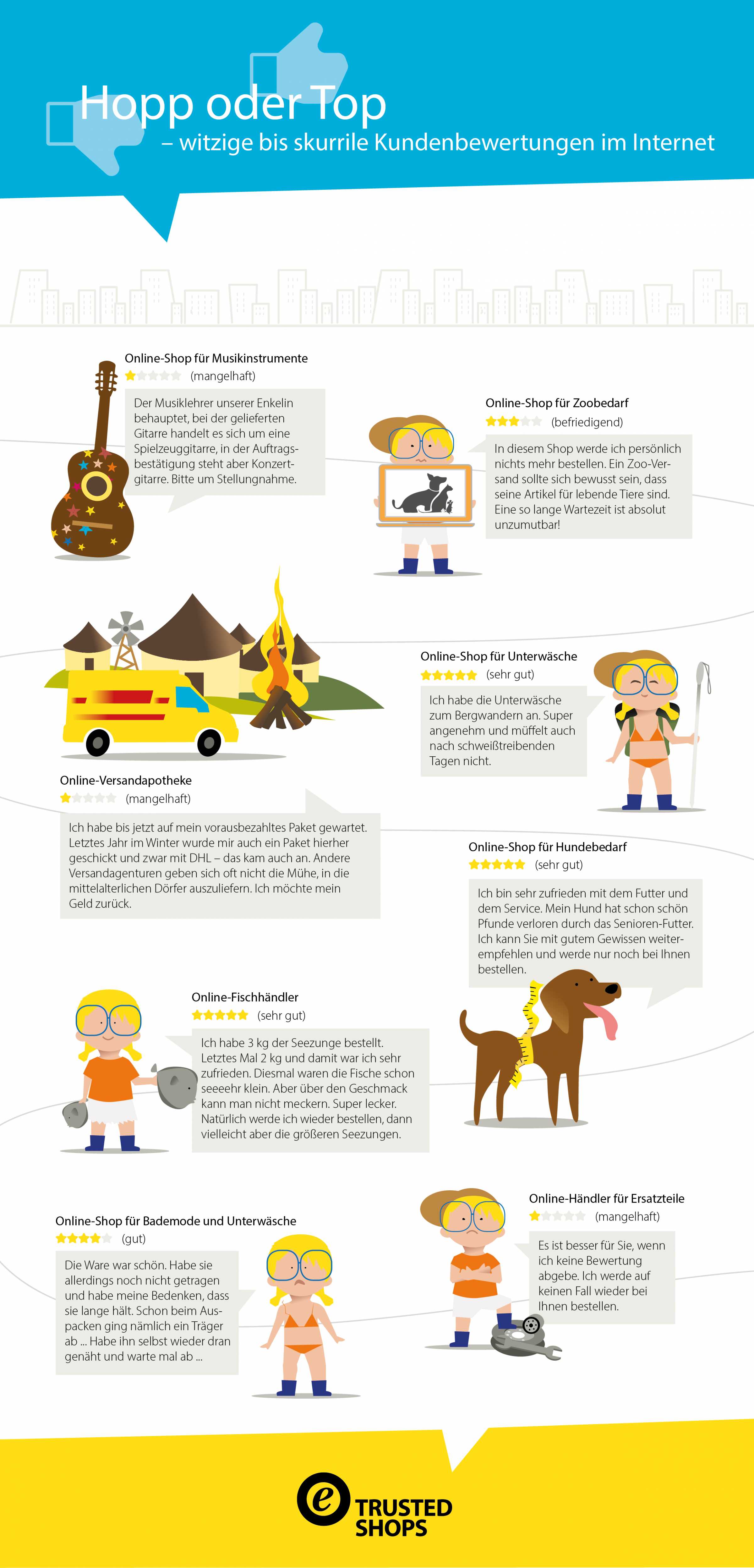
Funny to bizarre customer reviews on the Internet

Overhead view of male hand placing five cards with golden starsReviews on the Internet are important for online retailers.Online reviews are an important way for consumers to get an impression of a product or online store. But they are also direct, honest and hard-hitting. Trusted Shops shows bizarre and funny reviews that have actually been submitted.
infografik-witzige-bis-skurrile-kundenbewertungen-im-internet-mk-marketing-kommunikation

Talk about it!

rede-darueber-mk-marketing-kommunikation
In addition to online measures, posters are also part of the campaign concept.Today, around 1,500 people are waiting for an organ donation in Switzerland, and over the years the waiting list is getting longer and longer. Every week, two people die because they did not receive a transplant. Even though the majority of Swiss people say they are in favor of organ donation, few inform their relatives of their wishes. As a result, it is mostly the bereaved families who have to decide, and of them, in case of doubt, every second one rejects organ removal.A campaign that gets people talkingThe BAG's new campaign aims to encourage people to talk to each other about organ donation - an intimate topic, but one that also stands for solidarity. "Life is sharing" and "Talk about organ donation!" are the two slogans of the campaign: it is not enough to think about the subject; you also have to share your decision with others. The campaign, launched in collaboration with Swisstransplant, will run for four years and has a budget of 1.65 million per year. The commercial combines subtle humor with unusual situations to defuse the sensitive topic. Further information can be found on the website www.leben-ist-teilen.ch.Campaign as part of an action planThe number of donors per million inhabitants rose from 14.4 in 2014 to 17.4 in 2015 (all categories combined). However, the trend for 2016 is clearly pointing downwards. In the first half of the year, the number of donors per million inhabitants fell to 11.7. The federal government's goal is to reach the mark of 20 donors per million inhabitants by 2018. To this end, the Federal Council launched the "More organs for transplants" action plan in 2013, which includes this campaign. The action plan aims to implement and coordinate the various measures to increase the number of donors. The federal government can count on the most important players in this area and on the cantons, which play a key role in coordinating activities in hospitals.The video humorously encourages people to talk about certain things.https://www.youtube.com/watch?v=GlK7USofeHo

On the hunt with coop@home

auf-die-jagd-mit-coophome-mk-marketing-kommunikation
The coop@home delivery van as the hunted.The anniversary campaign is based on the interactive #catchathome campaign. The Swiss population is being sent on the hunt. Over the next two weeks, the coop@home delivery vans will be captured on camera or cell phone. The pictures can be uploaded to the photo gallery on www.15jahre-coopathome.ch and also uploaded to Facebook or Instagram using the hashtag #catchathome. Fifteen coop@home gift cards worth 500 francs will be raffled off among all uploads. In addition, coop@home customers benefit from various anniversary advantages.Goldbach Interactive (Switzerland) AG designed the landing page with the interactive competition including a hashtag campaign especially for mobile devices. In addition to the anniversary campaign, advertising material will be placed via various channels such as the coop@home newsletter or existing content partners and integrated into the ongoing performance campaign.A responsive landing page was created for the competition.

Social networks: more private than business

Friends looking at smart phone while sitting in cafeSocial networks are mainly used for private purposes.The use of social networks such as Facebook, Google+, Xing and LinkedIn has increased compared to last year: from 48.3% to 51.3%. Today, 3.4 million people in Switzerland use such platforms - the vast majority (70%) are so-called heavy users and log into social networks daily or almost daily. Three quarters spend their time on Facebook & Co. reading and viewing other people's profiles and posts. Seven out of ten users also use the platforms to send and receive personal messages. On the other hand, professional networking online is carried out by a minority: one in ten Swiss, or 700,000 people, use Xing, LinkedIn etc. They read profiles and posts from groups or organizations almost as often as posts from other users. Men enjoy virtual professional networking more than women - they are heavily overrepresented with a ratio of 7 to 3.Top smartphoneIt seems that social networks are often visited while on the move on the train, bus or while waiting, as three quarters of users access them on their smartphone. 7 out of 10 also prefer a larger screen for browsing, liking and commenting and use a laptop or desktop PC for this. A tablet is also regularly used by over 40 percent or 1.4 million users when visiting Facebook, Xing & Co. The two device categories of smart TV and MP3 player fall far behind, with only 1.3 percent and 1.0 percent of users respectively using them from time to time to surf social networks. Social network users are mostly multi-device users: two thirds use three or more devices. Only around 7 percent (= 250 thousand users) access the web with just one device.
grafik-soziale-netwerke-mehr-privat-statt-geschaeftlich-mk-marketing-kommunikation
get_footer();