Those who want a shitstorm rely on clumsy role clichés

It’s a field rife with pitfalls: gender marketing promises higher sales, but is turning into a balancing act. As the line between female and male role models becomes increasingly blurred—and the market increasingly transparent—a social media backlash is never far off. Opportunities are only available to those who look deep into the customer’s psyche, communicate in a gender-neutral way, and act with great sensitivity.

soup

They are young, highly qualified and ambitious. But Fanny Chollet, Danuta Cichocka and Andrea Ablasser are making headlines for a different reason: they are conquering male domains. Lieutenant Chollet, for example, graces the front pages as the first female fighter jet pilot in the Swiss Army. Dr. Cichocka, co-founder and CEO of Resistell received the first prize awarded by the Swiss MNT Network for the best nanotechnology startup. And EPFL professor Ablasser was awarded the 2018 National Latsis Prize for her research on innate immunity. Women with gender-atypical career paths are rare. So rare, in fact, that the Swiss National Science Foundation, which funds scientific research in strategically important areas, believes it is a must to support them in the workforce. The same is true for education and upbringing, where identities are shaped and life models are designed. One reason why gender inequalities persist so stubbornly is to be found there. Another lies in the economy. In the consumer goods sector in particular, age-old role models and patterns of upbringing are cultivated - with gender marketing.

Not hearsay, but fact

This special discipline, imported from the New World, is based on a marketing approach oriented to sex (gender). Unlike LGBT marketing, which addresses lesbian, gay, bisexual and transgender target groups, the world of gender marketing is divided into only two: Consumers are female or male. The dual view is confirmed by neurobiologists and brain researchers. They recognized that different hormone concentrations are the reason why brain types are already polarized in the womb to the empathic-feminine or systematizing-masculine type. In the 2004 book "Different from Day One," Simon Baron-Cohen summarizes significant experiments - a must-read for managers who rely on gender marketing. "I'm a fan of the British psychologist," says Anja Peter, CEO of the Human Empowerment Center AG. This book shows people once again clearly that the fundamentally different information, communication and purchasing behavior of women and men is not a matter of hearsay, but of facts that have been proven many times over (see interview). But they also have to be interpreted correctly for gender marketing to work. This is difficult in Switzerland, where it is predominantly men who decide on goals and strategies and thus give direction to the operational level, which is staffed by women.

Best cases are rare

Apart from biologically determined necessities, there are hardly any convincing reasons for offering products and services on a gender-specific basis. The fact that gender marketing is nevertheless enjoying increasing popularity is due to the fact that it is all too often understood as a solution to market-related problems. It only superficially doubles the target group and is therefore not suitable for compensating for product policy omissions or a lack of unique selling points. Intensive market research is needed to determine whether and to what extent the needs, desires and behaviors of consumers diverge. Only then can it be decided whether it is worth modifying a product and how it should be designed. For example, the IXO cordless screwdriver from Bosch, which was designed for women and is small, light and easy to use, also became a sales hit for men. Success stories like these are rare and show that gender marketing that is well thought out and finely tuned to the target group can work. However, it seems to be more the exception than the rule. Often there is a lack of deeper insight into customer needs, so the supposed way out leads straight into the dilemma. Because today, market transparency is so high that attempts to double the sales of one and the same product solely through gender-typical product and packaging designs or - even worse - through advertising with stereotypical role images neither go unnoticed nor unpunished. Then many a manufacturer and retailer experimenting with gender marketing suffers the "shitstorm" in social media. Which also explains why a statement on this topic is rather dispensed with

Drawers too narrow

Gender marketing is treacherous and also runs counter to market reality, in which around 85 percent of women now decide the consumer budget. If advertising is discriminatory or sexist, they criticize it most harshly. Agencies are also accused of not understanding the needs of the female target group: "Advertising simplifies the medically extremely complex question of a person's gender and leaves only two possibilities: Man or woman, girl or boy," explains author and director Sascha Verlan, "thus creating a binary and dichotomy that does not exist in real life." These only two genders would also be assigned very stereotypical characteristics, abilities and interests: Women would be reduced to household, grooming and beauty; for the "household-inexperienced" men, alcohol, meat, adventure and technology would be on offer. "If a company wants to appeal to people in their diversity, these two pigeonholes are certainly too narrow," he stresses. And explains how the vicious cycle of gender marketing plays out: "Products are designed and produced in two variants, light blue and pink. Advertising responds to this and markets them accordingly. The norms for female and male role models are narrowing, and at the same time the social pressure to conform to these new, narrowed norms is increasing. It's getting harder and harder to break gender norms, freedom of choice is shrinking." Finally, the idea that women and men, boys and girls, have fundamentally different interests, abilities and characteristics becomes entrenched, which in turn leads companies to offer products in two varieties, he said. "In this way, a self-reinforcing process has been set in motion that we can only stop again with a great deal of educational work and a sense of responsibility.

Blue for boys, pink for girls

Verlan also knows why many gender marketing campaigns fail: "They are simply too heavy-handed. That's when public resistance quickly arises." But that doesn't change the fact that the entire industry has been reproducing over and over again for more than ten years what boys should be like and what girls should like. "We adults can guard against this with a lot of awareness, but it's simply impossible for children, because they don't question the world, but have to learn to find their way in this society with its complex rules," he complains. "They take the marketing industry's offers for granted." For this reason, he wrote the book "The Pink-Light Blue Trap" together with Almut Schnerring. And since 2016, the pair of authors has also been waving the "Golden Fencepost for Absurd Gender Marketing." The negative prize exposes the limiting messages, outdated role specifications and underestimated impact mechanisms that emanate from product design and advertising - and reminds the marketing industry of its social responsibility. It is in the nature of things that it ensures great media resonance for winners and nominees. Whether printed, blogged, or liked, outraged comments pop up for a long time and damage the brand image. Meanwhile, anyone searching for "gendered products" can literally watch the negative list of articles for homesteaders and real guys grow. When it comes to princesses and craftsmen, tempers flare in particular. In addition to toys such as Barbie or Jako-o, Swiss brands such as Nestlé's Smarties or the children's sachet soups from the Migros brand Bon Chef can also be found there - in blue for boys and pink for girls.

Wasted potential

Verlan and Schnerring also point out in the blog "www.ich-mach-mir-die-welt.de" the limiting consequences of "always seeing only girls in the play kitchens in almost all catalogs, while the boys take a turn building and constructing, playing pirate or trying out a cool vehicle." That changes the worldview of both, he says. "And then later we want fathers and partners who are equally involved in family work, but deny boys playful access early on." The criticism is supported by quite another side. For example, the authors of the current Kantar Millward Brown study, "AdReaction: Getting Gender Right," state that women are not appropriately portrayed in advertising and are therefore not emotionally engaged. This reduces the effectiveness of many advertising formats and campaigns. But the wasted potential could also have deeper causes. "As long as market research deals with relative majorities and then derives trends and desires of the target audience from them, it will remain difficult with the individual address and the appropriate offer, because not only individual, but the majority is not recorded at all," says Verlan. For example, children were once asked what color their favorite car should be. "Just under 30 percent of the girls answered red and a good 30 percent of the boys answered black, which means that the majority of boys and girls prefer other colors. The wishes overall are colorful.

Better without clichés

Even if there are only two colors on the market: Things are happening in the experimental field of gender marketing. After initial attempts by the nominated companies to ignore the hint with the fence post, some have sought dialog in the second year, says Verlan. "But we're also invited by companies that don't just deal with our criticism superficially," he explains. That's where good conversations have developed, he says, "and it becomes clear that there are different attitudes within the teams as well." More and more companies are realizing that mixed teams are better at recognizing the pitfalls in gender marketing. And some are getting it right after the first faux pas, such as Stabilo: After the sexy "Neon" marker met with protest, the advertising now pays tribute to three forgotten female scientists from history. The Mercedes-Benz spot, which shows Bertha Benz on her pioneering journey, also appears authentic and credible. Gender-neutral evasive maneuvers of this kind lose their impact, however, when the trend swings into the opposite direction. For example, the British luxury department store Selfridges has just proclaimed the "genderless shopping" age, which futurologists also point to. Verlan has not yet been able to observe such an "agender" trend, but marketing without a discussion of roles would be desirable. "To achieve this, we first have to understand how and why gender marketing works and what the psycho-social consequences are," he says, "and then we'd all have to decide whether the messages we're giving children are really good ones." Not only ladies conquering male domains are likely to answer his follow-up question in the negative: "Is it really helpful to let children play in these clichéd worlds?"

Beat Krebs becomes Managing Director of OMD Switzerland

Beat Krebs will take over the management of OMD Switzerland by October 2019 at the latest.

beatkrebs

Krebs looks back on 30 years of media and communications experience and will contribute his experience to further expand OMD's success. For the last six years, Beat Krebs has headed Publicis Media. Prior to that, he worked for the OMG Group, most recently as COO at OMG Switzerland.

"I'm delighted about Beat's return. With him, we were able to gain a proven media expert who brings the necessary experience, seniority and the desired Swissness. I am sure that under his leadership OMD will make a measurable contribution to the business success of our customers," says Jens Brecht, CEO of OMG Switzerland.

And the 51-year-old Krebs: "I am very much looking forward to my new task and that I will soon be able to contribute all my experience and knowledge to the customers and the team at OMD. The media industry will change more in the near future than in the past years. I am proud to be a part of it. With OMD, I will have a network behind me that will help me position the agency for this future."
 

Ricola with the best result in the 2019 reputation ranking

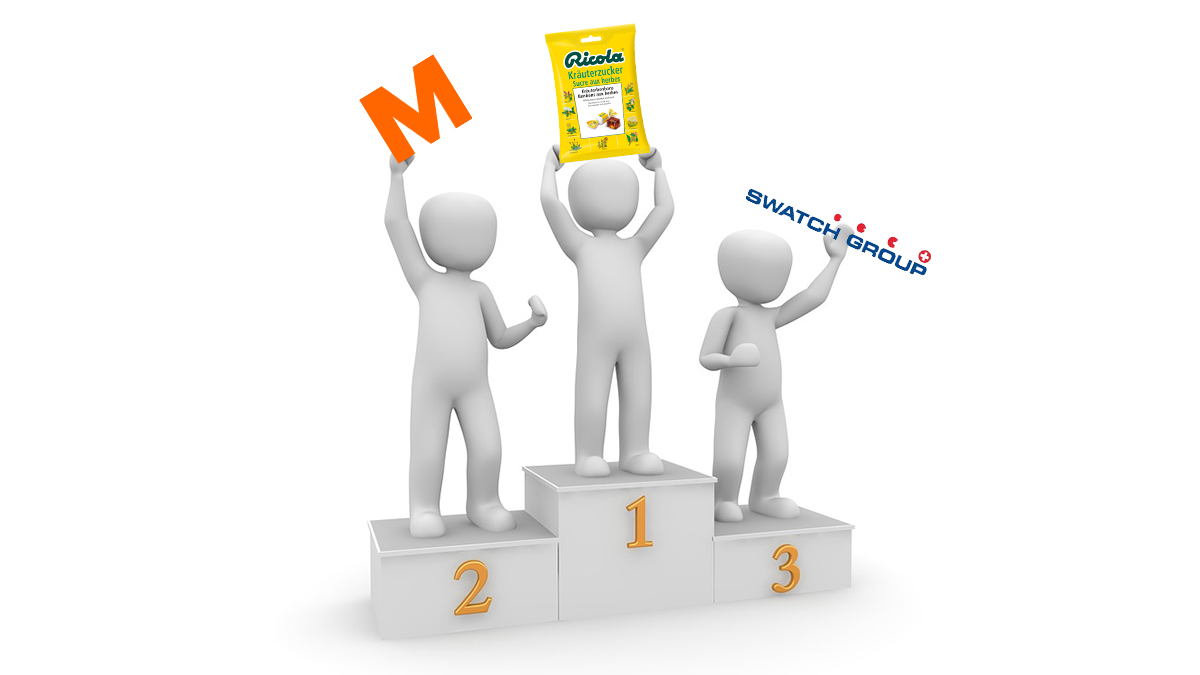
Ricola secures first place in this year's Reputation Institute ranking. Migros took second place, with the Swatch Group close behind in third place. Purpose, corporate social responsibility and leadership emerge as the most important reputation trends.

reputation-teaser

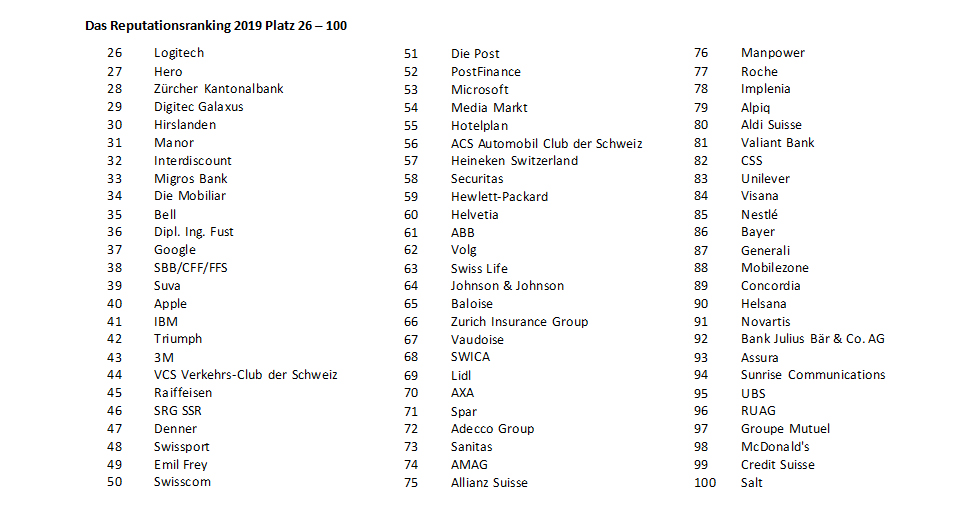
This year, the Reputation Institute significantly expanded the study in Switzerland and surveyed the population on over 200 companies, more than ever before. The following companies occupy the top 25 places:


  1. Ricola                                
  2. Migros                               
  3. Swatch Group                  
  4. Lindt& Sprüngli               
  5. Doubt                              
  6. Chocolat Frey                   
  7. IKEA                                    
  8. TCS                                     
  9. Mövenpick                        
  10. Rivella                                
  11. Rolex                 
  12. Tetra Pak      
  13. Skyguide
  14. Landi
  15. Hilti       
  16. Breitling
  17. Coop
  18. Swiss
  19. University Hospital Zurich
  20. University Hospital Basel
  21. Emmi
  22. Schindler
  23. Swiss National Bank
  24. Geberit
  25. Siemens

Purpose, CSR and leadership - companies need to be aware of these trends

Purpose, CSR and leadership - companies need to be aware of these trends "Purpose", the "purpose" of a company and its function in society, is becoming increasingly important. Consumers are becoming increasingly interested in the social responsibility that goes hand in hand with consumption. "To be perceived positively as a company, it is no longer enough to market innovative, high-quality products. It is also important what contribution the company makes to the well-being of society," explains Lukas Zihlmann, Director of the Reputation Institute in Switzerland.

It is fitting that corporate social responsibility is coming to the fore. If you want to be successful as a company, you will have to ask yourself the question in future: How can my company contribute to the common good? This includes sustainable business practices as well as social commitment at the location or the company's stance on social issues. Awareness of one's own role in society also has an impact on communication. Purpose - the purpose of existence - must be the fundamental core of the business model, corporate strategy and communication. This also brings the topic of leadership into focus. CEOs and members of the executive board are increasingly becoming public figures who represent the company in all their actions - both company-related and socially relevant. They therefore make a decisive contribution to the company's reputation and have the opportunity to actively manage it through their communication.

reputation9

Content and form sets the scene for Japanese luxury cosmetics brand

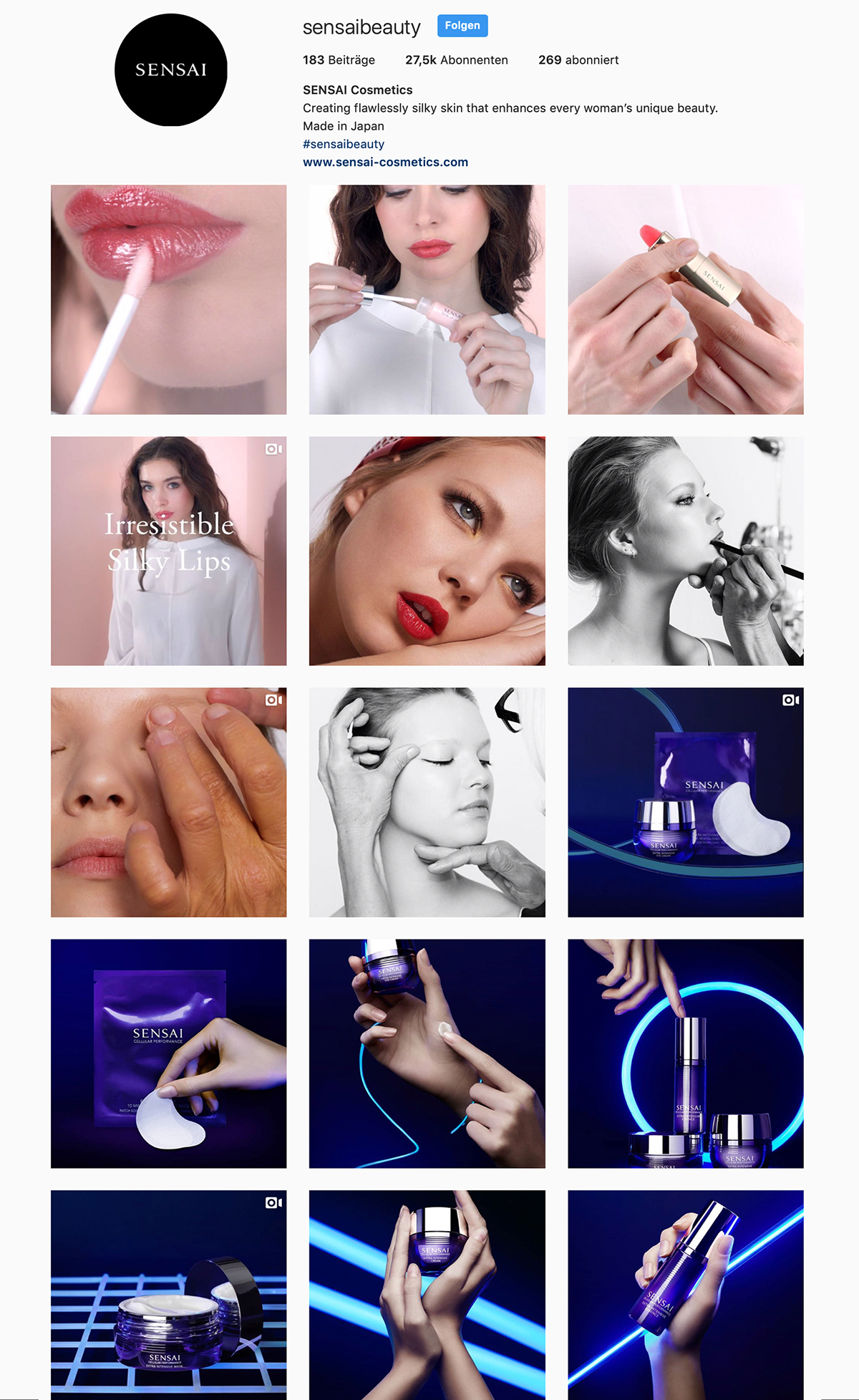
Content Marketing handles both the content and the presentation for Sensai and showcases the luxurious product lines in a social media campaign.

SENSAI_Instagram1-(2)-t

Sensai is known for combining innovative care technologies with Japanese beauty rituals. Inhalt und Form implemented an international social media campaign for the Japanese beauty brand. In different settings, the benefits of the products are highlighted and artfully staged. The campaign is designed to efficiently communicate Sensai's values with targeted measures and to inspire female buyers for the brand with convincing messages. It consists of five films as well as various static and animated images. The campaign is being used in seven European countries.

SENSAI_Instagram1-(2)

Responsible at Sensai: Yoshiko Sakurai (General Manager Marketing Division), Nina Weise (Marketing Division - Communications). Responsible for content and form: Dominik Stibal (CEO), Karin Estermann (Executive Creative Director), Mato Bilic (Animation), Gianin Walter (Graphics), Eveline Mathis (Project Management), Bodo Nuber (Content Manager). Photos: Pascale Weber. Movies: Nadia Rosasco, Yanik Müller (Rosas & Co Films), Paulus Bruegmann (Director) Valentin Bärlocher (Camera), Philipp Keusen (Make Up).

Ombudsman rejects complaints about Epiney marriage proposal on TV

SRF presenter Sven Epiney's surprise marriage proposal during the TV dance show "May I have this dance?" does not constitute abuse for ombudsman Roger Blum. He has rejected corresponding complaints.

epiney

Epiney had proposed to his life partner Michael Graber in front of running cameras in the final show on March 30. He was previously seen as a participant and not as the director of the SRF television show.

There is room for the private on television, and the surprising is also part of it, according to the newsletter published Tuesday by the Ombudsman's Office of SRG German-speaking Switzerland. "This event - not planned by SRF - gave both participants and the audience a beautiful, emotional moment."

Ombudsman Roger Blum has no sympathy for the discomfort of at least five viewers. He cannot understand the accusation that Epiney exploited a fee-funded program to raise his own profile.

Blum has no sympathy at all for the view of one complainant who saw public morality disturbed by the "propaganda action of homosexual associations." "We are not in Brunei, where homosexuals are executed. Nor are we in Russia, where they are discriminated against. We are in Switzerland, a country that legally recognizes same-sex partnerships. You should remember that," Blum countered. (SDA)

"For the love of the village": Butcher Rottmann Bürge tells more village stories

The new Volg advertising campaign by MRB Metzger Rottmann Bürge is moving into the next phase. «For the Love of the Village» is the new central theme that guides Volg’s communications and ensures scalable content across all channels.

VOLG_Plakat_Image_Eringer_F12_d_PM

Scalable means here: A good village story works just as well as a headline on posters as it does as an advertisement, as a photo story on a website or - in the long version - as a YouTube video or public reportage.

The second phase of the campaign features new village stories. For example, the TV commercial "Roland", which focuses on the many local "Feins vom Dorf" specialties. Or with other unique village stories from Aeschi BE, Turtmann VS or Römerswil LU, which can currently be seen as advertisements, publicity reports or photo/video stories and, of course, on posters in Switzerland. Village stories that can only be told by those who live in the heart of the village and create real shopping experiences.
 

The new campaign has already demonstrated this in the first quarter: Anyone who tells one village story usually gets told two more. This is currently creating an almost infinite pool of inspiration from which MRB's creatives can draw. 

On the subject: Butcher Rottmann Bürge celebrates love of the village for Volg

Volg_Publireportage_Eringer_428x275_d_PM

Responsible at Volg: Tamara Scheibli, Head of Communications/Publicity. Responsible at MRB: Christoph Bürge (strategy), Silvan Metzger, Bettina Righetto, Lara Roos (consulting), Michael Rottmann, Dominic Wirz, Janine Aebischer, Elgee Wee, Veronica Futterknecht, Oliver Spalt, Leorah Uhricek, Beat Egger, Grit Wolany (creation), Bruno Breitenmoser, Dave Guntern, Ursula Trottmann (realization/production). Rosas & Co (film). Nono Photography (Photo). The Generation Media (Media).

BFU and Axa launch prevention campaign with Ruf Lanz

The BFU and Axa have selected Ruf Lanz as the agency for their e-bike safety campaign.

bfu-logo

The BFU, the Swiss Council for Accident Prevention, has the legal mandate to prevent non-occupational accidents and to coordinate the prevention measures of all stakeholders. Together with Axa Insurance, the AAIB is launching a new campaign to reduce e-bike accidents. This is because e-bikes travel faster than classic bicycles. The higher speed leads to a longer braking distance and, in the event of an accident, to a higher risk of injury and death.

The Ruf Lanz agency was chosen for the creation and realization of the new campaign - among other things because of its experience in the surprising staging of prevention messages, according to a statement. The results of the new collaboration will be on display this summer.

TBWA\Zurich launches the new Coop image campaign

Coop is launching its new branding campaign with TBWA\Zurich. And it’s making the well-known tagline «For me and you» even more personal.

coop-tvc-2019

Proximity between customers and employees is at the heart of the new image campaign, which will be launched throughout Switzerland on April 22, 2019. The campaign therefore logically assigns two main roles: Customers and employees. And it stages their closeness to each other by focusing on satisfying every individual customer need.

The first main role in the 45-second films is played by Coop customers. They tell stories about their lives and the very personal challenges they face in their lives. 

These stories are told by the second main character: the employees who, as storytellers, know their customers so well that they have a solution ready for almost every everyday and less everyday challenge in their customers' lives. Sometimes with the help of the 40,000-product range, sometimes with the densest branch network in Switzerland, sometimes with personal advice at the counter and always with competence, heart and a twinkle in their eye.

In cooperation with Shining Pictures and director David Constantin, a unique and humorous storytelling format has been created, which makes it possible to present customers, employees and Coop's services in a charming way.

The other advertising media of the cross-media image campaign, such as landing page, banners, bumper ads, posters/DOOH and advertisements, also focus on the individual needs of the individual customer and how Coop responds to them with its variety of offers.

Coop_Cassandra_F12_d_low

Responsible at Coop: Thomas Schwetje (Head of Marketing/Digital Services), Sacha Zuberbühler (Head of Marketing Communications), Vanessa Finzer (Head of Advertising), Cassandra Zamorano (Head of Advertising Own Brands/Image), Rahel Kühne (Head of Social Media/Campaigning), Simon Flatt (Head of Media), Karin Heliopoulos (Head of Media Classic), Holger von Ellerts (Senior Project Manager Digital Media). Overall responsibility Creation: TBWA\Zurich. Film Production TVCs: Shining Pictures; Voice Recording: JingleJungle; Music Production/Soundmix: HitMill; Photography: Pool Films; Photographer Ailine Liefeld Photography; Banner Productions: EGPlus; Bumper Ads: Westpoint Film Production; Soundmix: Brauereisound; Media Agency: TW Media.

Coop_Product-stories_subline

The answer works for the economy the Swiss cross to the double plus around

The «AHV and Tax Proposal,» which will be put to a vote on May 19, 2019, is considered one of the most important referendums for the Swiss economy during the current legislative session. The agency Die Antwort won the campaign pitch through a multi-stage selection process. The campaign has now been running for several weeks throughout Switzerland across all channels.

Projektion_2

On May 19, 2019, voters will decide on the Federal Act on Tax Reform and AHV Financing (TRAF). The AHV tax bill is a hard-won compromise across almost all political camps in parliament that positively addresses two major challenges to prosperity: corporate tax reform and AHV financing. 

The bill finally takes Switzerland one step further in terms of pension provision and company taxation. The AHV tax bill is a balanced overall package that offers benefits for the population and companies. The Federal Council and Parliament recommend that the bill be adopted.

For its new client Economiesuisse, the agency Die Antwort has created a double plus from the Swiss cross - also a plus sign - because, according to the initiators, the proposal combines two major plus points: AHV funding and corporate tax reform.


The Doppelplus campaign is present offline, online and on social media throughout Switzerland. To mark the launch of the campaign, the well-known light artist Gerry Hofstetter also staged a light projection in the Bernese Oberland. In order to illustrate the willingness to work together and the ability to make compromises, members of the Council of States, the National Council and the cantonal government worked together in a highly symbolic way.

Community management: The modern customer wants to be looked after at all times

How do large Swiss companies handle community management outside of office hours? Xeit contacted 51 blue-chip companies in Switzerland via Facebook Messenger over the weekend.

Facebook-Community-Management

Today, having a company profile on Facebook, LinkedIn or Instagram is almost part of good manners or at least part of any contemporary communication strategy. Increasingly, the social media presences of companies are also used by customers and interested parties to make complaints and criticisms or to request information. Since community activity is generally higher on weekends, other presence times are also required for community management on the company side.


Social media users expect companies to respond quickly - at any time

While these platforms are enjoying increasing popularity - even if not all channels to the same extent - the speed of communication on them is also increasing. Users who contact a company via social media usually expect a response within a very short time. Constant support for fans and followers in the social media is therefore a fundamental element of customer relationship management. Many companies already act in an exemplary manner in this area. But requests, concerns and complaints do not adhere to office hours. Therefore, companies that ensure the flow of information day and night in particular can ensure a positive perception of their name or brand in the long term. It can also reduce the risk of online crises and provide timely intervention in the event of a shitstorm. In this area, however, many companies are still in a state of dormancy.


Sample of 50 of the top 100 blue chip companies shows need to catch up

Even though social media is often used for and during work, (private) user interaction is higher on weekends, as a recent study by Quintly shows. Those who contact companies with private concerns often do so outside of office hours. Nevertheless, a quick response is expected. The online marketing agency Xeit contacted 51 of the top 100 blue-chip companies in Switzerland on a random sample basis on Friday evening, Saturday or Sunday via Facebook Messenger to gain insight into their interaction behavior. Only just five companies responded with a personalized response, 40 percent did not respond and 6 percent did not respond until Tuesday. Looking at community activity, however, shows that at 28 of the selected companies, fans and followers are definitely active over the weekend, albeit rather discreetly in eight cases. Nevertheless, of these companies, only just two responded on the same day, while nine others got in touch within the following two working days. The remaining responses are pending to date.


Standard responses via autoresponder: High interaction rate in English

Some companies have set up an autoresponder in Messenger that indicates that they won't get back to you until Monday. What is striking is that companies with international Facebook profiles in particular respond with a standardized automatic reply in English. In some cases, however, the response is still a long time coming, even on Wednesday. The autoresponder, however, responds immediately in most cases, which artificially boosts the interaction rate of the corresponding companies.


The solution: professional community management outside official office hours

Are social media channels often not operated due to a lack of resources or legal hurdles? Or do many companies still have a policy of not working on weekends? However, if you have a large community that is particularly active in the evening and on weekends, you would be well advised to manage your profiles outside of office hours. If you post articles on the weekend or invite the community to participate, you also have a good chance that user interaction will be correspondingly higher and the articles will be seen more often.

SAP Campus Basel 2019: On the way to the intelligent future

At the SAP Campus Basel, thought leaders and experts from the worlds of business, academia, and IT discussed digital strategies and the latest technologies that prepare companies for the future as «Intelligent Enterprises.» The focus was on customer experience, intelligent processes, and a culture of innovation.

SAP 2

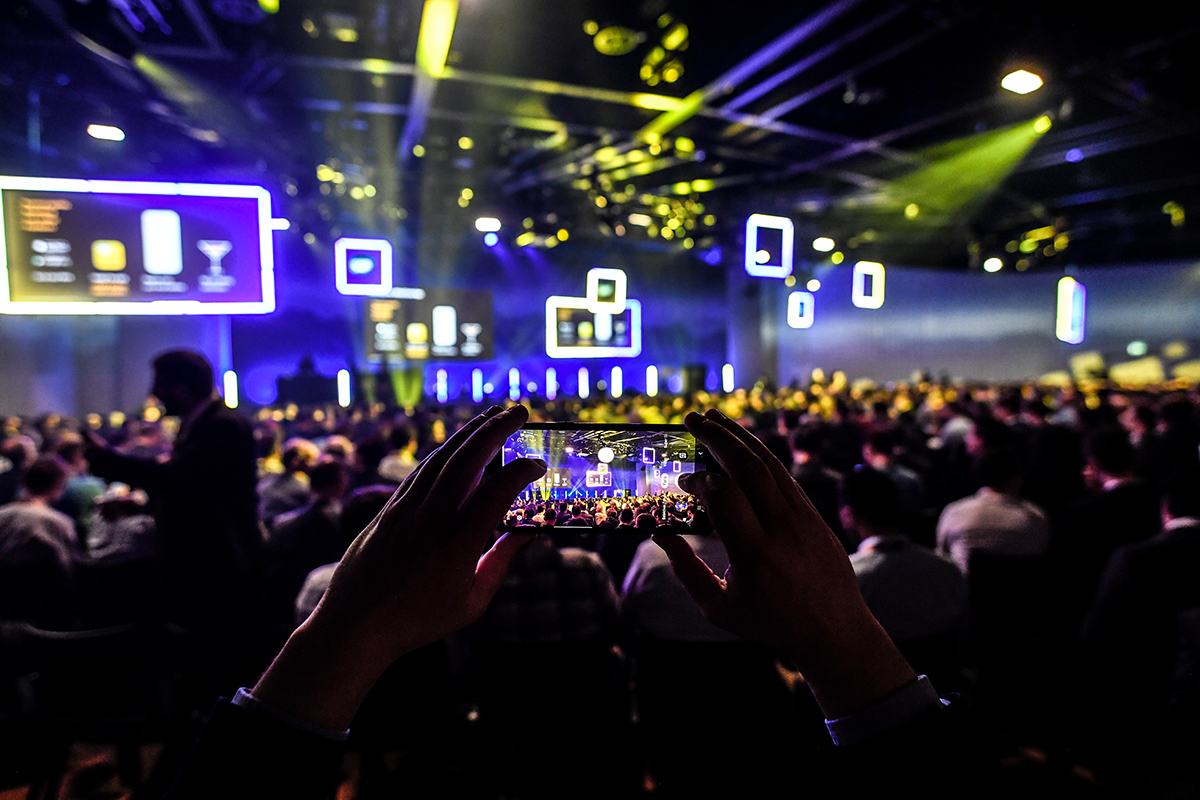
"What will be the most successful version of your company in the future?" asked Michael Locher-Tjoa, Managing Director of SAP Switzerland (pictured above), to the packed auditorium at the opening of the SAP Campus Basel 2019. It could well be that the answer no longer has much to do with the current company, the host answered his question and referred to current "disruptors" such as Airbnb, Uber and Netflix. That the future belongs to the intelligent company, however, is certain.

At the largest IT industry event in Switzerland with over 3,000 participants, the focus was therefore on the future of the intelligent company. As Locher-Tjoa explained, SAP is contributing three dimensions to this future: an intelligent suite of applications, a digital platform with SAP Cloud Platform and SAP HANA Data Management Suite, and intelligent technologies with SAP Leonardo. On this basis, the journey to the intelligent company begins. "I want to make the audience curious about the intelligent future," said Locher-Tjoa, formulating his conference goal.

And the audience had plenty of opportunity to do just that on April 3 and 4 in Basel. Under the motto "Explore the Future of Intelligence", well over a hundred sessions and demos explored individual aspects of intelligent technologies and solutions in greater depth using use cases, customer examples and live demonstrations. The presentation of solutions from companies such as Credit Suisse, SBB, Digitec-Galaxus, Migros, SV Group and Ypsomed met with particularly keen interest.

"It needs the emotional level"

It was up to Luka Mucic, CFO of SAP SE, to point out in his keynote speech that people, not technology, are at the heart of the digital transformation currently affecting business and society. With reference to Stephen Hawking, he reminded us that intelligence is the ability to adapt to change. It is primarily about linking trends in human behavior and trends in people with digital innovations.

Customer experience (CX) is a key area of focus here. Today, SAP provides company managers with all the business-related data they need for smart business management. They can use this data to analyze their customers' behavior, inspire their employees or optimize their supply chain. "But what has been missing in this world of numbers is the emotional level," diagnosed Mucic. "How do customers feel about the shopping experience? Do they like the contact with a company? Was the experience pleasant or did they feel annoyed?"

This is where SAP comes in with SAP C/4HANA together with the acquisition of Qualtrics announced in January. In Basel, visitors were able to experience the 4th generation CRM software suite. Short live acts introduced this new world in which companies can build trusting relationships with their customers and manage their experiences in a targeted manner. The in-memory CX suite provides cloud solutions for marketing, retail, sales, service and customer data. Each of these cloud solutions was given a slot in the live theater.

SAP

Customer experience in concrete terms

But it shouldn't stop there. Using the example of an amusement park, SAP demonstrated in concrete terms what is important in practice if you want to satisfy customers. A typical challenge for amusement park operators is to estimate visitor volumes as accurately as possible. The weather, bridge days, concerts in the area, the football World Cup, special attractions in the park: various factors have an influence on how many customers are interested in the "products" in the park. If there are too many visitors, this means busier roads on the approach, fuller parking lots and longer queues.

However, historical data can be used to analyze visitor flows, establish correlations with the weather and parallel events in the region, include pre-sales of tickets and see how much the mobile app is used. With this information, it is quite easy to predict how many visitors can be expected. Tickets can also include a VIP pass or reduce waiting times with a "fast track" service. It is also possible for visitors to queue virtually while they use the waiting time for refreshments or relaxation. This certainly leaves a more positive customer experience than long waiting times in the queue.

Over a dozen other live scenarios showed campus visitors how companies are already using intelligent technologies to strategically advance their business today. Using the example of a one-armed bandit, visitors were able to see what intelligent engagement of tomorrow will look like with the inclusion of modern facial recognition, voice analysis tools, pulse rate scanners and thermal imaging cameras. Another scenario showed how the interplay of design thinking methods and C/4HANA solutions can bring a digital beer community to life.

Broad-based innovation promotion

The "Intelligent Enterprise Truck" - a 25-ton truck that turns digital transformation into a live experience and provides inspiring impulses in the mobile "SAP Immersive Experience Room" with various scenarios - also offered a practical and inspiring insight into the dormant innovation potential. Practice was also a top priority in the truck: Various examples showed how companies develop and implement their innovations with SAP Leonardo.

Innovation is a strategic concern of SAP that has long gone beyond its own borders. With SAP.iO, which was launched around two years ago, SAP invites internal and external start-ups worldwide to pursue their ideas and thus realize products and services. They can count on financial, technical, logistical and personnel support from SAP. To date, SAP.iO's acceleration program has supported around 100 software start-ups at an early stage of development.

Computer operation: one glance is enough

The SAP Campus in Basel also addressed this promotion of innovation. It was already a central theme in the keynote speech by Chris Barton, who gave an entertaining account of the rocky road from idea to successful product using the example of the music recognition service Shazam, which he co-founded. In the upgraded start-up zone, six selected young companies presented themselves, which are shaking up the market with intelligent technologies and new business models: in supply chain management and personnel planning, in the management of customer data and in manufacturing.

The start-up 4tiitoo attracted particular interest with its eye-controlled computer operation. The software tracks the user's eye movements and recognizes the user's intention in order to automatically trigger the intended activity - opening or closing a window, selecting a field for data entry, etc. Stephan Odörfer, founder and CEO of 4tiitoo, demonstrated live how programs can be operated without the use of hands. This eliminates the need to switch between keyboard and mouse, allowing employees to complete their tasks more efficiently.

In addition to 4tiitoo, numerous other presentations and live scenarios at the SAP Campus Basel impressively demonstrated one thing in particular: the intelligent future has already begun.

The next SAP Campus will take place again in Basel on March 10 and 11, 2020.

From brewers who still prefer brewing to talking

To promote the new «Eichhof Urfrisch,» Publicis is once again letting the taciturn brewers have their say.

eichhof-t

A year ago, Publicis launched the campaign platform "From brewers who prefer brewing to talking" for Eichhof, in which the Lucerne master brewers made it clear that they prefer to devote themselves to their core competence instead of talking about it.

The campaign is now being continued for the nationwide market launch of the new beer "Eichhof Urfrisch". The product innovation is made exclusively with Swiss hops and Pilatus water and refined in a six-week brewing process. So there would be quite a bit for the brewers to say about the new beer, but they prefer to leave that to the gushing off-spokesman. So the TV spots begin with the categorical, exaggerated celebration of the ingredients, only to end abruptly in the reality of the brewery.


While the focus on TV is on the ingredients, online it is mainly short stories from the brewery that are used. In collaboration with director Jon Barber, a variety of conversions were again produced, which are used as prerolls, 6-second bumper ads, Insta stories and Facebook videos.

The campaign launched this week and will run in phases throughout the "beer season" and into late summer.

Responsible at Eichhof: Christian Weise (Marketing Director), Stefan Steiner (Brand Manager), Janine Beeler, Remo Viceré (Junior Brand Manager). Responsible at Publicis: Jan Kempter (Creative Direction), Yannick Schaller (Text), Anatole Comte, Priska Meyer (Art Direction), Dominik Locher (Graphics), Philipp Zubler, Meret Lauener (Consulting), Lena Altorfer (Strategy), Matthias Koller (Managing Director), Thomas Wildberger (CEO). Responsible for production: Jon Barber (director), Stories (film production), Jingle Jungle (sound). Responsible at Prodigious: Suzana Kovacevic (Integrated Producer).

get_footer();