Retail trade recovers in October

The recovery in the Swiss retail sector resumed in October following a dip in September. Sales rose compared to both the previous year and the previous month. Consumers were particularly eager to buy food again, while sales in the non-food sector were slow to pick up.

bananas-698608_1280

Adjusted for calendar effects, retail sales rose by 2.6% year-on-year in October, according to provisional figures released by the Federal Statistical Office (FSO) on Monday. Compared to the previous month, sales grew by 3.3% in nominal terms. The price-adjusted real figures were similarly positive.

Following the lockdown and the politically imposed business closures in spring, the retail trade recovered significantly from May onwards, but then came to a standstill in September. The main reason for this was the slump at petrol stations. Although this continued - sales fell by a further 4.4% compared to the previous month - it was more than offset by the strong growth in food retailing. This grew by 5.6% compared to September.


Online trade continues to grow

The non-food sector also rose by 1.8%, albeit at a much slower pace. There was a big increase in the volatile trade in information and communication technology equipment (+7.9%). In addition, retail trade at stalls and markets, including mail order and online trade, increased significantly by 4.8%. Retail sales of publishing products, sports equipment and toys rose by 2.3%, while other household appliances, textiles, DIY and furnishings increased by 0.5%.

Compared to the previous year, publishing products, sports equipment and toys (-3.8%) are still in the red, as is the retail trade in other goods (-9.5%). In contrast, online retail (+16.6%) and information and communication technology equipment (+12.7%) as well as other household appliances, textiles, DIY and furnishings (+9.3%) grew strongly. (SDA)

How companies reach their customers in the Christmas rush

The holidays are just around the corner. After a turbulent year, many marketers are asking themselves how they should approach their customers at the end of the year to achieve their sales goals. Selligent Marketing Cloud provides tips on how to reach customers during the holidays.

christmas-email-marketing

For businesses, the holiday season is one of the most important sales periods of the year. The corona virus has changed the world this year - some countries are still in lockdowns or have severe restrictions. Instead of strolling through Christmas markets and storming stores for Black Friday, many consumers will do their holiday shopping from home this year.


From the mall to the inbox

It's not just the where, but also the how that differs this year from previous years. In 2020, communication will shift even more from offline to online. This makes it even more important for brands to stay in touch with their customers. According to the Selligent Marketing Cloud Consumer Survey, most customers prefer to communicate via email - although there are of course differences between generations.


Email campaigns: content is king

When it comes to email campaigns, only exciting content can win over consumers - but what do we do if we're already failing to deliver our content to consumers? According to the Selligent Consumer Survey, 39 percent of customers unsubscribe from newsletters. The reason: they generally receive too many emails. Especially during the holidays, people are bombarded with a huge amount of marketing mailings. This is not only annoying, but also a technical hazard: inboxes are blocked, mail providers can trigger spam alerts. However, deliverability can be positively influenced with two factors:


Do not become a spammer

Sure: Black Friday, Cyber Monday, winter sales and Christmas specials tempt you to launch several email campaigns at the end of the year. But marketing mailings should not be sent too frequently - otherwise the click on the spam button is pre-programmed. The Selligent Marketing Cloud survey showed that most consumers tolerate a weekly mail or one to two mails per week. So it's better to optimize and further personalize the content of the mailings so that multiple promotions can be presented clearly and attractively. In addition, you should avoid critical changes right before the holidays. Conversions should be made at least two months in advance. Check your domains and email infrastructure before the campaign to make sure that no malfunctions have crept in.


Familiarize yourself with your customers

Mailings are aimed at people. They must be personal and contain relevant content or be in the current context. Links with attractive offers and clear calls to action provide added value for the customer and increase engagement. And what applies to infrastructure changes also applies to layout: these should never be made directly before important sales periods, as in the worst case the customer will not immediately recognize the brand and the mailings will not be opened.

Write to inactive contacts at the end of the year? Sounds good, but it's not recommended. Only target active customers (responding within the last six months) to keep their inbox rate high. Don't use third-party lists.

Selligent Marketing Cloud, a CM Group brand, is an intelligent omni-channel marketing cloud platform.

Creative Director Alex Hefter leaves SRF

Due to the reorganization in the course of "SRF 2024", Alex Hefter, Creative Director and Head of Design and Marketing, has decided to reorient himself outside SRF. He will leave the company in mid-December.

alex-hefter-srf

Alex Hefter has been working as Creative Director for Swiss Radio and Television since September 2004. He started at the then SF DRS as Head of Design. In 2011, design was merged as a division into the new SRF Programs department. In 2013, marketing tasks were additionally reorganized under Alex Hefter's leadership.

At different levels, Alex Hefter and his teams shaped the design appearance of SRF and SRG. At the holding level, he designed a new and uniform brand system for SRG and its corporate units RSI, RTR, RTS, SRF and Swissinfo. Furthermore, in the course of the merger of Schweizer Radio DRS and Schweizer Fernsehen in 2011, he developed the SRF umbrella brand with the associated brand strategy. In this context, the six radio channels in particular were repositioned and given a new visual and acoustic identity.

Early digital successes included the development of the SRF Meteo app in 2013. At the image level, Alex Hefter was responsible for the "My Switzerland, My Television" and "Switzerland at Heart" campaigns, among others. For the SRG streaming platform Play Suisse, which was launched in early November 2020, he led brand and branding development throughout Switzerland.

Before joining SRF, Alex Hefter worked for ZDF, from 1994 as a conceptual designer, and from 1996 as Head of Corporate Design. He also worked as a freelance TV designer for various media companies in Germany and taught media design at the Berufsakademie Ravensburg and the University of Applied Sciences Mainz, among others. At the end of November 2020 he was admitted to the ADC Switzerland (Werbewoche.ch reported).

As part of the "SRF 2024" transformation project, the teams of the current design and marketing division are to be reassigned organizationally, according to a statement from SRF. New management functions are to be created in the process, which will be advertised internally and externally in due course.

Retailers show satisfaction with Black Friday and Cyber Monday

The bargain weekend centered around Black Friday and Cyber Monday has brought substantial growth, particularly for Swiss online retailers. Friday remains the day with the highest sales. But according to retailers, the follow-up «Cyber Monday» is also going well.

dblack-friday-2925476_1920

Despite the pandemic, Swiss consumers were in a great shopping mood at the start of the Christmas shopping season this weekend, according to a survey of retailers conducted by the news agency AWP.

Customers were particularly keen on IT and consumer electronics products such as smartphones, laptops and headphones, as well as toys and household appliances such as coffee machines. "In times of corona, all items that optimally equip the home for home office and home schooling, as well as generally increase the feel-good factor in the home, are very popular," said a Migros spokesperson.

However, as expected, people mainly shopped online. "Demand on Black Friday was very high," said a spokeswoman for Migros' online subsidiary Microspot. "Almost 20 percent more people than last year visited the online shopping center during Black Friday week." Microspot's sister company Interdiscount reported 40 percent more online orders than in the previous year.

Migros' online retail subsidiary Digitec Galaxus also reported double-digit percentage sales growth compared to 2019. The online store Brack.ch is keeping a low profile when it comes to specific figures, but is also very satisfied: "The promotional weekend is still running until midnight, but what we've seen so far has exceeded our high expectations," said a spokesperson.


Protection concepts in the stores

Even for retailers with a stronger brick-and-mortar presence, the music was mainly played online, while protection concepts had to be implemented in stores. "Our safety concept has worked, consumers have tended to avoid Fridays and shopped much more online," said a Manor spokesperson. Online sales have grown in the high double-digit range.

Sales at Globus did not match those of the previous year, according to a spokeswoman. The increase in sales was roughly in line with expectations, Migros reported. Online orders at the Migros specialist stores Melectronics, Do it, SportXX and Micasa roughly doubled. "We are satisfied", said Coop.


Online shopping continues to grow

Black Friday is clearly the best-selling day of the promotional weekend. Many retailers are therefore already returning to normality. Manor and Coop, for example, are doing without Cyber Monday. "This campaign is not comparable to Black Friday in terms of scope and significance," said a Manor spokesperson.

Online, on the other hand, the discount festival is being extended further - in some places to Monday, but often also to the entire week, Cyber Week. "For the fact that we didn't announce this in advance, Cyber Monday is also running well on its own, albeit on a smaller scale than the promotional weekend as a whole," said the Brack spokesperson, for example. Digitec Galaxus, Microspot and Interdiscount are also reporting a good start to the day. The latter are celebrating Cyberweek until Sunday.

Online retailers are expecting further growth for the rest of the Christmas season: "Due to the current situation, we assume that even more people than usual will buy a larger proportion of their gifts online," says the Brack spokesperson. "We therefore expect order volumes to remain at a high level until the festive season." Digitec Galaxus is expecting at least 50 percent more orders by Christmas than at the same time last year. (SDA)

Press Council reprimands Blick for violation of privacy

The Press Council has reprimanded *Blick* for violating the privacy of a woman who failed to comply with a COVID-19 isolation measure. The woman was identified through photographs and numerous details to such an extent that she was recognizable beyond her immediate circle.

Wegen-dieser-Grenchnerin-(21)-mussten-280-Leute-in-Quarantäne!---www.blick_.ch_

A reader and a reader had complained that the July 8, 2020 article titled "Because of her, 280 people had to go into quarantine" pilloried the young woman and made her identifiable, the Press Council said Friday.

The Press Council found, View had violated the woman's privacy with the accumulation of personal details, a portrait photo and the picture of the part of the house where the woman lives. The editorial office had violated the journalist code, although View added a bar to the portrait and changed the name.

Nevertheless, the young woman was identifiable by the accumulation of the information for people who did not belong to the family, the social or professional environment of the woman, judged the Press Council.


In the specific case a private person

According to the Journalists' Code, journalists are obliged to respect the privacy of individuals unless the public interest demands otherwise. In the specific case, the woman had been a private person who had neither appeared in public nor sought public attention in any form.

The View took the view that the young woman was not recognizable to the average reader because of the black bar: Also the age indication had not been sufficient for an identification. The fact that she worked in the care sector was so unspecific that it was not possible to draw any conclusions about her profession or place of work. In addition, the name of the young woman had been changed.

The young woman, although infected with the coronavirus and isolated at home, had gone out partying. In the meantime, she was sentenced to a fine of 1,500 Swiss francs and to pay the procedural costs of 400 Swiss francs. (SDA)

Instagram allows direct brand PR on influencer accounts

The social media platform Instagram now allows brands to run ads directly on influencers' accounts. Until now, influencers on the platform could only create their own content for brands. Now, they can also simply let their sponsors promote their products on their behalf.

solen-feyissa-KWZa42a1kds-unsplash
Brand advertising in influencer accounts: sponsors can place ads directly - social media stars don't have to do anything. (Image: Unsplash/Solen Feyissa)

"This measure makes the influencer marketing process much simpler. Brands have less effort and more control as a result, while influencers can fulfill their contracts without having to create a lot of their own content. However, the ads still have to be published in coordination with each other, because they have to fit the image of the social media stars," explains social media expert Karim Bannour in an interview with the news portal Press release.

Influencers still have control over what content ends up on their accounts. Companies must send them a request and the social web celebrities must grant them access to their accounts so they can play the ads. Whenever an ad is played, influencers receive a notification and can delete it if necessary.


Sponsorship also in Instagram Reels

In addition to advertising in influencer accounts, Instagram also wants to offer brands other ways to promote their products. For example, sponsored posts are also allowed for videos in Instagram Reels and for livestreams in Instagram Live. With this measure, the Facebook subsidiary wants to keep up with its competitor TikTok. (pte)

Consumers expect wellness offerings from all brands

The global wellness industry is growing twice as fast as the global economy as a whole. According to Ogilvy's "Wellness Gap" study, wellness is now seen by 73 percent of global consumers as an essential component of a successful and sustainable brand strategy.

OgilvyWellnessGapReport_Factsheet-6
(Source: Ogilvy Wellnes Gap Study)

The Ogilvy study reveals for the first time the gap between consumer wellness expectations and brand performance, and analyzes and quantifies it across seven key sectors: food, snack, skincare, airlines, hotels, automotive and banking. The study is designed to enable companies to close this gap and consequently seize the opportunities for growth in the markets.


2020 is in the name of wellness

The global pandemic has led to world-wide restrictions and lockdowns and has brought the epitome of wellness ever closer to center stage. In 2020, nearly 70 percent of the Swiss say wellness is very or extremely important to them. These numbers come as no surprise. And in the future, consumers will demand even more. 82 percent of the Swiss surveyed would like to improve their wellness in the future. 67 percent even see it as the core task of brands to communicate wellness. In addition, wellness offers enormous potential for exploitation, because currently only 28 percent of respondents feel that wellness is handled as a priority by brands.

There are hardly any exceptional markets. The potential for growth is also very high in the wellness-intensive food and skin care industries, which have seen countless wellness innovations in recent years. According to Swiss consumers, only 27 percent feel that food brands are doing everything they can to help their customers achieve wellness. For skin care brands, at least 45 percent feel that way.

OgilvyWellnessGapReport_Factsheet-7
(Source: Ogilvy Wellnes Gap Study)

Wellness as a revolutionary

Marion McDonald, Ogilvy Global Lead in Health & Wellness Practices, is upbeat: "The fact that any brand can be a wellness brand today opens a great many new doors. Wellness has established itself as a tangible benefit in many ways and offers brands the opportunity for double-digit growth - as long as consumer expectations are perceived and met and the wellness gap is increasingly closing." Martin Keller, Health & Wellness Director at Ogilvy Switzerland, also sees wellness as a revolutionary: "Wellness has created new conversations, aspirations and goals - both for companies and individuals. It has become the inspiration for brands, products, services and experiences, and is increasingly becoming the linchpin of innovative strategies, businesses and portfolios. This revolution is already evident in certain industries, such as food and beverage."

The study also makes clear that wellness has no limitations and can help any brand to grow. Wellness has long since ceased to be a luxury good - and the Swiss agree on this. More than 50 percent of respondents believe that brands should consider wellness aspirations as a core mission. Wellness brands offer consumers many advantages, for example, the majority of the Swiss rate them as more environmentally conscious and more price-friendly compared to non-wellness brands.


Wellness should be social and purposeful

Healthy meals, restful sleep and sufficient time to relax are old tried-and-tested factors of wellness. In 2020, these will be supplemented with new social values.

According to the Ogilvy study, the Swiss associate wellness in 2020 with four facets: physical, psychological, social and purposeful. Society is changing, and the quest for connectedness is intensifying as a result. Nowadays, consumers do not want to "exclusively" consume, but to improve the world with their actions. This is clearly reflected in their perception of wellness. For 77 percent of the Swiss, wellness promotes their sense of harmony and balance; 66 percent feel it is essential that wellness brands make their positive contribution, and 50 percent want to be able to see meaning in wellness.

In particular, activating a brand purpose offers brands new opportunities to strengthen their bond with consumers. According to the study, an authentic and honest social brand purpose based on wellness attributes leads to rich and personal customer loyalty and sustainably improves social commerce.


Authenticity gap to take full advantage of growth opportunities

"Wellness-washing" is also no longer a foreign word in the wellness industry, which is also reflected in the Ogilvy study. Swiss consumers want authentic and honest stories, products with easily understandable ingredients and credible benefits. Keeping promises is seen as particularly critical by consumers, with only 30 percent considering the brands' currently promised wellness claims to be credible. The same applies in the wellness industry: only those who create trust can make a name for themselves.

The growth prospects of the wellness industry are very promising. Compared with other industries, Covid-19 has by no means had negative consequences - on the contrary, aspiration for wellness has risen sharply in times of the pandemic. However, consumers are demanding an optimized and more credible offering with the long-term goal of finally closing the wellness gap.

OgilvyWellnessGapReport_Factsheet-4
(Source: Ogilvy Wellnes Gap Study)

Within the framework of the "Wellness Gap" study Ogilvy surveyed 7000 consumers from 14 countries on four continents in April 2020 about their wellness perceptions.

Karling shows the art of packaging for Sihlcity

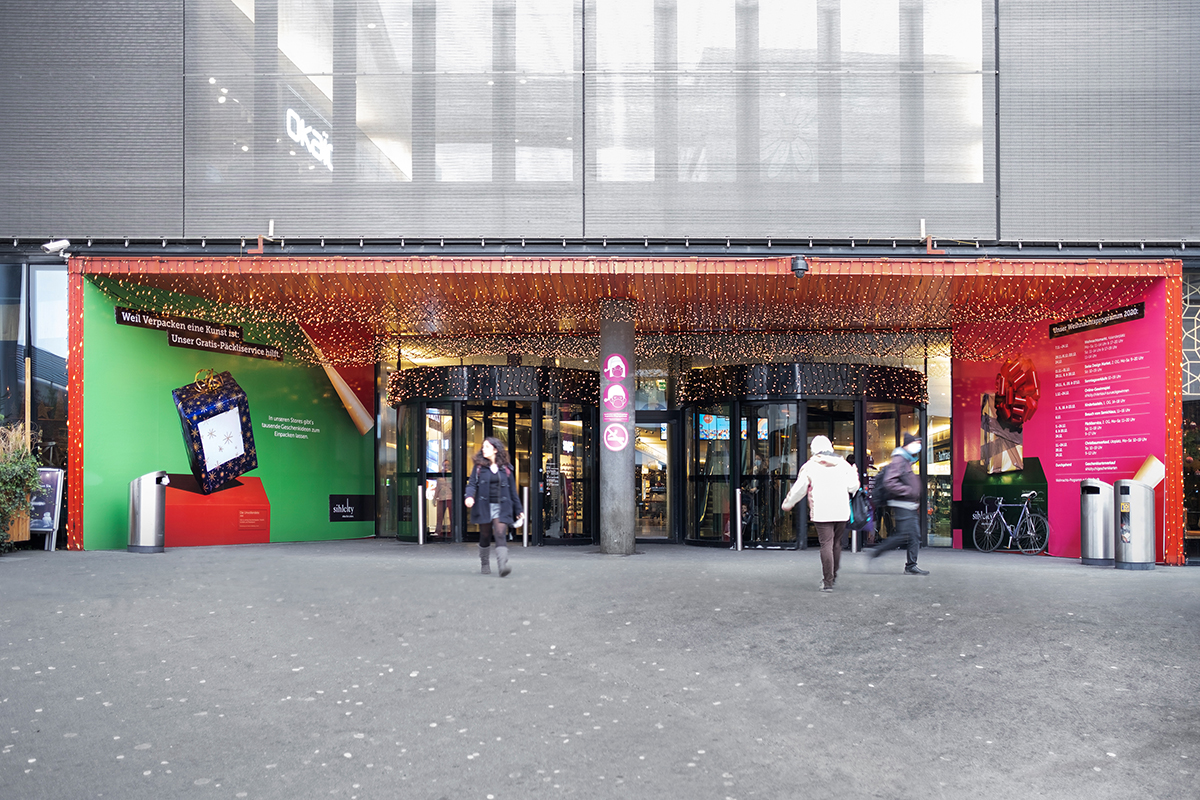
One of the highlights of Christmas is, of course, the gifts. Karling has launched a tongue-in-cheek campaign for Sihlcity’s gift-wrapping service.

SIH.20.12_XMAS_F12_2

When it comes to gifts, beautiful packaging plays an important role and creates a lot of anticipation. But who hasn't experienced this: wrapping a gift is not that easy. Sometimes you haven't cut out enough wrapping paper, and then the folding doesn't work out. Sihlcity promises a remedy and, in addition to the thousands of gift ideas in around 80 stores, also offers a large parcel service.

In the campaign developed for this purpose, Karling shows gifts that are not wrapped the way you would like them to be - accompanied by the message that Sihlcity's parcel service is happy to help.

The campaign can now be seen on banners, Insta-stories, posters and eBoards.

RoteWand_3_XT33705

Responsible at Sihlcity: Marianne Guldimann, Jessica Graf, Corinne Wiederkehr. Responsible at Karling: Verena Bernasconi, Daniel Serrano, Patrick Suter, Gjin Paloka. Photography: Ilka&Franz.

Art.i.schock starts fundraising with Zurich bars and clubs

The Zurich Bar & Club Commission (BCK) is calling for donations to support Zurich’s nightlife. Despite support from the federal government and the canton, there will be cases of hardship due to the COVID-19 crisis. The Zurich-based agency Art.i.schock assisted the BCK with the concept and implementation.

Keystone-Ennio-Leanza
Zurich's clubs, including the Hive Club (pictured), are currently closed due to the coronavirus pandemic. The Bar & Club Commission Zurich is now calling for donations. (Image: Keystone/Ennio Leanza)

The Fundraising campaign will be held under the motto "Für e gueti Nacht - Ausgeben statt Ausgehen", announced the BCK Zurich on Friday. The money donated will go to the newly created Zurich Night Culture Fund, the BCK Zurich or charitable organizations, depending on the donor's wishes.

The resources of the Night Culture Fund are to be used for the benefit of night culture companies based in the city of Zurich and individuals living in the canton of Zurich. The allocation of the funds is linked to a set of regulations. The decisive criterion is that added value is created for Zurich's nightlife.

The money received by the BCK will be used for lobbying work on behalf of the industry. A portion of the donations will also be passed on to Swiss Solidarity's "Coronavirus Schweiz" and the Zurich-based "Essen für Alle" campaign. (SDA/pd/swi)

spendebutton_neu

Huawei is the newest partner of Best of Swiss Apps

On Wednesday, the "Best of Swiss Apps" awards will be presented for the 8th time - this year a bit different than usual. In addition, the organizers welcome Huawei as a partner and main sponsor.

headline_bosa_2020_833_huawei

"With our commitment, we want to encourage developers in Switzerland in particular to set high goals and not to give up," Steven Huang, Country Manager of Huawei Consumer Business Group Switzerland, was quoted as saying in a statement from Best of Swiss Apps. The company knows firsthand how crucial dedication, perseverance and local support are, Huang added. Huawei would like to promote these qualities more strongly in the app community in Switzerland.

The tech group thus joins existing partners Magnolia, Nine Internet Solutions, Facebook, Teambox, Digicomp, Swico and Smama.


Award show goes virtual

Who will win gold, silver and bronze and who will become Master of Swiss Apps 2020 will be announced at the award ceremony on Wednesday. Due to current federal regulations, the organizers have decided to hold the Best of Swiss Apps 2020 award show virtually on Youtube, Facebook and Bestofswissapps.ch. The warm-up will start at 4 p.m., the show at about 4.30 p.m..

Four new presenters at Blick TV

Four more anchors are joining the Blick TV team and will soon be in front of the camera in the Ringier press building. The current Anchors are joined by Ramona Schelbert, Schirin Razavi, Sereina Tanner and Rahel Lenz.

Moderatorinnen_Blicktv
The four new presenters at Blick TV: Ramona Schelbert, Schirin Razavi, Sereina Tanner and Rahel Lenz (from left to right).

Blick TV is broadening its anchor team. During a casting process, four people prevailed who, alongside Sylwina Spiess, Simone Stern, Reto Scherrer, Nico Nabholz and Damian Betschart, will lead Blick TV's broadcasts as anchors.

Since the launch of Blick TV on February 17, 2020, 32-year-old Ramona Schelbert has been on the road as a live reporter. From Monday, the native of Muotathal will also be in front of the camera as an anchor in the studio. Previously, the Schwyz native worked for Tele1 television in Central Switzerland.

Schirin Razavi is joining the digital channel on January 1, 2021. The 33-year-old from Zurich will continue her current job as sustainability officer at a Swiss insurance group alongside her work as a presenter at Blick TV.

Sereina Tanner is producer and day manager at Blick TV and will additionally strengthen the moderation team as of January 1, 2021. Before Blick TV, the 36-year-old worked for six years as an editor at Radio 24.

Rahel Lenz is a presenter, video journalist and producer at TeleBielingue. The 32-year-old will take up her position as presenter and editor at Blick TV on February 1, 2021.

Shopping on Black Friday also meets with criticism

The Black Friday discount battle has begun. But while some people pounce on the bargains, others criticize the consumer mania. They say that impulse often wins out over reason when it comes to bargains.

ashkan-forouzani-sUlR4Iul-9c-unsplash
According to a Demoscope survey, almost half of respondents want to do away with Black Friday as a consumer event.

Fundraising campaigns, swap meets or counter posters: Not all Swiss retail and online retailers are joining in on Black Friday. "Anyone who campaigns for fair prices and sustainable production all year round cannot endorse this marketing ploy," writes the Fashion Revolution association, for example, which campaigns for a fair and ecological fashion industry, on its website.

Instead, he has launched "Colorful Friday," in which participating stores can voluntarily donate 10 percent of their daily sales to a meaningful project. For customers, however, the prices remain the same.

Also on the so-called "Fair Friday", around 160 stores, including for example the bookseller Orell Füssli, give their customers the opportunity to forgo a discount and instead donate an amount in favor of Caritas.

"In Switzerland, more than half a million people, including 100,000 children, live in poverty," says the website of the campaign, which was launched by the French-speaking Swiss bookseller Payot.

Swapping instead of buying is the order of the day at the bag brand Freitag: it is taking action against excessive consumption with a platform on which customers can swap their bags with each other. The online store, on the other hand, will be completely shut down on Black Friday.


Environment and workers suffer

Criticism of Consumption Day comes not only from retailers themselves, but also from environmental organizations such as Greenpeace and the climate strike movement, which repeatedly point out that excessive consumption causes major damage to the environment.

But the situation of the employees is also a source of criticism. "The sufferers of this corporate-sponsored consumption frenzy are the employees who have to pack, transport and deliver the ordered products under enormous time pressure," writes the Unia trade union in a statement on the situation in logistics.

"Dumping prices give the impression that a product costs very little. But the costs are incurred in another place or at another time," adds Iwan Schauwecker, spokesman for Solidar Suisse, in response to an inquiry from the AWP news agency. Especially employees with rock-bottom wages in Asian factories or in our logistics centers would suffer.

If you want to buy a product, you should ask yourself whether you really need it and whether it will still be useful after a few months, advises Schauwecker. And in order to make stores aware of sustainability as well, people should be critical: "When shopping, ask how a product is produced. Maybe the answer isn't satisfactory, but you're also sending a signal every time as a critical consumer."


Customers would like to be sustainable buyers

Many customers are not fans of the discount battle. According to a survey by the portal Blackfridaydeals.ch, just under half of the Swiss want to abolish the marketing event, which was imported from the U.S. five years ago (Werbewoche.ch reported).

Socially important topics such as global warming and overconsumption would push the day into the background, it is said. However, this is countered by the fact that in recent years, more people have shopped on Black Friday than on any other day of the year.

However, there is a scientific explanation for this: the intention-behavior gap. "People want to shop sustainably, but when it comes to their own wallets, they still opt for the cheaper offer," Marc Linzmajer, a researcher at the University of St. Gallen HSG, tells the AWP news agency. (SDA)

get_footer();