Digitec launches latest campaign and introduces live feed banner
Digitec's latest advertising campaign is live. In addition to the familiar formats, the campaign also features a new element: live feed banners.
Editorial
-
March 5, 2019
In the first wave, the Swiss electronics retailer is showing real product reviews on posters, hanging boxes, e-boards and e-panels as well as via banners on the Internet. The well-known campaign will run in German-speaking and French-speaking Switzerland until the end of the month. The second wave of advertising in the form of TV commercials will follow from mid-March. In these, actors act out the product reviews and discussions of users. The spots will also appear cross-media in online banners and on social media.
In addition to new subjects, the Digitec campaign features a further development on the web: For the first time, Digitec is also advertising with a live feed banner. The live feed shows the latest interactions, questions and comments from Switzerland's most active shopping community.
In addition, editorial content accompanies the campaign on digitec.ch: The Digitec editorial team tested four of the products from the campaign themselves and formed an opinion on them. Click here for the first article.
Responsible at Digtitec Galaxus: Martin Walthert (CMO); Flurin Spring (Creative Direction); Miriam Brack (Art Direction); Severin Keller (Online Media Design); Barbara Schuler & Silvia Meierhofer (Graphic Production); Thomas Kunz (Photography); Sandro Hostettler (Digital Marketing); Gesine Gerlach (Media Planning) Mariya Alipieva (Project Management).
Unique refreshes Fisherman's Friend with new campaign
The Unikat agency won the pitch and created the new campaign for Fisherman's Friend.
Editorial
-
March 5, 2019
The English pastilles Fisherman's Friend are extremely popular in Switzerland. This is also shown by the market figures, which show that per capita consumption in Switzerland is one of the highest in the world. The advertising campaigns with the legendary claim "If they are too strong, you are too weak" have certainly also contributed to the popularity.
For a new interpretation of this claim, Dabso, the company responsible for marketing, invited pre-selected agencies to submit a pitch. The Küsnacht agency Unikat made it onto the winner's podium. They were able to convince with a film idea that fits perfectly to the brand, introduces new elements and has the potential for an effective 360-degree communication. The evaluation of the winning concept was supported by an independent and professionally conducted pretest.
The current production aims to further excite existing consumers, but also to develop new target groups that could not yet be reached with the previous world of the "rough fishermen". During the development of the film idea and its implementation, special care was taken to ensure that the story also works in the short and abbreviated formats for digital media. In addition, the story is expanded in reminder spots that refer to the new "Honey & Lemon" flavor. The moving image formats are currently being used as the first means of communication, with further accompanying measures to follow.
Responsible at Dabso: Marcel Rebmann (CEO), Mirjam Stämpfli (Product Manager), Marcel Forter (Head Business Unit Food), Chris Gibson, Michael Geiseler (Impex Management). Responsible at Unikat Kommunikationsagentur: Daniel Meier and Patrick Lienert (creative direction and text), Simone Jung (consulting); Saverio Progano (Mediagenic). Film production: WirzFraefelPaal Productions, Zurich: Stefan Fraefel (Executive Producer), Nina Wirth (Producer), Jason Fialkov (Director), Eugenio Galli (DoP), Tonstudios Z.
The new Feldschlösschen brand film by Wirz celebrates community
Feldschlösschen brings people together: Wirz has created a new brand film for the brewery, focusing on togetherness.
Editorial
-
March 5, 2019
We draw strength from moments of community in our lives. We draw strength from being together with family, with friends, with colleagues at work, and with those in our fate. For generations, Feldschlösschen has been the beer for precisely these moments. It is the beer that brings people together, that builds bridges and connects us all. The new brand film emphasizes this in powerful images. It is an emphatic manifesto for the values of the traditional brand from Rheinfelden.
Feldschlösschen was able to win over the internationally renowned director Rob Sanders (including "The Independent") for the realization of the campaign film. Under the claim "Feldschlössen connects", he uses powerful images to show the challenges that have to be overcome in life. Situations that weld us together, situations full of emotion - visually powerful and yet very close.
The film's palpable authenticity is mainly due to the protagonists. Feldschlösschen consistently dispenses with actors. In the film, real people are shown in roles that they also fill in real life. From the firefighters, to the swingers and ice hockey players, to the beer brewers and other employees at Feldschlösschen in Rheinfelden - they all share the same passion for Feldschlösschen beer. In the monument of the brand, the film ultimately finds its conclusion. Over a shared beer, of course.
In addition to the film, new subjects and various promotional and digital measures were also implemented for the campaign.
Responsible at Feldschlösschen: Regina Wurz-Janssens (Head of Marketing), Jérôme Rueff (Brand Director), Anja Linsin (Brand Manager). Responsible at Wirz: Livio Dainese (CCO), Samuel Christ (ECD), Thomas Kurzmeyer, Hanspeter-Schweizer (CD), Heinrich Schnorf (AD), Nico Schläpfer (Graphics), Erasmo Palomba (Agency Producer), Isabelle Jubin, Fabian Nold, Tina Mons (Consulting), Antonia Frind, Cosima Lang (Storyline), Gordon Nemitz (Strategy), Andrea Bosshard (Production), Thomas Peller, Ramona Trebucchi (Media Realization), Jacqueline Chevrolet (Proofreading). Film: Tuna Production, Rob Sanders (director). Sound design and sound mixing: Jingle Jungle. Music: SpaceTrain and Massive Music.
The prize for the cartoon of the year 2018 goes to the Liberté cartoonist Alex
The Nebelspalter Audience Award for Cartoon of the Year goes to Alex (Alexandre Ballaman) for his cartoon «L’affaire du mime de l’aigle bicéphale au Mondial,‘ which appeared in June 2018 in the Fribourg daily newspaper La Liberté.
Editorial
-
March 4, 2019
Over 200 caricatures by 48 Swiss press cartoonists were available for visitors to choose from at the annual review exhibition "Gezeichnet 2018" at the Museum of Communication in Bern.
Visitors voted the article "Permanent change at the SVP" by cartoonist Carlo Schneider, published in the April issue of the Nebelspalter. Third place went to a piece on the WEF Davos by Gérald Herrmann, published in the Tribune de Genève at the end of January 2018.
The winner received 3.4 percent of the votes cast, followed by 3.3 percent for the runner-up and 3.0 percent for third place. Past winners include Patrick Chappatte, Felix Schaad, Silvan Wegmann (Swen) and Marco Ratschiller (Karma).
The "Drawn" exhibition was launched in 2008 and this year's edition was held at the Museum of Communication in Bern from December 14, 2018 to February 10, 2019. The 2018 edition of "Drawn" received a great deal of national media coverage and set a new audience record with over 14,000 visitors. The twelfth edition of "Gezeichnet" will take place again at the Museum of Communication in December 2019.
YES Media Award: Young companies pitch for TV spot
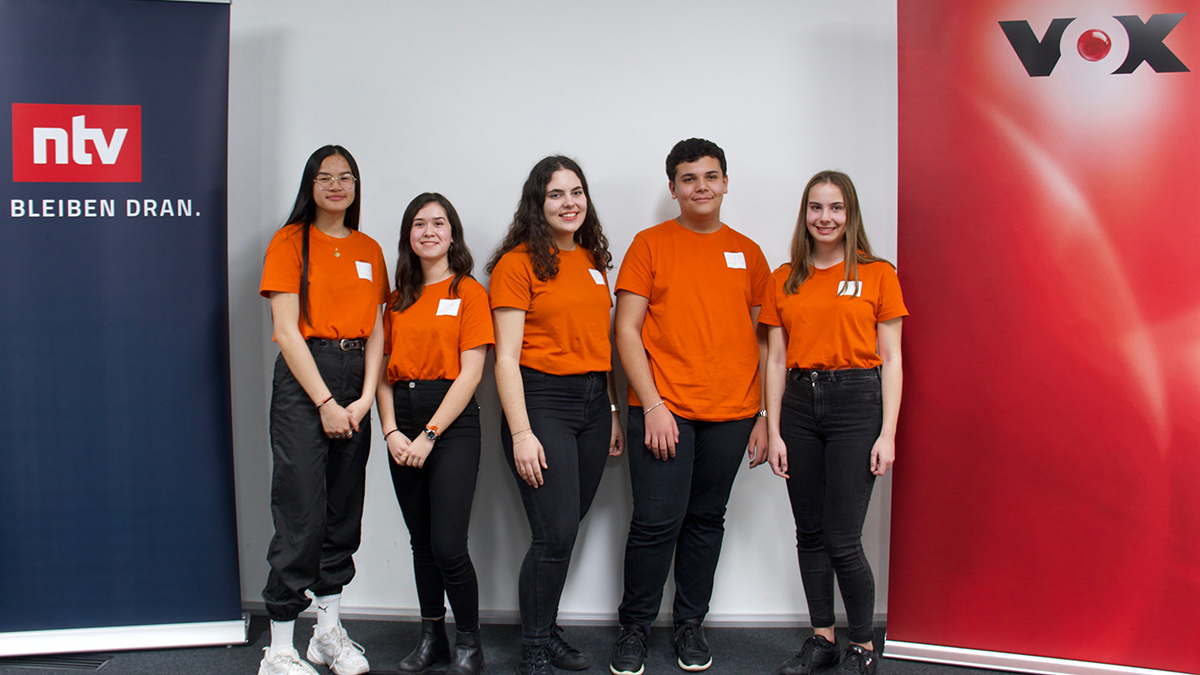
Goldbach, N-TV, Polymorph Pictures, and Vox once again presented the YES Media Award on March 1, 2019, in Küsnacht. The winning team is Drink’eat, which will now produce a TV commercial for its product to be aired on N-TV and Vox.
Editorial
-
March 4, 2019
As part of the "Company Program" of YES (Young Enterprise Switzerland), students aged 16 to 20 founded their own mini-companies over the past few months and presented the results to a jury of experts on Friday. A total of nine mini-companies competed against each other in a pitch on Friday in Küsnacht on the occasion of the YES Media Awards.
The award was presented for the fifth time. The prize is sponsored by Goldbach and Polymorph Pictures in cooperation with the TV stations N-TV and Vox. The winning team gets to shoot a TV spot for their company, which will be broadcast on N-TV and Vox during the summer months. Goldbach has been supporting YES as part of its corporate social responsibility for several years. "Every year, I am thrilled anew by what the young entrepreneurs come up with and how they present their products. They are every bit as good as their role models from TV shows like "Die Höhle der Löwen" on Vox," says a delighted Guido Trevisan, CMO at Goldbach.
The lucky 2019 winning team is called Drink'eat from Neuchâtel and they were awarded for their edible and 100 percent degradable straw. "We would never have expected this. It's a big and nice surprise for us to have won today. We hope it continues like this," says a delighted Maeva Raaflaub, CMO of the mini-company.
The Non-profit organization YES develops business education programs for students with the aim of linking business and school. For Noémie Sasse, CEO of YES, it's clear: "It's always a pleasure to see what these students achieve and with how much motivation and entrepreneurial spirit they implement their mini-companies."
Advertising spending on cars increases only sluggishly
Advertising spending by automakers is expected to rise by 0.8 percent in 2019 (compared to 1.5 percent in 2018). This is according to Zenith’s first Automotive Advertising Expenditure Forecasts, which was released on Monday.
Editorial
-
March 4, 2019
Automakers expect 2019 to be a difficult year as they face ongoing tensions in trade relations, particularly between the US and China, as well as the possible introduction of automotive import tariffs in the US. The latter is causing manufacturers' sourcing costs for raw materials and parts to rise, making cross-border sales more difficult. Zenith forecasts growth of 2.0 percent in 2020, when the Summer Olympics in Tokyo and UEFA Euro 2020 will provide valuable advertising space for car advertising.
Overall, the automotive advertising sector is falling short of expectations in the advertising market, which is recording growth of 4 percent. New technologies and constantly changing customer needs are a major challenge for the way sales are conducted in the automotive industry. Biofuels, innovative communication technologies, as well as new ownership models and the use of new digital channels - to actively reach buyers online - will be key to faster brand growth in the coming years.
Zenith has conducted its first exclusive survey of automotive advertising in 14 key markets worldwide*, based on the quarterly Advertising Expenditure Forecasts, which have now been published for 31 years. According to the calculations, advertising spend in the automotive sector in these markets amounted to $35.5 billion in 2018.
The U.S. is by far the largest automotive market in this report, with advertising spending of USD 18 billion in 2018. This surpasses China, the next largest market at USD 6.3 billion, by almost three times. U.S. ad spending by auto brands has been in decline for some time since 2012, with an overall decrease of 12 percent between 2012 and 2018. In China, however, auto ad spending has increased 47 percent over the same period. The fastest growing market is India. There, auto advertising costs are expected to increase by an average of 12.8 percent by 2020.
Television dominates in car advertising - Internet advertising growing fast
More than 50 percent of all automotive advertising spend goes to television - 54.9 percent in 2018, well above the 32.9 percent global average across all categories. Television remains the best channel for delivering emotional brand exposure and sustaining it over time. Nevertheless, the continued linear decline in ratings in most developed markets has driven up prices for the remaining viewers. This is currently driving brands to spend a greater proportion of their spend on online video and other internet formats. The TV share of automotive advertising spend, which was around 54.9 percent in 2018, is expected to fall to 54.4 percent in 2019 and then to 53.1 percent in 2020.
Car brands have steadily shifted more budget toward Internet advertising. This includes advertising on all online video services that broadcast TV-like content over the Internet. Overall, brands are lagging the market in terms of internet advertising: in fact, compared to the global average of 40.6 percent, they spent only 20.9 percent of their budgets on online advertising in 2018. The fact that vehicle sales are made almost exclusively offline makes it difficult for automotive brands to optimize their online sales efforts, unlike brands in most other categories. Today's consumers now do their research into car brands online, so it is still important that car brands maintain a strong online presence to reach customers at this key stage in the path to purchase. Zenith predicts that the digital share of automotive advertising spend will increase to 24.4 percent by 2020.
Apart from print media, which continues to struggle with the steady decline in circulation figures, the rest of the traditional media of advertising in the automotive sector is holding up pretty well. Radio, cinema and out-of-home advertising are expected to either maintain or narrowly increase their share of automotive advertising between 2018 and 2020. Radio, which many consumers listen to in their cars, works particularly well for car brands, accounting for 7.2 percent of automotive ad spend compared to 6.0 percent ad spend globally across all categories.
Automotive brands face unique communications challenges
Automotive brands are facing the same pressures for change that are currently driving all industries to change the way they communicate with consumers and leverage their paid advertising. But they also face unique challenges. The rapid increase in consumer demand for SUV models has led to much greater competition among vendors. This means advertisers must tailor their ads more efficiently to potential SUV buyers and more rigorously assess the return on their advertising, both by channel and by model. Meanwhile, government intervention and consumer demand are forcing brands to invest in green technologies and communicate their innovative values to customers demanding change. Using data cues such as interest in environmental issues and rapid adoption of new technologies can provide information in a more effective way to target potential environmentally conscious buyers.
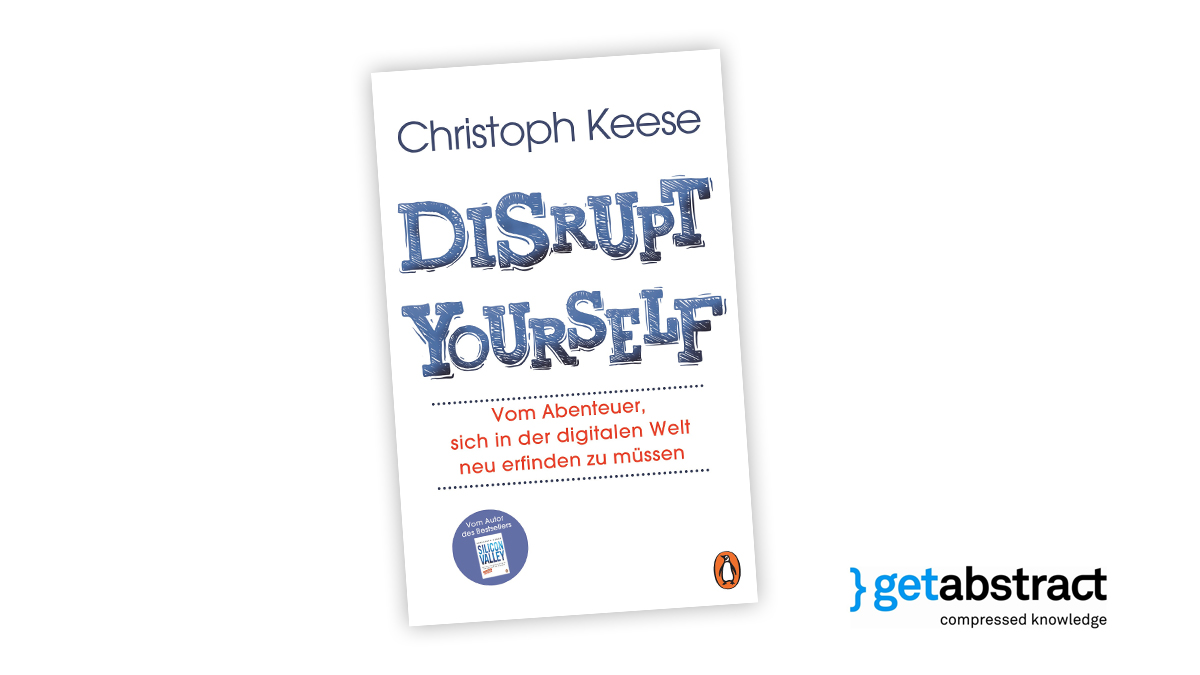
Reading tip: Disrupt yourself - On the adventure of having to reinvent yourself in the digital world
What kind of mindset is needed to succeed in the digital world? How do we deal with the uncertainties that digital transformation may bring to our professional lives? And how can we ourselves become active architects of this transformation—both professionally and personally?
Editorial
-
March 4, 2019
True to the motto "Attack is the best defense", Christoph Keese calls in his book "Disrupt yourself" for us to learn from digital founders and other innovators and thus become the pacesetters of change ourselves. The special quality of the book lies in Keese's profound and complex understanding of digitalization, which considers individual, social and entrepreneurial perspectives almost equally. The many portraits of and conversations with leading figures in digitalization also make the book an entertaining read. Highly recommended for anyone who wants to deal with the effects of digital change on their professional and private lives.
Author: Christoph Keese
Publisher: Penguin Verlag, 2018
Pages: 287
ISBN: 9783328600336
The reading tips are produced in cooperation with getAbstract, a Swiss company that specializes in summaries of business books.
Swiss agency Futurelite wins the Grand Midas Award and four golds
Futurelite and its client, Credit Suisse Switzerland, won the prestigious Grand Midas Award—the highest honor at the international event—as well as four gold awards in the categories in which they were nominated. The agency prevailed in the renowned competition and impressed the jury with its submission. Publicis and the agency at the airport also made a strong impression.
Editorial
-
March 4, 2019
The winners of the Midas Awards were announced last week. The awards are part of the New York Festivals and recognize the world's best marketing for the financial sector. The Swiss agency Futurelite won the Grand Midas and four Gold Awards. This is the first time that the Grand Midas Award has been presented in Switzerland and that the jury has honored a Swiss agency with such a large number of gold awards. Credit Suisse wanted an attractive and incomparable commercial for its online leasing offer. It had to be both humorous and intelligent and authentically represent the financial institution. "From the initial idea to the well thought-out concept to the excellent implementation: Futurelite's work was inspiring and of the highest quality. Thanks to the agency's high level of motivation and unwavering esprit, the project was a success despite limited resources," emphasizes Tarkan Özküp, former Head of Marketing at Credit Suisse. Claudio Catrambone, director, puts it into perspective: "This award reflects the strength and confidence that it takes to take on such a project. The Credit Suisse marketing team has definitely shown courage and recognized the potential of the idea. Once again, the brave win."
The agency at the airport was also delighted to win two silver awards in the TV/Cinema and Lending categories for the "De Hueber brucht Geld!" commercial for its client Lend. There was also a certificate in the Marketing category. Lend.ch stands for the democratization of the consumer credit business, which for a long time was the exclusive preserve of the banks. The start-up company wants to change this by means of crowd-based lending and offers borrowers fair and transparent loans at unusually low interest rates on its platform. Due to the low margin that Lend.ch requires to bring providers and borrowers together, it also opens up extremely attractive investment opportunities for the mostly private lenders, who can invest directly in "projects" on Lend.ch. The commercial was produced by Who's McQueen Picture in Zurich.
Publicis secured three silver medals with the "Swiss Skills", "Provision" and "Alp Professionals" campaigns for UBS Switzerland in the "Banks: Commercial" category:
Online shopping continues to boom: seven out of ten Internet users shop online
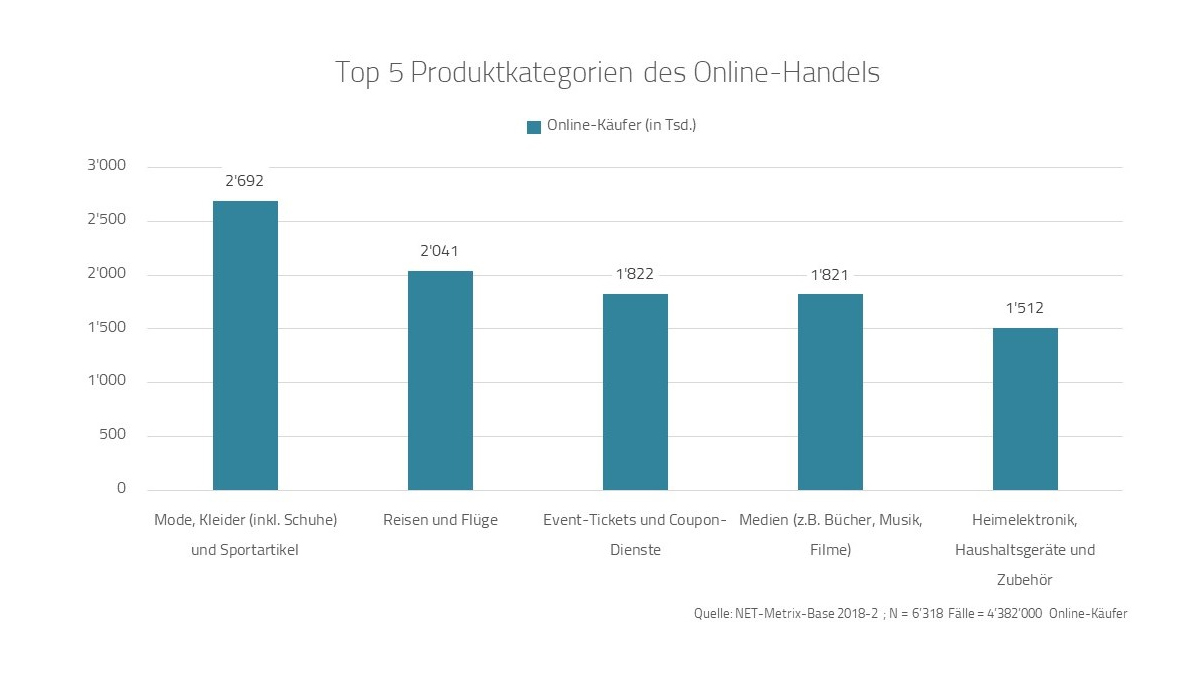
Seven out of ten Swiss internet users shop online, which amounts to 4.4 million people aged 14 and older. Fashion, clothing, and sporting goods are the most commonly purchased items online, but the most money is spent on travel and flights.
Editorial
-
March 4, 2019
This is shown by the latest figures from the NET-Metrix-Base 2018-2 study on Internet usage in Switzerland, which publishes results on online shopping for the fourth time.
The top categories of online retail
Fashion, clothing (incl. shoes) and sporting goods continue to top the list of online shopping: 2.7 million Swiss Internet users buy products in this category, an increase of 11 percent over three years. Purchases in the travel and flights categories as well as event tickets and coupon services round off the list with 2 million (+1 percent) and 1.8 million (+11 percent) online shoppers respectively.
However, Swiss Internet users spend the most in the categories of travel and flights, financial and insurance products, and furniture, furnishings and home improvement: 56 percent of people who booked a trip or flight online spent more than CHF 500 in a quarter. 35 percent of online buyers of financial and insurance products and 22 percent of online buyers of furniture, furnishings and home improvement also spent more than CHF 500 on the respective products in the same period.
Gender-specific purchasing behavior
Online commerce is successful among all generations of Internet users, but tends to decline with age: 83 percent of Internet users aged 30 to 39 shop online, compared with 54 percent of those over 60.
Online shopping is equally popular among women and men: 2.2 million users of each gender. However, if we take a closer look at the product categories, significantly more men than women buy products from the software, games and apps group online: 75 percent versus 25 percent. In the cosmetics and health product category, it's the other way around: with a ratio of 7:3, women are clearly overrepresented.
Nexum expands its Swiss location: Manfred Jürgens becomes Solution Director
The digital full-service provider Nexum is further expanding its service portfolio in the field of data analytics. With Manfred Jürgens, Nexum has gained an experienced Master Data Manager with expertise in e-commerce and data management.
Editorial
-
March 3, 2019
Manfred Jürgens comes from Migros, where he worked for seven years, most recently as Head of Product Information Management and member of the management team. In this role, his responsibilities included the procurement and digital preparation of structured information and media assets from various sources, which were consistently linked to customer preferences, promotional and trend topics as well as content and consumption situations across all channels. Prior to this, the graduate communication designer and manager (MBA) was in charge of projects for retail companies in the areas of CMS, MDM, e-commerce and SCM at Pironet NDH, among others.
"Manfred Jürgens is the perfect addition to our consulting portfolio. There is a lot of talk about customer centricity. But disillusionment is usually not long in coming. After all, companies need first-class data to perfectly satisfy their customers' needs - and it is precisely this solid data foundation that often causes digitalization and marketing strategies to fail," says Nicola Schlup, Managing Director at Nexum Switzerland, in a press release.
For companies to be successful in the age of digitalization, a data-driven corporate culture is essential. As Master Data Manager of a retail group, Manfred Jürgens has extensive experience in structured data management.
"In addition to professional and cultural factors, what appeals to me about the owner-managed service provider is the symbiosis of consulting and implementation. I am convinced that we offer our customers real added value," says Manfred Jürgens.
Twitter is working on hiding replies
Twitter is currently working on a feature that allows users to hide replies to their tweets. These should not disappear completely, however, but remain actively accessible to other users.
Editorial
-
March 3, 2019
The purpose of all this is apparently to give users more and finer control over their Twitter conversations. Hiding replies would be a less drastic alternative to blocking or muting users.
Code notes
On Thursday, user Jane Manchun Wong discovered hints of a new feature for hiding tweets in the code of the Twitter app for Android. The code pointed to a moderation feature, and she also found hints that it should probably be possible to make hidden tweets visible. Twitter has initially stated to TechCrunch confirmed that such a feature is being actively worked on. This was followed by a more detailed explanation from Twitter Senior PM Michelle Yasmeen Haq.
"We often hear from tweeters that they want to protect their conversations," she writes. Accordingly, hiding tweets should make it easier for users to keep conversations on Twitter pleasant. The previous options of blocking, muting and reporting are not always suitable for this purpose, it said. Blocking and muting ultimately only affect the one user, while reporting only helps with content that actually violates Twitter's policies. The new feature is supposed to make it possible to hide replies in such a way that other users can show them again if they wish. Overall, this should ensure a better user experience.
Hide opinion
Admittedly, the concept of being able to hide answers is itself not without controversy. After the plans became known, voices were quickly raised that feared the feature could be misused to suppress unpopular opinions - for example, that controversial politicians could use the function to hide critical answers or facts that contradict their claims.
"We think the transparency of hidden replies would allow the community to identify situations where people are using the feature to hide content they disagree with," Haq comments. How well this will work in practice remains to be seen. Twitter has not yet commented on when the feature will actually be launched. (pte)
Simple algorithm infers political sentiment from tweets
Today, using legal means, any Twitter user can be politically categorized and, for example, targeted by political parties for recruitment. This is made possible by a program based on a simple algorithm. However, this algorithm can also be wrong.
Editorial
-
March 3, 2019
Hernani Marques does not make a big fuss about his self-made program. "I made it in a night and fog operation," says the "hacktivist" of the Chaos Computer Club Switzerland in an interview with the Keystone-SDA news agency. The tool is "very primitive and simple", but can be expanded at will.
Specifically, the program compares the language use of any Twitter user with the language use of the various Swiss and some German parties. The tool compares which party website one's own writing style on Twitter most closely matches.
To do this, Marques downloaded the parties' websites on a key date in October 2018. If the software finds words or phrases in a user's tweets that are identical to those of a party, it generates a hit. The more hits, the higher the swing of the corresponding party's bar.
Recognize swing voters
"I show you what your political views are based on your tweets," Marques says. This is done legally, he adds. Twitter has an open interface, he says, and allows anyone with even modest IT skills to pull and use various data. "The program and how it works does not violate any applicable law in any way."
The problem: No user notices that he is being pigeonholed. And - perhaps even more disturbing: the result can be wrong. "Whether it's true or not doesn't matter," Marques says. "The algorithms have spoken." Even careful Twitter users who strive for a neutral political tone are pigeonholed.
This data could be useful for political parties, for example. They could send targeted advertising or messages to users of social networks who are in a similar political spectrum but voted for the competition in the last elections. "Working to get citizens to move in the right direction," is how Marques describes it.
Adjust target group
Like other programs of the Chaos Computer Club, his tool is not intended for sale. Together with his colleagues - they call themselves "hacktivists" - he draws attention to opportunities, but also to risks and dangers in the digital space, without commercial intentions.
According to Marques, however, his program could easily be developed further by professional IT providers - a lot could be achieved with relatively few resources. "If a party invests 100,000 francs, then a lot more can be achieved.
In addition, various actors could purchase further user data not intended for the public, such as private messages from professional hackers. This could refine the algorithm. Parties could win over potential swing voters in an even more targeted manner - without their knowledge. (Sebastian Gänger, Stefan Lanz, Keystone-SDA)