"We can go further than Amazon"

Anton Gäumann, head of the Migros Cooperative Aare, has high hopes for the young subscription and service project M-Plus: "M-Plus is a program without borders," he says in an interview with the Handelszeitung.

Wir können weiter gehen als Amazon

The Migros Aare project, which is set up as a paid subscription membership and is therefore very similar to Amazon's successful Prime model, still has a lot of potential for development: "We can go further than Amazon," says Gäumann, citing the transfer to the stationary world as an example. "Why shouldn't customers also be able to refuel at a discount or receive benefits for our restaurant offers?"

In an interview with the Handelszeitung Gäumann talks about the culture of failure within Migros and mentions other new projects from Migros Aare's "growth factory", such as the launch of a cooking box service called Yummibox.

When the office furniture rejoices too soon

The lockdown is over. The furniture can hardly contain its excitement, because people are returning to the office. Or maybe not?

Mobiliar

For office inventory, horror has a name: Work management tool Monday.com promises to take "remote working" to a new level. A computer mouse explains this and more to its increasingly panicked inventory mates in a TV commercial. Going to the office could thus become increasingly superfluous for many employees. It's understandable that panic is spreading.

Mobiliar

VSM underlines the importance of quality media with "Fakt

The Corona pandemic has shown how important the press is as an authority on factual accuracy. Quality media guarantee sound, reliable information. This is the message conveyed by the new "Fakt" campaign of the Swiss Media Association VSM.

VSM unterstreicht mit «Fakt» die Bedeutung der Qualitätsmedien

"Uncertain times need secure sources of information. That's why newspapers provide you with everything you need to know now, around the clock. Printed and digital. Stay healthy and well informed!" is the message of the campaign, which was developed for the Austrian market by the Vienna agency Demner, Merlicek & Bergmann on behalf of the Association of Austrian Newspapers (VÖZ). It is now also being used in Germany. Thus, a genre campaign highlighting the value of journalism and its role in democracy is in use throughout the DACH region.

The VSM provides its members with the corresponding templates for print and digital for free use.

Priska Amstutz and Mario Stäuble take over as Co-Editors-in-Chief at Tagi

Priska Amstutz and Mario Stäuble will take over as co-editors-in-chief of the Tages-Anzeiger on July 1, 2020. They succeed Judith Wittwer, who in turn becomes Co-Editor-in-Chief of the Süddeutsche Zeitung.

Tages-Anzeiger

Amstutz and Stäuble are already working at the Tages-Anzeiger and will retain their current functions. Amstutz heads the Zurich City Life section and is responsible for Züritipp, while Stäuble is Head of Politics and Business Zurich. Both have many years of experience in journalism and sound digital know-how.

"We will do everything we can to promote excellent 'Tagi' journalism, research, intelligent debate, entertainment, joie de vivre and an open culture of error," says Priska Amstutz. "The Tages-Anzeiger embodies one of the most valuable Swiss media brands. We want to strengthen, protect and cleverly modernize the title," adds Mario Stäuble.

Priska Amstutz was head of the online editorial department of the magazine from 2008 to 2010. Annabelle, then ran a hotel business in Flims and was subsequently editor-in-chief of the digital travel magazine elsewhere by Kuoni. From 2015, she worked as Head of Digital and Deputy Editor-in-Chief at the magazines Bolero and Style from Ringier Axel Springer Switzerland. In February 2020, she moved to the Tages-Anzeiger. Amstutz studied journalism, economic and social history at the University of Zurich.

Mario Stäuble started as a trainee at the Tages-Anzeiger in 2011. From 2013 to 2019, he worked at the Tamedia research desk, where he regularly made headlines with investigative stories. In 2018, as part of the research desk, he received the Zurich Journalism Prize for the offshore revelations on the "Paradise Papers". Mario Stäuble studied law at the University of Zurich.

Simonhofer Creative supports Casalucis with poster campaign

Simon Hofer from the advertising agency of the same name and his main suppliers are helping the Bernese boutique owner Salvatore Casaluci with a campaign during the coronavirus crisis.

Simonhofer Creative unterstützt Casalucis mit Plakatkampagne

With posters in F12 and F200 formats, postcards and social media measures, the Casaluci advertising team in Bern is supporting the company with an eye-catching motif: bikini or protective masks? The motif is intended to draw attention to the upcoming summer season and the dressing crisis.

Responsible at CasalucisSalvatore Casaluci (owner). Responsible at Simonhofer CreativeSimon Hofer (initiative, creative direction, art direction, graphics); Mike Krüll (Krüllkonzept, text); Reto Andreoli (photography); Patrick Salonen (Salonen Postproduction, image editing); Phillip Bühlmann (Baracom, poster display); Madeleine Uldry (Uldry Druck, poster printing); Kevin Bein (Aquaprint, postcard printing).

FDP intensifies communication in view of the 2023 elections

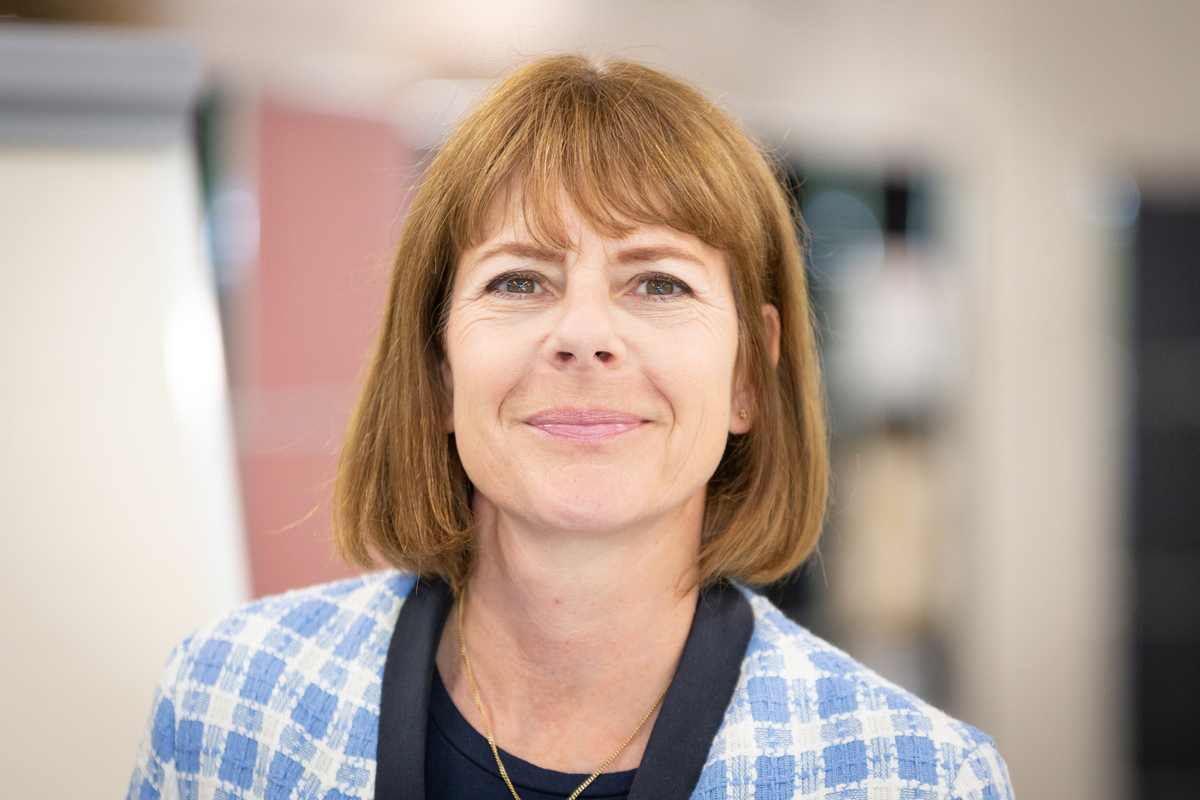
The FDP Switzerland is upgrading its General Secretariat and creating the new position of Head of Communications. Fanny Noghero, currently responsible for communications in Latin Switzerland, is to develop a communications strategy and define clear messages in this role.

FDP

Fanny Noghero is the new head of communications at the FDP. (Image: Fdp.ch)


The strengthening of the communications department is being carried out with the intention of being able to rely on a longer-term vision, the party wrote in a press release on Wednesday. The FDP is already working on the next elections in 2023.

Martin Stucki will remain in charge of communications for German-speaking Switzerland and will continue to be the contact person for German-speaking media professionals. (SDA)

Comet shows for canton of Bern that the lockdown is also over in the healthcare sector

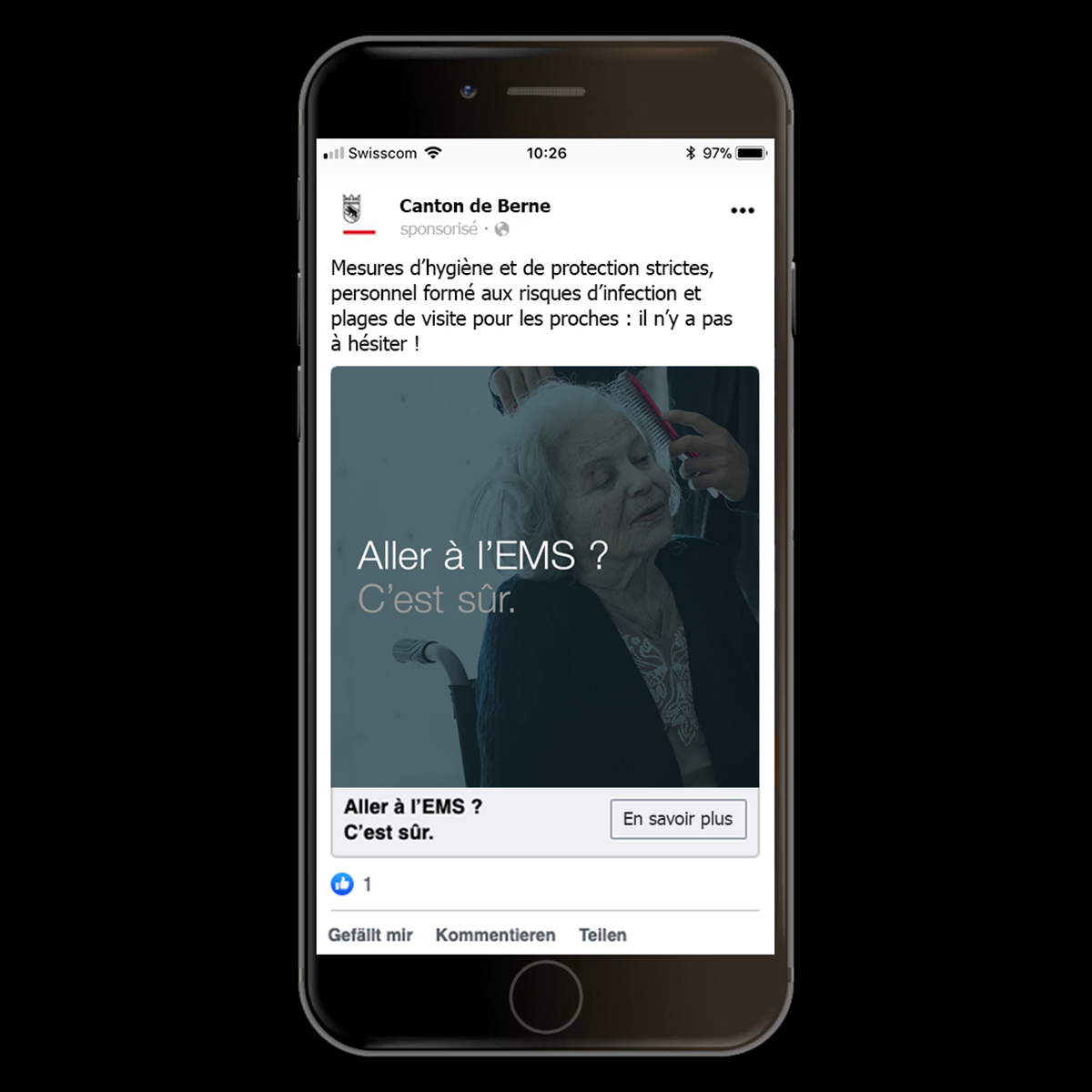
Fear of the coronavirus has also made the people of Bern reluctant to use medical services. Now a Komet campaign aims to restore their trust in their healthcare institutions.

komet

After the FOPH itself strongly advised against motorcycle trips during the lockdown in order to avoid placing an additional burden on our hospitals' emergency departments, Swiss healthcare institutions are now suffering from a lack of patients. This is because there is a certain amount of uncertainty among the population as to whether healthcare is also guaranteed for non-Covid-19 patients and whether there is a need to fear infection with the virus when visiting a hospital or doctor. This can have serious consequences. Currently, for example, people with cardiovascular problems are waiting so long to seek medical services that it may be too late for optimal treatment.


Quickly implemented campaign

The Canton of Bern's Covid-19 task force is now tackling this sometimes fatal situation with an awareness campaign that aims to restore confidence in Bern's healthcare institutions, hospitals, GPs, retirement and nursing homes and Spitex. A campaign that - as is completely normal in these crazy times - had to be designed and implemented within a few days. Stock photos were used for the background images of the posters and social ads, while the TV and online ad had to be shot under difficult conditions, i.e. in compliance with hygiene regulations and the 2-meter distance rule.

In terms of content, the campaign itself raises the questions that almost everyone is currently asking themselves before visiting a hospital or doctor and resolves them with a surprisingly clear answer: "Of course." This is because Bern's healthcare institutions can guarantee the safety of patients, visitors and staff alike thanks to the strictest hygiene measures and the strict separation of Covid-19 patients.

komet

Responsible at Canton Bern: Anna Djilali (Communication). Responsible at Komet: Corinne Hert (Client Service Director); Nicolas Gabl (Consulting); Jeff Gerber (CD); Daniel Müller (Text); Claudio Parente (AD); Andrea Zaugg (Graphics); Melanie Schlunegger (DTP). Film production: Allmen Films. DirectionSimon von Allmen. Media agency: Media Schneider Bern.

Dirtje Hüttmann moves from Farner to Pomcanys

After nine years at Farner Consulting, Dirtje Hüttmann is joining the Pomcanys Group as a member of the Group Executive Board. In addition to strategic consulting and communications, her responsibilities include establishing a training incubator called «The Incubator» to develop future skills in 360-degree marketing and communications.

Dirtje Hüttmann

"I enjoy the variety of tasks and building something completely new. I enjoy supporting young people and helping them to find their way! I can contribute my entire wealth of experience here," says Hüttmann.

The decision to leave her comfort zone was important, but not easy. Dirtje Hüttmann is convinced that staying agile and bringing about change not only costs energy, but is also necessary in order to keep developing personally and professionally.

As Head Events & Live Communication, she has designed and implemented numerous projects for Farner since 2011. Among other things, she has managed the Birgit Nilsson Prize, a major international project, three times.

Stutz Medien and Pomcanys Marketing are part of the Pomcanys Group with the partner companies Rheuma Switzerland, ZPS Lifestyle Factory, Waveup and The Incubator (under construction).

Habegger wins pitch for BLKB trade fair presentation

Habegger impressed the jury with a modular design during the pitch and will now develop and implement a new trade show booth concept for the Basellandschaftliche Kantonalbank.

BLKB_Habegger

With its new exhibition stand, BLKB not only wants to present its own service and products, but above all to create proximity to the population. Customers should experience BLKB emotionally and feel as if they were in a branch they are familiar with.

Habegger has taken these requirements and integrated them into a versatile concept. The idea presented by the live communication service provider from Regensdorf is a modular construction that can be set up in three different size variants. The assembly and disassembly processes (including technology) are also time-efficient.

In general, the stand is characterized by its intelligent use of resources, also in terms of storage space: a wall construction with built-in cabinets is designed to provide sufficient space for required utensils.

The new trade show appearance is expected to be used for the first time in spring 2021.

Customer Service in the Digital Age: Between Demand and Reality

Successful customer service is a crucial factor for businesses. But how can companies foster the necessary connection with customers when everything is becoming increasingly digitized? The ZHAW Institute for Marketing Management surveyed approximately 200 companies in the DACH region for a recent benchmark study.

ZHAW

Customer service is a key element for companies. Despite widespread acceptance of automation, most customer inquiries are still processed manually - at the expense of response times and efficiency. 80 percent of the companies surveyed consider customer orientation to be important for competitiveness. In this context, they rate reliability, friendliness and competence as the key factors. However, companies underestimate the importance of inspiring customer experiences. "In an in-depth analysis, the study clearly shows that customer enthusiasm, together with reliability, is the most important driver of success," emphasizes Frédéric Monard, CEO of the Pidas Group.


Only a small proportion measures customer satisfaction

Only 19% of the companies surveyed stated that they actually record or historicize customer interactions electronically. However, this measurement would be the basis for keeping the value proposition and would sustainably improve the customer experience.

The companies' own and external images also appear to differ. 83% are certain that their customers are satisfied with their service. However, only 13% of companies measure the actual willingness of their customers to recommend them using the so-called Net Promoter Score (NPS). The NPS is of course only a key performance indicator (KPI), but one that is very easy to measure as it only asks about the probability of recommendation. An important key performance indicator, especially when comparing the industry.

"Such measurements not only generate statistical key figures, they also help companies with their self-assessment and should be carried out in a structured manner," explains Pia Furchheim, lecturer at the ZHAW Institute of Marketing Management and co-author of the study.


Manual processing instead of automated processes

If we look at the digital aspects, the difficulties are very clear. Although everyone is talking about digitalization, only just under half (48%) of companies offer their entire range of services digitally. The picture is even worse when it comes to customer inquiries: At 43 percent of companies, these are still processed manually as there is simply no corresponding software in use. This leads to slower response times and a loss of efficiency in processing.

However, there are certainly signs of change here too, as around 53% of companies have already invested in the automation of customer processes and around 24% are still planning to do so. Although the 2018 study showed that chatbots are being increasingly accepted and used by consumers, only 9% of companies actually use chatbots. So here, too, there is great potential that is still untapped.

The current Benchmark study "Customer service in the digital age" was conducted by the ZHAW Institute of Marketing Management in cooperation with the international service provider Pidas. The survey took place in the second half of 2019. A total of 210 companies from Germany, Austria and Switzerland were surveyed. The surveys were conducted by telephone. The questions were answered by those responsible for customer service or related functions. The study was conducted for the seventh time.

The type of leadership and social commitment increasingly determine the reputation of a brand

The trend in the reputation of brands and companies is clear: leadership culture and social commitment are having an ever greater influence on reputation, while the importance of products and services for reputation is stagnating at the same level. The "Brand Reputation Study" shows what characterizes strong brands.

Reputation

Farner and The RepTrak Company focus on the significant development of brand reputation in their annual "Brand Reputation Study". The study measures the reputation of over 150 of the largest and most important companies in Switzerland (Werbewoche.ch reported). A brand's reputation has a measurable influence on the behavior of consumers, employees, investors and the general public - whether they recommend a brand, buy its products or want to work for the company. Reputation is therefore demonstrably linked to the market success of brands and companies.


Leadership behavior and contribution to society determine brand reputation

The results of the BRS confirm the trend that brands are increasingly distinguishing themselves through their "citizenship" and "governance". Brands are strengthening their reputation not through product advertising, but through their ability to provide orientation, make a positive contribution to life and enable positive moments. The brands that have made the biggest leap forward in the ranking of the most respected brands have achieved particularly good scores in the reputation drivers associated with leadership behavior, corporate culture and social commitment.


Strategic brand management is an investment in the future of a company

The current health crisis and the associated demand shock will exacerbate this trend. It has never been clearer what turbulent, polarized and uncertain times we are living in. And it has never been more important for brands to enable positive moments in everyday life and create security. What brands are currently doing is shaping the brand relationship after corona. Strategic brand management, thought through and planned for the long term, has a particularly important role to play - as an investment in the future that is critical to success.


The "Lindt & Sprüngli" brand has the best reputation in Switzerland

This year's ranking of brands with the highest reputation among the Swiss population is headed by Lindt & Sprüngli, followed by Coop (2nd place) and Landi (3rd place).

The top 25 brands with the best reputation in Switzerland in 2020:

  1. Lindt & Sprüngli
  2. Coop
  3. Landi
  4. Ricola
  5. TCS
  6. Migros
  7. Rolex
  8. Chocolat Frey
  9. Doubt
  10. Hilti
  11. Jaeger-LeCoultre
  12. Raiffeisen Switzerland
  13. Swatch
  14. Swiss
  15. Melectronics
  16. IWC Schaffhausen
  17. Rivella
  18. Feldschlösschen
  19. The furniture
  20. Geberit
  21. Liebherr
  22. Ikea
  23. Audi
  24. Breitling
  25. Hero

Retail trade records sharp decline in April due to Corona

Swiss retail sales plummeted by about one-fifth in April due to the COVID-19 pandemic. Different sectors were affected to varying degrees by the circumstances, as the Federal Statistical Office (FSO) reported on Tuesday. A sharp decline had already occurred in March.

corona

Compared to the same month last year, retail sales adjusted for the effects of sales and public holidays fell by 20.6% in nominal terms in April. Taking inflation into account, there was a real decline of 19.9%. Seasonally adjusted compared to the previous month, the decline was 14.8% (-14.7% in real terms) according to provisional data from the FSO.


Non-food sector particularly affected

In line with the closed stores, the non-food sector was particularly hard hit, shrinking by over 40% overall. Within this sector, the sub-categories "other goods (clothing, pharmacies, watches and jewelry)" (-56%) and "other household appliances, textiles, DIY and furnishings" (-46%) suffered even greater losses.


Food, beverages and tobacco less affected

Less affected by the crisis was the retail trade in food, beverages and tobacco, which grew by 4.0% in nominal terms (+3.5% in real terms). The "market stalls, mail order and e-commerce" sectors even recorded an increase in turnover of over 22%. The "information and communication technology equipment" sector recorded a 3.9% increase in turnover (+12.1% in real terms). (SDA)

get_footer();