Young media professionals want to talk openly about pressure in the industry

The Association of Young Journalists of Switzerland (JJS) is launching a campaign to raise awareness about the psychological pressure in the media industry. It is calling on the industry to be more open about the issue, warning that otherwise it will lose its next generation of talent.

Der Verein Junge Journalistinnen und Journalisten Schweiz (JJS)

Several members of their association had already suffered burnout before the age of 30, JJS wrote in a statement on Thursday. The members reported, for example, that they would no longer dare to look at the mails during vacations or during an illness because they had already been reprimanded for it before.

Journalists generally have a good resistance to stress because they are satisfied with their job, Daniela Landau, a psychologist and lecturer at the MAZ Lucerne School of Journalism, is quoted as saying in the press release. This fits the example of a 31-year-old member of the association, who is expected in the office on Monday to have read all the Sunday newspapers correctly and to be able to do a follow-up story. "That means my Sunday is not only free time, but also consists of reading newspapers. For the most part, I enjoy it, but it can also be stressful."

Stress resistance also has its limits, writes JJS. However, many journalists - especially young ones - often exceed this stress limit. As a result, members have reported poor sleep, high caffeine, nicotine or alcohol consumption, constant stress, poor concentration, anxiety, burnout or depression.

These people would lose their enjoyment of the profession - and journalism would lose talent in the long term, the association fears. In the industry, however, these problems are kept quiet and "normalized. In the coming weeks, the association will therefore draw attention to the issue on its channels with podcasts, videos and texts.

In the contributions, young journalists will tell how their profession affects their mental health. In addition, the aim is to show what media professionals can do if the job puts a strain on them, how work and free time can be better separated, and how burnout can be prevented. It will also show what media companies are doing to support the mental health of their employees. (SDA)

The House presents the mobile subscriptions of WWZ

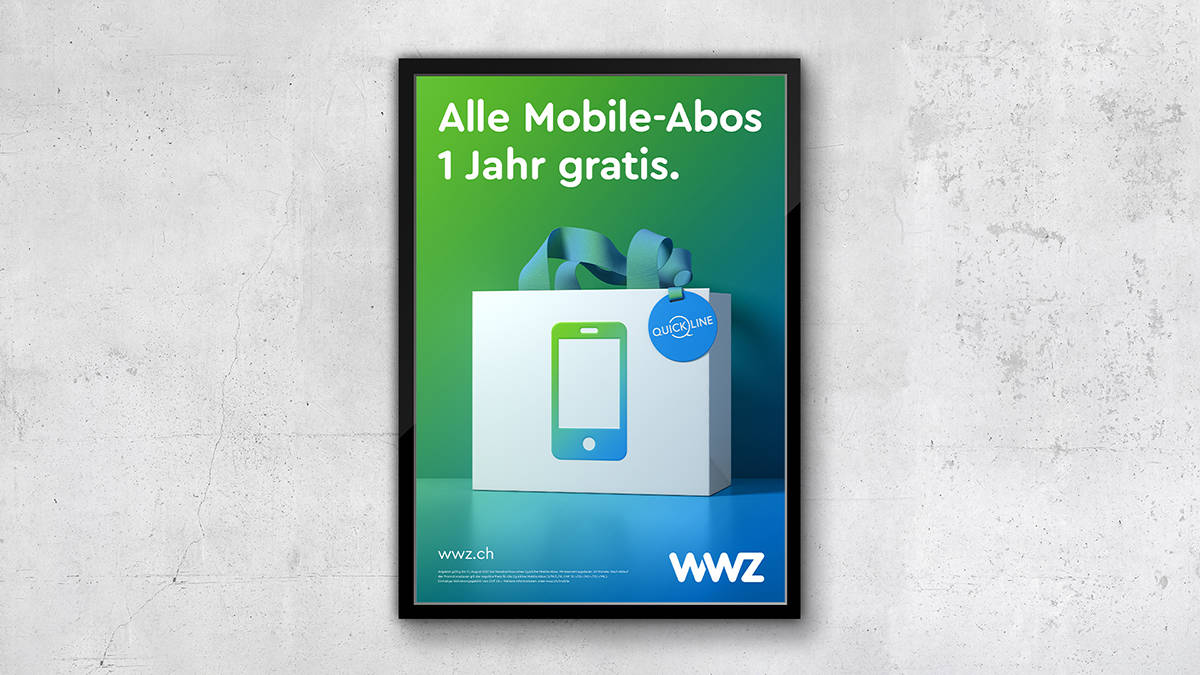
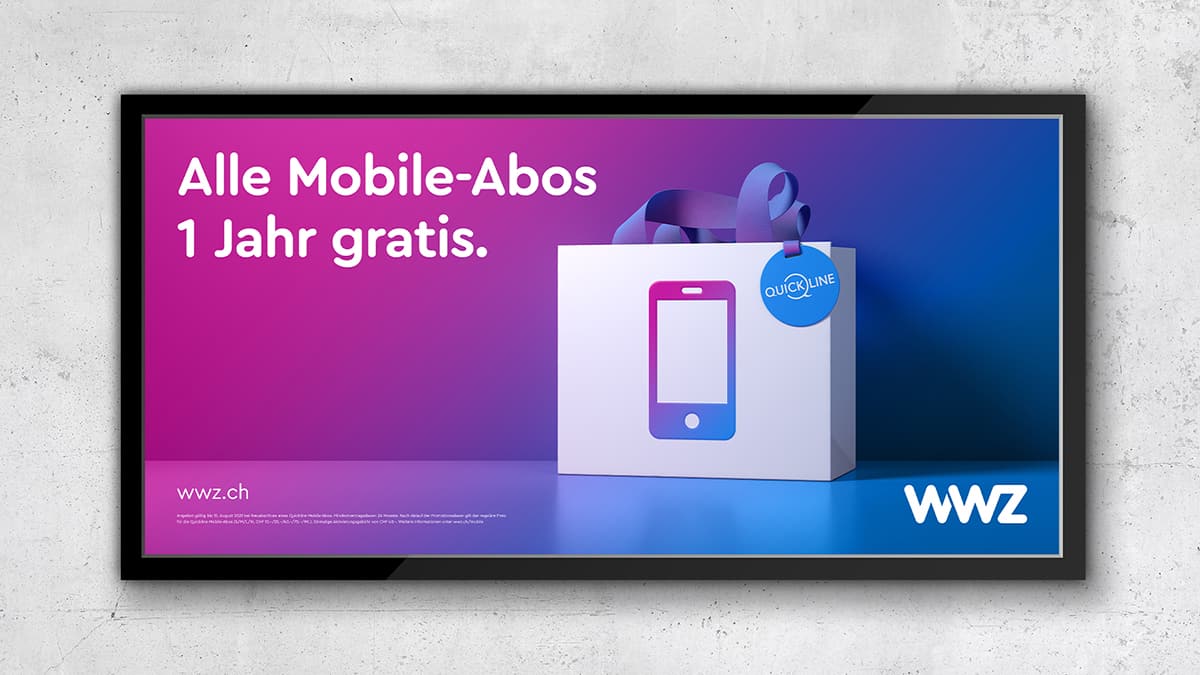
As the lead agency, The House developed the first Telekom campaign featuring WWZ as the sender as part of its market development efforts. The summer promotion advertises the S, M, L, and XL mobile plans with a special offer: When customers sign up for a plan, they receive 12 months of service for free.

WWZ is known in its own supply area for products and services in the areas of electricity and water. However, many people are not aware that the company is also a telecommunications provider. The aim of the campaign is to make WWZ known as a service provider in the telecommunications sector and to present the customized mobile subscriptions as part of a summer promotion.

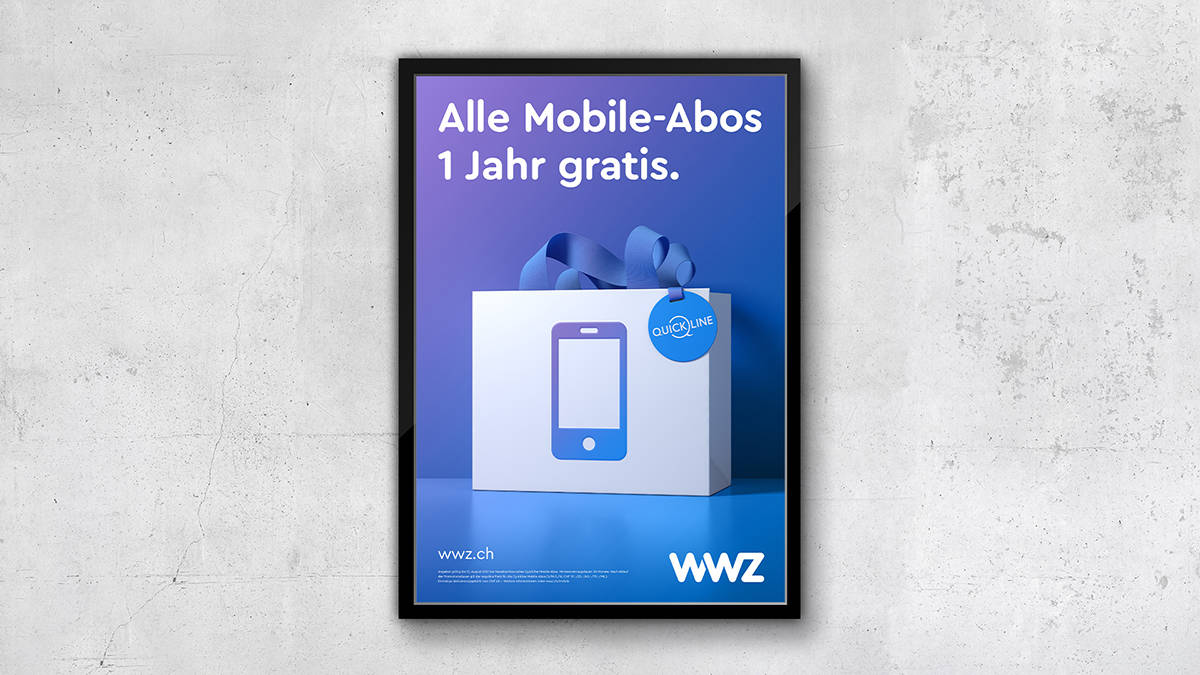
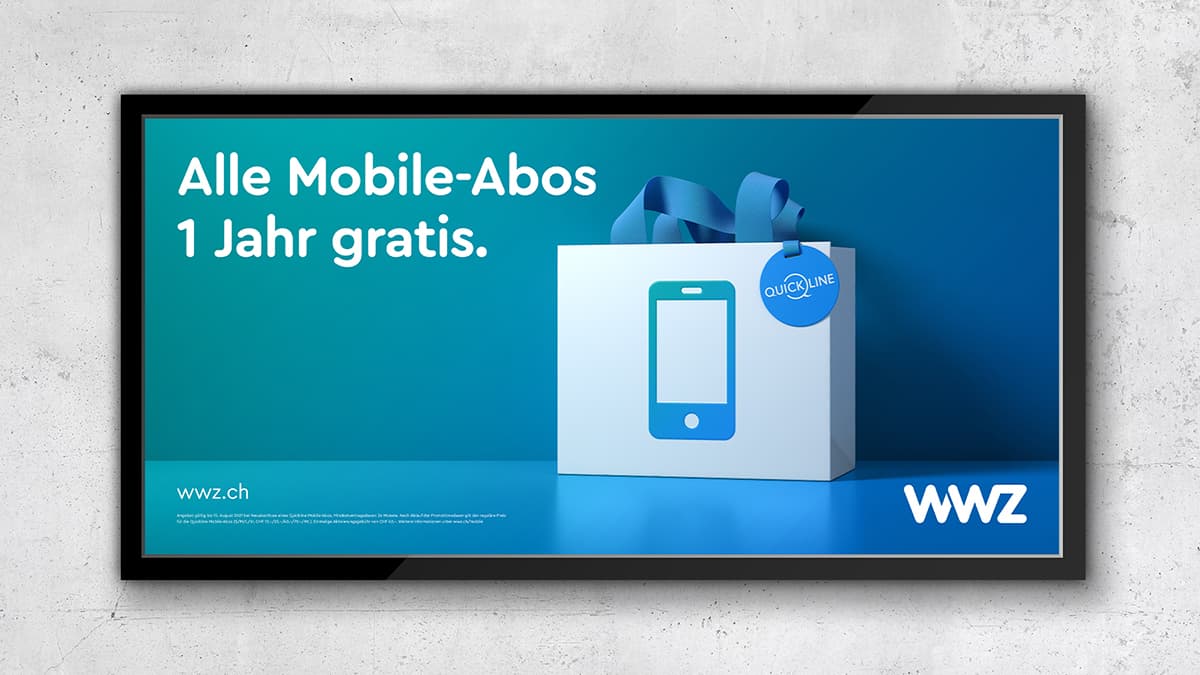
The House was commissioned with the integrated campaign strategy, including creative concept, media strategy and production. The subscriptions and the promo offer are simply and eye-catchingly placed in the center by means of shopping bags and color codes per subscription. This is the first time that WWZ has been prominently positioned as a provider of these services. In addition, the task of elegantly integrating Quickline as a partner was solved.

Due to the broad target group within WWZ's coverage area, the focus is on building a high reach within the target region. A suitable media mix should enable a performance-oriented user journey tailored to the target groups. Digital channels for penetrating the younger target group with flanking OOH measures for initial attention creation form the lead media. The campaign consists of two waves with a long-tail strategy. In the second wave, re-targeting measures are used to address the right people.


Responsible at WWZ: Andreas Fürling (Head of Marketing), Ramona Schocher (Marketing Manager), Julia Thalmann (Senior Online Marketing Manager), Flavia Marty (Marketing Manager). Responsible agency & media: The House. External partners: Detail AG, Flaeck, Ace2Ace.

Swiss Media Cast: VR reassembled

At Wednesday's general meeting, Swiss Media Cast announced that Dani Büchi will not be seeking reelection. Pascal Frei, CEO of the Energy Group, was elected to the board of directors. Florian Wanner is the new chairman of the board.

Pascal Frei (left) is a new member of the Board of Directors of Swiss Media Cast. Florian Wanner (right) becomes the new Chairman of the Board of Directors.

After eight years as a member of the Board of Directors of SwissMediaCast, half of which as Chairman of the Board, Dani Büchi is no longer standing for re-election, Swiss Media Cast announced on Wednesday. Under his leadership, the utilization of all DAB+ layers had been continuously improved. He also initiated the restructuring of the shareholder structure with the aim of giving Swiss Media Cast an even broader base in the radio scene. This project was successfully completed in mid-2019. A new concession for Ticino allowed the construction of a DAB+ network in Italian-speaking Switzerland in 2020.

The new Board of Directors Pascal Frei, CEO of the Energy Group, was elected unanimously at the General Meeting. With his many years of experience in the radio industry, he will competently strengthen the Board of Directors, according to the statement.

Florian Wanner new Chairman of the Board

32-year-old Florian Wanner, Head of Radio at CH Media, was elected as the new Chairman of the Board of Directors. As Head of Radio, Wanner is currently responsible for nine radio stations as well as the convergent regional news portals FM1Today (Eastern Switzerland region), PilatusToday (Central Switzerland region) and the recently launched ArgoviaToday (Midland region).
Since May 2017, he has been a member of the Board of Directors of AZ Medien and of Swiss Media Cast. He is also on the Board of the Swiss Private Radio Association (VSP).

"The tech industry has done a lot of good in the pandemic"

Petra Jenner has been Salesforce's head of Switzerland since February 2021 - and had to familiarize herself "remotely" due to the pandemic. In an interview with Werbewoche.ch, she reveals what difficulties this entails - and what Corona has meant for digitization.

Advertisingweek.ch: Petra JennerYou have been Salesforce's General Manager & Senior Vice President Switzerland and Eastern Europe since February. Currently, however, you still have to do your job from Munich because of Corona...

Petra Jenner: You are right, I can't move to Switzerland at the moment. That's really hard to organize at the moment. I hope it will get better towards the middle of the year - our two Swiss offices are still closed at the moment, so I can't meet the staff anyway. And customers also tend to be very cautious about physical meetings at the moment. So I'm primarily on the road digitally. Of course, that's not nice in the long run, especially when you've taken on a new position.


The training for such a responsible position should be particularly complex "remotely"?

Well, that's a challenge because, of course, I don't know every employee personally yet, although that would be my aspiration: to have seen everyone at least once. I have tried to schedule virtual meetings where I can get to know people - but that adds up to quite a number, and I can only work ten to twelve hours a day (laughs). If I had been able to meet employees in the offices right away, it would have been faster. I think it takes more time to build relationships today than before the pandemic.


An interesting statement. Many managers say they would rather save time - because they have to travel less?

Of course, I also find it very pleasant to be responsible for 22 countries and not have to travel somewhere every day. Especially now, with all these requirements in the context of the whole Covid prevention, traveling is anything but fun. But is the time you save on trips to the airport really gained? Or does it just shift to a more tightly scheduled agenda with more zoom calls? I think the latter. Those "in-between times" on the airport train, those have also been recovery breaks for me. You shouldn't underestimate that either. I read a lot more back then. I think we all work more today.


You used to spend an average of 150 days a year on the road. Is this kind of life and career management coming back?

A good question: Will we really have a different "New Normal," as they say? Or will it be that people will travel a lot more for now because they've missed it so much? I'm curious. I have a feeling that there will be lasting changes already. I think we will all stop traveling so much, and travel more consciously, because people have realized that they don't have to be physically present for every conversation.


Speaking of changes - as a profound connoisseur of the tech industry, perhaps you can say something about an observation that could be made during the pandemic. Namely, that companies like Salesforce or Microsoft have shown themselves to be even stronger corporate citizens. Or is this impression deceptive?

I also believe that the tech industry did a lot of good during the pandemic. With Salesforce, for example, we've adapted the "success from anywhere" theme: How can we ensure successful working from home in the first place? We advised many companies on this in a very short time; there was a lot of knowledge transfer. And we participated in vaccination and mask campaigns, as did many of our market competitors. We had our challenges, of course, but compared to many companies, we always had enough work; were able to create work and give work. And then it is our duty to get involved for those who are less well off.


Was the pandemic also a window of opportunity for digitization?

I was talking to a Swiss CEO the other day who summed it up very well: he said, "You know, Ms. Jenner, all my life I've always had to argue why we invest in IT. Since Covid, I don't have to anymore, because it's become clear to everybody that without certain investments, we wouldn't be able to work." And I think that's important, too: Covid and the undoubtedly dire circumstances ended up helping a lot of companies modernize.


So it's an exciting moment for you as a Switzerland GM to work the market here?

Yes, it was a good market before, but now it's even more exciting. What particularly moves me are the many great medium-sized companies that exist in Switzerland. People often associate Switzerland with global corporations, which are very important for the location. But there are so many brilliant, medium-sized entrepreneurs here who have certainly already taken the topic of digitization seriously, but are now simply pushing it harder. And that's where I would definitely like us as Salesforce to make a contribution.


Is that what you want to focus on?

Yes, that is a very big concern for me. The way I see it, Salesforce is a solution that is suitable for any company of any size. But it's also important to be able to support these companies. And I think we can do even better in Switzerland. We are perhaps not yet as strong in the SME sector as we should and could be, and I see that as great potential for us.


Who will be more important as a point of contact - the chief marketing officers or the chief information officers?

The Chief Marketing Officers and Chief Digital Officers have actually received a lot of attention in recent years, and the Chief Information Officers - insofar as all three functions existed in parallel in a company - have had to redefine their role in the meantime. In the meantime, it has been recognized that all competencies are needed. After all, the pandemic has changed the working world for everyone: The CMO was confronted overnight with having to work exclusively digitally, only being able to do online events. Were you prepared for this, did you have sufficient digital skills? I have also experienced this in our company, everything had to be changed. And then questions arise like: How far can you go? How do you stay innovative? What are the technologies? And the more marketing also had to deal with technologies, the more the CIO suddenly came back into play. You know: the role of the CIO has always been important. It was just perhaps no longer as present in the public perception. Today, if you have a good CMO and a good CIO, you are well equipped for the future.


Salesforce has long been the agile aggressor, taking market share from SAP, Adobe, and other competitors with speed and innovation. Now you're so successful that you've become the "hunted" yourself. So does success actually make the job harder?

I think it's equally challenging for any company to succeed in this environment today. I think the challenge for us is simply to make sure that our customers are really successful in using our solutions. And that, of course, becomes more demanding with increased expectations, increased requirements. That's quite clear. Competition is a good sign, because it shows that demand is there on the one hand. But it also shows that we have been working on an important topic for over twenty years. I make sure that our customers are satisfied. Because when customers are satisfied and employees are satisfied, growth comes naturally. That is crucial for me. And I think the work is only different in that the team is getting bigger. But otherwise, the job remains just as demanding or challenging as it was three, four, five years ago. Nothing has changed in that respect.


In Switzerland, Salesforce is very committed to equality - for example, with the "Bring Women Back To Work" initiative. Is this also an affair of the heart for you?

Yes, I think the idea is quite fantastic. I can also explain it simply: I've seen a lot of careers stopped, due to family backgrounds, and then after two to three years, the women haven't found their way back. That's why it's insanely clever of my colleague Vanessa Gentile to have launched "Bring Women Back To Work"; to say: we recruit talented, excellently trained female academics who simply have less work experience or didn't stay in their professions because maybe it wasn't compatible. Or simply because they had to go to another country and now want to start over again. They should be addressed. In my view, this is one of the most innovative ideas I have seen in recent years.


Petra Jenner has more than 25 years of experience in the IT industry: Before joining tech giant Salesforce in 2016 as Vice President Innovation & Transformation Europe, she was, among other things, Country CEO and General Manager of Microsoft Switzerland. In her spare time, the graduate in business administration and business informatics writes books; most recently, she published the title "Mit Verstand und Herz - Authentisch und erfolgreich: Führungskraft ist weiblich.

Conect Digital: Nina Schneider and Cedrick Wolf found digital service provider

Nina Schneider and Cedrick Wolf are founding the digital service provider Conect Digital. Previously, they worked together at Omnicom Media Group, where they were responsible for the agency group’s day-to-day digital operations and its further development.

The founding duo of Conect Digital: Nina Schneider and Cedrick Wolf.

With the increasing complexity of the digital universe, all market participants are confronted with growing challenges that must be mastered in order to be prepared for the future. The pandemic has additionally accelerated digitization and experience and expertise are needed for this transformation. The two new founders would like to start at this point and support market participants in digital consulting, campaign activation and development of technical solutions.

Nina Schneider started her career in publishing eleven years ago and brings with her many years of agency and client experience in the national and international arena.

Most recently, she was Managing Partner at OMG Switzerland, where she was responsible for the agency's digital focus and led the Programmatic and Ad Technology divisions of both the Swiss and Austrian markets.

Cedrick Wolf came to Switzerland directly after completing his studies in business informatics. In 13 years on the agency, marketer and technology provider side, he was most recently responsible for the "Digital Technology & Transformation" division at Omnicom Media Group as Managing Director.

"We are looking forward to starting our own business. In our previous stations, we were allowed to deal with a wide range of challenges and implemented the most diverse projects for customers of all sizes. We see the current situation as an opportunity to drive digital advancement and make a lasting contribution to increased knowledge, efficiency and effectiveness for all market participants. With our wealth of experience, we can optimally respond to customer needs, design individually and act in an agile manner," the two new founders said in a statement.

The company sees itself as an independent, all-things-digital service provider in the area of media that can be used by agencies and advertisers. The wealth of experience as well as the digital passion of the two founders should enable the company to provide the best possible consulting and activation services.

In addition to KPI-based campaign activation on all available devices, the service portfolio also includes consulting across all digital disciplines. In particular, the focus is on the design of holistic solutions as well as support and know-how transfer.

Kind regards and the city of Zurich would like to achieve the good zero

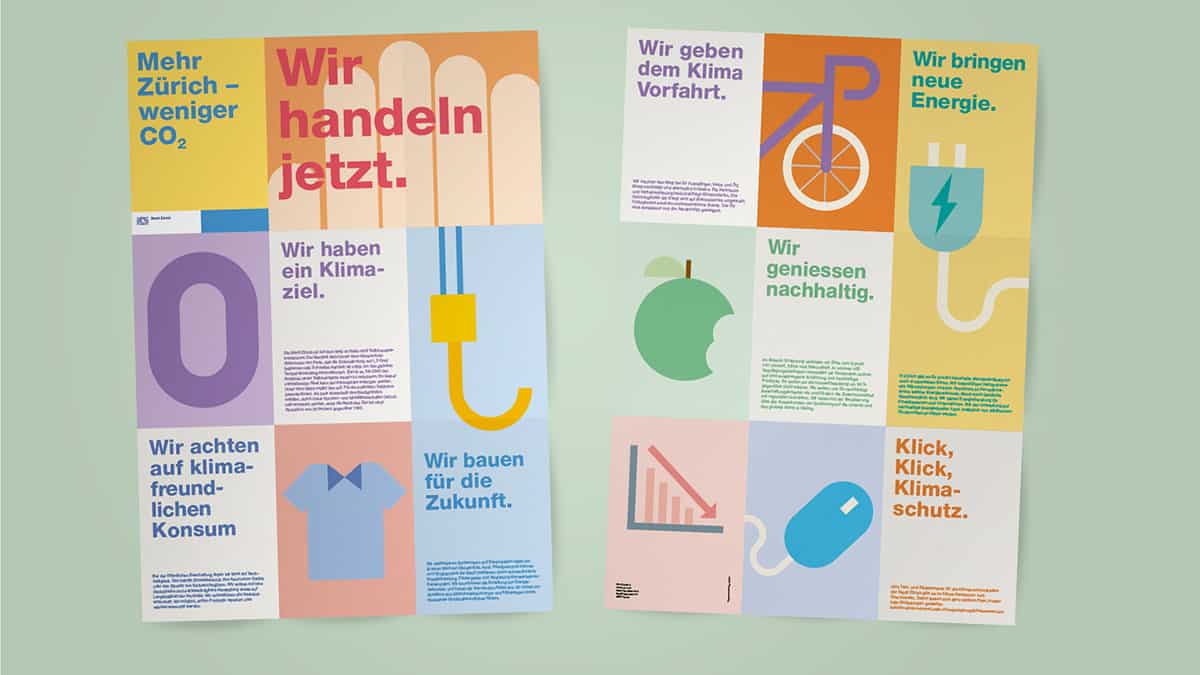
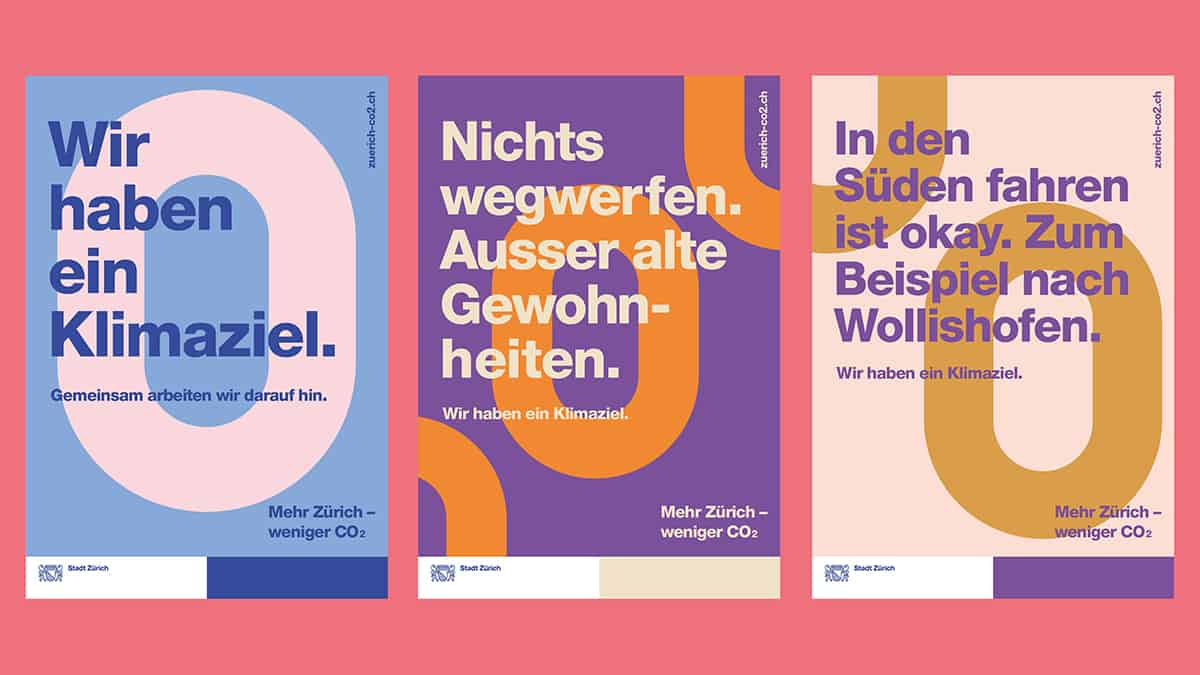
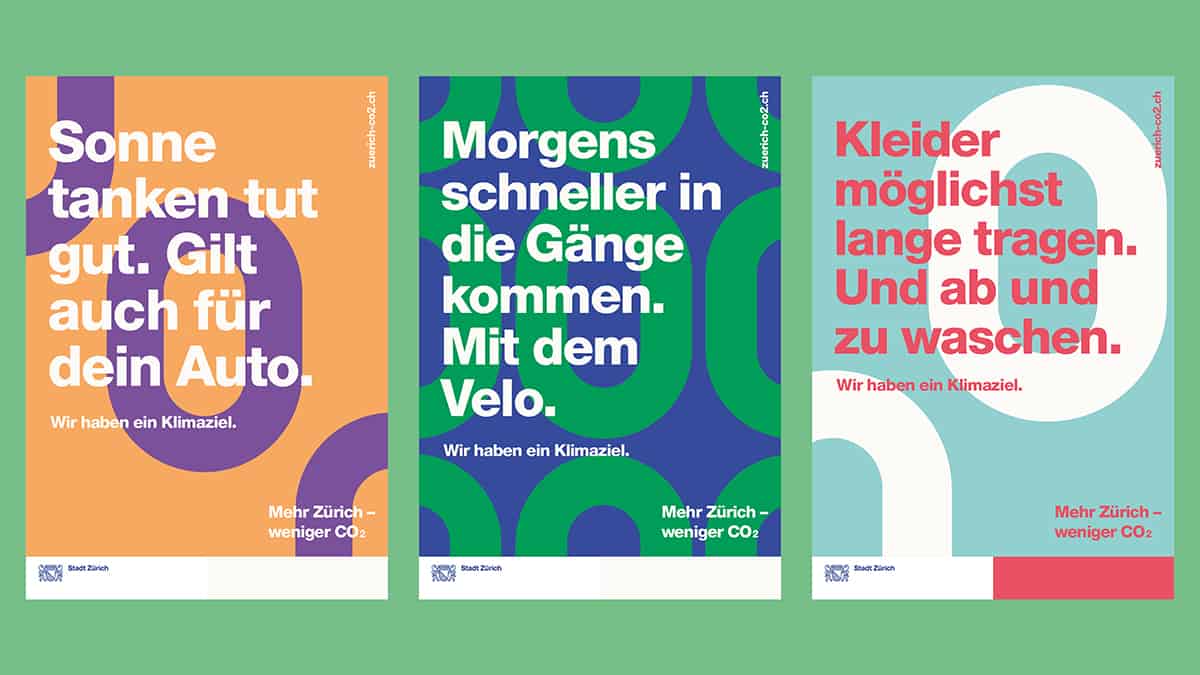
In a climate campaign, the city of Zurich and Freundliche Grüsse show how the population can participate in reducing greenhouse gas emissions to the point where the goal of "net zero" can be achieved.

This past Sunday's vote showed it: The people of Zurich want to do something for the climate. And they can. Whether in leisure time, nutrition or mobility: the behavior of residents can have a major impact on the climate-friendly development of a city without sacrificing quality of life. The city of Zurich wants to draw attention to this and encourage people to make their contribution to the climate target in their everyday lives.

Together with the Zurich agency, this theme has now been taken up and implemented in a straightforward and stimulating climate campaign. It is supported by a visually sophisticated film that shows citizens of Zurich at work and in activities - the number zero is cleverly emphasized visually in various sequences. The film is advertised as a short version, on the landing page Zuerich-co2.ch it is integrated as a longer explanatory film.

In addition, various headline subjects were implemented, which are intended to encourage people to do something good for the climate in their everyday lives in a direct yet relaxed manner.

Furthermore, the landing page contains many facts and tips on daily climate protection across all areas of life.

The campaign can now be seen on posters and digital screens, in VBZ transport vehicles and on social media (@klimazuerich), as well as OOH and digital OOH throughout the city.


Responsible at City of Zurich UGZ: Claudia Naegeli (Co-Head of Communications), Selina Galliker (Project Manager). Responsible at Friendly regards: Pascal Deville, Samuel Textor (overall responsibility), Käthy Känzig, Andrea Aegerter (consulting), Christian Stüdi, Morris Lötscher, Bernhard Brungs (text/concept), Norihito Iida (art direction), Maude Mahrer, Remo Wyss (graphics) Isabelle Schmid (social media). Responsible at Shining Film: Executive Producer: Sophie Toth. Senior Producer: Yanik Müller, Line Producer: Sandra Vacic, Director: Noël Dernesch. Director of Photography: Daryl Hefti, Editor: Martin Luchsinger, Music: Christian Stüdi, Sergio Vaccani, Carlo Onofaro. Grading: Samuel Muff.

Zimmermann Communications: Emmentaler brings back the cheese look

A modern take on tradition: Emmentaler Switzerland is giving away an e-bike with a cheese-themed design. Zimmermann Communications and Compresso developed the accompanying campaign.

Anyone who buys an Emmentaler AOP Mild or Surchoix in the Coop now has the chance to win an exclusive and limited e-bike from Thömus: Styled and designed in the cheese look that adorned the suits of our Swiss ski stars for many years.

The campaign was launched with a teaser on social media. It is resolved with a film that visually stages the cheese e-bike in the style of an exclusive product launch, but never loses its down-to-earthness with the rustic Bernese off-voice.

The campaign is currently running on TV and is supported by selectively chosen POS posters, digital advertising media and special implementations on social media channels.


Responsible at Emmentaler Switzerland: Sandra Wiedmer (Marketing & Communication Manager). Responsible at Zimmermann Communications: Ramon Alder (Art Direction), Christoff Strukamp (Creative Direction), Lara Cavelti, Florian Bieniek (Project Management), Dominik Mätzener (Managing Director Consulting), Implementation and production of digital advertising material and landing page: Zimmermann Communications, Compresso. Film and Production: Marty/Trezzini; Yves Marty (Director), Nino Michel (DOP), Gianluca Trezzini (Photography).

How the retail trade got through the Corona crisis

According to GfK’s 31st Retail Report, the pandemic has acted as a catalyst in many areas of the retail sector. The outlook for the retail sector as a whole in 2021 points to stability following an already very strong previous year. The Swiss population does not want to give up the conveniences introduced during the lockdown—such as home delivery and online shopping—even in the future.

After slight growth in 2019, the pandemic acted as an additional accelerator and Swiss retail trade grew again overall by 2.6 percent. With total retail sales of 99.1 billion, the retail trade is approaching the 100 billion mark as never before.

The winners in online retail

Following remarkable sales growth of 12.4%, Coop takes the top spot from a consumer perspective for the first time since the GfK Retail Trade Publication was published. The top 10 list of Swiss retailers with sales publication is largely unchanged since the previous year. As in 2020, there are nine Swiss concepts in the top 10. Only Ikea makes it into the top 10 companies with sales reporting for publication alongside the Swiss. Digitec Galaxus, the only digital pure player in the ranking, achieved above-average sales growth of 56.4 percent in 2020.

Not all markets benefited

The food market was a big winner in the pandemic. This was due to restaurant closures and limited cross-border shopping.

The big winner in the non-food market was home electronics, followed by DIY. Home furnishings and toys also posted encouraging gains, while the sports market stagnated and fashion was negative. In this context, it is important to mention: Even though some of the markets grew strongly, this does not mean that all retailers benefited.

Convenience remains, the physical experience becomes more important again

The desire for experiences is slowly returning among consumers - leading to dynamics in opposite directions. In the area of simplification or convenience, it can be seen that around two thirds of the consumers surveyed say they have shopped online in the last week. A third of all respondents want to use home delivery even more intensively in the future, which will necessitate new concepts in the logistics area. However, the opposite side is also exciting, the physical experience is also becoming more important again: it can be seen that consumers are again saying more often that they want to go to stationary retail in the future. While this figure was only around two-thirds just a short time ago, one in three out of four consumers now say this.

Online business continues to grow

Online growth in 2020 was additionally boosted by the lockdowns. The lack of stationary shopping options, higher demand for home electronics devices, and the increasingly large range of products offered by the major players - both nationally and internationally - were further consequences and growth drivers. The online share of retail trade in Switzerland will rise to just under 12 percent in 2020 - excluding foreign countries.

What will happen in 2021?

For 2021, GfK anticipates a net stabilization compared with 2020. Following a growing first quarter, which was only slightly impacted by the pandemic in the previous year, the second and third quarters are likely to develop stably. For the fourth quarter, GfK expects a return to normality to the greatest possible extent, including increased travel and the possibility of cross-border shopping.

Damian Schärli becomes new CEO at JLS Digital

The Swiss digital signage provider JLS Digital has arranged the succession of Patrick Minder. Damian Schärli, long-time employee and member of the management board, will take over the management of the company as of July 1.

JLS Digital has a new CEO. Damian Schärli will take over the role on July 1, 2021, according to the company. Schärli has previously held various management positions at JLS and therefore "knows the company very well," JLS writes. Two years ago, he was promoted to COO Digital Signage & Communication at JLS headquarters in Lucerne, and now succeeds Patrick Minder, who has been head of Platforms & Applications at JLS parent company Swisscom Business Customers since April. Swisscom had only taken over JLS in April (Werbewoche.ch reported).

With Damian Schärli, an experienced digital expert is taking over the management of JLS Digital. He has had a lasting impact on the company in recent years and has made a decisive contribution to JLS expanding its position as the Swiss digital signage market leader and leading digital agency. With Schärli's appointment, JLS is focusing on continuity, the company adds. Chairman of the Board of Directors Lukas Bigler says: "With the appointment of Damian Schärli as CEO, we can fill this central position with a person from our own ranks who is fully behind the strategy and, due to his background, knows and understands all areas of the company's performance in detail. The further development of the company and the growth course can thus be continued seamlessly." (Marc Landis)

This article was first published in Netzwoche.

CH Media sells Natürlich magazine to Werd & Weber publishing house

CH Media is selling the magazine *Natürlich* to Werd & Weber Verlag effective September 1, 2021. The publisher is ideally positioned to lead *Natürlich* into a successful future, CH Media states in a press release.

As of the beginning of September 2021, Werd & Weber Verlag will take over the magazine and online portal for nature, health, food and society from CH Media Natural. The Werd & Weber publishing house with seat in Thun publishes each year numerous high-quality books and magazines among other things within the ranges benefit, spare time, moving and nature. The Magazine Naturally with articles and reportages to exactly these topic fields the Portfolio of the publishing house supplements therefore ideally, so CH Media. The Thun-based publishing house will maintain the proven content concept and continue it in terms of quality. Therefore the publishing house holds to the co-operation of many years with the authors.

Samuel Krähenbühl new Editor-in-Chief

The editors-in-chief of Natural will be filled by Samuel Krähenbühl as of September. He is editor of the agricultural trade journal Swiss farmer and already an author for Werd & Weber Verlag. Krähenbühl takes over from Markus Kellenberger, who worked at CH Media for 16 years.

About the purchase price of Natural was not disclosed.

KKL: Aerosol study provides basis for further opening steps

An aerosol study conducted by the Lucerne University of Applied Sciences and Arts and SCOEH shows that the ventilation efficiency in the KKL Luzern is good for the most part. A basis for further opening steps is thus given, as the cultural center writes.

KKL Luzern

The study shows that the airflow in the concert hall largely meets expectations and that airborne contaminants are effectively dissipated in the audience area. The results also confirm that the risk of infection can be significantly minimized with consistent protective measures and that safe conditions can be created for visitors in the concert hall. These encouraging results, writes the KKL Luzern, would provide a very good scientific basis for the planned gradual opening steps over the next few months.

Together with its partners Lucerne Festival and Lucerne Symphony Orchestra, the KKL Luzern had commissioned the Lucerne University of Applied Sciences and Arts and the Swiss Center for Occupational and Environmental Health SCOEH to investigate the risk of virus transmission in the concert hall from a ventilation perspective. The aim of the study was to provide a sound scientific basis for the discussion on the upcoming opening steps for the event industry. The concert hall of the KKL Luzern is equipped with a special ventilation system in which the supply air is fed in under the seats in the audience area. This is intended to remove the aerosols emitted by the visitors and other air pollutants more effectively than with pure mixed ventilation.

The measurements were carried out at the end of April in the presence of musicians* and audience (more than 80 people in total) under realistic conditions. The ventilation effectiveness was investigated on the one hand with trace gases and on the other hand with a test aerosol in different areas of the hall, taking into account the ventilation and the activity of the room users (emitter and exposed person). The aerosols used were similar in size to those released by people breathing and speaking.

The study shows that air pollution in the public area is removed much more effectively than with purely mixed ventilation. Together with the generous design of the ventilation system and the large room volume, this results in a risk of infection that can be classified as low for the most part if the protection concept is adhered to. Only wind players and singers pose a slightly increased risk for other musicians singing or playing wind instruments without masks and for the front row of the stalls. Simple protective masks with a retention efficiency of 25 percent were used as the basis for the study. With a certified mask (75 percent) or an FFP2 mask (95 percent), the residual risk can be significantly reduced.

The results of the study are shared with the authorities and interested groups in the sense of an exchange of experiences. They have been incorporated into the test concert with over 500 guests of the Lucerne Symphony Orchestra, which was successfully held on Thursday with the highest level of safety for guests and musicians*. The results would form an important basis for the staging of Lucerne Festival from August 10 to September 12, 2021, the further opening steps of the KKL Luzern as well as the season start of the Lucerne Symphony Orchestra with its new chief conductor Michael Sanderling on October 20, 2021, the KKL writes in the statement.

For the staging of the Summer Festival, the Lucerne Festival has consciously decided to rely on a seating arrangement with safety distances in addition to the mask requirement, thus minimizing the risk of infection. The KKL Luzern uses the study as a basis to enable further facilitations for all concert organizers from July on, under constant compliance with the respective valid conditions, and to return step by step to normal operations.

The study also provides important information for the safe operation of large event venues in times of a pandemic, according to the KKL. The chosen measurement procedure can also be applied to other event venues in Switzerland with similar technical characteristics, so that they can be quickly and efficiently examined by experts.

Franz&René: new "video capsules" for Valais Valais Promotion

Franz&René is launching a new capsule series for Valais Wallis Promotion. Following the format of the eight previous episodes, this series focuses on individuals who have chosen Valais as their home and workplace.

What is the connection between an electric aircraft and a world-renowned biotech center? The answer: Valais, an innovative and dynamic canton nestled in a breathtaking landscape.

But above all, it is also the men and women who carry out these projects and put them into practice. Personalities who have chosen the canton both for its economic attractiveness and for the quality of life they find here.

That's why "Recto Verso" now becomes "Recto Perso" - a logical continuation, expressed in a simple idea, showing Valais from a personal point of view.

Two videos have already been broadcast. One about André Borschberg, former co-pilot of Solar Impulse and head of the spin-off H55. And one about Thorsten Schmidt, head of the Ibex Center (Lonza), which among other things produces the vaccine Moderna.

Produced by Imaginastudio and accompanied by an immersive sound design, the whole thing fits smoothly into the existing "chiseled into the heart" communication concept with the right social media codes..


Responsible at Valais Valais Promotion: Lucien Brantschen (Valais Expert), Laura Marro (Corporate Communication). Responsible at Franz&René: Luciano Gerber (Client Service Direction), Vincent Eichenberger (Client Service Direction & Digital), Yoann Cosson (Creative Direction), Sven Jungo (Graphic Designer, Chief of Production). Responsible at Imaginastudio (production): Pascal Forney (Director), Thibaud Maury (Chief operator), Tamara Castagnoli (Camera operator), Marc Thrill (Sound recorder), Elisabeth Péclard (Make up), Jean-Noël Yven (Sound designer).

get_footer();