Jung von Matt Limmat for Mobilar: "Treat yourself to more".

To raise awareness of Mobiliar’s youth program, Jung von Matt Limmat created a digital campaign featuring 3D GIFs. The campaign appeals not only to young people but also to their parents.

With the digitally controlled campaign "Gönn dir mehr" (Treat yourself more), Mobiliar promotes its extensive youth program. In addition to the benefits, Mobiliar also offers attractive partner benefits and savings opportunities that allow young people to simply allow themselves more freedom. This is exactly what the subjects and the campaign message are supposed to show: It's time again for more life and fewer worries. For young people, that means fun, adventure and carefree moments. The display ads were given a striking effect: repetitive movements in a loop and three-dimensionality. They pick up light-hearted situations from life and celebrate them.

Where the young cavort

With advertising channels such as TikTok and Tinder, the campaign's media mix is strongly geared to the zeitgeist of young people. In addition to additional placements on the major social media channels, advertising is also carried out on comparison portals in the home and car sectors. A dedicated landing page within the Mobiliar website provides detailed information on the youth program and, if required, leads further to the corresponding Mobiliar services for everyone up to 26 years of age.

Parents also addressed

The youth program is designed to appeal not only to young people but also to parents. After all, when it comes to choosing insurance, young people often take their cue from mom or dad. And parents of 18- to 26-year-olds probably feel a little more reassured if they know that their offspring's shared apartment or car is well insured. Using the same visuals, but with quotes from the young people as the headline, parents are reminded in a witty way that their children still have some fluff in their heads and that it is always worthwhile to rely on a reliable partner when it comes to insurance.


Responsible at Mobiliar: Yves Custer (Marketing Communications Manager), Caroline Bleuer (Digital Campaign Manager), Stéphane Dousse (Social Media Manager). Responsible at Jung von Matt Limmat: Regine Cavicchioli (Art Direction), Ian Musgrove (Graphic Design), Cla Campell (Text), Fiona Wishart, Adrian Haut, (Consulting), Anne Lang, Florence Scherrer (Strategy), Annette Häcki (Executive Creative Direction), Cyrill Hauser (Chief Client Officer). Responsible at Jung von Matt Services: Pepe Kägi, Fabrizio Rutishauser, Lisa Moser (media realization). External partners: Sabina Bösch (photographer), René Hauser (production), Janine Nussbaumer, Anna Perez (Mediaschneider).

SRF: Christian Dütschler new head of "Kassensturz"/"Espresso

The position of editor-in-chief of SRF's consumer affairs department has been filled again: Christian Dütschler will take over as editor-in-chief this fall. Until now, the 52-year-old has held the same position at the news magazine «10vor10.».

Christian Dütschler
Christian Dütschler is the new editorial director of Kassensturz/Espresso at SRF from fall 2021. (Image: SRF/Oscar Alessio)

Christian Dütschler entered television journalism in 1995 as an editor at "Kassensturz. Four years later, he moved to "10vor10. There, he first worked as an editor, later as a producer, topic planner and deputy editorial director, before taking over as head of the news magazine in 2012. During this time, he worked with the editorial team to develop the show even more into a background magazine with daily focuses and live interviews in the studio, SRF writes in a statement. Now Dütschler is returning to his journalistic roots: Starting in the fall, he will become head of SRF's consumer editorial department and will thus be responsible for the shows "Kassensturz" and "Espresso.

Before joining what was then Swiss Television, Christian Dütschler graduated from the Ringier School of Journalism and wrote for various Swiss newspapers. He studied history, political science and journalism at the University of Zurich.

"At 'Kassensturz' I learned the television craft and investigative journalism. With its advocacy and critical journalism, 'Kassensturz/Espresso' fulfills an important function in the journalistic landscape. It is a privilege to work with such a dedicated team with the highest journalistic standards," says Christian Dütschler about his new role. "The fact that I now have the opportunity to take over the management of 'Kassensturz' and 'Espresso' and thus return to my journalistic roots makes me all the more pleased."

At "Kassensturz" and "Espresso," Christian Dütschler succeeds Ursula Gabathuler, who has been Head of News Digital since April 1. (pd)

News agencies want to report in a more discrimination-sensitive way

The largest German-language news agencies want to report in a way that is more sensitive to issues of discrimination, but will refrain from using the gender star and other special characters for the time being.

This is according to a statement, the agencies AFP, APA, dpa, epd, Keystone-SDA, KNA, Reuters and SID published on Monday. The agencies see the action now agreed upon as the first step in a multi-year process. They want to "jointly monitor the development of the language over the next few years and regularly re-evaluate it in close consultation with their media customers".

For example, personal designations that are grammatically masculine but have so far been able to designate people with any biological gender - such as "the tenant" - are to be gradually pushed back. Whether news agencies will be able to dispense entirely with this so-called generic masculine in a few years "depends on the further development of the language," the statement continues.

Gender-neutral plural forms

It is also unclear whether and which special characters (gender star, underscore, colon), which are also intended to represent non-binary gender identities, will become established in general language use. "Until further notice, therefore, news agencies will refrain from using these characters," the agencies continue. A majority of media clients also do not use special characters such as gender star or underscore, they added.

So far, these special characters do not comply with the official rules of German spelling or with the general understanding or practice of the language. However, the agencies want to use a number of other options to avoid discriminatory language and make diversity visible. These include double forms - such as "students" - and gender-neutral plural forms such as "firefighters" and "professionals."

The agencies that supply their customers with multimedia as service providers want to continue to coordinate closely with their customers in the coming years. (SDA)

Serviceplan Suisse asks good questions about digitization for Swisscom

Digitization poses many questions for Swiss SMEs. Serviceplan Suisse's current campaign for Swisscom addresses the most pressing of these - and also shows where answers can be found.

Many SME bosses ask themselves: What is the best way to tackle digitization? It's a complex issue, because a company's IT not only has to be future-proof and secure, but also efficient and affordable. In its campaign, Swisscom is focusing on precisely these sticking points. The subjects show SME executives asking themselves key questions about digitization. Answers are provided in the form of online tests that can be used to quickly and easily find out whether the in-house IT infrastructure meets modern requirements, how well the SME is protected against cyberattacks, and how much digitization actually costs.

The aim of the campaign is to address SME owners as directly as possible and motivate them to take action. Through portraits photographed in authentic office environments, quoted questions written in dialect in the German-speaking part of Switzerland, and above all through concrete call-to-actions.

The communication measures developed and implemented by Serviceplan Suisse include advertisements in trade magazines and major Swiss newspapers such as NZZ, View and Le Temps as well as online banners and social media ads. Swisscom also developed and implemented social media measures internally.


Customer: Swisscom (Switzerland) Ltd. Responsible at Serviceplan: Günter Zumbach, Jan Krohn (text), Hanning Beland, Thomas Müller (art direction), Carina Kienzle (graphics), Marcin Baba (executive creative direction), Edi Walker, Selma Caglayan (consulting), Nathalie Jakober (art buying), Peter Schäfer (chief strategy officer), Sonia Ducu, Raul Serrat (overall responsibility). Production: Stories (production); Johannes Diboky (photographer).

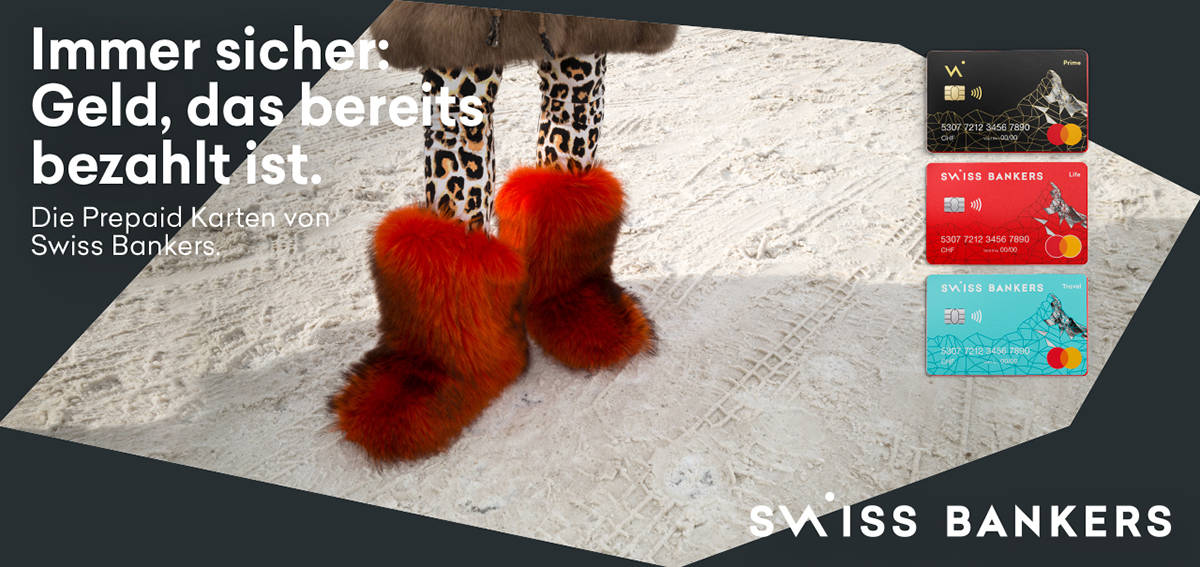
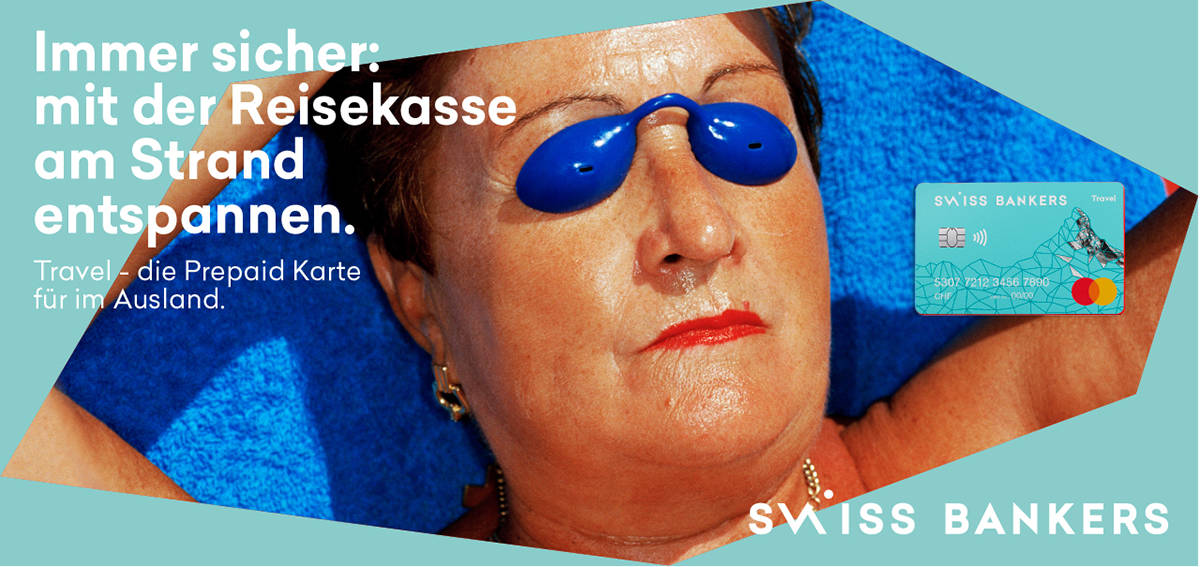
Publicis Zurich visualizes why control freaks will love Swiss Bankers

In collaboration with Publicis Zurich, Swiss Bankers« new »Control Freaks” campaign not only shows that customers have full control over their Swiss Bankers accounts, but also proves that humor and professionalism are not mutually exclusive.

Under the tagline "You can also overdo it with control - except when it comes to your own money", the brand communicates in two TV commercials and four tutorials in an exaggerated way that their customers - no matter what they like to control - are always in full control with the Swiss Bankers App service. Not only control freaks like that.

"We all have things we like to control or feel we have to control. And often we control these things even more than what is really relevant," explains Christine Florence Hansjosten, Creative Director at Publicis Zurich. "How often do we check if the alarm clock is really set compared to our account activity? How often do we know the Like count under our Instagram pictures better than our account balance? Our campaign builds exactly on this insight."

The campaign is a consistent further development of the positioning of Swiss Bankers, which defines its brand promise strongly through the theme of security. The rejuvenation of the brand and the appearance was launched together with Publicis Zurich with Swiss Bankers one and a half years ago. For this purpose, among other things, a new market presence including new imagery was conceived and implemented (Werbewoche.ch reported).    


Responsible at Swiss Bankers: Hans-Jörg Widiger (CEO), Sascha Breite (CMO), Andrea Minacapilli (Head of Marketing). Responsible at Publicis Zurich: Matthias Koller (Managing Director), Christine Florence Hansjosten (Creative Director), David Lübke (Creative Director), Hannah Züttel (Junior Art Director), Daniela Steffen (Senior Account Director), Phillipp Zubler (Account Director), Suzana Kovacevic (Integrated Producer & Head of Art Buying). Film production: Markenfilm Zurich. Greg Bray (director), Florian Studer (producer), Jingle Jungle (scoring). Production digital advertising materials: Prodigious Zurich.

Cannes Lions Vlog 2: Insights into the rehearsal day

Tanya König is on assignment as Data Presenter for this year's Cannes Lions. As part of this year's awards, she will be giving Werbewoche.ch a regular look behind the scenes. In the second vlog, she provides insights into the rehearsal on Sunday.

On Monday starts the Cannes Lions Festival. The first Lions will be awarded in the categories Pharma, Health & Wellness, Print & Publishing, Design and Outdoor. After several days in hotel quarantine, Tanya König had a day of rehearsals in the studio in London on Sunday in the run-up to the live broadcasts. In addition, she tells in her second vlog what to expect in the categories Pharma, Health & Wellness. She also mentions the special guests at this year's Cannes Lions, such as Hollywood actress Reese Witherspoon or musician Wyclef Jean.


The Cannes Lions 2021 on Werbewoche.ch

Kind regards and Schroten: What our behavior is doing to the global south

In a three-part film series, Caritas Switzerland and Friendly Greetings explain the dimensions of the term climate justice - and how it can be achieved with our help. The campaign was supported by Schroten.

So far, we are coping quite well with climate change. Sometimes the weather goes slightly crazy, but a hotter summer, dry spells or a lack of snowfall are easy to cope with in Switzerland. Most people don't notice the shrinking glaciers - and water is available in abundance.

In the global south, the situation is quite different: There, people are suffering from more frequent droughts, stronger storms, floods - and thus from a loss of harvests and income. The climate crisis is exacerbating hunger and poverty. But what does that matter to us? What does "just" mean in this context? And what is sustainable development policy in times of climate crisis?

In a three-part film series - developed and edited by Adrian Schräder of the Schroten agency in close cooperation with Caritas Switzerland, and produced by Mattogrosso Films - presenter Hannes Hug explores the dimensions of the climate crisis, talks to experts from the fields of climate, ethics and development policy, and is shown what Caritas Switzerland is doing in Tajikistan, Bolivia and Mali to help the farmers. In addition, directly affected people from these countries have their say and explain how climate change, which is the fault of the industrialized countries, confronts them with major and threatening challenges.

The three approximately five-minute films highlight the major global challenge of climate justice and our realistic, active approach to it. From now on, they will be distributed digitally and shown in the newsletters, on the social media channels and at the Caritas website played out.


Responsible at Caritas Switzerland: Reto Urech (Head of Fundraising and Marketing), Nicole Lehnherr (Team Leader Private Fundraising), Christoph Keiser (Responsible Online Fundraising); responsible at Friendly greetings: Pascal Deville, Samuel Textor (overall campaign responsibility), Kathy Känzig (consulting). Partner Agency Content: Schroten. Adrian Schräder, Michèle Roten (overall responsibility and editing). Production Company: Mattogrosso Films. Benjamin Weiss (producing & directing), Atila Ulcay (cinematography), Jessie Fischer (editing), Gabe Noel (music).

Positive tones and joy ensure advertising success

Empathy and positive messages are very important in digital campaigns for the BFSI sector—banks, financial service providers, and insurance companies—as a study by Instoried shows. The company evaluates the emotional content of the messages, their tone, and the relevance of the written content.

"In recent years in particular, we have recognized that emotions play a major role in consumer decision-making," the study states. There have already been several studies that have focused on the effects of empathy on consumer purchases. However, the effects of empathy in digital marketing have not yet been investigated.

Instoried analyzed ads and social media posts between January and May 2021 using its proprietary sentiment tool, which is capable of displaying the percentage of different tones and emotions in a provided text. Included were 500 ads on Google placed by various companies from the BFSI sector and 5,000 social media posts from the same sector and the 'likes' they received.

Positive tones and joy

The sentiment tool uses artificial intelligence (AI) to detect the percentage of positive, negative and neutral tones in each piece of text. At the same time, the tool can also display the percentage of emotions such as joy, anger, fear, sadness and surprise. By simply inserting a text into the tool, tonality and the emotional quotient can be checked. This data was cross-correlated with the associated likes and the number of views of the corresponding messages.

The emotion evoked by the most successful ads was joy. Surprise was the worst received. The prime example was the Indian insurer ICICI Prudential Life. It received the most likes on Instagram and Twitter. The dominant tone was positive and the dominant emotion was joy. (pte)

Giants CEO Christian Ammann becomes advisory board member at MYI Entertainment

The esports and gaming agency MYI Entertainment is expanding its advisory board. Christian Ammann, founder and CEO of Giants Software, has joined the board.

With the arrival of Dominik Allemann and Sven Ruoss, MYI Entertainment established its Advisory Board in September 2020. The agency is now strengthening this with Christian Ammann. "Christian's experience in the gaming industry is unique: His team and he have turned a Swiss start-up into one of the biggest game developers in Europe. We also want to grow beyond the country's borders and Christian's know-how as well as his broad network will be able to drive MYI Entertainment's expansion," says CEO Cédric Schlosser, explaining the choice.

Christian Ammann was one of the developers of Farming Simulator in 2008. The simulation game series is the most successful game developed in Switzerland. Farming Simulator has sold millions of copies and since 2019 has also launched its own Esports competition, the Farming Simulator League.

The reception situation explains the advertising impact

Screenforce's "Track the Success" study focused on the reception situation during media consumption. The results show that perception and reaction have an influence on contact quality, which leads to differences in advertising impact between channels.

Screenforce, the initiative of TV and moving image marketers in Germany, Austria and Switzerland, presents the experimental DACH study "Track the Success", the further development of the highly regarded advertising impact study "Not all Reach is Equal" from 2020. Once again, the study compares the impact of identical advertising spots on different media channels -TV, BVOD, YouTube and Facebook. This year, however, the focus is on the reception situation during media consumption.

At its core, "Track the Success" explores the question of how viewers and users receive media content and what implications this reception situation has on the impact of advertising. Three factors were examined for this purpose: Perception, Reaction and Impact. Perception" includes all variables relating to the technical playback of the advertising: how long the advertising was played, with which sound setting and which screen coverage. The second factor is the viewers' visual attention: How long did they look at the screen during the ad?

"Reaction" means emotional response and activation. How well does advertising succeed in emotionalizing the viewer? Are they more relaxed or activated when viewing content and advertising?

"Perception and reaction are decisive for the effect. They describe the reception situation in detail and thus provide indications of the contact quality, which ultimately explains the differences in impact," explains Malte Hildebrandt, Managing Director of Screenforce Germany. "With the Track the Success study, we can validly prove on the basis of high case numbers that TV and BVOD are clearly superior to YouTube, but especially Facebook, in all categories examined."

Memory best with TV advertising

Advertising on TV is particularly effective. It is best remembered spontaneously and is also ahead in aided recall. In comparison, TV achieves the strongest effects in free advertising recall with 52 percent, followed by BVOD (44%). The US platforms YouTube (34%) and Facebook (30%) follow in 3rd and 4th place.

TV is also ahead in terms of aided advertising recall with 60 percent, while BVOD is almost on a par with 57 percent. YouTube (47%) and Facebook (43%) place well behind. These significant differences in impact are all the more remarkable because BVOD and YouTube were each tested half on smart TV and half on smartphone. This does not correspond to the real distribution of usage. BVOD offers are predominantly used on the smart TV, YouTube on the smartphone. This tends to give YouTube an advantage in the context of the study. This is all the more true because only non-skippable ads were tested on YouTube to ensure the fairest possible comparison of the media.

Skippable advertising is much more widespread in reality, however. On Facebook, half were optimized commercials. The ranking of the media in advertising recall is identical for Germany, Austria and Switzerland, with slightly varying figures.

Purchase intention difficult to influence

Purchase intention is generally more difficult to influence because it depends on several factors. The differences are therefore smaller, but the pattern remains the same. TV and BVOD are tied with 26 percent each, followed by YouTube (23%) and Facebook (20%).

Emotionalization influences attention

Looking at the overall emotionalization during attention to the ad, BVOD is in first place with 6.1 seconds, followed by TV (5.4 sec) and YouTube (5.3 sec). Facebook (1.7 sec) cannot achieve comparable emotionalization. Positive emotions are so important because people are then more receptive to advertising messages. Consumers who are positively associated with a brand are generally also more willing to buy.

Emotionalization: Differences between content and advertising

The differences between content and advertising are also striking. In TV and BVOD, advertising has a comparably strong emotional impact as content. (TV: content 33%, advertising 31% // BVOD: content 38%, advertising 35%). For YouTube, the discrepancy is somewhat greater, at minus 5 percentage points (content: 35%, advertising 30%). At minus 21 percentage points, the losses to content are highest on Facebook (content: 33%, advertising: 12%).

De- and tense reception

TV as a lean-back medium shows a relaxed state of viewers during advertising, while YouTube as a lean-forward medium shows a somewhat more tense reception of advertising. This indicates a stronger disturbance by the advertising. BVOD sorts itself in between. With Facebook, the fleeting nature of the contact means that the spots are not very activating.

Change between content and advertising is perceived differently

TV shows a balanced activation level during advertising and content. On Facebook, the changes between content and ad are too fast to lead to large breaks in activation. The break is all the more obvious with YouTube: Whereas with TV, advertising is learned and accepted and "runs with it," a change between content and advertising on YouTube generates significant fluctuations.


For the study "Track the Success" Eye Square created 549 so-called "in-home media ethnographies" in the period from January to March 2021. This refers to precise recordings of the media usage behavior of study participants in their familiar surroundings. This procedure offers the great advantage of mapping reception behavior as undisturbed as possible and thus as close to reality as possible. An online survey of the participants, in which classic advertising impact parameters such as advertising recall and purchase intention were determined, rounds off the study design. Eight different advertising media from brands in various industries were analyzed. The study results are available at Screenforce.ch available for download.

ProCinema and Allianz Suisse bring back the great cinema

After many months spent in front of small screens, Switzerland can once again look forward to the movie theater experience. As part of the Allianz Day of Cinema, Switzerland will celebrate a major film festival on September 5, 2021. With a trailer spot brimming with love for the cinema, ProCinema and Allianz Suisse aim to entice movie fans back to the theater.

The trailer uses all the means of cinema to tell the charming story of how an enthusiastic cinema fan seduces two stay-at-home girls to go to the movies - and possibly finds the great love in the process. The Kacey Mottet Klein could be won for the leading role.

For the trailer, Kacey Mottet Klein shows off her talent in a variety of roles - in the lusty action scenes across film genres as well as in the close-ups of the tender love story.

An agency team for cinema

The film story was invented by creatives Flavio Meroni and Beat Egger, who joined forces with strategist and consultant Reto Alborghetti to form the Alliance Day of Cinema agency team. The production was realized by Shining Film and director Marco, the soundtrack is by Great Garbo.

"The Seducer" premiered Thursday in more than 550 theaters, launching the advertising campaign for Alliance Cinema Day 2021. Other versions will appear on TV and online. In the cinemas themselves, the film runs in full length in the trailer block.

Alliance Cinema Day: a thank you

With the "Alliance Day of Cinema"On September 5, 2021, for the fifth time in 226 cinemas in Switzerland and Liechtenstein, Swiss cinema operators and distributors will be thanking the public with movie experiences at a ticket price of 5 Swiss francs. The "Alliance Cinema Day" is made possible by ProCinema and the title sponsor Allianz Suisse.


Responsible at ProCinema: René Gerber (Secretary General ProCinema, overall responsibility), Brigitte Müller (BM Conseils, strategy, concept and project management). Responsible at Allianz Suisse: Thomas Wegmann (Head of Market Management), Thomas Jost (Brand Management & Sponsoring)m, Marcel Wolfgramm (Sponsoring & Hospitality), Tanja Cereghetti (Sponsoring & Hospitality). Agency Team: Flavio Meroni (CD/AD), Beat Egger (concept/text), Reto Alborghetti (strategy/consulting). Responsible for Shining film (Film Production): Stefan Bircher (Executive Producer), Marco Lutz (Director), Ralph Bätschmann (DoP), Gabi Benz (Production Manager), Glaus Casting (Casting), Peter Scherz (Art Department), Christoph Menzi (Edit), Dominic Frei (Colorist), Great Garbo (Music), Jingle Jungle (Sound Studio).

BrinkertLück invests in new project of Viva con Agua

The environmental organization Viva con Agua is launching a new project by taking over a hostel in Cape Town. Among the investors is the Brinkertlück agency, based in Hamburg and Zurich.

(Image: Andrin Fretz)

In spring 2021, Viva con Agua took over "The Backpack", the oldest hostel in Cape Town. With this step, the organization, which campaigns worldwide for safe access to clean drinking water and basic sanitation, is writing a new chapter in social business. The Villa Viva project will be financed for at least ten years by 20 friendly investors.


Among the investors is BrinkertLück. The agency, which is based in Hamburg and Zurich, is supporting "Villa Viva" with a total of 50,000 euros. "I have been thinking for a long time about how our agency can become more involved in the responsible use of water worldwide and support Viva con Agua. Villa Viva is now the perfect option. I am convinced that our world needs more space for creative joie de vivre with social added value," Raphael Brinkert, managing director and founder of BrinkertLück in Hamburg, was quoted as saying in a statement.

Villa Viva" is a place in Cape Town where friends and supporters of Viva con Agua can meet and work on projects and ideas together with committed locals. The proceeds from the overnight stays and the gastronomy flow directly into regional projects of the organization.

get_footer();