Information and communication technology needs skilled workers

According to a new study by the National Association for ICT Vocational Training, the demand for skilled workers in the rapidly growing field of information and communication technology (ICT) is rising even faster than previously expected. A total of 117,900 additional ICT professionals will be needed by 2028.

Kommunikationstechnologie

If this additional demand were to be met, 35,800 more people would have to be trained than today, according to the study. According to the study, the ICT occupational field is growing almost four times as fast as the average for all occupations: Within nine years, the number of ICT employees has increased by 50 percent and now numbers 242,600.

With today's efforts, only 70 percent of the additional ICT specialists expected to be needed by 2028 can be met by new graduates and immigrant ICT specialists entering the labor market. Companies in all sectors, as well as the public administration, must take responsibility for ensuring a sufficient supply of young ICT professionals, Serge Frech, managing director of ICT-Berufsbildung Schweiz, was quoted as saying in a media release.


Significantly more apprenticeships needed

In the last ten years, the number of ICT apprenticeships has increased by 43 percent to 9,700, says Frech. In view of the enormous demand, however, much more needs to be invested in ICT apprenticeships and further training. In addition, a more balanced gender ratio in ICT professions should be strived for.

Andreas W. Kaelin, President of ICT-Berufsbildung Schweiz, assumes that the Swiss education system will not be able to meet the rapidly growing demand for ICT specialists, despite extraordinary efforts. Therefore, it must continue to be possible in the future to obtain the required specialized ICT specialists from abroad in a simple manner. (SDA)

Big data analyses show that Trump will probably win the election

Election campaigns are no longer limited to posters and speeches. Instead, the race is shifting to the digital realm. This is likely to work in Donald Trump’s favor: Based on internet analyses, Swiss researchers predict he will win in November 2020—contrary to all poll results.

Umfragewerte

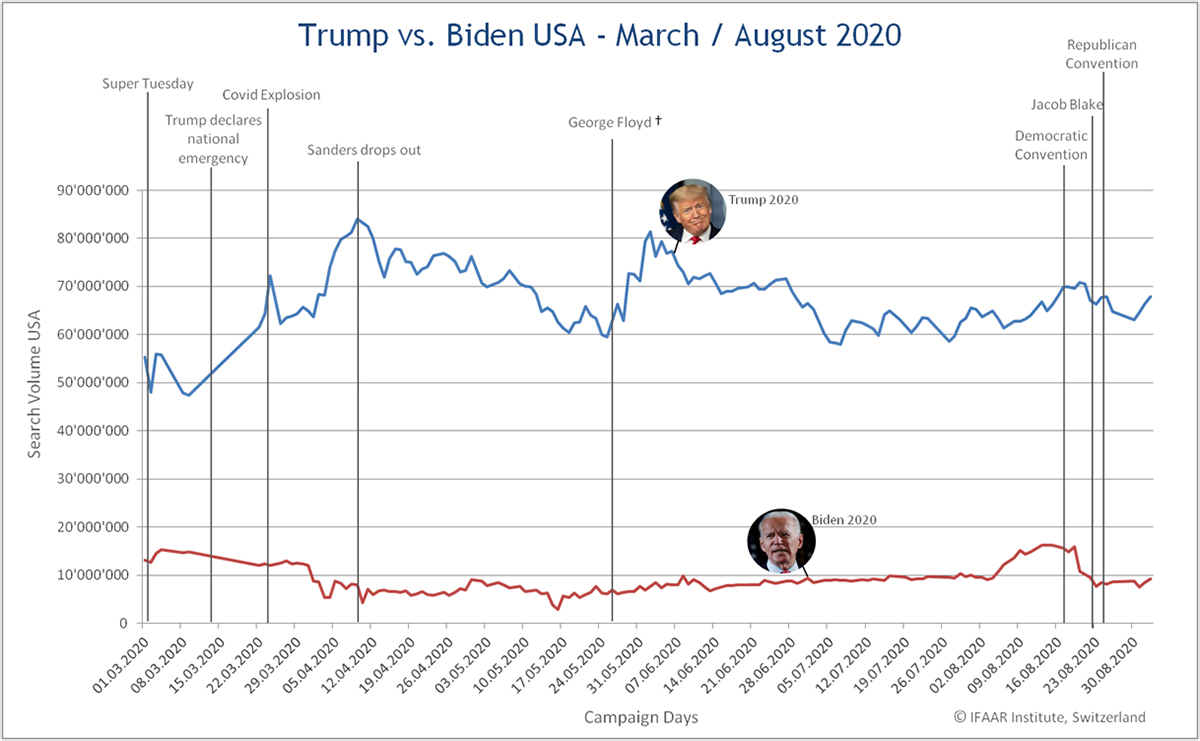
Donald Trump is stealing the show from his likeness Joe Biden on the internet. US citizens searched for the name of the incumbent president on the internet five times more often than that of the Democratic presidential candidate.

This was the finding of researchers led by Christoph Glauser from the IFAA Institute in Bern and Jacques Savoy from the University of Neuchâtel. They analyzed search queries on a total of 200 search and social media channels in the USA since the beginning of this year. They presented the preliminary results to the media on Thursday.


The avid Twitterer: Visibility-Trump

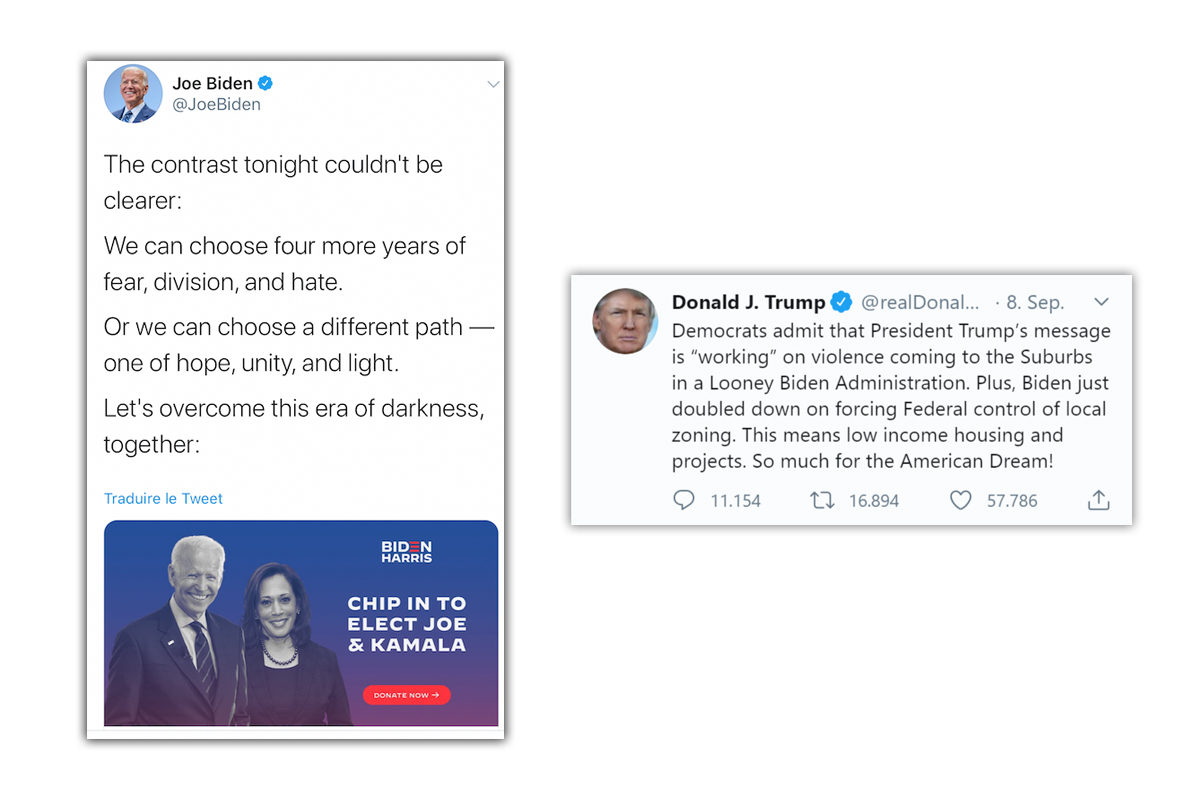
The researchers used computer-aided methods to analyze the tweets of the two candidates. The incumbent president posted an average of 37 tweets per day, while Biden only posted 14. "Visibility is crucial, especially in personal elections," said political scientist Glauser in an interview with the news portal Keystone-SDA.

While Trump focused on emotions such as fear and anger in his messages, Biden insisted on moral values. He also criticized Trump's approach to the Covid-19 pandemic.

Umfragewerte

No profit from Sander's departure

It is true that Trump's poll ratings plummeted during the pandemic. However, Biden never came close to his opponent on the internet during this time either. Nor in the first two weeks of August, when his campaign experienced an upswing thanks to the announcement of vice presidential candidate Kamala Harris.

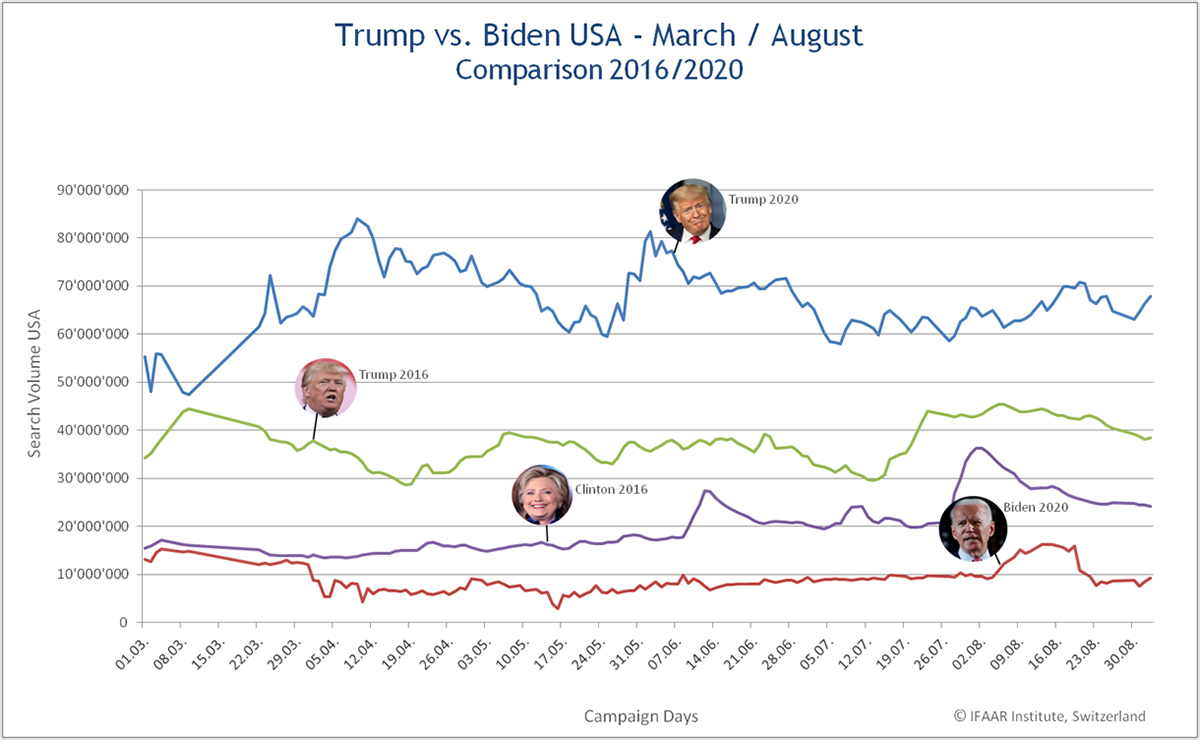
Unlike Hillary Clinton four years ago, he also failed to win over Bernie Sanders' supporters to his side after he dropped out of the election campaign. "The Democrats really slept through that," said Glauser. That's no way to win an election campaign. Biden's search volume did not even come close to that of Hillary Clinton in 2016.

Umfragewerte

Bad websites

The researchers also analyzed the campaign websites - and gave the candidates a poor grade: "Neither website is really cool or technologically advanced," said Glauser. However: Trump hits the nerve of his voters on the website six percent better than Democrat Biden.


Comprehensive mood picture

Does Christoph Glauser trust his own analyses? "Certainly more than any survey," he says. "Our evaluations give a more comprehensive overall picture of the mood among the population."

He cites the Black Lives Matter movement as an example. Although a powerful wave of protest erupted on the streets after the death of George Floyd, the movement hardly gained any momentum on the internet - and Biden did not benefit.


President Trump already predicted in 2016

During the 2016 election campaign, all forecasts and digital channels were already betting on a Hillary Clinton victory. Even then, however, analyses by the research team showed that Trump would probably emerge from the election as president.

The team will now continue its internet analyses beyond the presidential elections. But: "I would be sorely mistaken if the Democratic presidential candidate could make up the ground by November," concluded Glauser. (SDA/swi)

Zimmermann Communications invites you to the fabulous Emmental valley

Zurich agency Zimmermann Communications has launched a Wheel of Fortune promotion for Emmentaler AOP.

zimmermann-glücksrag-promo-02

Anyone who buys a piece of Emmentaler AOP Mild at Migros now also gets the chance to visit Casino Emmental and spin the digital wheel of fortune. There are various prizes to be won: In addition to adventure tours of the Emmental show dairy or sets of Jass cards, there are also Migros vouchers - and the grand prize is 5,000 Swiss francs.

The national promotion in cooperation with retail partner Migros consists of a coordinated mix of online and POS measures, supported by social media activities.

zimmermann-glücksrag-promo-01

Responsible at Emmentaler Switzerland: Luana Monopoli (Marketing & Communication Officer); Sandra Wiedmer (Marketing & Communication Manager). Responsible at Zimmermann Communications: Christoff Strukamp, Ramon Alder, Marietta Mügge (creation); Florian Bieniek (project management); Dominik Mätzener (consulting). Film and 3D production: Tuna Production.

Ruf Lanz lets VBZ present the traffic jams on Radio 1

Ruf Lanz demonstrates for VBZ, using the latest Radio 1 traffic reports, that switching to public transit is worth it.

Radio 1 regularly informs its listeners in the greater Zurich area about the current status or gridlock on Zurich's roads. After all, traffic in Zurich is almost always at a standstill, backed up or gridlocked somewhere. Now, after each of these traffic reports, the smart solution is offered: "VBZ Züri-Linie. It pays to change trains.

Because the VBZ recently present the traffic news on Radio 1 and thus call themselves to the attention of congestion-plagued motorists at exactly the right moment as a time and nerve-saving alternative. The trenchant idea comes from Ruf Lanz, VBZ's lead agency of many years, and has been implemented in close cooperation between VBZ, Ruf Lanz and Radio 1.

Werbewoche.ch presents four examples - representative of countless broadcasts:


Responsible at VBZ: Silvia Behofsits (Head of Corporate Communications), Jörg Buckmann (Corporate Communications), Sherin Madassery (Corporate Communications). Responsible at Ruf Lanz: Markus Ruf, Danielle Knecht-Lanz (Creative Direction), Markus Ruf (Text), Miro Poffa (Consulting).

Swiss Radioworld is back in Küsnacht

During the lockdown—and thus virtually unnoticed by the public—Swiss Radioworld moved from Zurich Wollishofen to Küsnacht.

Swiss Radioworld

In Küsnacht Goldbach, the radio broker Swiss Radioworld shares office space with Goldbach Audience. Also moving into the new offices are the employees of the newly established Goldbach unit AdManufaktur, headed by Martin Radelfinger.

The offices are located in the same building as Goldbach's headquarters, but have their own entrance. The project was planned long in advance and coincided exactly with the time when everything was at a standstill. In March 2020, the boxes were already packed up and transported from Wollishofen to Küsnacht. Due to Corona, however, the office space with a view of Lake Zurich could only be gradually occupied after the lockdown. Even today, the spaces are only occupied as far as the clearance rules according to BAG allow.

Since the Swiss Radioworld team did not fully utilize the office space in Wollishofen, the lease was not renewed.

Parliament approves VAT refund scheme

For years, value-added tax had been unlawfully levied on radio and television reception fees. Now, households are to receive a one-time lump-sum reimbursement of 50 francs. Parliament has approved this solution proposed by the Federal Council.

Parlament

After the Council of States, the National Council also approved a corresponding federal law on Thursday. The decision was made unanimously with 2 abstentions. The bill is therefore ready for the final vote. The credits on Serafe invoices could be made as early as next year, as Media Minister Simonetta Sommaruga announced.

The committee agrees with the Federal Council and the Council of States that a flat-rate fee could prevent a disproportionate administrative burden, said spokesperson Philipp Matthias Bregy (CVP/VS). In addition, fee payers would be relieved as they would no longer have to submit individual applications. "This is a pragmatic solution."

The Council of States had added a provision allowing companies to claim a lump sum. The National Council also approved this addition. The Federal Council could live with the new paragraph, said Sommaruga.

Accordingly, companies are entitled to a refund if they have paid fees for commercial or business reception and have not deducted input tax. The Federal Office of Communications (OFCOM) is instructed to offer a simple procedure for reclaim requests. In addition, it should be expressly mentioned that lump-sum compensation is also possible.

A minority in the National Council requested that the lump sum in favor of households be increased to CHF 60 so that the entire interest payment could be reimbursed. The motion was narrowly defeated by 95 votes to 80 with 6 abstentions. There are therefore no differences with the Council of States. (SDA)

Mobilezone launches brand for used smartphones

The mobile phone retailer Mobilezone also plans to sell used smartphones. To that end, the company is launching the «Jusit» brand, according to a press release issued Thursday.

Mobilezone
(Image: Mobilezone)

The smartphones came from Mobilezone's trade-in program, the company further writes. The returned new devices and used smartphones would be checked, refurbished if necessary and then put up for sale. This extends the life of the devices by two to four years, which is good for the environment.

The reconditioning is carried out by the Mobilezone subsidiary Mobiletouch, which describes itself as the largest workshop for smartphones in Switzerland.


Slight signs of use possible

Each smartphone must pass the original manufacturer's test and perform as well as a new device, according to the specifications. Technicians also performed a professional data wipe and clean on each one and installed the latest software updates.

"Jusit" offers the devices in three quality categories "Like new", "Very good" and "Good", it adds. In the last category, the smartphones may show slight signs of use, which can also be felt with the fingers. (SDA)

National Council wants to tackle print and online promotion together

The National Council wants to tackle the promotion of traditional print and new online media together. On Thursday, it narrowly rejected a division of the bill, as demanded by the Commission.

Nationalrat
(Image: Béatrice Devènes)

The decision in the large chamber was made by 109 votes to 84 with one abstention. The National Council's Telecommunications Committee must now deal with the bill again. It has the task of preparing the package of measures in favor of the media submitted by the Federal Council and already adopted by the Council of States.

The proposal of the committee minority was accepted with votes from the SP, Greens, GLP and a majority of the center group. They are of the opinion that media funding should be geared more towards the growing use of digital media. "We doubt that funding for online media will be promoted in any other way," said Isabelle Pasquier-Eichenberger (Greens/Geneva). All channels are affected by the structural change in the industry, so all channels should also be supported.


Controversial constitutionality

The SVP and FDP advocated separate treatment of print and online promotion. They doubted that the planned promotion of online media is constitutional. "We cannot pass laws for which we have no constitutional responsibility," said Gregor Rutz (SVP/ZH).

Christian Wasserfallen (FDP/BE) also said that the first-time promotion of online media should be carefully considered. More hearings are needed and alternative support models must be examined. In order not to lose any time on the uncontroversial parts of the bill, it would make sense to shorten it.


Offensive by the media associations

In the preliminary consultation committee, this argument had still convinced a narrow majority. The State Policy Committee (SPK) had also spoken out in favor of tightening the package in a joint report.

In the meantime, the wind has changed. The lobbying offensive by various media associations does not appear to have failed to have an effect. They warned that splitting up the package would jeopardize the entire bill. In addition to the SVP, which rejects state support for the media for fundamental reasons, left-wing representatives also threatened to vote no in the overall vote if online funding was excluded.


Against pure structural maintenance

The Center Group tipped the scales. A majority supported the rejection motion. "A package should not be unnecessarily unraveled," said Martin Candinas (CVP/GR). In addition, the Federal Council's online funding concept was well thought out. The offers would remain independent and there would be no performance mandates.

"Media funding in 2020 that does not take digital media into account would not be in keeping with the times," said SP parliamentary group spokesperson and former journalist Matthias Aebischer (SP/BE). Supporting only the printed press would be pure structural preservation, said Katja Christ (GLP/BS). "Even a parliament with an average age of over 55 years that can still get something out of the daily trip to the letterbox should recognize this."


"Beautiful gift basket"

Fundamental opposition to media funding was only voiced by the SVP. Rutz described the bill as a "hodgepodge of different concerns" and a "nice gift basket with something for every taste".

However, the other parliamentary groups see a need for action. "The media are the fourth estate in the state, they monitor and inform," said committee spokesperson Philipp Kutter (CVP/ZH). The industry has a problem: "Readers are only slowly getting used to the fact that digital media channels also have to be paid for." This structural change must be slowed down and support from the state is needed.


No quick solution in sight

After being referred back to the committee, the National Council will probably discuss the bill again in the winter session. The media package could be finalized in spring 2021 at the earliest; according to the usual deadlines, entry into force would be realistic at the beginning of 2022 at the earliest.

The timetable is not insignificant. The coronavirus pandemic has further accelerated structural change in the media industry. Many newspapers are struggling to survive, with hundreds of jobs being cut in the coming months and years.


Three-pillar model

The Federal Council had already put together the package of measures for the media before the coronavirus crisis. It consists of three pillars. Firstly, a revision of the Postal Services Act is being proposed, which would expand the existing indirect press subsidies. This is intended to provide more comprehensive support for the printed press and allow more titles to benefit from reduced postal delivery rates.

To this end, an increase in funding of CHF 20 million to CHF 50 million per year is planned. The Council of States and the National Council's preliminary consultation committee also want to include support for the early delivery of newspapers, including the Sunday press, in the package of measures. This would cost the federal government an additional CHF 40 million per year. The association and member press will now receive CHF 30 million per year instead of CHF 20 million.


30 million francs for online media

Secondly, a revision of the Radio and TV Act will finance new measures that will benefit the entire media system. These include support for journalistic training and for news agencies as well as a funding pot for IT projects in the sense of industry solutions. Two percent of the radio and television levy, around CHF 30 million per year, is earmarked for this purpose. This part is uncontroversial.

Thirdly, the Federal Council is presenting a new law for the promotion of online media. This is intended to support paid journalistic services that offer professional digital public service journalism for ten years. CHF 30 million per year has been budgeted for this purpose. The models are indirect, with no performance mandates. According to the Federal Council, editorial freedom will be preserved. (SDA)

How local businesses can strengthen their sales for the holiday season

A study by Rakuten Advertising shows that local retailers were able to benefit from increased consumer attention during the COVID-19 crisis. Now they need to come up with effective strategies for the holiday shopping season. After all, despite the crisis, German consumers’ Christmas budgets remain secure.

Weihnachtsgeschäft

During the coronavirus-related restrictions, local retailers were able to benefit significantly from increasing consumer awareness. 27% of German consumers shopped more at local retailers. This figure even rose by a further five percent after the restrictions were eased.

Local retailers should not ignore two further findings of the study for the upcoming holiday season: the ever-growing online trade and the certainty that, despite the crisis, consumers' budgets are not at risk this Christmas. This is because the majority (60 percent) do not plan to reduce their gift budgets this year. They can use this to their advantage to generate sales despite the continued preference for online shopping. This requires targeted marketing and online strategies.


Festive mood despite Covid-19: gift shopping mainly online

Due to the nationwide restrictions, German consumers sought shopping alternatives without exposing themselves to the risk of possible infection. 52% therefore opted for the internet. There was also an interesting development in the local retail sector: initially out of solidarity, German consumers increasingly shopped at local stores, which were primarily reliant on in-store retail before the outbreak of the coronavirus pandemic - as long as they had an online offering or were able to set one up at short notice. Interestingly, however, the proportion of those who increased their household budget in favor of local stores continued to rise after the easing of measures (33%).

Shopping behavior in the second half of the year will therefore be shaped by two trends in particular: Firstly, the majority of German consumers will continue to use online offers to make their purchases. Secondly, more than half of German consumers (51%) will focus their shopping on the upcoming holidays in December, while 36% will also use special promotional days such as Cyber Monday for their purchases.

Even in times of crisis, German consumers are looking forward to the festive season and do not want to miss out on buying presents. Even the threat of a second wave of infection does not seem to be dampening this anticipation: German consumers are not planning to reduce their household budget for the upcoming Christmas holidays - even if nationwide restrictions come into force again. A total of 85% are leaving their budget at the same level as last year (53%) or are even planning to increase their budget for this purpose (32%).


Consumer First: Local retailers need to realign their strategies

This presents a great opportunity for local retailers to play at the top in the long term: SMEs can use the attention that customers are now paying to local retail to retain consumers in the long term during the holiday season and generate sales despite the prevailing pandemic.

To do this, small and medium-sized companies must adapt their marketing strategies and online offerings to the trends that will dominate the second half of the year. In addition, 26% of German consumers stated that they would prefer to buy from national retailers. Aspects relating to shipping, such as shipping costs, customs duties and delivery times, are still the main reasons for not wanting to make purchases on international markets.

International retailers can offer their customers incentives to counteract their concerns. For example, they can ensure that their stocks are always up to date and full. Immediate availability speeds up lengthy processing procedures and consequently reduces shipping times. In addition, in the event of a return, for example, they can waive shipping costs that would otherwise be imposed on consumers in order to make shopping in their store more attractive for international customers.


Savings are still being made

Even if the majority of German consumers are not planning to reduce their budget, they still love to save money: Around a third of consumers said that sales promotions and other offers would influence them in their Christmas shopping. Free shipping (26%), discounts, coupons and vouchers (22%) and special deals such as "2-for-1" (21%) are the most convincing special offers.

The Christmas season could open up additional target groups and therefore additional sales markets, even for local retailers in Germany: The majority of French and Chinese consumers (46% each) stated that they plan to expand their gift shopping to the European market at the end of this year and the beginning of next year respectively.


Finding the right strategy

"During the COVID-19 restrictions, consumers supported the local retailer next door out of solidarity so that they would not have to close their business for good due to crisis-related losses. These retailers must now use this new awareness for the Christmas business," says Stefan Bernauer, Country Manager DACH at Rakuten Advertising, commenting on the commitment of German consumers. "The trend towards increased online shopping, which has picked up speed during the restriction periods, will continue in the second half of the year through to the holidays. Local businesses can also take advantage of this development by optimizing their online customer experience and targeting consumers and their plans for the coming months."

Another way to attract German shoppers in the coming months is the use of deals and discount campaigns: A well-placed special offer in the online store that is individually tailored to (potential) customers can be a good argument for choosing a product from the small company next door.

On behalf of Rakuten Advertising, Qualtrix conducted a survey in June and July 2020. Online survey The survey was conducted among a total of 8,673 adults in 15 countries and regions: Germany, France, the United Kingdom, Brazil, Australia, Canada, China, Hong Kong, New Zealand, Singapore, South Korea and the USA.

The finalists of the EY Entrepreneur Of The Year 2020 have been determined

On Friday, EY announced the finalists for the 23rd edition of the EY Entrepreneur Of The Year competition in Switzerland. From among 60 participating entrepreneurs from Swiss companies, the independent jury selected 15 finalists. The awards gala will take place virtually on October 30.

EY Entrepreneur

Traditionally, the award ceremony for the "Entrepreneur Of The Year" takes place as part of a festive gala event. Due to the current situation, EY has decided to hold this year's competition anyway, but to announce the award ceremony in the form of an online gala on October 30. The award show will be broadcast live via the Internet from a virtually recreated gala location, and guests will also be able to find out virtually about the nominated entrepreneurs and communicate with each other through a live chat.

The 15 finalists will compete for the title of "Entrepreneur Of The Year 2020" in four categories.


Category "Service/Trade

Jan Schibli, CEO, Hans K. Schibli AG

33-year-old Jan Schibli took over the 3rd generation of the company, which was founded in 1937. Schibli specializes in electrical engineering, building services, IT, communications and automation. In 15 years, Jan doubled the workforce and is now one of the largest building services engineers in the German-speaking region. Jan Schibli is chosen as a finalist because he proves that traditional craftsmanship is also an important part of our future.

Marek Dutkiewicz, CEO & Founder, HR Campus

Marek came to Switzerland as a Polish refugee and started his company HR-Campus in 1998 as a technology provider for HR departments. Today, with more than 160 employees, the company is the leading service and IT provider dedicated to HR excellence. Its tools, solutions and platforms cover the entire employee lifecycle for HR professionals. Marek Dutkiewicz became a finalist because his resume shows that true entrepreneurship is limitless.

Vincent Gonet, CEO, Point Prod' SA

Vincent Gonet founded Point Prod in 1996 with the aim of developing entertainment programming. Today, the company is a broad-based audiovisual content provider for the major European broadcasters as well as the private sector. Point Prod successfully manages the entire audiovisual production cycle, from design to financing and from production to broadcast. Vincent Gonet is honored as a finalist for his visionary leadership as well as his foresight in implementing audiovisual and digital synergies.


Emerging Entrepreneur Category

Raphaël Gindrat, CEO & Founder and Anne Mellano, Founder, Bestmile SA

Bestmile was founded when its founders were working on conducting one of the first pilot tests for autonomous vehicles in Europe. The company offers cloud technology that harnesses the full potential of autonomous vehicles to address global mobility challenges. Bestmile enables fleet operators to move more people with fewer vehicles, reducing congestion and pollution in cities. Raphaël Gindrat and Anne Mellano are finalists based on their impressive track record as pioneers as global leaders in the autonomous mobility industry.

Urs Frey, Co-Founder & CEO, MaxWell Biosystems AG

Urs Frey learned about stem cell research in Japan and founded his company in this field in 2016. Today, MaxWell Biosystems is a world-leading platform for brain cell imaging to investigate the clinical potential of drugs. The research centers on a new camera that can display 26,000 pixels instead of the previous 8 x 8 pixels. Urs Frey became a finalist because it is precisely this kind of research and development that makes Switzerland a global brand.

Michael Born & Karim Nemr, CEO & CBO, PXL Vision AG

Michael Born and Karim Nemr met at Dacuda (2012 EOY winner) and decided to develop this technology further. Today, PXL Vision provides a technology platform for secure identity verification and trusted digital identities. The platform is a scalable business model that is only at the beginning of a large and global application space. The two are honored as finalists because they have set up an absolutely compelling future technology.


Category "Family Business

Patrick Firmenich, Chairman, Firmenich SA

Patrick Firmenich is the family delegate and chairman of a traditional family business founded back in 1895. Firmenich is the world's largest privately held fragrance and flavor company. In 160 countries, 8,000 people represent fragrance and flavor ingredients around the world. Patrick Firmenich is honored as a finalist for holding his family tradition together so successfully that it is one of the top companies in the world.

Caroline Studer, CEO & VR Del., Mila d'Opiz

Mila d'Opiz was founded in 1938 by a woman and is still in the hands of a woman in the third generation. The company is a manufacturer of high-end cosmetic and pharmaceutical products. Caroline Studer is now working with her daughter to prepare the company for the 4th female generation. Caroline Studer is chosen as a finalist because she continues a family tradition that is very rare and very valuable in Switzerland.

Andreas Michel, VRP & CEO, Michel Gruppe AG

Andreas Michel took over the family business as a career changer, which is rare in the medical field. The group operates clinics and other healthcare facilities. Andreas Michel is one of the largest employers in the Bernese Oberland and is constantly expanding his medical expertise. He became a finalist because he shows entrepreneurial strength and foresight even in an economically fragile region.


Industry/High-Tech/Life Sciences" category

Avni Orllati, Managing Director, Groupe Orllati SA

In 1997, at the age of 21, Avni and his twin brother founded their own company by renting a machine that breaks up concrete. Today, Orllati is a leader in the field of construction in Suisse Romande and employs over 850 people. The company specializes in all areas of preparatory construction work, such as demolition, earthworks, sewage disposal, and drilling. Avni Orllati is honored as a finalist for his hard work that led to an inspiring founding story.

Hans Nagel and Gregor Stücheli, Partner & Owner, Inventx AG

Hans Nagel and Gregor Stücheli founded Inventx as an IT business partner for the financial sector. Today, Inventx is a leading service provider for the banking, finance and insurance sector with over 250 employees. The main focus is on continuous business transformation and digital transformation, where the company is an innovation leader. The two entrepreneurs became 2020 finalists because their solutions set reliable standards for our financial industry worldwide.

Wim Ouboter, CEO, Micro Mobility Systems AG

Wim Ouboter founded the company in 1999 and today works with his two sons Merlin and Oliver to remobilize the world. Today, Micro Mobility Systems is the world's leading brand for short-range mobility; scooters, e-scooters and kickboards. And the pioneering work continues: in 2020, the family presented the Microlino, a small car for urban mobility. Wim Ouboter is honored as a finalist for his tireless efforts to shape a trend into a global brand.


The jury

An eleven-member jury is responsible for evaluating the candidates and awarding the EY Entrepreneur Of The Year Awards. It reviews the candidates independently of EY. In 2020, the jury will be composed of:

  • Dr. Adrienne Corboud Fumagalli (Member of the Board of Directors of Swiss Life Holding AG, Vice-Chairwoman of ComCom)
  • Claude Cornaz (Chairman of the Board of Directors Vetropack Holding Ltd, Entrepreneur Of The Year 2012)
  • Thomas Hanan (CEO Webrepublic AG, Entrepreneur Of The Year 2017)
  • Dr. Paul J. Hälg (Chairman of the Boards of Dätwyler Holding AG and Sika AG)
  • Dr. Sara and Christoph Hürlimann (Founders zahnarztzentrum.ch AG, Entrepreneur Of The Year 2010)
  • Dr. Jan Lichtenberg (CEO InSphero AG, Entrepreneur Of The Year 2015)
  • Didier Maus (CEO Maus Frères SA)
  • Simon Michel (CEO Ypsomed AG)
  • Jean-Marc Probst (Chairman PROBST MAVEG)
  • Prof. Dr. Thomas Zellweger (Director Center for Family Business of the University of St. Gallen HSG)

EY is supported in the "Entrepreneur Of The Year" program in Switzerland by Credit Suisse as program partner, as well as by Amag, the watch manufacturer H. Moser & Cie, Die Mobiliar and Swiss.

Migros launches coffee flat rate

The Migros Zurich cooperative is testing a subscription service for unlimited coffee and other hot beverages. This is reported by the Handelszeitung in its latest issue.

Migros

The "Ezycup" program is scheduled to begin with a test run in October and is valid for 35 locations in the Migros Zurich area. The pilot project will start with a selected number of customers. Drinking unlimited coffee for two weeks is to cost 39 francs; for four weeks it will be 75 francs.

Migros Zurich justifies its flat rate offensive as follows: "In the age of Netflix, Spotify and the like, many customers prefer an uncomplicated flat rate for the regular use of services and products instead of individual purchase decisions. In addition, the abo economy will be further boosted by the corona-induced triumph of cashless consumption.

In the pilot project, Ezycup functions as a subscription card, "for the planned scaling and expansion to other locations throughout Switzerland, an app will be created," according to Migros Zurich.

"Inspiration Market: Interactive event marketplace for meeting & event planners

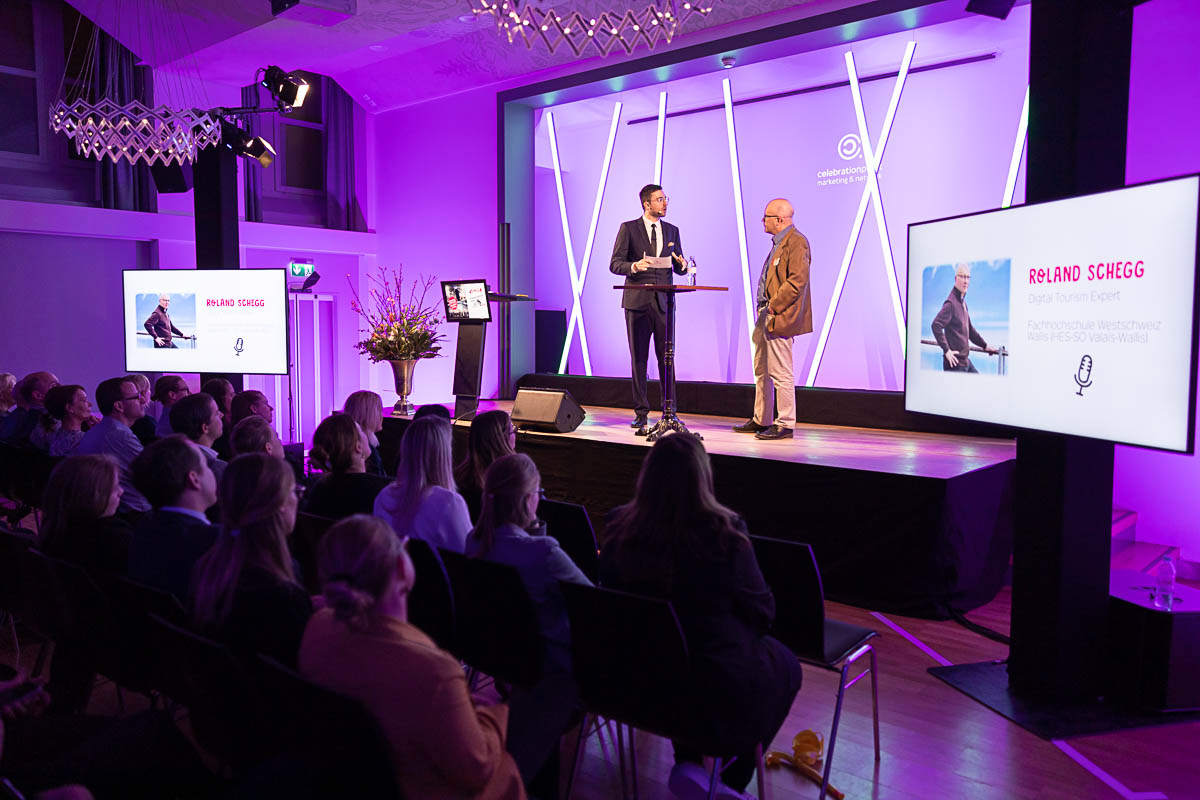
On September 29, the final Inspiration Market of 2020 will take place «live.» At the newly renovated Eulachhalle in Winterthur, event and seminar planners will get new ideas and event news from over 20 vendors—in an after-work setting with networking opportunities.

Inspiration Market

The Inspiration Market is an interactive business and networking event and the annual meeting place for event managers and suppliers from the MICE industry. Celebrationpoint - network & marketing agency for the event industry - is the organizer and, as a hub, offers hotels, event locations, caterers and destinations as well as event managers from national and international companies a platform and stage to get to know each other and network.

During the aperitif, at the flying dinner and on stage, news, trends and ideas for the next corporate event will be presented interactively and in two-minute pitches. The newly renovated Eulachhalle can also be visited. Highlights include a short interview with important personalities from the region. In the Eulachhalle, it will be Manuela Leonhard. She is a passionate social media influencer for Zurich and the personal assistant to Corinne Mauch, Mayor of Zurich. The Participation is free of charge for event managers after qualification.

get_footer();