Avoiding plastic: consumers and companies take responsibility
The COVID-19 pandemic has not diminished the importance of the issue of plastic waste. For brands, this continues to be a major focus of attention. According to Brandwatch’s Plastic Report, consumers believe that the responsibility for reducing plastic waste lies not only with themselves but also with companies.


Consumers around the world are concerned about their planet, especially the visible problem of plastic waste. The concerns, but also the efforts of consumers to avoid plastic waste in their everyday lives, can be easily shared via social media. As a result, the topic reached an unprecedented peak in German-language social media conversations in the fall of 2019. The avoidance of plastic and the use of alternative packaging materials was by far one of the most important topics on social media in 2019, and the plastic report for 2020 shows that concerns about plastic waste have increased again after the coronavirus pandemic dominated conversations in the first half of the year.

After a steady increase in conversations around plastic waste prevention since 2018, April 2020 saw a slump in social media conversations. It was the month in which the coronavirus pandemic captured the attention of consumers worldwide. In the months that followed (May to August 2020), conversations in Germany slowly rose again and are now at the same level as in January 2020. Concerns about plastic waste remain high worldwide, as a direct consumer survey of more than 7,000 consumers shows. After France and Spain, German consumers are still very concerned, only citizens from the USA are less worried.
Understandably, one may find the aforementioned figures somewhat bleak, as the pandemic is distracting consumers from the global plastic waste problem and all the consequences that come with it, Brandwatch concludes. Nevertheless, there is also positive news. A high proportion of respondents say they care and are taking action to reduce waste.
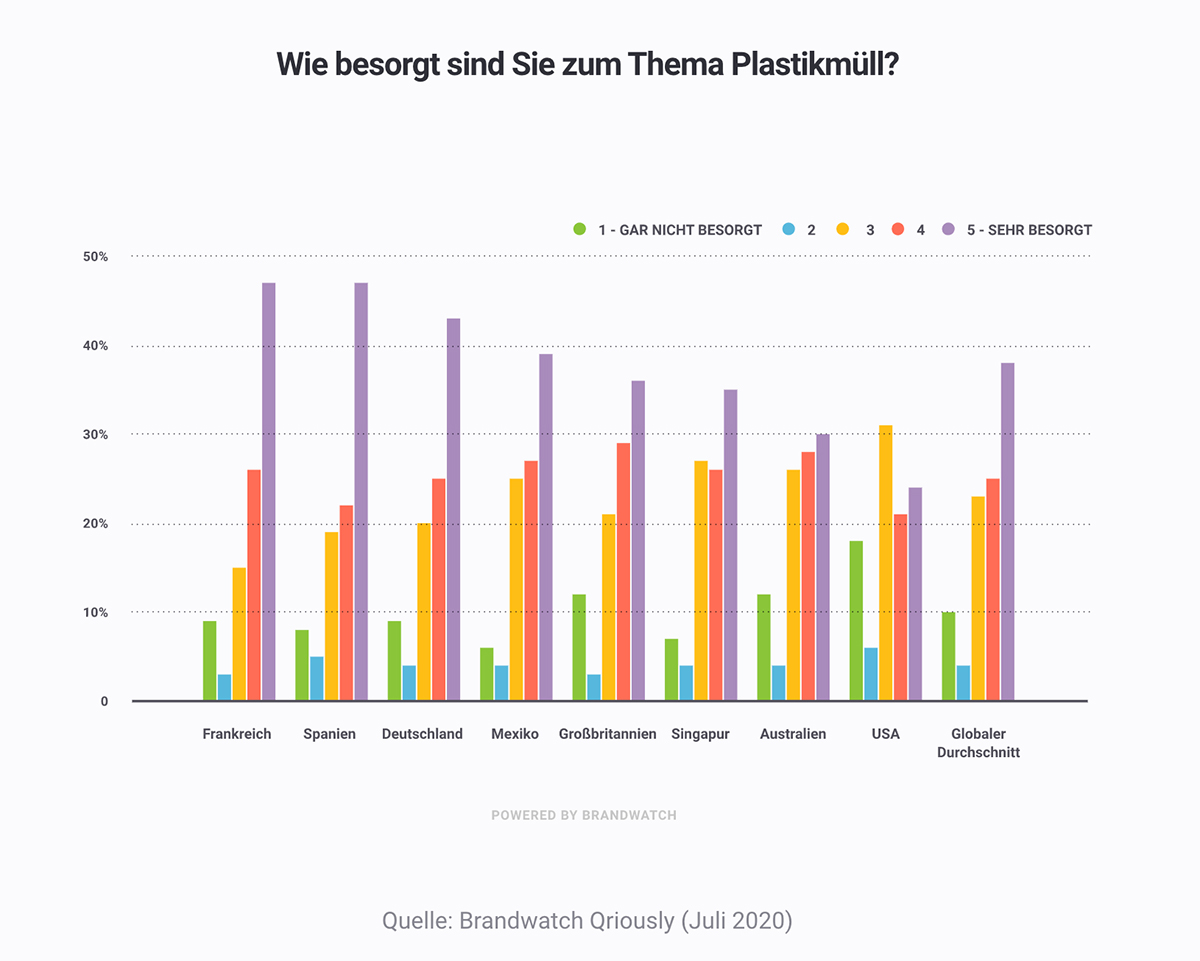
The desire to avoid plastic waste remains high despite the coronavirus pandemic and German consumers in particular see it as their duty, and increasingly that of companies, to take appropriate measures in the fight against plastic waste. 79 % of German consumers stated that they avoid plastic waste. This puts them above the global average. In the survey, they confirmed that they do not use plastic bags (66 %) or disposable coffee cups and plastic straws (61 % each) in order to reduce plastic. Delivery service food in plastic packaging is also avoided, with over 40 % of the German consumers surveyed using this measure to combat the increase in plastic waste.
Brand companies are held responsible
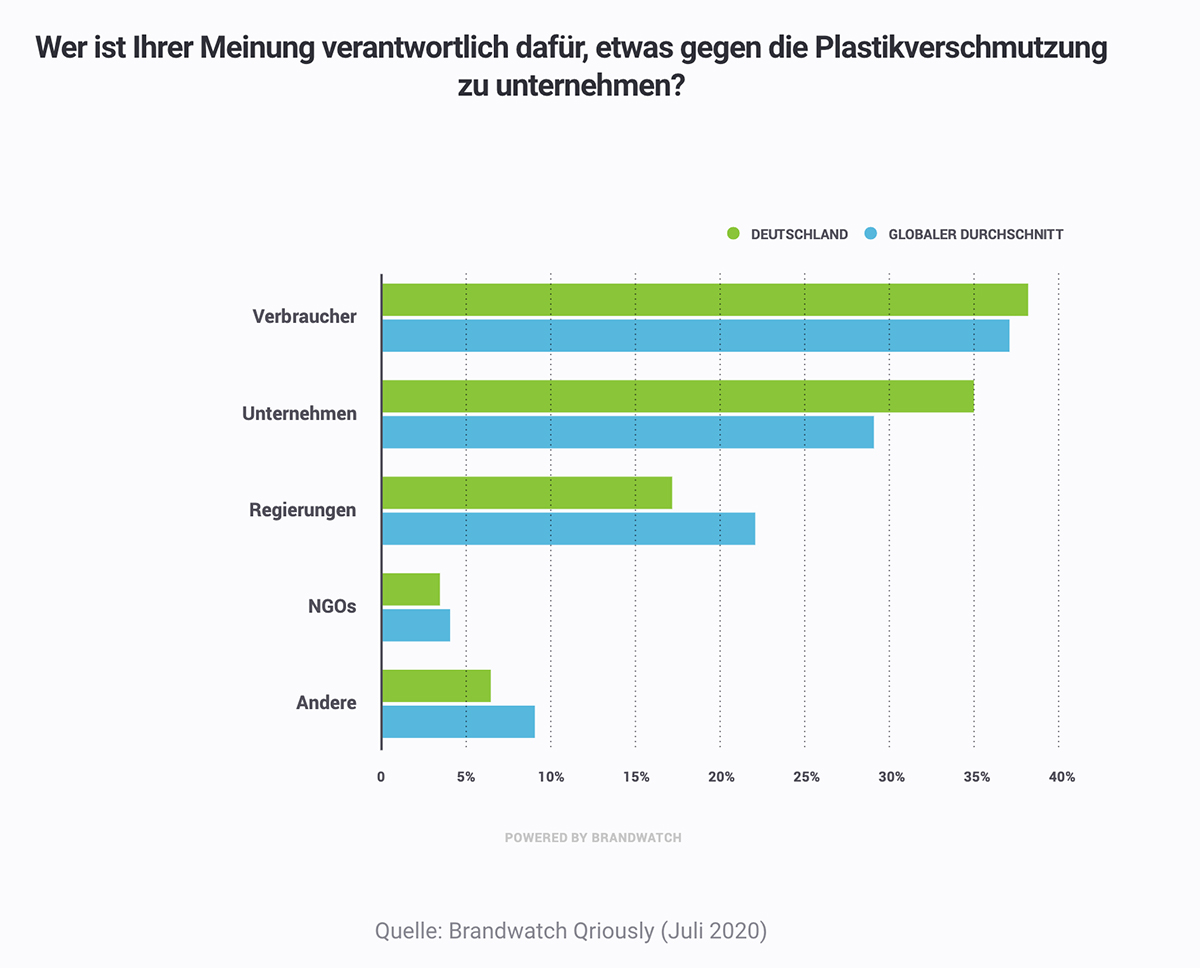
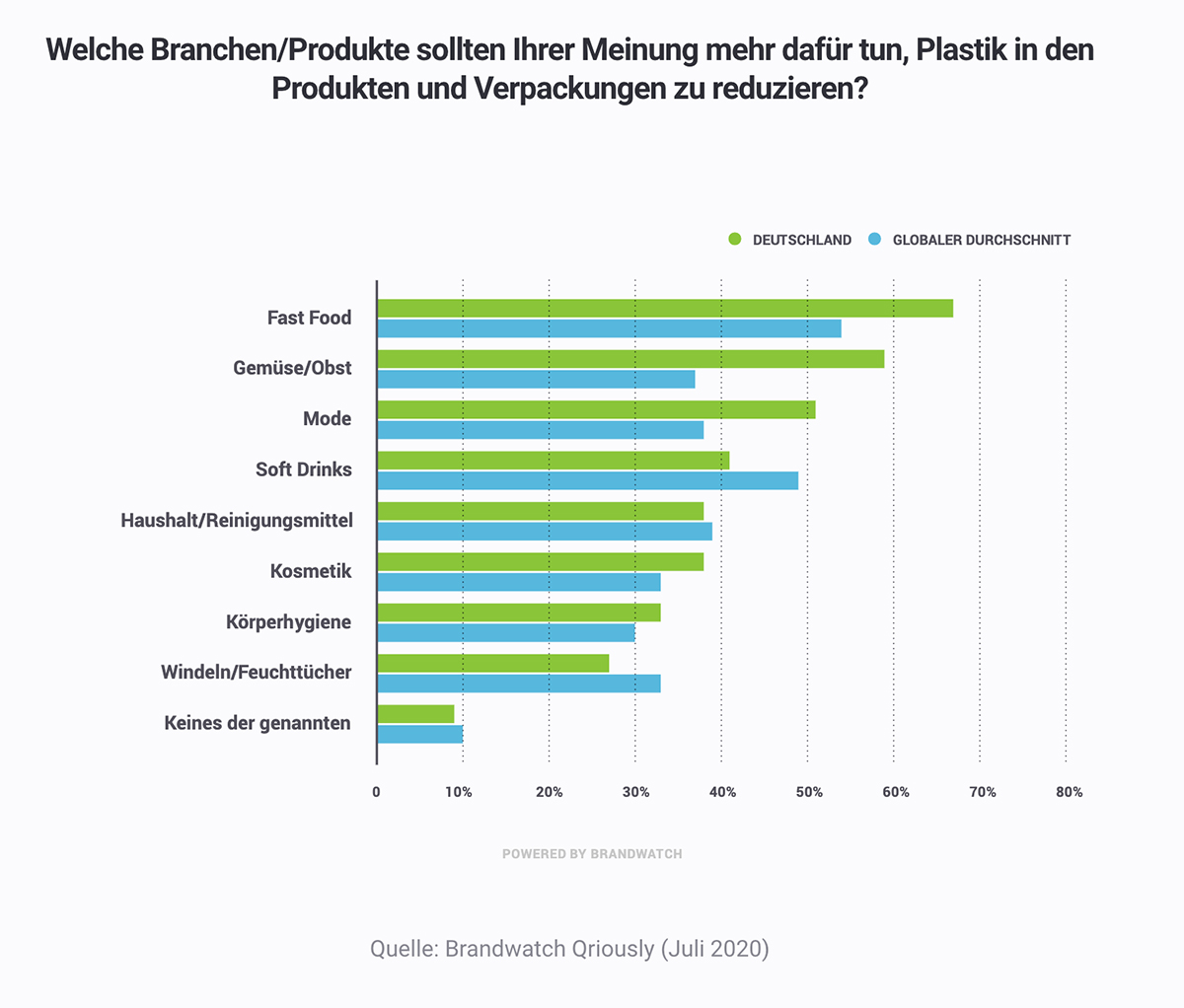
Brand companies are more likely to be held responsible for reducing or limiting plastic waste and its impact than governments, NGOs or other players. Fast food chains are cited as particularly responsible from a consumer perspective: Consumers believe that fast food brands need to do more to reduce their plastic consumption (54 %). In addition to the fast food industry, the focus is on companies that produce soft drinks (49 %) or household and cleaning products (39 %) as well as brands from the fashion industry (38 %). German consumers name fast food (67 %), fruit and vegetables (59 %) and fashion (51 %).
Authenticity is important
One of the researchers' conclusions is that people are still discussing online how various plastic products affect the environment and consumers are increasingly holding brands to account. In our recent Brand Purpose study, 55 % of consumers surveyed were asked what is important to them about a company and influences their purchasing decision, with their attitude to sustainability and environmental protection being the second most important point. Over half of those surveyed also stated that it is important to them that a company acts authentically according to its values and principles. This shows that words are more important to consumers than actions and if words are not followed by actions, consumers will switch brands.
Accepting economic consequences to avoid plastic
63 % of respondents in the direct survey agreed with the statement that brands should use more recyclable material in their packaging. Another exciting result of the survey is that German consumers would accept economic consequences if they could avoid plastic waste. This means that 70 % of German consumers would pay more for a product that is offered in alternative packaging. Unfortunately, however, the efforts of the major players are still far from sufficient. The Waste & Opportunity 2020 report by the non-profit organization As You Sows shows that hardly any progress has been made. Out of 50 major companies from the beverage, fast food, consumer goods and retail sectors, just one company received a B-. 74 % of the companies received a D or worse.
#sustainability #sustainable #vegan
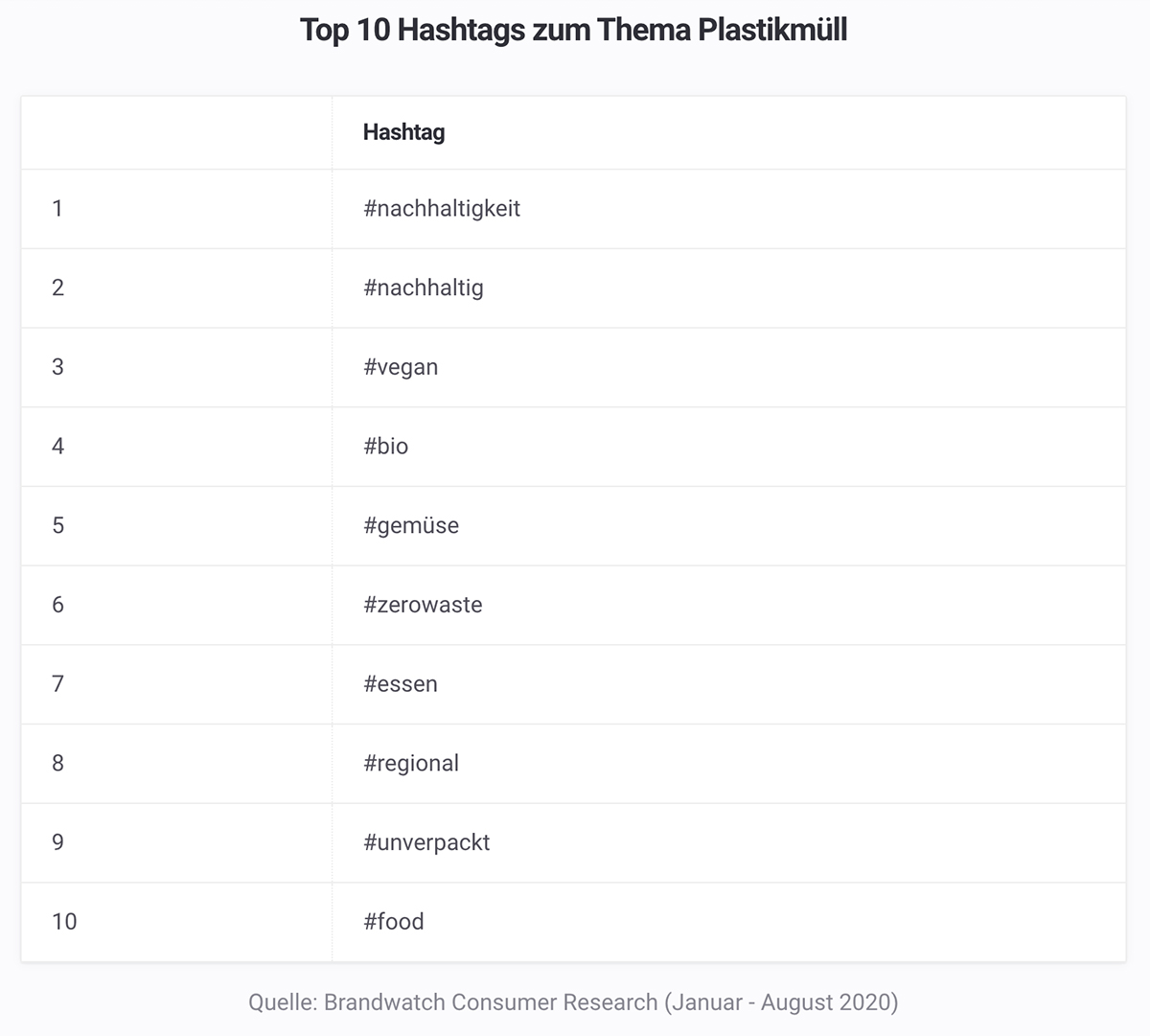
The hashtags used to avoid plastic waste have changed compared to last year. Today, the focus is on food, which is also reflected in the most frequently used hashtags. Half of the top 10 hashtags relating to plastic waste are about food.
Thomas Grünberg, Senior Marketing Manager for the DACH region at Brandwatch, believes that companies have a duty to do more to combat plastic waste: "Even if awareness has dropped somewhat this year, consumers are demanding responsibility from brand companies. They need to take action to retain their customers because, as our study shows, consumers are now willing to accept economic consequences if it means they can avoid plastic."
For the Brandwatch Plastic Report a survey was conducted using Brandwatch Qriously with 7212 people in Australia, Germany, France, the UK, Mexico, Singapore, Spain and the US via their mobile devices. Brandwatch Consumer Research was used to search public mentions in German and English around plastic waste, garbage, litter and pollution (and related terms) from all Brandwatch sources (including Instagram, Twitter, Reddit, news sites, forums, blogs and more). All social media results in this report are based on this search.