Is communication still worthwhile for companies at all?

The marketing budget is always the first thing to be cut. Communication expert Cordelia Hagi and advertising executive Simon Hofer believe this is a fatal mistake, so they quickly organized an event on the topic of «The Art of Communication.».

Gruppenbild-Jimy-Hofer,-Jean-Claude-Galli,-Schîre-MÅller,-Cordelia-Hagi,-Remo-Neuhaus-und-Simon-Hofer-(vlnr)

Group picture: Jimy Hofer, Jean-Claude Galli, Georges "Schöre" Müller, Cordelia Hagi, Remo Neuhaus and Simon Hofer (f.l.)


On Friday Cordelia Hagi and Simon Hofer invited to "The Art of Communication" at the auction house Dobiaschofsky. The event consisted of three parts: Presentations on the topic of storytelling and advertising, an art exhibition with the theme "The Art of Communication" and the Pinktank Talk.

The pink tank in leo pattern is the key visual of Pinktank, the new umbrella brand of Pink Elefant and Cordelia Hagi. Pinktank is there for all companies that want to take the leap into the new dimension. Because if you don't address topics such as digitization and transformation, you will be overrun sooner or later.

The highlight of the event was the Pinktank Talk. This was designed as an interactive talk in which the audience, about 100 people, took over the moderation and asked the guests Remo Neuhaus, Jimy Hofer, Georges "Schöre" Müller, Jean-Claude Galli, Simon Hofer and Cordelia Hagi questions on the topic of "The Art of Communication". The talk led to aha moments for all participants and showed that communication is still of central importance, both in companies and in personal life.

The organizers are extremely satisfied with the event and are likely to plan more such events in the capital, according to a statement.


Cordelia-Hagi-in-Action

Kreienbühl und Vogler creates campaign for Freestylehalle Zurich

«We're freezing»: The Zurich-based agency Kreienbühl and Vogler is using this tagline to promote the insulation of the Freestylehalle Zürich.

Kreienbühl und Vogler has developed a film and a subject to draw attention to the icy temperatures and the petition to isolate the freestyle hall. The campaign can now be seen online and offline.

With over 20,000 visitors a year, the Freestylehalle Zurich is a popular training venue for skaters and BMXers. However, because the hall has no insulation, temperatures there are often around zero degrees Celsius in winter.

wirfrieren-petition

Responsible at Freestylehalle Zürich: Carlos Venegas (Managing Director); responsible at SP Zurich: Liv Mahrer (Co-President SP Zurich), Oliver Heimgartner (Co-President SP District 9), Pascal Lamprecht (SP Municipal Councillor District 9). Responsible at Kreienbühl and Vogler advertising agency: Oli Kreienbühl, Reto Vogler, Marco Donada, Tiffany Lau; Oliver Nanzig (director & photography); Dani Hobi (sound design, tonundmusik.ch); Roman Peritz, Milos May (Hunter Film).

On the slopes with Marco Rima: Republica implements national campaign of Swiss ski schools

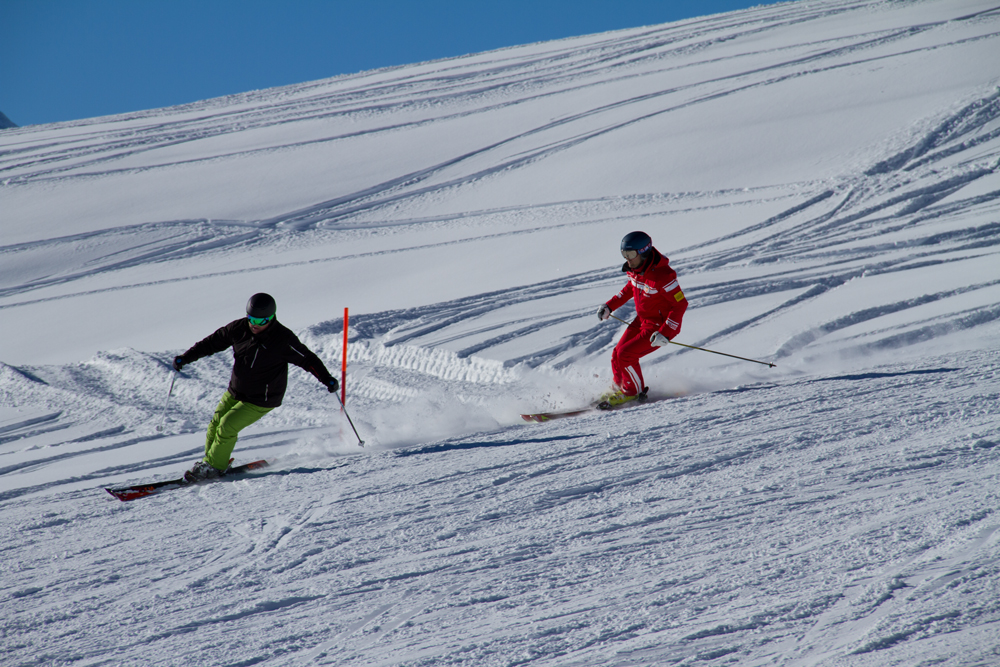
In the 2018/2019 winter season, Swiss ski schools are drawing attention to their services on television for the first time. In various TV commercials produced by Republica, they show what snow sports enthusiasts of all levels can learn from them. Comedian Marco Rima also took to the slopes for the campaign's social media videos.

Skischulen-Marco-Rima

The Swiss ski schools are an institution: they have been present in all winter sports resorts and major cities in Switzerland since 1932 and offer lessons in all snow sports disciplines to guests of all ages. With the new campaign, the Swiss ski schools are launching national TV commercials for the first time, flanked by various social media posts and advertisements. The campaign will put a real strain on the laugh muscles: short video sequences show in a humorous way what skiers and snowboarders can learn in the Swiss ski schools.

Swiss ski school for all

With the videos, the Swiss ski schools want to draw attention to the fact that ski school is not just for beginners and children; adult experts and returning skiers are far from finished and can also benefit from the offer. All measures were conceived and implemented by the Republica communications agency. "The campaign reflects our motto: Swiss ski school for everyone," explains Riet R. Campell, Director of Swiss Snowsports. "We are extremely pleased that we were able to realize a national TV campaign for the first time in the history of Swiss ski schools. We are very pleased with the result."

IMG_8156
IMG_8189

On the slopes with Marco Rima

The campaign has been on TV throughout Switzerland since December 24. Posts about the ski school have been published on Facebook and Instagram several times a week since the beginning of November. The social media shoot with Marco Rima was particularly funny: the popular Swiss comedian caused a lot of hilarity on the slopes of the Jungfrau Ski Region. Marco Rima - who incidentally belongs to the "expert" category - donated his entire fee to former Federal Councillor Adolf Ogi's "Freude herrscht" foundation.

Responsible at Swiss Ski School: communications department. Responsible agency: Republica.

The website of tomorrow - think about the future now

The corporate website is the central hub of digital marketing and provides visitors and customers with all relevant information at a glance. The online presence should be part of a holistic marketing strategy and serve as a central hub for marketing activities. But what features should a website have to remain attractive to visitors even years from now? And how can these features be implemented?

Andreas-Oettl

Guest article by Andreas Öttl, Head of Marketing at Curry Innovations.


Even though many customers in the B2B sector now have the opportunity to get in touch with a company via a wide variety of channels and touchpoints, the website is still the most important point of contact in B2B. Companies should no longer allow themselves to neglect this in times of digital change. Rather, they must make it their business to critically review the current status again and again and, if necessary, make quick adjustments so as not to fall behind the competition. To achieve this, online marketing managers should take a look into the future in order to prepare their online presence for it. After all, the corporate website is the central hub for digital marketing and offers visitors and customers all relevant information at a glance. The online presence should be part of a holistic marketing strategy and act as a central hub for marketing activities. But what features should a website have in order to still be attractive to visitors in a few years' time? And how can these features be realized?


1. modern design and outstanding usability

Today, a professional website design is the be-all and end-all - because the design is one of the first things that catches the eye of a website visitor. A modern website should be characterized by convenient navigation, clarity and easy comprehensibility. Usability, i.e. the ease of use of the website, should also not be neglected. The kind of operation that users are familiar with from apps is particularly intuitive.

2. optimized for mobile devices

Many B2B customers now also use their mobile devices to research new products or services. It is therefore important that the website is also easy to use on mobile devices. However, this does not mean that a website created for a desktop PC can simply be implemented 1:1 on mobile devices. In order to make mobile navigation as convenient as possible, it may be necessary to rearrange individual elements or even reduce content in order to keep the visitor's attention for as long as possible.


3. state of the art technology

Not only should the front end play a role in a website, but the back end also plays a central role. For example, it is important that the front end is based on clean and error-free source code. This plays a particularly important role for technical SEO, fast loading and therefore for the customer's user experience. This also means that the application is generally responsive and performs well, meaning that the user benefits not only from short loading times but also from powerful filters and a powerful, fast search function. Just as important: very good functionality and that the website works equally well on all relevant browsers. On the backend side, a modern CMS is required for this. However, due to the large number of possible touchpoints, this must no longer focus solely on the creation of websites, but must be able to serve a variety of channels.


4. integration with other channels and systems

Due to the large number of existing touchpoints that B2B customers can use to get in touch with a company, the website is not necessarily the first point of contact. It therefore makes sense to link the website with other channels such as social media, blogs or interactive configurators. However, this is not only important for these touchpoints - it can also be an important step for connecting other IT systems. For example, if data from third-party systems, such as an ERP system, is required, or if a company is planning to add AI functionalities to the website or offer contact via a chat bot.


5. public and non-public areas

In the course of after-sales support in particular, it can be important to provide customers with access via a B2B web portal. For example, they can access orders that have already been placed, customer discounts and personalized information and content. In addition, the company also knows which customer has logged in at what time - and always has access to relevant data, making it easier to provide the customer with personalized offers.


6. measurability and data protection

If marketing wants to measure whether marketing measures and website updates are actually successful, detailed web analysis is essential. Today, this goes far beyond the simple measurement of access figures and provides marketers with an overview of which measures and content are useful and which are not. Of course, companies must ensure that this review is carried out in compliance with data protection regulations (in accordance with the GDPR) and that legally compliant information is included in the website's data protection guidelines. It is also important to ensure that the data protection information is up to date - and that data transmission is only possible in encrypted form via HTTPS.


Implementation using progressive web apps

One example of how companies can make their internet presence fit for the future is the implementation of progressive web apps (PWA). This is a modern technology that combines the advantages of traditional websites and native apps. For example, it uses the advantages of native apps, such as access to certain end device functionalities, without losing the advantages of websites, such as relevance in search engines or browser-based access.

The question of whether a company wants to use a web app usually arises as part of a website relaunch, when developing special (business) applications or when optimizing the offering for the mobile web. A PWA is a very good alternative to native apps in particular. In many cases, native apps can be replaced by PWAs so that only a PWA is required instead of a website plus apps. This reduces effort both in terms of creation and subsequent maintenance and therefore cuts costs. If B2B companies decide to use this technology and implement the features of future-proof websites, they will be well prepared for the tough digital competition.


Further information on PWA technology and its implementation can be found in the free white paper "Progressive Web Apps - modern applications for the web of tomorrow" from Curry Innovations, which is available at following link is available for download free of charge.

Matchcom helps Schweizer Illustrierte win new customers

Matchcom developed a promotional insert for *Schweizer Illustrierte* in the *Sonntagszeitung* on behalf of Ringier Axel Springer Schweiz AG. Featuring a winter-themed design, the offer was promoted in a style that perfectly matched the look and feel of the celebrity magazine.

Schweizer Illustrierte inspired Sunday newspaper readers with a gift idea for Christmas: A six-month subscription to Schweizer Illustrierte at preferential rates. A personal gift card can be given away with best wishes. To complement the insert, the offer is available at the online newsstand until the end of January 2019.

Responsible at Ringier Axel Springer: Ninu Amirfallah. Responsible at Match Communications: Christian Staub (project management), Eveline Hagenbuch (consulting/text). On behalf of Ringier Axel Springer Schweiz AG, Matchcom developed a promotional supplement for Schweizer Illustrierte in the Sonntagszeitung.

Campaign to boost sales of mineral water again

Mineral water instead of "Hahnenburger": Following a decline in the consumption of domestic mineral water last year, the beverage industry wants to launch a counter-campaign.

mineralwasser-restaurant

How the newspapers Ostschweiz am Sonntag and Central Switzerland on Sunday report, the benefits of mineral water will be promoted to restaurateurs in the spring.

Despite the hot summer of 2018, consumption of domestic mineral water fell by 0.4%. In the same period, sales of foreign brands rose by 1.5%. Consumption of other soft drinks and beer also increased.

The Association of Swiss Beverage Wholesalers (VSG) attributes the decline to the popularity of tap water. More and more "Hahnenburgers" are also being used in the catering trade, says VSG President Gmür. Devices that turn water into sparkling water are increasingly being installed. As good as tap water is in many places, retailers are suffering from the trend, says Gmür: "We're losing a lot of sales."

However, mineral water is still the most consumed cold drink in Switzerland. Around 115 liters per person per year are consumed. The figure for soft drinks is around 68 liters and for beer around 55 liters.


Reminding people of the benefits of mineral water

The announced campaign is intended to remind restaurateurs of the benefits of mineral water and thus boost sales again. In contrast to tap water, mineral water never has to be treated, says Gmür. The latter is partly obtained from lake, river and groundwater. In areas with a lot of agriculture, the nitrate content sometimes becomes an issue and here and there there is also contamination from bacteria or pesticides.

Whether restaurateurs and consumers will let the campaign take away their desire for tap water will become clear from next spring. (hae/SDA)


Photo: Pixabay/LUM3N

TV judge Jorge González drops all his clothes for anti-fur campaign

Catwalk trainer and choreographer Jorge González appears stark naked in the new motif for the well-known Peta campaign "This is how you wear fur".

Jorge-Gonzalez-Pelz-RGB-2019-01-001

With Willie, the dog he rescued on Mallorca, in his arms, he wants to make a statement and appeals to all consumers to opt exclusively for fur-free fashion when shopping.

"Animals are mutilated and killed for fur - how can we talk about fashion? The fashion world is all about trends and styles. Wrapping yourself in skin and fur that has been cut from an animal's body is anything but stylish," says Jorge González. "If you want to impress as a trendsetter with your outfits, you should focus on animal-friendly materials."


Animals caught, hunted and mistreated for fur

Every year, over 110 million animals are still locked up on so-called fur farms. There, foxes, minks and rabbits have to spend their entire lives in completely filthy, tiny wire mesh cages that dig painfully into the animals' paws. As they have no opportunities to keep themselves occupied, many animals develop serious behavioral disorders, such as constantly turning in circles or mutilating themselves.

Millions more coyotes, foxes and raccoons are also hunted for their fur. Many animals are caught in traps that cut deep into their flesh and hold them captive. They often have to remain trapped for several hours or days, suffer from gangrene and are at the mercy of predators and the weather until the hunter returns and shoots or kills them.

Regardless of whether they are hunted or farmed, and regardless of whether the fur comes from China or the EU: Animals always suffer for fur and the husbandry and killing methods are comparable worldwide, writes Peta in a statement.


González supported the anti-fur campaign back in 2015

The Cuban-born actor and "Let's Dance" judge has already appeared in front of the camera for a Peta anti-fur campaign. Even then, González was not stingy with his charms and appeared on a red carpet dressed only in high heels in the name of the animals - also together with his dog Willie, whom he rescued from a Mallorcan garbage can.

Costs for subscription services are often greatly underestimated by users

84 percent of consumers underestimate their spending on subscription services such as Netflix, Spotify, Amazon Prime and others, according to a recent study by consultancy firm Waterstone Management.

abo-gebuehren

According to the survey, respondents spend on average twice as much per month on such services, including dating apps, cable TV and Wi-Fi, than expected.


But respondents are satisfied

The survey participants estimate that they invest around 111 dollars (around 110 francs) per month in the above-mentioned services. However, the truth shows a different picture: in fact, 237 dollars leave the account every month. For this survey, the company interviewed 2,500 people in the USA.

Regardless of this sobering finding, however, respondents still feel satisfied with the services, particularly Netflix, Amazon Prime, cable TV and Spotify. In fact, Netflix's recent rate increases in the US have not had a negative effect on the number of subscribers.


Potential for savings

According to the experts, monthly fixed costs incurred by such services and memberships are a good opportunity to save money. In most cases, people only think about how much a subscription costs each month, while the annual costs, not to mention the costs for a decade, are completely ignored. (red/press release)

Virtual climbing tours and new winter sports ideas

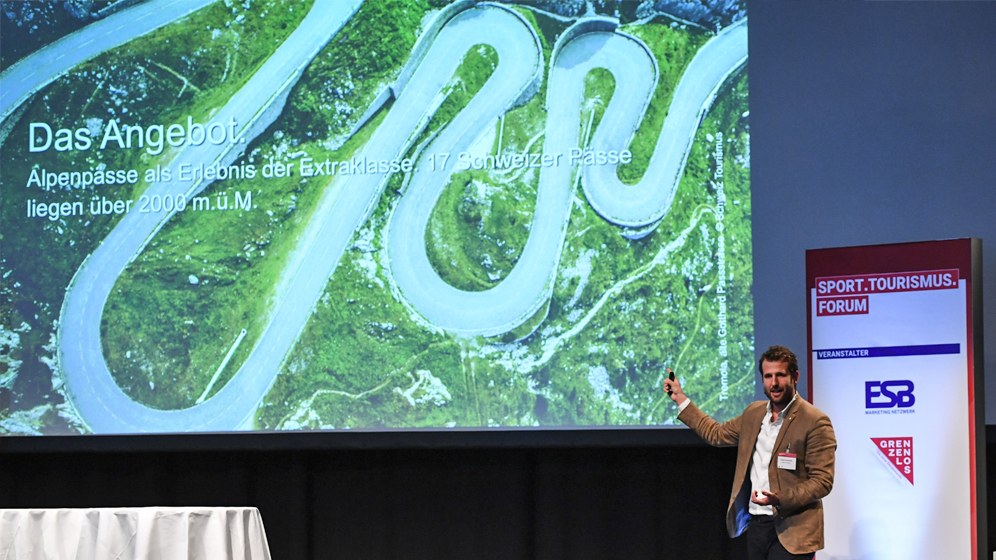
At the Sport.Tourism.Forum, which took place on Friday to kick off the “Grenzenlos” vacation fair, the latest trends in the tourism industry were presented. The traditional vacation is a thing of the past. Guests are looking for lasting memories that they can share and “like.”.

Sport-Tourismus-Forum

Sport is traditionally one of the cornerstones of tourism in Alpine destinations. But innovations are in demand. At the Sport.Tourismus.Forum in St.Gallen, a number of ideas were presented that should also help tourism to gain new momentum in terms of sport. 30 experts provided in-depth insights. One trend emerged clearly: weather-independent outdoor experiences should help to attract guests to destinations in the future.

This is precisely where Hologate comes in. The company is the global market leader for virtual reality games that are played in groups. Virtual worlds become reality in various game genres. According to Robert-Maximilian Fankhänel, COO of Hologate, this is a trend that tourism regions can take advantage of. One example of this is the ICAROS flight simulator. Guests ascend to lofty heights and glide over the Alps. "Places that appear in the games create a desire to visit them in reality," says Robert-Maximilian Fankhänel. Virtual climbing tours are already possible thanks to the new technology. "Virtual reality is constantly evolving and will be suitable for the masses from 2020," says Fankhänel.

Birgit Hajek from Netural spoke about how digital devices can be used to attract guests to real vacation regions. The Linz-based company organizes so-called Instawalks. These special walks bring together photo fans who otherwise only know each other virtually. Winning over Instagrammers as ambassadors for your own region is obvious, as 80 percent of all users follow companies on Instagram. However, Hajek advises not just focusing on reach. "Regions also benefit from influencers who have fewer followers. The person has to fit their destination. You can achieve the best results with 1000 followers or more," says Hajek.


With skates to the ski resort

If Martin Schobert from Alpine Ice has his way, the first guests will soon be putting on their skates in alpine locations. The idea goes far beyond the usual ice rink on the mountain. The "Alpine Ice" pilot project sends tourists skating through the ski area on three-metre-wide ice skating paths. The free skating can even be done at 20 degrees plus. But that is not the aim, says Schobert. Rather, the existing infrastructure is to be expanded with this winter offer. In 2020, the freestyle will be implemented for the first time in Salzburg at the Gasteiner Bergbahnen. "We are investing 800,000 euros," says Schobert. According to his calculations, the investment will pay for itself within three years. Alpine Ice is a ready-made experience product that can basically be implemented in just a few days.


Cycle tourism is booming

In addition to the latest winter sports ideas and virtual excursions, classic sports were in the spotlight at the forum. "Guests are looking for an experience where they can break out and showcase themselves," said Samuel Zuberbühler from Switzerland Tourism. Despite digitalization and virtual trends, classics such as hiking are still very popular. Biking and e-biking are even booming. "The bicycle is now considered a lifestyle object," said Zuberbühler. The number of cyclists and road cyclists in urban areas is increasing worldwide. This trend is also clearly evident in Switzerland. 340,000 bicycles were sold in Switzerland in 2018.

Whether the guest chooses a vacation region in reality or virtually - events like the one in St. Gallen create an exceptional platform for encounters.

Streaming giant Netflix continues to boom thanks to hit movies like Bird Box

Netflix recorded significant growth in the number of users in 2018 and was able to increase revenue. However, profit declined due to large investments.

The online video service Netflix continued to record strong growth at the end of the year thanks to hit films such as "Bird Box". Worldwide, 8.8 million new paid subscriptions were recorded in the three months to the end of December. The company announced this on Thursday after the U.S. stock exchange closed in Los Gatos, California. In the U.S. home market, 1.5 million new customers were added. Internationally, there were 7.3 million new customers. In total, the streaming giant brought it to a good 139 million paid memberships at the end of the year. 

Netflix scored in the final quarter with productions such as "Bird Box" with Hollywood star Sandra Bullock. According to the company's estimates, the thriller, which has been available worldwide since December 21, was accessed by more than 80 million user accounts in the first four weeks. The streaming service, which is best known for hit series like "House of Cards," also enjoyed further success with other films like "Roma" and "The Christmas Chronicles.


Significant drop in profits 

Business was also good: Netflix increased its revenues by more than a quarter year-on-year to $4.2 billion in the final quarter. However, the company fell slightly short of Wall Street's expectations. The profit fell by 28 percent to 134 million dollars. Netflix, however, exceeded forecasts. For its international expansion and to keep rivals such as Amazon Prime or Hulu at bay, Netflix is investing a lot of money - which brings growth, but eats into profits. 

The figures were not well received by investors - the share price fell sharply after trading hours. However, the share price had previously also risen sharply, and a price increase in the USA was the most recent boost on the stock market. The outlook for the current quarter was the most likely cause for complaint. Netflix missed analysts' expectations in terms of both revenue and profit. 

For the full year 2018, revenues grew by more than a third to $15.8 billion. Net income was $1.2 billion, more than double the previous year's figure. (SDA/DPA)

bird-box-netflix

Working on the smartphone: In Switzerland, two-thirds do business during their free time

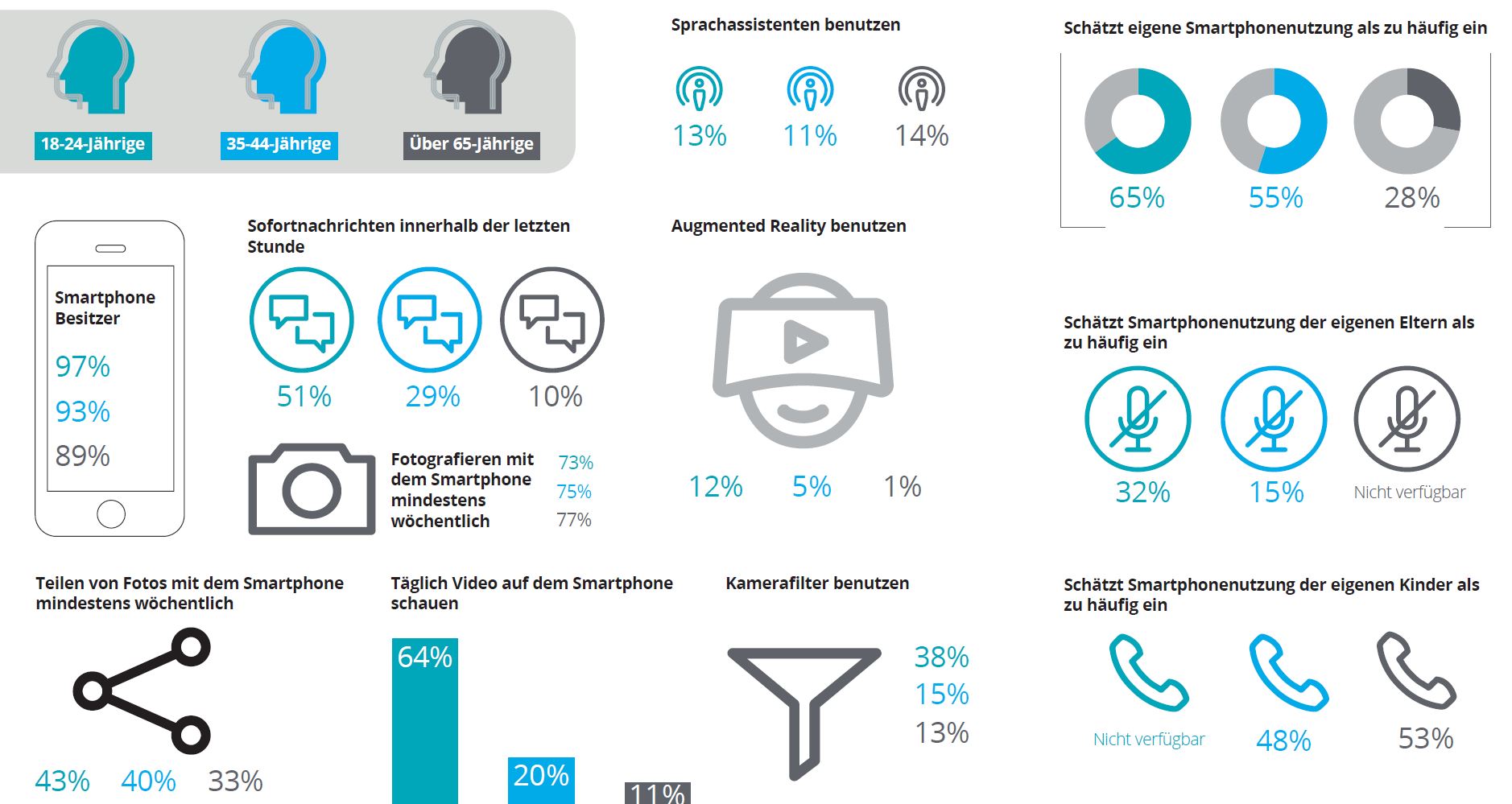
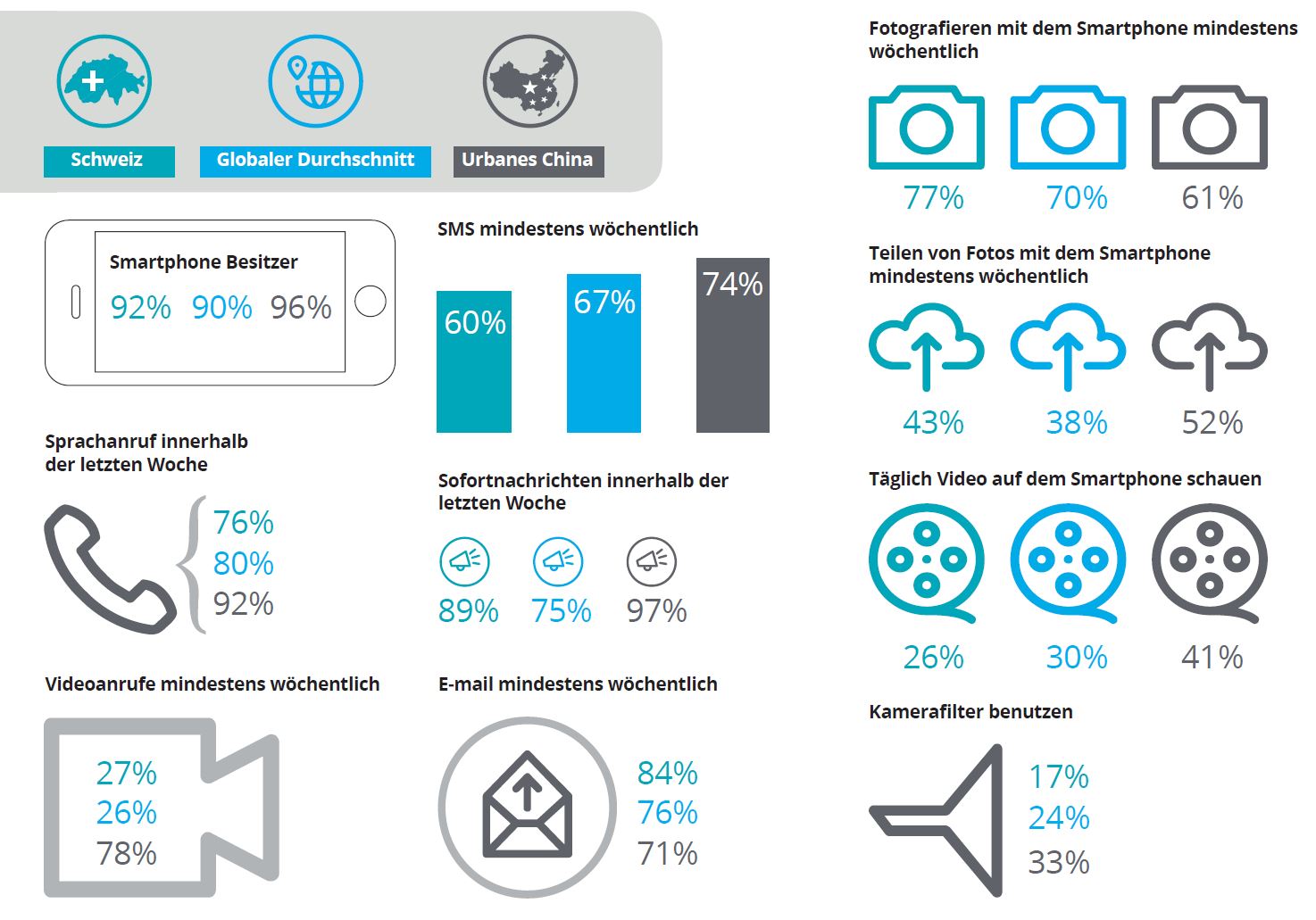
More and more people in Switzerland are working while they have time off: 68 percent say they use their smartphones to handle work-related matters during their free time. At the same time, 84 percent use their devices for personal matters during work hours.

In Switzerland, 92 percent own a smartphone and 97 percent of them use it every day, not least for work. These were the findings of a survey of around 1,000 consumers in Switzerland and a total of 54,150 people from 34 other industrialized and emerging countries for the Deloitte Global Mobile Consumer Survey.

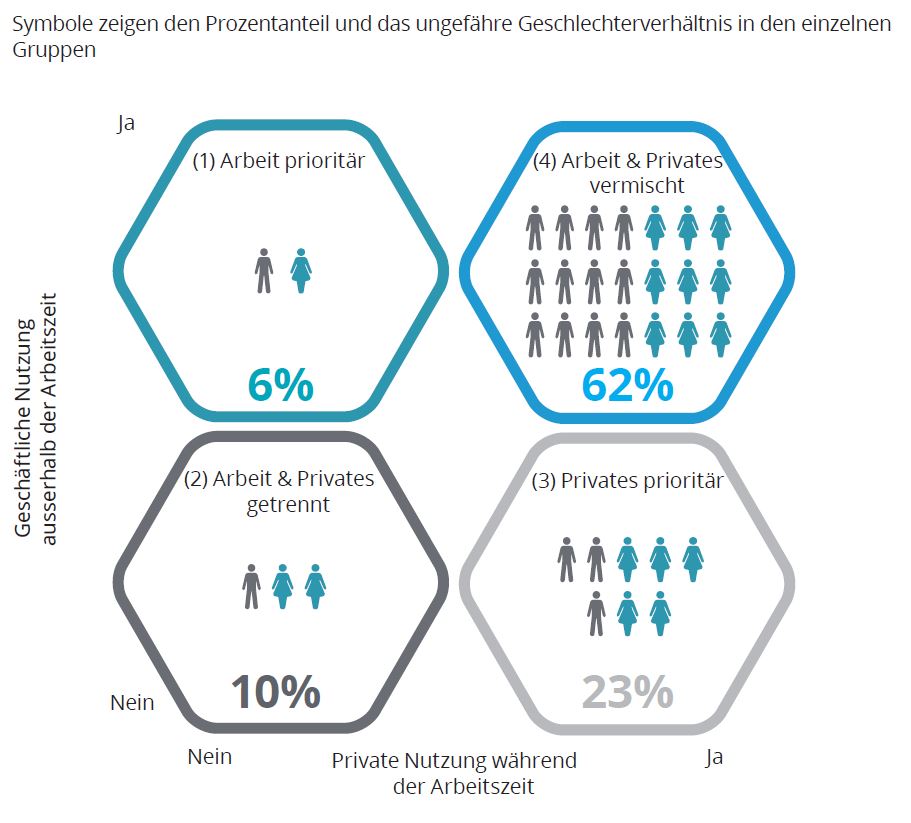
Four groups can be formed from the responses of all working smartphone owners to the questions on the professional and private use of their devices. The smallest group, at six percent, is made up of those who use their smartphone for work in their free time but never do private things during working hours. The second most common group (10%) is made up of people who continue to keep work and private life strictly separate. The majority of this group is female (61%) and tends to be older.

Almost four times as large as the first group is the group of those who spend working time on private matters but never free time on business (23%). This group also includes a majority of women. Most of them only go on their social media profiles or exchange private messages during working hours from time to time. However, a good third do so frequently or very frequently. The vast majority of employees in Switzerland (62%) mix work and leisure on their cell phones in both directions; men are in the majority here (58%).

deloitte-report-mobile

Similar use private and business

The top business applications are email (48%), phone (44%), calendar (36%) and instant messaging (35%). Barely ten percent of respondents use their smartphones to complete administrative processes such as expense tracking, scheduling work assignments, billing hours or project management. "There is great potential to increase efficiency in the greater use of smartphones for administrative processes - companies should take advantage of this to save costs and stay competitive. It also relieves employees of tedious paperwork," says Myriam Denk, Partner and Head of Future of Work at Deloitte Switzerland.

With a simple user interface on the smartphone, it is possible to integrate and digitize process steps that are separate and time-consuming from one another. For example, the personal trainer can not only manage her client appointments more easily or invoice regularly in an automated manner, but also continuously measure the vital data of her clients and send progress graphically processed directly after the training - without having to return to the office.

deloitte-report-mobile1

Project instructions on work surface

Further, by integrating new technologies such as augmented reality (AR), the smartphone can also transform the way we work. AR can be applied in various sectors, such as education, medicine or industry. For example, an assembler then projects instructions or information directly over his work surface, allowing him to work more precisely and quickly. During maintenance work, material weak points are highlighted or complex work steps are displayed step by step directly on the device.

"The world of work is increasingly geared toward flexibilization, collaboration and connectivity. The new digital technologies are placing the relationship between employees and the company on a completely new footing; they are also changing the workplace and the tasks themselves. Mobile devices and their flexible, self-determined use are an essential element in realizing the new world of work. However, companies and employees still have a lot of catching up to do," says Myriam Denk. For example, 42 percent of respondents to the Deloitte study on the future of the workplace said they were not provided with any mobile digital devices by their employer.

deloitte-report-mobile2

Data security and data protection

The increased use of digital mobile technology also means that investments must be made in cyber security. IT departments and external IT service providers will have to deal accordingly more with the new possibilities and potential vulnerabilities of mobile digital systems.

Networked databases and real-time information sharing bring additional challenges: Incorrect entries could spread quickly or unauthorized persons could gain access to data and systems. In addition to data security, data protection must also be ensured and it must be precisely defined and checked which customer information may be used how and for what purpose.


Keeping an eye on health

In addition, the individual risks of further flexibilization of work should not be forgotten. In the survey, 66 percent said that they are distracted from work by the private use of their smartphones, and for 19 percent this is even often or very often the case. In addition, a lack of rest periods and constant availability can have a negative impact on employees' health. In the workplace, too, it is therefore important to use smartphones consciously and responsibly. Employers must sensitize their employees to this and, if necessary, issue rules.

"Many Swiss companies have still used digitization too little in recent years to increase productivity, as our study on digital innovation capability has shown. Mobile solutions can make a decisive contribution to leveraging the benefits of digitization more strongly in people's working environment, thereby increasing competitiveness and productivity and securing jobs in Switzerland," explains Bjørnar Jensen, Managing Partner Consulting at Deloitte Switzerland.

deloitte-report-mobile3

Migros appoints Christoph Rytz as Head of Integrated Communication

The Migros Cooperative Federation (MGB) is undergoing a personnel change in its corporate communications department. Christoph Rytz will assume the position of Head of Integrated Communications at the Migros Cooperative Federation effective June 1, 2019.

This was announced by the MGB in a communiqué on Thursday. Rytz succeeds Luzi Weber, who will take up a position outside Migros. Rytz, 49, has worked in corporate communications for more than 20 years. He is currently head of corporate communications at WWF Switzerland, and was previously head of corporate communications at SBB Cargo. Rytz holds an Executive Master of Science in Communications Manamgent (EMScom) from the University of Lugano and a Master of Arts from the University of Sussex.

In the transitional phase until Christoph Rytz takes up his post, Roland Binz will lead Integrated Communications with the Dialog and Corporate teams on an interim basis and will be part of the management team of the Communications & Media Directorate. He is familiar with the Migros Group and the Communications & Media Directorate of the MGB from various projects that he has supported as an external expert over the past two years. (pd/hae/SDA)

ChristophRytz
get_footer();