Mountaineer Evelyne Binsack receives her own Barbie doll
As part of Barbie's 60th anniversary celebrations this year, the brand is honoring a long line of female role models. This week in Zurich, extreme mountaineer Evelyne Binsack was honored with her own Barbie doll.
Editorial
-
October 10, 2019
By honoring female role models, Barbie aims to close the so-called "Dream Gap". The term describes the gap that stands between girls and realizing their full potential. A study shows that girls start to doubt their potential from the age of five. Barbie wants girls around the world to grow up with the "you can be anything" attitude, according to the release. The world's most famous doll therefore acts as a role model and creates a play world full of possibilities, dreams and belief in oneself.
To generate more attention for the "Dream Gap" in Switzerland, a talk with female personalities took place in Zurich on Tuesday. In addition to Evelyne Binsack, Meta Hiltebrand, chef and TV cook, and Laura Seifert, co-founder of the coworking platform We Space, also talked about how they hold their own in a male-dominated industry and what obstacles they have successfully overcome to achieve their goals. Also discussed was how parents can best instill in their children the willpower to purposefully pursue and achieve their own dreams. The highlight of the event was the honoring of the first Swiss Barbie Role Model and the ceremonial presentation of a One of a Kind-Barbie to Evelyne Binsack.
First Swiss woman on Mount Everest
Faith in herself made Evelyne Binsack the first Swiss woman to climb Mount Everest in 2001. She climbed the Eiger North Face a total of three times. By bicycle, on foot, with skis and sledges: Evelyne spent a whole 484 days on the road to reach the South Pole, and even from an expedition to the North Pole neither hardships nor organizational hurdles could keep her away.
"Even as a small child, I unconsciously became an adventurer when I knelt by a stream and decided I would never grow up," says Evelyne. "Often I had watched adults and quickly realized that I had no desire to be so serious and stressed myself, and to have to clearly commit to a career option." But Evelyne Binsack is not just a professional mountain guide and adventurer: as a speaker and bestselling book author, she shares insights into her experiences and outlook on life. She knows what she is talking about when she talks about topics such as motivation, perseverance and willpower: "When I have a goal in mind, I pursue it consistently. For example, when I started track and field training as a young woman, I could always bring myself to complete the prescribed training distance, even on bad days. Willpower can be trained like a muscle".
It is this mental strength and belief in oneself that Barbie now wants to memorialize with the doll modeled after her as part of the "Shero Campaign" launched in 2015.
The House for Suva: The medical costs under control
A Suva awareness campaign aims to educate policyholders about the insurer’s medical cost management. The House is responsible for the overall concept.
Editorial
-
October 10, 2019
Health care costs rank number one on the worry barometer of the Swiss. To help Suva's policyholders worry less, Suva provides information about its medical cost management.
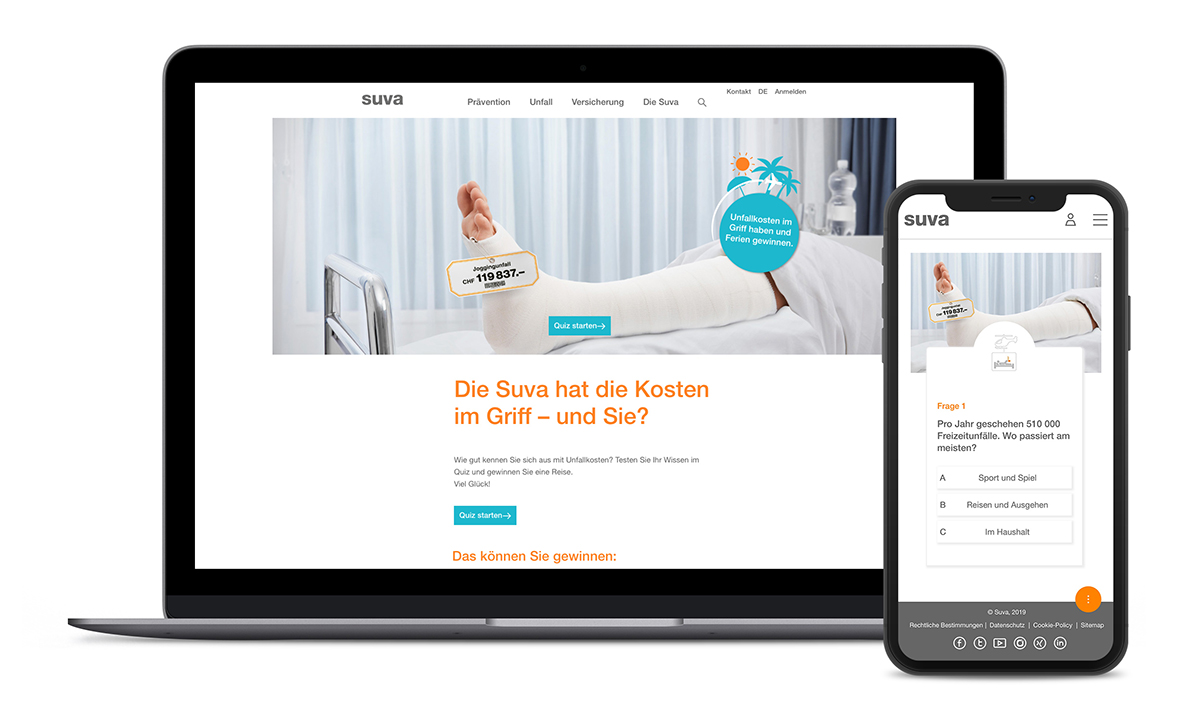
As part of the awareness campaign, the topics "medical cost management" and "risk-adjusted premiums", which are close in content, will be presented on a new Landing page united.
The necessary attention within the target group of policyholders from SMEs to large companies, as well as among the general public, is ensured by the corresponding online communication with a focus on owned and earned channels and mechanics with a wink.
The House developed the overall concept for this, which manifests itself in a key visual, digital advertising materials, an online promotion and the story concept for the online film implemented by Fadeout under its own direction. The online promotion as Knowledge Quiz is intended to increase awareness by means of gamification on the separate landing page.
Responsible at SuvaNadja Kunz Rütimann, Ralph Heidenmann (Head of Communications). Responsible at The House: Grischa Rubinick (Executive Creative Director); Sascha Borsai (Creative Director); Roger Dobmann (Senior Art Director); Ritiane Da Cassia Zimmerli (Digital Art Director); Laura Jaggi (Junior Art Director); Alia Malash (Junior Copywriter); Nadine Vasella (Group Account Director); Sasha Djabbari (Senior Consultant); Andreas Jorgella (Business Development). Production: Fadeout. Photo: Christine-Joy Apolinar, Detail.
Artificial intelligence as a quality booster for digital marketing
Without good data, there is no intelligent marketing. But what constitutes data quality? Together with Stuttgart Media University, United Internet Media conducted a study on the topics of artificial intelligence and data quality, thus analyzing the importance of the two factors for intelligent marketing.
Editorial
-
October 10, 2019
The importance of artificial intelligence in digital marketing is increasing. This is a key finding of the new "Digital Dialog Insights 2019" study. Three quarters of the experts surveyed forecast a high significance of AI for advertising companies and agencies. Half are certain that intelligent technology will form an essential part of a company's marketing strategy in the future.
However, current AI concepts still need to be revised for this - only 15 percent of the study participants currently consider the technology mature enough to be used productively in intelligent marketing.
Personalization as a killer application
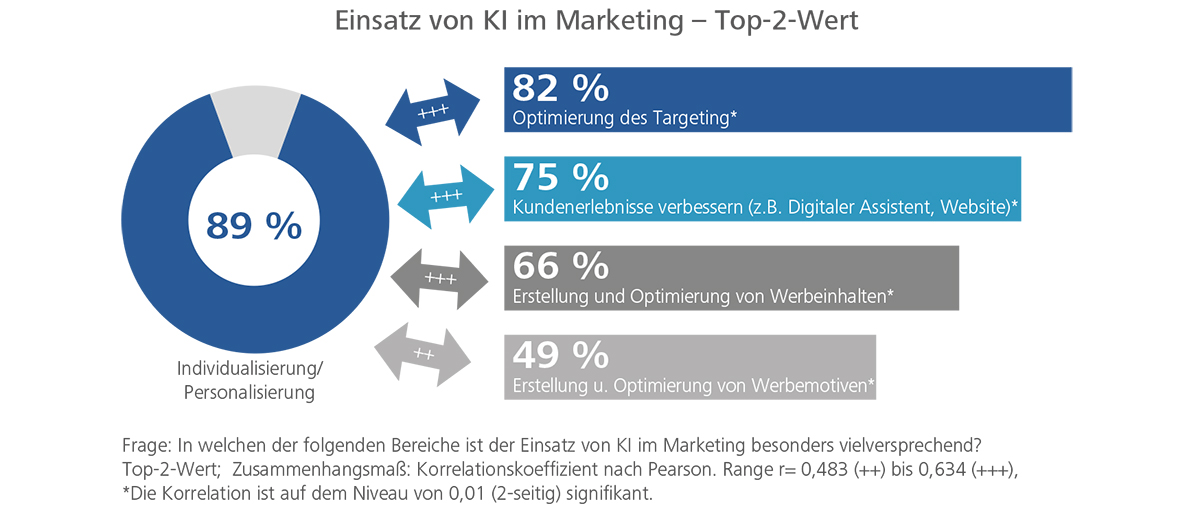
The experts agree: Artificial intelligence helps above all with personalization/individualization (89%). 82 percent of participants believe that this great potential comes from optimizing targeting with the help of smart technology. 75 percent of the experts think that improving the customer experience - for example, through a digital assistant - contributes to individualization. The respondents see great potential in the fact that messages can be personalized through automated creation as well as optimization of advertising content (66%) and motifs (49%).
Individually tailored and intelligent advertising messages
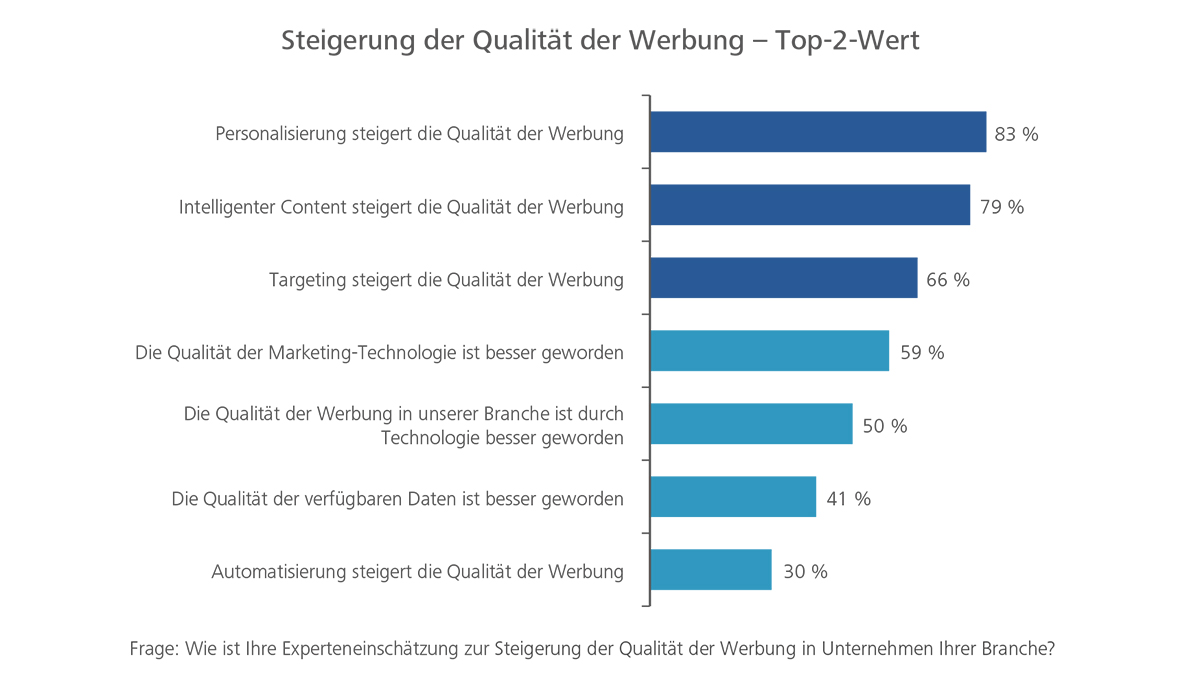
Artificial intelligence is seen as having the potential to contribute to improving digital marketing as a quality booster. This is because 83 percent of the experts surveyed are certain that personalization increases the quality of advertising messages. This is also improved by intelligent content (79%). Two-thirds of the study participants are convinced that marketing quality is additionally enhanced by effective target group addressing via targeting.
The willingness of companies to invest in promoting smart processes in marketing is correspondingly high. Almost 60 percent of the experts expect to improve existing customer experiences and individualization by investing in intelligent processes within the next two years.
Data quality as a success factor
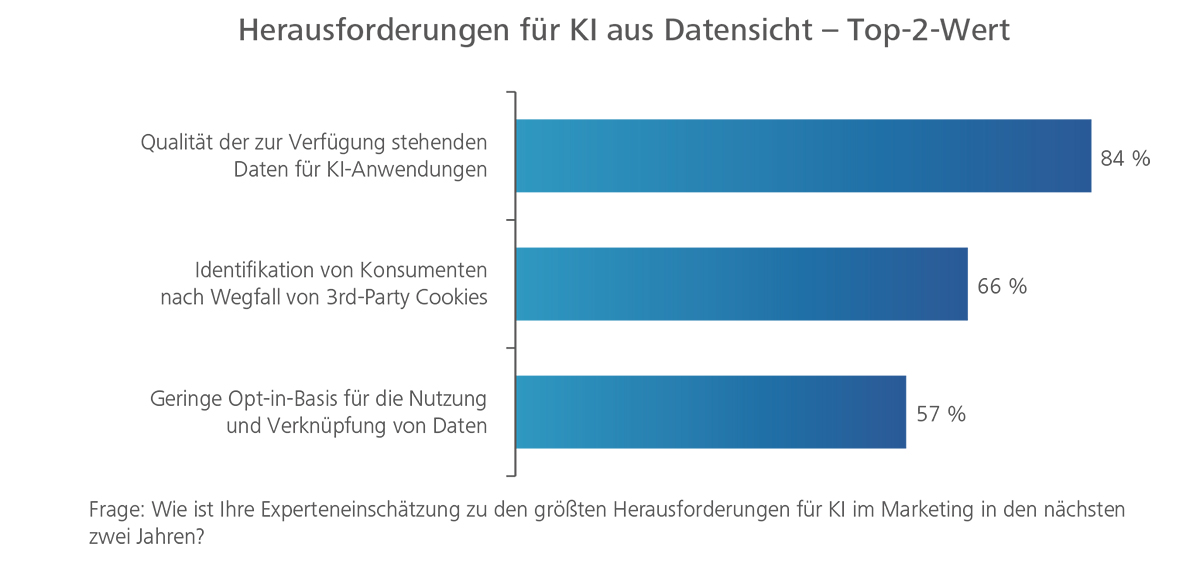
The use of artificial intelligence depends not only on the willingness to invest, but also on the quality of the available data. 84 percent of the experts see this as a major - or very major - challenge.
The experts name the identification of consumers after the discontinuation of "third-party cookies" as another top challenge (66%). More than half (57%) also consider the low opt-in basis for the use and linking of data to be challenging.
Almost 60 percent of the experts already consider the poor quality of the available data to be a high - or very high - hurdle. The study participants see the timeliness and consistency of the data as the most important quality criteria, with 96 percent and 80 percent respectively agreeing. However, the majority of experts also consider the criteria of up-to-dateness of the underlying data model (74%), documentation of data origin (73%), high degree of user identification (67%) and completeness of the data with regard to user identities (64%), as well as the type of data generation (57%) and persistence of data information (52%) to be important or very important.
Need for alternative identification methods potentially underestimated
The experts predict a high willingness to invest in the data basis due to the high relevance of data for AI applications. 65 percent believe that improving data quality for AI will be promoted in the future. A surprising figure in terms of user consent: Only one-third of respondents currently rely on opt-ins as part of their AI strategy.
However, more than half of the study participants across the industry already anticipate expanding the opt-in base to implement AI-based strategies (56%). The willingness to invest in the use of alternative identification methods as a replacement for third-party cookies (47%) is definitely there. However, it is rather weaker and the topic is thus potentially underestimated.
"As the basis of digital business models, cookies are becoming increasingly difficult to fulfill all the criteria for data quality, since browsers and adblockers, among other things, prevent them from being set and read. This makes it all the more important to look for alternative identification methods to compensate for third-party cookies, or to work with login-based solutions, as these allow persistent and privacy-compliant opt-ins to be obtained easily and quickly, as well as cross-device advertising," says Rasmus Giese (pictured below), CEO of UIM.
"Data-driven approaches are increasingly becoming the operating system in marketing communications. Our study underscores the importance of operational excellence and high-quality data," adds Professor Harald Eichsteller from Stuttgart Media University (HdM).
"Differentiating yourself through marketing AI is difficult. However, according to experts and decision-makers, investments are imperative in order not to be left behind in the competition. They are focusing primarily on personalizing their communications and improving the customer experience," explains Professor Jürgen Seitz from the HdM.
For the eighth edition of the "Digital Dialog Insights. 101 experts from the fields of production, retail and services were surveyed online in the period from May to June 2019. The questionnaire was developed by United Internet Media in cooperation with Stuttgart Media University. Participants were recruited from the HdM's network of experts and answered questions on the status quo, trends and upcoming challenges in digital dialog marketing.
Downloads, Spending, and Breakouts: The App Economy at a Glance
In the third quarter of 2019, growth in the mobile app market was unstoppable. App Annie’s «Q3 App Economy Index 2019» shows which apps led the way in download numbers, where consumers were willing to spend their money, and other interesting insights into the app economy.
Editorial
-
October 10, 2019
According to the report, the third quarter of 2019 once again saw strong growth in downloads and consumer spending, boosted not least by the upcoming Christmas period in the fourth quarter.
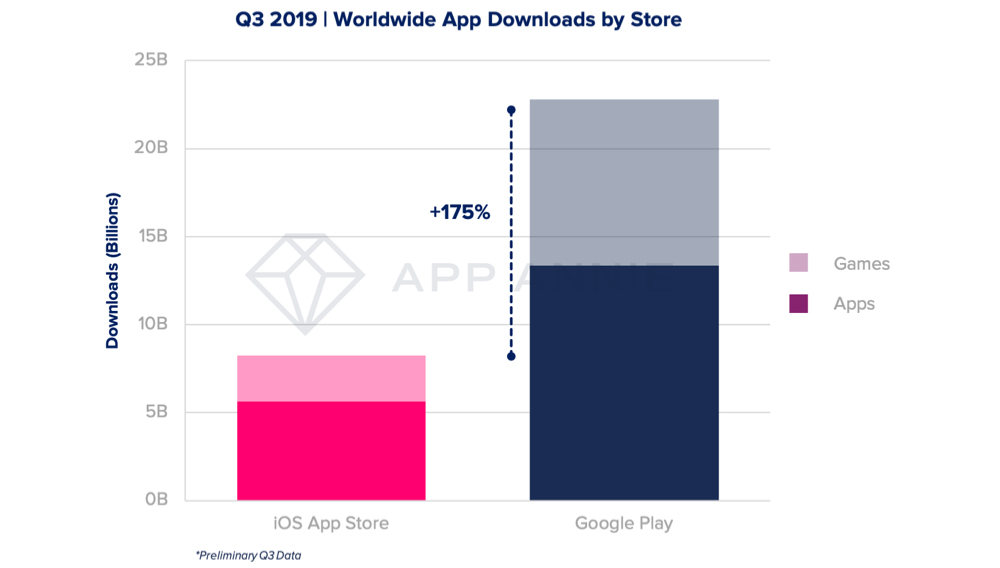
However, the start of the new school year and the start of the football leagues' seasons around the world are also having a positive impact on this growth. As a result, the third quarter of 2019 was the strongest ever for mobile applications. There were over 31 billion app downloads worldwide - 10% more than in the previous year.
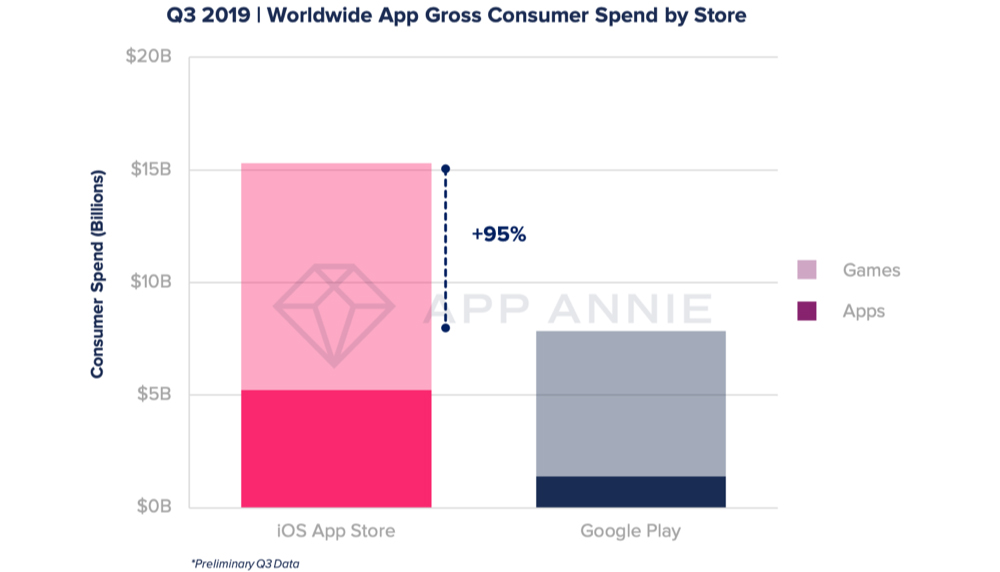
Consumer spending also reached new heights at over 23 billion US dollars, with growth of 20% compared to the same period in 2018. Europe was no exception: here, the number of downloads also grew by 10% to 5.3 billion, while consumers spent 20% more (3.5 billion US dollars).
Download figures: Google Play grows, iOS remains stable
In the third quarter of 2019, Google Play downloads worldwide increased by 10% year-on-year to almost 23 billion, while iOS downloads remained stable. Google Play also generated growth of 10 percent in downloads within Europe, while iOS grew by 5 percent.
Apps other than classic games accounted for over 60 percent of downloads in both stores, with the percentage on iOS (70 percent) being slightly higher than on Google Play (60 percent).
As in the previous quarter, the emerging markets of India, Brazil and Indonesia were the top three countries for absolute downloads from Google Play in the third quarter of 2019. In terms of year-on-year growth in downloads, India, Brazil and Russia contributed the most.
In terms of non-gaming apps, the growth in downloads on Google Play was primarily generated by comics, finance and cars and vehicles. Of the top 20 comic apps downloaded, 19 were gaming apps, accounting for 95 percent of downloads. However, the most important comic apps in terms of consumer spending were traditional applications such as "Line Manga", "Piccoma" and "LINE Webtoon". The same applies to the cars and vehicles category: the most frequently downloaded apps in this area were also games.
China, the US and Japan were the largest markets for iOS downloads in the third quarter of 2019, but the US, Saudi Arabia and Brazil recorded the highest absolute growth compared to the previous year. Among non-gaming apps, shopping, food and drink and health and fitness were the main categories contributing to quarter-on-quarter growth in downloads.
Applications from the food and drink sector recorded particularly strong growth: 10% compared to the previous year. This is due to the continued strong growth of apps such as "FamilyMart", "McDonalds App" and "Postmates". As the start of school also falls in the third quarter, shopping apps that offer parents and students an optimized shopping experience also recorded growth. In general, however, Chinese shopping apps were the key to the growth in download figures.
Spending: iOS extends its lead over Google Play
The first thing to say is that consumer spending in both app stores increased by 20 percent. Non-gaming apps accounted for 35 percent of consumer spending on iOS, compared to 20 percent on Google Play - an increase of nearly 10 percent from the previous quarter.
The key markets driving year-on-year growth in iOS consumer spending remained unchanged compared to the previous quarter: the US, Japan and China. Growth of over 30 percent was achieved in Japan.
Apart from gaming apps, the areas of photo and video, entertainment and music were the main contributors to the growth in consumer spending. Photo and video, music and education recorded the highest year-on-year growth in market share, i.e. the fastest growth compared to the overall market. "Duolingo" recorded particularly strong growth in consumer spending in the third quarter of 2019. In addition to the increase in these, an increase in downloads of educational applications during school hours was also previously recorded.
For Google Play, the USA, South Korea and Germany contributed significantly to the year-on-year growth in consumer spending, with Germany replacing Japan from the second quarter of 2019. In terms of market share growth compared to the previous year, the USA, Russia and Germany were the top 3 markets.
The main non-gaming categories on Google Play were social, productivity and entertainment. In productivity applications, a number of cloud storage solutions - for example "Google One", "Dropbox" - were the main reasons for the growth in consumer spending.
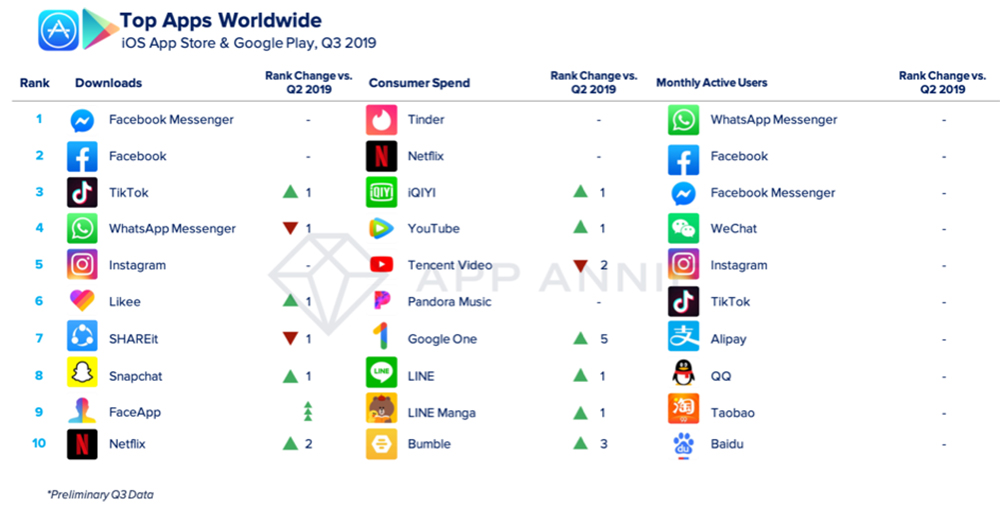
Breakout apps: "FaceApp", "Google One" and Netflix
"FaceApp", a photo and video editing app that first went viral in 2017, enjoyed great popularity again at the beginning of the quarter. The application attracted a lot of attention thanks to the new ageing filter. Sharing on social networks, particularly by celebrities, played a key role in the app going viral.
"Google One", a membership app for more storage space exclusively for Google Play, entered the top 10 non-gaming apps in global consumer spending. The subscription service offers 15 gigabytes of free cloud storage space for Google Drive, Gmail and Google Photos. Customers are also incentivized with subscription packages for larger amounts of storage, as well as other benefits such as premium customer support.N
Netflix, on the other hand, entered the top 10 non-gaming apps by downloads and at the same time remained in first place for consumer spending. The launch of the third season of Stranger Things probably supported the re-entry into the top 10, which has already been observed in the past following the release of new seasons.
The upcoming launches of streaming services such as Disney+ and Apple TV Plus will increase competition in the streaming market in the coming months. Strong downloads and usage are expected there as consumers try out the new services.
In this context, consumer spending is also likely to grow: when the free trial periods expire and users are satisfied with the offer and quality, they will decide to pull out their wallets.
App Annie is a mobile data analytics service that provides trusted app data and insights to help companies position themselves for success in the global app market. The company is headquartered in San Francisco with 12 offices worldwide.
Federal Court confirms award of the City of Geneva's billboard concession to Neo Advertising
With its decision of September 18, 2019, the Federal Supreme Court dismissed APG|SGA's appeal regarding the concession of billboard sites on public land in the city of Geneva. Neo Advertising becomes the official billboard provider of the city of Geneva.
Editorial
-
October 10, 2019
At the end of 33 months of legal proceedings involving the first-instance Administrative Court of the Canton of Geneva, the Cantonal Court of Geneva and finally the Federal Supreme Court, APG|SGA's appeal was rejected in its entirety by all instances.
The City of Geneva and Neo Advertising can thus continue the concession of billboard sites on public land, which the City Council of the City of Geneva awarded to Neo Advertising on November 16, 2016. Neo Advertising thus becomes the official billboard provider of the City of Geneva for the next 5 years. (pd)
2019 elections: Media presence largely corresponds to voter shares, according to analysis
In 2019, in the run-up to the elections, the SVP once again claimed to have the greatest media presence among the parties represented in Parliament. Overall, the frequency of media coverage across the parties roughly corresponds to their share of the vote.
Editorial
-
October 9, 2019
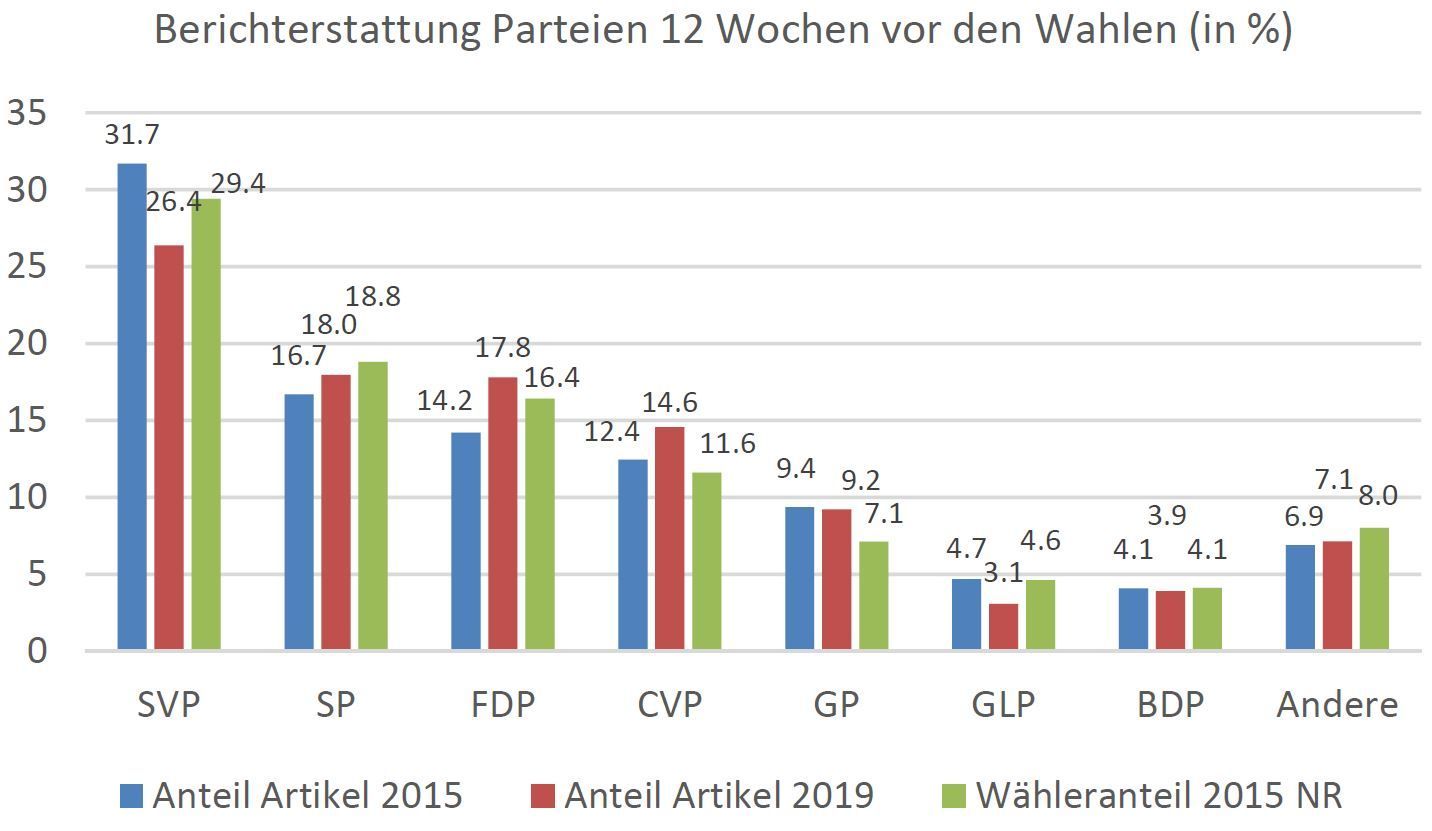
Media presence is the most important currency in the battle for attention in the run-up to federal elections, according to the study published on Wednesday by Année Politique Suisse (APS) of the University of Bern published analysis. The 33 Swiss daily and weekly newspapers with the highest circulation were included.
It is not uncommon for party representatives to complain about sparse or even tendentious reporting. However, at least as far as media presence is concerned, these accusations are unjustified.
The results of the analysis made it clear that the proportion of articles about parties in the print media examined in the twelve weeks before the federal elections corresponded surprisingly closely to the proportion of voters for the individual parties. So far, the most articles have been written about the SVP. Its media presence is no longer as dominant as it was before the elections four years ago, when it had twice as many newspaper reports as the SP.
Wormy apple as an outlier
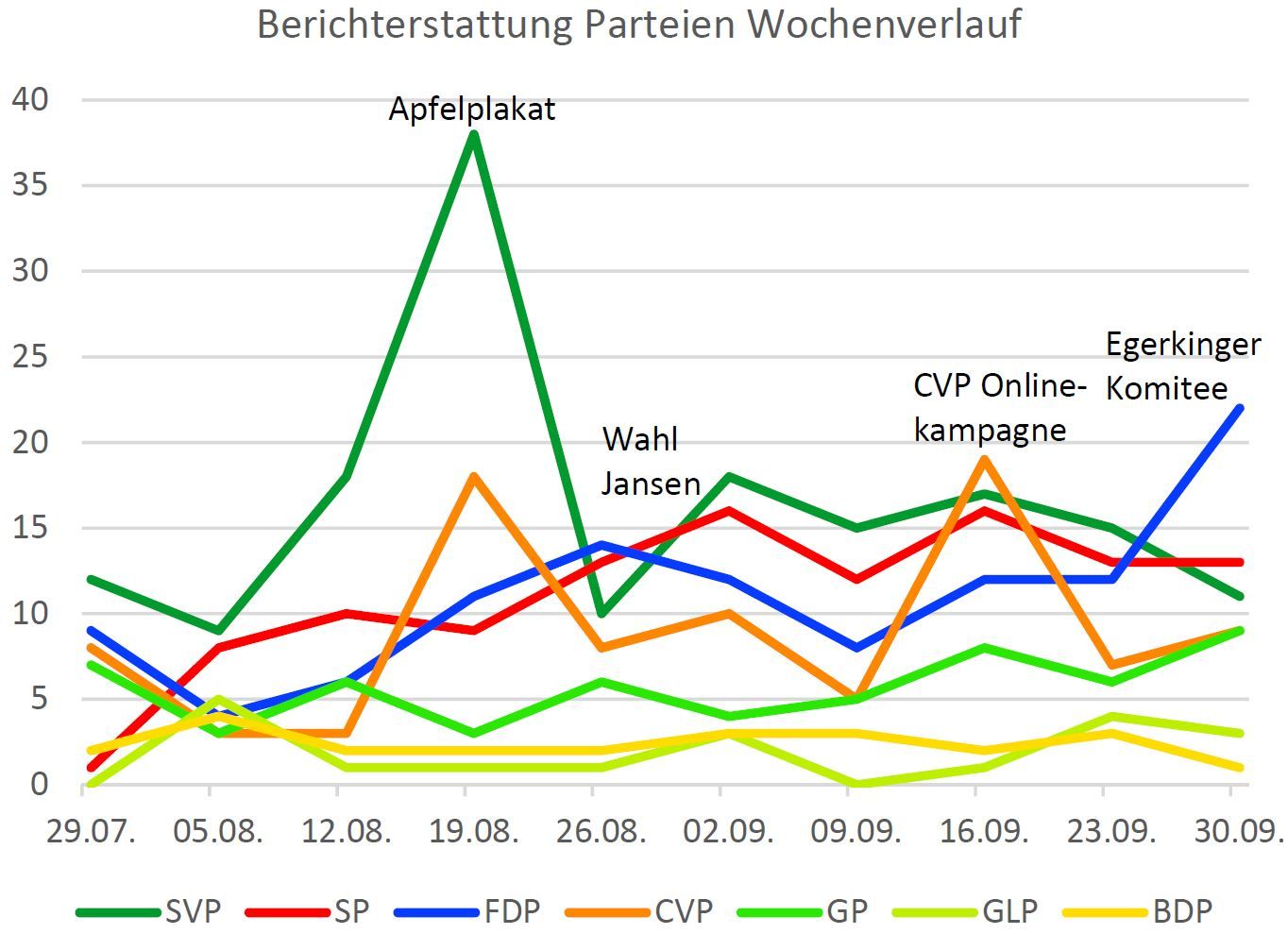
But parties also create media events, if necessary with the help of provocation. The SVP in particular seems to have succeeded in this. According to the APS, one clear outlier immediately caught the eye when looking at the weekly progression of party reporting: when the SVP published its election poster with the worm-eaten apple in mid-August, this triggered a huge media response.
With its deliberate provocation, the SVP had thus succeeded in generating the desired media attention. The effect was amplified by the party's internal criticism of the poster (Werbewoche.ch reported).
The other parties did not generate as many media events as the SVP, writes APS. The controversy surrounding the CVP's online campaign, in which the party reported negatively on the positions of candidates from other parties on a seemingly neutral website, only generated around half as many newspaper articles as the SVP poster.
The FDP's complaint against the poster by the Egerkingen committee received the second most attention in the print media during the period examined. The poster accused FDP members of protecting Islamists in Switzerland. Party President Petra Gössi responded by taking the committee to court.
Greens unable to take advantage of the climate
The SP was only able to make a few waves with the election of Ronja Jansen as the new president of the Young Socialists. The Green Party and the Green Liberal Party, on the other hand, were unable to turn the hottest current election issue, climate policy, into additional newspaper articles. (SDA/hae)
Stöckli shines in new splendor just in time for the new ski season
The agency Oeriginal Marke & Kommunikation, based in Zumikon, developed the rebranding for Stöckli Ski.
Editorial
-
October 9, 2019
With the 2019/20 collection, the Swiss ski manufacturer Stöckli presents itself in a new look - from the word and figurative mark to the comprehensive corporate design. The central element is the dynamic lettering with precise lines. This is joined by the new figurative mark: the crossed S is intended to symbolize Stöckli's ski racers in a crouched position. This visual element will primarily convey the corporate values in the textile design.
The Oeriginal Marke & Kommunikation agency from Zumikon is responsible for the new look. It developed the lettering and figurative mark by hand. "Our aim is uniqueness," explains Peter Oehjne, owner and creative director at Oeriginal. "This is created by clearly working out the distinguishing features and visualizing them clearly." To ensure this succeeds, the agency provides the client with strategic advice throughout the development process. This leads to security and progressive design concepts that customers can identify with. "First and foremost, I want to understand the client, the company and the industry. To do this, I listen and analyze a lot. Based on these findings, I then develop the solution step by step - often as a logical quintessence."
Oehjne's passion for the craft and the sport of skiing is palpable. The Swede with Swiss roots has been an expert on the ski circus for many years. According to the press release, he contributed his broad expertise from World Cup events to the customer perspective of amateur skiers to the project. The result is a progressive redesign that stands for the values of the traditional Swiss brand.
The agency at the airport "mats" for Autofit
The agency at the airport has created a website for Autofit’s new online tool, which is designed to facilitate «matches» between garage owners and their customers.
Editorial
-
October 9, 2019
Autofit is an association of independent specialist garages with around 280 partners, and is now offering its garages and their customers an online dating platform for service and repair work. Through the online appointment planner, the car owner can quickly find a suitable "date for his darling" in a garage.
To publicize Autofit's new online tool, the agency at the airport developed a campaign that "mates". Because car and mechanic also have to fit together in order to build an intimate relationship.
The online and offline campaign will use banners, social media ads, cinema advertising and radio spots to ensure reach in the German and French-speaking parts of Switzerland, as well as generating traffic on the landing page and in the garages.
Responsible at Hostettler Autotechnik: Marcel Stocker (Head of Automotive); Tobias Graf (Head of Sales); Melissa Santos (Online Marketing Manager). Responsible at agency at the airport: René Eugstair (Creative Direction); Dominique Rutishauser (Art Direction); Willy Wonka aka Oberhänsli (Art Direction); Ketil Eggum (Graphics); Miriam Egli (Text/Consulting); Julia Lüchinger (Coordination/Media). PhotosMicha Freutel, Tina Aich Photographers.
Markus Hammer is the new creative director at Equipe
Since the beginning of October, Markus Hammer has been strengthening the Equipe management team as the new Executive Creative Director. Most recently, he was Executive Creative Director at Publicis Communications at Stadelhofen.
Editorial
-
October 9, 2019
Markus Hammer has worked for many years in leading positions in Germany and abroad. In Zurich, for example, he worked for Notch Interactive, Scholz & Friends and in Hamburg for Kolle Rebbe, Philipp & Keuntje and Yours Truly, where he looked after clients such as BMW, Coop, Ricola, Swisscom, UBS, Credit Suisse, Telekom, CSS Versicherung, Otto.de, Swiss and TUI Cruises. He has received national and international awards for many of his works. For example, he was responsible for the campaign of the year for Astra, the Fooby brand for Coop, which won numerous BOSW awards and three gold medals at the BCM, and the autumn campaign for CSS Versicherung, which won gold at BOSW and the Effie.
Markus Hammer is delighted with the new challenge: "For years, Equipe has been one of the most exciting creative agencies in Switzerland, which also knows how to play on all communicative layers. And it does so along the entire sales funnel. Being part of the team here and actively shaping the future of the agency is a fantastic challenge."
Martin Widmer, CEO of Equipe is happy about the new addition: "It's great that we could win Markus for our agency, because he is not only an excellent creative, but also fits super to our agency because of his analytical skills and team-oriented way of working."
Twitter inadvertently uses private user data for advertising
Twitter, the microblogging service, used private user data—which was actually intended for security purposes—for advertising. The online company announced this on Tuesday.
Editorial
-
October 9, 2019
According to the report, telephone numbers and email addresses used to authenticate Twitter accounts were inadvertently used for advertising. The user data had been matched with that of advertising companies to enable targeted advertising. "This was a mistake and we apologize," Twitter continued on Tuesday.
The short message service claimed that the data had not been shared with partners outside the company. However, it remained unclear how many Twitter users were affected. The problem had already been fixed in mid-September. Large online companies such as Twitter and Facebook are always criticized for their handling of private user data. (SDA)
Epica Awards extend submission deadline
Last-minute decision-makers still have the opportunity to enter the race for the Epica Awards crystal pyramids: Entries can now be submitted until October 21.
Editorial
-
October 9, 2019
This extends the deadline by two weeks. Epica is the only global creative competition whose jury consists solely of media professionals. The representatives of leading advertising and marketing trade magazines - including titles such as Adweek, Campaign and W&V - will meet in Amsterdam from November 18 to 21 to evaluate the best campaigns of the year. The awards will be presented on November 21 at the Royal Tropical Institute (KIT) in Amsterdam.
As an innovation this year, Epica is presenting a PR Grand Prix and the new category "Gender Equity". Werbewoche is again part of the jury this year and will report daily from Amsterdam on the results of the Swiss entries and other exciting news.
New payment systems: Payment is becoming easier and cheaper
Apple Pay, TransferWise, or WeChat: More and more companies around the world are integrating payment features or creating new business models centered on payment systems. In its study, the management consulting firm Bain & Company analyzes what this trend means for banks, credit card companies, and retailers.
Editorial
-
October 9, 2019
The study "Payments Just Want to Be Free - How Can Providers Adapt?" at a glance:
The speed of innovation in electronic payment transactions is increasing
Global payment systems threaten banks' earnings
E-wallets gain market share worldwide in online and brick-and-mortar retail
More and more apps contain payment functions
Banks can defend their traditional business with additional services
E-wallets are becoming increasingly popular
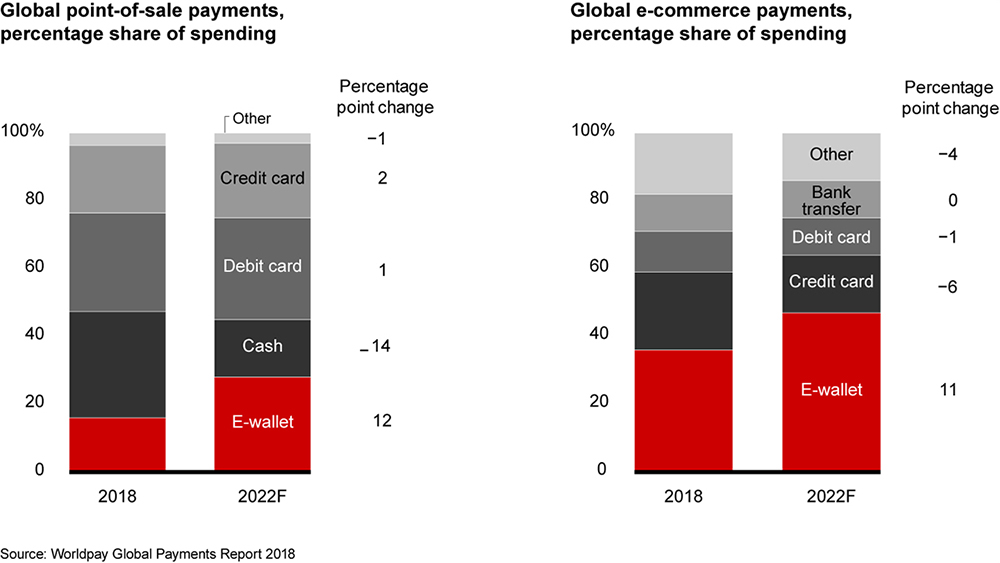
"Payment systems are in the spotlight more than ever, especially in Asia," emphasizes Bain Partner Imeyen Ebong. There, e-wallets are likely to replace cash as the most widely used means of payment in bricks-and-mortar retail in the next three years. By 2022, more than a quarter of all payments in stores worldwide and almost half in online retail are expected to be made using virtual wallets. "Modern e-wallets are considered easy to use," says Ebong, "and new market players are further raising the expectations of customers and retailers."
Global income from payment transactions currently amounts to around 830 billion US dollars. Around half of this is made up of B2B transactions on the one hand and B2C and C2C transactions on the other. Cross-border payments and money transfers from and between private individuals are particularly lucrative. The margin here is 3.4 percent or 340 basis points. Otherwise, the margins range between 2 and 22 basis points.
Strengthening the payment transaction business
Banks have three options for defending their business around payment systems and the associated direct customer contact:
Takeover of competitors. This not only increases efficiency and the speed of innovation. It also opens up new markets and business areas and creates cross-selling opportunities.
Simplify e-commerce transactions. This can be achieved, for example, by integrating payment functions - an option for retailers in particular.
Expansion of the range of services. Pioneers are already offering numerous solutions for the actual payment process. These range from fraud detection support and the evaluation of payment data to the granting of credit to consumers and merchants.
Additional services strengthen the business
"The days of fees for pure payment transactions are numbered," states Bain partner Ingolf Zies. "Payment will become part of other products and services." Payment service providers must therefore create added value for their customers, be it through particularly convenient payment options, integrated solutions such as data analysis and financing or complete software solutions including web stores and business management programs. In ten years' time, such services will account for between 50 and 80 percent of payment system providers' profits.
The speed of innovation around payment processes is high. "Every payment provider must therefore consider how their business can survive in the future," says industry expert Zies. And Bain partner Ebong adds: "Consumers will definitely be the winners, as payment will be easier and cheaper than ever before in the future."