Publicis launches barbecue campaign for Migros in Corona times

Barbecuing is also different this year than usual. In its new barbecue campaign, Migros addresses the current barbecue situation and shows how to make the most of this summer.

Migros

After the Grillitarians with their various preferences formed the summer campaign in recent years, Publicis developed the idea further for this summer. In the coming weeks, Migros will become Grillitarien, i.e. the place where you can find everything for grilling. Due to the Corona crisis, the focus is not only on the wide selection of barbecue food, recipes and tools, but also on the current very special situation: barbecue parties with friends are not possible at the moment and the social component of barbecuing is largely missing. However, Migros shows in two films that there are other ways to barbecue together.


Let's make the most of this summer.
Just as more people than ever are currently engaged in baking and cooking at home, grilling can also bring some variety into everyday life at home. Publicis has created a new spot from the various barbecue commercials of recent years that focuses on variety on the grill.


Grillitarians app

The free Grillitarier app and the Grillitarier website also provide variety on and off the grill. In addition to many recipe ideas and a practical grill timer, you'll also find a grill game. This offers fun entertainment, which could be a bit lacking this year due to the lack of friends next to the grill.

The campaign extends across all customer-relevant channels.

Migros

Responsible of Migros: Désirée Strassmann, Bojana Taraba, Bettina Huwyler, Céline Jagisch (Campaigning), Eveline Zollinger, Barbara Stauffer, Mariko Hooiveld, Mike Haak (Sales Promotions), Sergio Pintadu (Digital), Simone Blaser (Media). Responsible at Publicis: Peter Brönnimann, Pablo Schencke, Jan Kempter, Priska Meyer, Anatole Comte, Janine Sauter (creation), Matthias Koller, Meret Lauener, Selina Bigler, Jacqueline Willimann, Nina Frisch, Adrianna de Feydeau (consulting), Suzana Kovacevic, Carol Maag (Integrated Producer, Prodigious). Film production "Balcony barbecue" and "Barbecue conference": Plan B, Zurich. Chris Niemeyer (director), HC Vogel and Jessica Sonderegger (producer), Rafael Kistler (camera balcony grill), Christoph Menzi (editor), Adriel Pfister (grading), sound: Jingle Jungle. Film production "Variety": Czar Zurich. Johannes Schröder (director), Kai Kniekamp (editor), Julien Alary (grading). Sound: Jingle Jungle. Photos: Stefan Thurmann (food photos), Jens Piotraschke (food styling), Felix Streuli (Foto Schild), Pixelprinz Linus Schneider (image editing). Website/App: At Mutabor (concept and design): Burkhard Müller, Sebastian Locke, Robert Stoof, Christian Heins, Florian Schommer (creation), Stephanie Hentschel, Tobias Flosdorf (consulting), German Wahnsinn (SFX "Grill game"), Apps with love (technical implementation).
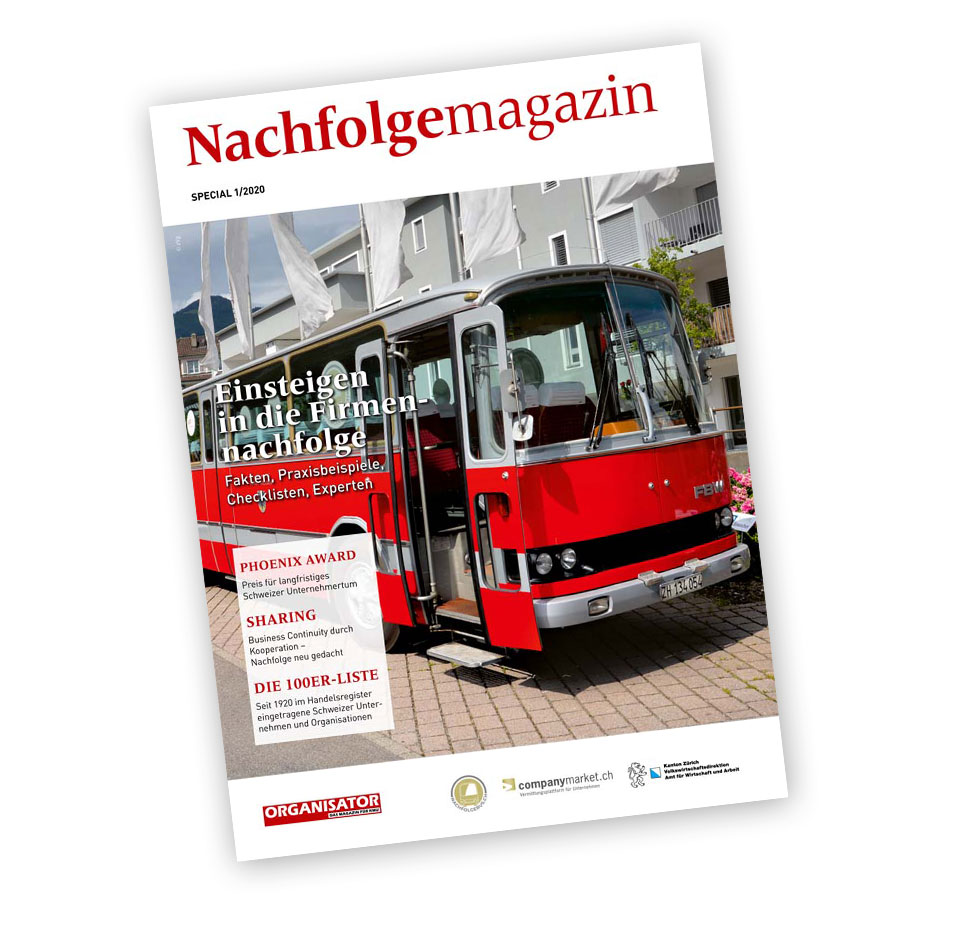

Organizer, Nachfolgebus.ch and Companymarket.ch launch joint successor magazine

The first digital issue of the succession magazine was published on April 29. This publication was launched jointly by the SME trade magazine *Organisator*, the Nachfolgebus.ch initiative, and the business-matching platform Companymarket.ch.

Nachfolgemagazin

The topic of company succession is highly relevant despite - or perhaps because of - the current coronavirus crisis. According to a study by Bisnode B&D, over 75,000 companies in Switzerland are currently facing an unresolved succession plan. The need for information and competent support in the succession process remains correspondingly high.


Covering high information requirements

The topic of "succession planning" has always had a permanent place in the editorial section of the SME trade magazine. Since 2018, there has also been a media partnership with the Nachfolgebus.ch initiative: in the form of a roadshow, succession experts toured a total of 14 German-speaking Swiss cities in a vintage bus in 2018 and 2019. The team of experts was available for consultations with interested entrepreneurs.

In 2019, the idea matured to cover the high demand for information with an additional communication channel. Working in partnership, the SME trade magazine OrganizerNachfolgebus.ch and Companymarket.ch subsequently developed the concept for the successor magazine. This is to be published annually in future and is now available with its first issue - initially digitally as a PDF.

The publication, published jointly by the aforementioned partners, provides bundled know-how on all aspects of company succession. Checklists, practical cases and expert articles provide an introduction to and in-depth knowledge of this complex topic. What's more, the topic of sharing adds another aspect that shows SMEs various options for overcoming crises and managing succession.

Nachfolgebus-mit-Carla-Kaufmann

Nachfolgebus.ch founder Carla Kaufmann.

The successor magazine is available until May 31, 2020 at preferential rates of CHF 15 for the complete issue and CHF 10 for the checklists (PFD & Word) and the expert directory from May 1 as a PDF download. Like Werbewoche and m&k, the SME trade magazine Organizer is part of the publishing house Galledia Fachmedien.

Admire sells the Federal House for Suter & Kocher

The Admire agency carried out a campaign for the real estate company Suter & Kocher Immobilien.

Admire

Suter & Kocher specializes in quick and successful real estate sales. To dramatize the "successfully sold" in an exciting way, Admire developed key visuals with well-known landmarks. The agency also implemented the complete website. This is to serve as a hub for all measures such as Programmatic Ads, Google Adwords, advertisements or Facebook.

Admire

Responsible at Admire: Oliver Hofer, Kevin Freitag, Victor Zollikofer, Boris Aebi, Vincent Kauter, Ben Thomann, Mariana Hurtado, Melanie Hählen. Responsible at Suter & Kocher Real Estate: Daniel Suter, Oliver Kocher, Stefanie Tschanz.

Erdmannpeisker brings diversity to Bimbosan packs

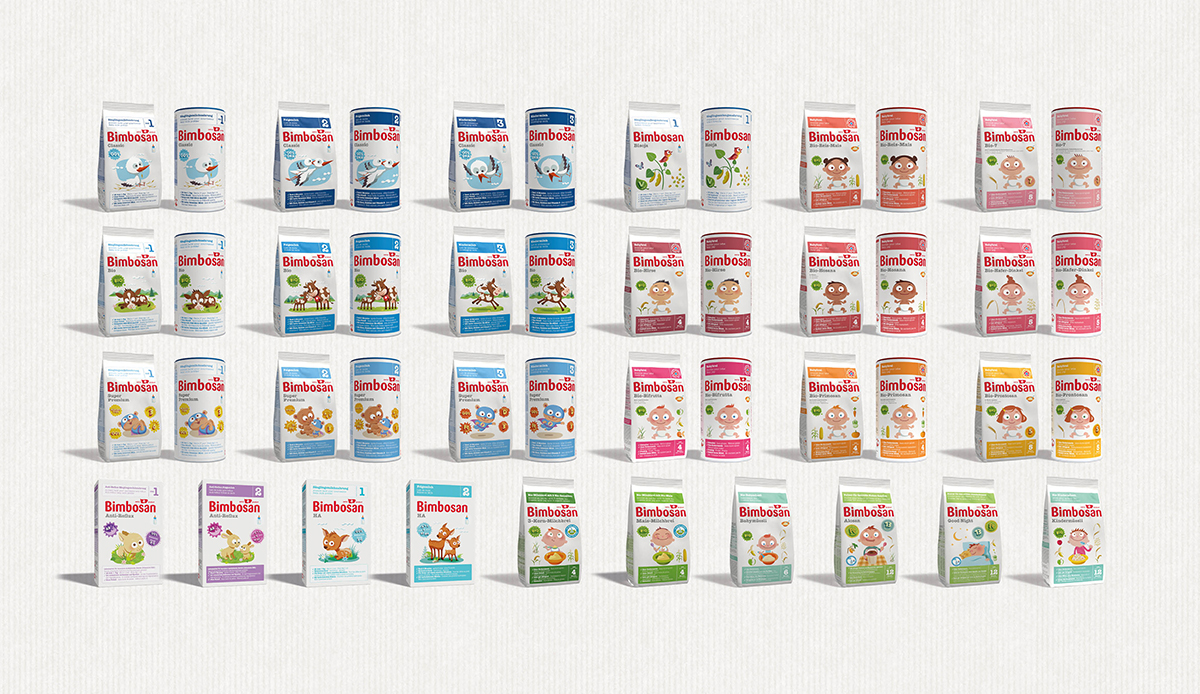
The Biel-based agency Erdmannpeisker supported Bimbosan during its 2013 relaunch and continues to work for the company to this day. Now, the entire product line has been redesigned once again.

Bimbosan-Packungen

The reason for this was legal restrictions and an optimized formula. However, Bimbosan took this as an opportunity to incorporate social changes such as gender and diversity developments into the design. Girls and boys from different ethnic backgrounds can now be seen on the new packaging.

The pacifier, which is meeting with less and less acceptance among mothers, has also been replaced on milk cartons (where no children may be depicted). Baby animals can now be seen growing up and slowly fledging. Functionally, a simple number and color system has been introduced to facilitate recognition and advice within the extensive product range.

With the new packs, Bimbosan has definitely said goodbye to the last "old habits" and appeals to young, interested and open-minded parents with its illustrations.

The new packaging will be rolled out to retailers from May 2020.

Erdmannpeisker

Responsible at BimbosanDaniel Bärlocher (CEO Bimbosan); Roger Brugger (Communications Manager). Responsible at ErdmannpeiskerGabriel Peisker (CD); Christina Weisser, Jenny Ziörjen (Art Direction); Felix Reidenbach (Illustration); Sybille Erdmann, Selina Helbling (Consulting).

Sunnie J. Groeneveld new member of the Board of Directors of Jung von Matt/Limmat

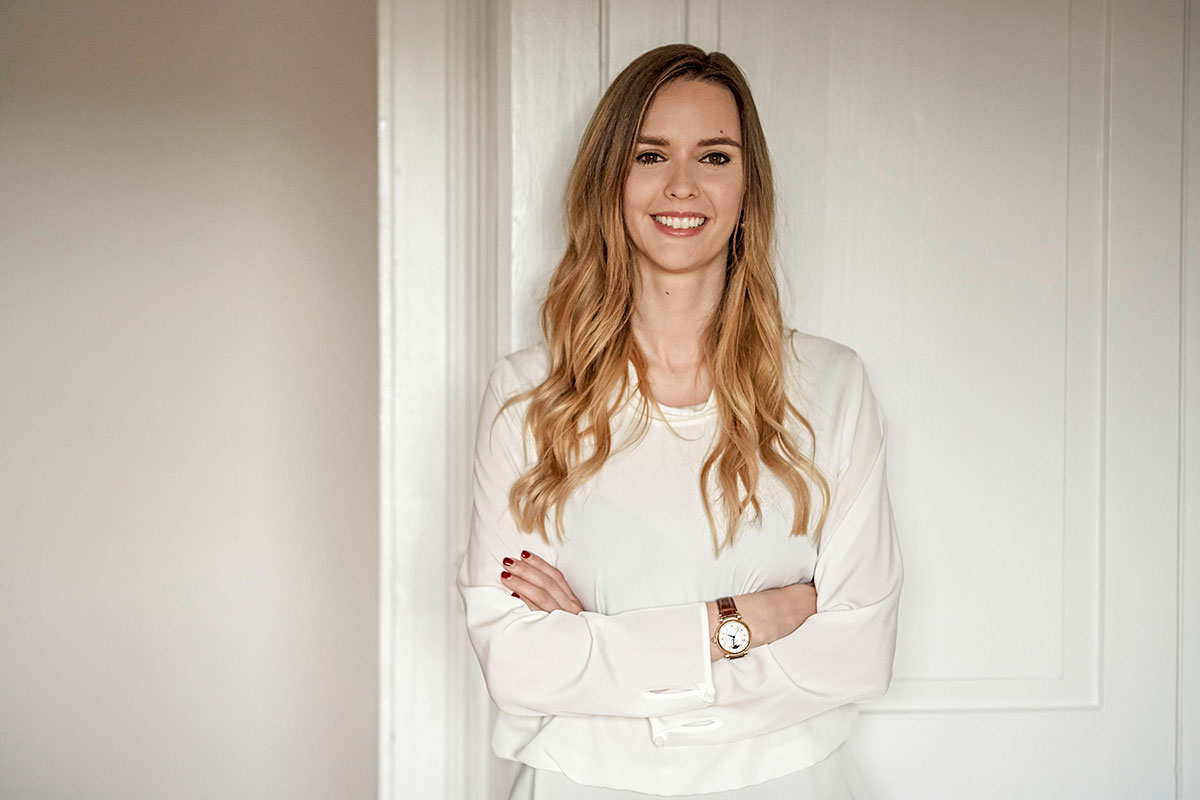
Jung von Matt/Limmat expands its Board of Directors. Entrepreneur, author and course director Sunnie J. Groeneveld has joined the Board of Directors of the communications agency. The 31-year-old joins existing Board members Dominique von Matt, Peter Figge and Roman Hirsbrunner.

Sunnie J

Sunnie J. Groeneveld is the founder and managing partner of the consultancy firm Inspire 925 and a board member of Swiss companies in the IT, engineering, media and healthcare sectors - including the Galledia Group, which includes the Advertising Week and m&k are among them. Groeneveld also heads the Executive MBA Digital Leadership program at the HWZ University of Applied Sciences in Business Administration Zurich. As a proven digital expert, she will join the Board of Directors of Jung von Matt/Limmat in spring 2020.

"Sunnie Groeneveld has in-depth expertise in digital leadership, modern forms of collaboration and combines digital strategy skills from a wide range of industries. She is a perfect addition to the existing Board of Directors and will help Jung von Matt/Limmat to continue to be at the cutting edge," says Dominique von Matt, Chairman of the Board of Directors.

Commenting on her new role as a member of the Board of Directors of Jung von Matt/Limmat, Groeneveld says: "For me, Jung von Matt/Limmat is clearly the leading communications agency when it comes to digital expertise and adapting trends. As an external member of the Board of Directors, I am very pleased to be able to strategically develop this success story further together with the Board of Directors."

Sunnie J. Groeneveld was elected to the Board of Directors of Jung von Matt/Limmat on April 23, 2020 and takes up her position with immediate effect.


Television Group RTL Suffers from Decline in Advertising Business

The Corona crisis has caused a decline in advertising business for the RTL television group, and with it a drop in revenues. Total revenues fell by 3.4 percent to 1.46 billion euros in the first quarter within the year, as the group announced on Thursday.

RTL

Digital sales, on the other hand, climbed by just under six percent to 233 million euros. Due to the unforeseeable consequences of the virus pandemic, the Group had cancelled the dividend for 2019 at the beginning of April and revised its forecast for the current year. Now it said: "RTL Group is currently not in a position to provide a new outlook for the 2020 financial year."

The first cancellations for advertising bookings and postponements of productions were registered at the beginning of March, said RTL CEO Thomas Rabe. "This trend accelerated in the second half of March with the introduction of far-reaching protection measures across Europe."

RTL Group's TV channels, radio stations, streaming services and websites did record significantly higher reach and usage figures. However, the Group estimates that the net TV advertising market shrank by four to 4.5 percent in Germany alone in the first quarter. (SDA)

One in ten online retailers sees its existence threatened

The prevailing crisis is putting the brakes on retail. But it's not just brick-and-mortar stores that are facing the effects: According to a survey commissioned by Trusted Shops, 11 percent of online retailers fear that their existence is at risk. The majority of them also face fewer orders and problems with suppliers and partners.

Coronavirus

At the beginning of the Corona crisis, it seemed that online stores would be able to expand their business. But shortly afterwards it became clear that Internet retailers were also feeling the effects of the pandemic strongly. One in ten store operators currently even sees their existence at risk (11 percent). How did this fear come about? Almost half of the stores are currently registering fewer orders (45 percent) and therefore also lower sales. In addition, problems in cooperation with suppliers and partners are making work more difficult for 43 percent of online retailers.


Appropriate measures implemented

To counteract this development, many online stores have reacted. The topics that now appeal to and move their customers are different than they were just a few months ago. As a result, half (50 percent) have changed their marketing and advertising measures and adapted them to the situation. The needs and demand of online shoppers have also changed. To respond to this, about the same number have adjusted their product offering (47 percent). To create an additional incentive to buy, 40 percent of store operators have highlighted their delivery times. With waiting times of up to six weeks, fast availability can be decisive for the purchase decision.


Willingness to cooperate

Despite all the problems and challenges that online retailers have to overcome themselves, over half of them would be willing to cooperate with stationary retailers (56 percent). However, the majority of them do not know what such cooperation might look like (56 percent). One possibility is that unemployed employees from bricks-and-mortar retail could help out in stores with a sharp rise in demand. This would be supported by 41 percent of store operators.

How online stores will get through the crisis in the future can hardly be estimated so far. It is to be hoped that the measures will help smaller stores to continue to exist.

To the survey

The data used is based on an online survey conducted with Surveymonkey, in which 141 operators of online stores participated in April 2020. 

Despite increasing sales revenues, many media companies are threatened with insolvency

According to an expert survey by Publicom, the Covid-19 pandemic is hitting the Swiss media industry hard: paid media are benefiting from increased sales revenue. As these are far from compensating for the collapsing advertising market, many media companies are facing insolvency.

Medienunternehmen

The coronavirus crisis is thus accelerating structural change, and many media offerings relevant to democracy will soon no longer be financially viable without additional funding. This is the result of a new expert survey conducted by Publicom.


SRG and streaming services among the winners

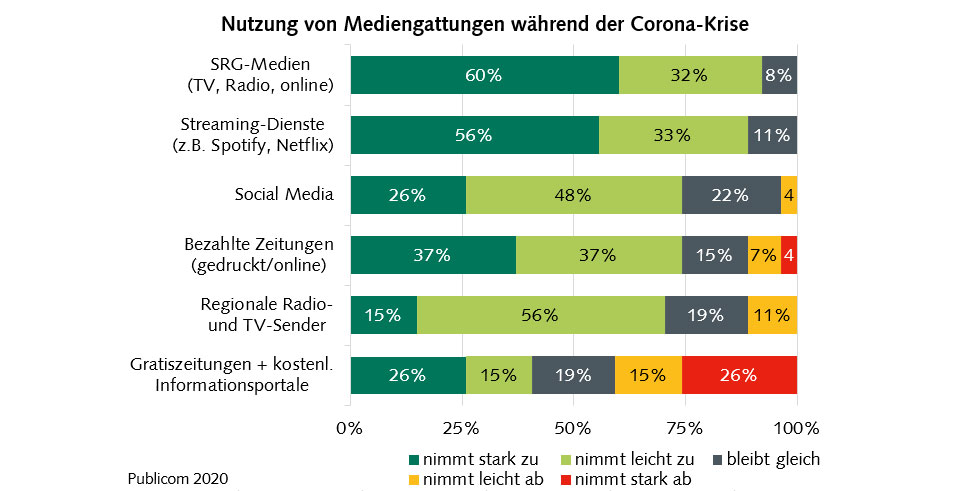
The coronavirus crisis has increased the Swiss population's need for information, from which paid media in particular can benefit in terms of usage: The Delphinarium experts from Publicom see the strongest increase in usage among SRG media (for the media types radio, TV and online - 92% of respondents see a "slight" or "strong increase"). Paid newspapers (printed or online) and social media (74% "slight" or "strong increase" each) are among the winners, as are regional radio and TV stations (71%). Only free newspapers and free information portals are predicted to stagnate. According to the experts, streaming services such as Netflix and Spotify (89% increase in usage), which offer entertainment and entertainment during the crisis, are also among the big winners.


Loss of trust for free newspapers

According to experts, the coronavirus crisis has also led to a gain in trust for SRG media, paid newspapers and, to a lesser extent, regional radio and TV stations. Free newspapers, free information portals and social media, on the other hand, have suffered a loss of trust.

The public service mission of SRG SSR and the regional radio and TV providers is gaining momentum thanks to increased use and greater public trust. And apparently readers are also prepared to pay more for newspaper content: A total of two thirds of the Delphinarium experts predict an increase in subscription income and sales. More than half see a slight increase of up to 10 percent, while a further sixth expect an even greater increase.


Gloomy future prospects

However, increased sales are nowhere near enough to compensate for the sometimes dramatic drop in income in the advertising market. The economic success of media companies is suffering as a result of the coronavirus crisis, which is leading to drastic measures and consequences: All experts are of the opinion that media companies will respond to the crisis with redundancies (100 percent agreement with the scenario in the "definitely true" and "probably true" categories), and 96 percent state that the manifest trend towards short-time working will intensify.

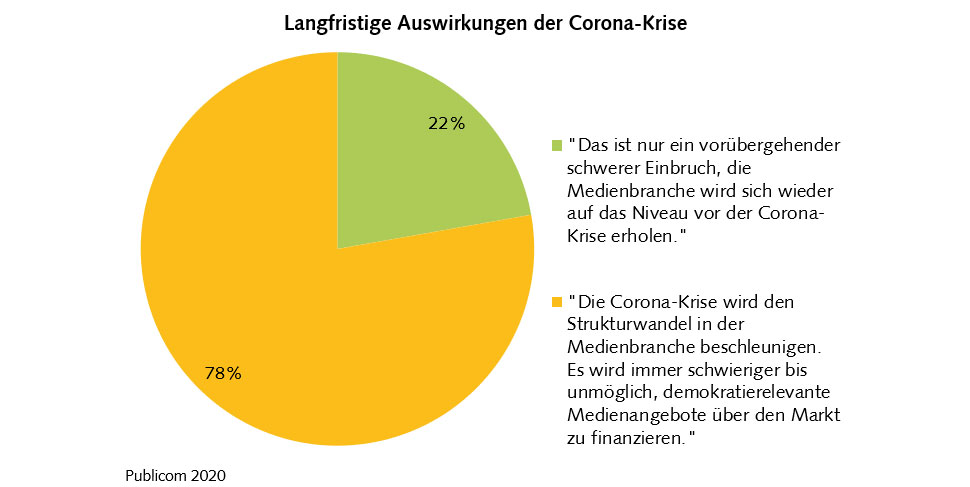
In addition to the measures, some of which have already been implemented, the experts paint an alarming picture of the future: A full 86% expect that companies in the media and advertising industry that are existentially affected could go bankrupt due to the corona crisis. A clear majority (78%) believe that the current events will further accelerate the ongoing structural change in the media industry, and only 22% see the coronavirus crisis as a temporary severe slump from which the industry will recover to pre-crisis levels. For almost three quarters of the Delphinarium experts, it is also becoming increasingly difficult or even impossible to finance democracy-relevant media offerings via the market and they expect the federal government to provide the media companies with additional funding.

Unbenannt-1

About the study

Under the name DELPHInarium, Publicom, which specializes in media research and consulting, publishes the results of an expert survey twice a year. Over forty experts from leading media companies as well as representatives from advertising, media journalism, communications science and corporate communications take part in the panel.

Facebook is already confident again in Corona crisis

In the midst of the coronavirus crisis, Facebook is offering hope that the worst is already behind us. Advertising spending in the first three weeks of April showed signs of stabilizing, the world’s largest social network announced on Wednesday after the U.S. stock market closed.

Coronakrise

Advertising spend would have been roughly in line with the previous year. Facebook shares jumped 9 percent in after-hours trading.

In the first quarter of 2020 - especially in March - the frozen advertising budgets were still noticeable. Travel companies, restaurant chains and retailers in particular refrained from advertising in view of global travel warnings and closed stores.

Revenue, which consists mainly of advertising income, increased by 18 percent in the first quarter to around 17.7 billion dollars (17.2 billion Swiss francs). In the previous quarter, growth had still been 25 percent. However, analysts had on average expected lower revenues in the first three months. Google had also recently exceeded expectations.

Due to the uncertainties in connection with the Corona crisis, the U.S. group does not provide an outlook for the current quarter or for the full year. However, Facebook wants to spend a little less than planned: In addition to less travel, job creation is now to take place somewhat more slowly.

The group, which also includes WhatsApp and Instagram, now has 2.6 billion monthly active users, or around one-third of the world's population. Only recently, the company expanded its foothold in India with a stake in the digital division of the Indian Reliance conglomerate for $5.7 billion. (SDA)

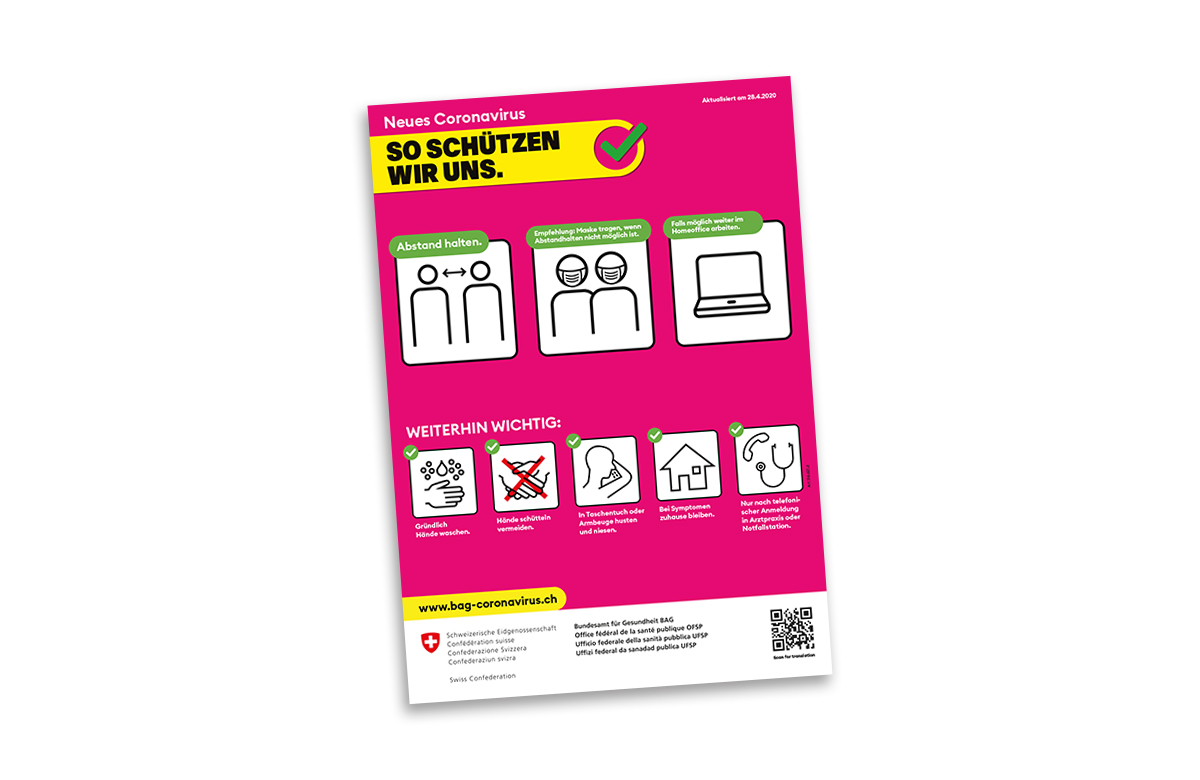
The FOPH campaign "This is how we protect ourselves" changes to pink

The Federal Office of Public Health is updating its campaign to protect against the novel coronavirus and switching to pink as its primary color. With the first easing of restrictions to protect the public from the novel coronavirus, some activities are once again permitted.

Kampagne

Despite the easing of restrictions, which the Federal Council is now gradually adopting, the same rules still apply: Keep your distance, wash your hands thoroughly, sneeze into the crook of your arm. If the minimum distance cannot be maintained, a mask should be worn.

In addition, the number of contacts should be reduced by continuing to work from home wherever possible.

Kampagne

Radio Argovia celebrates its 30th birthday

Radio Argovia is celebrating its 30th birthday with well-known voices of former presenters congratulating the radio on its anniversary and creating a hidden object book for Argovialand.

Radio Argovia

Two of the seven hidden object pictures that will be published in the "Aargau Wimmelbuch" picture book in the fall. 


Aargauer Radio celebrates its 30th anniversary on Friday. Radio Argovia first went on air on May 1, 1990. The initial twelve employees have now grown into a 35-strong team. To celebrate the anniversary, many former presenters can be heard on the station, even if they are unable to be live in the studio due to the coronavirus pandemic. These include former presenters Michel Birri and Judith Wernli, former program director Michel Erismann and long-time editor-in-chief and man of the first hour Jürgen Sahli.


Hidden object book for Argovialand

To mark its anniversary, the radio station is presenting Argovialand with a hidden object book, which will be published by Vatter&Vatter at the beginning of fall. The picture book "Aargau Wimmelbuch", illustrated by Julien Gründisch from Wettingen, contains seven subjects that reflect Aargau. "The hidden object book shows in a wonderful way that our canton consists of more than just freeways, white socks and carrot cakes. Each subject focuses on a different facet of the canton of Aargau," enthuses Oliver Wagner, program director of Radio Argovia.


Unfortunately without "Argovia Fäscht"

The radio station's traditional birthday party, the "Argovia Fäscht", cannot take place this year due to the extraordinary situation. The festival, which would have taken place on June 5 and 6, had to be postponed to 2021 due to the coronavirus pandemic.

Federal Council wants to increase funding for press and online media

The Federal Council wants to provide more support for newspapers, radio and TV stations and news agencies in future. CHF 50 million instead of CHF 30 million will now be available for indirect press promotion. Online media are to receive CHF 30 million per year.

Bundesrat

On Wednesday, the Federal Council adopted the dispatch on the package of measures in favor of the media. It wants to partially revise the Radio and Television Act and the Postal Services Act. In addition, a media law limited to ten years is to be created. Parliament could deal with the bill for the first time in the summer session in June.

In addition to the SRG, which currently receives CHF 1.2 billion from the fee pot and will receive CHF 1.25 billion from 2021, CHF 111 million per year has so far gone to the private media: CHF 81 million to local radio and television stations and CHF 30 million to the postal delivery of regional and local press.


Profit more from the cake

In order to maintain press diversity, indirect press subsidies are now to be extended to all daily and weekly newspapers with subscriptions. To this end, the current circulation limit of 40,000 copies will be lifted so that national newspaper titles can now also benefit from the support.

Newly, newspapers that are part of a so-called "Kopfblattverbund" with an average total circulation of more than 100,000 copies per issue will also benefit from the funding.

According to the Federal Council, the two measures will enable around 35 million additional newspaper copies per year to benefit from indirect press subsidies in future. The federal contribution will be increased from the current CHF 30 million to CHF 50 million so that the less high-circulation titles will also benefit. This means that all subsidized titles will benefit from a higher delivery discount per copy.


Only reader-financed online media

Online media will now also be eligible for funding. The Federal Council intends to make CHF 30 million in general federal funds available each year for this purpose.

Last summer, Media Minister Simonetta Sommaruga proposed only supporting online media that sell their content. The Federal Council has now fleshed out this model. Online media that can count on revenue from readers will be supported. Income from online subscriptions, daily passes or individual downloads as well as voluntary contributions from readers will be taken into account.

The support is to be based on audience turnover and designed to be degressive. This means that the proportion of support decreases with increasing turnover. This leads to greater support for media offerings with a regional focus.


Common platform

The Federal Council also wants to improve the framework conditions for the electronic media with various other measures. These include supporting training and further education institutions, national news agencies and self-regulatory organizations.

In addition, the Federal Council envisages that IT projects can be supported, especially those that are available to the entire industry. This means that all online media, including free offerings, will benefit regardless of the business model. It would be conceivable, for example, to support the development of a joint platform.

These general measures will be financed with a maximum of 2% from the proceeds of the radio and television license fee. The Federal Council emphasizes that the independence of the media will be preserved in all measures.


Media market in crisis

In the past, opinions have differed on the expansion of media funding. Various reforms failed to find a majority - whether in the government or in parliament. A provisional emergency package of 78 million francs during the coronavirus crisis also recently failed.

Now the Federal Council is presenting a new model. This is important for the industry. The pressure on the media is currently greater than ever. Even before the coronavirus crisis, advertising revenues were falling rapidly. Since the turn of the millennium, the Swiss press has lost more than two thirds of its advertising revenue.

The pandemic has exacerbated the existing problems. As a result, publishers are being forced to pass on more and more costs to subscribers and cut staff.


Pending motions

The coming months will show whether the media package is capable of gaining a majority in parliament. It is clear that the Committees for Transport and Telecommunications (KVF) have recognized the emergency situation. They have submitted motions - some with large majorities - calling for immediate aid for the media.

The Keystone-SDA news agency is to be supported and the delivery of newspapers is to be made cheaper. Finally, they are calling for regional radio and television broadcasters to be supported with an additional CHF 30 million.

These initiatives are expected to be dealt with at the extraordinary session next week. They are intended to bridge the time until the media package that has now been communicated comes into force. (SDA)

get_footer();