The lake smiles, inviting you to sing

In August 2013, the opera spectacle «Festival La Perla» will take place on the lakeside promenade in Pfäffikon, ZH. The event was initiated by George Egloff, the former CEO of Ticketcorner, who will soon be back with his own new ticketing service.

Unbenannt-1_6
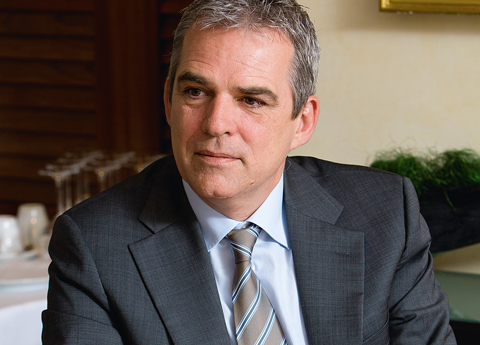
George Egloff was co-founder and CEO of Ticketcorner. After the sale of this company, he founded the La Perla festival to "serve out" his time with the imposed non-competition clause.  
 
WW: What inspired you to produce an opera on Lake Pfäffikon?
George Egloff: I noticed years ago that there was a market need in this area. In Switzerland, we have the opera festival in the Roman arena in Avenches as well as Bregenz and Verona close to the border. But there is nothing in Zurich, the most important economic area. This analysis was constantly on my mind. The idea was born in spring 2011, when I had lunch with Sergio Fontana, our artistic director, here by the lake. Sergio thought it was a dream setting and that something should be done.
 
It really is paradise here. But why an opera?
Switzerland has one of the highest event densities in Europe, perhaps the highest. We also have high admission prices. So you would have to say: hands off and do nothing. But I think we have discovered a real gap in the market here: In the broad spectrum of all open-air offerings, opera has been missing until now. The response from the media and also in terms of ticket sales immediately proved us right.
 
And why "Aida"?
Various considerations have led to this choice. Most people know this opera. "Aida" is a brand. Secondly: Sergio Fontana saw an opportunity in the Verdi year. Giuseppe Verdi would have been 200 years old in 2013. On August 7, it will also be 100 years since "Aida" was first performed in the Verona Arena. Fourthly, it is a very demanding opera. We wanted to set a highlight at the first edition of our festival.

Unbenannt-2_7
 
How do artists react when a completely new festival wants to get them involved?
I wouldn't get a single artist on my own. Our artistic director has these connections. Sergio Fontana managed Avenches for 17 years, he set up the Alpine Gala in Gstaad and has sung on many major stages himself. With us, he is now responsible for the composition of the soloists and for the entire artistic content, including the direction.
 
What ultimately tipped the scales in favor of Pfäffikon?
It's actually an accident. I live here, all of us in the organization are from Pfäffikon, and this lunch with Sergio Fontana made it an obvious choice.
 
The advantages of the landscape are obvious, what are the disadvantages of this location?
We have imposed a lot on ourselves. We said we wanted a modal split of 80 percent, which means 80 percent should use public transport. We had no requirements, neither communal nor cantonal. Nevertheless, we decided that we wanted to include the train ticket in the ticket price.
 
Isn't the stage too far away from Zurich?
I see Pfäffikon ZH as part of Zurich. Lake Pfäffikon is part of the local recreation area and can be reached in 15 to 25 minutes by car or train. If you compare it to Verona or Bregenz, our stage is actually on our doorstep.
 
There is a catering service. People want to take the train so they can have a drink.
Exactly. We open at 6 pm and the opera starts at 8.15 pm. We do the public catering together with local businesses so that we have a good foothold there.
 
How has your idea been received in the community?
At the beginning they thought: What kind of madman is this? Who is this Egloff anyway? People were very reserved. That has changed massively in the meantime. We have an advisory board made up of local politicians. We have a godfather in the form of Thomas Heiniger, President of the Zurich Cantonal Government Council, and we enjoy really good support from the business community.
 
How long did it take for the idea to mature?
The idea was born in spring 2011, we got the permit in August 2011 and we started advance sales on December 1, 2011. The entire program was already in place at that time. We quickly got down to business because there were rumors that another event was planned that wanted to be similarly positioned. That's why we got out early with all the advertising. We wanted to occupy the field.
 
Was there ever a discussion about holding a jazz festival, or was the opera a given?
I wouldn't do anything else. There is such a density of jazz and pop/rock in Switzerland that there is no more room. Opera yes.
 
What is the concept?
Our target group is people between 40 and 75 who are interested in culture. At this summer festival, we also want to pick up the people who go to the opera house in winter because of the quality. That is our benchmark. All the others, who perhaps don't have such strict criteria themselves, will automatically realize that we offer a good product. We want to stage the performance without sound, a truly purist production of "Aida".
 
Verona by the lake?
The vision is "Little Verona". Of course, we won't reach that size. In terms of quality, Verona is A+, then there's nothing for a long time.
 
How are competencies distributed at La Perla?
We have clearly assigned responsibilities within the OC. I am the initiator and majority shareholder. Sergio Fontana is the artistic director. Luca Laezza is primarily responsible for marketing and its implementation (see box).
 
How were you able to attract sponsors? The cultural market is completely overcrowded...
 
That's right, yes. We have achieved the goals we set ourselves. It's fair to say that they weren't too high. We looked for sponsors with an external partner, Marc Brunner from People Mind, who has also managed "Art on Ice" in St. Moritz and exclusive polo tournaments and is on the board of Swiss Tennis.
 
Who creates the advertising?
The CD/CI was developed by the agency Gut Werbung from Kreuzlingen. The website of Escapenet in Winterthur. FBM Communications is responsible for public relations.
 
Freddy Burger is also involved in other ways.
FBM Group is a shareholder and FBM Communications also has the PR mandate. I thought long and hard about whether we wanted to manage "Aida" on our own or with a partner. The budget is 3.5 million, which is quite a lot. That's why we decided to bring Freddy Burger on board. I've known him for 25 years. He thought the product was great and agreed relatively quickly.
 
What is the USP of the festival?
Our USP is certainly the highlight in the area of opera and open-air performances. We have a unique natural backdrop, and for the sponsors we have a very affluent target group, 40 to 75, rather female, high income and/or wealthy. This is how we have positioned ourselves, and this is also how we have chosen our media partners: SRF Radio 1, Tages-Anzeiger, Schweizer Familie, Schweiz am Sonntag and Clear Channel.
 
At 89 francs, you offer reasonable prices.
This is the cheapest category, then it goes up to 249 francs. That's high priced, slightly below the Opera House, but higher than comparable festivals.
 
You know the business. You were co-founder and CEO of Ticketcorner.
I was with Ticketcorner almost from the start. In 17 years as Managing Director, I have been able to accompany various company sales, or have had to, depending on the situation. I have witnessed a total of four company sales.
How has your experience at Ticketcorner helped you with the marketing of Festival La Perla?
Of course, I was on the other side at Ticketcorner and got relatively little insight into the marketing and organization of an event. That's done by the organizers themselves. But in my more than 20 years in this business, you get to know a lot of people and know roughly how the mechanics work.
 
What was your role in setting up Ticketcorner?
The organization was launched in 1987 by the former Bankverein as a marketing tool. I came from the other side. UBS and Credit Suisse had Fastbox Ticketservice as a public limited company with the task of making money. When Bankverein and UBS merged, everything was combined. Fastbox Ticketservice was renamed Ticketcorner, and my job was to bring in structure and growth until the next sale.
 
What were the challenges back then?
During my last time at Ticketcorner, a private equity company held the majority of shares. Private equity means debt financing and returns. I can't really recommend that. On the other hand, the market trend was towards promoters selling their own tickets. A promoter today no longer really needs a sales organization. It's comparable to DVD and CD sales. Such stores no longer even exist, everything is done via downloads. The Internet has established itself as a mass medium. We're noticing that here too. Although we are offering a new product with the La Perla festival, 85 percent of tickets are already sold via our own sales channels. Huge changes have taken place in the ticket market over the last four years.
 
In what form are you still involved with Ticketcorner?
After the sale to CTS Eventim, I had to serve a non-competition clause of two and a half years. I didn't want to offer any targets during this time, which is why we are working with Ticketcorner for "Aida". However, I will be announcing in the foreseeable future that I will be launching a new project, again in ticketing. With a new business model that primarily leaves the value creation to the event organizers.
 
What was the impetus to become an organizer yourself with "Aida"?
To bridge the time until the non-compete clause expires (laughs).
 
So not the big dream of an artistic director?
No, but I used to manage artists and organized various tours before my time at Ticketcorner, including a small open air with 2000 people in the classical field.
 
How did you get started in the cultural business?
After the CT, I quickly realized: That couldn't be it. One dream was to be a journalist. I was allowed to join Pop/Rocky. Jürg Marquard's magazine no longer exists. Back then, we were still number 2 in Europe. It was a good time, hard and seven days of work a week. But you get to know interesting people. That's also how I got in touch with artists and event organizers. Then it grew steadily. At some point, I made the leap into self-employment. I took on the management of Steve Thomson, who was Swiss rock star of the year at the time. This was followed by various other mandates from Phonogramm, Sony Music and at some point from Volksbank, which was then taken over by Credit Suisse. In the beginning, I built up the ticketing as a freelancer. At some point, that ended in a permanent position. That's how I later came to Ticketcorner. You'll find out the name of my new company in the fall.
 
Interview: Andreas Panzeri

UN Security Council discusses violence against journalists

In view of the growing number of journalists killed, media representatives from all over the world have called on the UN Security Council to take action. In most cases of journalists killed since 1992, those responsible have never been brought to justice.

The Somalia correspondent for the AFP news agency, Mustafa Haji Abdinur, described the risks of his work in the civil war-torn country to the UN ambassadors of the 15 member states on Wednesday. "When a journalist is killed, the news dies," Abdinur said at the meeting of the UN's most powerful body in New York. In 2012, 18 journalists were killed in Somalia. Most recently, television reporter Liban Abdulahi Farah was killed in the country in the Horn of Africa last week. "My story is not unique," said Abdinur, who won the Committee to Protect Journalists (CPJ) Press Freedom Award in 2009. "I am simply here today because I was lucky. Because the gunmen who killed so many of my colleagues and friends haven't found me yet."

Since 1992, almost 1,000 journalists worldwide have been killed in the exercise of their profession. In most cases, those responsible have never been brought to justice. In the Syrian conflict alone, it is estimated that around 100 journalists have died since the fighting began in March 2011.

"Eyes and ears in all corners of the world"

Ghaith Abdul Ahad, Iraq correspondent for the British newspaper The Guardian, lamented the "impunity" in cases of violence against journalists. Abdul Ahad called for media representatives in conflict zones to be seen as "part of the humanitarian effort to tell the story". The Security Council debate on violence against journalists was organized by the United States, which holds the presidency of the body this month. "Journalists are literally our eyes and ears in all corners of the world," said acting U.S. Ambassador to the UN Rosemary DiCarlo. "This Council has an obligation to protect those who provide us with so much important information."

Switzerland also had its say in the debate, which was open to all members. The Swiss ambassador in New York, Paul Seger, pointed out that the number of murders and imprisonments of journalists was on the rise worldwide. Journalists are civilians on dangerous missions. Every state had a responsibility to protect them. (SDA)

Teaser image: Keystone

Kargo is new nine

The Kargo Kommunikation team has grown to nine employees. The newest members of the team are Evelyn Schneider, Anouk Aschwanden, and Claudia Strässle.

Since spring, Evelyn Schneider, formerly with Goldbach Interactive, has been strengthening the online consulting team with her knowledge of online communication and social media. Anouk Aschwanden was previously involved in the creative team at the Erdmannpeisker agency in Biel and works as a graphic designer at KargoKommunikation. Also new to the team is Claudia Strässle, who found her way to the capital from In Flagranti and supports consulting at Kargo.

kargo1

Allaccess: Oversized Minion for the movie release

To coincide with the theatrical release of the animated adventure *Despicable Me 2*, Allaccess’s promotional staff appeared at various Swiss movie theaters with an oversized balloon shaped like a Minion.

They handed out key rings and magnets in the shape of the stars.

Responsible at Universal Pictures International Switzerland GmbH/ TTP Take Two Publicity: Mirela Schick (Promotion Manager). Responsible at Allaccess: Brigitte Schäffer (Project Manager).

Minion1

CR Basel: Baseldyt campaign

CR Basel has designed a "Baseldytsche" campaign for BZ Basel. This is intended to emphasize the local newspaper competence.

With messages such as "Aini fir alli.", "Aadie und bis morn." or "Al-lewyyl aschuur.", the campaign is intended to say in unmistakable dialect that BZ Basel and its creators literally speak the same language as their readers; "just as the beak has grown". The new campaign slogan sums up this common denominator: "bz basel. My newspaper every day." The campaign is used in advertisements, on posters and online, supported by Baseltype radio and TV commercials, including statements from local celebrities.

On its website, BZ Basel also invites readers to send in special Basel expressions and sayings "that the rest of Switzerland only understands".

Responsible at AZ Medien: Tanja Laube (Head of Marketing), Miriam Meury (Publishing Manager). Responsible at CR Basel: Gabriel Heuberger (CD), Dominique Wegmann (text), Philipp Kropf, Ruedi Rominger (graphics), Thomas Fux (consulting).

bzbasel-1
bzbasel-2
bzbasel-3
bzbasel-4
bzbasel-5
bzbasel-6

Last but not least: "Wholy fuck"

Following the crash-landing of a Korean jet in San Francisco, the U.S. television station KTVU came up with a particularly tasteless joke. However, this will have no legal consequences.

The airline Asiana is again refraining from filing a lawsuit against the broadcaster. According to the San Francisco Chronicle on Wednesday, an airline spokeswoman confirmed that the station will not be sued. Asiana had initially threatened legal action for damage to its reputation. After the crash landing of an airplane in San Francisco with three fatalities, the KTVU station in California reported the supposed names of the Korean pilots, which shortly afterwards turned out to be a hoax. The presenters realized too late that the names - spoken aloud - resembled a description of the accident in broken English with an Asian accent: "Something wrong, we too low, holy fuck, bang ding ow" (roughly: "Etwas falsch, wir zu tief, heilige Scheisse, bumm krach aua.").

zglwf_teaser

Outraged viewers complained about the joke. The station promptly apologized for the blunder. According to KTVU, the mocking names came from an employee of the National Transportation Safety Board (NTSB). An intern involved in the incident was fired by the agency. (uma/SDA)

Teaser image: Faz.net

Pixel disco: In the land of the rising sun

Warner Bros. Pictures and Coop Pronto launched a promotional partnership covering multiple productions back in June with the «Man of Steel» campaign. Starting July 15, the second promotion as part of this collaboration will be underway.

To mark the cinema release of "The Volverine", the two companies are giving away a trip to Tokyo for 2 people. Communication will take place via a nationwide outdoor campaign and POS ad screens. Supported by corresponding online measures via the Coop Pronto website.

Pixeldisko was commissioned to develop and realize the communication elements for this promotional partnership - with reference to international campaign elements of the respective cinema titles.

Responsible at Pixeldisko: Othmar Küng (overall responsibility), Bianca Jäger, Nathalie Moser, Hannes Quaderer, Corinne Weber-Wyssen (realization). Responsible at Warner Bros. (Transatlantic) Inc: Thomas Scheller (Promotion Manager). Responsible at Coop Pronto: Regina Just (Marketing Administrator), Martin Hungerbühler (Head of Procurement Concepts), Michael Mohler (New Media), Delphine Brossard (Shop Identity).

w1

Wirz: Swing microsite for furniture

«Scroll your way to the Swiss Wrestling Festival.» This is the call to action that kicks off Mobiliar’s new Swiss wrestling microsite. Along the way, users pass animated illustrations of property damage on their way to the festival grounds.

Along the way, they can get in shape for the Swiss Federal Championships and win tickets in the process. The Site promotes Mobiliar's commitment as the king partner of the 2013 Swiss Wrestling Championship in Burgdorf ESAF.Users are made fit with all kinds of wrestling knowledge. They scroll past the cities where Mobiliar's Schwing Roadshow is stopping in the run-up to the ESAF. They come across the small wrestling lexicon with entries from "A for Abderhalden" to "Z for Züpfe". And finally, there's the wrestling quiz, where you can test your level of fitness and finally get a personal oak leaf wreath to print out and make. Those who take the quiz will also be entered into a draw for exclusive ESAF tickets.

The web presence is supplemented by banners, e-boards, posters, advertisements and, from mid-August, a TV spot.

Responsible at Mobiliar: Christoph Ott (Head of CI/CD and Advertising), Marianne Sterchi (Project Manager Advertising). Responsible at Wirz Advertising: Philipp Skrabal (ECD), Andi Portmann (CD), Hanning Beland, Florian Molinari (AD), Paul Labun, Benjamin Staudenmann (graphics), Bianca Kury, Winfried Schneider (text), Urs Hirschi, Yves Rückert, Stefan Schmid (consulting), Marco Zuber, Ursula Christen, Sam Sherbini, Ruben Frank, Jefferson Notaro (digital), Michael Kohli, Peter Winkelmann (production). Responsible at Wirz Fraefel Paal: Ernst Wirz (director), Stefan Fraefel, Gabi Benz. Responsible at PHD Switzerland: Peter Hüssy (Account Director). Sound: Jingle Jungle. Litho: Straumann.

mobi2
mobi3
mobi4
mobi6
 

"Reorganization is inevitable".

Digitalization, social media, and big data are radically transforming economic and social conditions. Only companies that adapt will survive, warns the book *Digital Darwinism*. An interview with co-author Karl-Heinz Land. 

Unbenannt-8_7
WorkKarl-Heinz Land is the founder of the consulting firm Neuland Consult  
 
WW: Karl-Heinz Land, the appearance of your book is quite dramatic: "The silent attack on your business model", the meteorite is approaching. Are companies asleep or do they need to be shaken awake?
Karl-Heinz Land: I am indeed shocked at how difficult it is for companies to deal with the digital revolution - not just in Germany and Switzerland, but throughout Central Europe. Many are completely unprepared. In this respect, they definitely need to be kissed awake.
 
What are companies actually doing wrong?
Many have already missed out on the Internet wave, and now they are also missing out on the mobile wave, to name just one example. Many more smartphones are already being sold worldwide than computers. In addition, mobile use is steadily increasing. Mobile devices have become the most important channel, more important than TV and computers. They are the screen with which we do everything today, which we always have with us, which is always in use. Companies must adapt to this usage. Otherwise there is a risk of "digital Darwinism". People's behavior is changing faster than companies are able to adapt.
 
What would be the right approach?
There needs to be a rethink. Companies need a digital vision. Mobile first is the order of the day. Applications must be developed for mobile first and only then for computers. This is the direction we need to go in.
 
Digitalization opens up new opportunities to gain additional information about customers. However, the challenge lies in using this data. 
That's right. Companies need to consider how they can enrich existing CRM (Customer Relationship Management) data with sensitive customer data. We talk about social CRM when social media technologies and services are also used. CRM is enhanced with data from the social web - for example, data from Facebook or Twitter. Facebook is not only a relationship network, but also the largest customer preference database in the world. Every "Like" expresses a preference. This must be used. If companies know their customers' preferences, they can address them in a much more targeted way and make them tailor-made offers.
 
One example please.
Let's take an online bookshop. It sends out a personalized newsletter once a month. You are one of the customers and have subscribed to the newsletter. A few weeks ago, you ordered a book about fishing for your father. We know what will happen: In the next newsletter, you will most likely receive suggestions for books about fishing. But you are not interested in fishing at all. After the third time, you find the newsletter so stupid that you unsubscribe. You think: They don't have what I want anyway. This does not happen if the newsletter is not only created on the basis of purchases already made, but also on the basis of your profile and your preferences from the social CRM. Then the bookshop knows, for example, that you are 28 years old, have just moved to Berlin and like cocktails and sends you the book suggestion "Life in Berlin: The coolest cocktail bars."
 
The offers are more precisely ...
... and not only the customers benefit from this, but also the companies. The conversion rate (when the prospective customer becomes a customer) is increased. In addition, companies save the costs of winning back those customers who previously unsubscribed from the newsletter because the offer did not suit them.
 
This means that customers give the company their data in return for an additional service.
Correct in principle. However, customers do not give away their data, but simply allow the company to use it - as long as they receive a good service in return. As soon as the service is no longer right for them, they cancel the service again. This means that the company can no longer access their data.
 
Data can be misused. How do you respond to data protection concerns?
The data may only be used with the customer's permission. However, customers must be aware of this: Privacy and service are two sides of the same coin. They are in control of the service they are offered. The corner store was only possible because there was no privacy. The stores knew their customers inside out.
 
How are customers served who prefer not to provide their data?
The answer to this is: "No data, no exclusive service. " Either customers allow the companies they trust to access their data. Or they don't - but have to do without the better service. In other words, they have to live with the fact that they continue to receive the outdated 200-page catalog and have to search for the information themselves.
 
How can trust in companies and brands be established?
By guaranteeing the customer that they will only use their data to provide a better service and will not commit fraud. As a guide for the customer, we are currently in the process of obtaining certification from the German Technical Inspection Association (TÜV). A TÜV seal guarantees that data security is guaranteed.
 
Merging and processing the collected data is likely to be cost-intensive for companies.
That is a fallacy. Of course it requires an investment in strategy and technology. However, the bottom line is that social CRM is cheaper and more accurate than many old systems that are based on an annual customer survey, for example. After all, the data from the social web is maintained by the customers themselves - many of them even do it very lovingly! Quite a few update their Facebook profile seven days a week. This gives companies a profile of their customers that they would not otherwise have. The data is always up to date and the preferences of buyers can be analyzed virtually in real time.
 
Let's move on to the reasons why companies are failing to adapt. In the book, you mention corporate culture as a problem: employees with the most digital experience and the greatest affinity for social media often have the least power to promote its use. What do you suggest?
With my company Neuland, I run workshops in which I show managers the "need for urgency". It's an educational measure, if you like. I take the executives with me to the Digital Valley. For a week, they walk around with data glasses from Google (Google Glass). They use them from morning to night and are not allowed to talk to their assistants on the phone during this time. In this way, they learn what is possible with the new technology.
 
Enthusiasm alone might not be enough ...
No. We are also discussing what the organization in companies will have to look like in the future. I am convinced that in three to four years' time, half of all employees in companies will be working with social media. In service, in sales, in marketing, in short, everyone who has anything to do with customers. These people need to be trained.
 
When it comes to social media, it is often said that the proof of the pudding is in the eating. You contradict this statement.
Yes, there are now enough examples of best practice that can be studied to show what has worked and what has not. Of course, not everything can be transferred 1:1, every company and every customer is different and has to make its own experiences, has its own learning curve. Nevertheless, courses can be attended that show what is possible with social media.
 
Another obstacle you complain about is the cognitive firewall between marketing and sales. Instead of pursuing common goals, they encounter each other as "inhabitants of different planets".
It's even worse! Firewalls exist not only between marketing and sales, but even within the individual areas. In many companies, for example, online sales are separated from physical retail. Everyone thinks only for themselves! A reorganization is inevitable in the medium term.
 
What needs to be done?
You have to break down these firewalls and turn the different departments into one team. Today's customers operate in a multi-channel world: smartphone, telephone, call center, Internet, POS ... Companies have to do justice to this.
 
How?
Behind the physical store, the online store, the mobile channel, the sales department, the call center, etc., a digital memory must be established. A central database. The crux of the matter is recognizing the customer and offering them the best possible service, regardless of which channel they use. I don't want to ask them the same question three times: "What was your customer number again?" "What was your request again?" "Oh, you called yesterday, sorry, that was my colleague, I don't know ..." This costs the customer - and the company - time. The marketing of the future is perfect service. And: Satisfied customers pay off. Today, 75 percent of communication about a brand or company no longer comes from the brand itself, but from customers (user-generated content). This is where companies need to start.
 
Would mean: Companies need a concept for referral marketing.
My thesis! I am certain that Google will face hard times. In future, customers will no longer search for the right product themselves, but will want to be found by the right product. For example, via a recommendation in their social network, via recommendation portals on the Internet or via "recommendation engines", i.e. services that automatically provide consumers with the best suggestions for restaurants, car rentals, flights, hotels, etc. based on their profile.
 
Last question: Books on social media are published every week. Why should people read yours?
I don't see the publication as a social media book, but as a book about the future of digital sales and digital marketing - or more generally: as a book about the way companies will have to deal with digital things in the future. Social media is a channel that can be used for this. Web 2.0 has turned the one-way street of the Internet into a dialog. The entire market is a dialog. And this heralds the end of marketing as broadcasting. Companies must adapt to having conversations with their customers. This leads to a subdivision into micro-segments; in case of doubt, one-to-one marketing emerges. With millions of potential customers, companies need to consider how best to communicate with them. It works via social media.
 
Interview: Isabel Imper

Unbenannt-9_6

The data explosion, social media, the growing number of communication channels and changing consumer behavior are presenting established business models and brands with new challenges. Very few are well prepared. And most don't seem to have a concept either. For example, over 60% of companies have not defined any goals for their social media engagement (Bitkom study 2012).

This lack of planning and vision will not remain without consequences, the authors of the book "Digital Darwinism" are certain. "Social media, big data, increasing digitalization and much more are triggering a veritable tsunami that will destroy large parts of today's economy!" According to the authors, the digital revolution is leading to a permanent transformation of economic and social conditions and a struggle for survival among companies. The importance of empirical knowledge is decreasing at an inflationary rate, while the adaptability of the business model is becoming a strategic competitive advantage. "Survival of the smartest!"

Inaction becomes the worst faux pas, the "late movers" become the "first losers". However, many companies do not yet seem to be aware of this. Strong signals of change are simply ignored. One of the main aims of the book is to make readers think. The book points out dangers and opportunities and shows ways in which companies can adapt to the changing market conditions. What does increasing mobile access to the internet and the emergence of big data in conjunction with cloud technologies mean? It also sheds light on how marketing needs to change. What opportunities does the integration of data from social media services and technologies (social CRM) open up? Why is change management necessary?

The book's concept of encouraging questioning is also reflected in its design and structure. Boxes repeatedly appear in the text, pointing out problems and raising specific questions (do we also have a "top ten excuses" when it comes to social media?) Approaches that managers, marketing and communication managers can check for themselves in their company.

Authors:
 
Ralf T. Kreutzer held management positions at Bertelsmann, Volkswagen and Deutsche Post for over 15 years and is now Professor of Marketing at the Berlin School of Economics and Law. He advises companies as a marketing and management consultant.
 
Karl-Heinz Land is the founder of Neuland Consult and advises companies on digital transformation issues with a focus on social media, mobile, big data and e-commerce. Land has worked in management positions for over 25 years, including at Oracle, Business Objects, Microstrategy, Grand Centrix and Voice Objects. Kreutzer, Ralf T. & Land, Karl-Heinz (2013): Digital Darwinism - The silent attack on your business model and brand. Wiesbaden: Springer Fachmedien.
 

Skewered: WOM! A grandiose failed self-experiment

Anne-Friederike Heinrich, freelancer for Werbewoche, on word-of-mouth propaganda (WOM).

Today, with social networking reaching all the way to the bedside table and into the bathtub, WOM is all the rage. For all outsiders: WOM means "Word of Mouth". If you can share the most intimate details of your life with your digital fan base, why not share your everyday life too? So: Mrs. Dättwyler tests all kinds of stuff and then tells Mr. Hürrlimann and a thousand other Hürrlim men online which confi she made today or which shower gel she showered with and how, how her cat liked the new cat food or which rice she used for her risotto and how it turned out. Ms. Dättwyler is rewarded for her generous information with the products, which are sent to her free of charge.

I found the idea tempting: I get chocolate, shower gel, baby food, cheese biscuits and all sorts of other fine and useful things, I can test them for free and the only thing I have to do is give my opinion. Honestly and unembellished. I can do that, that's what I do. That's what I thought. And let me tell you something: after this self-experiment, I think WOM is hilarious!

Non-stop showers

First, I was sent twelve 250 ml shower gels, plus 50 shower gel samples and postcards, which I distributed to neighbors and friends. I was looking forward to the many fragrant, relaxing shower sessions. And then came the catch: after just one week, I was asked to give my opinion on the 3000 ml shower gel, broken down by type and by dozens of properties that can only really be assessed after a non-stop shower test lasting several days. A tough nut to crack even for a frequent showerer like me. After all, I'm no Nauplius!

In this emergency, my husband was very reliable in helping with the consumption and somewhat less reliable in assessing the shower products. Even our almost two-year-old lent a hand - the stuff foams up really well. My colleagues, when asked for their opinion on the samples, mostly left me in the lurch: "Wait a minute, where did I put that ...?" My God, and what am I supposed to say now?

Test with stomach pain

I had a similar experience with Apérogebäck, which I had signed up to test. I was asked to buy certain products from one manufacturer for a total of 40 francs, with the purchase price refunded after the final evaluation. Have you ever lived on just Chäschüechli, Schinkengipfeli, bruscetta and pizza rolls for 14 days? That's no fun, I tell you. And if it comes out your ears or somewhere else after the first bite - so what: a good WOMmer keeps on eating. Wurgs. At least in this case I knew what I was writing. After all, honesty is the top priority when it comes to WOMmen.

I also knew that I would never WOMme again. I'd rather buy a fine shower gel or a new convenience product, try it out in secret and exactly when I want to, without anyone knowing about it. And I look forward to it instead of having to deal with the stress of constant emails saying "Ms. Heinrich, you haven't written a review yet ...". But now - all the shower gels are empty and all the Chäschüechli have been eaten - our beloved domestic peace has not returned. No, I'm constantly being asked to test cat food. But not only do I not have a cat, I have no intention of ever allowing a domestic tiger into our four walls. I am a WOMmer, let me out of here!!!

Mediapulse: Superprovisional injunction lifted

The Federal Administrative Court has lifted the super-provisional measures sought by the TV station 3+ with immediate effect. However, the TV ratings will not be published immediately.

The super-provisional measures applied for around a month ago against the publication of data from Mediapulse television research collected since January 2013 have been revoked by the Federal Administrative Court in St. Gallen. This decision comes into force with immediate effect. Following this decision, nothing stands in the way of the publication of the 2013 TV ratings, as Mediapulse announces on its press portal.

However, due to ongoing discussions between the TV channel 3+ and Mediapulse regarding optimization measures in the new television research, the TV ratings will not be published immediately, according to the press release. Mediapulse will decide in the coming weeks when to publish the available television data.

On the subject:

Mediapulse: Criticism of expert reports

Dominik Kaiser: "We are not the problem".

Ratings debacle: Kantar Media takes a stand

Mediapulse: 700,000 francs profit

Powerful, clear, unusual

Andreas Steiner and René Karrer offer their advertising under the label pink. An agency name that demands interpretation and can thus also initiate an exciting discussion. Another unusual aspect is that the agency runs its own fashion label.

Unbenannt-16j

At first glance, their appearance creates "a provocation - it attracts attention. At second glance, pink visualizes the philosophy with which René Karrer and Andreas Steiner design their advertising: Red stands for powerful and emotional communication, white stands for simplicity and clarity. "Together, it adds up to pink."

Many agencies work with initials or use common marketing terms. But: A letterhead with "RK Kommunikation " would have had no character, no message with the Rosaroten as a brand. "We can't just talk about advertising, we have to live the advertising. We wanted to build a world with our agency," Karrer philosophizes. The choice has proven the advertiser right to this day: "We've never had anyone ask us for our name a second time. Once heard, it's remembered. Advertising it is." Even though the name is part of the success today, it still carried a certain risk at the very beginning. "We were invited by Credit Suisse for a presentation of the Bonviva campaign and wrote an offer on pink paper for it. We got the job anyway." Even today, the appearances can be polarizing when Karrer and Steiner consistently confront a management team in pink shirts. "Most of the time, we walk into the room during a presentation and the ice is broken immediately. Today, we're playing with the preconceptions around this provocation." The two business partners have soundly acquired the craft for their shenanigans, both theoretically and practically.

René Karrer chose the path via the University of Applied Sciences with a focus on marketing and communication, which was followed by various engagements on the agency and client side. After graduating, he first worked at Credit Suisse in the Product Management department. Karrer then moved to the communications department, where he was in charge of various central marketing campaigns. Managing the budgets led to lively contact with agencies. And because he was given more freedom to develop his own ideas there, Karrer finally switched to the agency side as a consultant.

He then helped to set up a merchandising agency in Bern. This is how the later initiator of the label AD.M first came into contact with the textile sector. "We designed collections for Audi. For this, I had to visit factories in Portugal, Turkey and China for the production."

All these experiences led to the decision in 2007 to set up my own agency. It was a "gut decision. When René Karrer became a father for the first time, he said to his wife one day later: "This is the right moment for me to start my own business." As the daughter of someone who is also self-employed, his wife understood the motivation. "Setting up something of your own because you think you can do things differently and, of course, better. In our case, with passion, contagious enthusiasm and a clear customer focus."

René Karrer managed the first orders all by himself and with freelancers. Soon, however, it needed a first employee. The second employee was Andreas Steiner, an "all in one" package, who later also became a partner. Andreas Steiner graduated in journalism from the University of Zurich. His professional path led from positions in PR and advertising agencies to the marketing department in an international tourism company and back to the agency world. In 2007, Steiner joined rosarot. "Working in an agency is extremely varied, and helping to build one up naturally makes the work doubly exciting." So Steiner didn't have to think twice when he received the offer to join rosarot as a partner at the end of 2008.

In five years to the desired size

Since then, the agency has grown continuously with its clients. Initially small projects have become larger and larger over time. Examples of this are AMAG or Neue Aargauer Bank (NAB), which rosarot has been working with almost since its founding - in the case of AMAG, now with nationwide campaigns. Or Credit Suisse, for which Karrer and Steiner worked a great deal, especially in its early stages. "For the company's development, such clients are of course formative. But more formative than individual clients is actually the diversity of our engagements. Fortunately, we still get to serve clients from fundamentally different fields with equally different needs and goals, so we've been able to steadily develop our thinking and approach both in depth and breadth to this day." The projects range from the creation of an iced tea relaunch to mailing ideas for Swisscom and international event communications for BARRY CALLEBAUT to trade fair concepts for Zurich Insurance. And the core competence? "When we look back on our projects, we've been allowed to do just about everything: classic advertising, branding, dialog and direct marketing, corporate communications, packaging, online advertising and event communications. We love diversity, variety and challenges. That's why we like to call ourselves a boutique agency. In other words, the smaller but finer advertising agency, with attention to detail, stylish and always with a gripping idea, clear concept as well as emotional design." Winning creative competitions is not a goal. At the client's request, however, rosarot has already submitted to the DM Award and won outright.

With Credit Suisse and NAB at the very beginning, rosarot had the credibility to handle large budgets as a small agency. Growth occurred primarily because the creatives were highly recommended by their clients. "Have you guys ever built a trade show booth?" No, was pink's short answer. Yes, those of the client. "That strengthened us, motivated us and drove us to top performance. To this day, we are grateful to all our clients for trusting us - our communication flair, our strengths regarding idea, concept and design." In order to properly reflect this diversity, the company in its entirety is also called rosarot Ideennetz. There are 11 permanent employees. "A size of which we are proud and in which we would like to continue to work in the future. Proximity to our customers is elementary for us. That is why we would like to remain operationally active ourselves," is very important to Karrer and Steiner. As far as the division of labor is concerned, it has become clear over the years that Steiner is primarily responsible for concept and text. Karrer is primarily responsible for creative direction and consulting. Ideas, however, are still found and developed together.

The own fashion label

The idea for her own fashion label AD.M has particularly gripped rosarot. It popped into René Karrer's head while he was on vacation in Sardinia and slowly flourished in everyday life: "the fashion answer to the versatile demands and roles of today's man: the perfect polo shirt." With the work in the advertising agency one is of course permanently occupied with the question of "appearance". So Karrer and Steiner have quite an affinity for the "look" of something or someone. What's more, you don't necessarily have to wear a suit and tie in the creative industry. The pink solution: A polo shirt would give the man more freedom - as long as it would fit - it is comfortable in casual situations like at the desk or at home. Throw a jacket over it, and the polo would be dressy and appropriate for most business appointments. "So we started evolving the polo shirt. Until it had a perfectly fitting collar so it would sit under a jacket, until the shoulder area stayed tight, and until the entire material was higher quality than traditional polos. We called it the Work.Life.Polo because it fits just as well in the business world as in private life," says Karrer proudly of the in-house creation. The name AD.M (pronounced ædm) is an association with the archetype Adam, who embodies "absolute masculinity. The pronunciation is modern and contemporary. The label is therefore also intended to support the modern man in his new, diverse world of life.

The shirts were launched in 2010 in a pop-up store as a test for three months. The product was very well received, thanks in part to the in-house advertising campaign, which included TV commercials, a website, POS design, events and promotions. The biggest challenge of all: "With AD.M, we were suddenly our own customers at rosarot." In the beginning, building up their own fashion label was "a job for which you also sacrifice a lot of free time." But with increasing success, it became significantly more demanding. "AD.M has now grown to a size where we can no longer run the company alongside the agency business. That's why we hired a managing director as of July 1, 2013, so that we can continue to focus fully on communication - in other words, on agency work." In terms of appearance and overall communication, rosarot wants to market AD.M even more independently. "We want to sharpen the brand, stand out from the competition and communicate our brand values emotionally and clearly."

Since April 2012, AD.M polo shirts have been sold not only in the online store and various boutiques throughout Switzerland, but also in the company's own flagship store on Predigerplatz in Zurich. In addition, new distribution partners are constantly being added. "We are also thinking about the German market." The pink provocateurs don't want to leave it at just the Polo, however. The AD.M brand is to be supplemented with other products with care and, without distorting the core of the brand. For the launch of the current collection, for example, the "advertisers as entrepreneurs" have created a perfume. Karrer and Steiner had a "real sniffer" develop an AD.M fragrance. At the moment, the water is still offered in an attractively printed standard glass. Ideas for the creation of an own bottle form are however naturally already present. Whether the glass will then be pink is still open.

Andreas Panzeri
 

get_footer();