Advico Y&R: Mrs. Merkel's crisis recipes

The Sonntagszeitung is once again serving as a media partner for Orange Cinemas in Zurich, Bern, and Basel this year. To mark the occasion, it is unveiling a new film produced by Advico Y&R and Markenfilm.

This time, moviegoers witness Angela Merkel jetting off to Greece in a hurry to explain to Prime Minister Samaras her plans for the recovery of the Greek national budget. The spot is part of the Babushka campaign, which has won several awards worldwide, according to a statement. The spot launches July 18 at Orange Cinema Zurich and can also be seen shortly thereafter in Bern and Basel.

Responsible at the Sunday newspaper: Diego Quintarelli (Publishing Director), Thomas Frei (Advertising Director), Nadia Stefanizzi (Project Manager Cooperations). Responsible at Advico Y&R (Member of Y&R Group Switzerland): Markus Gut (CCO), Martin Stulz, Dominik Oberwiler (CD), Martin Stulz (text), Christoph Schwarz, Valeska Pfeil (consulting). Responsible at Markenfilm: Wolfgang Weigl (director/editing), Stefan Schorer (production), UPP Praha (post-production & sound).
 

//www.youtube.com/watch?v=pIYCOb7p-6s

On our own behalf: Summer break

Werbewoche is taking a summer break. Starting August 5, 2013, you’ll once again find news from the communications and media industry on Werbewoche.ch.

You will receive the first Newsmail in your mailbox on August 5. The next issue of the printed Werbewoche will be published on August 16, 2013.

We thank you for your loyalty and wish you continued sunny summer days and - if you have one - a relaxing vacation.

The Werbewoche online editorial team

Teaser image: Keystone

Pusula: On course with the compass

In an interview with *Werbewoche* Editor-in-Chief Pierre C. Meier, Turgut Karaboyun, editor-in-chief, and Mine Bardakci, editor, explain the concept behind a new newspaper that will be published in four languages and aims to promote integration through information about Switzerland.

Unbenannt-13_5

WW: How did the idea of Pusula come about?
Turgut Karaboyun: The original idea of a newspaper for the Turkish population of Switzerland was mine. Since 2007, we have been publishing a monthly edition of 20,000 copies, which are sent free of charge to our subscribers.  
 
When using your program "Our primary goal is to promote integration and to bring people closer to their home country, Switzerland. We want to inform the Turkish population (...) about topics such as law and order, health, education and Swiss history as well as civics and politics." it sounds very "official. Do you think that the need is there among the readership for such information?
TK: I am 100% sure about that. The foreign population in Switzerland does not know the current topics and discussions, which concerns law and politics in Switzerland so well. They usually don't know enough German to read a Swiss newspaper. Take my compatriots, the Turks, for example. I have been living in Switzerland for 15 years. In the first 3 years, I noticed that my compatriots almost don't know Switzerland. If there are questions about current problems, a Turkish man asks his colleague. What he says is then correct. That's how it always works. That's why I thought it wouldn't be bad to have a newspaper in Turkish to inform people about Swiss issues. We then worked very quickly with experts and specialized journalists. We wanted to bring Switzerland closer to the Turkish population living here. The information we provide them is very important for them.
 
Who is the typical reader of Pusula?
TK: 85% of our readers are between 14 and 39 years old. 39% are in the 14 to 29 age bracket. Readers between 14 and 29 tend to have a greater interest in German-language news, or they even read Swiss newspapers. Simply because they have a better command of the German language than their parents. In the future, we would therefore like to have a greater proportion of German articles in the newspaper. At the moment, we only have very short summaries, which originally had a different purpose.
 
Which one?
TK: Initially, we were always asked the same questions: Who is behind the newspaper? Is it a mosque or even a political organization? When we contacted Swiss advertising agencies or clients, they always said, "The newspaper looks good, but who is in the background? "People always thought Pusula was a political newspaper because they couldn't read the content. I then worked with the editorial team to find a solution. That's how these short summaries in German came about. Since then, these questions no longer arise. The customers have noticed that we are neither politically nor religiously biased, we are neutral. That is very important for us. In Turkish society, there are very different religious or political attitudes. So for us it was always clear that we have to stay in the middle in terms of our attitude. As a kind of side effect, we then noticed that the young Turks read and appreciate these German summaries.
 
How did you want to develop Pusula?
Over time, I realized that we as Pusula are very small for the Swiss market. I thought that if we could make a newspaper for different foreign groups in Switzerland, we would cover the Swiss market better and would have more impact. For the last three years, I have wanted to realize this. Starting this year, we have a new investor. Now we can do this. In two months we will start.
 
You now have a new owner?
TK: Until 2013, I was managing director in my own company. At the beginning of the year, Santander Estate AG took a stake in our company as an investor. I am now editor-in-chief at this company and CEO of the media division.
 
Santander Estate AG is a company with interests in sports licenses in football, isn't it?
TK: Yes, that is correct. Santander Estate AG is an investment company. They thought it was a great idea to make a four-language weekly newspaper for ethnic groups. They thought they could realize this project.
Mine Bardakci: ... and are thus now also investing in the media sector.
 
Who owns Santander Estate AG?
TK: Santander Estate AG is an investment company and consists of several shareholders. The management consists of Murad Emmioglu and Bahadir Candan.
 
So from September, everything will be different. What does that mean for the concept?
TK: The magazine is now published weekly in tabloid format in four different languages: Turkish, Albanian, Serbian and Portuguese. The total circulation is 100,000 copies, 25,000 per language.
 
How is the newspaper distributed?
TK: The magazine will continue to be free and personally addressed by mail.
 
Where did you get the addresses?
TK: We buy addresses and we have very good contacts with associations and various foundations that provide us with their addresses.
 
What will be the name of the newspaper?
TK: Pusula means compass in German. Originally, we wanted to use the name for all issues. But we abandoned that and decided to translate the name: Kompas for the Serbian edition, Busull for the Albanian and Bussola for the Portuguese.
 
Will the themes of each issue be different?
TK: We want to run 32 pages every week. The first 20 pages will be done by our central technical editorial office. We would like to translate these news items into the other languages. There it is about Switzerland, there the topics are the same for all foreigner groups. The remaining twelve pages will be made by the journalists of the individual language editions and adapted in the topics to the respective nationality.
 
In the current Turkish edition, the topics are fully related to Switzerland. Is it possible to make a newspaper for a group of foreigners in Switzerland and, to a certain extent, hide the home country?
TK: At the moment, we have focused on Switzerland in terms of integration. That was the first priority for us. If we're successful with that, we'll see how we can broaden our project. One possibility is the selection of news. Information from the homeland should then also take place. But there is something to consider. For each of these groups of foreigners there are already different newspapers and magazines. Whether they are really a competition for us, I don't know yet. Certainly not in the area of Swiss news, but certainly in the news from the home country.
 
The newspaper will be published in four languages. Where will be translated?
TK: Portuguese translation happens in Portugal and Brazil, Albanian and Serbian happen in Turkey.
 
Is there a responsible editor for each language?
TK: At the moment we have contacts with various journalists. By August, we must have decided who will be the editor responsible for which language.
 
There are probably different information needs depending on the foreigner group. Will the four issues perhaps also differ more in the "Swiss section" in the future?
MB: We are now starting with translations of a common part. We are very open to feedback from our readers and also from the responsible editors. If there is a need, for example, that the Portuguese part of the readership is interested in other news about life in Switzerland, we will be able to report on these current things with freelance journalists. It's clear we have to adapt to the needs of each ethnic group. Over time, this will settle in.
TK: The first six months are very important for us. We are excited, but also dependent on the feedback from our readership.
 
 
Is there cooperation with the various federal or municipal integration offices?
TK: In the future, we definitely need to work with the integration offices, because we want to give our readers the best information and news about Switzerland.
 
Was this not done until today?
TK: Today, for the monthly Turkish-language newspaper, we have worked together with the Integration Promotion Zurich. For the planned weekly four-language newspaper, the needs are quite different. The cooperation should be with the Federal Office for Migration. We have to get in touch with them. But so far, that has not happened yet.
 
Where is the newspaper printed?
TK: We have been working successfully with Ringier in Adligenswil for three years. That will continue.
 
When do you start?
TK: We will be in the mailbox on September 2.
 
How many people will be working here?
TK: We have rented these offices brand new. There is enough space. The plan is to have 25-30 permanent employees.
 
The target groups you want to address are interesting for advertising. What are the reactions from the advertising market?
TK: At the moment we have a lot of contacts with Swiss customers and advertising and media agencies. It's going very well and we're getting a lot of very positive feedback for our project.
 
What's next? How important is the online sector?
MB: Our new website is in the development phase.
TK: Until three months ago we had a real news portal, in the current rebuild phase we only offer the newspaper as an e-paper. In the future, it will again be a usual news site of a newspaper.
MB: There will be a site with news and editorial content in different languages, as well as different advertising options. Once the site is up and running, we will also be active on social media, i.e. Facebook and Twitter. For a younger target group, that's simply part of it.
 
What else is planned for the future?
TK: If we're successful with the newspaper, then we'll launch television and radio with the same concept. I'm originally a radio journalist. So I'm very interested in expanding the concept. In the beginning, we will be receivable via the Internet. If we're successful, we might get a radio frequency one day (laughs). But there are also plans for more print editions in other languages. We are thinking of Tamil, possibly also English and Italian. So we still have a lot of plans.
 
Are you planning an introductory promotion?
TK: The current plan is for billboard advertising. Perhaps radio advertising at a later stage.
 
Interview & Photo: Pierre C. Meier

Unbenannt-14_4
The covers of the four editions: Turkish, Albanian, Portuguese and Albanian.

An article from the current Print edition the advertising week.
 

TBWA creates campaign mix for Frxsh

TBWA\Zurich has launched an online campaign mix for the Frxsh mixer, featuring, among others, Michelin-starred chefs.

When you think of product innovations, a blender would probably be in last place. That's exactly what appealed to five gentlemen in their prime, and together with regional partners they developed Frxsh. They have launched a drink mixer on the market that, with its handling and high-quality components, has also found a permanent place in star kitchens.

As a Frxsh partner from the very beginning, TBWA\Zurich already supported the developers from the naming to the packaging to the corporate identity (Werbewoche.ch reported). Accordingly, the current campaign also comes from TBWA\Zurich and includes, in addition to a comprehensive Website with store also an advertorial and online banner in the NZZ online edition. Star chefs Tanja Grandits from Restaurant Stucki in Basel and Stefan Meier from Rathauskeller in Zug were won over as testimonials. The advertising media will be in use until the end of July.

Responsible at Frxsh: Rudolf Räber (BoD). Responsible at TBWA\Zurich: Frederick Rossmann, Marcel Vogt, Tizian Walti, Martin Schmidlin, Barney Rees, Laura Haas, Chan I. Au, (creation), Matthias Kiess, Edith Swiezy, Mariko Thölen (consulting).

Frxsh-Banner-Zusammenstellung
Home
Rezepte
Shop


Radio listeners remain loyal to their stations

In German-speaking Switzerland, more people listened to the radio in the first half of 2013, but for shorter periods of time. In the rest of Switzerland, reach and usage declined slightly, as Publica Data and Mediapulse reported on Friday. Market shares remained largely stable.

On an average day, 89.1 percent of the population over the age of 15 in German-speaking Switzerland tuned in to the radio for 123.7 minutes. In the second half of 2012, the figure was 88.5 percent, and the average listening time was 125.5 minutes per day. Once again, SRG stations suffered a slight drop in market share from 65.5 to 64.9 percent. SRF1 remained the most listened-to station, with its market share falling from 33.0 to 32.7 percent. SRF Musikwelle, on the other hand, gained from 5.2 to 5.8 percent, and Radio Swiss Pop from 1.4 to 1.7 percent.

The private radio stations increased their share slightly from 30.1 to 30.4 percent. Zurich-based Radio 24, the leader, lost some of its listeners and market share (from 3.1 to 2.9 percent). FM1 made gains, from 1.8 to 2.2 percent.

In French-speaking Switzerland, 85.5 percent of the population listened to around 105 minutes of radio a day. SRG stations had a market share of 65.8 percent here (previous year: 66.4 percent). In Italian-speaking Switzerland, the radio medium reached 88.4 percent of the population, with usage of 116.3 minutes per day. Here, too, SRG stations lost market share, from 82.5 to 81 percent.

The measurement method was changed slightly as of January 1, 2013. This should be taken into account when interpreting the differences from the previous semester, but a comparison is still permissible, said a Mediapulse spokesperson. All stations were affected by the new method, he said, with some feeling the impact more, others less. (SDA)

Dominique Locher new CEO of Leshop.ch

Dominique Locher is to become the new CEO of Migros subsidiary Leshop.ch. Chief Operations Officer (COO) at his side will be Sacha Herrmann. The new management duo will succeed the retiring co-founder Christian Wanner as of October.

Two long-serving Leshop.ch managers are moving to the top of the Migros subsidiary: Marketing and Sales Director Dominique Locher is leading the management as the new CEO. Finance Director and Head of Human Resources Sacha Herrmann, as COO, is now in charge of Logistics and IT in addition to his previous responsibilities. Migros has thus opted for an internal succession, according to a statement. Ernst Dieter Berninghaus, Head of the Retail Department of the Federation of Migros Cooperatives and Chairman of the Board of Directors of Leshop.ch, says: "With Dominique Locher, we have been able to win over a distinctive entrepreneurial personality from our own ranks as CEO of LeShop.ch. Together with Sacha Herrmann, he will continue to position LeShop.ch as the market and innovation leader in online grocery in Switzerland."

Continuity in Leshop.ch management

Dominique Locher joined Leshop.ch back in August 2000. As Marketing and Sales Director, he shaped the product range and pricing, managed PR and customer communications, and cultivated contacts with manufacturers of branded goods. Together with Christian Wanner and Sacha Herrmann, he drove forward important innovations. These include the new Drive and Rail pick-up concepts and the award-winning iPad store. Commenting on the future, he says: "Today, we and our competitors are only exploiting around one-fifth of the potential sales that can be generated online with groceries in Switzerland. We want to continue to grow and invest to make shopping independent of time and place. Mobile, usability and convenience are at the forefront of this." Dominique Locher is a business economist (lic.oec.HSG) and worked for Nestlé in Switzerland and abroad before joining Leshop.ch. He is married and has two children.

Sacha Herrmann shaped LeShop.ch since 2004 as Finance Director and Head of Human Resources, and was also responsible for Distribution. Before that, the certified accountant and master in business administration worked as an auditor and consultant at Arthur Andersen.

Dominique Locher and Sacha Herrmann lead Leshop.ch in a four-person management team together with Nicolas Soussan as Logistics Director and Ivan Torreblanca as IT Director.

Magical children's world at the kiosk

Boost, the international full-service marketing & sales agency, launched a new collection campaign for Valora at the Züri Fäscht this weekend.

This summer sees the release of the sequel to the clumsy cinematic adventures of Smurfette, Clumsy and Co. that children and fans around the world have been eagerly awaiting: "The Smurfs 2". The film from Sony Pictures will be launched worldwide on July 28 in the form of the "Global Premiere Day" and will be shown in Swiss cinemas from July 31. In Switzerland, the big advertising machine will be set in motion two days before the film is released. From July 29 until the end of September, marbles with the Smurf family's likenesses as well as matching collector's cases, collector's bags and other items will be available at Valora's K-Kiosk, Avec. and Press & Books outlets. The promotion was developed by the two Boost units Shopper Marketing and Collectibles Promotions.

The kick-off for the collection campaign was launched at the Züri Fäscht festival. Last weekend, a giant Smurf attracted attention on Zurich's Rentenwiese and invited the curious into the Valora Dome. Here, young and old alike could play with blue marbles and win numerous prizes and vouchers. With this three-day opening, Boost created a brand-appropriate, interactive world of experience for Valora's new "Marble Magic" collector's promotion. The promotion, coinciding with the release of the movie "The Smurfs 2", makes the marble game the main attraction: with gigantic marble runs, marble pots, a wheel of fortune, mazes and an obstacle course.

Collectibles promotions are a specialty of the Boost Group alongside shopper marketing and loyalty programs. Such promotions usually run for six to eight weeks. Your customers receive attractive collectibles as a reward for their purchases. At Valora, this involves a marble worth 10 francs with every purchase. "Collectible promotions have a positive and lasting effect on the brand image and, in combination with shopper activation and the use of social networks, can generate a lot of hype," says Alban Haas, Director Client Service at Boost.

The company carries out such campaigns worldwide for international retailers and manufacturers of FMCGs. A Boost campaign for Swiss Post has also just successfully gone over the counter. With the "Zoo Adventure" collectible promotion, a total of 120 animals provided both fun and knowledge. Boost developed this collection promotion in collaboration with Zoo de Servion, Tierpark Dählhölzli Bern, Tierpark Goldau and Zurich Zoo. For the current promotion with the Smurfs, Boost Shopper Marketing's Nicole Steiner, Client Service Manager, is responsible for the project together with Alban Haas, while Stefan Lindt and Meiko Hellfeier are responsible for Boost Collectibles. At Valora, the campaign is being managed by Jana Zimmermann, Head of Marketing/Sales Promotion K Kiosk and P&B. In addition, experts from the film distribution company (Sony Pictures Switzerland) have been invited to join the project team in order to exploit the resulting synergies.

Andreas Panzeri

Unbenannt-5_9
Unbenannt-7_7
Smurfy promoters at the Züri Fäscht

Unbenannt-6_13
Project manager Nicole Steiner from Boost
 

On course with the compass

In an interview with *Werbewoche* Editor-in-Chief Pierre C. Meier, Turgut Karaboyun, editor-in-chief, and Mine Bardakci, editor, explain the concept behind a new newspaper that will be published in four languages and aims to promote integration through information about Switzerland.

Unbenannt-13_5

WW: How did the idea of Pusula come about?
Turgut Karaboyun: The original idea of a newspaper for the Turkish population of Switzerland was mine. Since 2007, we have been publishing a monthly edition of 20,000 copies, which are sent free of charge to our subscribers.  
 
When using your program "Our primary goal is to promote integration and to bring people closer to their home country, Switzerland. We want to inform the Turkish population (...) about topics such as law and order, health, education and Swiss history as well as civics and politics." it sounds very "official. Do you think that the need is there among the readership for such information?
TK: I am 100% sure about that. The foreign population in Switzerland does not know the current topics and discussions, which concerns law and politics in Switzerland so well. They usually don't know enough German to read a Swiss newspaper. Take my compatriots, the Turks, for example. I have been living in Switzerland for 15 years. In the first 3 years, I noticed that my compatriots almost don't know Switzerland. If there are questions about current problems, a Turkish man asks his colleague. What he says is then correct. That's how it always works. That's why I thought it wouldn't be bad to have a newspaper in Turkish to inform people about Swiss issues. We then worked very quickly with experts and specialized journalists. We wanted to bring Switzerland closer to the Turkish population living here. The information we provide them is very important for them.
 
Who is the typical reader of Pusula?
TK: 85% of our readers are between 14 and 39 years old. 39% are in the 14 to 29 age bracket. Readers between 14 and 29 tend to have a greater interest in German-language news, or they even read Swiss newspapers. Simply because they have a better command of the German language than their parents. In the future, we would therefore like to have a greater proportion of German articles in the newspaper. At the moment, we only have very short summaries, which originally had a different purpose.
 
Which one?
TK: Initially, we were always asked the same questions: Who is behind the newspaper? Is it a mosque or even a political organization? When we contacted Swiss advertising agencies or clients, they always said, "The newspaper looks good, but who is in the background? "People always thought Pusula was a political newspaper because they couldn't read the content. I then worked with the editorial team to find a solution. That's how these short summaries in German came about. Since then, these questions no longer arise. The customers have noticed that we are neither politically nor religiously biased, we are neutral. That is very important for us. In Turkish society, there are very different religious or political attitudes. So for us it was always clear that we have to stay in the middle in terms of our attitude. As a kind of side effect, we then noticed that the young Turks read and appreciate these German summaries.
 
How did you want to develop Pusula?
Over time, I realized that we as Pusula are very small for the Swiss market. I thought that if we could make a newspaper for different foreign groups in Switzerland, we would cover the Swiss market better and would have more impact. For the last three years, I have wanted to realize this. Starting this year, we have a new investor. Now we can do this. In two months we will start.
 
You now have a new owner?
TK: Until 2013, I was managing director in my own company. At the beginning of the year, Santander Estate AG took a stake in our company as an investor. I am now editor-in-chief at this company and CEO of the media division.
 
Santander Estate AG is a company with interests in sports licenses in football, isn't it?
TK: Yes, that is correct. Santander Estate AG is an investment company. They thought it was a great idea to make a four-language weekly newspaper for ethnic groups. They thought they could realize this project.
Mine Bardakci: ... and are thus now also investing in the media sector.
 
Who owns Santander Estate AG?
TK: Santander Estate AG is an investment company and consists of several shareholders. The management consists of Murad Emmioglu and Bahadir Candan.
 
So from September, everything will be different. What does that mean for the concept?
TK: The magazine is now published weekly in tabloid format in four different languages: Turkish, Albanian, Serbian and Portuguese. The total circulation is 100,000 copies, 25,000 per language.
 
How is the newspaper distributed?
TK: The magazine will continue to be free and personally addressed by mail.
 
Where did you get the addresses?
TK: We buy addresses and we have very good contacts with associations and various foundations that provide us with their addresses.
 
What will be the name of the newspaper?
TK: Pusula means compass in German. Originally, we wanted to use the name for all issues. But we abandoned that and decided to translate the name: Kompas for the Serbian edition, Busull for the Albanian and Bussola for the Portuguese.
 
Will the themes of each issue be different?
TK: We want to run 32 pages every week. The first 20 pages will be done by our central technical editorial office. We would like to translate these news items into the other languages. There it is about Switzerland, there the topics are the same for all foreigner groups. The remaining twelve pages will be made by the journalists of the individual language editions and adapted in the topics to the respective nationality.
 
In the current Turkish edition, the topics are fully related to Switzerland. Is it possible to make a newspaper for a group of foreigners in Switzerland and, to a certain extent, hide the home country?
TK: At the moment, we have focused on Switzerland in terms of integration. That was the first priority for us. If we're successful with that, we'll see how we can broaden our project. One possibility is the selection of news. Information from the homeland should then also take place. But there is something to consider. For each of these groups of foreigners there are already different newspapers and magazines. Whether they are really a competition for us, I don't know yet. Certainly not in the area of Swiss news, but certainly in the news from the home country.
 
The newspaper will be published in four languages. Where will be translated?
TK: Portuguese translation happens in Portugal and Brazil, Albanian and Serbian happen in Turkey.
 
Is there a responsible editor for each language?
TK: At the moment we have contacts with various journalists. By August, we must have decided who will be the editor responsible for which language.
 
There are probably different information needs depending on the foreigner group. Will the four issues perhaps also differ more in the "Swiss section" in the future?
MB: We are now starting with translations of a common part. We are very open to feedback from our readers and also from the responsible editors. If there is a need, for example, that the Portuguese part of the readership is interested in other news about life in Switzerland, we will be able to report on these current things with freelance journalists. It's clear we have to adapt to the needs of each ethnic group. Over time, this will settle in.
TK: The first six months are very important for us. We are excited, but also dependent on the feedback from our readership.
 
 
Is there cooperation with the various federal or municipal integration offices?
TK: In the future, we definitely need to work with the integration offices, because we want to give our readers the best information and news about Switzerland.
 
Was this not done until today?
TK: Today, for the monthly Turkish-language newspaper, we have worked together with the Integration Promotion Zurich. For the planned weekly four-language newspaper, the needs are quite different. The cooperation should be with the Federal Office for Migration. We have to get in touch with them. But so far, that has not happened yet.
 
Where is the newspaper printed?
TK: We have been working successfully with Ringier in Adligenswil for three years. That will continue.
 
When do you start?
TK: We will be in the mailbox on September 2.
 
How many people will be working here?
TK: We have rented these offices brand new. There is enough space. The plan is to have 25-30 permanent employees.
 
The target groups you want to address are interesting for advertising. What are the reactions from the advertising market?
TK: At the moment we have a lot of contacts with Swiss customers and advertising and media agencies. It's going very well and we're getting a lot of very positive feedback for our project.
 
What's next? How important is the online sector?
MB: Our new website is in the development phase.
TK: Until three months ago we had a real news portal, in the current rebuild phase we only offer the newspaper as an e-paper. In the future, it will again be a usual news site of a newspaper.
MB: There will be a site with news and editorial content in different languages, as well as different advertising options. Once the site is up and running, we will also be active on social media, i.e. Facebook and Twitter. For a younger target group, that's simply part of it.
 
What else is planned for the future?
TK: If we're successful with the newspaper, then we'll launch television and radio with the same concept. I'm originally a radio journalist. So I'm very interested in expanding the concept. In the beginning, we will be receivable via the Internet. If we're successful, we might get a radio frequency one day (laughs). But there are also plans for more print editions in other languages. We are thinking of Tamil, possibly also English and Italian. So we still have a lot of plans.
 
Are you planning an introductory promotion?
TK: The current plan is for billboard advertising. Perhaps radio advertising at a later stage.
 
Interview & Photo: Pierre C. Meier

Unbenannt-14_4
The covers of the four editions: Turkish, Albanian, Portuguese and Albanian.
 

Neutral: class and elegance of today

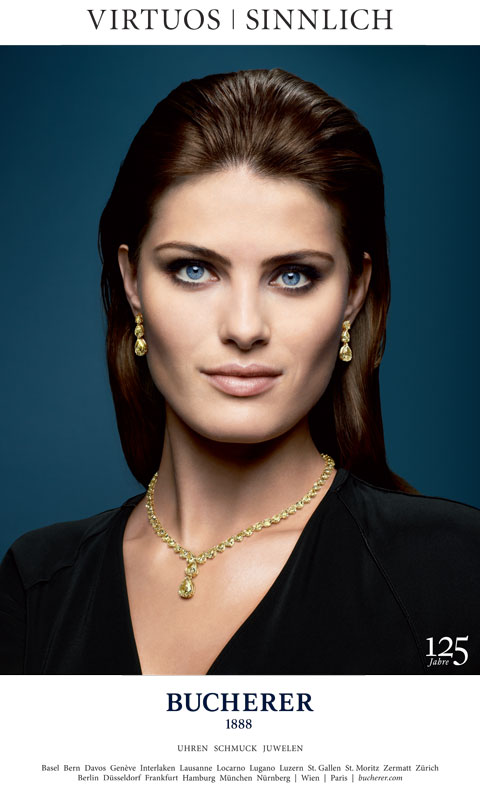
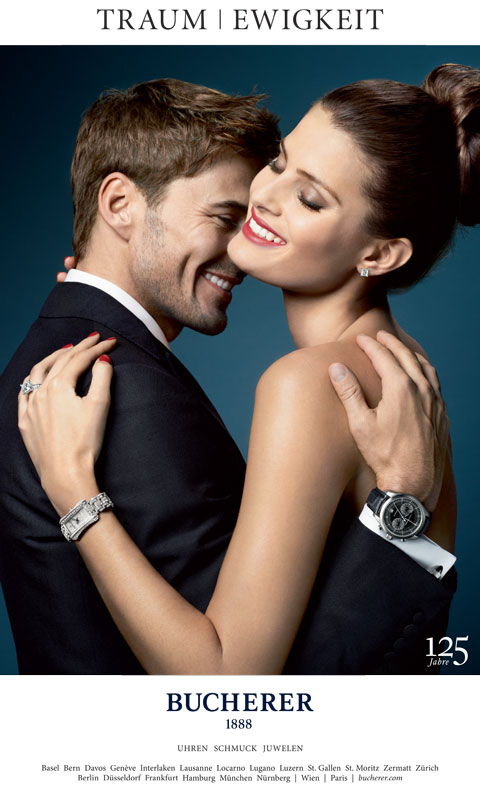
Neutral designed Bucherer's 2013 branding campaign and an anniversary book. The agency has been working with Bucherer since 2010.

With its third image campaign, the agency is continuing its strategy of portraying contemporary class and elegance, passion and precision in expression in advertisements and posters. The campaign focuses on the ethereal beauty of Bucherer's jewels and the watches from the best manufactures that Bucherer offers in its total of 26 stores in Switzerland, Germany, Austria and now in France, more precisely Paris.

The jewelry is worn by the Brazilian Isabeli Fontana and the Swede Alex Lundqvist. The Bucherer blue is to provide emotional space and background. The couple was staged by photographer Sølve Sundsbø.

bucherer1
bucherer2

Bucherer celebrates birthday

For Bucherer's 125th birthday, Neutral has continued to produce a large-format anniversary book that traces the development and soul of the company since 1888. With milestones - but also side notes and peculiarities - the chapter "Moments in Time" outlines the Bucherer story from its origins in Lucerne in 1888 to Paris in 2013: Epoch-making events, styles, fashions in design, art, architecture, film, society are associated with Bucherer.Jörg G. Bucherer reveals personal insights. Bucherer customers and Bucherer people are characterized archetypically. Anniversary watches, realized with important watch partners, are accompanied by notes author and blog-ger Scott Schuman. Elle editor-in-chief Sabine Nedelchev comments on the anniversary creations from Bucherer's ateliers.Finally, a series of still lifes stages the anniversary collections.

The images were realized together with young photographer Zoe Ghertner and stylist Sam Logan.

Buch_Titel

Responsible at Bucherer: Jörg Baumann (Director Marketing and Business Development), Sandra Bär (Head of Marketing Communications). Responsible at Neutral: Rudolph Schürmann (Strategy and Creation), Michelle Nicol (Consulting and Art Buying), Peter von Ah (Art Director), Vincent Delaleu (Graphic Designer), Carole Lütschg (Client Service Director), Lisa Binkert (Account Director), Corinne Wiederkehr (Account Assistant). Responsible at Burki Scherer: Patricia Häuselmann (image editing and realization). Responsible at Te Neues: Nele Jansen (Manufacturing/Production). Photography image campaign: Sølve Sundsbø. Photography Still Lifes Anniversary Book: Zoe Ghertner. Styling Still Lifes Anniversary Book: Sam Logan.


How you could improve advertising

I’ve taken the time here to recap the last 10 lessons. Now it’s your turn, before we give in to creativity. By Theophil Butz, graphic designer, advertising agency owner, source of inspiration, and—for over a year and a half now—also a complainer for *Werbewoche* readers. Please send relevant comments to [email protected]

In January's Motz, I explained the following theory based on the banal illustrations for the casino advertisement: The design medium of illustration undoubtedly has a high entertainment, attention and memorization value. But advertising with illustrations cannot be an idea. You need an idea beforehand, which you then overdraw with the appropriate painter, puppet maker or caricaturist. It's that simple.

This was followed by a description of the fear virus in Motz No. 2. Large clients are particularly affected. The remedy for this must be administered by advertisers with courage, creativity and without Pampers. Please memorize! I maintain that the decline in advertising volume, especially in print, is not only due to the economic situation. Consumers also want to be entertained and not bored. That's clear.

In March, I complained that automotive advertising is interchangeable and therefore ineffective. We learned from this that we should not implement a boring customer briefing exactly one-to-one, but in a more profiled, non-interchangeable and original way. That's not a problem.

Stop taking part in competitor presentations. That's where cheeky, attention-grabbing campaigns are created. But these usually end up in the drawer. Read more about this under the title "The pitch nonsense".

If you create the product name, corporate identity and advertising in-house for cost reasons, you shouldn't be surprised if you don't succeed. There are enough excellent professionals. They may cost money, but in the end the cost savings are many times higher. So hands off tinkering.

Continuity is an important recipe for success in advertising. It is wrong, however, to use the same joke over and over again for years. A good example of this is the Graubünden tourism advertising with the ibexes. The same concept, but always fresh and new.

In Advertising Week, I preach that you should train young talent. In strategy, graphics, copywriting, film and new media. Switzerland has an excellent reputation to defend. Even the day after tomorrow.

We are a small country and should not implement good ideas with elaborate Hollywood productions. The Coop ch-ch-ch campaign has thus lost its charm. Reduction is also part of the recipe for success. Finito, punto.

Emotional products such as Swiss, Swiss Casinos and Zürifäscht deserve more creative and emotional advertising. I don't want to have to watch anything boring in future.

I'm taking a break for four weeks now and you still have to recap.

Publicitas and SWA: "Advertising Barometer Switzerland

The advertising market in Switzerland is starting the second half of 2013 with a slightly negative investment mood. Compared with the first half of the year, the outlook for advertising-financed radio and print media is improving.

These are the findings of the second edition of the Advertising Barometer Switzerland, an initiative of SWA and Publicitas. After the first Advertising Barometer survey in January 2013 had forecast stable investment sentiment for the first half of 2013, the sentiment indicator determined in July for the second half of the year lost two percentage points, indicating a slight decline in advertising investment (above the line).

Notwithstanding this trend for the market as a whole, four of the seven media categories surveyed separately report positive investment sentiment (> 50), with online media in particular - as in the previous survey - continuing to be able to count on an increasing willingness to invest. Negative (< 50), by contrast, are the prospects for print media and outdoor advertising. Compared with the January figures for the different categories, it is noticeable that the two categories with the lowest index values (print and radio) show the highest rates of increase. This reduces the gap between the categories with the highest and lowest sentiment indicators from 30 to 21 index points. In addition to spending on the media types mentioned, the Advertising Barometer Switzerland also records advertising investment "below the line". With an index value of 57, the positive investment sentiment already observed for this area in January has continued through the middle of the year.

wb1

The advertising barometer

The findings of the Advertising Barometer are based on a survey of a standing panel of a total of 40 advertising clients, who together account for around a quarter of gross advertising spending in Switzerland. The survey covers the actual net advertising spend in the previous semester and the forecast net values for the following semester. The current survey was conducted in July 2013. To calculate investment sentiment, the Advertising Barometer Switzerland uses a diffusion index, which expresses the ratio of advertising clients increasing, decreasing or leaving their advertising budgets unchanged, and thus indicates the direction of an expected change. Index values above 50 indicate a positive development, index values below 50 a negative development. Neither the SWA nor Publicitas have insight into the detailed figures.

You can find further information here.


To the point: Review

Before the summer break, a brief incomplete review of the past first half of the year. January: Off. Axel Springer Schweiz discontinues the print edition of the investor magazine Stocks. February: In. Andrea Bleicher becomes ad interim editor-in-chief of Blick. In. Florian Fels becomes CEO Publishing Ringier.

March: New. Ostschweiz am Sonntag is launched. New. Der Sonntag and Die Südostschweiz am Sonntag appeared for the first time as Schweiz am Sonntag. Off. The Basler-Zeitung-Medien Group closes its printing plant at the end of March. Flop. Total operating revenues of the NZZ Media Group declined by 8.3 million Swiss francs year-on-year to 519.0 million Swiss francs due to the sharp drop in print advertising. The corporate result was 30.9 million Swiss francs.

April: In. Etienne Jornod is the new Chairman of the Board of the NZZ Media Group. In. The Board of Directors of AZ Medien appointed Axel Wüstmann as its new CEO. Top. Ringier increased EBITA by 55.2 percent to 99.5 million Swiss francs in 2012. Profit was 32.3 million Swiss francs, and sales at Group level were 1087.6 million Swiss francs.

May: Plan. Hansi Voigt wants to launch news portal before the end of 2013. Peter Wanner is the main investor so far. In. Stefan Barmettler, becomes new editor-in-chief of Handelszeitung on August 1, 2013. In. Christoph Bauer, former CEO of AZ Medien moves to the Cologne-based media group M. DuMont Schauberg. He will take up the post of Chairman of the Executive Board there on January 1, 2014.

June: In. Martin Kall, a longtime Tamedia executive, joins the supervisory board of Frankfurter Allgemeine Zeitung (FAZ). In. The Board of Directors of the NZZ Media Group appointed Veit Dengler as its new CEO. He succeeds Albert P. Stäheli, who will remain with the company in an advisory capacity until the end of 2014. July: In. TV journalist Christine Maier takes over as Editor-in-Chief of SonntagsBlick as of November 1, 2013. In. Christoph Blocher joins BaZ-Holding. He takes over 20 percent of the share capital with his financing company Robinvest for 306,000 francs. And he is to become a member of the Board of Directors of BaZ-Holding. Out. Martin Spieler leaves SonntagsZeitung. Even though I'm itching to - I'm not writing anything about the TV ratings whorehouse today. There will be plenty to talk about in the fall. I wish all Werbewoche readers a wonderful vacation season. Enjoy a few carefree days!

Pierre C. Meier, Editor-in-Chief [email protected]

Summer break
This issue of Werbewoche marks the end of the summer break. The next print issue will appear on August 18. Werbewoche.ch is also going on vacation: From July 22 to August 2, you will have to do without the daily news.
 

get_footer();