The story collector

At around age 30, Daniel Puntas Bernet began reading—and never stopped. He studied German and Spanish literature, worked in Spain’s real estate market, traded foreign exchange in Basel and New York, and wrote for the NZZ. Then, about three years ago, he decided to share his love of reading with others.

Unbenannt-38_2

Since October 2011, he has been editor-in-chief responsible for publishing the magazine "Reportagen. The magazine is positioned between a magazine and a book. It is intended to set itself apart from the other magazines on the newsstand: The text is in the foreground. No photos or picture spreads flood the texts; in the current issue, only a historical reportage by Maltese-American comic artist Joe Sacco interrupts the texts. "If I had to attribute one skill to myself, it would be that I believe I can tell a good reportage from an average one," says Daniel Puntas modestly. This does not mean that his assessment of the written story is the only correct one, but he feels competent in this area - and for the readership of the magazine "Reportagen" his assessment is apparently also correct. As a former real estate and foreign exchange trader, South America traveler and NZZ editor, Daniel Puntas has not only been around in many professions, but also in the world. Most recently, he was traveling in North Africa for a story of his own. There, he visited the Spanish town of Ceuta. African refugees wait outside the Moroccan-Spanish border for an opportunity to cross into Europe. It is not far, Puntas describes the situation, only a fence separates the many refugees in the Moroccan hinterland from the longed-for European soil of Ceuta. Because on February 6, 2014, Spanish border guards fired rubber shot at around 200 Africans who tried to swim around the border fence protruding into the water - and at least 15 refugees were killed in the process - the officers' guns were taken away. While one does not want a refugee invasion in Ceuta, more negative headlines weigh even worse for Spain.

A storyteller does not put himself in the foreground, is interested in the country and its people, their fears, their everyday life and their worries. Daniel Puntas has made these qualities his own, or precisely because of these personal qualities he has ultimately found his way to the journalistic-literary genre of reportage as a non-fictional narrative medium. Only slowly does he reveal his personality; even after hours of conversation, the focus of his narratives is the magazine and its reporters, the stories within it, and its positioning. His day-to-day work is not particularly exciting, he says. "Most of my time is spent in the office taking care of administrative tasks." In passing, he does mention that he often enjoys reading the reports together with his editorial team, evaluating them and, above all, in this way visiting places in his mind that he has never seen. Reading a report on St. Petersburg, for example, would have given him such powerful images and intense experiences that it would not have been a bad thing if he had never been able to visit this city. It is therefore not surprising that for Puntas, conveying experiences is the most important quality of a good reportage.

Passion reading

His life has come to him. Daniel Puntas only actively decided to do the CT. But that was only because he didn't know what he really wanted, as he says. After that, one thing led to another. After the military, he wanted to go to Spain. He found a job at a real estate company with Swiss clients. However, because this only marginally occupied his working time, he learned Spanish very quickly. "This job was a stroke of luck," he says looking back, "the best way to learn a language. " Eighteen months later, it was back to the military from Alicante. He was looking for a bank job, "because they pay the military," he says, explaining his decision at the time. At an audition at what was then Volksbank in Bern, he says, the human resources manager gave him a tour of the entire bank and then asked him where he would like to work. Puntas landed in foreign exchange trading in Basel. The ease of finding a job of his choice at a bank as a KVA graduate still amazes him today. "I had no idea about banking," he points out. His wish to work in foreign exchange trading was nevertheless fulfilled. "Foreign exchange trading, anyone can do it," he adds. He says it's simply a matter of the primal principle of the market, which is to buy lower than to sell, simply rephrased to currency pairs. At the time, Puntas was just 19 years old. Dealing millions at that age had been exciting. Still, soon after, he wanted to go to London for six months to improve his English. His supervisor gave him the opportunity to do his job in America instead. "A huge stroke of luck," he says in response. Looking back, he himself is sometimes amazed at how lucky he was. After his return, he met Roger Brennwald by chance, who was looking for a successor for his tennis tournament. That's how he got his start as marketing manager at the Swiss Indoors.

After five years of marketing tennis sponsorships, at the age of 27, he realized that his life had been exciting and educational, but also superficial and "did not offer any deeper satisfaction. After all, heart and soul flowed neither in finance nor in marketing. So his path led him to reading. One of the first books was Pablo Neruda's "Confieso que he vivido." In this book, Neruda describes the south of Chile. This impressive description magically attracted Puntas. After the desire to go to Spain had already brought him through the military, the desire to travel to Chile saved him through the last half year at the Swiss Indoors. Before leaving for Chile, he then stayed in Switzerland for one more winter season, on the Jakobshorn in Davos, helping out a friend "as a sausage and chicken griller," he says with a laugh. There, by chance, he met someone who asked him to help him with a house renovation in Hamburg. Finally, the opportunity arose for him to travel to Santiago de Chile by cargo ship. "To be so unattached and on the lookout, I liked that very much ", he summarizes. However, Puntas got off the cargo ship in San Juan de Puerto Rico. Another year would pass before he reached Santiago de Chile. Among other things, he worked as a translator for German tourists during a stopover on the Galapagos Islands. In Venezuela he worked on a coffee plantation and in Chile finally in the cellar of a winery. About 18 months later, after a detour as a tango cab dancer in Buenos Aires and to Calp (Spain), where his father had unceremoniously opened a restaurant, he traveled back to Switzerland to study and become a teacher in Fribourg. In 2004 he handed in his thesis. In between, he had started working at the "NZZ am Sonntag" to finance his studies. His boss offered him the you only after he had certified his licentiate thesis, he tells a little anecdote about the "old school NZZ". When he began to talk aloud to his employer about founding a reportage magazine at the same publishing house, he was simply told: "Dream on.

Daniel Puntas tells all this as if none of it were really worth mentioning. As if his life had merely happened - what is interesting is the other, the outside, the experience. So the story collector doesn't like to tell much about himself. It is not his way to put himself in the center or to cultivate his image. He prefers to stay in the background. This was also the case with his latest report from Ceuta, "Selection on the Fence." Even here he does not reveal his own emotions, tells little of the "culture shock" that probably everyone experiences who crosses the border between Morocco and the Spanish town of Ceuta on the Strait of Gibraltar. He doesn't talk much about the uncomfortable feeling of visiting a tapas bar and sipping wine in Ceuta - while next door thousands of refugees have been waiting for months in the rugged and mountainous hinterland to storm the border. "Many journalists have the concept of not paying money for information in such areas, so as not to encourage the business of information as well - I can't do that."

He almost always gives something, even if not much, to people living in precarious circumstances who have previously given him a lot of time and insight into their lives. His commitment, his tool in dealing with such inhumane situations is reportage. His magazine - with the telling claim "world events in miniature" - an attempt to generate attention for the people behind the headlines. Daniel Puntas is Bernese, even if he has not spent a large part of his life in this canton. Having grown up in Belp, he left his home canton at the age of 18. He only recently returned to Bern - to start a family. That's why the magazine "Reportagen" is now also based in Bern. His name has Grisons roots. Accordingly, on the phone usually only Graubünden people understand his name correctly. The origin of the name Puntas itself is Spanish, but etymologically it comes from the Grisons. And suddenly Daniel Puntas gushes out a personal story that he likes to tell. He begins to ramble: "In 1492, when the Spanish used foreign mercenaries to banish the Jews and Muslims from their own country, mercenaries from Switzerland served under the Spanish crown. This brought the Puntas family from the Grisons to the Cordoba area." In Switzerland, this then also developed further, the original form of Puntas became Püntener through sound shifting. This phenomenon of sound change fascinates him: "My children and grandchildren will still understand me, but after five or six generations this is no longer necessarily true. I have met Germans who came to Brazil in 1923, to a colony of Germans south of Rio de Janeiro. You almost don't understand their German anymore, because they speak the High German of 1923." Fascination with languages is part of Daniel Puntas Bernet, like reading, which since the age of 30, after initial interest, has developed into a passion with repercussions. The effects are the 20 issues of "Reportages" published so far. Puntas looks at it not only with pride, but above all with love for the narrated experience. In his opinion, a reportage should not only tell a non-fictional story, but should also take the reader with it, give the reader an experience as if he had been there himself. Or, as Puntas describes the goal of a good reportage: "To make a film with the typewriter, so as to set the cinema in motion in the mind."

Ursina mason
 

Identify Kids

With a focus on true digital natives, Goldbach Media, in collaboration with Viacom and Nickelodeon, organized the industry event «Identify Kids Switzerland.» Viacom researchers Simone Reitbauer and Claudia Fischer flew in from Berlin to present the latest research findings.

Organizers of Identify Kids and Swiss contact persons: Bastian Sarott (above), Team Leader Partner Relation Management TV PG2 Goldbach Media, and Sebastian Kahlich, Head of Sales MTV and Viva/Group.

The trade event for advertisers brought to light some revealing study results. Speakers on the results of the annual study by Viacom International Media Networks (VIMN) Northern Europe included Simone Reitbauer, Head of Research VIMN Northern Europe, and Claudia Fischer, Insights Manager Viacom Advertising and Brand Solutions. The study results focused on children's values and their attitudes towards happiness, family, digital networking and responsibility. With the results on children's and young people's media use, Goldbach Media wanted to show how advertising impact differs between TV and online, what role digital media generally play for today's children, and what effects cross-media campaigns have on kids.

"Mediavolution" in families

Viacom conducted an international study in seven countries with 3200 kids and their parents. It found that household penetration of TVs and computers in Switzerland is 98 percent - in other words, almost every Swiss family has at least one TV. Tablets and cell phones are even less widespread. For example, 26 to 28 percent of 6- to 13-year-olds own a device - less than in most other countries surveyed. "However, these ownership rates will rise," Simone Reitbauer is convinced. Already today, 13 percent of 6- to 13-year-olds would watch TV and use their smartphone at the same time. And kids can already recognize brands at a very young age, with this generation of digital natives preferring to receive advertising on the TV. As many as 34 percent of young users search online for further information about a product or service after seeing advertising, and around 47 percent would spend their pocket money on such products received on TV. The conclusion is clear: transmedia storytelling. An advertising campaign with the target group of kids should be played cross-medially. Because cross-media concepts have a higher impact than all the individual effects added together, says Reitbauer. But despite smartphones and tablets, the TV still clearly dominates kids' screen time.

Value attitude in the marketing focus

Claudia Fischer presented further study results from Viacom: In 33 countries, 6400 9- to 14-year-olds were researched in terms of their values. The results not only showed that the "digital generation" is happier than average, but also very self-confident and grounded. In other words, they trust in family, friends and themselves. According to Claudia Fischer, the success factor of possessions continuously plays a weaker role. Instead, a loving family is seen as a success factor. Thus in the marketing focus of Nickelodeon rather the individuality, creativity and singularity of the Kids stand than a car or a home of one's own. The slogan "Mach mal" fits in with this. But a strong sense of community, local ties and the will to get involved also characterize the digital natives of Switzerland - while they generally tend to perceive themselves as overprotected. uma

Unbenannt-31_7

WW: Ownership rates of mobile devices and TV will rise. Can a single ad still attract the necessary attention of kids?
Claudia Fischer: I can imagine that this can be overwhelming for parents. But when you see how kids use the devices, you can say quite clearly that they are in control of their own entertainment. The kids know exactly how to use the devices and how to mix the different content. And I think the kids are just taking what they need.
Simone Reitbauer: The topic of attention span has not yet been sufficiently researched in this context. But I don't see any problems either. After all, kids have grown up with all these devices - not like us, who had to learn how to use them first. Kids use the various devices actively and consciously, depending on the situation and content. For today's kids, who were born into this media world, this is therefore nothing special, but rather absolute normality. We also see this, for example, in the fact that children use their smartphones or tablets in parallel with their TV consumption.
Fishermen: So the kids are very good at judging for themselves what level of entertainment they want, and they take it - apart from regular school hours, of course. The kids don't just talk about content and advertising, they also become active in this area themselves. In other words, they investigate further after seeing an ad, search online for more information - they want to know more.
 
The TV thus becomes a source of inspiration for kids to get more information online.
Reitbauer: That's what the results of our study show. TV often provides the initial input and thus acts as a showcase for further actions to follow. This is also reflected in communication concepts: The first story is often played out via TV, this is where reach is generated and broad attention is achieved. This is the basis for further measures via different touchpoints to interact even more strongly with target groups.
 
How does it look the other way around with the advertising recall of online advertising?
Reitbauer: Our study shows that advertising works on all the platforms we examined - TV, display ads and video ads. We were also able to show that cross-media communication concepts - i.e., linking TV and online advertising - achieve a significantly higher advertising impact. For example, online ads are viewed longer if a TV spot from the same campaign has been played beforehand, and the level of positive emotions is also significantly increased. We were able to prove this using methods such as facial coding and eye tracking.
 
That means multitasking and a higher attention span on the screen is one of the drastic changes of digitalization?
Reitbauer: Today's children definitely have a multitasking ability in this area that exceeds ours. They use the devices intuitively and without thinking. They are less focused on the devices than on the respective content - and simply use the devices accordingly. For example, the TV is still the most present, but if the children can also find and receive the content on other devices, they adapt their use.
 
Fishermen: In general, it's all about content for kids. For example, they want to watch cartoons, play games and share content with friends. The device itself may not be perceived as such. Children are already creating multimedia content themselves, which they then distribute across different media. These are the first true digital natives. These kids were born between 2001 and 2008, and they can no longer imagine a world without these devices. For example, these kids often already tend to want to turn the pages of a print magazine by touch - to assume there's a touchscreen behind everything. That's why we already call the post-millennials Generation Touch.
 
Interv iew: Ursina Maurer


Radio research from 2017 with new measurement system

Mediapulse has extended its contract with GfK Switzerland for radio research, effective in 2017. Of all the available radio audience measurement methods, the redesigned Mediawatch measurement system ideally meets the needs of the Swiss market.

This fall, the measurement system for radio usage in Switzerland celebrated an anniversary: For 5,000 days, radio reach in all parts of the country has been recorded with the Mediawatch dial indicator. More than ten years in use - for Mediapulse also a reason to take a close look at the future of radio research. Together with its clients, Mediapulse began an evaluation of the needs in the radio market in 2013. At several events, the Swiss radio scene was able to formulate its expectations for radio research in the future and gain insight into the research approaches of other countries. It became apparent that the market has clear ideas about radio measurement. For example, it was stated as a prerequisite that radio stations from abroad should also be measured in order to fully represent the market.

From the formulated expectations and needs, Mediapulse drew up a detailed set of specifications. The catalog comprises around 120 criteria, which served as the basis for planning radio research from 2017. Subsequently, three measurement system providers presented their ideas for implementation as part of a "Request for Information".

The comparison of specifications and measurement solutions showed that one system clearly best meets the formulated requirements of the market: the newly designed measurement system from GfK. Alternative systems bring neither cost savings nor decisive additional benefits, Mediapulse said in a statement on Thursday. GfK will thus provide the basis for all key figures on radio reach in Switzerland for another few years. This will be done with a Mediawatch measurement system, which will be based on new technology from 2017.
 

To the point: the eternal feminine

Australian TV presenter Karl Stefanovic stood in front of the camera for a year in the same blue suit. And no one noticed.

Stefanovic is no greenhorn, but with his action he wanted to draw attention to the fact that men and women are treated unequally on television. While for men it is central what they say, how they interview and comment, for women it is how they are dressed and whether they have "nice hair" that counts. While Stefanovic's suit, which is always the same, didn't seem to bother anyone, his female co-host has to justify herself for every new costume. And surely she gets a lower salary, too.

The fact that women are reduced to appearances and considered to be the weaker sex is nothing new. And yet it outrages again and again. Symbolically only this: There's the Audi A6 driver whose rear end juts out far beyond the end of his parking space, has enough room to the front, and waves back the lady parked close behind him, who doesn't want to block the parking space behind her any more than necessary, with an impertinent hand gesture so that he can park out more easily. And isn't even ashamed of it. She grasps the situation, he dominates her. A woman would be too embarrassed by such a thing. But a man is granted from birth that he can drive a car. So he must not be able to do it either.

Men are pigs - but fortunately very few. They are predictable and if they like to have it pretty and feel strong, here you go. If they'll hold the door open for me in return. Few men would bitch about costume colors, because most don't care about such things at all. Women, however, do. The bigger threat to gender equality, therefore, is women themselves. The career beasts who think they have to become cowboys to make it in the "man's world." Mare biting included. Ladies, be aware: "The world of men" does not exist. We are outnumbered!

Why not just stay a woman, be a fully committed mommy and at the same time a leader, a boss? Why shouldn't that be possible? Men sit on the board of directors and go to the gym in the evening. Women initiate new projects in the morning, make personnel decisions at noon, prepare their presentation or an interview in the afternoon and give their children a feeling of security in the evening. Who is the multi-talented one? (Yes, men, you're already doing a great job with the housework).

A man is never simply a board member or a presenter. He is even more - and if he is a woman, much more. The secret of our success is authenticity with all its facets, not conformity. Then acceptance comes all by itself. At some point, you can wear what you want.

By the way, my three-year-old is currently making a mamichlaus out of Samichlaus. Perhaps a nod to the Santa Claus bag.

Anne-Friederike Heinrich, Editor-in-Chief
[email protected]
 

The Motz of Butz: Nothing use advertising

It's not as if I have to go looking for rarities like the one in the picture. No, they're constantly following me—and, by extension, the consumers. But they don't even look at them anymore.

What this is about: this poster site, an everyday advertising example from today, November 2014. I could also have chosen three brochures or three TV spots on Tele Zurich. This is how the majority of advertising presents itself to me, which no one comprehends and thus does not understand. So advertising that costs a lot of money but is of no use.

Unbenannt-9_45
 
I write my column here in an advertising and marketing trade press whose readers should be interested in their clients receiving optimal communications solutions. Unfortunately, however, as described here, the reality is completely different. I don't understand this unprofessionalism. Or is it a case of turning a blind eye or even a fear of losing customers?

My analysis of this misery: I have already described the useless effect several times. But apparently not clear enough.

Let's take a closer look at these randomly discovered F4 poster examples. The requirements for a street poster must meet the following conditions: 1. Does the viewer understand what it is in one second? On the left, a car; in the middle, a cell phone; on the right, even if I look at it for 5 seconds, I can't tell whether it's a travel agency or an aftershave. 2. what is the brand name of this product? Left, center and right are not remembered after 1 second. 3. can you remember the statement or the product advantage? 3 x no. 4. what is the slogan of the advertised product? Don't know, don't know, what is a slogan?

Why is this analysis so devastating? Let's take a closer look at these three billboards. On the left is a Nissan car poster. A brand that has always been characterized by its lack of profile. Thus a meaningless rice bowl, which does not depend on the weather forecast. Nobody believes in the fairy tale about snow. Who has the time and intellect to read and understand this headline. By the way, this Nissan from 34 890 Stutz is also called Qashqai. Pronounce this name sometime. The poster on the right is apparently still one of the last legally permitted ways to advertise Marlboro. "Be one of a thousand explorers." It also obligatorily states that smoking kills. Dear Philip Morris, stop such nonsense advertising and donate the money to the Cancer League.

Now to my favorite scheusal. The headline is: "Simply sharper, LG, G3." And a lot of small text, 6 pieces in the number, besides phones from the front and back, and in addition two watches. So colorfully designed that at first I could hardly believe that Apple creates such bad advertising. Oh well, it's not about the iPhone 6.

For me it is simply inconceivable that the Nissan, LG and Marlboro agencies would let such a good-for-nothing out. A professional ban would have to be imposed here.

The display of the week is the finally completed website www.tingerbutzmarketing.ch. There you can click on examples of good advertising.

Theophil Butz, graphic designer, advertising agency owner, inspirer and motzer for Advertising Week. Please send any relevant information to [email protected].

Last but not least: Lölis under Attack

The next campaign targeted by the guardians of decency and morality: Media Markt is no longer allowed to display the Lölis in all their glory.

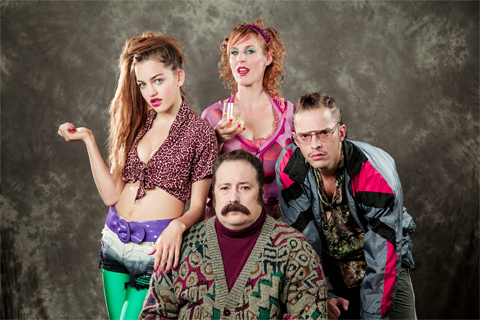
Some love them, others - and this is without question the larger group - hate them: The Lölis. Media Markt Switzerland's new figureheads were not only welcomed with open arms in Switzerland after being unleashed on the unsuspecting Swiss nation by the Viennese agency Demner, Merlicek & Bergmann (Werbewoche.ch reported).

Unbenannt-1_31

//www.youtube.com/watch?v=469FEJapIOU

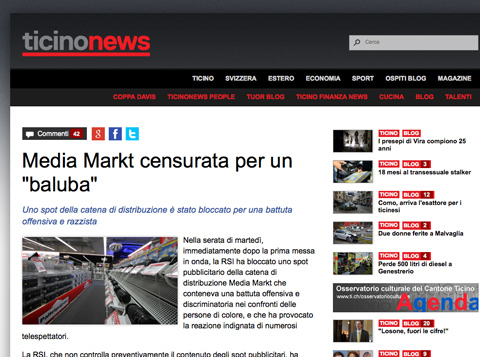
A first stumbling block in Ticino: There the family was called Baluba. The Baluba are - when they are not titling a Media Markt family - an ethnic group in Central Africa. A another case of discriminatory advertising. At least some viewers were sure of that. Consequences: RSI tipped the spot from the program, Media Markt apologized. And: The Balubas are now called Babbeo.

Bildschirmfoto-2014-12-04-um-19.11.56
Screenshot Ticinonews.ch

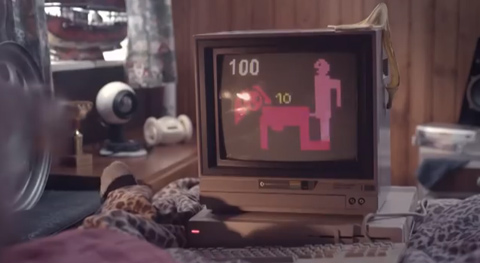
As if that wasn't bad enough, the family - which has quite a few supporters behind closed doors - has now also come into the crosshairs of the guardians of public morals in German-speaking Switzerland: Son Reto masturbates under the covers in the first commercial. The target of desire: a pixel porn of the more rudimentary variety.

Bildschirmfoto-2014-12-04-um-19.15.38
Bildschirmfoto-2014-12-04-um-19.15.48
Switzerland, 10 Points: The Austrians really only meant well with us.

A furtive laugh for many - a nuisance for 20 minutes-reader Sandra S., who unsuspectingly wanted to watch TV with her godfather at 7 p.m. and suddenly found herself confronted with unintentionally delicate questions. "Is it still going on?" she asks. No, it's no longer on: Media Markt bans the short spot "Sohn Reto" from the program - and pushes the spot with the whole family (see video above) back in time. No longer running at Media Markt.

And now the industry mouthpiece Frank Bodin is taking it on the chin, calling the scene in question a "Löli idea" on 20min.ch. Personally, he would not have chosen this means of sexual provocation for Mediamarkt, because the topic is neither in line with the brand nor with the communication idea. That is understandable. But at least, thanks to Reto, 20 Minuten and Blick, Media Markt has forced itself back into the public spotlight. That would have been difficult in the long run with "Das muesi grad am Urs verzelle" and "Ich bi doch nid blöd".

Thomas Häusermann
 

Graphic recording: visual protocol

Hundreds of people in a room follow a presentation more or less attentively. A lot of talking, a lot of theory and unfortunately often a lot of incomprehensible things. You listen, stare at the monotonous PowerPoint battle, occasionally glance at your smartphone and then look back again, bored. We are all familiar with long seminars, conferences and workshops. Graphic recording proves that such conferences are not always monotonous.

Hundreds of people in a room follow a presentation more or less attentively. A lot of talking, a lot of theory and unfortunately often a lot of incomprehensible things. You listen, stare at the monotonous PowerPoint battle, occasionally glance at your smartphone and then look back again, bored. We are all familiar with long seminars, conferences and workshops. Graphic recording proves that such conferences are not always monotonous.

But what is graphic recording? Graphic recording (also known as scribing) is nothing more than the visual documentation of the spoken content of a conference or lecture. An illustrator stands in front of an easel or a flipchart and summarizes what is being said in drawings in real time. A large picture is ultimately created from various strokes and colors, illustrating the topic, supporting and summarizing it in a playful way. During a break or at the end, the audience can take another look at the "in-time documentation" of the presentation and view or photograph it at their leisure. This creates exciting dialogs among the participants and a viral distribution of the content on social networks. There are already several companies in the United States that successfully offer graphic recording. ImageThink (imagethink.net) is playing a pioneering role here, transforming large white surfaces into works of art with its slogan "visuals make meetings better", even at huge conferences such as South by Southwest.

Animated videos are another form of graphic recording. These are often so-called explanatory videos, which are ideal for presenting complex issues in a simple way. A good example of this is RSA Animate (thersa.org), which has already achieved over 12 million views on YouTube with its illustration video "What really motivates us".

In Switzerland and Germany too, more and more illustrators are specializing in the new visual documentation method. Everyone has their own style and that's a good thing - at least that's the opinion of Gabriele Heinzel (gabriele-heinzel.com), a graphic recorder from Germany. She likes to travel to Switzerland for her job and has already supported companies such as Allianz, Novartis and us at the HWZ Arena on the subject of digital disruption. In the past, it was often said that picture books were for illiterates. But today we all know that visualizations with infographics help us to understand many things more easily and condense the masses to the essentials. Graphic recording captures exactly what is essential, links content together, shows structures of thoughts and anchors them with witty images and bright colors, according to the motto of Confucius: "Tell me and I forget - show me and I remember."

Manuel P. NappoHead of Studies CAS Social Media Management HWZ University of Applied Sciences in Business Administration Zurich.

www.fh-hwz.ch/smm

Swiss Gold Initiative in Amsterdam

The Epica Awards are on a path of global growth. As a sign of this, the jury recently met in Amsterdam. Switzerland was successful, winning eleven awards.

No Grand Prix went to Switzerland. Nevertheless, the local agencies can look back on a successful competition in Amsterdam: eleven awards were won by Leo Burnett Switzerland, Ruf Lanz, FCB Zurich, Saatchi & Saatchi Switzerland, Havas Worldwide Zurich and Advico Y&R. (The works are available via here (ff.)). With two Gold Epicas and a bronze award, Zurich-based Leo Burnett is not only the most successful agency in Switzerland in the 2014 competition. The creatives on Aemtlerstrasse also belong to the most award-winning network: Leo Burnett won 92 awards, 26 of which were Gold. The most successful agency in 2014 is Adam & Eve DDB: 30 awards - 15 of them gold - went to London. With 18 awards, Germany won only 7 more than Switzerland. It should be put into perspective that not all German agencies have rejoined Epica as a result of an ongoing change in the weighting of the ranking. On the other hand, acceptance of the competition is clearly growing in many other countries.

163 submissions from 11 agencies in Switzerland competed against 3422 submissions from 585 international agencies. Editors from over 40 trade journals from all over the world rate the submissions with marks between 1 and 10. After introductory explanations, the work and usually a case movie are projected. The jury members then have five seconds to form their opinion on a voting console. This is a fair system, as in reality the advertising subjects are hardly given any more time to win over the target audience. Nevertheless, there is of course enough room to bring any overlooked ideas back into play before the plenum in a "wildcard" discussion. This has also led to two Grand Prix being awarded in the Digital category in Amsterdam, as the number of entries in this area has grown disproportionately compared to traditional advertising. As a result, the Epica Awards are planning to introduce additional categories for digital forms of advertising in the future. Epica was founded in 1987 by Andrew Rawlins as a European competition. He sold his life's work to Ad Forum in 2012. The new owners want to re-establish the award around the globe.
 
Andreas Panzeri
 

Unbenannt-28_4
Philippe Paget is CEO of Maydream in Paris and New York. In addition to Epica, this organization also owns Ad Forum, a platform with an international advertising archive and numerous research options.

WW: This year was the first time that Epica was judged in Amsterdam instead of Paris. Why was that?
Philippe Paget: Amsterdam is a very important location for international advertising. For me, it is definitely the most creative hub in Europe. I hope that we can stay in Amsterdam for at least two years. Then we could move every two years. London, for example, will certainly be a possible destination.

Epica wants to have a global say in the future. How is it positioned compared to Cannes?
We don't want to copy Cannes. We are completely different. Cannes is big business, an industry. We need Cannes. But Epica can analyze the award-winning works there from a different perspective. Our jury is not made up of star creatives who travel from one competition to another as jury members. Our jurors, who all come from international trade journals, perhaps see the work more closely from the consumer's point of view. I am convinced that agencies and advertisers should be more and more interested in such an outside perspective.

What are your other plans?
Two years ago, we opened up from Europe to the wider world. We are still in the process of convincing a few important international networks of our competition. We want to work with even more partners around the world. The specialist media are not yet sufficiently aware of how influential they can be when they work together. We already have over 40 Epica partners in the media world. Together, that makes for a very strong voice. pan

Favourite Website Award for Samsung Cover Shoot

Serranetga has developed an interactive cover shoot for Samsung in which users press the shutter button themselves. Today, Thursday, the website will receive the «Site of the Day» award from the Favorite Website Awards.

With the "Site of the Day", the jury honors websites that set new standards in the areas of design and innovation. At Alpha-cover.ch users were able to interactively stage the international top model Ronja Furrer. They chose between different poses and outfits and took high-resolution pictures in real time with just one click. The winning photo made it onto the cover of the November 14 issue of "20 Minuten Friday.

Bild-1_0

Last week, the joint project between Samsung and Serranetga was already recognized with its inclusion in the global Rich Media Gallery from Google honored.

Award page
 

The Mother of all Screens

At the conference of the international cinema advertising association Screen Advertising World Association (SAWA) a few weeks ago, Sir John Hegarty gave a highly acclaimed keynote speech as an introduction to an ambitious seminar program that focused on the digital revolution and its consequences for communication, for the media and therefore also for cinema.

John Hegarty discussed the importance of technology - and its relationship to content. The "advertising guru" (more of an understatement given the many awards he and his agency BBH have already won) gave the following memorable examples: Les Paul invented the electric guitar, but didn't write a song of any real significance. Gutenberg invented letterpress printing with interchangeable letters, but was the first to print a text that was well over 1000 years old. This shows that leaps in technology - as we are seeing now - initially generate a creative deficit that must first be filled with ideas, with content. We are currently in this process.

This quickly becomes clear when we look at the development of web formats: After several boom years, the success of display advertising formats now seems to have ended virtually overnight. This is somewhat reminiscent of the Andersen fairy tale "The Emperor's New Clothes", because the previously advertised offers could turn out to be a sham. The salvation now lies in the moving image. Well, that's not a ground-breaking new insight for a pronounced cinephile like me. I'm just a little surprised at how sacred storytelling is now being spoken of. We've all known this for a long time: the best form of transmission and communication is a good story. To tell a story in moving images, you need a projection surface - today it's called a screen. We encounter these screens every day as a PC screen, a smartphone, a television at home, an LED board on the street, a screen in the supermarket and a very large screen in the cinema - described by John Hegarty as "the mother of all screens".

It is important that we accept cinema advertisers: The reality of consumers is shaped by these many screens. However, it was also important for John Hegarty to emphasize that, from the cinema's point of view, we should not enter into a competition for the performance of various screen formats, because this would clearly be won by the cinema per se. It was nice to hear this message so clearly. The original wording is not quite quotable, so I'll try the following: "Don't try to beat the small screen - you have the biggest f...... screen in the world!"

However, this raises the question of whether cinema, as the last bastion of monoscreen storytelling, where even smartphones are stowed away in pockets after a few minutes, needs a dialog with the help of a second screen to enhance the experience. Sir John had an answer to this question that was as simple as it was obvious. If the interaction between content on the big screen and the smartphone offers people a clear advantage, then it will prevail. In his view, advantage means: entertainment value, experience, joy, excitement, exchange. If this is not realized ... "forget it!"

Next year, we will definitely try to expand the possibilities of communication in cinemas to include precisely this strand. It will then depend on the content as to whether this interactive channel will prove to be an enrichment for cinema fans and therefore also for advertising clients. We are more than excited about this process.

In any case - the success of this development or not - we can look forward to what is probably one of the most promising cinema years of modern times, to a blockbuster cinema year 2015 the likes of which we have not seen for a long time. Looking forward to it Florian WeischerChairman WerbeWeischer and President of SAWA.
 

Stories

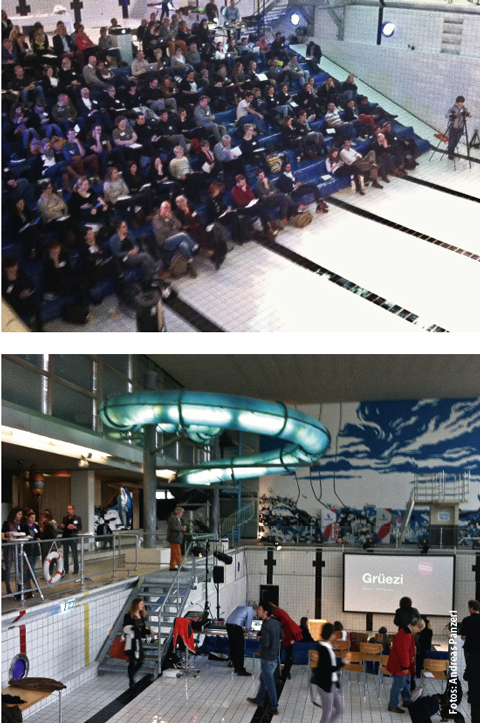
Storytelling is more than just a buzzword. Over 200 interested people attended the 3rd edition of a "Storytelling Conference" in Lucerne. Concrete examples and pioneering projects were presented. The event was hosted by the Center for Storytelling in Zurich.

The "Center for Storytelling" is a network of storytelling specialists from science, business and design. Together, its members explore the field of storytelling. The aim is to focus on the topic at colleges, universities and in practice. "Our aim is to gain scientific knowledge and to link this with concrete everyday practice through accompanied transfer," says Kurt Reinhard, who founded the center in 2012 with a group of cultural people and scientists and now heads the creative pool together with Florian Wieser and Axel Vogelsang.

Unbenannt-19_14
StorytellerKurt Reinhard is the founder of the jobtv media workshop, the online portal iturn.tv and the Center for Storytelling. He presented the project "The global skin" at the conference. This can be found on the website centerforstorytelling.org. Above are three stills from the 13-hour film. Reinhard is a director, media creator and social entrepreneur. Freelancer at the Zurich University of the Arts (ZHdK).

The program includes ongoing research in collaboration with the Zurich University of the Arts and Lucerne University of Applied Sciences and Arts, as well as an exchange of ideas with experts in the USA, England and Canada, which can be followed, for example, in a video series available on the website www.centerforstorytelling.org. The annual Storytelling Conference, which took place for the third time in 2014, is a highlight of the activities. The event, held at the Neubad in Lucerne, addressed the question of how we define ourselves through storytelling and how narratives shape us. One generally accepted premise was that we become media creators of our own identity, in line with the YouTube slogan: "Broadcast Yourself".

Identity is more than a selfie

Identity was therefore probably the most frequently heard and uttered word at the Storytelling Conference 2014: What does identity mean? Does it exist at all - or is identity rather an artificial concept, a trick that we use to better understand our environment and ourselves?

Among the various experts, Watson founder Hansi Voigt explained why his portal no longer writes articles, but instead "tells stories". He was pleased that, with around 120,000 unique clients per day, Watson has reached the point where readers are starting to interact with the medium. "Readers identify with the content they share with the world." Hanspeter Danuser from Platon provided a counterpoint to Voigt's online stories by talking about Switzerland's plans for the next World Expo in Milan. "Storytelling is always also storyselling." As the former and legendary spa director of St. Moritz, Danuser has successfully practiced this art of marketing with content for over 30 years. He is now part of the team that will also develop such ideas for Expo 2015 in Milan. Danuser has already revealed that the story of Marignano will play an important role. A mega choir of 500 alphorns will be played in the square in front of Milan Cathedral to commemorate the battle 500 years ago. The overture from Rossini's "William Tell" will be played together. "Alphorns instead of halberds" is the motto. "Does this really represent Switzerland today?" was discussed during the Q&A session. But that's another story.

250 storytellers for 13 hours of film

In addition to other presentations on the hype surrounding selfies, swarm identities and the search for Jewish identity through storytelling, one idea in particular, which was initiated by the organizers themselves, was particularly impressive. "The global skin" is the name of the collaborative film project. Following a call from the Center of Storytelling, 250 videos on the subject of "textiles" were collected from all over the world. The spectrum ranged from professional glossy works to valuable documentaries to meaningful amateur films made with a cell phone. The material was edited into 13 hours of film. The comprehensive "story" about the world of fabrics can be seen on the Center's website. The possibility of a film for the cinema is still being worked on in co-production with Dschoint Ventschr.

Andreas Panzeri

Unbenannt-20_12
The 3rd Storytelling Conference took place in the Neubad in Lucerne. A drained indoor swimming pool was converted into an original and versatile event location.


On behalf of good taste

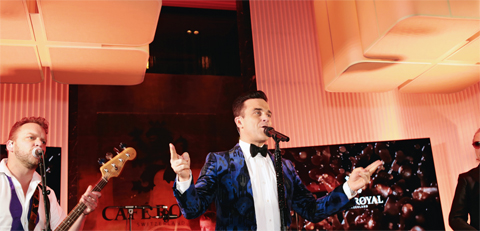
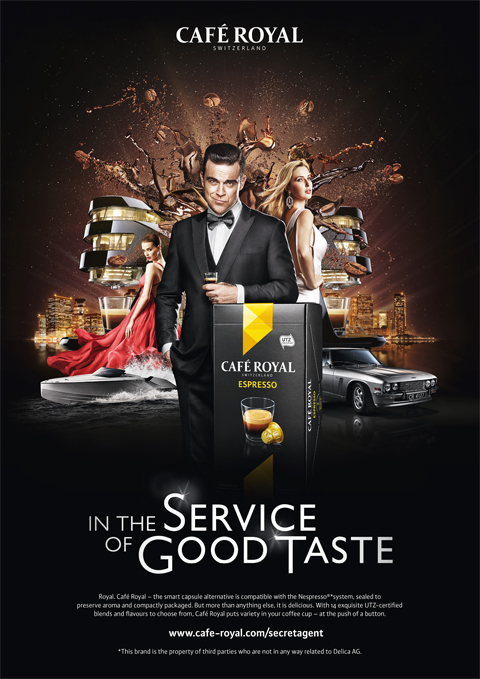
For a European campaign by Café Royal, Serviceplan Suisse casts Robbie Williams as a suave agent. Another smart touch: The capsules are compatible with all standard Nespresso machines.

Unbenannt-5_56
ECD Christian Sommer and CEO Christian Baertschi (r.) of Serviceplan Suisse.

WW: Robbie Williams has been making a splash since December 1 as brand ambassador for Café Royal from Delica. The campaign was launched in Paris. How did Serviceplan Suisse get the job with this superstar?
Christian Sommer: When we started our work for the client, it was already set that Café Royal wanted to do a testimonial campaign. Robbie Williams is considered a proven coffee lover, we knew that from his social media activities. He also appealed to the ladies in our agency, who have of course been following him for years. So the "brand fit" question was solved relatively quickly. But we didn't come up with the campaign via the testimonial per se, but first considered: What can be the format with which we can charge the brand? Since we didn't know whether we'd get Williams at all, we had to come up with a concept that wasn't so strongly attached to one person.
Christian Baertschi: It is clear that we are challenging the competition in the capsule market with this campaign. After all, they haven't done badly so far. Very well, in fact. It quickly became clear that we couldn't just use any other actor. Nor is that the intention of our brand. Since Café Royal capsules work in Nespresso machines, you could call it a clone. But it's not a clone. Café Royal is a premium brand. Accordingly, the challenge was: How can we top the campaign of our most successful competitor? The reason for a testimonial is that you can achieve a high profile very quickly. It buys you a shortcut in brand building, so to speak. That was the background for us. So we had to ask ourselves: What is even bigger than a well-known actor? The solution is: an entertainer. And there's hardly anyone better than Robbie Williams. He also fits the demographic, is very congruent with the target group, and is known throughout Europe.

Unbenannt-4_52

Delica is a subsidiary of Migros. Why does it now want to conquer a market throughout Europe?
Baertschi: Café Royal is always among the top products in all blind tastings - regardless of the market. Café Royal even scores better than Nespresso. The Delica company in Birsfelden was founded by Gottlieb Duttweiler. It is now the largest coffee roasting company in Switzerland. Duttweiler also already operated his own plantation in Brazil. Migros' coffee business is therefore very solid and traditional. Now Café Royal is selling very well in Switzerland and is seriously competing with Nespresso. Café Royal will now be on retail shelves with appropriate distribution partners and not just marketed through direct sales. In France, these are primarily Carrefour and Monoprix. That covers a very large part of the catchment area. In Germany it's Edeka, among others, in Austria Spar, and in Switzerland of course Migros.

And the advertising everywhere comes from Serviceplan Suisse?
Baertschi: We have done everything. We've been working on this assignment for a good year. Serviceplan in Zurich developed the strategy, created the concept, organized the testimonial and negotiated the collaboration. We were able to build on the advantage of our group and access various resources. The idea for the commercial and the work for print came from the creation department in Zurich. Our PR agency here also does the media work for all markets, organized the event in Paris and is the press office for Café Royal. Zurich also realized the micro-site with our digital agency Plan.Net Suisse.
Summer: On top of that, there's a lot of other work, starting with event invitations in a very elaborate way. Last Monday we put on the launch event in Paris, including a concert with Robbie Williams. Together with Markenfilm we are already working on further films, all with funny scenes of Robbie Williams as an agent of good taste. But of course these are still "top secret".

Unbenannt-6_53

"Top secret" was also the start of the campaign. What was the concept?
Baertschi: On November 17, we launched a teaser campaign in France, announcing the Agent of Good Taste - but still without mentioning Robbie Williams by name. We played that up more and more until the official media event. We spread speculation with a micro-site as well as through the fan clubs and Robbie Williams' Twitter and Facebook accounts. That's how fans knew something was going to happen. We then invited around 120 journalists to Paris for the launch on December 1. And the campaign has been running ever since.

Interview: Andreas Panzeri

get_footer();