Wine merchant demands 30 million from SRG

Valais wine merchant Dominique Giroud is seeking 30 million francs in damages from SRG. He was wrongly accused of adulterating wine.

As the newspaper Schweiz am Sonntag writes in its current issue, the payment order reached the Bern-Mittelland debt collection office on Thursday. In December 2013, Giroud was accused of wine adulteration in an RTS report without presumption of innocence. In October, the UBI narrowly rejected a complaint by Giroud (Werbewoche.ch reported), but the public prosecutor's office in Vaud recently acquitted Giroud of the suspicion of wine falsification. This has strengthened the wine trader's intention to file a lawsuit against SRG. As Schweiz am Sonntag is said to have learned from his environment, Giroud accuses SRG of having ruined his reputation as a serious wine expert and of being responsible for the loss of major customers like Denner. Moreover, he could not sell his wine estate at a decent price due to the story.

Giroud and SRG are at loggerheads as a result of several reports. The Walliser accuses the company of not being willing to make any compromises. For example, unlike the newspaper Le Temps, which was also involved in the reporting, it did not agree to a suspension of the statute of limitations - the statute of limitations for a possible lawsuit is short.

In the meantime, Giroud is no longer operationally active in his wine shop, but is mainly concerned with restoring his tarnished reputation. This reputation is not only affected by the accusations of cheating: The Valaisan was convicted in July for document forgery and tax fraud in the canton of Geneva is being investigated on suspicion of hacking attacks on journalists. (hae/SaS)

Image: Keystone
 

Empties

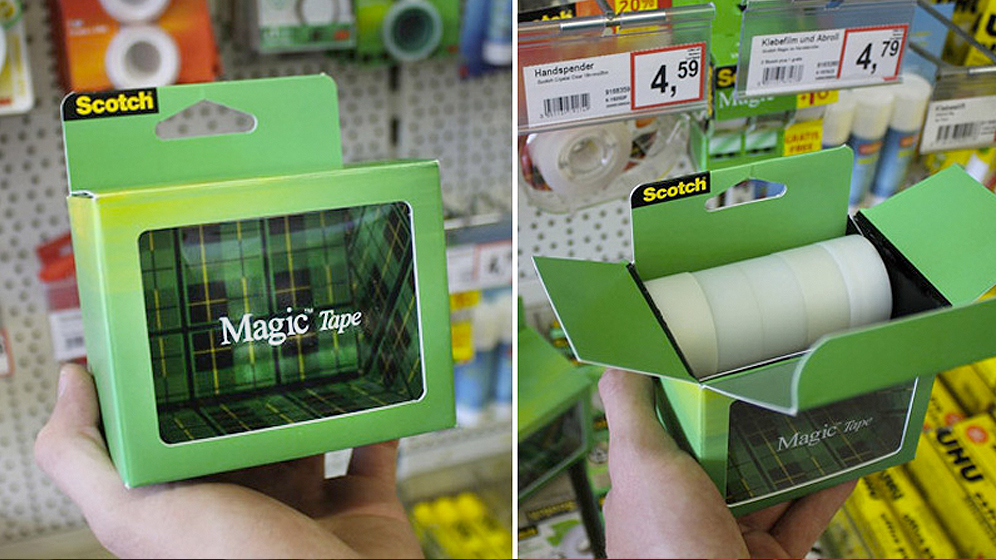
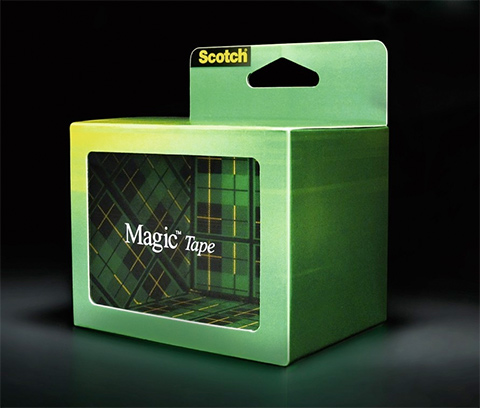
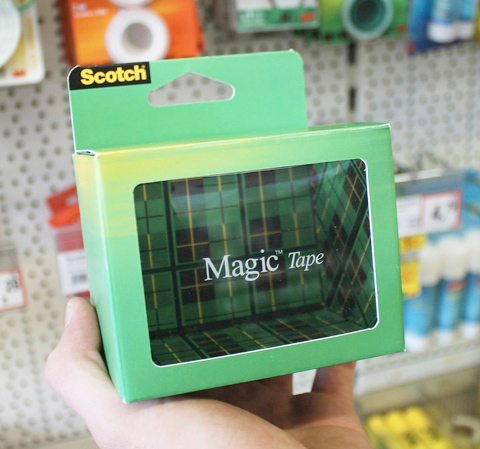
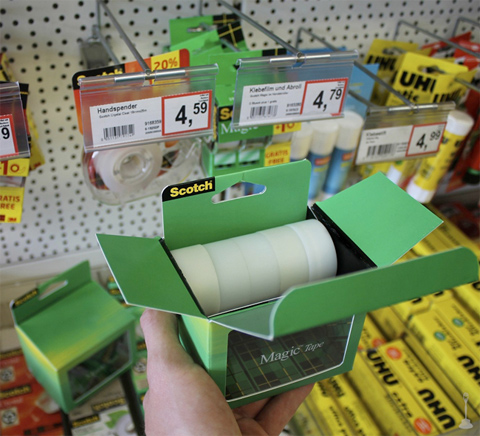
3M's Magic Tape is supposed to be invisible. At least the packaging designed by Kolle Rebbe Hamburg lives up to that promise.

kolle-rebbe

According to the product description, Magic Tape is "practically invisible" and is therefore suitable for repairing sheets of paper, sticking individual pages or even objects together. Obviously not an empty advertising promise, as a look at customer reviews from a major online retailer shows. Properties that can therefore be communicated with a clear conscience. In this case, the Hamburg agency Kolle Rebbe took on the task and created packaging for the Magic Tape that caused a sensation far beyond Germany's borders. A simple magic classic with a great effect ensured that the tape became more invisible than the paying customers would have liked at first glance. At second glance, however, the clever packaging may even have been the decisive selling point for many. (hae)

Unbenannt-5_57
magic-tape-01
magic-tape-02
Unbenannt-9_46

Jung von Matt/Limmat: Baden gets fit

Jung von Matt/Limmat carried out a striking ambient campaign to mark the opening of Exersuisse Baden.

In the pedestrian zone of Baden, a strongman caused quite a stir: he held on to a horizontal bar for hours with just one hand. The action at a mobile poster site drew the attention of passers-by to the new Exersuisse training center, which was opening just around the corner.

Exersuisse_Badenwirdfit_900

The location in Baden's Gstühl-Center is the first Exersuisse branch in the canton of Aargau - and the 19th in the whole of Switzerland. The training principles are based on the latest medical and sports science findings. For example, Exersuisse is the first provider in Switzerland to have so-called eccentric equipment, which enables particularly efficient training. True to the motto: no resting, more effect - as the feat of strength of the Exersuisse promoter in Baden's city center showed.

//www.youtube.com/watch?v=M5uERpGYSOw

Responsible at Exersuisse: Sandra Thoma (Owner); Annette Brauer (Marketing); Julia Dieziger (Public Relations). Responsible at Jung von Matt/Limmat: Andy Lusti (Creative Direction); Christina Wellnhofer (Art Direction); Daniel Gremli (Text); Aude Kohler, Bettina Ehrismann (Graphics); Merja Rinderli, Milena Elias (Consulting); Philipp Bühler (Public Relations); Streuplan (Production).
 

Navyboot parts ways with Schumacher

Former Formula 1 driver Michael Schumacher, who is struggling with the aftermath of his serious skiing accident, is no longer under contract with Philippe Gaydoul's fashion companies Navyboot and Jet Set.

This was reported by the Aargauer Zeitung on Saturday. It highlights the uncertain, challenging situation for Schumacher's sponsors: They pay several million francs a year, but have received nothing in return since the fatal accident. However, those who part with the racing legend risk damaging their public image. Nevertheless, the first sponsor has now "bailed out": Swiss fashion brands Navyboot and Jet Set are no longer contractually bound to Schumacher, as Gaydoul's spokeswoman confirmed to the newspaper.

83352591g
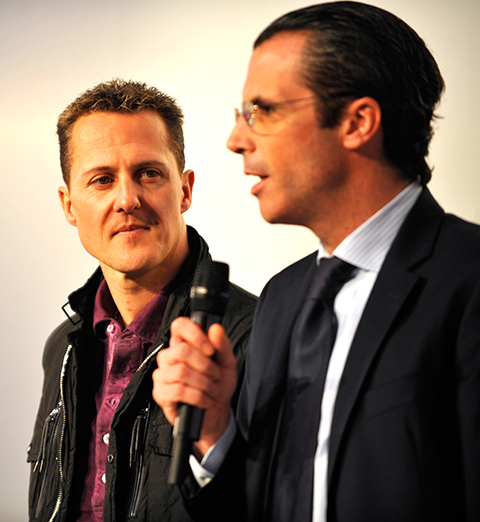
Schumacher and Gaydoul at a sponsor meeting in Munich in 2010 (Image: Keystone)

No details are disclosed. AZ interprets this secrecy as a possible indication that the contract may not have expired properly, but could have been terminated prematurely. This is because it is reasonable to assume that the former case would have been specifically communicated for image reasons.

The reasons for the separation are likely to be of a purely commercial nature, as Gaydoul and Schumacher had acted as friends in public in the past. According to Gaydoul's statements at the time, Schumacher's involvement before the accident and after the end of his career as a racing driver was mainly due to his enormous network and less due to his function as a classic advertising medium. As these advantages have been lost since the accident, the five million francs per year estimated by Bilanz magazine are likely to have become unsustainable for the two Swiss fashion companies, which are under economic pressure. (hae/AZ)
 

Media funding: Federal Council passes the ball to Parliament

In the Federal Council’s view, the media industry must navigate this structural transformation on its own. However, it is proposing measures to Parliament that could ease the pressure on the media. The foundation proposed by the Media Commission is not among them.

In 2012, Parliament had tasked the government with conducting an overall review of the Swiss media landscape and developing a funding concept to strengthen the importance of the media in terms of state and democratic policy. The Federal Council was reluctant: it referred to previous reports and recommended that the industry be given enough time to solve its own problems. It has maintained this stance in the report published on Friday, which fulfills the parliamentary mandate.

Federal Council relies on personal responsibility

It concludes that the media industry is still undergoing profound structural change and that further developments are not foreseeable. The Federal Council identifies media concentration, the eroding economic basis of daily newspapers, competition from online offerings and, as a result, poorer working conditions for media professionals and a loss of quality as the biggest problems. However, it does not see any immediate need for action: the Federal Council wants to give the sector time to overcome these challenges on its own, according to the report. If untested funding approaches were introduced prematurely, this could lead to false incentives. However, as Parliament has called for a funding concept, the Federal Council is proposing various measures to mitigate the consequences of structural change. One of the short-term measures that could be implemented without amending the law is temporary support for the basic service of the Swiss Press Agency sda in French and Italian. The Federal Council does not specify a possible funding amount in the report. It also proposes extending the reduced VAT rate of 2.5 percent, from which print products as well as radio and television currently benefit, to certain online media.

More money for journalism training

According to the Federal Council, support for training and further education could be expanded in order to ensure journalistic quality. The federal government currently spends around one million francs per year on this. According to the report, an additional million could already provide effective support in this area. By retaining indirect press funding, the Federal Council is putting up for discussion a savings proposal that it itself had proposed. The Confederation currently provides CHF 50 million to reduce the cost of delivering newspapers and the membership and foundation press. Although the effect of this measure is controversial, it would be in the interests of media policy to maintain the reduction in delivery costs for the time being. In the medium and long term, according to the Federal Council, online media could also be supported in addition to the radio and television offerings already subsidized today. However, this would require a fundamental debate on the scope and content of the public service in the media sector. Such a debate could also lead to media funding that is independent of genre. However, the Federal Council also points out that a constitutional amendment required for this has already been rejected several times.

Open questions about the foundation

The Federal Council's list of measures is largely in line with the proposals put forward by the Federal Media Commission (FMEC) at the beginning of September. However, the non-governmental foundation for the promotion of the Swiss media, which the FMEC also proposed, is not one of them. According to an expert opinion by the Federal Office of Justice, there is no constitutional basis for this. In addition, the Federal Council writes that fundamental questions would arise regarding the content, mandate, organization and financing of such an institution. The ball is now in Parliament's court. It would be up to Parliament to issue any further mandates to the Federal Council or initiate legislative amendments. The Councillors have so far expressly refrained from issuing a mandate to draw up a specific proposal. However, they will have to deal with one element in the course of next year: The abolition of indirect press subsidies is still part of the consolidation and task review package (KAP) that the Federal Council is proposing to Parliament. (SDA)

Image: Keystone

Publishers welcome indirect press subsidies - trade unions do not

Employer and employee representatives from the media industry have different reactions to the Federal Council's proposal to continue indirect press subsidies. While Syndicom believes that this does not solve the problems, the publishers' associations praise the government's approach.

"We welcome the fact that the Federal Council is continuing the subsidized postal delivery of smaller newspapers and that the sda news agency is to receive greater financial support," writes the Swiss Media Association VSM. The planned reduction in the VAT rate for online offerings also meets with approval. In its report, the Federal Council rightly states that Switzerland is one of the countries with the greatest media diversity and the strongest press. Newspapers are used to an above-average extent in Switzerland compared to other countries. "Switzerland is a strong newspaper and private media country."

In the fundamental digital upheaval in the media landscape, good political framework conditions are of the utmost importance. The Federal Council's political thrust is therefore the right way forward for publishers. It is right that the media companies themselves are primarily called upon to find new ways and business models. "The state should be an enabler, but not intervene directly financially."

Disappointed media union

The Syndicom trade union takes a diametrically different view. "We need new ways of promoting the media," it said in a press release. The report by the Federal Office of Communications (Bakom) confirms the findings of other studies: in terms of quality and diversity, the Swiss media are threatened with further deterioration in the coming years. "In order to stop this development, the Federal Council should finally show courage, take off its ideological blinkers and demonstrate openness to new forms of media and journalism promotion," the trade unionists criticize.

Even after more than a decade, Swiss publishers have not found a way to counter the media crisis. Sustainable business models for journalism are being sought in vain, especially on the Internet. "If you still want a media offering with quality and diversity in ten years' time, you have to act now." The plan to promote the training and further education of media professionals is of little use if working conditions in editorial offices continue to erode, Syndicom complains.

Repeated demand for a CLA

The union suggests that the Federal Council could ask the publishers to finally negotiate a collective labor agreement (CLA) for the Swiss-German and Ticino media with the social partners Syndicom and Impressum again after ten years. The Swiss Federation of Trade Unions (SGB) supports Syndicom's demands and is equally disappointed by the Bakom report and the Federal Council's actions, as it writes in a communiqué.

The journalists' association Impressum is also in favor of a new CLA. Any support for the media must be linked to compliance with journalistic ethics and the guarantee of appropriate working conditions, it says. Unlike the trade unions, however, Impressum also sees positive aspects to the continuation of existing press subsidies. Impressum also welcomes the look across the border: the report rightly emphasizes that in two thirds of the countries examined, the press is supported by direct funding measures. (SDA)

"A tribute to Swiss humor"

What really happened under Reto Löli's comforter? And what does the Vienna-based agency Demner, Merlicek & Bergmann, which is responsible for the campaign, actually have to say about "Löli-Gate"? Partner Harry Bergmann answers the questions.

The waters are rising. Reto, the son of the Löli family who advertise for Media Markt, can (supposedly) be seen masturbating in one of the commercials. The ad has now had to be canceled due to some protests (Werbewoche.ch reported). But Reto himself doesn't understand the unrest surrounding his activities at all, as he says via the agency responsible, Demner, Merlicek & Bergmann: "I'm only doing what many others are doing under cover!". To reassure the public, the agency is now providing the answer to the question of what really happens under the teenager's blanket. Watch the exclusive video evidence here:

//www.youtube.com/watch?v=Mpf8A66zYoo

It remains to be seen whether this resolution can really calm the agitated minds. We went to Vienna to find out what the scandalous Lölis are really all about. The independent, owner-managed agency Demner, Merlicek & Bergmann employs 136 people and has 39 clients from 13 European countries. One of them is Media Markt Switzerland. Among other things, the successful agency leads the Effie ranking in the German-speaking world.

Harry Bergmann joined the creative company founded seven years earlier by Jan Demner and Franz Merlicek in 1976. As a partner and member of the management team, he answers the seven most important questions about Löli-Gate.

bergmann

Advertising Week: Mr. Bergmann, your Löli campaign is currently under fire in Switzerland: Media Markt is taking the masturbation spot out of its program. Did you as an agency consciously take this step or even calculate it?
Harry Bergmann: If we had shown what was really going on under the covers from the start, I wouldn't be answering this question now. And it remains to be seen whether you can really calculate an interview with Werbewoche.

Swiss advertiser and ADC President Frank Bodin accuses the campaign of sexual provocation that is neither in line with the Media Markt brand nor with the communication idea. Is he right?
Honi soit qui mal y pense.

How did you, as a Viennese agency, get the "honor" of designing the new Swiss Nerv family?
We have had the honor of being the lead agency since the opening of the first two Swiss Media Markt stores. And we have had to defend this honor several times against the most renowned Swiss agencies.

Have the Lölis also been unleashed on their western neighbor with a bit of schadenfreude - perhaps as a payback for the many alpine skiing defeats in recent years?
As a former monarchy, we are in possession of an almost endless fleet of magnificent return coaches. Unfortunately, we are not aware that one of them has left the Schengen area for Switzerland. As Austrians, however, we see the campaign more as a tribute to Swiss humor, which we have come to appreciate very much over the years.

What many people are keenly interested in: Why does the father speak Basel German? Are the Lölis from Basel?
One of Papa Löli's work colleagues is actually from Basel. And the accent must have rubbed off somehow. However, we were unable to find out where the Lölis come from - despite asking several times in person.

In southern Switzerland, the name "Baluba" was chosen for the Lölis, which in retrospect turned out to be somewhat unfortunate. How did they come up with this name?
Let's put it this way: unfortunately, some solder made a mistake.

First of all, are you satisfied with the campaign so far - despite or perhaps because of the icy headwind that the Lölis are facing?
The icy wind you are feeling has more to do with the time of year than with the campaign. As far as satisfaction with the campaign is concerned, we are pleased that the campaign is obviously being talked about more than any other campaign currently running in Switzerland. We are satisfied with the large number of people who love the Lölis. Yes, we are even satisfied with the large number of people who don't love the Lölis. Because the Lölis embody the anti-world of Media Markt. But we are not about to promise that we will only allow joysticks to be used above the belt in the course of the campaign.

Interview: Thomas Häusermann


Neo Advertising and Clear Channel end cooperation

Clear Channel Switzerland and Neo Advertising have decided not to renew their Digital Shopping Media sales partnership in 2015. As of January 1, 2015, the two companies will therefore resume marketing their digital advertising space in shopping centers on their own.

The cooperation was decided and communicated in October 2013 (Werbewoche.ch reported). With the strategic cooperation, the two companies merged their "Digital Shopping Media" products. Clear Channel and Neo Advertising together marketed a total of 653 digital screens in 54 shopping centers in Switzerland, enabling advertisers to reach three million store visitors per week. The portfolio was further enhanced by an investment of 50 55-inch interactive screens in twelve shopping centers by Neo Advertising in the first quarter of 2014.

Now they are going their separate ways: Clear Channel Switzerland is sticking to its strategy of keeping only large-format premium products in its DOOH portfolio, as the company tells Werbewoche.ch. Since Neo Advertising is pursuing a different strategy, the cooperation will not be continued. Neo Adverstising has a lot of small-format digital advertising space in its portfolio.

For this reason, Clear Channel is continuously expanding its Digital Shopping Media network: For example, the company now has Digital Shopping Media screens in the Regensdorf shopping center, which is one of the largest centers in Switzerland with 3.3 million visitors per year. In a statement, Sales Director Diego Quintarelli is pleased about the expansion of the network: "Digital Shopping Media opens up new and exciting opportunities to connect people with brands when they are out and about and in a shopping mood." (hae/pd)
 

Good ride and good air in one breath

Zurich Public Transportation (VBZ) contributes to Zurich’s clean air through its public transportation services. Ruf Lanz is promoting this message with a new campaign.

According to the renowned Mercer study, Zurich has been one of the cities with the highest quality of life for many years. In the current 2014 study, Zurich landed in second place, behind Vienna and ahead of Auckland, Munich and Vancouver. With its public transport services, VBZ helps to ensure that the quality of life in Zurich does not fall by the wayside. For example, a single streetcar lane provides the same capacity as five car roads. And as far as CO2 emissions are concerned, one person on a streetcar causes 13 times fewer emissions than one person in a car (with average occupancy).

Ruf Lanz communicates these facts with a playful analogy that shows the Zurich network plan in a completely different way. The latest advertising piece in the multiple award-winning VBZ campaign is used on TV and in cinemas as well as on ad screens, posters and advertisements.

//vimeo.com/113605433

Atemwege_Einzelseite_VBZ-480

Responsible at Zurich Public Transport: Heinz Vögeli (Head of Corporate Communications). Responsible at Ruf Lanz: Markus Ruf, Danielle Lanz (Creative Direction), Marcel Schläfle (Art Direction), Markus Ruf (Text), Laura Hofer (Graphics), Christian Brütsch (Consulting). Production: Manifesto Films. Direction: Reto Salimbeni, Jürg Dummermuth. Animation: Jürg Dummermuth. Producer: Shannon Mildon/Charlotte Hottinger. Music: Fred Hermann, Hitmill.

Vizner Borel for I Gelati: smile please

For nearly three years, Vizner Borel has been keeping the ice cream balls rolling in its communications campaign for Midor, a Migros subsidiary. And with its refreshing themes, it’s putting smiles on the faces of restaurant owners and their guests, both young and old.

The focus of the existing campaign (Werbewoche.ch reported), the latest creations from the kitchen of the Zurich-based communications agency feature the faces and heads of animals.

igelati-inserat210x297
igelati-inserat210x2976
igelati-inserat210x2972
igelati-inserat210x2973
igelati-inserat210x2974
igelati-inserat210x2975

Responsible at I Gelati: Stefan Eberle (Product Group Manager), Barbara Velder (Product Manager). Responsible at Vizner Borel: Lajos Vizner, Guillaume Borel (overall responsibility), John Leuppi, Florian Steiner (creation), Eveline Jakob (consulting), Jonas Kuhn (photography).
 

Sonntagszeitung strengthens business editorial team

Peter Burkhardt is joining the editorial staff of the SonntagsZeitung. He has been working as a business editor at Schweiz am Sonntag since 2007 and will join Tamedia as deputy business editor in February 2015.

Before joining Schweiz am Sonntag, the 44-year-old journalist wrote for the Neue Luzerner Zeitung and "one", the employee magazine of Credit Suisse. Peter Burkhardt gained his first experience as a journalist at the former Luzerner Tagblatt. He then moved to the BZ Berner Zeitung in 1992, where he worked until 2000. He then worked as a press officer and editor-in-chief for the Swisscoy KFOR peacekeeping mission in Kosovo until 2001. Peter Burkhardt studied modern general history, Swiss history and political science at the University of Bern and the Free University of Berlin.

Indirect press subsidies increased by 1 centime

Next year, 143 regional and local press titles will benefit from reduced delivery rates. The satirical weekly newspaper Vigousse is a new beneficiary of the indirect press subsidy. It had to go all the way to the Federal Supreme Court to enforce the discount.

The Lausanne judges' decision last September also has an impact on the other subsidized titles: they will receive 23 centimes per copy next year, 1 centime more than before. However, because CHF 30 million is available for indirect press subsidies and the number of eligible copies has fallen by 5.3 million to 130.1 million, a reduction of 24 centimes would be possible. However, due to the Federal Supreme Court ruling, the Federal Council assumes that the number of eligible copies will increase slightly next year. It therefore opted for an increase of just 1 centime. According to a press release issued on Friday, this will ensure a certain degree of stability with regard to the level of the delivery allowance in subsequent years.

The discount for the membership and foundation press remains at 14 centimes per copy. A total of CHF 20 million per year is available for this purpose. The annual distribution volume remains almost stable at CHF 139.6 million, but the number of subsidized titles is decreasing by five: in 2015, 1119 membership and foundation press titles will still benefit from indirect press subsidies. (SDA)

get_footer();