"We fight for every cinema contract"

Will WerbeWeischer start next year with an 8 or 21 percent market share in the French-speaking Swiss cinema market? The truth will lie somewhere in between.

The German cinema marketer is bringing a new dynamic to the market - as previously in German-speaking Switzerland. Werbewoche spoke about this with Nils Schilling, Managing Director of Werbe-Weischer.

At the beginning of the year, you bet on a "really good 2014" in a column in Werbewoche. How are things now - are you satisfied?
Nils Schilling: We are actually very satisfied because we achieved important milestones in 2014. We were able to conclude key contracts that will take effect from 2015 and will give us market leadership in German-speaking Switzerland with a market share of 52%. And in French-speaking Switzerland, we were able to seal our planned market entry with a higher market share than planned: My minimum market share was 15%, now we have 21%.

Your competitor Publicitas Cinecom takes a different view: it only grants the 35 screens that you have under contract in French-speaking Switzerland from 2015 a market share of 8%. The reason: the new Arena multiplex La Praille in Geneva with nine screens and 1,600 seats is under contract with Cinecom and was not yet included in Mach Cinema 2014.
Our benchmark is always the official industry statistics, the admission figures from the Pro Cinema association. The Arena La Praille is not yet included in these statistics, but it remains to be seen what effect it will have on the market. In any case, it is possible that other cinemas in Geneva, which are also leased by Cinecom, will primarily lose visitors to La Praille, which would not affect the market share of our cinemas.

Nevertheless, their market share could be lower.
We cannot understand why we have fallen from 21% to 8% because of La Praille. According to my calculations - and assuming that La Praille only generates new moviegoers - at worst we will start with 18 or 19 percent instead of 21 percent. Ultimately, however, we will have to wait for the actual data.

A similar discourse is taking place in German-speaking Switzerland: Cinecom is contesting its market leadership from 2015 because it has a contract for the Arena-Megaplex Sihlcity, which will have 18 screens and 2,600 seats from Easter 2015 (previously 10 screens). Cinecom says that WerbeWeischer will therefore only reach 48%.
The same answer applies here: these are just estimates. The fact that Cinecom is trying to factor in new screens is understandable, but not serious. The Arena Sihlcity undoubtedly has a large number of visitors, but here too it is possible that in future they will simply be spread across more screens within the building.

You have been campaigning in the Swiss market for three years: what is your assessment?
A very positive one, because we met with a great deal of interest. Our marketing model, which we call "Cinema Reloaded", is very well received in the market: with the targeting options according to target groups and billing customers and cinemas according to actual attendance figures, we are meeting the market's demands. We have already acquired many new customers in the national advertising business.

Apparently, Kitag, the largest cinema chain in German-speaking Switzerland, brought you to Switzerland because Kitag was no longer satisfied with Publicitas Cinecom.
You could put it like that. But there was also a certain frustration among other cinema operators because important changes that were supposed to lead the medium into the future failed to materialize. When we established our marketing model on the German market in 2010 and achieved high growth rates, Swiss cinema operators also became aware of it. In the meantime, we have grown far beyond Kitag and have 193 out of a good 500 cinemas in Switzerland under contract.

I hear that you are quite aggressive on prices in Switzerland.
It's clear: in the current competitive situation between us and Cinecom, the cinemas are benefiting. But also consider the side of the advertising customers! Before we entered the market, Cinecom offered them far too high freespace volumes - but the premium medium of cinema does not deserve to be hawked in this way. In short: on the cinema side, we fight for every contract, whereas on the customer side, we want to enforce price stability.

Publicitas Cinecom was sold to the Munich-based investor Aurelius in the spring. The company is now as German as WerbeWeischer. Has this made it easier for you to gain access to (French-speaking Swiss) cinema owners?
This situation is actually more of an advantage than a disadvantage for us. Cinecom no longer has a home advantage and is therefore no longer in pole position. A second aspect is that nobody at Publicitas currently knows exactly what the future strategy will be. In addition, cinema is just one of many media that it looks after. The owner-managed company WerbeWeischer, on the other hand, has been dealing exclusively with cinema for 60 years. So anyone who has the choice is happy to switch to us.

Why haven't you managed to do business with Pathé or the Arena cinemas so far?
Contracts always have a term, which we respect. But you can be sure that we are in very intensive talks with all cinema operators. We are therefore certain that we will continue to improve our market share in the coming months and years.

Let's be honest: is there anything your competitor does better than you?
The name Cinecom is a well-established brand in the Swiss cinema market. However, it is sad to hear that this brand will be scrapped at the end of 2014 because Publicitas is focusing on a one-brand strategy (1). A second point: Cinecom has a good local sales organization that has operated under the same management for years and has good contacts.

They are also active in the local market.
Yes, the local advertising business accounts for around 40 percent of advertising spend in cinemas - so it's not an insignificant slice of the pie. That's why we have four local sales managers in German-speaking Switzerland, and we now have a fifth person for French-speaking Switzerland and are expanding in line with growth.

What new things are you bringing to French-speaking Switzerland?
First a lot of passion for cinema. Then our cinema marketing model - the most advanced in the world. We don't just say that, but because we have an international overview: You won't find such fine scalability according to target groups, billing according to visitor data and the high quality standards for advertising broadcasts anywhere else. These alone are positive innovations for the cinema market in French-speaking Switzerland. Added to this are ideas such as new foyer activities, the link with online advertising or interaction models via smartphone. We are also pushing a branded content approach using storytelling: brands offer material for great stories, and cinema provides a great stage for this. We have our own department for this type of communication and can provide the Swiss market with many exciting concepts.

In 2013, you started with a thousand-contact price (CPM) of 11.50 francs. What CPM do you have in 2015?
This CPM refers to room-related placements, per advertising second and proven 1000 contacts. We will keep this price stable in 2015. However, there are other products where we are making improvements due to demand. We are therefore planning a moderate price increase of 2% across the board for the coming year. There are no differences between German-speaking and French-speaking Switzerland.

Competition stimulates business, they say. But after you entered the market in 2013, net advertising sales in the cinema medium fell by CHF 4 million to CHF 26 million. What did you do wrong?
This alleged decline is based on an incorrect sales report for 2012. We recently noticed this and informed Wemf and Cinecom. A correction will be made, which will probably result in a more stable development (2). Something second: In the years before we entered the market, the cinema share in the media mix fell from over 1 percent to 0.6 percent. This cannot be turned around overnight, especially as the innovations we introduced to the market have not yet fully established themselves: As before, only WerbeWeischer charges according to actual visitor numbers, offers targeting options and combinations and implements an international quality standard for all advertising spots.

Markus Knöpfli

1) Christoph Marty, CEO of Publicitas, confirmed on request: "Since mid-2014, we have been gradually merging the Publimag, Publimedia and Cinecom image brands under the Publicitas umbrella. "

2) On request, Rolf Blum from Wemf confirmed that a correction will be made regarding cinemas when the 2014 net value statistics are published (in spring 2015).

in a nutshell

Nils Schilling (44) comes from Bonn. After training in banking, he switched to the entertainment industry. He has been working in cinema advertising marketing since 1996, first at the former company Cinecom Deutschland, from 2000 at WerbeWeischer as a member of the management board and since 2009 as its managing director. Schilling was instrumental in establishing "Cinema Reloaded" on the German market. Advertising wiper is an owner-managed company based in Hamburg. It has been involved in cinema for 60 years and has been the market leader in the German cinema market ever since - with a market share of 90 percent in terms of cinema advertising spendings. With over 2000 cinemas, WerbeWeischer looks after the majority of cinema companies. In Germany, cinema has a reach of approx. 5 percent and a market share in the media mix of approx. 1 percent (gross).
 

Salzburg Bull 2015 goes to Bänz Friedli

The Swiss cabaret artist and columnist Bänz Friedli has been awarded the "Salzburger Stier 2015". Born in Bern, he receives the 6,000 euro cabaret prize, which is being awarded for the 34th time.

In addition to Friedli, Christoph & Lollo will be honored for Austria and Simone Solga for Germany; the two winners will also each receive 6,000 euros. This was announced by ORF on Thursday night.

Born in 1965, Friedli has worked as a journalist for radio, TV and the press and is now an established columnist. Since 2005, he has written the weekly family column "Der Hausmann" in "Migros-Magazin". He regularly contributes to the satirical radio column "Zytlupe" on Radio SRF 1. Friedli has been on the jury for the "Swiss Word of the Year" every year since 2004.

He has also been at home on stage since 2001. His current cabaret program "Gömmer Starbucks?" has been running for almost two years in cabaret theaters across the country. In its announcement of the award ceremony, Austrian broadcaster ORF praised Friedli as "critically close to home, sympathetically philosophical and reliably funny".

The "Salzburger Stier" has been awarded by the public radio stations of Germany, Austria, Switzerland and South Tyrol since 1982. Originally, the award ceremony took place in Salzburg, but since 1997 the participating countries have alternated.

The Swiss prizewinners in recent years have been Thomas C. Breuer, Schertenlaib & Jegerlehner, Jürg Kienberger, Knuth and Tucek, Michel Gammenthaler, Franz Hohler, Simon Enzler, Gabriel Vetter and Emil Steinberger.


Heineken, Adidas, KLM, McDonald's, VW

London and Amsterdam are competing for the title of "Europe's most creative city. Currently, a few important global budgets have been parked in London again. DDB Tribal feels little of this in Holland.

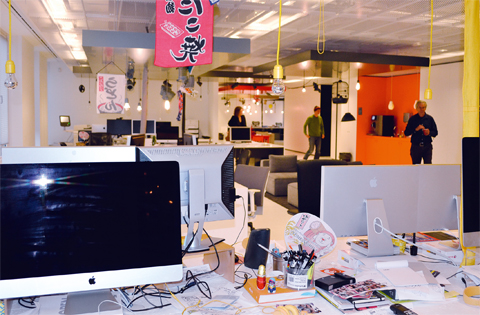
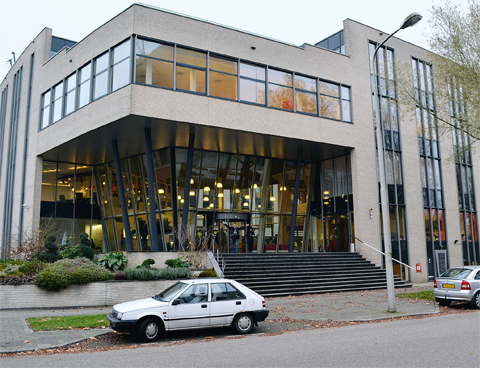
Not in a Seefeld neighborhood, but in the pampas with a lot of industrial buildings, DDB Tribal in Amsterdam is located right next to an equally large functional building from Publicis. DDB and Tribal merged three years ago. "Since then, the motto has been "Born brand, raised digital. 116 people work in the agency, plus a few specialist companies in the same building, bringing the total to around 200. DDB Tribal won "Agency of the Year" twice in 2014, San Advertising Agency of the Year and spin awards in digital. Fifty percent of its business is local; the other half is international. A whole herd has already been captured by the Cannes Lions. There are also 53 Effies in the rack.

Unbenannt-17_24

The agency is regarded in the industry as the largest training center in Holland and offers a wide variety of courses internally. In addition to lead agency Wieden & Kennedy, DDB Tribal also holds a major bite of the Heineken budget. The Amsterdam-based brewery is celebrated as "Marketer of the Year" at Cannes 2015. Another global budget is Adidas. Strategically important in the mission statement is the "Spark Innovation" concept. The aim here is to develop new products or business ideas for customers. A diverse team has exactly 30 days to come up with an idea and build a prototype. pan

Unbenannt-18_21

Cheese and emotions

A new study shows that people with different emotional decision-making styles also have different cheese preferences. These findings can be used for target audience segmentation.

For the most part, people do not make rational decisions. Even when they have the same information, they often make different decisions. According to neuroscientific research, decisions are largely guided by the limbic system, the emotional center. According to neuroscientists, we make up to 99 percent of our decisions unconsciously - with the limbic system deciding what we want or which facts we ultimately consider relevant. Nevertheless, neuromarketing makes purchasing decisions predictable - by investigating how our emotional decision-making system works. And it doesn't work the same for everyone. According to the Limbicode method, the way in which someone makes a decision depends largely on how they weight certain values and motives based on their personality. Limbicode is based on neurobiological findings, which were fundamentally researched by Prof. Dr. Dr. Gerhard Roth and applied in neuromarketing by Dr. Hans-Georg Häusel. The Limbicode method itself was developed by the Institute for Limbic Communication. It forms the basis of this study, which Marketagent conducted in collaboration with the Bern University of Applied Sciences' School of Agricultural, Forest and Food Sciences and the Institute for Limbic Communication.

Three decisive main motives

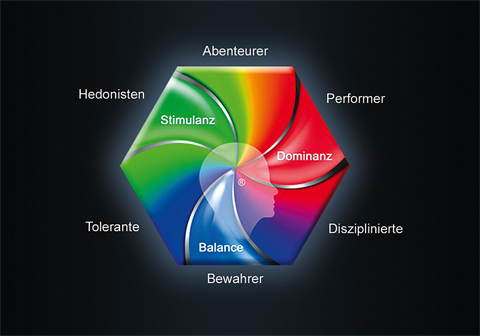
Ulrike Brämswig, Professor of Marketing and Food Business at Bern University of Applied Sciences, first presented the limbic typology on which her cheese research is based at the Zunfthaus zur Schmiden on Thursday morning. The scientist distinguishes between the three main motives "balance", "dominance" and "stimulation", which strongly influence human decision-making behavior. As they are different for each person, different personality and decision types can be derived from them. The balance type is defined by a pronounced need for security and constancy. The stimulation type, on the other hand, seeks new stimuli and variety. And the dominance type is oriented towards power and status. In addition to these three limbic types, the model also identifies three intermediate types: Tolerant, Adventurer and Disciplined. You can find out your own limbic type at www.iflk.ch, the website of the Institute for Limbic Communication.

Effects on cheese consumption

The second part of the presentation is particularly noteworthy. According to the results of the study, this limbic typology can also be used to determine taste, consumption and purchasing preferences for food. The researchers asked 1500 people from German-speaking and French-speaking Switzerland about their cheese consumption habits and looked for characteristics of the individual limbic types. According to Cornelia Eck, Senior Research Consultant at Marketagent, the topic of cheese was chosen because four out of five Swiss people consume it on a weekly basis and cheese is a matter close to the heart with a high emotional value in this country. Eck presented the most striking results to the interested guests on Thursday morning: Adventurous people tend to prefer their cheese to be more refined, while disciplined people like it mild. Performers generally buy cheese more often than other limbic types - and they are hybrid cheese consumers; they buy their cheese both in discount stores and in delicatessens. This is because they are price-conscious shoppers on the one hand, but also want to express their status with their choice of cheese on special occasions.

Addressing preservers

According to Brämswig, limbic segmentation increases target group accuracy. The better a marketing measure is aligned with the limbic profile of a target group, the more effective it is. Unfortunately, marketing measures usually appeal to adventurers, who make up just under 15 percent of the Swiss population. The largest group by far in this country are the preservationists. The current study is particularly interesting for retailers with a range of cheeses, says Marketagent Managing Director Ursula Kaspar. The proven correlation between decision types and consumer preferences suggests that they should first identify the limbic types that particularly like a cheese product in order to target the implementation of marketing measures at them. sis

Unbenannt-25_10
The limbic typology developed by the Institute for Limbic Communication. The main motives of balance, stimulation and dominance are differently pronounced in all six types, which leads to different decision-making behavior.
 

The view from the other side

In conjunction with the Epica Meetings, the jury also visited a few of Amsterdam’s hottest agencies. 180, for example, sets the standard on an international level.

Amsterdam's reputation as one of the world's creative capitals began in the early 90s with Wieden & Kennedy. That was when Nike moved its headquarters to Amsterdam. This impulse soon attracted other agencies. One of these was the hot store with the creative name 180 in 1998.

Unbenannt-11_44

Behind the number lies the 180 degrees of a complete turnaround, with which you can save yourself from a situation when you suddenly can't go any further. The motto of 180 (see above) is said to be a quote from star director Francis Ford Coppola, reveals agency founder and Chief Creative Officer Al Moseley.

Unbenannt-12_42

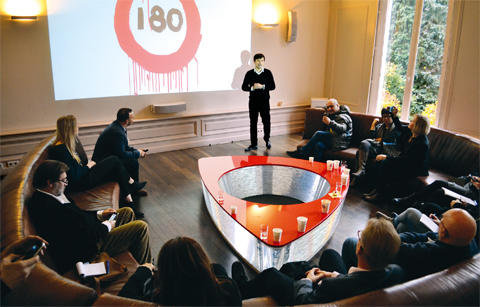
Today, 65 people of 17 nationalities work at 180 and design "creativity without frontiers". The agency, which is rather large by Swiss standards, nevertheless functions like a boutique. The hierarchies are kept very flat. The way the team works is also illustrated by the meeting room (left), where all participants in a brainstorming session sit in a group of equals and can contribute their ideas unfiltered.

Unbenannt-13_31

Playstation is one of 180's best-known international customers. Global marketing for PS4 is managed from Amsterdam. Replay jeans are also sold worldwide thanks to 180. The agency is currently working on a comprehensive repositioning for DHL for the coming year. The driving force behind the numerous successes is that the agency is also managed by a creative despite its size. Even as CEO, Al Moseley is still in very close contact with clients. As a creative, he says: "Amsterdam is a very international city and also allows this kind of thinking to mature." Otherwise, he argues 180 degrees against the mainstream: "Content is everywhere. Its execution, that's king." When there are tens of millions of films on YouTube, a commercial is only sought out "if it's really top-notch".

Andreas Panzeri

Unbenannt-14_34
Unbenannt-15_28
 

Egg dances around journalistic quality

Every time Prof. Kurt Imhof publishes his yearbook on journalistic quality, the industry takes it as a personal affront. It has a hard time accepting that someone could come across as just as vain and image-conscious as the industry itself—and, to make matters worse, touch on one of the most sensitive issues in current media trends with such persistent insistence.

Both Imhof's broadcasts and the reactions of sensitive recipients seem to be based on a fundamental misunderstanding: They confuse quality with level. In my view, quality refers to a whole number of verifiable achievements and characteristics, e.g., honest handling of sources, presentation of controversial opinions independently of those of the reporter with their best arguments, linguistic purity, disclosure of gaps, as they are unavoidable due to current events. On balance, journalistic quality is achieved when the intended target groups or the specific reading situations are served in such a way that comprehensibility is created and, in the best case, understanding is possible. In other words, the Glückspost can also be a quality medium if it works according to the criteria listed above. Level, on the other hand, is characterized by the form of presentation: It is a truism that Blick am Abend and NZZ are at different cognitive altitudes. But is it permissible to compare one with the other, or even to condemn one and canonize the other? Who would think of comparing H&M with Prada or McDonald's with the Kronenhalle? What is self-evident in the case of clothing, restaurants and a hundred other business offerings - namely, the satisfaction of needs at very different levels - is also commonplace in the case of the media.

As a former tabloid journalist (seven years in the editorial management of Blick) and nearly twenty years at the helm of local free newspapers, I protest from experience against Imhof's insinuation that popular and free equate to irrelevance and an inevitable lack of quality. Have we not, in hundreds of specific individual cases - and always under a time pressure that is alien to media science - dissected out the qualitative deficiencies of a story in an attempt to formulate a tabloid headline? Didn't the subscription-based quality media in their best days derive up to 80 percent of their income from advertising, so that they could confidently have been called "four-fifths free media"? The form of distribution as a sign of quality - what an absurdity! I insist: It is possible to translate even highly complex contexts into comprehensibility. If this were not possible, our direct democracy would be a farce. Here, even the non-academically educated service technician and the waitress are expected to vote yes or no on highly complex issues such as mass immigration, genetic engineering or gold policy. From that point of view, the professorial disdain for popular media is a presumption. Incidentally, I have found in dozens of cases - especially in the case of elaborate foreign research - that the research at Blick has been more thorough, because it has been more direct, while the pack of supposedly righteous media has disseminated a comparatively inferior, but uniform and thus, so to speak, "generally binding" agency version.

Of course, the criticism of many journalistic practitioners of the media scolding that sounds from the professorial high seat is also stupid and short-sighted. Why do journalists and their superiors still resist methods of objective quality measurement that are standard not only in industry but also in every conceivable service sector? Why are there ISO-certified trust companies, investment consultancies, educational institutions, law firms and other intellectual service providers, but not editorial offices? (More about this on http://www.sqs.ch/de/Leistungsangebot/ Industries/services) Is it the arrogant opinion that everything is fundamentally different for us than for everyone else anyway? Or is it the simple fear of objective quality and performance measurement?

Karl Lüönd is a freelance publicist and book author
 

Press Council reprimands BaZ for naming names

The Press Council has reprimanded the Basler Zeitung and BaZ Online for an article about a pedophile who escaped from the University Psychiatric Clinics (UPK) in Basel in February. The article named three experts—wrongly, as the Press Council has now determined.

The three psychiatric experts of the UPK Basel came off badly in the article of the Basler Zeitung: Their procedural report had driven the pedophile into flight, it said among other things. The full names of those criticized were mentioned. The head of the UPK at the time, Rita Anton, then filed a complaint with the Press Council. She claimed that the three employees of the UPK Basel had been publicly defamed by the reporting. This is according to the decision of the Press Council published on Thursday. The Basler Zeitung, on the other hand, argued that the mention of the names was justified because the experts were people in a leading position in society. In addition, the naming of the reviewers eliminated a "diffuse general suspicion" against all other employees of the UPK.

UPK responsible as an institution

However, the Press Council did not follow this argumentation. Ultimately, the UPK as an institution would bear the responsibility for the expert opinion, the decision states. The Basler Zeitung confused public interest and social curiosity. The mention by name was not justified. nIn contrast, the Press Council believes that the Basler Zeitung did enough to confront the UPK with the allegations. The Press Council dismissed this part of the complaint. The pedophile, who had been convicted several times, had not returned to the UPK on February 12 after an authorized exit on the clinic grounds. After three weeks on the run, he was finally stopped in Berlin.
 

"The Circle" Qualified for Golden Globes

The Hollywood Foreign Press Association (HFPA) has announced the list of 53 films in the running for the Golden Globe in the Best Foreign Language Film category. Among them is the Swiss film «Der Kreis.».

The feature film directed by Stefan Haupt and produced by Contrast Film Zurich is competing for the second most important award in the film business for Switzerland. The 72nd Golden Globe Awards will be presented on January 11, 2015 and are regarded as a yardstick for the subsequent Academy Awards. "The Circle" is also in the running for an Academy Awards nomination (Oscars, Werbewoche.ch reported) and is currently being shown simultaneously in cinemas in German-speaking Switzerland, French-speaking Switzerland, Germany, Poland and the USA.

Interview with producer Ivan Madeo (Advertising Week Print, September 2014).
 

Unbenannt-36_0

Print remains the most widely used medium

The updated edition of the WEMF's MA Strategy, published in late November 2014, confirms print media's leading position. Newspapers and magazines remain the most widely used media.

More than 6.1 million people, or 96.2 percent of the population aged 14 and over, use print. This confirms the print media's leading position. They remain the most-used media genre and are positioned ahead of the electronic media of television, Internet and radio. Only among the generation of digital natives does the Internet come out on top and lead the ranking of the most-used media. The results come from the MA Strategy intermedia study conducted by WEMF AG für Werbemedienforschung. The study enables user comparisons between entire media groups. Here is the ranking of media users for the three main age groups:

Digital natives: 14 to 34 years

The 14-34 age group includes the first generation to grow up with the new technologies of the digital age, such as e-mails, the Internet and cell phones. The birth year 1980 is considered the oldest cohort of digital natives.

The Internet is establishing itself as the clear lead medium in this target group. Nevertheless, young people also love the old media. Thanks to commuter newspapers, the press follows with 83.6 percent. 20 Minuten and Blick am Abend make a significant contribution to the strong newspaper value. Television and radio are positioned behind magazines in fourth and fifth place.

Internet 96.7%
- Newspapers 83.6%
- Magazines 77,9%
- Television 76.9%
- Radio 65,2%

Middle Age: 35 to 54 years

The middle age group of 35 to 54-year-olds is one of the most consumer-intensive target groups. Households with children are particularly well represented.

In this age group, magazines are the strongest medium and the only genre with over 90 percent reach. However, it is likely to be only a matter of time before the Internet also becomes the leading media channel among 35- to 54-year-olds.

- Magazines 90,7%
- Internet 88.8%
- Newspapers 88.5%
- Television 82.6%
- Radio 77.6%

Best Agers: 55 plus

The age group of Best Agers has the greatest disposable assets, which makes them attractive for many products and services. The target group currently comprises one-third of people aged 14 and over - and the trend is rising. The older the target group, the higher the media usage. No less than three media types achieve reach rates of over 90 percent. The digital immigrant target group prefers print media in particular. Television is also among the top three, well ahead of radio and the Internet.

- Magazines 96.2%
- Newspapers 94.5%
- Television 91.8%
- Radio 79.2%
- Internet 58.2%

MA Strategy new with Direct Mail

Thanks to the uniformly recorded media performance in the form of RUS (Regular Readership/ narrow user group), MA Strategy is used to create or evaluate media strategies. The study enables performance comparisons between media groups and relevant individual media from the areas of newspapers, magazines, television, radio cinema, teletext, Internet, address directories, outdoor advertising and - for the first time - direct mail. MA Strategy evaluates the media at the level of reach (narrower circle of users) as well as suitability in relation to socio-demographically or consumption-related defined target groups.

Otto Meier

Unbenannt-32_5
Unbenannt-323
 

Leo Burnett: brand philosophy in a nutshell

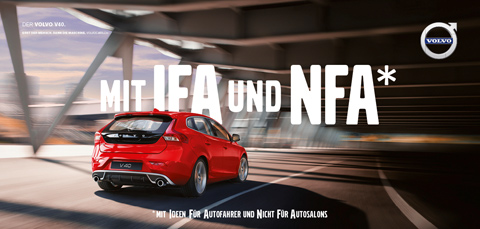
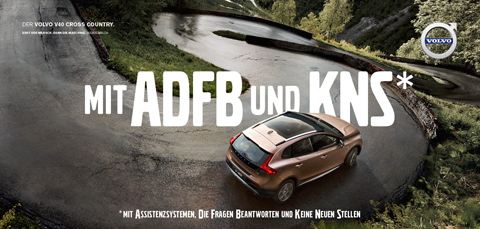
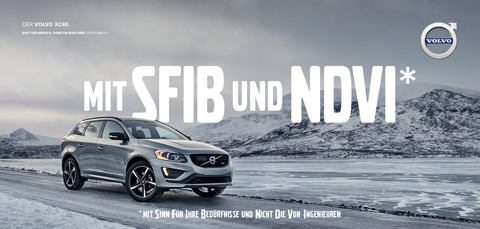
Many car brands like to use acronyms—especially when talking about their engineers’ technical achievements. At Volvo, however, people always come first—as Leo Burnett’s new campaign shows.

In the typical abbreviated form, each subject apparently extols new features which, however, turn out to be basic wishes of drivers when the asterisk text is read. For example, "With MIB and WIA*" is not yet another assistance or multimedia system. Instead, it is the answer to a need that is likely to speak from the heart of many drivers today: "With more innovative usability and fewer innovative shortcuts.

A total of five subjects invite you to discover Volvo's brand philosophy.

Plk_Volvo_Abschied_F12_470x224_CO_d_HE
Plk_Volvo_Abschied_F12_470x224_CO_d_HE3
Plk_Volvo_Abschied_F12_470x224_CO_d_HE2
Plk_Volvo_Abschied_F12_470x224_CO_d_HE4
Plk_Volvo_Abschied_F12_470x224_CO_d_HE5

larger

Responsible at Volvo Car Switzerland: Beat Fritschi (Commercial Director). Responsible at Leo Burnett Switzerland: Axel Eckstein (ECD), Bastian Otter (text), Pascal Herzog (art direction), Tiffany Gaggia , Dominik Mätzener (consulting).
 

Check competitors with SEO analysis tools

If you want to know which keywords your competitors are ranking for in search results, what positions they hold with those keywords, and how valuable those positions are, you should ideally use an SEO analysis tool.

SEO analysis tools such as Sistrix, Xovi or Searchmetrix analyze the technical and content-related search engine friendliness of a website from the perspective of Google & Co. The analysis provides valuable information on the behavior of users and competitors.

SEO analysis tools provide webmasters with valuable data week after week: With which keywords does the website appear in which positions in the search results, which important keywords are not occupied, how has the visibility of the website developed in the search results, which optimization potential has not been exhausted, etc.? SEO analysis tools are also valuable for online marketing, as they provide valuable information for the strategic orientation of search engine marketing. It is well known that the primary search engine marketing goal is to occupy keywords that are used by new customers and clients. However, evaluating the right keywords is not easy. In order not to miss out on potential customers, you also need to consider the keywords used by your competitors.

SEO analysis tools have functions for competitor analysis. With the help of the tools, keywords used by competitors and their positions in the search results become visible. The tools make it possible to evaluate keywords that competitors are not using and to assess their performance based on demand and competition.

How can this information be used profitably? After the analysis, online marketing has sufficient quantitative and qualitative data at its disposal to determine which keywords are interesting due to demand and competition, which are used to control competitors and which are used to open up "untouched" niches. These keywords are also the basis for the briefing for the search engine optimization of the website. Once the measures have been implemented, nothing stands in the way of well thought-out, successful search engine marketing.

Imre Sinka

Questions or suggestions for this article to [email protected].

Between trade, state revenue and cityscape

The company's own publication "Stellenwert" looks back on the history of out-of-home advertising in Switzerland to mark Clear Channel's 90th anniversary.

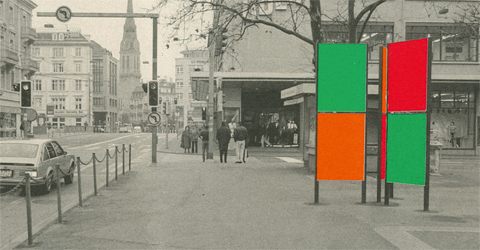
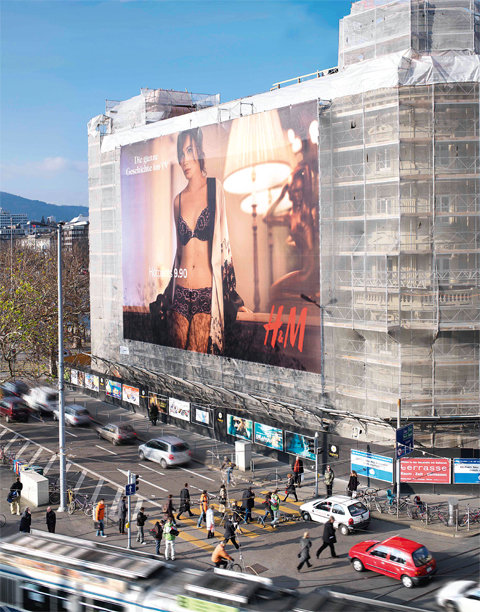
The Swiss outdoor advertising market is currently dominated by two large outdoor advertising companies: The market leader Allgemeine Plakatgesellschaft (APG) and the steadily growing company Clear Channel. Clear Channel currently markets around 20,000 of Switzerland's poster sites, giving it a market share of 24 percent. The second-largest Swiss poster company was founded in 1924 under the name Plakat und Propaganda A.-G, and was acquired by the US company Clear Channel in 2001. It had once broken APG's monopoly position within the poster industry. Accordingly, Clear Channel presents itself in the publication for its 90th anniversary as a company with a fierce nature that "fights for every poster site and defends itself against the authorities and the dominant position of Allgemeine Plakatgesellschaft (APG)". The publication, extensively researched by Simone Bammatter, not only celebrates the company's own success story, but also takes a detailed look at the entire development of the Swiss outdoor advertising market.

Unbenannt-22_11

First state regulations

Advertisers were obviously resourceful early on when it came to placing their clients' messages in prominent places in an eye-catching way. As early as the 19th century, the first Swiss cities therefore began to regulate the gradually emerging proliferation of posters. In Zurich, an ordinance issued in 1856 regulated "wall billposting" and the city set up fixed, chargeable billposting sites. At that time, only a dozen or so posting points were needed. However, their number increased rapidly and towards the end of the 19th century the first criticism was voiced by the population, who were annoyed by the growing number of posters on public property.

Unbenannt-23_10

Privatization of the poster industry

APG was founded in 1900 with the support of the advertising agencies Haasenstein and Vogler, Vettiner, David and Juvet. After the turn of the century, the exclusive claim of the authorities in many larger cities was transferred to private outdoor advertising companies. The main purpose of this was to ensure that the growing "poster business developed efficiently and its income was promoted". This was because the longer it went on, the more it became a significant source of income for the authorities. Privatization led on the one hand to a quantitative increase in poster sites and on the other to a qualitative improvement, as APG renewed the majority of billboards. For decades, the outdoor advertising company held a monopoly position. APG repeatedly took over the marketing of all public billboards under multi-year leases.

Unbenannt-24_12

Resistance to monopoly

For a long time, the municipalities saw an advantage in the fact that APG's national network provided them with a standardized process and they did not have to settle accounts individually with countless poster companies. The sphere of activity of smaller poster companies was limited to private property. Only in Zurich did a dual system develop relatively early on on public land. In 1970, Clear Channel was first awarded a concession to display posters in a handful of city districts. To date, however, this has only happened in larger cities. Otherwise, APG still owns all poster sites on public land in many places.

Overall urban development concepts

Until the 1990s, there were no overall concepts for urban billposting. It was not until 1992 that the so-called Overall Concept 92 was launched in Zurich. Among other things, it harmonized the variety of poster types and sizes and led to fewer, but better-placed poster sites. This practically doubled public revenue in one fell swoop. At the same time, however, greater consideration was given to the city's appearance. The number of posters on public land was reduced from 3160 to 2000 spaces. Some of the more numerous poster sites on private land were also subject to regulations. In the years that followed, GK 92 developed into the national standard. The overall concept remained valid until 2006, when it was replaced by the new PK 06. In it, advertising is seen as an integral part of the city and billposting as an urban planning issue. It stipulates, for example, that posters are only permitted in areas where commercial use is present. An update was also necessary with regard to technical innovations. In order to achieve maximum returns on existing sites, poster companies have been constantly looking for new ways to expand their advertising space in recent years. PK 06 also includes regulations for illuminated posters, rotating machines and prism turners - the latter are already considered outdated due to their energy inefficiency. sis
 

get_footer();