Leshop.ch achieves new sales record

Leshop.ch, Migros' online supermarket, increased its sales by 6.6 percent, or 11 million francs, in 2015. Customers spent a total of 176 million francs at Leshop.ch.

Switzerland's largest online supermarket has thus posted a significant increase in sales for the third year in a row. Growth was driven by orders from smartphones and tablets, the expansion of delivery services and more precise delivery times, according to a statement on Monday.

Unbenannt-3_114

The strong franc left its mark on the retail trade in 2015, with many Swiss buying food abroad. Around 10 percent of Swiss retail sales, or 11 billion Swiss francs, are said to have flowed abroad, according to a Credit Suisse estimate. Pressure on prices also increased due to foreign e-commerce providers pushing into Switzerland. Contributing to Leshop.ch's nevertheless sustained growth trend has been the spread of smartphones and tablets across all age groups. More than 40 percent of Leshop orders already come from mobile devices. In addition, the expansion of services boosted the growth of Leshop.ch: Together with Migros, the online supermarket launched eleven PickMup pick-up points in Migrolinos, Migros shopping centers, and fitness centers in pilot operations in June 2015. At these locations, online customers can pick up their purchases ready-packed the day after they place their order.

LeShop.ch - Results 2015:

  2014 2015 1st semester
2014/15
Development
2014/15
Sales (million CHF) 165 175.9 + 6.5 million / + 7.8% + 10.9 million / + 6.6%
CO2 savings* (tons) 1292 1373 + 17 / + 2.6% + 81 / + 6.3%
Share of mobile orders**
(smartphone, tablet)
37% 40% + 4% / +11.4% + 3 % / + 8.1%

* LeShop collective delivery compared to motorized individual shopping.
** In each case for the month of December

Ernst Dieter Berninghaus, Head of the Retail Department at the Federation of Migros Cooperatives, says: "Experience shows: The more seamlessly we link online and offline offerings, the more loyal customers become. Those who use in-store shopping, home delivery, and pick-up services in combination buy more than twice as much as traditional in-store customers. That's why we're building on the cross-channel strategy as a Group."

From October, Leshop.ch also specified its delivery times: In over 40 Swiss cities, customers can choose between significantly smaller time windows for home delivery. Leshop.ch delivers in the morning between 9 a.m. and 12 p.m., at noon between 12 p.m. and 2 p.m., or in the afternoon between 2 p.m. and 5 p.m. In the city of Zurich, there are even four additional 1.5-hour time slots available in the evening from 4.30 to 9 p.m. The new time slots will be available in the afternoon. In this way, Leshop.ch aims to reach new customers: Offices or daycare centers have their purchases delivered in the morning, while professionals who work long hours use the time slots in the evening. At the same time, in October Leshop.ch became the first online supermarket in Switzerland to launch nationwide home delivery on Saturday mornings from 9 am. The two Leshop.ch Drive pick-up centers in Studen BE and Staufen AG developed solidly and also contributed to sales growth in 2015.

Growth spurt expected in online grocery trade

In Switzerland, the market potential for online grocery is far from exhausted. The e-commerce experts at Credit Suisse expect strong growth in the coming years: in the "Retail Outlook 2015" study, they forecast that the online share of the grocery trade will double from 1.7 to 3.5 percent by 2020. Leshop.ch CEO Dominique Locher says: "The cake that has not yet been distributed is big, and everyone wants to secure the biggest piece now. In this environment, we can win new customers with precise and fast services as well as cross-channel initiatives with Migros." A look at nearby countries shows that the market for online grocery shopping is on the move: In England, France, and Germany, various new providers are preparing to enter the market, including online giant Amazon with Amazonfresh.

Maybaum Film: Moving Pole of Rest in the Commercial Block

Every day, nearly ten people die of lung cancer in Switzerland. This doesn’t have to be the case: if detected early, lung cancer can be cured. The TV campaign by the Foundation for Lung Diagnostics draws attention to this fact in three emotional commercials.

The focus is on a wife, a young father and a girl. Reduced to the minimum, they sit in an empty room while the camera moves calmly towards the protagonists. In their thoughts, they talk about a beautiful memory. The room gradually darkens and we finally learn that they have lost someone close to them. But it's not just death that preoccupies us - it's the stories of the bereaved that stir us up.

The three TV commercials were created in just under four weeks, from the first draft to the finished film. Maybaum Film from Baden developed the concept in close cooperation with the Foundation for Lung Diagnostics and was responsible for the complete realization. Authenticity was particularly important. There were no professional actors in front of the camera, but rather amateurs who were completely convincing in an emotional casting, as was reported in a press release. The commercials have been running on SRF 1 and SRF 2 since December 25, 2015.


Responsible at the Foundation for Lung Diagnostics: Jürg Hurter (President of the Board of Trustees). Responsible at Maybaum Film: Michel Alraun (Director/Screenplay), Michel Frutig (Production Manager/Screenplay), Laurent Ulrich (DoP).

Adello: Advertising in the third dimension

The new 3D Touch technology enables interaction based on the amount of pressure applied for the first time. This allows advertisements to convey a new sensation to consumers.

Apple has given the screen pressure sensitivity with the iPhone 6s. This opens up a third dimension after swiping and tapping. In addition, users receive haptic feedback, which adds even more depth to the feeling. 3D Touch allows for a new user experience that is just perfect for mobile advertising. The complexity allows more information to be conveyed while making it easier to access - without an overloaded two-dimensional navigation. For example, an advertisement can display different sub-products directly from the product or offer coupons for selection without leaving the original advertisement.

Adello is launching 3D Touch in all formats, the first mobile ad tech company to do so, according to the release. "Our use of 3D Touch gives ads more depth and us more measurement points while improving the user experience. It makes our deep-learning technology even more accurate," the company wrote in a statement. Various forms of advertising are conceivable. For example, car advertising, where different options are displayed underneath by applying different pressure. Where you can tell where you are by the haptic feedback. On the PC, we know this to some extent from the right mouse button and the scroll wheel. Both try to lead to more information. The focus is on human, sensory interaction. "With the 3D Touch forms of advertising, we are giving consumers a completely new way of interacting. Possibly, 3D Touch will become the most important milestone since the introduction of HTML5 in advertising," Adello said.

https://www.youtube.com/watch?v=l6nFNP_Pktw

Bachelorette: Press Council reprimands Blick.ch

According to the Press Council, Blick.ch violated Frieda Hodel's privacy. The reason: its reporting on medications that were visible in Hodel's refrigerator in an Instagram photo.

The online portal Blick.ch had a closer look at an Instagram post by Bachelorette Frieda Hodel. It was about a photo of her refrigerator and its contents. Hodel wanted to make the point that she wanted to eat healthy things like fruits and vegetables after returning from filming in Thailand. However, Blick.ch discovered a pack of vaginal tablets in the side door of the refrigerator. This resulted in an article that speculates about Frieda Hodel's sex life and not only wonders why Hodel needs this medication, but also seems to know why. The article was based on pure conjecture by the editors. Hodel did not want to comment on it.

Bildschirmfoto-2015-12-23-um-11.20.17
Screenshot Blick.ch

For the Press Council, this article clearly violates Frieda Hodel's privacy. Blick.ch was allowed to publish the photo of the refrigerator because Frieda Hodel is a public figure and the photo was related to her celebrity as Bachelorette. However, according to the Press Council ruling, the portal should not have made the medication, which is barely visible at first glance, a topic of discussion.
 

New Beatles music on streaming services

According to a U.S. media report, the Beatles« music will be available on various streaming services for the first time this Christmas. Until now, the »Fab Four's" songs have only been legally available for purchase on physical media such as CDs or as downloads.

From Thursday, however, it will be widely available for playback directly from the internet, the technology blog Recode reported on Tuesday. The services include streaming market leader Spotify, Apple Music, Google Play, Amazon Prime Music and Jay-Z's Tidal service, according to sources in the music industry. More and more musicians are shedding their aversion to streaming services. For example, music by Herbert Grönemeyer has been available on Apple Music since December. At the same time, there is a discussion about free offers with advertising. Singer Taylor Swift, for example, criticizes them for devaluing music and refuses to place her albums on free services such as Spotify. The Beatles, on the other hand, should also be available there, Recode emphasized. When they first offered their music for download via Apple's iTunes platform in 2010, it caused quite a stir. (SDA)

Wunderman: For master only

The Zurich-based agency Wunderman has created a high-impact video for Windows 10 Hello.

Typing in a password is a thing of the past with Windows 10: Thanks to the "Windows Hello" function, Windows 10 recognizes its owner by face (provided the appropriate hardware is available). Wunderman Zurich has created a film for Microsoft that dramatizes this practical feature in a surprising way - with a Jack Russell Terrier with a lot of jumping power. The film will be used online and on social media channels. It is part of a larger campaign that Microsoft Switzerland has "on air" during the Christmas season for Windows 10 and the new Surface Pro 4.

Responsible at Microsoft Switzerland: Daniel Furger (Consumer Marcom Manager), Kurt Hoffmann (Windows Product Marketing Manager). Responsible at Wunderman (Member of Y&R Group Switzerland): Thomas Engeli (ECD), Thomas Bosson (AD), David Krucker (graphics), Parvez Sheik Fareed (text), Fabrice Tobler (production), Nicholas Meyer (consulting); X52 Film/Stefan Rüegg (production).

Last but not least: The year in Blick headlines

20 relevant headlines and stories that Blick.ch shared with us in 2015.  

The year 2015 is drawing to a close. Time to take another look back at the most important events. How 2014 this year, we are once again using the headlines from Blick.ch.

12---3999317-franzoesisch
The French Scrabble world champion, who supposedly doesn't know French...

12---TT-3469198-Baby-kommt-schwanger-zur-Welt-
...was actually only surpassed by the baby, who was born pregnant - with twins! - came into the world. Hopefully all four are well up.

12---3022734-kuh-angriff
Bullying mother cows were officially declared a national threat in 2015 (ahead of terrorism and the tiger mosquito). Here appropriately illustrated with an exuberant, curious bovine. Since Blick trained the nation in self-defense, more deadly incidents have failed to materialize. So far.

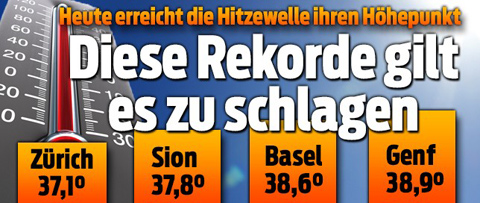
3937502-Rekorde
Mass event record heat: How desirable cracking a record of 38.9 degrees should really be then...

TT-3980489-Hitze
...became not quite clear at the end.

12---TT-3544165-daenin
Which brings us to politics. Here, this "Danish politician" in particular was able to stand out, who simply convinced everyone. 

12---TT-3995235-sprutz
Does it have to be like that? Coop and KSP were able to do it with the «Chill'n'Grill»-campaign really doesn't please anyone.

12---TT-3491299-coci-neu
The new green Coca-Cola with stevia was also polarizing. While some were pleased with the relatively low sugar content and the healthier sweetener variant, others criticized the unfamiliar taste. Still others were simply happy to finally have to "drink less". Congratulations!

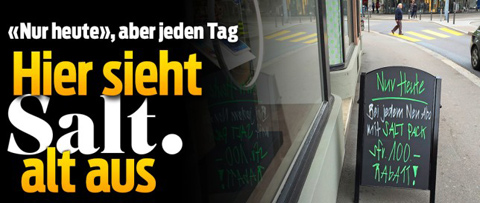
12---TT-3806500-salt-sieht-alt-aus
Speaking of relaunches: Orange became Salt in 2015. Accompanied by a gigantic campaign - and puns that work at best in writing. Or with people who pronounce Salt like "old.

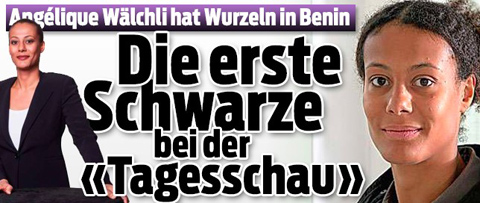
12---TT-3475218-tagesschau
Interesting what is apparently still headline worthy in 2015: a woman with dark skin (a "black") becomes a news anchor.

TT-3594351-fuck
Back to the really relevant topics: For example, to Mr. Fuck, who not only has a sophisticated name, but also a black Labrador.

TT-3549870-JoergSchneider-Sex-Quer
Jörg Schneider unfortunately passed away in August. Hopefully he was able to laugh about the title "Potz Holzöpfel und Zipfelchappe!" before.

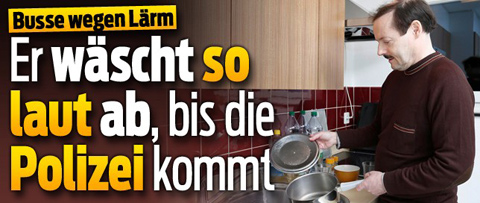
12---TT-3385697-Polizei
So much for cuddly justice: the police showed the dishwasher greenhorn the limits of noise pollution.

12---3983067-thais
Too stupid and too small: Something has to change - however.

TT-3957942-Protz-Teenies
"No diligence, no rice" - one of the title highlights of 2015. Even if China's "swank teens" are probably not particularly keen on the poor people's food rice. Does not matter, had to bring here.

12---3947376-Jubel-Tubel
Another highlight: the "Jubel-Tubel".

12---TT-4179671-kippts
The worthy successor to the bridge dork: The Trough Dork.

TT-3404723-Spermalbad
This pun was also overdue.

12---3737056-TT-Bauernkalender-quer
The really good titles were rare in 2015, though. This one, for example, was rather so-so...

TT-3710647-dominique-quer
...and this rather something miss lungs.

12---hunziker-streit
Then still rather this one here: Without text, but with a picture. The furious Michelle Hunziker even left Blick speechless.

Thomas Häusermann

Alpha 245: Christmas delicacy for Manor

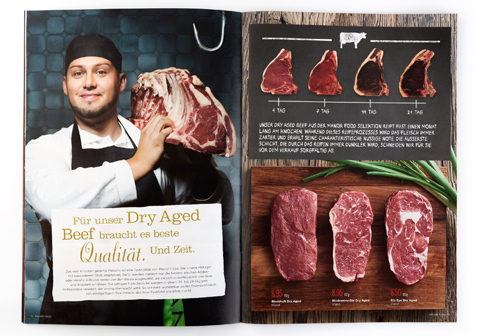
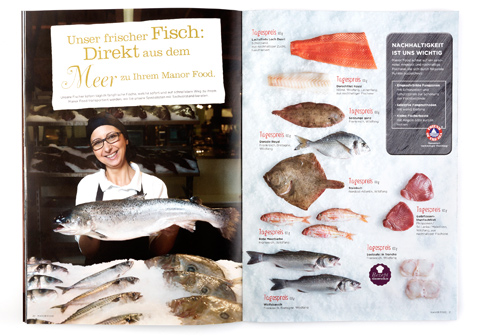
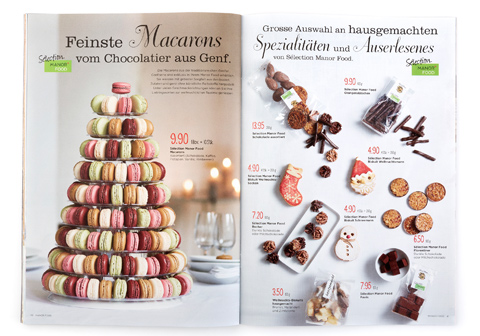
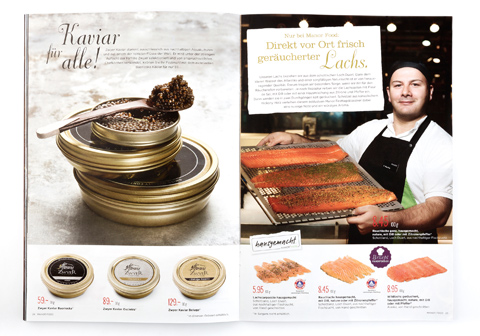
Christmas dinner is probably the most important meal of the year. That's why Manor Food commissioned the Alpha 245 agency to develop and design a culinary Christmas magazine.

On more than fifty pages, Manor Food employees guide you through the various métiers with great expertise and attention to detail. From well-hung dry-aged beef to gold medal-winning oysters, you'll find everything your gourmet heart desires. In addition, selected recipes with a guarantee of success invite the reader to try them out. These link the reader to the website and the Christmas offers from Manor Food. And digitally round off the epicurean print product.

Titelseite_0
1-Innenseite
2-Innenseite
3-Innenseite
4-Innenseite

Responsible at Manor Food: Conradin Schaad (Marketing Director Manor Food), Michèle Leibacher (Head of Communication Manor Food), Marina Djordjevic (Project Manager Communication Manor Food), Jasmin Rennhard (Project Staff Communication Manor Food).
Responsible at Alpha 245: Patrick Senn, Patrick Beeli (Creative Direction), Mario Moosbrugger (Art Direction), Joni Müller, Balz Chen (Text), Andrea Staub, Mirjam Birrer (Consulting), Barbara Häne, Carmen Anderegg (Realization), Pam Hügli, Diana Wick (Overall Responsibility).
Sandra Kennel, Philipp Rohner, Martin Hemmi (photography).
 

Press Council: Contradictory statements must both be quoted

If two critical statements contradict each other, both must be quoted. The Press Council has partially upheld a complaint filed by Christian Lüscher, a National Council member from Geneva representing the FDP, against the French-Swiss magazine L'Hebdo.

The magazine had reported in March 2015 about a "conflict of interest" of Lüscher as the lawyer of the son of former Nigerian dictator Sani Abacha and as a national councilor. Abacha's son was accused of helping his father embezzle millions in the 1990s. As a lawyer, Lüscher defended the interests of his client, the Press Council quoted from the article in Wednesday's statement. But as a parliamentarian and member of the legal commission, Lüscher was called upon to decide how potentate funds could best be returned to the affected population, it said. L'Hebdo had quoted an SP parliamentarian as saying that Lüscher had not disclosed this "conflict of interest." On the other hand, it did not quote the statement of a CVP parliamentarian according to which Lüscher had spontaneously referred to his attorney's mandate in the commission when discussing the draft law.

Quote even without date

However, the parliamentarian could not specify when exactly Lüscher had made his statement. L'Hebdo based its report on the secret minutes of the commission, which it could not quote. According to the Press Council, no corresponding intervention by Lüscher was mentioned in the minutes. In the eyes of the Press Council, the magazine violated the "Declaration of the Duties and Rights of Journalists" by not quoting the CVP parliamentarian. This requires, among other things, that no important elements of information may be suppressed. Because the two parliamentarians had made contradictory statements, it would have been fair to quote the statement that exonerated Lüscher, the Press Council found. This was also the case if the date of Lüscher's intervention was not known. (SDA)

"A brand cannot please everyone"

Two years ago, Peter Felser and Max Meister initiated the "CAS Brand Leadership" course. Werbewoche asked them what you learn there, why brands need leadership and how VW can polish up its image, which has been tarnished by the emissions debacle.

felser

Advertising veteran Peter Felser (right) and Max Meister, brand valuation consultant and lecturer in strategic communication at the Zurich School of Business

Advertising Week: The second year of the Brand Leadership course graduated in September: What can the 14 graduates do now?
Peter Felser: They see the world of brands differently. They think bigger, more far-sighted and, above all, think in terms of big visions and missions, and not just in terms of small optimizations and making things a little better. For us, it's all about doing things differently.
Max Meister: They certainly think more strategically and less operationally. We understand brand management from a strategic perspective, from the aspect of leadership.

Leadership means that brand management is integrated into corporate management?
Felser: Yes, it's about using the power of the brand mission to lead the entire company. You have to know where you want to go and why you exist as a company in the first place. Leadership and management are not the same thing. Management optimizes a little, makes sure that the business runs reasonably smoothly. Leadership, however, leads and has a big goal towards which it steers.
Master craftsman: The brand is central to the success of a company. The mission of a company is very much reflected in the brand and vice versa. If you take a leadership perspective, the brand suddenly becomes a very important part of corporate management. That's what we want to convey: The brand is not simply a product of the strategy, but should be understood as an important driver of the strategy.
Felser: The top 20 brands in Switzerland, which were recently published as part of the Brand Asset Valuer brand study, reveal something astonishing: When the study was launched 20 years ago, many brands that are still top today were already top, for example Migros, Ovomaltine, Toblerone, Zweifel and Caran d'Ache. On the other hand, there are new brands that have made it to the top very quickly. Google is one of them. The question is: why do some take so long to get to the top and others so quickly? My answer: It's the mission. Those who have a clear conviction get to the top quickly and can stay there for a long time, even if they hardly do any marketing or advertising. The mission is the be-all and end-all.

How is the Brand Leadership course structured? Can it be completed while working?
Master craftsman: Yes, there are 20 teaching days between March and September, during which the participants are present. In terms of content, we cover social and technological trends, crisis communication, change management, brand architecture and brand portfolios, the monetary aspects of brands through to the optimization of cooperation between partners, i.e. agency and client. We cover a wide range of topics and try to cover as many issues as possible that our participants have to deal with or will have to deal with in the future. We are less concerned with operational issues such as logo development and more with the big picture, the holistic view. This is why we also target people with management experience or management aspirations on the client or agency side.

They boast renowned speakers: Feldschlösschen CEO Thomas Amstutz, Emmi CEO Urs Riedener, top advertisers Dominique von Matt and Martin Spillmann as well as leading scientists such as neuromarketing expert Hans-Georg Häusel and professors Torsten Tomczak and Sven Reinecke from the University of St. Gallen. Does each of them cover a topic?
Master craftsman: Exactly. We have speakers from science and practice, each representing a specific range of topics. The composition of the people always remains more or less the same. Of course, we constantly add current topics to the course, such as digital transformation, and then look for suitable lecturers.

What sets holistic, strategic brand management apart from the status quo?
Felser: Brand management is very often equated with communication: We have something and tell people about it. Maybe we look at what people want to hear and just say that. But brand management, as we understand it, comes from the core of the brand, from the entire brand and from the company. It influences the employees, the suppliers, the investors - not just the sales market, but everyone. Employees are particularly important. The brands that are successful over a long distance have their employees under control, in the sense that they are motivated and inspired to work for the brand. I was able to visit Google in Silicon Valley. It's amazing how you can feel the enthusiasm of the employees. They emulate the company's mission, 30,000 on campus. Or take Tesla. The company's mission is to "revolutionize mobility" and change the world with it. The people who work there live it. That's why a mission is not simply advertising in the sales market. Brand leadership and mission are something holistic. Even the telephone operator and everyone involved with the company must be aware of it and support the ideas.

Let's put this in more concrete terms: Everyone is talking about VW-Gate. In your opinion, what can VW do to revitalize its brand?
Felser: Good question. Difficult question. The first thing is certainly to admit that you've made mistakes ...

... which VW did, even in advertisements with a mourning border ...
Master craftsman: ... yes, they have tried. VW is already in the middle of the change management process, which is certainly an important step. We will see how well-founded this process is. VW has to implement a cultural change - and that won't happen overnight. I think the problems that have now emerged are very much focused on technical operations. I don't think the whole company is infected. If you can localize the problem in a targeted way, you can also combat the damage in a targeted way. And the recently published figures indicate that the damage, at least so far, is economically manageable.

But isn't that the root of all evil? After all, VW vehicles are THE engineering cars, and the slogan has been "The car" for decades. And if there is now a problem in the area of engineering, this will severely damage the core of this brand and its credibility.
Felser: Yes, that's right. "The car" emphasizes reliability and technical perfection.

... and if there are now problems in this area, VW will lose its reputation, not only among consumers, as we are currently experiencing, but probably also among the employees who believed in "their" brand. Don't you think so?
Felser: I also see major problems ahead for VW. But two other points seem important to me in this case. One is that a strong brand is also stronger in crises. Just think of UBS. A weaker brand would not have survived this crisis of confidence. And it will be exactly the same with VW. In three or four years, VW will once again be a strong brand that will survive. The second point is that the problem at VW is obviously a cultural one. And that is the pressure that has been exerted on the engineers. They failed to meet certain requirements and were not allowed to admit it. Similar to UBS, which has high profit expectations, exerts pressure and the employees then become semi-criminals. VW has to change this culture.

What role do employees play in this?
Felser: A very central one. VW needs to communicate new values to its employees and this will most likely have to be done top-down.

And what role do consumers play?
Felser: Well, they don't have a huge problem, for the individual it is not so relevant that certain standard values were not met. VW has loyal and satisfied customers, the car drives. But I do believe that the brand has to move on its own initiative, not the public. But I wouldn't rush into it. Changes in values and culture are necessary: Mistakes have to be possible again, you have to be allowed to admit that you can't do something. The mass mind is slow and wounds heal. I wouldn't overreact.

What do you think of the advertisements currently being placed by VW - framed with a mourning border, the management crawls to its knees and asks for forgiveness. Is this the right approach?
Master craftsman: That is a first step. And the only one they can take at the moment. In a situation like this, it's the only message that comes across as reasonably credible. Let's take a look at Toyota, which has also caused some problems. It didn't damage the company's reputation in the long term. And consumers forgive relatively quickly when the performance is right again. So: Do buses ...

... and talk about it ...
Master craftsman: Exactly. You simply have to focus on your strengths again quickly. I am confident about VW. However, we're not talking about six months; it will certainly take three to four years.

What is more important: the standing of a brand with consumers - or with the employees of the company that manages the brand?
Felser: Both are important. I would now give more weight to employees. But that's not the same in every industry. In the service industry, it's extreme, employees are central, they are living brand messages. It's slightly different in an industrial company. But I would rate the importance of employees very highly. And there is generally too little awareness of this in brand management. Everyone says "employees are important, people are at the center". But this is rarely put into practice and made tangible so that employees are motivated and inspired.

Do brands have a life of their own?
Master craftsman: Certainly more so in times of social media and digital transformation. It is becoming more and more challenging to manage brands, brand management is becoming more and more complex. That's why we offer this course, because we want to show that you can manage brands in a targeted manner even in times of digitalization. But you have to know how. However, we don't offer any one-size-fits-all solutions; each situation must be considered separately. The fundamental problem is that anyone can express their opinion anonymously on the Internet and thus damage a brand considerably. Even if what you write is not true. You simply have to deal with this challenge professionally. Nestlé, for example, has a kind of war room in which negative comments are dealt with in a targeted manner so that shitstorms do not occur or only occur in moderation. But if you are really confronted with a shitstorm, there is no one-size-fits-all solution. You have to decide how to react based on the situation. Incidentally, we also cover crisis communication in the course.
Felser: I warn against companies virtually handing over their brand management to consumers in the age of social media, looking for a way out and then adapting to the needs of their customers. Anyone who does this is zigzagging and has absolutely no control over their own brand. And if everyone collects data about their customers, analyzes it and then does exactly what they want - then everyone is doing exactly the same thing. In terms of branding, this leads to a dead end. A brand has to know for itself what it wants, what suits it and what doesn't. And then the consumer has to decide whether this brand suits them or not. A brand cannot please everyone. A brand must have a conviction. And those consumers who have the same conviction say: this is a great brand, I'll stay loyal to it. Conviction binds and creates loyalty. The relationship between brands and people is like the relationship between people. Consumers who have a different conviction turn to a different brand. If there is no shared conviction, you cannot retain consumers in the long term. Then you entice them with prices, vouchers and discounts, manipulate them - marketing that is not financially viable in the long term.

Digitalization, mobile and social media are changing our lives. How does brand management in the 21st century differ from that of the 20th century?
Master craftsman: The instruments hardly differ, but the distribution channels do. Our media usage behavior has changed dramatically, and mobile will become even more important in the future. Consumers will watch less "normal" TV and use channels such as Netflix instead, and the video format will certainly continue to grow in importance. If the distribution channels change, we naturally have to adapt the messages accordingly, but brand management still works with the same tools and pursues the same goals.
Felser: We have more and more opportunities to manage our brand. However, this also entails decisions. After all, it is impossible to be equally present on all channels and take advantage of all the opportunities that present themselves. Not least for financial reasons. Companies therefore need to focus. There is the touchpoint analysis, which analyzes 72 different touchpoints and tries to evaluate which one has the most impact. Logically, not all 72 can be used. That's why you have to decide what suits the brand best, where you really want to invest and be strong. And these are then four or five touchpoints, perhaps even fewer for smaller companies.

Or if we look at VW again: What is their target group? Not the very young people. So social media marketing is certainly less relevant than print advertising.
Felser: That is an important point. Of course, you have to think about which channels you really use to reach your target group. But I wouldn't reduce this to young and old - I have the feeling that social media is more important for the older generation than for the very young. But you are absolutely right that you have to look at which target group you want to address, what the task of communication is, and only then can you decide which are the right communication channels for this. And it may well be that established channels such as print and TV are right in one case and completely wrong in another and you have to do something completely different.

The "CAS Brand Leadership" course is aimed at experienced professionals. Do graduates have better promotion and development opportunities after completing the course - or what do they gain from participating?
Master craftsman: Professional profiling is certainly one of the motives of our participants. However, their strongest motive is to acquire new and additional knowledge that can be used strategically and broaden their horizons.
Felser: I listened to all the presentations myself. And despite 25 years of professional experience, I learned a lot. I was able to take away new knowledge and fascinating information about neuromarketing, for example. Or in the area of human resources, the question of whether employee bonuses make sense in the context of brand management. Very exciting. The lecturers come from the field and tell us what works well for them - but also what works less well. And it is very instructive to learn about this. You can't find this knowledge anywhere else.

When you launched the course in 2013, you were responding to an unmet need in the market: can you reiterate this?
Felser: At the time, we analyzed further education courses at various universities of applied sciences. There are many brand management courses that teach tools for optimizing the brand. There are also courses on strategic corporate management. But there was no link between strategic corporate management and brand management. We have filled this gap with brand leadership. A brand only has a right to exist if it does something for people. We don't mean that esoterically. Brands that do something for people are much more successful in the medium term and earn much more money. That's the point. So the question is not how I can make 2 percent more turnover, but how I can do something for people. Then I make 10 percent more turnover.

The next round of the course will start in March 2016. Do I have to apply to take part?
Master craftsman: Exactly. Interested parties can submit their CV by the end of January and we will check whether they are suitable for the course. It is important that participants have experience in brand management, marketing or communication in order to benefit from the course.

Interview: Anne-Friederike Heinrich

This article appeared in Werbewoche 22/2015 from 4.12.2015. OurSubscribers miss nothing in the new year.

Unbenannt-14_54


Stämpfli: Time for summer vacation

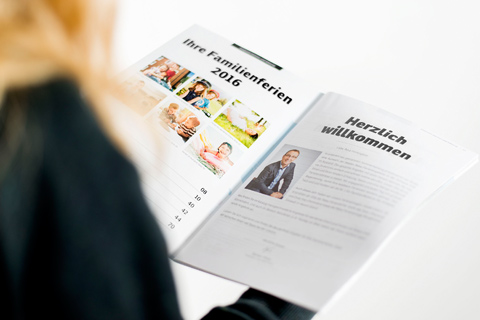
The new vacation catalogs from the Swiss travel fund Reka are here. They feature not only a new design but also a new content concept. Stämpfli Kommunikation is responsible for this.

Via a pitch process in March 2015, Reka decided in favor of the new catalog concept by Stämpfli Kommunikation. Now, in December 2015, the first edition, the 2016 summer catalog, is available. "With the new catalog, Reka will be more modern and even closer to its customers," emphasizes Damian Pfister, Head of Reka Holidays.

Ferienkatalog-Dez15

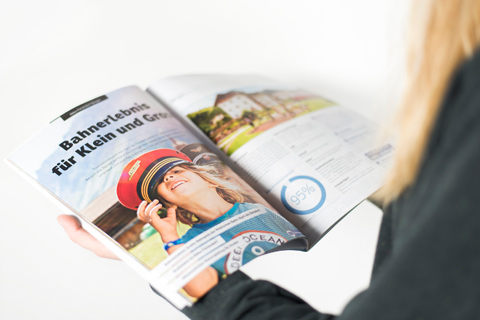
The new Reka catalogs were conceptually revised. The previous containers "Holidays in Switzerland" and "Holidays by the Sea" have been replaced by "Family Holidays in Summer" and "Family Holidays in Winter". This new seasonal subdivision of the vacation offer provides customers with a better overview, which is also noticeable elsewhere in the catalog. By linking to the Web, where vacations can be booked directly, the catalog's offerings have been reduced, which not only provides better orientation but also makes room for a refreshed image section. "With this concept, we are giving the catalog a magazine character by placing more emphasis on the vacation experience and the topic of family," emphasizes Dominic Eichenberger, head of the communications agency at Stämpfli.

Ferienkatalog-Dez15_2
Ferienkatalog-Dez15_3

Responsible at the Swiss Travel Fund (Reka) Cooperative: Reka Holidays, Damian Pfister, Head of Reka Holidays and Vice Director. Responsible at Stämpfli: Stämpfli Communication.
 

Jolanda Spiess-Hegglin demands half a million francs from Blick

The farce surrounding the Zug political sex scandal is entering a new act: Cantonal Council member Jolanda Spiess-Hegglin (Alternative—the Greens) has filed a debt collection claim against *Blick* for half a million francs over its coverage of the scandal.

Edi Estermann, Ringier's media spokesman, confirmed on Wednesday the claim by Spiess-Hegglin published by Blick. According to the report, the Zug politician has sent Ringier a debt collection order in the amount of 500'000 Swiss francs. Ringier disputes the claim and has filed a legal challenge. Spiess-Hegglin has been making headlines for a year. The morning after the Landammann celebration last December, she had gone to the hospital with no memory of the previous evening and with abdominal pain. Her canton council colleague Markus Hürlimann (SVP) then came under suspicion of having subdued her with knockout drops. (SDA)
get_footer();