Wirz Cocktail 2009: Recipes for survival in the crisis
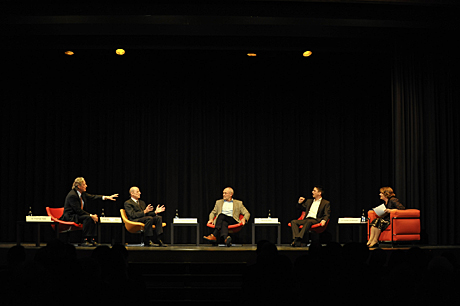
The 39th annual Wirz Cocktail took place yesterday. Over 300 guests accepted the Wirz Group’s invitation. Under the theme «Survival of the Fittest,» entrepreneur Giorgio Behr, headhunter Thomas Frei, Avenir Suisse Director Thomas Held, and journalist and former chief physician Oswald Oelz discussed the skills and qualities needed for individuals and companies to succeed in the marketplace.
Editorial
-
November 20, 2009
Urs Binggeli, CEO of Wirz Corporate and member of the Wirz Group Executive Board, opened the evening and also noted that, in addition to the right qualities and skills, companies always need a dose of luck to survive. Moderated by Esther Girsberger, this was followed by an interesting and entertaining panel discussion on the best survival strategies in ever faster changing market conditions. Influenced by his experiences as an alpinist, Oswald Oelz relies entirely on human instinct to overcome critical situations. Giorgio Behr, on the other hand, is convinced that companies that remain lean in the sense of lean management, even in the boom phase, can react much more flexibly and better to any crises. Thomas Held also emphasized the rapid adaptability of companies. After all, it is not the best fitness, but the "perfect fit" to the respective framework conditions that determines the fight for survival. However, Thomas Frei from the Shikar Group emphasized that this adaptability does not mean conforming to the masses when it comes to asserting oneself on the personnel market. Rather, it is about the ability to learn and emphasizing the uniqueness that makes you stand out from the crowd. The panel agreed that although there is no universal recipe for survival, there are some sure-fire ways to ensure successful failure. Staying in the crisis is just as dangerous as trying to change everything from one day to the next. A summary of the panel discussion with the most important comments made by the panelists and the guests' comments on the evening will be available on Wirz.ch from November 20, 2009.
Panel discussion: Dr. Thomas Held (Avenir Suisse), Prof. Dr. Giorgio Behr (CEO Behr Bircher Cellpack BBC Group), Prof. Dr. med. Oswald Oelz (alpinist, former chief physician), Thomas Frei (SHIKAR Group), Dr. Esther Girsberger (publicist). (Source: tilllate custom)
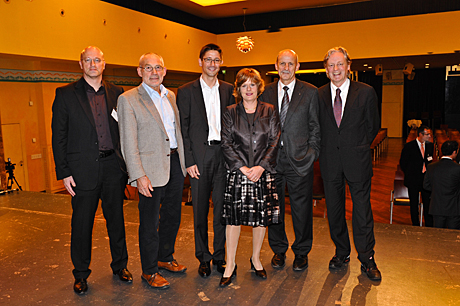
Urs Binggeli (CEO Wirz Corporate, member of the Wirz Group Executive Board), Prof. Dr. med. Oswald Oelz (alpinist, former chief physician), Thomas Frei (SHIKAR Group), Dr. Esther Girsberger (publicist), Prof. Dr. Giorgio Behr (CEO Behr Bircher Cellpack BBC Group), Dr. Thomas Held (Avenir Suisse). (Source: tilllate custom)
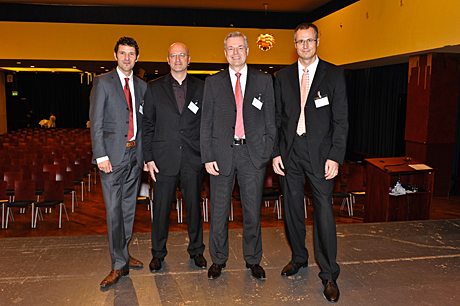
Wirz Group Management: Michel Juhasz (Assai Dialog & Digital), Urs Binggeli (Wirz Corporate), Geri Aebi (Wirz Advertising), Rinaldo Poltera (CFO Wirz Group). (Source: tilllate custom)
Welt am Sonntag: Electronic magazine launched
Next Sunday, the new digital magazine Welt am Sonntag eMag will be published for the first time with a preview edition. The online extension of Germany's largest quality Sunday newspaper offers users multimedia stories from the print edition as well as exclusive content.
Editorial
-
November 20, 2009
The idea and concept for the eMag came from an employee of the Welt Group and were presented to the Executive Board of Axel Springer in September 2009 as part of a company-wide "Day of Ideas" and implemented within just two months. From spring 2010, the digital magazine will be published on a monthly basis.
Flops of the week
The Media Freedom Campaign is not particularly enthusiastic about the proposal to introduce a general TV and radio tax. The argument that technological progress allows access to electronic media via cell phones and computers does not hold water.
Editorial
-
November 20, 2009
Flop 1: The media freedom campaign on the Bakom director's fee proposal Aktion Medienfreiheit is not very enthusiastic about the proposal to introduce a general TV and radio tax. The argument that technological progress also allows access to electronic media via cell phone and PC does not hold water. "Such an approach would be comparable to every Swiss person having to pay for a highway toll sticker - regardless of whether they use the highways or not, simply because everyone is theoretically able to do so," writes the media freedom campaign. A fee is compensation for the use of a service. It is incomprehensible why someone who does not use this service should still be asked to pay. The TV and radio fee for everyone is an additional tax that is to be introduced through the back door without having to hold a political discussion about it. The general statement of the Bakom director on Billag was also surprising. He does not appear to be seriously willing to examine alternative fee collection models.
Flop 2: Swiss Post withdraws Red Bull advertising material The "Red Bull Mobile" cell phone subscription is sold exclusively via post offices. From now on, however, parachute scenes will no longer be used to advertise the product. Due to the fatal fall of Ueli Gegenschatz during a promotional jump, Swiss Post is removing all advertising material featuring skydiving. This is Swiss Post's reaction to the death of Ueli Gegenschatz. The fall has no consequences for the collaboration between Red Bull and Sunrise. The joint "Red Bull Mobile" service will continue as planned, according to Sunrise. However, it can be assumed that the product will be advertised in future without Ueli Gegenschatz's aerial shots. "The marketing is entirely in the hands of Red Bull," spokeswoman Sevgi Gezici told 20 Minuten Online. However, Sunrise is trying to influence the further campaign. According to the news portal, two days after Ueli Gegenschatz's accident, an advertisement appeared in French-speaking Switzerland showing Gegenschatz plunging into the depths. The corresponding advertising images appear to have been removed from the Red Bull Mobile homepage in the meantime. Red Bull did not wish to comment on the further course of the campaign.
Swiss Effie 2010: Advertising pays off
In addition to the agency rankings, the 2010 Effie Award was also a topic of discussion at the bsw media breakfast. Communication and advertising campaigns launched between 2006 and 2009 can demonstrate their effectiveness at the Swiss Effie 2010. The deadline for submissions is January 15, 2010.
Editorial
-
November 20, 2009
The jury president is Ralph Büchi, CEO of Axel Springer Switzerland and President of Axel Springer International. He is chairing the jury for the second time. The members are ten representatives from the client side, four experts from research and teaching as well as ten personalities from bsw agencies (see list).
In the first round, all submitted cases are assessed online by one of the three groups of eight people; submissions with an above-average score are shortlisted for discussion by the full jury in the second round in March 2010, from which the award winners are selected. As a rule, the aim is to award gold, silver and bronze in each category.
The categories The judging will now take place in six categories: Consumer Goods Food / Consumer and Durable Goods, Capital Goods / Services, Trade, Media / Financial Services / Culture and Social Affairs / International Campaigns. The closing date for entries is January 15, 2010, and the award ceremony will take place on April 27, 2010 in the studios of Swiss Television SF. The Swiss Effie is sponsored by bsw leading swiss agencies. It is sponsored by Publisuisse (host sponsor), Schweizer Fernsehen SF (event sponsor), APG, Handelszeitung, NZZ, Die Post, Publicitas, Ringier (category sponsors) as well as Persönlich and Handelszeitung (media partners).
To the point: crisis communication
It is legitimate for companies to use celebrities as brand ambassadors or advertising media. It is hoped that the image transfer will have a positive effect on the company's own brand.
Editorial
-
November 20, 2009
It is legitimate for companies to use celebrities as brand ambassadors or advertising media. It is hoped that the image transfer will have a positive effect on the company's own brand. But one thing should be clear to every company: With every celebrity, whether he or she is an actor, singer or athlete, something can happen that disturbs the hoped-for positive effect of the celebrity on one's own brand or even turns it into the opposite. The sponsored celebrity can take drugs, dope or misbehave. So there is always a residual risk. Red Bull has been involved in sponsoring extreme sports events for years. In addition, the brand also relies on extreme athletes as advertising media. It is therefore completely incomprehensible that a company that lives very much from this world of adrenaline junkies and daredevils has not thought out a communication plan for possible crisis communication beforehand. On almost any of these occasions, disaster could strike. But last week's tragic incident, which ended with the death of base jumper Ueli Gegenschatz as he attempted a promotional jump for Red Bull from the Sunrise Towers in Zurich, is unfortunately clear evidence that no such emergency scenario existed. Or - even worse - that such a scenario started from false premises. Beatrice Tschanz, who has been an expert in crisis communication since the crash of a Swissair plane near Halifax, told the News newspaper: "Anyone who believes that in such a situation they can take a dive and that everything will pass by itself is massively mistaken. (...) The person in charge should have expressed his regret and stood by what happened. But in this case, Red Bull missed the right moment. Now the company is in a defensive posture. Explaining oneself afterwards in a crisis is not an option. You have to stand your ground at the moment." Red Bull, however, took too long to react to the tragic accident, reacting only late and even then with little sensitivity. An immediate stop to the ongoing advertising campaign would have been the least that could have been done, along with clear words of apology from the top boss. Only when the criticism of Red Bull's communication became stronger and stronger did the company take the liberty of publishing a few personal and appreciative lines about the extreme sportsman who had died in the accident. Even the fact that the family of the injured athlete has come to Red Bull's defense cannot prevent the reputation of the Red Bull brand from suffering greatly as a result of bungling communication. Pierre C. Meier, Editor-in-Chief [email protected]
Long live the dead
The murderer is always the gardener. What do you think is going on with that cemetery gardener?! Cemetery gardeners are tall, gaunt, have long noses, thinning hair, and probably always carry a scythe with them.
Editorial
-
November 20, 2009
The murderer is always the gardener. What do you think is wrong with the cemetery gardener? Cemetery gardeners are tall, lean, have a long nose, thinning hair and probably always have a scythe in their luggage. In any case, the gentlemen who dig around in old graves with Caterpillars and occasionally uncover a few old bones are at best sympathetic to heather and arborvitae. Or do you regularly go for a beer with a cemetery gardener, or are you even married to one? Exactly. The Association of German Cemetery Gardeners (BdF) has also noticed this. Since the beginning of October, it has been promoting the good side of the profession with a Germany-wide image campaign. Under the motto "Long live the cemetery", a commercial, posters, advertisements and a Website the gruesome diggers in the right light. The message: we have the cemetery gardeners to thank if not only our loved ones feel at home in the cemetery, but also those of us who visit them. They sometimes turn a grave into a pool if the deceased loved the liquid element more than anything else. The cemetery as a Garden of Eden - a somewhat quirky but courageous campaign. And very effective. To me, at least, the "cemetery gardener" species no longer seems quite so creepy. But I still wouldn't marry one. afw > To the spot
Oldies are Goldies
Further training is not a question of age, but a question of will and commitment. What professionals who are no longer very young need to know if they are aiming for a certificate or diploma.
Editorial
-
November 20, 2009
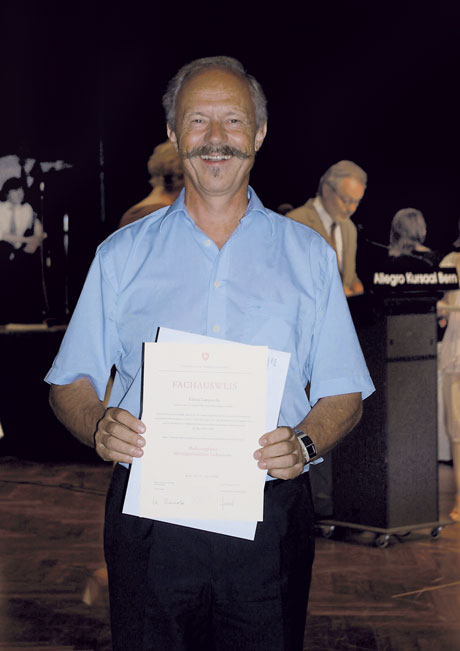
They looked a bit strange in class at first when I arrived," recalls Edwin Lamprecht. What struck the students on the marketing planner course at the Swiss Marketing Academy, all between 25 and 30 years old, as strange was the seniority of their fellow student. Indeed, a 62-year-old rolling up his sleeves for a federal certificate is something of a rarity. But Lamprecht didn't feel too old to want to try again: "As an early retired IT specialist, I wanted to learn something completely different again." Every marketer knows that the over-50 generation is a relevant target group. With noble labels such as Best Ager, Silver Surfer, Generation Gold, the young old are a market that is as idolized as it is difficult to crack. The hiking holiday/incontinence/mail order catalog pigeonhole has long since ceased to work for a generation that is largely fit, hungry for life and internet-enabled. It is also a generation that is not satisfied with what it already knows: "When I took early retirement at the age of 60, I noticed how my colleagues of the same age were becoming active on the left and right," says Lamprecht. "One studied mathematics, the other law, others threw themselves into other forms of further education." Lamprecht himself looked around for a course in economics, but found nothing that suited him. The IT specialist then realized "that there was a lot to learn about economics in marketing" and enrolled on the marketing planner course - now marketing specialist - in 2007. The question of motivation Of course, course participants over the age of 50 are a rarity. And yet: due to the economic situation, which makes it seem advisable for many employees to do something for their own school bag and CV, the topic of further education is also increasingly coming to the fore for some older semesters. After all, it has probably dawned on everyone that in the globalized economy, mere anciennity is no longer a job guarantee. This is noticeable at some schools. While companies may be making cutbacks here and there and therefore sending fewer of their employees on courses, on the other hand, the proportion of professionals who register themselves and therefore pay for the course costs themselves is tending to increase. Even people who are no longer 25: "We are noticing that the higher professional examinations in particular are also attracting more older participants," says Lex Ambühl, Head of School at Simakom in Hergiswil. We would never turn down students because of their age, says Ambühl. Increasing interest from professional veterans can also be seen here and there in the statistics from Swiss Marketing. In 2009, 6.1 percent of successful graduates in the field of marketing specialists were aged between 41 and 50 and 2.1 percent were over 50 - the highest figures since 2005. And among sales managers, the proportion of 41- to 50-year-olds even exceeded 10 percent for the first time in 2009. "You generally never stop learning, age shouldn't really play a role," says Hansruedi Knöpfli, Head of School at the Swiss Marketing Academy in Zurich. The school often trains older students who have come to marketing in a roundabout way on their career path and now want to have a proper education in order to be able to act competently in everyday working life. Knöpfli would talk about the attribute "old" "from 55 onwards". Those who are fit and have the drive to continue their education will probably never hit a glass ceiling in terms of seniority. Nevertheless, says Knöpfli, people are asked about their age and their motivation to embark on further training relatively soon during a consultation. Anyone who has simply accepted the course as a gift or offers other implausible reasons has a hard time or is rejected. And the return on investment? Knöpfli addresses another thing that oldies and goldies need to think about: the personal return on training. "Older people simply have less time to reap the return on investment." Or to put it another way: the later you decide to undertake further training, the smaller the window of time you generally have left in your career. Someone over 50 has a good 180 months left; someone who graduated ten years earlier can hope to amortize their course costs for 120 months longer - or work on it. People over 45 probably need to think more carefully about what their professional and personal goals are. You can feel as young as you like: the older you get, the closer you get - at least as an employee - to the point at which your working life comes to an end. The concept of return on investment may sound a little technoid and more appropriate for financial transactions or real estate investments. But anyone who sees their education and career path as an investment in their own person should give it some thought. As an early retiree, Edwin Lamprecht no longer had to deal with the issue of "return on investment". And yet: "Of course I also thought about how I could justify the approximately CHF 12,000 in training costs." The young senior from Benglen in Zurich has solved this in a clever way: he works between 30 and 50 percent in his wife's import company, where he takes care of the financials and - thanks to the marketing planner - can also contribute more marketing expertise. Lamprecht's tip for all those who are in the late fall of their working life and are interested in further training: "You should simply take a close look at what add-on the degree you are aiming for will bring for the employer." Or to put it another way: will what I'm aiming to do professionally be of any use in my company and in my position? The return on investment can be calculated in hard currency - course costs and time spent versus payback - over the remaining time in your professional career. However, there is also the soft factor, which is less easy to calculate, but usually always materializes: the potential for cultivating relationships that further training brings with it. The group dynamic process, getting to know new people, that can't be represented in an Excel sheet, but it definitely has its value. For oldies, it is possibly even more important, because this way you once again get close to people who may be part of the target group in your own business. Oldies in the classroom: advantages and challenges The next question arises from the contact between experienced professionals and people at the beginning of their careers: How do old and young get on in the classroom? And what about the personal central computer? After all, it can be assumed that people learn and memorize faster at a younger age and that response times become slower with each year. Lex Ambühl sees advantages in having Goldies at the school: "To put it bluntly, they are good for the youngsters, thanks to their experience, for example. For example, we once had a 53-year-old grandmother next to a 22-year-old student in the same classroom." Ambühl has an apt saying at the ready, quoting communications professional Harry Holzheu: "You should listen to the older people until you're 40. After that, listen to the younger ones." Knöpfli also sees experience as a positive attribute, but notes: "We want to put classes together in a heterogeneous way, but as a rule there is no room for more than one class elder. Because of their life experience, this is usually a mother or father figure who is valued." Lamprecht writes this to mature students: what older participants bring with them in terms of life experience should be used sparingly and not actively, as this could otherwise come across as arrogant. Difficulties can also arise when older participants meet younger lecturers and question their views and assignments: "I had to bite my tongue a few times." When it came to learning speed, examinee Lamprecht remembers: "Everything that had to do with experience was almost a piece of cake for me. But when it came to memorizing things, I found it a bit more difficult." In initial discussions, head teachers often point out to older participants that they do not receive special treatment. So as an oldie, you have to know that you have to compete with the younger participants on the same terms. This may not be easy at first for people who are used to working in an individual office in their professional lives and are now learning in a classroom. And it can be an unfamiliar situation for managers who are supported electronically by assistants in their day-to-day work to suddenly have to familiarize themselves personally with an electronic learning platform. However, those who overcome the hurdles and are able to fit into a learning community that may be the same age as their own offspring will experience a learning curve that is worth the course fee alone. Edwin Lamprecht has fond memories of his time in his class. Sometimes he was even a guest at the private weekend parties of his much younger fellow students. And sometimes an older student can be a comfort to someone who is no longer quite so young, Lamprecht recalls: "At the exam in an exhibition hall in Basel, another student came up to me and said: 'I'm so glad you're here too. At 40 years old, I'm already considered an old bag in my class." Lamprecht, at any rate, has no regrets about having opted for further training at a comparatively advanced age: "I would do it again. Or rather: I will do it again." It looks like the next course is coming up in the near future.
Edwin Lamprecht.
Last but not least: Without words
Editorial
-
November 19, 2009
Taken by Urs Gysin in northern France, 2009.
Ruf Lanz: Radio spots realized for Hiltl
The Ruf Lanz agency has created a witty radio commercial campaign for Hiltl. The spots dramatize the message that Hiltl only serves healthy food.
Editorial
-
November 19, 2009
For 111 years now, Hiltl has stood for healthy enjoyment. Hiltl has no genetically modified food, no gelatine of animal origin, no glutamates - and none of today's widespread e-food additives. Ruf Lanz is now dramatizing this message in a new radio commercial campaign. A spokesperson serves up the recommendation of the day. But the E's are missing from all the dishes. A deviation from the norm that makes people sit up and take notice. Werbewoche.ch presents three commercials from the series, which is currently being broadcast on Energy Zurich. > Spot 1 > Spot 2 > Spot 3
Bold lands "Vom Chäser" mandate
During a strategy presentation, Bold Werbung was able to secure Spirit Market’s «Vom Chäser» brand as a new client.
Editorial
-
November 19, 2009
According to the agency's press release, the mandate ranges from strategic consulting to the optimization of the corporate image and the creation and implementation of all advertising measures for Switzerland and abroad. The first implementations are planned for spring 2010 - so that the specialties from selected village cheese dairies will soon be on everyone's lips.
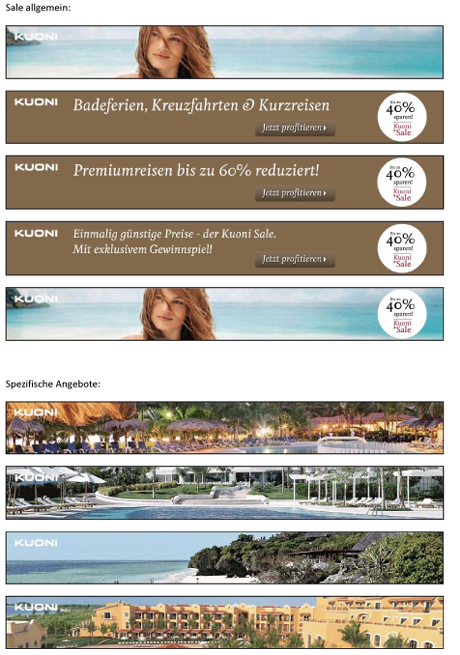
Futurecom: Spreading the vacation mood online for Kuoni
Futurecom, an agency belonging to the Y&R Group, has created modular online advertising materials in a wide variety of formats for Kuoni Switzerland.
Editorial
-
November 19, 2009
The new banner templates include skyscrapers, rectangles, full banners and some special formats and have been implemented as both Flash and gif banners. According to the agency, they will be available online in the next few weeks - just in time to awaken the desire to travel during the gloomy season. Responsible at Kuoni: Fabian Frank (Head of E-Marketing). Responsible at Futurecom: Stefan Hengartner (Project Management/Consulting), Roger Rüegger (Creative Direction), Ruben Feurer (Design).
Astrid Kägi takes over advertising management at the specialist magazine Schweizer Versicherung
On November 1, 2009, Astrid Kägi took over as advertising director of the trade magazine *Schweizer Versicherung*, published by the Handelszeitung Publishing Group.
Editorial
-
November 19, 2009
The 54-year-old previously worked as Key Account Manager for the French-speaking Swiss daily newspaper Le Temps and as Publishing Director of the trade publication htr Hotel Revue, as Axel Springer Switzerland writes in a press release. Astrid Kägi began her career at Jean Frey AG before moving to the newly founded publishing house Züri Woche in 1982, where she was responsible for communications, PR, marketing, advertising and sales for 19 years.