Walder, advertiser: campaign for Energie Uster realized

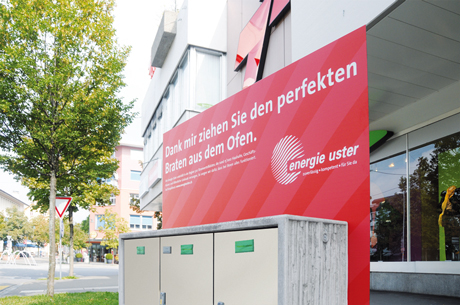
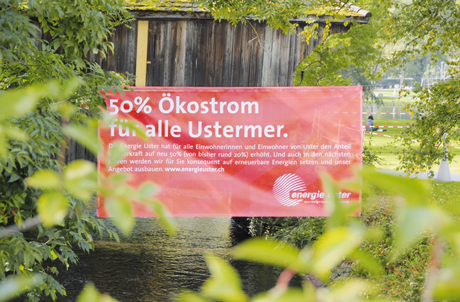
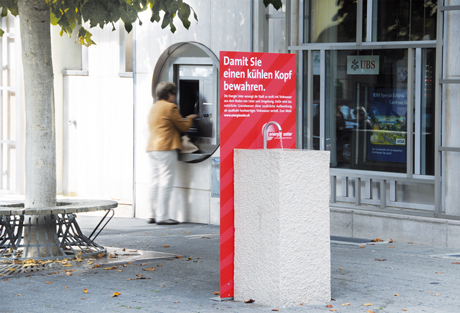
The Walder, Werber agency has developed a public awareness campaign for Energie Uster. The campaign aims to highlight all the work the energy provider quietly does behind the scenes and how residential and business customers benefit from it.

According to the agency's statement, it can be seen 75 times in Uster's city center - on street lamps, electricity boxes, hydrants, above the Aabach, on bridge railings and on fountains. The various campaigns take place wherever Energie Uster is active, shaping the everyday lives of the population with electricity, drinking water and natural gas, and supporting the business activities of its business customers without them noticing.
Responsible at Energie Uster AG: Philippe Joss, Division Manager Sales Energy Water. Responsible at Walder, Advertiser: Reini Walder (CD); Sascha Völki (AD), Michael Döös, Gregor Szabo (graphics), Alex Muster (DTP), Daniel Wegmüller (text), Sandro Walder, Andy Müller (consulting). Production/assembly: Christinger Partner AG.
1290581276_img091118_energie1
1290581276_img091118_energie2
1290581276_img091118_energie3
img091118_energie4

Michael Reusser becomes presenter at Radio 24

Michael Reusser will start as a presenter at Radio 24 on March 1, 2010. 30-year-old Reusser will present the early evening information show Info 24 from 4 p.m. onwards.

Reusser is a teacher, he was a flight attendant, editor at the Berner Zeitung, presenter at Canal 3 and Extra Bern. For the past two years, he has been a presenter at Capital FM, from the morning show to the hit parade and outside events. Michael Reusser is Head of Music at Radio Capital FM.

Federal Council adopts "Swissness bill"

The «Switzerland» brand is to be better protected. To this end, the Federal Council submitted draft legislation to Parliament on Wednesday to revise the Trademark Protection Act and the Coat of Arms Protection Act.

According to SDA, Federal Councillor Eveline Widmer-Schlumpf told the media in Bern that the "Swissness bill" would create the basis for preserving the value of the "Switzerland" brand in the future. This is because "Swiss quality" or "Made in Switzerland" is increasingly being misused.
The law is now intended to regulate "how much 'Switzerland' must be in a product or service for it to be labeled 'Switzerland'," Widmer-Schlumpf explained. The current laws leave too many questions unanswered here. Specifically, natural products such as plants must have been harvested in Switzerland or a maximum of ten kilometers outside the Swiss borders in order to be advertised with the Swiss cross or the designation of origin "Switzerland". For processed natural products, at least 80 percent of the raw material weight must come from Switzerland.
Exceptions are possible
Exceptions apply to raw materials that are not available in Switzerland, such as cocoa, or that are temporarily unavailable due to crop failure caused by a storm. In the case of industrial products, at least 60 percent of the manufacturing costs must be incurred in Switzerland. The costs for research and development may also be taken into account. In addition, in the case of industrial products and processed natural products, the activity that gives the product its essential characteristics, for example the processing of milk into cheese, must take place in Switzerland. Services may be designated as Swiss if the headquarters of the provider company and the actual administrative center are located in Switzerland. In this way, the Federal Council wants to prevent letterbox companies from taking a slice of the "Swissness cake".
Swiss coat of arms remains reserved for the Swiss Confederation
As far as the Swiss coat of arms is concerned, this is generally reserved for the Swiss Confederation. Companies such as Victorinox or TCS, which have been using the coat of arms as part of their company logo for decades, are exempt. Widmer-Schlumpf went on to say that by allowing the Swiss cross to be used for products in future - today this is only the case for services - the Swissness bill would provide producers with an important advertising medium. Swiss products and services enjoy an excellent reputation both at home and abroad.
With the "Swissness bonus", the affected industries already generate a reputation premium of around CHF 6 billion, which corresponds to over 1% of Switzerland's gross domestic product. In addition to consumers, the Federal Council believes that research-intensive industries, the Swiss labor market and agriculture should also benefit from the proposal.
Exporting companies should benefit in particular from the possibility of registering non-agricultural geographical indications or geographical trademarks such as "Genève" for watches or "St. Galler Spitze" in a register that is yet to be created by the Swiss Federal Institute of Intellectual Property. This will simplify the enforcement of protection in future, particularly abroad.
However, the bill cannot prevent cheese from continuing to be sold with names such as "Swiss Cheese" or "Emmentaler" that has never even been close to Swiss soil. As long as these products are not advertised with a Swiss cross or specifically as Swiss products, these designations are permitted.

Heads for Axpo under power

On October 1, Nordostschweizerische Kraftwerke AG (NOK) was renamed Axpo AG. Heads supported the company—which is approaching its centennial—in this significant milestone in its history.

With the renaming of NOK to Axpo AG, the Axpo brand is to become an even stronger brand in the Swiss energy market, according to a press release. In less than three months, Heads changed over 4,000 labels, 2,000 electronic forms, around 1,000 electronic documents, labeled around 150 vehicles and designed over 50 NOK brochures in the Axpo design. Heads doubled its staff for this project: Under the management of Ralph Hermann and Mike Stillhard, the following additional staff are working on this major project: consultants Andrea Bruggmann, Kristina Brunner and Lora Franceschini, PR specialist Felix Müller, IT management specialist Dr. Jürg Eberhard, Esther Hirzel as project manager for signage, designer Petra Jörger and art director Andreas Preis. The agency will continue to be involved in the implementation of Axpo AG's single brand strategy until April 2010.

New advertising manager for Limmattaler Zeitung and Bezirksanzeiger Dietikon

Predi Vukovic-Häfliger will take over as advertising and sales director of the Limmattaler Zeitung and the Bezirksanzeiger Dietikon on December 1, 2009.

According to a statement from AZ Medien, he has many years of sales experience in various sectors, including more than ten years in management positions as a sales and team leader. Two years ago, he moved from Publicitas Mittelland/Aargauer Zeitung to the free newspaper .ch. There he worked as sales and advertising manager for the regional markets of German-speaking Switzerland, in particular for sales in the Mittelland and Zurich.
Predi Vukovic-Häfliger will report directly to Dietrich Berg, Managing Director of AZ Medien Group's newspapers/magazines/books. Oscar Meier, previously responsible for the publishing of "Limmattaler Zeitung" and "Bezirksanzeiger Dietikon", will concentrate on the management of AZ Wochenzeitungen AG (Stadtanzeiger Baden, Stadtanzeiger Aarau, Lenzburger Bezirksanzeiger).

Formeldrei: Image campaign developed for Das Zelt

The Bern-based agency Formeldrei has created an image campaign for the Swiss touring theater Das Zelt.

The advertisements, brochures, posters, bathing tubes, TV commercials and soon also newly labeled vehicles can be seen from November 2009. Formeldrei has also developed a new website for Das Zelt.
Responsible at Das Zelt, Zurich: Adrian Steiner, Director. Responsible at Formeldrei, Bern: Moritz Adler (CD), Christian Wüthrich (text/concept), Patrick Ochsenbein (consulting). TV spot production: Efex GmbH, Schübelbach. Photo: Photography Simon B. Opladen, Bern.
1290581274_img091118_daszelt1
1290581274_img091118_daszelt2
1290581274_img091118_daszelt5
1290581274_img091118_daszelt3
img091118_daszelt4

JWT+H+F: New brand identity and image campaign developed for Tela

For over 70 years, Tela has been producing Swiss-quality napkins and accessories. JWT+H+F has comprehensively revamped the company’s corporate design and launched a branding campaign.

Tela products with a new logo and new packaging design will be on the shelves of wholesalers, retailers and food service outlets from November 16. An image campaign was also launched at the same time. To emphasize Tela's contribution to table culture, the agency has developed the claim "Tela turns every table into a work of art", which, according to the press release, takes into account not only the value of the products, but also the variety of possibilities for table decoration. The various subjects can now be seen in the form of specialist advertisements and on posters in the gastronomy environment. A banner was also produced especially for the Basel gastronomy trade fair IGEHO. In addition, a culinary surprise in the new Tela colors awaits visitors. Various BTL measures round off the campaign.

Responsible at Kimberly-Clark GmbH: Franziska Leisi (Marketing Manager Family Care), Rico Germann (Business Manager). Responsible at JWT+H+F: Remy Fabrikant (overall responsibility), Enrico Bachmann, Grischa Rubinick (CD), Vanessa Lehmann-Spalleck (consulting), Anna Kindlimann (graphics), Mathias Bart (text), Felix Streuli (photography), Type Design (image processing), Peter Wandfluh (production) .

1290581273_img091118_tela1
1290581273_img091118_tela2
img091118_tela3

DSM awards international contract to BSSM

DSM Nutritional Products in Kaiseraugst has commissioned the BSSM advertising agency to develop a campaign for the launch of a next-generation vitamin for animals.

The measures for the bone-strengthening feed additive consist of advertisements, sales documents and give-aways. Initial work will be used worldwide in 2010 and adapted by local agencies, as the agency writes in a press release.
DSM is a global market leader in vitamins, carotenoids and other fine chemicals for the animal feed, food, pharmaceutical and cosmetics industries. The company is headquartered in the Netherlands and employs more than 22,000 people worldwide.

Bing: US market share further increased

Microsoft's search engine Bing continues to grow in the USA - at the expense of Yahoo. According to the latest statistics from Comscore, Bing achieved a market share of 9.9 percent in the US market in October 2009.

According to Netzwoche.ch, Google extended its lead to 65.4%, an increase of 0.5 percentage points compared to the previous month. The clear loser is Yahoo, which sank to a historic low with a market share of 18%. As an alliance, Microsoft and Yahoo hold around 28% - not even half of Google's share.

Jung von Matt/Limmat wins BMC account

The race is on: Jung von Matt/Limmat wins the contract for the BMC budget as part of an agency evaluation.

The Zurich-based agency is supporting the Swiss manufacturer of bicycles in the premium segment with international communications and realizing an image campaign. According to the press release, the first works can be seen this year.
CEO BMC Mike Hürlimann: "Jung von Matt convinced us as an integrated and internationally networked communications agency to support our international business expansion by convincingly increasing our brand awareness." Rolf Helfenstein, Client Service Director at Jung von Matt/Limmat, is delighted: "As an agency with many enthusiastic bike enthusiasts, we know from our own experience what is important."

Brand fragrance - scent mark

«You smell great,» «I like the way you smell»—who doesn’t like to hear that? Yet so far, only a few companies in Switzerland have come up with the idea of giving their brand a distinctive scent in addition to a face and a sound.

Smells are closely linked to emotions, they can express feelings and evoke emotions. The smell of cinnamon transports you straight to your grandmother's kitchen, between gingerbread and cinnamon stars. Damp socks - at best - conjure up images of the last ski tour, and the smell of leather reminds us of the heavy armchair in our father's office where Mikesch the cat used to curl up. The sense of smell was the first sense to be developed during evolution, and it is the only human sense that is fully developed at birth. Every human being can store and recognize around 10,000 smells, and 90 percent of taste perception is based on the sense of smell. "Smells are the only sensory impression that reaches the brain unfiltered," says Hans Rudolf Keller*, neuromarketing expert, mental trainer and owner of Mental.ch. This is what makes them so powerful. Smells influence us even when we are not consciously aware of them. They control our subconscious and determine sympathy and antipathy. The subtle influences of scents go so far that we feel comfortable in a room or like a person without realizing that it is scents that make us feel this way. Bad feelings can also be caused by smells: "I can't smell him" is much more than a metaphor. Scents control our social and sexual behavior, and they influence our hormone balance. The nose also has more to do with our choice of partner than most of us realize.

Purchasing decisions are a matter of emotion
When choosing a brand, our decisions are as intuitive as when choosing a partner. Why do you wear Boss and not Hilfiger? Is it really because of the better fit and the more elegant colors? Why do you drive an Audi and not a Hyundai? More sophisticated technology? In short: brands mobilize emotions. Either a brand suits you and you feel comfortable with it, or not. What could be more obvious than using fragrances to steer this relationship building in the desired direction? Caroline Demeulemeester** has written exactly that on her fragrant flags. The marketing consultant and qualified aromatologist has been creating perfumes and room fragrances for private individuals and companies from natural essences since 2006: "I translate the values of a brand into fragrance," she explains. "Patchouli, for example, suits a classic brand, while lotus flower is more suitable for a fresh, young brand."
Demeulemeester combines such fragrances to create a brand scent that can then be used to scent the headquarters of a company, its branches, flagship stores, trade fair stands, sales rooms, the POS and even products. The trick is the dosage: the fragrances must not be an olfactory slap in the face that immediately kills off the sense of smell and the ability to think in the style of "perfumery just before Christmas" or "vanilla aroma on the toilet". Brand fragrances are dispersed in the air via a fragrance column or air conditioning system in such fine doses that they are not even perceptible if you smell very carefully. They subtly meander through our nose into our bloodstream and create a good feeling - which is subconsciously linked to the brand and stored in our memory. "BMW and Mercedes started scenting their cars 30 years ago," reports Demeulemeester. "At first, it was just about using leather scents, for example, to dispel unwanted glue and plastic odors." Mercedes now has its own fragrance concept for rooms and products, which is used throughout the Group. The fashion-conscious Italians show how things could go on: Anyone who bought a Lancia Ypsilon in Italy last year could choose between three scents for their vehicle.

Vanilla against wet dogs
But it's not just automotive companies that rely on subtle scents. Manor, Globus and Migros also use fragrances in all departments, not just for meat and baked goods. Children's clothing, stationery and household appliances also have their own scent. In this way, retailers subtly put their consumers in the mood to buy. Siemens, the Geneva Motor Show, Singapore Airlines, Zurich Airport and the Omega watch brand all have a scent tailored to their brand. Since introducing its new fragrance concept, Siemens has even recorded 30 percent fewer sick days among its workforce. Because it smells good? Exactly. One positive side effect of room scenting is that it cleans the air, not only of unpleasant odors, but also of bacteria and germs. The company Air Creative from Rheinfelden, for example, offers a scenting system that first filters the dirt out of the air, eliminates unpleasant odors such as smoke or sweat in a second step and only then releases the fragrant essences into the clean air. "Wet dog", "old sports shoes" and "sweaty shirt" are therefore first neutralized with corn starch before a gentle vanilla or grapefruit fragrance creates a feel-good effect. Anything else would result in an almost unbearable olfactory cacophony.
The Swissôtel and Hyatt hotel chains have long recognized how well they can differentiate themselves from their competitors with fragrances. Swissôtel hotels have the same "corporate scent" at all locations, while the Hyatt hotels in Paris, Dubai, Washington and Zurich have their own individual scent - each matching the city. For the Zurich Hyatt, Parisian perfumer Blaise Mautin was inspired by Bellevue, Grossmünster and the Limmat and created a fresh, young and dynamic fragrance from bergamot, grapefruit, ylang-ylang, thyme and patchouli. This is how Zurich smells - at least to Hyatt guests. They experience the city not only outside the door, but also in room spray, candles, body lotion, shower gel, soaps and bath salts. And hopefully come back again.

Atmosphere makes the difference
Good smells are nice - but do they really have an impact on brand image and sales? "Yes," says fragrance expert Demeulemeester and backs up her conviction with an example: Beiersdorf conducted an experiment for Nivea in two movie theaters. In both theaters, a commercial for a Nivea product was shown before the film, and Nivea fragrance was also sprayed in one of the theaters. After the film, moviegoers were asked whether they could remember the Nivea commercial. In the scented movie theater, 37 percent did, in the unscented theater far fewer. In another test, 45 test subjects watched the same pair of sports shoes in two identical rooms. One room was fragrance-free, the other was immersed in a light floral fragrance. Even though the scent of flowers and sports shoes hardly go together in everyday life: 84 percent of the test subjects liked the shoes in the scented room better than in the unscented room. A sporting achievement.
"There is still considerable potential for development in scent branding and scent marketing," says Demeulemeester. "Discotheques and pubs will have to find an effective way to combat the smell of sweat in the smoke-free future, for example. In streetcars, post offices and SBB ticket offices, you often have to wait and put up with unpleasant odors. Why is that? Doctors could reduce the stress of their patients with targeted scenting, and I can also imagine scented exhibitions. The scent can enhance the experience." The development of a fragrance concept with one fragrance costs 2,000 francs at Demeulemeester, and the same amount is added for each additional fragrance. In addition, the fragrance column must be purchased, which costs between 200 and 3,000 francs at Air Creative, for example, depending on the type of device and room size.
Of course, if you wrap your salesrooms in a pleasant, barely perceptible fragrance, you shouldn't expect your sales to skyrocket. However, the fragrance can certainly make customers feel more comfortable in the scented store and prefer to spend more time there than in another store. They stay there longer, are more likely to come back and may end up buying more. Today, you can buy anything anywhere. Atmosphere makes a small but decisive difference.

Anne-Friederike Wilhelm

This article appeared in the current print edition of Werbewoche. You can find further articles here.

img091117_duefte

Wemf: New member of the Research Commission

The Board of Directors of Wemf AG for Advertising Media Research has elected Marcel Korner to the Research Commission. The 34-year-old oversees the «Projects & Strategy» division under CEO Christian Unger at Ringier.

Marcel Korner studied journalism and media studies, economics and psychology, graduating with a Master of Arts (MA UZH) from the University of Zurich and a doctorate in business administration (Dr. oec. HSG) from the University of St. Gallen. From 2003 to 2005, he was employed as a research assistant at the Institute for Organization, Technology and Innovation Management at the University of Zurich. In 2005, he moved to the Japanese group JT International S.A., where he worked as Brand Coordinator in the FMCG division. From 2006 to 2009, he was Product Manager of "NZZ Campus" and Project Manager for publishing projects at Neue Zürcher Zeitung. Today he is responsible for "Projects & Strategy" at Ringier's CEO Christian Unger. Marcel Korner is also a lecturer and member of various expert commissions in the fields of strategy, media, communication and marketing.
The Research Commission (FK) is made up of domestic and foreign media experts from university and applied media research. The FK is intended to help ensure the practical relevance and professional quality of ongoing research activities.

get_footer();