Job cuts at SDA: editorial team demands negotiations

Following the announcement by SDA management that it would cut 13 full-time positions from the 140-member editorial staff, the outraged editorial staff held an emergency meeting in Bern. They are calling on management to begin negotiations with the editorial committee.

The editorial meeting passed a resolution without dissenting votes (49 present plus 34 representatives in favor, one abstention), which emphatically demands that no redundancies be made. According to a media communiqué, the management should enter into genuine negotiations with the editorial committee (ReKo) within ten days, otherwise the latter will be forced to prepare industrial action.
In particular, the editorial meeting is calling for the restructuring to be extended to more than the planned year in order to avoid redundancies due to staff turnover, a social plan that includes transitional payments for voluntary reductions in workload and departures, negotiations on financing early retirements from the reserves and on short-time working options, as well as full transparency regarding SDA's future offer (the already lean editorial team would be unable to deliver the current volume after this reduction). "Language solidarity", the equal service in and from all three language regions, must not be sacrificed either. This is a central function of Switzerland's only national news agency, the statement continues.

Control advertising effect

What is the potential of your advertising efforts?

Objectively assess advertising success
Advertising success is when advertising objectives are achieved. For a subject to be effective, the target group must perceive its message quickly and accurately. Every month, advertising effectiveness researcher Patrik Zwahlen evaluates the persuasive potential and visualization quality of five selected advertising subjects exclusively for Werbewoche - and thus provides an objective assessment of their advertising success.
Analysis with method
This brief analysis assesses the communication performance of advertisements with the help of the two metrics "persuasion potential" and "visualization quality". To determine the persuasion potential, Zwahlen first formulates measurable goals such as "sell more", "become better known" or "reduce the frequency of accidents". In order for such goals to be achieved, the subject needs a credible reason for the effect that corresponds to the message. After defining a plausible objective for each advertisement, the message is set out in writing in an unencrypted form. A green arrow means that the subject is convincing, a red arrow means that it is not.
With the visualization quality, Zwahlen provides an assessment of whether the message is perceived quickly and without scatter loss. A green arrow indicates that the ad communicates quickly and without errors. If the subject is marked with a red arrow, many misunderstandings and misinterpretations are to be expected.
> Gaining attention for a good cause
> Detailed analysis of all five subjects (Webcode 4009DetailsAdvertising impact)
1290581266_img091120_zwahlen
Dr. Patrick Zwahlen, Managing Director
BildKom GmbH Research Institute for
visual communication.
Telephone: 044 380 78 88.
Internet: www.bildkom.com

bsw ranking 2009: Much remains the same - agencies in the wake of the crisis

The association of Switzerland's leading advertising and specialist agencies, bsw leading swiss agencies, presented its 2009 ranking at its annual media breakfast. This shows a similar picture to 2008, with only very few shifts in the top positions. All of the top 10 agencies are included. The crisis is making things difficult for the agencies: a ten percent drop in revenue is expected for 2009.

The 54 advertising and specialist agencies in the bsw, which celebrates its 75th anniversary in 2010, generated total gross operating income (GOP) of around CHF 334 million in 2008, slightly more than the 2007 figure of CHF 331 million. In 2008, they were responsible for advertising money totaling around two billion francs for their clients. This corresponds to around two thirds of all advertising investments made via agencies in Switzerland. It should be borne in mind that only around seven percent of all advertising agencies based in Switzerland are bsw members.

>To the ranking of advertising and specialty agencies

For the second time since 2008, media agencies are also publishing their own ranking in the bsw. Media agencies have a different business model to advertising agencies (media planning and media buying in addition to consulting services/strategy) and are therefore not directly comparable with them. The ten media agencies in the bsw generated gross operating income of CHF 45.8 million in 2008. They invested media funds worth around CHF 1.1 billion on behalf of their clients, making them an important link in the communications industry's value chain.

>To the ranking of media agencies

Pleasing first half of 2008, unpleasant development for 2009
Thanks to a strong first half of the year, the member agencies of bsw leading swiss agencies were able to close 2008 at the same level as 2007. Like the economy as a whole, communications agencies also suffered from the global financial and economic crisis that began in the third quarter. 2009 did not bring any noticeable improvement in the situation, and bsw agencies expect their income to fall by up to ten percent in the current year.
Despite signs and forecasts of recovery, agencies still do not really believe that the crisis is over. Advertising clients are still cautious and are reluctant to increase their advertising investments. In a survey, the vast majority of agency bosses predicted stagnation, if not a further slight decline in income. Agencies are also being called upon to act even faster and more flexibly. The challenges of the near future are essentially the ever more rapidly changing economy, the globalization of brands and markets, cost pressure and profitability as well as the associated structural adjustments and investments, according to the report.

View advertising as an investment, not a cost factor
The business conduct and behavioral culture of many clients has deteriorated dramatically during the crisis. The cost pressure on agencies has taken on unprecedented dimensions. This is not least because the finance and purchasing departments are increasingly dictating the rules and "buying advertising" instead of the marketing departments. As a result, marketing communication is being degraded from a strategic instrument of the company to an expense item in the operating account. However, successful companies do not view advertising as a cost factor, but as an investment.
A negative sign of the current situation is the often pointless competitive presentations (pitches), which are only about "cost optimization" (international media pitches have recently even been held in the style of an internet auction). The fact that many clients mistakenly believe that they can demand all rights from the agencies without incurring any costs is also an unpleasant side effect.
The discussions between bsw leading swiss agencies and the advertising client association SWA regarding the contractual framework conditions, on which the two leading industry associations are making good progress, are also part of this context. Good quality must be well remunerated - including copyrights and rights of use. Dumping prices are not conducive to promoting the quality of advertising. Successful advertising is not mass-produced goods, but strategic expertise tailored to the individual factors and needs of customers.

Globalization of markets and brands
Unfortunately, the globalization of markets also has the negative effect that decisions for formerly Swiss brands are often no longer made in Switzerland. In this situation, it is gratifying that some large Swiss agencies are also able to operate successfully on the international market, according to the association. However, the Swiss communications industry would welcome it if Swiss companies were to increasingly use Swiss agencies again.

Cross-media communication strategies and further growth of online media
The present is cross-media and online media are experiencing the highest growth rates. In Switzerland, digital media dominate according to a new study 33 percent of the population. The crisis in the print media is certainly also due in large part to the public's changed media behavior. Traditional media continue to be an indispensable and strong element for cross-media campaigns. Agencies have also made the transition to cross-media agencies. The so-called "classic" agencies no longer exist in this form.

Goldbach Media: Cooperation with online advertising network Adconion

The Goldbach Media Group has signed a cooperation and license agreement with the Adconion Media Group, the world's largest independent online advertising network. The cooperation gives Goldbach Media exclusive use of proprietary targeting and optimization technology for performance marketing.

This will also pave the way for the introduction of network-centric online marketing models in Switzerland, Austria and throughout Eastern Europe. The cooperation agreement is strategic and long-term; no equity participation is planned. Goldbach Media intends to use a dual strategy to supplement traditional platform marketing for display and banner advertising with the further expansion of performance-oriented network-centric marketing models in the continuously growing market for online marketing with higher margins.

About Adconion Media Group
With 16 offices in the USA, Australia and five other European countries, the American-European Adconion Media Group is the largest independent global online advertising network. With its targeting and optimization technology developed in the company's own technology center in California, Adconion reaches over 300 million or one third of all global Internet users worldwide every month. According to comScore, this gives Adconion the largest reach worldwide behind Google. The partnership creates a marketing network with a reach of around 400 million Internet users and over 20 billion ad impressions per month.

Print becomes cheaper

The trend in advertising rates for 2010 is clear: Many newspapers and magazines are lowering their cost per thousand readers. Apparently, they hope this will help them capture a larger share of the advertising market.

Almost a zero round - that was the title of Werbewoche's article on print rates a year ago. This time, however, the print genre is more accommodating to its customers than ever before since Werbewoche has been observing the development of advertising rates. For the first time, a broad trend towards genuine rate reductions can be seen. Generally speaking, it can be said that titles that have recorded a significant increase in reach this year have seen their rates rise, but as a rule the percentage increase in rates remains well below the increase in performance. A prime example of this is the Sunday edition of Südostschweiz, which has 26 percent more readers but is only 10 percent more expensive. NZZ am Sonntag, SonntagsZeitung and Schweizer Familie are doing the same. And TV2, Glückspost and Bilan - despite double-digit gains in reach - are not even making an impact. Finanz und Wirtschaft is even more modest, reducing its four-color price by 26 percent despite a 14.8 percent increase in readership - and thus also introducing the standard rate. Le Temps also opted for the standard rate, albeit by only slightly lowering the four-color rate and simultaneously raising the black-and-white rate to the same level. However, because the title has 11.4 percent more readers than a year ago, this still results in a lower thousand-reader price (TLP) for most customers.
A lower TLP also results when prices fall more sharply than reach. This is the case this time with the Edipresse titles Matin orange and Matin Dimanche.
Despite the crisis and advertising slump, some titles remain self-confident: they are demanding what their additional service deserves. Take 20 Minuten Deutschschweiz, for example, whose price increase of 9.3 percent is exactly the same as the last increase. In French-speaking Switzerland, the title is demanding 45 percent more, naturally because it hopes to fill the gap left by Matin bleu (blessed). It remains to be seen whether the rate increase is justified to this extent. Customers of Magazin, NZZ Folio and Blick am Abend will also pay more in 2010 - because they have expanded their distribution area: Magazin is now also included in the Bund, while Blick am Abend and NZZ Folio have expanded into eastern and central Switzerland.
As is the case every year, there are also some black sheep among the print titles. Although they suggest a zero price increase, they are actually becoming massively more expensive because their reach has fallen significantly compared to the previous year. Among the titles with a poorer price-performance ratio are Tele, TVStar, Beobachter, Weltwoche and Femina. Terre et Nature is behaving particularly cheekily, maintaining this year's rate despite a 17% drop in reach. Similarly, the Berner Bär: its price fell by only 1.5 percent, although its readership plummeted by 13.1 percent.
And finally, there are a few titles that leave their side tariffs at the previous level but raise their millimeter tariff at the same time. The second option is to lower the page rate but not reduce the millimeter rate to the same extent. In both cases, they become more expensive for those customers who do not place full-page ads. Such hidden rate increases can be found at Freiburger Nachrichten, Journal du Jura, Bieler Tagblatt and La Liberté.
Markus Knöpfli
> To the tariffs
> Corrigendum

Some big ones missing
Not all publishers have published their rates yet. For example, the new prices of Basler Zeitung, Baslerstab, Bilanz, Solothurner Zeitung, Reader's Digest and the cinema magazines had not been published by the editorial deadline. (mk)

The re-education has begun

Creating Added Value: France’s Newspapers Are Testing the Future, Streamlining, and Upgrading. With government aid as well. By Jürg Altwegg, Geneva correspondent for the Frankfurter Allgemeine Zeitung and author.

Are these the relaunches of the last chance? Libération and Le Figaro have significantly changed their content concept and layout this fall. Le Monde is adding a weekend magazine - the daily newspaper was already successfully relaunched a few months ago. There is a spirit of optimism in the editorial offices. The newspapers have become thinner, but by no means worse. They are desperately looking for coordination with the Internet: What belongs in print, what goes online?
If you surf through the Libération portal, every second or third click is now free: You leave the freely accessible area, this article is only accessible to subscribers or against individual payment. This is a completely new and frustrating experience for online users of this newspaper, which was once founded by Maoists around Jean-Paul Sartre. It's easy to be tempted to whip out your credit card. Access to the content costs six or twelve euros per month. Even the more expensive option is significantly cheaper than a six-month subscription to the printed newspaper and is obviously preferred by those who are prepared to pay at all. It creates a close bond with the newspaper - which can also be read as an e-paper many hours before it hits the newsstands or letterboxes.
In print, the new Libération is an attractive and dignified newspaper. The number of topics covered has been significantly reduced, but more space and more editorial effort has been devoted to them. More depth and more background, more opinion and more distance is the motto. Every day, the newspaper analyzes an event from the perspective of media criticism - the title of the section: "Desintox". How did the story get into the world, who launched it, what was said about it, by whom and where? This is a new approach and a very contemporary way of dealing with current affairs in the media age - especially in the realm of Sarkozy, who is taking the manipulation of public opinion to the extreme.
The number of legendary opinion pages has been increased to three a day. Although the response to a publication on the Internet is often greater, the authors want to be printed. This also applies to editors and journalists. Although they moan about the limited space available, they are pleased that the articles can be longer again.
After several waves of layoffs, editors are working harder than ever, but motivation is higher than it has been for a long time and the mood, which had been tending towards doom and gloom, is more confident again.
"Many newspapers will die," explains Etienne Mougeotte, head of Figaro. The conservative newspaper of aircraft manufacturer Serge Dassault also appears in a new guise. As elsewhere, there is talk of "added value". Mougeotte makes a fiery commitment to the printed word: the printed edition is to remain the flagship. The format has been slightly reduced, as has the volume: ten percent less material is offered. At the same time, however, the literary tradition is emphasized: The feather as Figaro's logo has returned to the newspaper head.
The portal will be changed in a few months - it is not yet known exactly which areas can only be viewed for a fee. More than any other newspaper, Figaro is interested in being able to report the most hits. Le Monde is the most advanced: the paper has several tens of thousands of online subscribers. The newspaper is available online for 6 euros per month, which also includes access to the archive - the e-paper, however, costs much more.
The situation in France is much more difficult for newspapers, most of which are underfunded, than in Germany and Switzerland: there is a strong free press and several information portals that are definitely worth taking seriously, mostly founded by renowned journalists who opted for the high severance payments in the waves of redundancies. A year ago, the government organized "general stands of the press". The number of outlets is to be increased and home delivery must be improved. One of the many measures that have been introduced in the meantime has had a big impact: the free subscriptions for young people - the state pays for them - have been a huge success. The quota was quickly exhausted and some publishers are continuing with exclusively self-financed campaigns. Although young people only receive the newspaper one day a week, there is hope that they will acquire a taste for it. The editorial teams have less of an impression of writing past the young generation. It's the fall when the leaves bloom in Paris - even if no one knows whether the fruit will sprout one day.

European Certificate: Any questions?

New orders for Swiss Marketing's Europe Certificate are coming in all the time. This certificate is sure to become a long-term bestseller.

As soon as the message was posted online on October 9, 2009, the sprint began. "The very same day," recalls Claude Dubois, Head of Examinations at Swiss Marketing, "the first orders came in." The first to sign up was a marketing manager who wanted to obtain one of the coveted European certificates and thus his continentally certified title of Marketing Director. This early bird will soon receive his personal European certificate. However, in addition to all the sprinters and early bird registrants, there will probably be many more starters from the second tier who will also receive the coveted paper.
We have now received over 250 orders from marketing and sales managers, sales and marketing specialists. And of course also from former marketing planners and sales coordinators, as today's specialists used to be called. Up to ten years ago, the degrees were suitable for Europe. Which brings us to a question that is often asked by professionals who would like to obtain a European certificate: Why only ten years and not longer? It is actually only logical that more mature students, whose degrees may date back to the marketing days of the 1970s and 1980s, are also interested in European suitability. According to Dubois, negotiations are currently underway to see whether the backdating can be extended. Should this be the case, information will be provided here. At the moment, the ten-year backdating period still applies.
A second question that is asked time and again is about association membership. Is it enough, applicants want to know, if my company is a member of the Gesellschaft für Marketing GfM? The answer is no. Membership of a legal entity is not enough to obtain a European certificate. A personal individual membership in one of these organizations is required: Swiss Marketing, Verkauf Schweiz, Schweizer Werbung, Schweizer Direktmarketingverband SDV, KV Schweiz or GfM. However, it must be said that membership is worthwhile anyway. And as a kind of bonus, it also gives you a ticket to the European certificate. Have you already got yours?
www.marketingplus.ch

Only thought about web design and messed up the relaunch

Mistakes are made when relaunching a website. Not just the much-discussed ones related to design and usability, but also mistakes that are critical to success. What are these mistakes, and how can they be avoided? By Imre Sinka, DotPulse Web Agency.

Evaluate web analytics
The analysis of visitor behavior and visitor sources with web analytics data reveals the strengths and weaknesses of the website. The findings must be incorporated into the design of the new website, otherwise errors will be transferred one-to-one to the new website.
Use a search engine friendly CMS
A CMS (content management system) must also be assessed for its search engine friendliness. The CMS must be open to search engine robots so that they can index the website. It should also output speaking URLs and allow the free revision of page titles, meta tags and alt attributes. If this is not guaranteed, the website will not achieve top positions in the search results.
Ignoring search engine positions
URLs/pages that have reached top positions and are no longer active after the relaunch remain in the search results. This potential must be exploited! To ensure that a click on such a result does not lead to nothing, these URLs should be redirected to corresponding pages with a "301 redirect" so that they inherit the traffic and trust.
Links that lead nowhere
External websites refer visitors to the website via links. After the relaunch, it must be ensured that internal and external links do not point to nowhere, otherwise visitors and search engines will be annoyed.
No "error handling" available
When a site is relaunched, some of its URLs are deleted. Visitors who call up such a URL via bookmarks, for example, end up on unsightly "404 page not found" pages. Error handling intercepts the visitor and redirects him to a page with links to the most important information on the site. This prevents visitors from bouncing.
Deleting texts
Relevant text is often sacrificed for an elegant design. Unfortunately, the prevailing opinion is that website visitors do not want detailed information. This is not the case! Anyone evaluating a product is looking for information. Detailed, focused texts also have a positive influence on search engine positions.
Tracking codes not inserted
If the tracking code for web analytics tools is not transferred to the new website, important information on the acceptance and impact of the relaunch is lost until the error is discovered.
These are some important points to consider when relaunching a website. In order to avoid mistakes, it is worth bringing in specialists not only for the design and programming when relaunching a website, but also for web analytics and search engine marketing. The processing of analytics data provides important insights for maximizing website success. Ensuring the search engine friendliness of the website prevents an abrupt interruption in the flow of visitors from the search engines.

Career changer

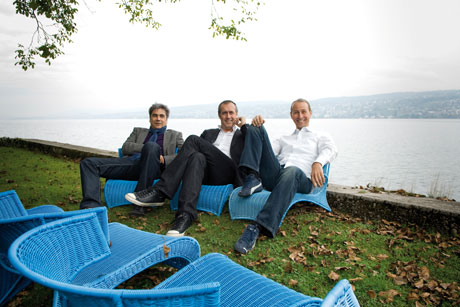
Urs Benz, Stephan Brunner and Javier Gonzalez are BBG Werbung in Thalwil and are increasingly becoming high-flyers from the provinces. But this has little to do with their shared past in the tourism industry.

Two is a company. Three's a crowd," the film comedian Groucho Marx once quipped. This wisdom even made it into the title of an American sitcom. But what may be true in an amorous relationship is by no means necessarily true in business life. BBG Werbung, at least, has been proving the opposite since 1999. The trio of Urs Benz, Stephan Brunner and Javier Gonzalez find it ideal that the three creatives in their agency discuss all plans, problems and projects not just in pairs, but in a "crowd". "This can sometimes bring social discord into the working day. Decisions have to be discussed. Which is not easy with three alpha males - but all the more exciting," say the three owners of BBG.
Corporate identity and design, classic advertising, marketing, public relations, internet solutions, trade fair appearances and events make BBG a full-service agency. In addition to the three partners, there are currently three employees in Thalwil. These are soon to be joined by a web programmer. "So far, we have outsourced this. However, we are convinced that in-house online expertise is an essential part of a classic agency today, just like graphics," says Javier Gonzalez. BBG has an otherwise broad network of freelancers: "We don't claim to be able to do everything. But we know who can do what best."
Even though many projects are launched jointly, the areas of responsibility are clearly structured. Javier Gonzalez is the managing partner or MD. Urs Benz continues the visual design as AD. As CD, Stephan Brunner coordinates the complex processes and is responsible for new business. "However, everyone has an overview at all times and stays in contact with the customers themselves," says the well-coordinated team and jokes: "As we are all born in the same year, 63, no one has the right to take the lead as the oldest."
Another thing the three partners have in common is their professional past in the tourism industry. "It was a coincidence that brought us together. Today, however, this industry is no longer a cluster risk at BBG," says "company spokesman" Stephan Brunner. The portfolio and therefore also the expertise have expanded in a wide variety of directions with customers such as Meteo Switzerland, Swiss Caution, the Federation of the Deaf, Olympus, Bernina, ZyXEL and Docu Media. One core competence can be found in the B2B sector. That is why the company remains open to projects from a wide range of sectors. "The mechanisms of marketing are basically similar for all communication tasks," says Javier Gonzalez.
The actual founder of BBG started his career at the counter of Traveller Reisen. From there, the journey continued at Jelmoli and TUI. However, Gonzalez realized that selling travel was not getting him very far, so he switched to management consulting with Roland Bischofberger. He continued his training in test psychology and also completed a degree in business administration. With these diplomas and his tourism experience under his belt, the opportunity arose to set up a new marketing department at Travac Fernreisen. Gonzalez was able to organize promotional campaigns with funds from various destinations such as the USA. He also launched new ideas for trade marketing involving hotels, airlines and other service providers. "We designed all the advertising in-house," says Gonzalez, explaining the smooth transition into his current job. Before that, however, he was appointed to the management of Imholz. After the takeover by TUI, he became Head of Marketing there. During this time, he worked with various advertising agencies. Because he soon found their tasks more exciting than his own, he finally asked himself: Why do we have to outsource the jobs? Gonzalez created a concept for an in-house advertising agency with 15 people. When TUI was reorganized during the further expansion with Kuoni, the idea fell through. However, Gonzalez did not want to give up on his dream goal and ventured into self-employment in 1999. At the beginning, the advertising agency was still called Emch, Gonzalez & Partner. Urs Benz joined as Art Director in the very first year.
Urs Benz started out with a technical bend in a small print shop. As a reprographer, he soon discovered his flair for graphic work. "This was strongly encouraged by my boss at the time," he recalls. As a result, the creative talent was able to switch to the then Swiss Student Travel Service (SSR) as a career changer. There, he was able to learn a lot from very experienced graphic designers in the advertising department. "That was all in a time before computerization," smiles Benz. But as this technology became more and more visible, Benz was one of the first to want to swap his desk for a desktop. He also trained as a technical color designer. After the takeover of SSR by STA Travel, Benz was able to land a major contract for the new brand's destination advertising. Because he couldn't do the job alone, he went to Gonzalez. This is how the two became partners.
Stephan Brunner, the third member of the trio, joined after five years. As befits a BBG partner, he also started out in tourism as a Product Manager at Hotelplan. This was followed by five years in publishing marketing at IVA and Senger Annoncen. Then, back in the 1990s, the business economist also set up his own business as a "one-man advertising agency". The move to a new office on Seestrasse in Thalwil brought Brunner together with Gonzalez and Benz, first physically thanks to the same address and soon also organizationally. Since then, the advertisers have been traveling as a trio.
In order to continue to be equipped for the future, BBG Werbung is going on a retreat these days and is hiring an external consultant for this purpose. "You can't just tell your customers that you need external advice - and then want to do everything yourself."
Thanks to the "privileged and ingenious location" directly on Lake Zurich, a change of location to Zurich will not be an issue despite the strategy review. After all, creativity can also flourish in the "Zurich Park Side" region. Such an insight seems doubly logical for three creatives, none of whom were allowed to or had to earn their spurs in a large agency. They all made their way up from BBG as career changers.
Andreas Panzeri
> Work
1290581264_img091120_kdw
Urs Benz, Javier Gonzalez, Stephan Brunner (from left).

Gemi: Internet at a high in October

According to the Goldbach Index (Gemi), advertising pressure from the Internet rose again in October by 13 index points. E-media increased advertising pressure by 7 index points.

In October 2009, the Goldbach Index (Gemi) for e-media showed a marked increase in advertising pressure of 7 index points to 448 (441). TV also increased by 7 index points to 453 (446). Radio rounded off October's advertising pressure figures for offline media with a considerable increase of 4 index points to 257 (253). While teletext was able to maintain its 145 index points, digital advertising space lost a further 3 index points to 184 (187). Internet, on the other hand, once again shone with an increase of 13 index points to 543 (530). All media published by Media Focus lost one index point to 183. When assessing the index, it should be noted that the 12 previous months are seasonally smoothed in the short-term analysis.

Classic and modern intelligently combined

By intelligently combining traditional and new media, companies can reach their target audiences through multimedia channels.

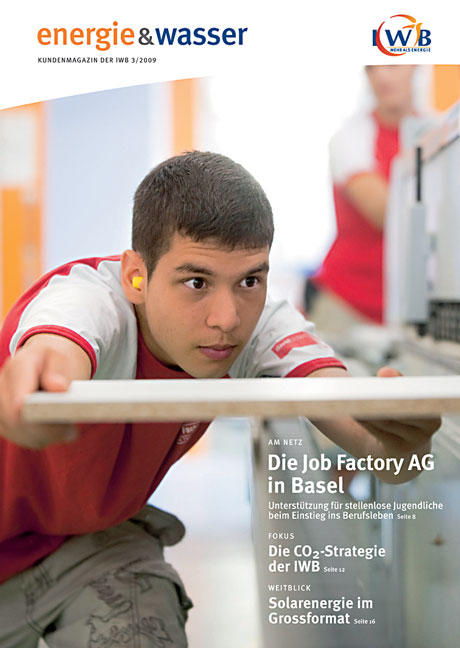
Online technology gives companies the opportunity to address different target groups individually. With the right orchestration of traditional and digital media, it is also possible to establish actual media brands in corporate publishing. The aim is to reach customers in a credible way using online, mobile and print media and to retain them comprehensively. One successful multimedia corporate publishing concept is energie&wasser, the customer magazine of Industrielle Werke Basel (IWB).
In the beginning there was the classic magazine
After newspapers, radio and television, Energie&wasser has been the most important source of information on energy issues in the canton of Basel-Stadt for around twenty years. Readers primarily expect background information, practical tips and advice on the subject of energy. From IWB's point of view, customer loyalty, confidence building and image cultivation are also important functions of the magazine. In order to meet these expectations, the content is conveyed in a way that is easy to understand and comprehensible for the general public.
A survey of readers in 2006 confirmed that acceptance of the magazine is very high. However, there is still room for improvement, especially among the younger target group. After a relaunch with new content and design impulses, the magazine appears fresher, more emotional and more youthful. Additional sections dealing with the energy generation of the future and information about trend spots in Basel are designed to appeal specifically to the younger audience. Coordinated communication was also taken into account in the redesign, which aligns the content of the energie&wasser magazine with other communication channels, such as the IWB website.
The reader portal www.energie-und-wasser.ch
On the website www.iwb.ch is where IWB presents its products and services. The easy-to-follow navigation structure allows you to find the information you are looking for quickly and easily, or to surf through the IWB world. Until now, however, the magazine and the website have only been linked in a rudimentary way. It was therefore not always clear to magazine readers where they could find the relevant product or specialist information and contact addresses for the article in the magazine on the IWB website. In order to make better use of the synergies between the customer information in the magazine and the product marketing on the website, Medianovis created the reader portal www.energie-und-wasser.ch which was integrated into IWB's existing website in 2007.
The reader portal contains an abridged version of the respective magazine article as well as further information, mainly in the form of links to the individual product and service websites. Checklists and information sheets are available for download in a clearly arranged thematic order. The article can also be downloaded as a PDF and forwarded electronically. As the magazine content is of a medium to long-term nature, older issues of energie&wasser are also available for download. The customer or interested reader is invited to spend more time in the IWB world. The need for such a medium was great: since its launch in winter 2007, the reader portal has been the third most visited IWB website after the homepage and job offers.
Making even greater use of cross-media synergies
The latest instrument in the energie&wasser media orchestra is an electronic newsletter, which was first published in September 2009. It can be subscribed to free of charge via the reader portal.
The energie&wasser online newsletter is sent out every three months as an electronic version of the printed magazine. It provides subscribers with a quick overview of the current issue and takes them to the reader portal with the corresponding link. "The aim is to increase the cross-media effect and bring more print content to online users," says Erik Rummer, PR project manager at IWB. "We first want to test how the newsletter is received. In the long term, however, we want to expand the regular dialog with our customers via the Internet. The newsletter is a cost-effective way of distributing information about our products and services to our customers quickly, specifically and personally."
1290581265_img091120_energieundwasser

That's how you pick up employees!

Employee communication: PostFinance relies on Infel's online journal.

With a new type of online magazine, PostFinance employees are always up to date about their company. They receive the electronic PF Journal every two months - directly to their screen via the intranet. Following the first issue on the main topic of "Professional development", the second PF Journal is now available. In excitingly structured articles, videos and multimedia animations, around 3,500 employees can find interesting and useful information for their day-to-day work, such as background information on strategy, products and projects. Playful elements also invite employees to join in and get to know each other. Employees can participate directly with competitions, comments and questions.
The PF Journal is produced by Infel AG, the leading corporate publisher in Switzerland. It is published in three language versions: German, French and Italian. "The PF Journal is an innovative tool, ideal for a dynamically growing company like PostFinance," emphasizes Sabine Zeilinger, Head of Public Relations at PostFinance. Page-turning e-journals combine the advantages of the print world with an attractive digital presentation. "They open up completely new perspectives for employee communication - without the need for costly distribution," says Infel Publishing Director Elmar zur Bonsen. The electronic magazine is produced and editorially supervised by New Business Director Julia Dieziger and the digital team at Infel AG, in close cooperation with PostFinance's internal communications department.
img091120_post
get_footer();