Bloggers create World Compact edition

Welt Kompakt will be published on July 1, 2010 with an edition written entirely by bloggers. Among others, Jeff Jarvis, Robert Basic and Sachar Kriwoj write for the German daily newspaper.

The bloggers are not bound by content guidelines when creating the editorial content. They are free to choose the topics and how they are presented. Jan-Eric Peters, Editor-in-Chief of the Welt Group: "While we as professional journalists report, classify and evaluate every day in print and online, bloggers stand for subjective expression of opinion on the Internet. Our experiment is intended to show how content tailored to the Internet works as a newspaper."

Cannes Lions: Swiss agencies on the shortlist

The hunt for the Lions in Cannes is on, and the first shortlist selections for the international advertising festival have been announced. Several Swiss agencies are also celebrating nominations, including Advico Y&R, SFLB, Ruf Lanz, Saatchi & Saatchi, Futurecom Interactive, and Rod Kommunikation.

1290580850_img100621_cannes

The nominated campaigns per category:
Promo & Activation
"Supreme Security" by Advico Y&R for Supreme Security Company.

PR
"Take Over" by Spillmann/Felser/Leo Burnett for the weekly Woz.

Direct
"Romantic Power Blackout" by Ruf Lanz for the Centralschweizerische Kraftwerke.
"Supreme Security" by Advico Y&R for Supreme Security Company.

Radio
"City Street" by Saatchi & Saatchi Carouge for Novartis Consumer Health.
"Office" by Saatchi & Saatchi Carouge for Novartis Consumer Health.
"Park" by Saatchi & Saatchi Carouge for Novartis Consumer Health.
"Amsterdam" by Jung von Matt/Limmat for Mercedes-Benz Switzerland.
"Athens" by Jung von Matt/Limmat for Mercedes-Benz Switzerland.
"Amarillo" by Jung von Matt/Limmat for Mercedes-Benz Switzerland.
"Moskow" by Jung von Matt/Limmat for Mercedes-Benz Switzerland.

Outdoor
-

Media
"Supreme Security" by Advico Y&R for Supreme Security Company.
"No Comment" by Futurecom Interactive for Reporters Without Borders.
"Slow Down" by Rod Kommunikation for the Swiss Insurance Association SVV/the Accident Prevention Advisory Board.

Press
-

Wirz Group: stake in Wirz Brugger Lüthi relinquished

Die Wirz Gruppe gibt ihre Minderheitsbeteiligung an der Dialog-Marketing-Agentur Wirz Brugger Lüthi Dialog auf. Die Dialog- und Direktmarketingkompetenzen werden zukünftig in der Gruppengesellschaft Assai Dialog + Digital konzentriert.

This joint decision was confirmed by the General Meeting of Wirz Partner Holding on May 20, 2010. Wirz Brugger Lüthi Dialog now offers its dialog marketing services under the name WBL Dialog. The new market presence is intended to emphasize the company's independence from the Wirz Group, which still held a 20 percent stake in Wirz Brugger Lüthi until the beginning of 2010. At the same time, the abbreviation WBL will remain in the name.
"By separating from Wirz Brugger Lüthi, we are achieving a clear division of tasks and specialization within the Wirz Group," says Geri Aebi, Chairman of the Wirz Group Executive Board, commenting on this decision. Stefan Brugger, CEO of WBL Dialog, on the new market presence: "The separation from the Wirz Group gives us the entrepreneurial freedom to further develop our agency in a targeted and independent manner in an extremely dynamic market."
In addition to Assai Dialog + Digital, the Wirz Group also includes Wirz Werbung, which focuses on marketing communications, and Wirz Corporate, which focuses on corporate communications and branding.

Last but not least: Machine, please smile!

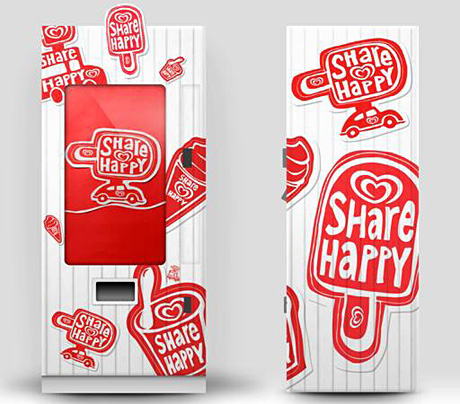
Insert money, select a product and pull it out - that's now a thing of the past. The advertisers from Sapient Nitro presented the vending machine of the future in Cannes. The best thing about it: all you have to do is smile and you'll be rewarded with a free ice cream.

When a passer-by approaches the machine, they are asked to smile. The "Smile-o-Meter" recognizes how well they do this. As a thank you for smiling, the customer receives a free ice cream and also has the opportunity to share a photo of their personal moment of happiness with the Unilever Facebook community. The machines are to be installed in highly frequented locations around the world over the next 18 months. We want one too!

> The machine in action

1290580849_img100621_unilever

The machine is part of the campaign for ice cream manufacturer Unilever, which aims to encourage consumers to share small moments of happiness with their community.

SRG: Rudolf Matter becomes first Super Director

Radio DRS Editor-in-Chief Rudolf Matter is to become Director of SRG's German-language radio and television programs. The Board of Directors elected him on Monday. Matter is currently Editor-in-Chief of SR DRS and Co-Project Manager of the SRG German-speaking Switzerland Media Convergence project. The 56-year-old from Basel will take up the newly created position on January 1, 2011. From this date, the company will operate under the new name SRF (Swiss Radio and Television).

Until he takes office, the two current directors, Iso Rechsteiner and Ueli Haldimann, will continue to manage Schweizer Radio DRS and Schweizer Fernsehen. With immediate effect, however, Matter will assume responsibility for the implementation of the SRG German-speaking Switzerland media convergence project, the detailed report on which was approved today by the SRG Board of Directors. Viktor Baumeler, President of the SRG.D Regional Board, commented on Matter's election: "Rudolf Matter's extensive experience in journalism and management, which he has gained in the radio, television and internet media in recent years, spoke in his favor." This was also emphasized by Jean-Bernard Münch, Chairman of the Board of Directors: "Rudolf Matter has the required experience in all media, in particular several years of journalistic management experience at management level and in-depth knowledge of the national and international media markets."
The 56-year-old historian Matter (lic. phil. I in history, journalism and philosophy) began his journalistic career in 1974 as editor of the Basler National-Zeitung. From 1976, he worked for twelve years at Swiss television as editor, producer and presenter of "Tagesschau" and the magazine "Karussell". After working as a freelance TV journalist and a stint at McKinsey&Company, he moved to Ringier in 1993, where he set up and managed the program "Cash-TV" as editor-in-chief and presenter. In 1997, he moved to Berlin to work for news television station N-tv. As editorial director, Matter was responsible for the station's business formats. Later, he also managed the restructuring of the company, the move to Cologne and the digitalization of TV production and was responsible for programme planning and programme purchasing. Rudolf Matter has been Editor-in-Chief of Schweizer Radio DRS since fall 2006. In June 2009, he also took over the co-project management of the SRG regional convergence project together with Hansruedi Schoch, Editor-in-Chief of SF.D. Matter was born on October 24, 1953 in Buckten (BL), is married and has three children.

(Image: Keystone)

Media convergence: detailed concept for SRG German-speaking Switzerland

Am Montag hat der nationale Verwaltungsrat SRG das Detailkonzept «Medienkonvergenz SRG.D» genehmigt. Die Zusammenlegung von Schweizer Radio DRS und Schweizer Fernsehen zum neuen Unternehmen Schweizer Radio und Fernsehen (SRF) wird auf den 1. Januar 2011 vollzogen.

Over the past few months, around 230 employees from Schweizer Radio DRS, Schweizer Fernsehen and TV Productioncenter Zürich (tpc) have further developed the overall concept of media convergence for SRG German-speaking Switzerland into a detailed concept under the co-project management of Hansruedi Schoch and Rudolf Matter. After the regional steering committee under SRG.D President Viktor Baumeler approved the detailed concept at the end of May, it went to the national authorities for approval. On Monday, the SRG Board of Directors approved the detailed concept "Media Convergence SRG.D".
The new company Schweizer Radio und Fernsehen (SRF) is headed by the Regional Director Rudolf Matter. The Executive Board consists of eight members. Six members of the Executive Board represent journalistic areas of responsibility: the two editors-in-chief of radio and television as well as the heads of the programming, culture, sport and entertainment departments. They are joined by the heads of the merged Communications and Marketing and Finance and Controlling support departments. Human Resources, Corporate Development with Training as well as Program Strategy with Audience Research and Program Controlling are staff areas of the Regional Directorate. It is planned to combine production and IT in the tpc. This structure is intended to support the company's focus on content. All members of the Executive Board have trimedial responsibility.

1290580849_img100621_srf
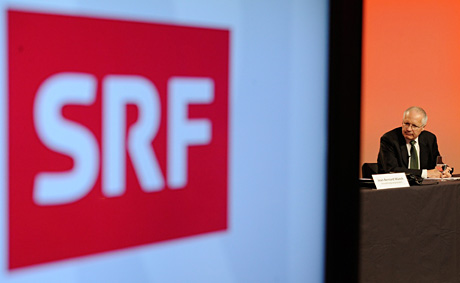
(Caption: Rudolf Matter, newly elected Regional Director of Swiss Radio and Television (SRF), presents himself to the public on Monday, June 21, 2010, in Bern).

Six program departments
The new department Programs includes the program management of radio (DRS 1, DRS 3, DRS Musikwelle and DRS Virus), television (SF 1, SF zwei, SF info) and multimedia. It also includes the areas of design and D+A (documentation and archives). Based on the new programming strategy and the financial guidelines, the programming department reaches agreements on programming services with the chief editors of radio and television as well as with the culture, sport and entertainment departments. The aim is to work in a cost-conscious manner and to make funds available for new ideas and concepts.
In the core journalistic area, internal competition is desirable for media policy reasons, writes SRG in a communiqué on Monday. This is why there are two separate editorial offices for radio and television. In the areas of consumption, health and IT/new media (new: "Digital plus"), the previously separate editorial teams are to be merged at one location under one management. The new trimedial editorial teams Consumer and Health are part of the TV editorial team and work at the Leutschenbach site. The "Digital plus" editorial team is part of the Radio editorial team and works in the Zurich radio studio. All three editorial teams work for all vectors.
The new department Culture In addition to the DRS 2 program area, the cultural department comprises the four specialist areas "Music and Events", "Knowledge and Society", "Current Culture and Background" and "Fiction/Production". The main location of the culture department is Basel, with some jobs remaining in Zurich for production reasons. Around 20 cultural editors from radio and television will be relocated from Zurich to Basel.
The Sports editorial office of Radio, previously part of the SR DRS Information department in Berne, will be integrated into the much larger SF Sport department and relocated to Zurich. The central convergence project is a joint newsroom, which will go into operation in 2012.
The department Entertainment remains largely unchanged in the form it has had within SF to date. Entertainment also includes the new trimedial children's editorial team, which produces for all vectors from the Zurich radio studio. From the end of August 2010, it will produce a daily interactive program for 6 to 13-year-olds under the title "Zambo". The existing online content from SF and SR DRS in the areas of popular culture/folk music, games, travel and cooking/lifestyle will be linked by 2012.

Consolidation of support services on October 1, 2010
It is planned to combine the production of radio and television programs in the tpc. The IT departments of SR DRS and SF will also be integrated into the tpc. In order to be able to merge SR DRS and SF smoothly into the new SRF corporate unit as of January 1, 2011, the previously separate Communications and Marketing and Finance and Controlling support departments will be merged as early as October 1, 2010, as will the HR and Training departments. The further procedure for implementing the convergence will be determined in consultation with the new Regional Director.

(Image: Keystone)

Media freedom campaign: SRG to review cost structure

The Federal Council is granting SRG both additional fee money and further advertising opportunities outside prime time - now even the option of offering advertising on the internet. The Media Freedom Campaign is demanding that SRG review its cost structure instead.

To this end, the Campaign for Media Freedom, together with 114 co-signing National Councillors, supports the motion of its board member Thomas Müller "SRG. No additional fee money". The National Council submitted the motion last Friday. The SRG must make do with the existing fee and advertising money, demands the media freedom campaign. "It is not understandable why all private media companies have to operate their business on the basis of the current market conditions, which do not allow any price increases or volume expansions, but SRG should receive additional income through regulation," it says in a communiqué. In this way, the Federal Council is maintaining further competitive advantages for SRG and making it more difficult for private media providers to recover economically.
Instead of looking for new sources of money in the area of fees, SRG should review its cost structure. SRG has been increasing its fee income for five years. However, the additional fee money has been consistently used to expand additional programs. With the convergence of radio and television, there is considerable potential for cost savings in the administrative area. In addition, radio and television fees are among the highest in the world.

Rudolf Matter faces election as "Super Director"

Rudolf Matter is expected to be elected on Monday as the chief executive in charge of the SRG's German-language radio and television programs.

According to reliable sources, the Board of Directors of SRG Deutschschweiz has submitted this proposal to the national SRG Board of Directors, writes the NZZ am Sonntag. It is said to be virtually impossible that the board will reject the choice. Matter is currently editor-in-chief of Radio DRS. He won the race for the new position against Ueli Haldimann, Iso Rechsteiner and Filippo Leutenegger.
The 57-year-old is considered business-friendly and was criticized internally for this. However, this image may have been an advantage in the race for the new post, as the Sonnagszeitung writes. Especially as the SRG regional council, which submitted the proposal, is dominated by the middle classes. Matter is intended as a counterweight to the new left-liberal SRG Director General Roger de Weck. Another argument in Matter's favor is that he has both radio and television experience. Before joining Radio DRS, he worked for SF, the consultancy firm McKinsey and the commercial German news channel n-TV, among others.

SF: Award for best weather presenter

Beim 4. Treffen der Wettermoderatoren der grössten TV-Anstalten Deutschlands, Österreichs und der Schweiz wurde auch heuer die beste Wettermoderation im deutschsprachigen Fernsehen prämiert.

After RTL, ORF and ARD in previous years, the coveted prize went to Swiss Television (SF) for the first time, as reported by SDA on Saturday. Around 20 weather presenters took part in the event in Velden am Wörthersee. The special thing about this award is that the weather presenters themselves vote on the quality of the submitted contributions on site and thus select the respective winning contribution themselves.

Last but not least: How the win against the Spaniards boosts the fan merchandise business

Since the victory against Spain, World Cup fever has finally broken out in Switzerland - and with it the unbridled desire to buy fan merchandise.

Even before the World Cup, the fan article company Kurt Hauser delivered 60,000 car flags to wholesalers and department stores, according to the Sonntag newspaper. But since the legendary Wednesday, everyone wants to reorder - another 30,000 car flags will soon be going out. And a further 9,000 will be added to the 30,000 key rings. Fahnenfabrik Bern has already sold 50,000 large Swiss banners, with more to follow. And the football company Tramondi has already sold around 400,000 balls in Switzerland. The vuvuzelas are also doing well - how could it be any different: Manor has so far sold 5,200 of them to the Swiss people. And of course the Swiss jerseys are also a big hit - individual children's sizes and baby sets are already sold out at Zurich football corner store Oechslin. And Ochsner Sport can't complain about a lack of sales either: since the game against Spain, business has been running like clockwork, a spokesperson is quoted as saying in Sonntag. In the meantime, business has clearly developed in favor of red/white, whereas in the beginning, exotic jerseys were in particular demand. To sum up: the victory against the Spaniards was worth it - in every respect.

Opposition to plans to finance SRG

Den Verlegern und dem Gewerbeverband stösst sauer auf, dass die privaten Medien und die Betriebe stärker zur Kasse gebeten werden sollen.

The Swiss Trade Association (SGV) expressed its outrage at the federal government's intention to collect up to CHF 60 million in additional fees from businesses, among other things. It is offensive that the Federal Council wants to collect the money from SMEs, said SGV spokesman Patrick Lucca at the request of SDA. The association recommends that its members do not pay the fees and duly deregister with Billag. The argument: "An SME cannot listen to the radio," said Lucca. Consumers were already paying the fees as private individuals. However, the SGV is pleased that the fees will not be increased.
Swiss press "still fundamentally against"
The Swiss Publishers Association is disapproving of the Federal Council's openness towards advertising on SRG websites. The Swiss press is "still fundamentally against it", said Urs Meyer, the association's managing director. If online advertising were permitted for the SRG, a fee-financed company would be taking money away from the private sector, said Meyer. The additional SRG advertising time alone could lead to publishers losing advertising money. The association is now waiting to see what SRG wants to present in the announced talks.
SRG wants to convince the publishers that a joint approach "against the major international competitors" is appropriate, SRG spokesperson Daniel Steiner said on request. Advertising money in the online market is being diverted primarily from foreign portals such as Google and Facebook.
Imprint and SMM disappointed
The media unions find it incomprehensible that the Federal Council does not want to increase the fees. Impressum was disappointed. The Federal Council is explicitly urging the SRG to compete with newspaper publishers, which are under economic pressure. In doing so, it is putting both private and public media under pressure to save money. The Swiss Syndicate of Media Professionals (SSM) considers the decision to be "absurd": although the Federal Council acknowledges the SRG's additional financial requirements, it does not want to increase the fees. As this does not even compensate for inflation, the SRG will have to provide the same service with less money in future.
SRG could not really have expected a fee increase because it had not formally requested one, said SRG spokesperson Steiner on SRG's position on the fee issue.

Vademecom takes over press relations for Bang & Olufsen in Central Europe

Bang & Olufsen has entrusted Vademecom with its PR and media relations for the Central Europe region. For the past ten years, the Zurich-based PR and communications agency has been handling the PR needs of the Danish consumer electronics company in Switzerland and has recently begun managing its media relations in Germany and Austria as well.

According to Bang & Olufsen, the decisive factors for this step were organizational considerations as well as the many years of good cooperation with the agency. Vademecom has been serving international mandate clients for many years, including in the areas of consumer electronics, telecommunications and software.
www.vademecom.com
get_footer();