Match Communications: Campaign for residential development in Lenzburg realized
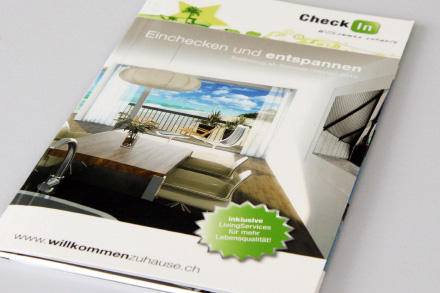
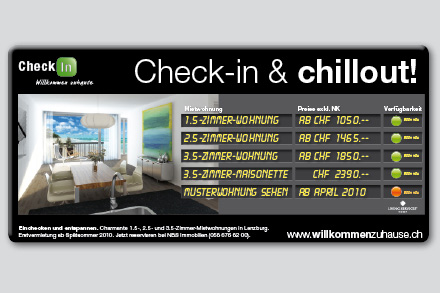
To promote the «Check-In Lenzburg» residential development, Match Communications developed a campaign that has resulted in the complex being «nearly fully leased» as of today—two months before completion and the first move-ins.
Editorial
-
July 1, 2010
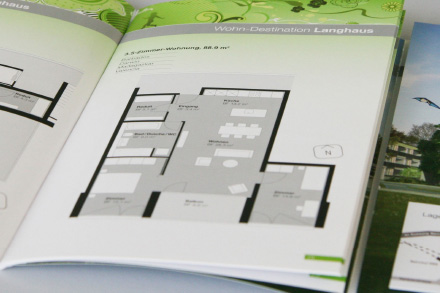
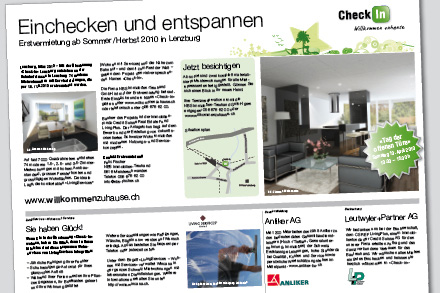
In its communication, the agency focused on the proximity of the property to the train station - and thus to the rest of the world, according to a press release. In the language of the travel industry, apartment seekers were motivated to find their dream home destination in Check-In. The marketing board, for example, resembled the check-in board at the airport, the brochure a travel guide, the website a vacation portal with booking options and, since all 74 apartments have been given the resounding names of popular vacation destinations, interested tenants do not talk about "Apartment 12a on the left on floor 3" but simply about Aruba, Phuket, Las Palmas and so on. Match Communications was commissioned by the Credit Suisse Real Estate Fund LivingPlus real estate fund. Its investment focus is on the acquisition and construction of future-oriented Swiss residential properties with modern usage and service concepts. Responsible at Match Communications, Zurich: Roland Sennhauser, Christian Staub. Responsible at Real Estate Asset Management of Credit Suisse: Petra Knecht.
Swissprinters Group: Nicolas Sauvant becomes new Head of Western Switzerland
Nicolas Sauvant will become the new head of the Swissprinters Group for Western Switzerland effective September 1 and will join the company’s executive board. He will succeed Gérald Lechault, who will leave the company at the end of August.
Editorial
-
July 1, 2010
The 39-year-old comes from the Bertelsmann company DM Michelotti in Rotkreuz, which he heads as CEO. He is also a member of the Executive Board of AZ Direct, for which he previously worked for four years as Director for French-speaking Switzerland in Crissier. Prior to this, he held management positions in sales, communications and marketing at various companies in French-speaking Switzerland. Nicolas Sauvant will take over the business of Swissprinters Lausanne on September 1, thus ensuring the seamless continuation of ongoing projects.
Thurgauer Zeitung: David Angst becomes new editorial director
David Angst will head the editorial team of the Thurgauer Zeitung in future. This was announced by St. Galler Tagblatt AG on Wednesday evening. Angst will take up the new position in January 2011.
Editorial
-
July 1, 2010
According to a press release, the 44-year-old has been the domestic editor of the St. Galler Tagblatt for four years and originally comes from Thurgau, where he began his journalistic career at the Thurgauer Volkszeitung in 1993. He later wrote for the Thurgauer Zeitung and the Thurgau edition of the Tagblatt, among others. Angst's appointment is a key decision "as part of the project work to integrate the Thurgauer Zeitung into the Tagblatt newspaper network", according to a statement from St. Galler Tagblatt AG quoted by SDA. In April, it was announced that the Thurgauer Zeitung would be transferred from Zurich-based Tamedia to Freie Presse Holding AG (FPH) - a subsidiary of the NZZ media group. In return, Tamedia is taking over the shareholdings of FPH and the Gut publishing family in the Zurich regional newspapers. The Thurgauer Zeitung will thus be integrated into the St. Galler Tagblatt Medien, which belongs to FPH, from the beginning of 2011. According to the communiqué, the Thurgauer Zeitung will be published as the largest edition of the Tagblatt network from next year. A newspaper "with well-staffed editorial offices in Frauenfeld, Arbon, Kreuzlingen and Weinfelden will then cover the entire canton".
Annemarie Kaser Head of the new ZMS Media Monitoring Division
The head of ZMS’s new Media Monitoring Division is Annemarie Kaser. A marketing and sales specialist, she has been with ZMS since 2008 and played a key role in shaping the new structure.
Editorial
-
June 30, 2010
Annemarie Kaser previously worked for Yendi, Schiesser and Diesel. She is currently training to become a federally certified sales manager. In the online area, Annemarie Kaser and her team are working on the development of new products in order to find the filter information that is relevant. The core business of the ZMS Media Monitoring Division is media monitoring. Every day, print and electronic media are scanned for search terms such as company or product names and the results are made available to customers. However, this is no longer done by post as it was 20 years ago, but directly via the online platform Info Management, which was recently launched in an updated version so that the clippings and analyses can be retrieved and processed even more quickly via Internet access.
Summer of reading
Sun, vacation, finally some quiet time to browse. We have put together a selection of books that you really need a little time for - either to sink in and enjoy or to try out the tips. Treat yourself to a few book-filled hours. It's well worth it.
The Swiss holding company of French publisher Philippe Hersant has acquired from Rhône Média the
majority stake in the French-language Valais daily newspaper *Le Nouvelliste*. According to the agreement signed between Rhône Média and the French publishing house, the newspaper’s current editorial direction will continue.
Editorial
-
June 30, 2010
The French publishing house already publishes the Neuchâtel daily newspapers L'Express and L'Impartial and the Vaud regional newspaper La Côte in Switzerland. The new owner hopes to achieve synergies from the purchase of the Valais newspaper. This was announced by the French publisher in a communiqué sent out on Tuesday. Jacques Lathion, who previously held more than 75 percent of Rhône Média, said he was convinced that the paper would retain its independence as well as its position among readers and in the advertising market. Philippe Hersant, Chairman of the Board of Directors of the EHS Group, announced in a press release that he was convinced that the acquisition of Nouvelliste would enable his publishing house to strengthen its position in the media landscape. The Le Nouvelliste journalists' association also expressed its satisfaction with the decision. This ends a period of rumors and uncertainty, said Olivier Hugon on Tuesday at the request of SDA. Securing jobs and continuing the current working conditions are also in the interests of the new owners. Philippe Hersant will take a seat on the boards of directors of Editions Le Nouvelliste and Rhône Média at the general meetings on Wednesday. Publigroupe, already a partner of ESH in the Neuchâtel newspapers, is also involved in Valais with a minority holding of 7.5 percent. www.sda.ch
Frank Bumann to leave Zürich Tourism at the end of the year
Frank Bumann, Director of Zürich Tourism, is leaving the company at the end of the year after more than seven years of service. A search committee will begin looking for a successor in the coming weeks.
Editorial
-
June 30, 2010
Quality tourism and sustainability were of particular concern to the outgoing director, as Zurich Tourism announced on Wednesday. Since the beginning of the year, the company has been the first climate-neutral tourism organization in Switzerland. Before joining Zürich Tourism, Frank Bumann was Head of Marketing Communications at SBB.
Former television director Guido Frei dead
Former program director and later television director Guido Frei died Tuesday at the age of 89. SF described Frei as a pioneer of Swiss television.
Editorial
-
June 30, 2010
Guido Frei began his career in 1946 at Radio Zurich. A graduate in German studies and history, he worked for Swiss television between 1958 and 1989. At first, he was a program director at the television station. In 1965, he was appointed television director. Between 1974 and 1979, Frei was also program director at DRS, after radio and television had each been merged into a regional directorate a year earlier. Until his retirement in 1986, Guido Frei was deputy to the regional director and responsible for coordinating the two media in joint program areas. He dealt with general programming and media issues and developments. After that, he still performed tasks at the Swiss editorial office of the joint program 3Sat. Frei was also active as an author. Among other things, he wrote the screenplay for a film about Homer's "Iliad" as part of the "Schauplätze der Weltliteratur" series co-produced by ZDF, ORF and SRG.
Hesskisssulzersutter wins its first new customer
Following the merger, Hesskisssulzersutter wins its first new client: the Swiss Alpine Club.
Editorial
-
June 30, 2010
The club has 120,000 members and was once founded in the station buffet in Olten. The agency supports the traditional Swiss Alpine Club with its hut marketing.
After the decision - before the tussle
The SRG has a documented financial need, but license fees will not be raised. This was decided by the Federal Council. Comments on a biased campaign and a contradictory decision. Op-ed by Hans Stutz, freelance journalist.
Editorial
-
June 30, 2010
The print media campaign against the SRG and its supreme chieftain was unmistakable but unsurprising: the writers simply repeated what they have been saying for years. SRG = colossus, put on fat, go on a diet. An autocratic boss with princely salaries and a business off-roader, huge savings potential. The two rounds of cuts that SRG employees - similar to their colleagues in the print media - have already had to endure in recent years have mostly gone unmentioned. Also unmentioned was the fact that Tamedia CEO Martin Kall, who heads a company with less turnover and fewer employees, receives more than double Walpen's annual salary, over 1.3 million, both in 2008 and 2009. Or that a member of the Board of Directors like Iwan Rickenbacher (part-time) has around 240,000 francs a year credited to his account. All this can be read in the annual report of Tamedia, which - because it is listed on the stock exchange - is obliged to be transparent. The other media companies, however, keep as much under wraps as possible. Speaking of which: how much does Michael Ringier actually get paid out each year? SRG critics pay little attention to such questions, but they do pay attention to the details of SRG. And as a result, Walpen's additional expenses (27,000 francs) are being stylized into an uproar that is supposed to last an entire Sunday. Or very loosely based on Bertolt Brecht: the distribution battle also distorts journalistic perception. The extent to which Armin Walpen's policy was right, almost right or completely wrong can remain an open question. Shortly before the midsummer solstice, the Federal Council has now made its decision and, as is often the case with controversial deals, the result is contradictory. The national government recognizes an additional financial requirement of around 10 percent of the total SRG budget. However, it still refuses to increase the fees. This is a decision that media professionals - and not just those working for SRG - will have to pay for. SRG is to save 58 million a year. The calculation is simple: less money for SRG and therefore the industry as a whole, poorer working conditions and earning opportunities for media professionals as a whole. In concrete terms: less money for SRG means job cuts and a reduction in contracts for freelancers. So do the publishers and SRG critics now have what they want, a weakened SRG? Partly yes, partly no. Another decision is more far-reaching: the Federal Council is allowing SRG to advertise online as well as on TV. Bitter for the publishers. The national government justifies the decision with the withheld fees. Or as the media release puts it. "As there are limits to the financing of fees, at least partial commercial financing of the online presence must also be considered." However, one wonders what the seven from the Federal Palace were thinking. Before a definitive decision is made on opening up and the modalities are determined, they expect the SRG to approach publishers and look for a solution "that allows all parties involved to operate under appropriate framework conditions in the online sector". With respect, how is that supposed to work? And what happens if the SRG and publishers cannot reach an agreement? Will the Federal Council then go back on its decision and still approve a (moderate) fee increase? Whatever happens, the wrangling will continue at first, and journalistic oblique shots are to be expected. As a precautionary measure, publishers and SRG critics should be reminded that around 50 million of the SRG fee money goes to licensed private broadcasters (radio and television). Mostly operated by those publishers who would like to see a weak SRG. And what service do the private broadcasters provide for this money? Only if you don't take the facts too seriously can you claim that the private broadcasters provide a satisfactory local "public service".
Paid content - opportunities for the media industry?
A study by Transaction Consulting aims to determine whether users are willing to pay for content.
Editorial
-
June 30, 2010
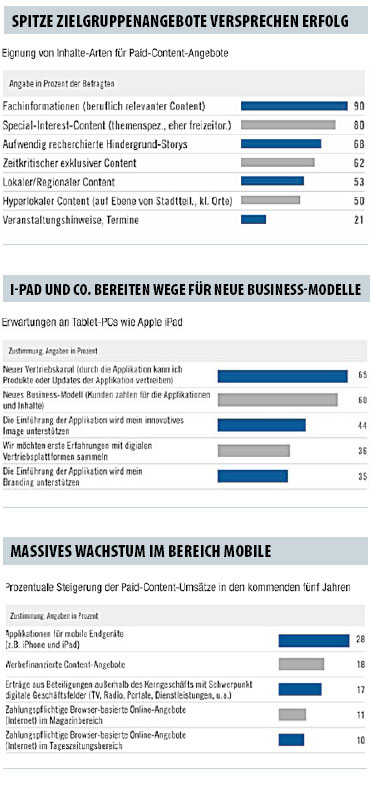
Low sales levels are no longer the short-term phenomenon of economic crises, but a sign of a sustained structural crisis. Market share and sales in the German daily newspaper and magazine market have been falling sharply since 2000. From 2008 to 2015, a loss of EUR 500 million in sales is forecast for consumer magazines alone in the advertising market in Germany (VDZ, Booz & Co. study). Publishers are facing an enormous structural change and a sustainable adaptation of their business model: is it possible to improve quality and efficiency while making savings at the same time? New business models must be developed and introduced in order to remain viable. Although sales in the digital sector have increased disproportionately in recent years, they are far from being able to compensate for the losses in the core business. The crisis is exacerbated by ongoing and recurring cost-cutting programs and staff reductions, including in editorial offices. These are jeopardizing the quality of content production and thus the core competence of publishers. Results of the study The study shows that new hardware - even or especially if it is from Apple - does not yet provide the publishing industry with a new business model. Experts see the new iPad as a great opportunity for the industry, but at the same time warn against viewing it as a panacea. Digital paid content offerings are rather a first and decisive component of an urgently needed comprehensive digitization strategy. Media experts expect the launch of the iPad and other tablet PCs to first and foremost create a new business model and a new distribution channel. This also appears to be urgently needed, as the industry is required to massively increase its sales via digital channels. Currently, publishers are still a long way off the 30 to over 50 percent forecast for 2015 with an average of 5 to 12 percent digital sales. According to the study participants, content categories such as specialist information, special interest and extensively researched background stories are best suited to paid content business models. New content concepts and multimedia-linked content as well as location-based services are decisive for the success of paid content offerings. The majority of respondents plan to introduce paid content offerings in the next twelve months: 33 percent of them within the next six months and 20 percent within the next twelve months. Two thirds of respondents want to use existing digital platforms (e.g. iTunes) to distribute their content, half plan to work with a partner from the industry and 38% want to set up their own infrastructure. However, when it comes to customer data access, two thirds of respondents do not accept platforms without access to customer data. Conclusions and challenges The majority of respondents expect digital business to account for more than 30% of sales in 2015. In order to exploit these growth opportunities, existing and new customer relationships must be transferred to the digital world and new business models must be designed and implemented. Of course, paywalls - i.e. the differentiation of paid areas or content - mean a decline in website traffic and therefore less advertising revenue. But overall, revenues will increase in the medium and long term. This will be offset by income in the form of digital subscriptions. At the same time, publishers gain registered and profiled customers who can be monetized. Differentiating between paid and free content offerings is one of the most demanding and important challenges for the launch of digital paid content offerings. The business models have not yet been tested and there are no patent remedies. However, there is no way around a clear distinction between paid and free content offerings. Planned testing and optimization is an important prerequisite for the success of paid content offerings. Expectations for the iPad and apps are very high. The majority of respondents expect the highest sales growth in apps for iPhone and iPad. Initial surveys in the USA appear to confirm these expectations: The average prices for iPad apps ($ 5.79) are almost four times higher than those for the iPhone ($ 1.51). Closer to the target groups, but on all channels: Target group-specific and cross-media channel products - the differentiation of content between existing channels such as print and online, but also the integration of new channels such as mobile and iPad - are the right way forward. New customers need to be reached in the Facebook generation. Interaction between readers and editors through social media is the decisive factor here, driving business forward and turning casual readers into the digital customers of the future with enormous potential in the long term. The Huffington Post generates over 2.3 million comments every month from 800,000 registered users. By integrating social media offers, traffic to the website from social networks increases disproportionately and can compensate for the loss caused by a paywall. Referrals from social networks to ABCNews.com have increased by 250% in recent months. The development of mobile offers is of crucial importance here. Dr. Marcus Garbe, Managing Partner at Transaction Consulting Objectives and methodology of the study Objective - Highlighting the status quo at the companies surveyed in the media industry - Identifying new revenue potential through paid content for the media industry - Identification of the need for action at the companies surveyed (new Business models, new content and navigation concepts, new payment models, organizational adjustments, new sales and partner models) Methodology was developed with the study partner FACIT Digital: - Qualitative part: Expert interviews in Germany and Switzerland to identify opportunities and obstacles in the period March-May 2010. - In total, more than 30 discussions were held with paid content managers from the following companies: Verlagsgruppe Handelsblatt, Ringier AG, NZZ-Verlag, TAMedia, Axel Springer AG, Deutscher Pressevertrieb, dpa Deutsche Presseagentur, asv Vertriebs-GmbH, Rheinische Post, Burda Medien, Sevenval (YOC AG) and various payment and platform providers. - Quantitative part: Online survey of industry experts in Germany and Switzerland in May 2010. Net sample: n > 100. Data collection and analysis by FACIT Digital, Munich
Street Parade with its own radio station
After a few years off the air, Radio Street Parade is returning to the airwaves. From July 18 through August 15, Radio Street Parade will be on the air at 96.9 MHz in the city of Zurich and available online worldwide.
Editorial
-
June 30, 2010
In addition to information and news about the event, Radio Street Parade is the only radio station to offer 24 hours of electronic music. Project manager Timo Wäschle (Corpmedia) and his team promise a colorful, pulsating warm-up to the big event with Radio Street Parade, true to its slogan "The Spirit of Street Parade".