National Council for more youth media protection

On Thursday, the National Council rejected the idea of a «media license.» Instead, it plans to promote the protection of minors in the media.

It supported a motion by Ivo Bischofberger (CVP/AI) by 116 votes to 43, as reported by SDA on Thursday. The Council of States wants to counteract the "patchwork quilt" in the protection of minors in the media and in the fight against cybercrime. The federal government is to draw up a legal basis to ensure that the federal and cantonal authorities and private organizations active in the area of cybercrime work together "more efficiently and cost-effectively".

"Media driving license" buried

However, the National Council buried the idea of a "media guide" for children and young people. The motion by Councillor of States Rolf Schweiger (FDP/ZG) was rejected by 88 votes to 66 with 6 abstentions. The motion is therefore off the table. Schweiger called for a so-called "media driving license" in Curriculum 21 - a certificate as proof of achievement that pupils have been taught how to use the Internet, computer games and television in an age-appropriate manner. The Federal Council acknowledges the importance of media literacy, but says it is not the responsibility of schools. Families also have a responsibility, said Burkhalter. In addition, the federal government has no authority to act on a nationwide basis in the area of elementary school.
 

Mobile guide launched for Swiss Marketing Day 2011

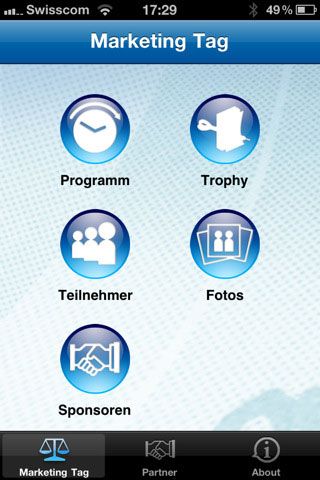
Just in time for the annual Swiss Marketing Day at the KKL Lucerne, Webgearing—an online communications agency specializing in mobile and social media—has developed an iPhone app for the event.

The mobile guide offers comprehensive information on the program, automatic updating of the attendance list and the digital exchange of business cards, as detailed in a press release issued on Thursday.

The "Swiss Marketing (SMC)" app for iPhone is now available in the Apple App Store available to download free of charge. The Swiss Marketing Day will take place on March 8, 2011 at the KKL in Lucerne.

marketingtag
 

No M better

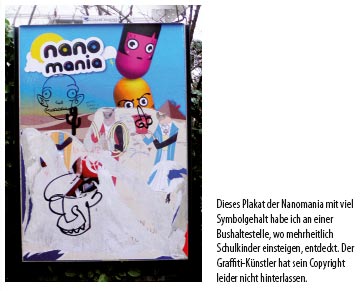
Are children between the ages of 5 and 15 now supposed to trigger a sales frenzy at Migros through the Animalos, Spuukies, Robots, Pinkies, or the Luxious—capsules from the smallest planet in the Milky Way?

What it's all about: With a clever marketing strategy and a huge volume of advertising, our children, godchildren, grandchildren and great-grandchildren are terrorized with 48 different creatively designed, 33 mm tall, tumbling, pill-shaped figurines.

To get one of these "Nanos" with stickers, you have to make a purchase of at least 20 francs. On certain Joker days, there are also shiny, glittery or even golden Super Nanos. But for this, the mother has to buy at least 60 francs. Migros media spokeswoman Oliva Luginbühl said in an interview that the Migros marketing department is running this campaign for its customers as a small thank-you gift with a reward.

My opinion on this: If you want to reward the parents, who also have to earn the money in order to spend it at Migros, then the solution with the Nanomania invention is completely wrong.

On the contrary, the advertising agency certainly understood and interpreted the briefing perfectly and found a solution tailored to the target group (see article in WW 03, p. 12). Certainly, legal aspects were also precisely checked. However, I can well imagine that an agency with such a large budget would not even consider possible ethical concerns. The Nanomania campaign is a snake-catching operation, as it uses multimedia to strap inexperienced 5 to 15-year-olds in front of the Migros sales cart. Grandma, aunt, godmother, uncle - they all have to get as many of these "pills" as possible for their grandchildren, godchildren, etc. and stop shopping at Coop. The mother has long since tired of the junk and could also be annoyed by the stressful situation she is put in. Her positive preference for Migros could suddenly change. "Migros is fooling me with this nano-terror", she might think.

We know our children, who know no bounds when it comes to having all 48 figurines. The cost is 980 francs, not including accessories, which are also available to buy. As a father, you've only invested 100 francs in this hysteria in no time at all. It would be interesting to find out how much additional turnover Migros will generate with this customer reward campaign.

I think that Migros has been doing good, entertaining and funny advertising for a long time. However, the slogan "One M better" is less appropriate for this nano-invasion.

This week, after a lot of back and forth, I decided to get rid of my moth against Migros and Wirz in favor of unethical advertising.

nano

Theophil Butzonce a star advertiser (Ringier), now an inspirer and, from now on, a mocker. "Not an easy role, but a necessary one, which I perform here every 14 days." Please send any relevant information to [email protected].
 

Flop of the week

Affichage: Loss of Over 50 Million Francs

The failure to expand abroad, particularly in Greece, is costing the outdoor advertising company Affichage dearly. The 2010 financial year ended with a loss of 52.3 million Swiss francs. Affichage now wants to concentrate on its home market. Sales fell by 10.5 percent to 304.3 million francs, as the company announced on Wednesday according to SDA. This reflects the generally negative development abroad and currency effects. The net loss is characterized by value adjustments in foreign activities. They cost Affichage CHF 70.8 million. Without these write-downs, a profit of CHF 15.1 million would have been recorded. Affichage had already had to write down CHF 82.6 million in 2009, resulting in a consolidated loss of CHF 59.1 million. The renewed value adjustments were made in Greece, Bulgaria, Romania, Hungary, Serbia and Bosnia. The operating result (EBIT) for 2010 was a loss of CHF 39.1 million (previous year: CHF -65.2 million). Foreign sales shrank by almost half to CHF 45.2 million.
 

MACH 3 in a 1:1 test

MACH 3, the new WEMF research system for surveying print reach, is designed in such a way that it can serve as part of a future "Intermedia Study Switzerland". It is currently still undergoing a 1:1 test in the cantons of Zurich and Vaud. If everything goes well, the full MACH 3 Basic survey will start in 2012.

The national readership study Media Analysis Switzerland (MACH), which WEMF is currently conducting for around 350 print titles across Switzerland, is reaching its limits. This is because it is becoming increasingly difficult to find 23,500 representative people each year who are willing to take part in a 35-minute telephone interview. In addition, around 20 percent of households can no longer be reached at all because they either do not have their landline number listed in official telephone directories or can only be reached by cell phone. 

But the demands on readership studies have also increased. In the age of iPad & Co, publishers naturally want to know more than just the reach of their print titles. In short: the contact values of media brands are in demand.

For these reasons, the WEMF has been working on a new study since 2008. In the meantime, the new research system has been practically finalized. The tried and tested methods will be retained: Telephone interviews will be conducted throughout the year as before (CATI method). The survey will also continue to ask when the individual titles were last read (for daily newspapers, for example, "read yesterday?"). MACH 3 therefore remains the same as MACH 3 in the 1:1 test MACH 3, the new WEMF research system for surveying print reach, is designed in such a way that it can serve as part of a future "Intermedia Study Switzerland". It is currently still undergoing a 1:1 test in the cantons of Zurich and Vaud. If everything goes well, the full MACH 3 Basic survey will start in 2012. LpA approach (readers per issue). "The LpA value is still the world standard and therefore absolutely state of the art," says WEMF Head of Research Harald Amschler.

However, the sample size will change: for cost reasons, only 18,000 people will be surveyed in future. And they will now be recruited using a multi-stage procedure ("two-part CATI with RDD"): Instead of drawing the telephone number randomly from directories with computer support, as is the case today, MACH 3 will have the numbers compiled and dialed by a random number generator (RDD). Once the number is in operation, the corresponding person can be invited to take part in the study. This also makes it possible to contact people who can only be reached by mobile phone or who do not have an entry in the telephone directory.

If the person reached is ready for a MACH 3 interview, they are asked for their basic data (age, gender, place of residence). They are then given the choice of either a main telephone interview or an online survey. If they choose the former, an appointment is made. In addition, the person receives a booklet by post in which the title logos to be interviewed are shown. The interview is then conducted with the help of this booklet in order to avoid confusion between the titles (e.g. NZZ and NZZ am Sonntag). This is also new; previously the interviews took place without visual support.

However, if the respondent prefers an online survey, they will receive a corresponding link by e-mail. Here, too, the survey is carried out with title logos, but the respondent completes it independently. In both cases, the interviewees receive a ten-franc voucher for taking part, another innovation to optimize the response rate.

As MACH 3 will no longer only survey the reach of print titles, but will also provide information on the use of the corresponding websites and apps, the survey list will also be supplemented with their logos or screenshots. Incidentally, the WEMF has conducted a joint pilot project on this intermedia part with Net Metrix, which surveys online reach, the results of which are already available (see article below).

All of these innovations have been tested and approved by the Swiss Media Association and the WEMF Board of Directors. The only thing that is not yet definitive is whether the MACH 3 data will actually be collected by telephone and online. A 1:1 test of MACH 3-Basic is currently underway in the cantons of Zurich (WG 43) and Vaud (WG 12) - parallel to the current survey method. The results will be available at the end of April. It should provide information on whether the online survey can achieve the quality of the telephone survey and whether the survey with two parallel methods can be implemented in practice. Only then will a decision be made. The test will also show how much the results deviate from those of the current survey method.

But this much is already clear: although the MACH 3 retains the LpA value, the results will not be comparable. One thing is also certain: the MACH 3 will be around 20 percent more expensive.

Publishers now have until the middle of the year to decide whether they want to take part in the first MACH-3-Basic full survey. This is scheduled to begin in April 2012 and will be conducted by the Link and Demoscope institutes. The current type of survey will be discontinued in March 2012. "We are making good progress. The funding for MACH 3 is likely to materialize," says WEMF Managing Director Marco Bernasconi. "This is because publishers welcome the fact that the MACH 3 research system can also be part of an overarching 'Intermedia Research Switzerland'."

Markus Knöpfli
 

Spiked: Information leak as a travel souvenir

"Werbewoche" editor Anne-Friederike Heinrich on the decline in neuron formation in the hippocampus caused by air travel—or, to put it simply: on jet lag and forgetfulness.

All right, if you have to go on the road for four weeks at the beginning of the year while all the other normal people are working, it's your own fault. During the summer break, time stops a bit, for everyone. The inbox hardly fills up either, even if you forgo a vacation function. But if you break with common sense and take a vacation in February, there's no slow warm-up, no grace period, no mercy.

The perfidious punishment for four weeks of enjoyment and switching off one hundred percent is the feeling of having forgotten everything, but really everything, on the first day of work. Like a child learning to walk. But at the age of 35. On a stick. Great.

First, I take the elevator to the wrong floor. Well, that can happen. I find my office without any trouble, but who are all those people running around? The boss? On my desk, next to a dirty foreign cup, is a stack of newspapers and I have no idea what's in them. Is there a crisis again? Is Blocher now driving Pastor Sieber's Pfuusbus? Is Schawinski now moderating DRS 1? I have only heard about Grusel-Gaddafi's latest brain burnings. You can't even dive in the rainforest in front of this desolate son.

Fortunately, I have good colleagues who are not above updating the lost employee: The clean man Guttenberg screwed up on his dissertation, you're now allowed to break up via text message, and Gottschalk doesn't want to do "Wetten, dass ...?" anymore. Thanks, guys. But I need the following information even more urgently: What day is it today? What time is it? When will the next issue be published? Do I need to write anything for it, and why am I even here??? How does my computer turn on? Where did I put the key to my desk? And who's going to tell me my password - which I've written down on a slip of paper, but which is in my desk, which is locked, and the key ... But I've already mentioned that.

Fortunately, my letter opener is always on my desk. What's the point of having a key if you can do it by force? But regret follows on its heels: 500 e-mails, oh nooo. But maybe they will bring me back to the here and now. "Dear President & CEO," I read. Have I been promoted and forgotten? In addition, Dr. Axel Lehmann writes to me "from Harlesden, North West London, here in England". Here in England? Am I perhaps at the wrong workplace? That would explain a lot, for example the thing about the people in my office, whom I have never seen before. "The choice of contacting you is of a geographical nature", Mr. Lehmann writes further. That's too high for me, I need a coffee.

But the next disaster already awaits me in the kitchen. What was to be done again when this little light flashes on the coffee machine? "Selamat datang," it shoots through my head. That's Malay and means "welcome". I don't know why I just remembered that now.
 

Y&R Group: ÖKK campaign in favor of Pro Juventute

To ensure that Pro Juventute can continue to support children and young people in the future, ÖKK is supporting the foundation with a stamp campaign: From March 23 to May 27, 2011, it will be touring Switzerland with a mobile photo studio.

Families can have their picture taken free of charge and then receive a stamp sheet with their family portrait. For each family that participates, ÖKK donates 2.50 Swiss francs to Pro Juventute.

The linchpin of the campaign is the online platform developed by Futurecom My-stamp.ch. Here you can view and rate all the family portraits created, take part in the campaign online and have a stamp sheet created from your own photo or support Pro Juventute with a direct donation.

Advico Young&Rubicam is responsible for the campaign and the design of the mobile photo studio. Some of the posters are equipped with flyer dispensers, and the new PosterPlus app allows users to get all the important information directly on their iPhone. Advertisements, streetcar hangers, direct mailings, radio spots and online measures round off the communication.

All info and tour dates can be found from March 7, 2011 at My-stamp.ch. Tour start is on March 23, 2011.

Responsible at ÖKK: Mario Theus (Market Private and Corporate Clients, Member of the Executive Board), Venanzi Vincenz (Head of Marketing Communications), Linda Meyer (Project Management). Responsible at Advico Young&Rubicam: Dominik Oberwiler (ECD), Martin Stulz (CD), Lukas Wietlisbach (AD), Annik Weber (graphics), Julia Brandstätter (text), Pablo Koerfer, Julia Kull (consulting), Daniel Ganahl (illustration).

Budgets of the week

Maxomedia, Flowcube, PPR Media, and Grayling

Finecom relies on Maxomedia
Maxomedia has acquired an exciting new customer in Finecom Telecommunications AG. The full-service provider for network operators offers end customers Internet, landline telephony, mobile telephony and digital TV under the "QuickLine" product brand.

Flowcube for Thalia books
Thalia-Bücher has awarded Flowcube Communications a mandate for the company's public relations activities. Thalia-Bücher operates 23 stores in Switzerland.

Various mandates for PPR Media
Brand-PR, a service division of PPR Media Relations, is now supporting the Lancia, Fiat, Alfa Romeo, Abarth and Jeep brands of Fiat Group Automobiles Switzerland.
Grayling for ASUS Switzerland

ASUS Switzerland has entrusted Grayling with the communication
for the Swiss market. Grayling is now running ASUS's media office in Switzerland and is supporting the Taiwanese hardware giant with all its media work, at trade fairs and product launches.
 

Brain2: Launch of the new flirt app Citykiss

The agency Brain2 from Zurich Seefeld has realized a campaign for the location-based dating service Citykiss from Ringier.

The new flirting platform for cell phones uses GPS technology to inform users directly about singles in their area, according to a press release from the agency. The slogan "the kiss with heart" is intended to Citykiss the object of desire. It is used on advertisements, posters in the party environment and various web banners.

Responsible at Citykiss: Julia Ostermann, Rebekka Ricken. Responsible at Brain2: Oliver Kindhauser, Piotr Müller (CD), Joni Müller (text), Philipp Jeker (photo).
 

Good and bad news spreads like wildfire

The power to decide whether to disclose personal information must therefore lie with the individual. Trust and mistrust must be weighed against one another.

haas-josefa

In a frenzy of liberation, we rejoice in the victory of the good over the bad. It is easy to lose sight of the fact that mindfulness for our well-being also includes paying attention to those who are not so well-disposed towards us. In the digital world, it is all about self-determination: the power of disposition over the publication of personal data must lie with the individual. After all, both charitable and hurtful messages spread like wildfire via digital media.

The Jasmine revolutions are often portrayed as Facebook revolutions. In fact, the new communication platforms play a central role. One insurgent defined their role as the fuse that made the powder explode. It used to be said that news spread like wildfire. Facebook and Twitter are the wildfires of today. Just like in the past, they are used to spread not only enlightening news, but also manipulative information. In both the public and private spheres, it is therefore important to strike the right balance between trust and mistrust.

The Google and Facebook generation is playing a central role in the revolutions in the Arab world. The upheavals mean not least a liberation of communication. Direct communication between citizens has increased awareness of dignity and human rights. Documents on Wikileaks, which confirmed the self-dramatization and corruption of the potentates with further information, also played a role.

In Switzerland, on the other hand, data protection is fighting against Google. An anachronism? No. Ultimately, all communication instruments and all tools can be used for both good and evil. Even in the digital world, the need to close the front door remains with good reason.

Power asserts itself through violence and strict control of communication. In the Arab world, the rebellious population does not fear the sanctions of the potentates. Once anger at the oppression gained the upper hand, the urge for freedom could not be restrained by weapons. The Western world, which liked to legitimize the Arab regimes with cultural explanations, is rubbing its eyes: human rights are universal. Opportunistic friendships with dictators turn into mortgages for governments and companies within days.

Meanwhile, the Swiss Federal Data Protection Commissioner Hanspeter Thür and the Google Group's lawyers faced off in the Federal Court last week. The point of contention is Street View, the Google tool that allows you to take a virtual walk on any street, look into gardens and houses and observe people and cars. Google argues with the great success of the application. Of course, who can resist peering curiously into gardens and living rooms? In future, thanks to image recognition, we will know who crosses us on the street without any effort and should not be surprised if we are addressed by name by complete strangers. If we are out exploring ourselves, we will be delighted by the unlimited access to private spheres. However, if we ourselves are being watched at every turn, we rightly feel persecuted. Virtual boundlessness opens the door to stalkers of all kinds.

Self-determination, both collectively and individually, is a universal human need. Institutions that want to count on the loyalty of those involved in a politically, economically and culturally sustainable way would therefore do well to create space for autonomous decisions within their structures. The major players in the digital revolution should therefore not exhaust their current dominance. Sooner or later, people will find ways to escape their control. The news about the winners and victims of the dictatorship of the public sphere, as aptly described by Richard Sennett, will also spread like wildfire.

By Josefa Haas, Head of the Media Institute
 

Toyota launches design competition for Verso-S with Goldbach Interactive

Goldbach Interactive is executing the campaign for Toyota's latest model, the Verso-S. The agency developed the campaign concept, promotional materials, and the microsite. The team won Toyota over during the pitch.

Toyota launches the Verso-S model and Goldbach Interactive developed the campaign, which introduces the so-called space miracle in more detail, involves potential customers and interacts with them. The centerpiece of the campaign is the microsite Color-your-verso-s.ch with a design competition, product information and an easy way to make an appointment for a test drive, according to a press release from the agency. For the competition, users can use the specially developed application to unleash their creativity, upload their own design proposal for a Verso-S and vote on their favorites.

Toyota's broad target group is directed to the microsite with a media campaign using banners and print material and encouraged to take part. Social media elements ensure the viral spread of the campaign. All promotional measures are consistently implemented cross-media for online, print and at the point of sale.
 

Facebook to boost self-esteem

Social networking among hundreds of millions of users does more than just help maintain contact and foster healthy relationships with friends. Furthermore, Facebook and similar platforms primarily enhance the personal well-being of individual users.

Activity in social networks promotes self-esteem and self-respect, as scientists at Cornell University found out, according to the press release. After all, most users look good when they look in the networking mirror.

The vast majority of users present themselves from their best side on social networks - at least in the subjective perception of the profile operator. The online ego even enables users to emphasize characteristics that they would not show in "real life". They can decide for themselves what information and characteristics they reveal about themselves and share with others on the social web. Anything that could cast a bad light on the user, on the other hand, is filtered and has no place in their virtual reality.

The image that users see of themselves online in the mirror of social networks therefore often corresponds to their own ideals - in contrast to the image in a real mirror. Facebook can show a positive version of ourselves, according to Jeffrey Hancock, professor at Cornell University. According to the expert, this version is not even deceptive, but it is consistently positive. What's more, the usually effusive, appreciative feedback that users receive from friends on the web in the form of comments and clicks on the Like button further boosts self-esteem.
 

get_footer();