Adcare and Goldbach Audience: 2011 event for non-profit organizations

The association for the support of non-profit organizations Adcare and Goldbach Audience invited to the event "What does it take for success in online media?". Around 50 representatives of organizations with the Zewo seal of approval gathered in Küsnacht on 16.03.2011 to get an idea of the nature of a comprehensive online marketing strategy.

If you want to use interactive and mobile media for fundraising, you need to know the facts and figures of Swiss online marketing, the basics of social media, lead and performance management and the integration of TV commercials on the Internet. This is what the Swiss online marketing provider wrote in a press release on Thursday. For this year's Adcare event, Goldbach Audience was able to attract Swiss online greats such as Jörg Eugster (Topin.travel), Mike Schwede (Goldbach Interactive), Ronie Bürgin (Web2com), Ivano Celia (Media.Bros) and Roman Reimann (Goldbach Audience), who passed on their knowledge and many years of experience in dealing with online media to the non-profit organizations.


New heads, old bags, network power

The 2011 Swiss Marketing Day is now history. Nearly a thousand marketers gathered at the KKL Luzern for a day full of insights, emotions, and inspiration. Surprises at the Marketing Trophy awards and an electrifying «Pop Star of Marketing» were just two of the many highlights.

She is not known for being overly shy. When Susanne Wille wants to - and Wille often wants to - she can quickly break through verbal barriers as host of the Swiss Marketing Day and really get to grips with invited guests. But of course a lady like the "10vor10" anchorwoman also has tact and decorum. So it was that Susanne Wille had to summon up all her courage when she asked the newly crowned Marketing Trophy winner Peter Hiltebrand coram publico: "And what can you be hired for, you old bag?"

Wille was sure of a thousand voices of laughter. And the question was not cheeky or inappropriate. On the contrary, it was highly appropriate. After all, if someone, like the retired electrician Hiltebrand, has "Competence Center for Old Bags" on their business card, then you simply have to ask them. Especially as Peter Hiltebrand and his daughter Sarah have just been awarded the newly created Marketing Trophy special prize. Their achievement: with the online platform "Rent a Pensioner", the Hiltebrands are, as they say, bringing "old boxes and old bags" to the people. You can hire sprightly pensioners and ladies who use their expertise to carry out a wide variety of tasks.

Morning greetings from overseas

Another elderly gentleman, who will be 80 in May, opened this year's Swiss Marketing Day. With a message of greeting that was recorded on video from overseas. Professor Philip Kotler - revered by many as the "Pope of Marketing" - spoke in faraway Florida about how we can imagine "Marketing 3.0". For example, by splitting the conventional marketing team into one team that takes care of day-to-day business and a second task force-like marketing team that is responsible for finding out what customers will want and need in the future: "Marketers," said Kotler, "are in the best position to anticipate the future of any company. They have the customer data and they know the demand."

The fact that the video cast from Florida was recorded in the KKL Luzern without any jerking or twitching was just one of the many flawless facets of the technology. In fact, this year saw a veritable firework display of innovations (see second text). Not just any old gadgets were on show, but tools were introduced that increased interactivity to such an extent that you could feel like you were in an offline Facebook. And even though the carnival-like Güdisdienstag was raging around the KKL Luzern, inside the theme was eagerly filleted, which this year was: "Worthless or valuable? Marketing for marketing". Swiss Marketing President Uwe Tännler is full of praise for the thousands of participants who once again came to Lucerne for the Swiss Marketing Day: "A sensational recognition for what we do. And an incentive to continue to meet the high expectations in the future. Or even better, to exceed them!"

Enemy figure scores plus points

Kotler, it soon became clear, has not retreated into his university ivory tower, but knows what marketers want today. And what sometimes makes them sick: "Of course, we marketing people often have our problems with the CFOs," said Kotler. He called for more understanding on both sides: "The Chief Marketing Officer has to have lunch with the Chief Financial Officer once in a while."

One of the event's strengths was that it was not just a debate about the differences between marketers and (mostly absent) financiers. It also offered a stage to a speaker from the crater of numbers. Thorsten Truijens, Managing Partner of the consulting firm Controlling Partner St. Gallen AG, gave the marketers in attendance an understanding of the finance people's soul meccano. Caused by the financial crisis, which most of them had not foreseen, they went through a kind of crisis of meaning. They were also aware that the big end of the general debt crisis was yet to come. The Chief Financial Officers in the companies are working hard to achieve sustainable cash flows. And they are sometimes worn down by how little the marketers understand about the general wheel of figures. "Financial knowledge is not rocket science," Truijens warned, adding that marketers should ask controllers to "explain their number salad a little more precisely." He advised an alliance to bridge the eternal rift in companies: "Controllers need allies to compensate for their lack of market knowledge." However, this is often the responsibility of the marketers, who should first take an interest in the basics of the financial jungle.

Names to take home

After Truijens, it was fitting that a representative of an original Swiss cash cow made an appearance: Urs Riedener, CEO of Emmi. The former head of marketing at the Federation of Migros Cooperatives explained how the Lucerne-based milk processor cleaned up its patchwork of brands, how it now uses three pillars and why it can make sense to reduce its innovation cadence to a healthy level despite the eternal battle cries for more innovations. The KKL Lucerne provided a high-quality "real-life" marketing lesson.

And where other speakers sometimes put on too much cream, moderator Susanne Wille was quickly on the spot. She engaged with the other speakers in a constructive style, with Professors Christian Belz and Holger Rust and with Tom Kunze, who explained the brand power of the Mini car powerhouse.

Which of course is also part of a Swiss Marketing Day: extensive networking, exchanging the latest news and business cards. And people like to have a take-away in the form of a head that they have never seen before. In this respect, the attendees were well served by the hero of quirky bel canto, Leo Wundergut - and by the appearance of Canadian trend guru Jeremy Gutsche. In a mixture of James Brown and Justin Timberlake, he whirled across the stage, a single invitation to always push the wire mesh in your own brain a little further. If you don't want to end up like the US typewriter giant Smith Corona, who did everything right for a hundred years - and then got into a huge mess due to the misjudgement of the computer boom.

Prevailed against "big names"

Gutsche succeeded in reminding those present of the enthusiasm gene. Those who connect emotionally with their customers, who get the spark going, can write marketing history, the Canadian announced.

Marketing history was also made on March 8, 2011 by all those who won a Marketing Trophy. And it was not uncommon for companies to win against market players that actually have a much bigger name. In addition to the aforementioned Hil¬tebrands and their pensioner company idea, SAM Sustainable Asset Management came out on top among the large companies, Brack Electronics won in the medium-sized segment with its "Daydeal.ch" project, and the transport company Alois Scherrer AG triumphed in the small company category with its repositioning as a specialist in textile logistics. In the NPO segment, the charity project "Jeder Rappen zählt" ("Every cent counts") came out on top, while Ego Kiefer was awarded the audience prize for its climate protection project. Worthy winners on the Day of Deeds at the KKL Lucerne.
 

Journalist released from prison in Libya

The journalist from the British newspaper *The Guardian* was released by Libyan authorities about two weeks after his arrest. The correspondent had been detained along with Brazilian journalist Andrei Netto. The reporter from the Brazilian newspaper *Estado de São Paulo* had already been released a few days earlier.

The Iraqi Ghaith Abdul-Ahad is safe outside Libya. This was announced by the newspaper in London on Wednesday evening. Behind the scenes, hard battles had been fought for his release.

Last week, it became known that a team from the British broadcaster BBC had been mistreated by soldiers of Libyan ruler Muammar al-Gaddafi. Three reporters were arrested and later tortured while trying to reach the embattled town of Al-Sawija in the west of the country.
 

Successful start for The Brander

Thanks to mentions in numerous blogs from South Korea to Texas, The Brander got off to a strong start following its launch on March 10. The online magazine, published by the Zurich-based brand consulting agency Branders, profiles brands and their creators.

This Thursday's weekly update of the interactive portal includes a new report on the Magnum photographer René Burri, whose name became a brand in the course of his career. With a picture of Che Guevara in 1963, René Burri also created a brand that has since been adapted for all kinds of revolts and revolutions. NZZ journalist Urs Steiner has written an article about the Magnum photographer for The Brander, which sheds light on the brand and the man "René Burri" from various perspectives.

In addition, another report will be published on Thebrander.com on Saturday: Editorial Manager Olivia El Sayed reports on a visit to the Franches-Montagnes in the Jura, where she spoke to brand-resistant brewer Jérôme Rebetez about his brasserie and the beers brewed there. Gian Marco Castelberg is responsible for the photographs for both stories.

The Brander: The new online magazine portrays brands and their creators

Schoch&Sonders wins new customers

The branding agency Schoch&Sonders has added two new brands to its portfolio: Emmi has entrusted the «Emmi Caffè Latte» brand and its visual identity to the Zurich-based agency. And the Swiss service portal Search.ch has also placed the management of its website in the hands of Schoch&Sonders.

As a first step, the agency is to revise the appearance of the multipacks for Emmi and adapt them to the brand's core values. The new Emmi brand product packaging will be available in retail outlets in time for the summer. The Search.ch platform, which is owned by Tamedia and Swiss Post, will undergo a brand identity overhaul as a first step. A comprehensive communication campaign is then planned.

Schoch&Sonders has been working for the Emmi dairy group for a long time. In addition to other cheese products, the agency is primarily responsible for the cave-aged cheese Kaltbach.
 

Maz: CAS Certificates for Communication and Leadership Professionals

Sixteen communications and leadership professionals successfully completed the 17th Maz course in Rhetoric and Public Speaking under the direction of Oliver Schroeder. In the 6-month, part-time program, participants honed their public speaking skills by utilizing a wide variety of rhetorical techniques and applying proper breathing and vocal techniques.

They deepened their knowledge of the art of convincing arguments and appearances in speeches and negotiations as well as persuasive presentations. In the second part of the CAS course, participants developed their skills and knowledge in moderating meetings and panel discussions as well as conducting difficult discussions. A two-day media training course concluded the 11 modules.

The CAS Rhetoric and Moderation is a partner program of the Maz and the HWZ Hochschule für Wirtschaft Zürich and an elective module of the MAS Business Communications of the HWZ.

Certificates received:
Andreas Ackermann, Evangelical Reformed Church of the Canton of St. Gallen; Edith Aepli, Uster Technologies; Andrea Andreotti, BKW FMG Energie; Reto Baumgartner, SVA BL; Christine Borsodi, Canton of Zurich; Daniel Bossel, Amcor Flexibles Europe & Americas; Thomas Buchmann, Department of Primary Education of the Canton of Lucerne; Jacques Feiner, Department of Construction of the Canton of St. Gallen; Roger Fisch, Grundfos Pumpen; Gesa Gaiser; Iris Hassenpflug, Stadtwerk Winterthur; Evelyne Hug, Terre des hommes - Kinderhilfe; Peter Kanscár, Zürcher Hochschule der Künste ZHDK; Maurizio Pezzotta; Samuel Wille; Andy Wolf, Radio Pilatus.
 

Sleepless on the highway

Drowsy driving is as dangerous as alcohol. The BfU is launching a prevention campaign. The advertisers from Numéro 10 are introducing turbo sleep.

Fatigue is involved in around 10 to 20 percent of all road accidents. Anyone who gets behind the wheel tired endangers themselves, passengers and other road users. This is why the Swiss Council for Accident Prevention (BfU) - together with the TCS, the Road Safety Council and the Road Safety Fund - is launching a three-year campaign to combat fatigue at the wheel. The campaign started on March 14 with the national Turbo Sleep Day.

The term "Turboschlaf" is an invention of the creative minds at Numéro 10, with which Head of Strategy Gilles Aeby wants to launch a popular formulation for the technical term "Powernap". Turboschlaf can be adapted into all national languages and is also intended to arouse the curiosity of the target group more quickly with "Turbo". The creative paraphrasing of the scientifically confirmed effect of the power nap is the heart of the campaign, which Numéro 10 won in a pitch. In the first year, the general message is that such a short nap can work wonders for people who are overtired. If there are signs of drowsiness while driving, drivers should pull over as soon as possible and recharge their batteries with a short nap of ideally 15 minutes. The recommendation is visualized with print images and films showing drivers in all possible and impossible situations, fast asleep. Further tips and information can be found at www.turboschlaf.ch. Viral films are also intended to appeal to young people. These document guerrilla campaigns by Numéro 10, in which an actor lies down for a turbo nap in the most conspicuous places possible. So far, the "hidden camera" has been filmed at a car showroom, on the escalator of a department store or on a football pitch.
In the second year, the campaign will focus more on senior citizens and professional drivers, and in the third year on young people. Andreas Panzeri

sleepless1
sleepless2
sleepless3


Royal lie

WVC Communications has developed a luxurious visual identity for Bico Royal.

Everyone needs sleep, whether young or old, rich or poor. And everyone wants to sleep as comfortably as a king. Bico has addressed this guiding principle and developed the Bico Royal System "Swissbox".

Bico has been inspired by an international sleep culture - as celebrated in the world's luxury hotels - and has developed a concept that combines unprecedented sleeping comfort with high-quality design.

WVC Communications was commissioned for the advertising campaign. The advertisers around CD Kurt Wettstein created a royal ambience for the campaign that does justice to the product. After developing the logo, a unique visual language was defined, which is used in the product brochure, at the POS and in the advertisements. The Utiger furniture store in Bern, a building that was constructed 900 years ago, was chosen for the shoot with photographer Stöh Grünig. Detail was responsible for the post-production. pan

bico1
bico2
bico3
 

"The marketer becomes a eunuch manager when the controller does all the math"

At the Swiss Marketing Day, one person in particular stood out among all the advertisers and marketing experts: controller Dr. Thorsten Truijens. Between two lectures at the St. Gallen Business School, Werbewoche spoke to Truijens once again about why marketers should try to become their controller's best friend - and what this has to do with their own personal future.

WW: At the Swiss Marketing Day, you pointed out how important it is for marketers to finally open their eyes to controlling, to the figures they are making with their products - or not. Why do you have to explicitly point this out?
Dr. Thorsten Truijens: I have the impression that many business administration students here are very proud of the fact that they have successfully avoided dealing with finance. After all, finance is not the sexiest topic in the world, even business administration students squirm around it. This is even more true for marketing and sales people. They often lack the willingness to sit down for an hour and understand what is happening in this spread sheet, in the balance sheet, in the income statement. An accountant can spend eight hours on this, it seems to be a question of personality. Marketers don't have the peace and quiet to do this, and that's the first big hurdle. In marketing, a lot of things are common sense, whereas in finance there are basics that you have to master. You have to take the time to learn what's behind it. If you don't internalize this, you'll never get to grips with your finances and every meeting in which finance is a topic is embarrassing. Because you know that you should actually know this. That's why you can't ask.

Being able to have a say at meetings is a good feeling. But are there even more important arguments why marketers should have financial knowledge?
My professional experience has shaped my image of the marketer who doesn't WANT to have much to do with finance. If they stay at a lower level in the hierarchy, they might not need to. Or if he works in a company that is hugely successful and has a huge margin, maybe it's not that important. I don't think Steve Jobs ever looked at an Excel file, but Apple also has a 30 percent margin. If you're doing marketing for a lower margin company and moving up the hierarchy, it's essential that you can quantify what you're trying to do. Otherwise you won't get your plans through. Because the controller has the power, and as a marketer you have to be able to convince him. The controller has no obligation to deliver, the marketer has an obligation to pay.

You are of the opinion that the marketer must take the first step towards building a "lifelong friendship". Does the controller not have to approach the marketer at all?
That's the way it is. It's a question of personality structure. The controller prefers to sit in his office and do Excel calculations, partly because he has been extremely misled by marketers in the past, who promised great things but failed to deliver. In addition, the marketer often uses very flowery language that cannot be expressed in figures. This does not suit the controller. So the marketer has no choice but to win the controller's trust - like a six-year-old who has to show his parents that he can handle pocket money. And I mean that quite unironically. In many companies, the controller simply has the greater position of power and will not knock on the marketer's door to build a bridge and give up some of his power. The marketer has to approach him and ask for explanations, that's pure psychology.

The controller has the upper hand. But couldn't he also approach the marketer?
Controllers are now realizing that costs are slowly being squeezed out. They realize that, due to market conditions, some kind of measure must be taken to guarantee stable earnings. It's no longer just about short-term profit accumulation, but about what the next three years will look like. If turnover falls, you can reduce your costs. In many companies, however, this is only possible to a limited extent. Anyone who recognizes this limit should try to stabilize turnover. And that only works by retaining customers so that they remain loyal even in the next crisis. Only marketers can do that. And that is precisely the basis for an extremely good connection between controlling and marketing. The days of throwing a product over the fence and generating huge sales are over. Today, we are operating in an extremely uncertain environment with crises and disasters. That's why you have to see the whole thing in a much broader context. Many controllers - especially in small and medium-sized companies - do not have this overview. That's why they need marketers who design business models that go beyond "we produce a nice product". Despite their completely different mentalities, marketers and controllers need to approach each other, otherwise they will not be able to master the future.

When you spoke of the "marketer as the controller's best friend" at the Marketing Day, there was a lot of laughter. What does this reaction tell you?
That the awareness that controllers and marketers need to work together has not really arrived yet. I see really big problems here that we absolutely have to tackle. If the crisis leads us to address this issue, it will have a positive effect. Never waste a good crisis. In America and China, a salesperson is held in much higher esteem than in Europe. We have a different culture: here, the engineer develops the great product, the controller shows the costs - and that's it. "Sales? Do we still need that?" But that only works in niches at best.

Do you know of any companies or entire countries where the interaction between controlling and marketing is exemplary?
Yes, marketers with a great deal of financial know-how work at General Electric. There it is absolutely clear that you need financial knowledge if you want to hold a management position. It is also clear that the marketer gives the budget presentation, not the controller, as is the case in many companies. If the controller calculates everything, the marketer can be degraded to a eunuch manager and becomes a victim of the controller. At Apple, the financiers compile the figures, but the decision is ultimately made by the marketers. Overall, I have the impression that financial knowledge is implemented much more in the marketing departments of American companies than here. People think more about finance. The big consumer goods companies - I dealt with Procter&Gamble - of course have a strong finance department. But it seems to me that marketers and controllers talk to each other on an equal footing there. Marketers do question the controller's calculations critically. Here, nobody challenges the demigod controller. And why does a Chinese person know more about cash than we do?

Interesting question. Do you have an answer?
Finance has a lot to do with culture. China, as well as Holland and Israel, are trading nations. And trading nations are geared towards always having tight margins. We are an engineering nation and determine our prices based on our costs. I try to get this out of my students, because demand must determine the price, what the customer is prepared to pay is decisive. I have ETH engineers on my course who can't understand that. Incidentally, engineers normally get on very well with controllers. Both create an accounting sheet and every product and every customer must bear their costs. But it's not that simple. That's why the alliance between controller and engineer is an unholy one - also because the marketer often can't get a foothold between the two.

Are there differences between Germany and Switzerland in this respect?
I have the impression that this engineering mindset from the high horse is more pronounced in Germany than in Switzerland. This also has to do with the training here. The education system in Switzerland is better than in Germany, and great importance is attached to further training. I think the German business education in particular is extremely poor. Swiss training is closer to reality and more practice-oriented. In terms of business education, Switzerland is the most American country in Europe. Take the issue of protection against dismissal. In Switzerland, everyone knows that they have to market themselves because they can't be sure that they won't be fired in three months. That's why everyone has a basic knowledge of cash and marketing. Anyone who has worked at Opel in Germany for ten years shrugs their shoulders and thinks "what can happen to me?". This kind of industrial officialdom doesn't exist in Switzerland.

You have said that exchange rates are the new weapon of mass destruction. That scares rather than encourages ...
Maybe, but it's true. Switzerland's belief that everything will be settled if it stays out of the euro is a misconception. It is not regulated and will become a problem. Switzerland will have to pay a price for the fact that it has a healthy economy that is much more successful than other economies around it. We will get to the point where the exchange rate will be used as a weapon. With every crisis, more people will invest their money in Swiss francs; when the euro collapses, the franc will soar. Congratulations. In addition, a parallel currency will develop. Some German companies that we advise at Controlling Partner St. Gallen are already no longer accepting invoices in Swiss francs. They want a euro invoice at the exchange rate of a year ago. That brings us a considerable drop in margins. And depending on the industry, this can quickly become existential.

Is the realization that publishing houses, media, advertising and marketing are also primarily concerned with sufficient cash flow a child of the recent crisis?
Is there such a realization in this industry? That would be great, of course. I have nothing to do with publishing houses, but in the SME sector I often find that cash is still a long way off - unless the company has been hit by the 2009 crisis. I can also imagine that newspapers are under enough pressure to think about cash. And book publishers are trying extremely hard to sell their books, I can see that. So there seems to be a slow process of reflection. That's good.

Can the battle for sufficient cash diminish the journalistic quality of media or the creativity of advertising? Or is the opposite the case?
I believe that thinking about cash has a positive influence, but it's a question of how you view people. I don't think pressure in a company is fundamentally a bad thing, I'm very influenced by my American education. A bit of a struggle for survival is great if you can take out the despair and turn it into positive energy. As a financier, I would therefore always keep cash in short supply, let people fight for cash, that increases creativity. Saying "there's enough money and we don't need to worry" is not a good way to get things moving.

According to you, cash flow is stagnating primarily because customers are not paying on time. What can the controller do about this? And what can the marketer do about it?
The controller can't do anything about it. That's where the marketer comes in, and the salesperson of course. When selecting customers, they have to see what kind of customer they are: will they pay me? I think you can only pay the salesperson a bonus once the customer has settled their bill. The salesperson's time is not too valuable to chase an invoice. On the contrary: until the invoice is paid, the salesperson has not done their job. That's why I would always hold the salesperson accountable.

Will financial knowledge be part of marketing training in the future?
Yes, that's coming. Figures are playing more and more of a role, and universities of applied sciences are also increasingly incorporating financial topics into their courses. If at least a minimal amount of financial knowledge is integrated into marketing training, the business will become more professional. It is important that marketers learn to interpret financial data, that they do business games to experience first-hand what it means to go bankrupt. This has an enormous learning effect.

Interview: Anne-Friederike Heinrich

In a nutshell
Dr. Thorsten G. Truijens (48) was born in Düsseldorf, studied business administration at the University of Cologne and the University of North Carolina at Chapel Hill and completed his doctorate at the University of St. Gallen. Truijens has held various management positions at Adam Opel AG in Rüsselsheim, General Motors (Europe) in Zurich and the CZSG Controller Center St. Gallen. Today, he is Managing Partner at the consulting firm Controlling Partner St. Gallen AG, where he heads the consulting and training business in the areas of value-oriented management, balanced scorecard and performance measurement. Truijens also teaches at several renowned business schools worldwide. www.cpsg.ch

top2
 

Advertising on Facebook could be much more efficient

Nearly two-thirds of Switzerland's largest companies actively use social media for marketing. Very few, however, do it right. Serranetga can provide professional assistance in this area.

Unbenannt-7

Everyone is talking about advertising on Facebook. What is it all about?
Remo Prinz: Media volumes on Facebook are increasing significantly. However, many companies or their agencies are booking more or less without a strategy. They buy from Facebook by credit card or intermediaries. The analysis, optimization or comparison of advertising media and how they are received by different target groups often fall by the wayside.

A study says: Only 22 percent of advertising on Facebook & Co. is based on a strategy. A wasted opportunity?
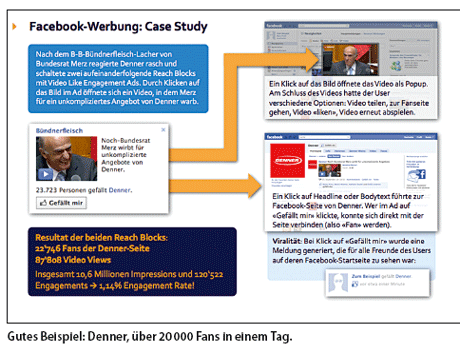
However. No other platform like Facebook offers such detailed information on the socio-demographic composition of users. They are present with a profile and have to log in every time. Of course, the information about the users is only available in correctly anonymized form. However, ads placed on Facebook could use the Facebook API to provide information on socio-demographics up to the point of purchase. Professionally managed, this holds enormous potential.

How can Serranetga help here?
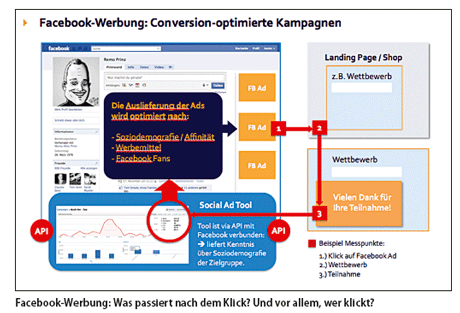
As a pioneer in Facebook advertising, we are the first German-speaking online agency to offer professional Facebook performance optimization at this level. At the moment, Facebook is still basically booked according to two scenarios: customers book their ads themselves via Facebook's own tool using a credit card. This is time-consuming, complicated, unreliable and only worthwhile for very small budgets. Our latest technology allows you to advertise much more efficiently for budgets of CHF 5,000 or more. With this, the ad placement is linked to Facebook's API so that the advertising can be checked for efficiency and performance. Facebook's own system does not offer this. The second outdated scenario is buying ads at a fixed click price.

What's wrong with that?
On the one hand, you sometimes pay high margins for the middleman. On the other hand, you book without a concept. How an advertisement works also depends on how it is designed. An advertising medium that is highly activating will have many click costs. Nevertheless, it does not guarantee success. We therefore see the booking of Facebook advertising as a separate discipline, similar to Google advertising. If Facebook is to be used seriously as an advertising channel, we need to optimize budgets at different levels.

With which tools?
We work with a creative media approach: How do you get as many users as possible, and above all the right ones, onto the communication platform used? We look at this: What actually happens after the click? We therefore integrate a code, so-called tags, which track the user and measure where they have gone after clicking on a Facebook ad. For example, you can combine different tags with different images. We offer the technological support for this. This automatically creates countless combinations and highlights ever better combinations. So we no longer start from a target group planning that is already predefined and restrictive, but we start more broadly and can then narrow down the channelization more and more until we arrive specifically at a group for which we can react: People are interested here. This means that we deliver different advertising material to different groups or age groups and then realize that an advertisement works better with older women here and younger men there. Different subjects therefore appeal to different target groups - and this can be measurably compared.

What does this cost the customer, and what are the benefits for Serranetga?
As with Google, margins must be reduced or even completely abolished, i.e. the click prices achieved must be credited 1:1 to the customer. Our conviction: If performance is optimized, a click should no longer be the cheapest! It's better to pay a few centimes more to convert the limited target group into real prospects, fans or buyers. The business model for Serranetga as a provider of performance-optimized Facebook advertising is therefore not based on margins from buying and selling, but on income from management fees - as has long been the case with Google.

Interview: Andreas Panzeri

Remo Prinz is co-founder of the digital agency Serranetga and the marketers Stailamedia and Adwebster. He sees his work as "inspiring and mobilizing communities for an idea". Serranetga employs 15 people.

fb1
fb2
 

At the Google Office in Zurich, you don't work in an office

Google will continue to expand its headquarters in Zurich. In addition to the office on the Hürlimann site, where 700 people already work, a second building will provide space for 300 additional employees. This will make Zurich even more important for Google as the largest research location outside the USA.

Google is growing and growing. In 2010, 4500 new employees were hired across the Group. The company expects a similar development in 2011. In Zurich alone, 300 new jobs will be created. There are no problems with recruitment. Google receives over 3000 applications worldwide every day. In addition to the magic of the Internet, the unconventional jobs certainly play a role here.

The working environment at Google is designed to enable employees to be as innovative as possible. The goal is to drive innovation. Over 700 specialists work in Zurich. However, they are organized in very small teams. Small teams have the advantage of correspondingly short decision-making paths. Speed is a crucial element. Google also cultivates a "bottom-up" culture worldwide. Goals are not imposed from above, but ideas can also be brought in "from below". "Our employees can define their own goals. At the beginning of each quarter, the employee presents their manager with their own idea of where their work should lead," explains company spokesperson Matthias Meyer at Google Zurich. Time planning is also the responsibility of the employees themselves. In order to be able to work in such a culture, Google naturally does not just need executive employees, but entrepreneurial types.

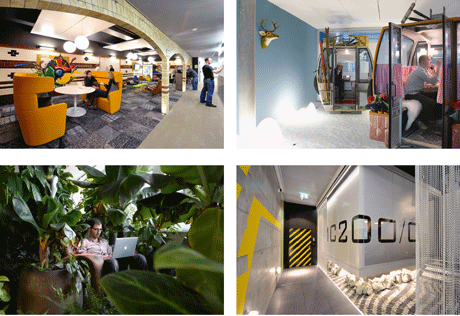
The office is a space for creativity. Each floor at the Zurich headquarters - and equally worldwide - allows for different topics. "Whether you hold a meeting in a gondola or in a room with four gray walls naturally makes a difference," says Meyer. The working environment therefore has a direct influence on the process of innovation. To design these rooms, Google asked its employees: What does your dream office look like? A wide variety of suggestions were received, from a "jungle in the office" to a high-tech oasis, a slide or a nostalgic library. These ideas were then creatively implemented by Camenzind Evolution architects. In Zurich, an office in a "tunnel" decorated with boulders, a music room with drums and keyboards and a bistro in a replica of the Paris metro have just been put into operation.

Everyone goes through ups and downs in their daily work. There are various ways to keep yourself active at Google in order to find new and different ideas in such situations. A fitness trainer is employed at the in-house gym. There are dance classes as well as yoga lessons. Or massages. So everyone can relax individually.

Good ideas are not necessarily born at the desk, but often during a relaxing game of billiards or table football. Google has also recognized that employees are more productive when they are allowed to work on projects that really excite them. That's why the company gives its engineers as much freedom as possible to choose the projects they want to work on. To this end, everyone is even allowed to spend 20 percent of their time completely freely - perhaps to come up with a new idea themselves. Various successful Google products, such as Google News, G-Mail or Google Talk and Orkut, have already been created in Zurich alone as part of this free time.

Andreas Panzeri

google1
google2
 

Impaled: I go with my agenda, and my agenda with me

Werbewoche editor Anne-Friederike Heinrich on new trends and old iron.

At last we know what is "out": the typewriter is already irrevocably out. And the compact disc, the USB stick, the so-called Rolodex (that rotating card index for business cards that you could play around with so wonderfully while making phone calls), the note calendar, the pocket calculator, the desk phone, the paper bucket, the paper shredder and the desktop PC are all right on the brink of the abyss. And tomorrow they will all be one step ahead.

Are you attached to at least four of these ten things, use them every day and can hardly imagine life without them? Then you're like me - and we're old news. Pixmania-PRO, an office equipment distributor based in Paris, has taken the liberty of making this outrageous statement. This company has analyzed its sales figures and compiled a black list of office veterans who are to be deleted from the sales catalog in the future. This means that it could soon be very embarrassing for you when your grandchildren discover your pocket agenda. Start thinking of a clever hiding place. Or at least a good excuse.

Reassuringly, where old things die, new things sprout. Pixmania-PRO, for example, sees the Eco-Button coming, a device that indicates via USB connection when your computer has been inactive for a long time. This is supposed to encourage you to switch to standby. Oh great. Now not only does my inbox, Twitter and Xing blink, now my entire computer blinks when it wants to take a nap. A great idea that will definitely catch on very quickly. I praise my leather agenda (with offline address book!). And the good old typewriter. It didn't use any electricity at all. Not even for blinking.

The past is sometimes the future

Compared to the old junk, however, augmented reality, social media, cloud computing and tablet PCs are brutally "in" or at least on everyone's lips. However, all of this technical junk also has its quirks. For the writer, the worst is that, according to Duden (that yellow book on your desk with the thick layer of dust on top), every word needs a hyphen. But it gets even more dramatic: augmented reality doesn't quite catch on because no one has an idea how to use the new possibilities cleverly and beyond superfluous gimmickry. Social media divide humanity into lovers and haters, believers and non-believers, users and ignorers. And no one has ever built a skyscraper on a deep rift. What cloud computing is has only been nebulously bandied about, so cloud 7 of data storage is still a long way off. And tablet PCs have problems with their readers. They are totally unfocused and no longer check what they are reading. Golly.

The U.S. publisher Bonnier has discovered this insane decline in intellect through a study. Bonnier publishes titles such as "Popular Science" and found that tablet users e-mail, play games or read other news while reading an article. Outrageous. Are they allowed to do that? Calm down, dear Bonniers. All this doesn't necessarily mean that readers don't finish reading a text, nor that they don't understand what's in it. Ever heard of multitasking? (That's also "in" these days.) But Bonnier isn't worried about its readers at all. The study served to create new forms of advertising for tablets. That's where the wind is blowing from. Of course, advertisers want full content distraction, not half. But they haven't reckoned with the cleverness of their readers. If things get too colorful for them, they can simply use their tablet to serve the three o'clock tea. That - and I have to admit this without envy - is not possible with my pocket agenda.
 

get_footer();