Head of the week: The remote viewer

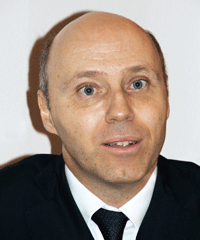
ARD, ZDF, Viva, 3Sat, RTL/Pro Sieben, and SF. Frontal21, 10vor10, Rundschau, SF Spezial, Quer, and Eco—Alexander Mazzara has worked for many broadcasters and on many programs. But his most exciting project to date is likely to be the cross-media youth TV channel Joiz, which plans to make television history from its Zurich headquarters starting in late March.

kdw2

Young adults between 15 and 30 have lost their home on TV," says Alexander Mazzara (35). "In Switzerland, TV is only made for older and old people, and we want to change that." We, that is Mazzara and TV veteran Kurt Schaad. In 2009, they had the idea of founding a TV station for young adults that would combine television, the Internet, mobile and social media. For young people today, watching TV is no longer just about watching a program; they also have their smartphone in their hands in front of the TV and often a laptop or tablet PC on their knees. 90 percent of 16- to 24-year-old Swiss people exchange information with friends during a program, post articles or search for further information. So what could be more logical than linking the TV with the computer and both with the smartphone?

That's exactly what Mazzara asked himself - and closed the gap. In January 2010, he and Schaad founded the youth station Joiz, which aims to pick up young people on all channels. The station dovetails the public service it broadcasts with the private world of its viewers, where they are linked to their friends via Facebook, Twitter and the like. And this is how it works: Joiz offers news, entertainment and background information on music, lifestyle, cooking, fashion, cinema, politics, education, health, sexuality and, in the future, sports in various formats. Viewers receive additional information in parallel and in real time to the TV broadcast, for example, the recipe that is recooked in the cooking show, can tweet it or put it on Facebook. They can also get tips on buying meat or find a good butcher in their area. In the politics format, they can join in the discussion or cast their vote. In the music show, they get the latest video of the still unknown band sent directly to their smartphone - and can also win tickets for the next concert. Votings and rankings, the results of which are available within seconds, are also possible and can even influence what happens on the program. And of course, every user can share Joiz content or embed it on their private pages. "This is true cross-media," says Mazzara. "It's becoming more and more important in television to offer information that goes beyond the broadcast and to enable interaction." With a wink, he adds, "Of course, you can also just watch TV with us." Or not. Because you don't even need a TV to join Joiz. Because the station interacts with social media and links all shows and activities to the Joiz website, a laptop or smartphone is all you need.

Balancing act between numbers and letters

Alexander Mazzara was born in Aarau in 1975. Although he writes for the regional daily newspaper as a young man and is enthusiastic about the media, he decides to study civil engineering - and still wonders why. As a boy, he had dreamed of becoming an architect, a profession in which he would have been more likely to live out his creativity. Mazzara quickly realized that he was too bored in the civil engineering office. He lacks the room for maneuver, the joy of playing, the fun of communicating. But Mazzara wouldn't be Mazzara if he didn't finish what he started. He loosened up the time until his civil engineering diploma by taking a job at the local radio station Kanal K in Aargau. "Of course, I also enjoyed dealing with numbers and mastering complicated calculations during my studies," Mazzara softens. "And the fact that I'm good at that benefits me now as an entrepreneur." Nevertheless, the change of direction has long since been decided: After his diploma thesis on the improvement of the hydropower plant of the Jungfraujoch railroad, Mazzara will follow up with postgraduate studies in journalism. "I really wanted to master the tools of journalism and have more feedback," Mazzara explains. "At the regional newspaper, it was always just 'You're already doing a good job.' That wasn't enough for me."

Driver Innovation and Marketing

In 1999, Mazzara's career takes off through all the big, German-language TV stations: From RTL/Pro Sieben, he goes to Swizz Music Television, which is bought by Viva. Then he works in Germany for ARD and ZDF and ends up at SF at the age of 25. There, between 2000 and 2009, Mazzara works mainly for news programs: Rundschau, SF Spe¬zial, 10 vor 10 and Quer, and from 2006 he also produces the format "Start up - Der Weg zur eigenen Firma". This program is a "warm-up format" for the business magazine Eco, which Mazzara later develops together with his boss at the time, Kurt Schaad. "Eco found its audience immediately, but unfortunately we didn't succeed in picking up younger people with Eco either," Mazzara recounts. "The average age of the Eco viewer is 57."

But Mazzara and Schaad make a good team. "Alexander has an eerily good overview, he's a real generalist in the media field and can distinguish the essential from the unessential," Schaad says of his young colleague. The two men can't get young TV viewers out of their minds; they want to get them excited about TV again. So Mazzara and Schaad put their heads together again, and out comes Joiz. "I wanted to do something for young people where I could stand behind the content and say that it had a long-term future, where the content and packaging were right," Mazzara emphasizes. Social media has brought a tremendous dynamic to the way stories are told and content is distributed. We used to exchange panini pictures in the schoolyard, but today the exchange is via Facebook. Linking this completely changed media use in the right way holds huge potential for the media, which we want to exploit. With Joiz, we're giving young people a media home again, a place where they feel at home, where they learn new things and get cool information. That's huge fun for me, too."

Mazzara has caught the perfect time to launch Joiz: Hardly a teenager is without a cell phone, computers are part of the basic equipment in children's and teenagers' rooms, and Facebook is the second, if not the first, home of the "digital natives. It's as if the world had just been waiting for Joiz.

My friend Joiz

Joiz will be on the air 24 hours a day in HD quality from March 28. Mazzara and his team will produce four hours of new programming every day, with the remaining time covered by repeats. The offer is financed on the one hand by sponsors, on the other hand by advertisement and E-Commerce. Joiz will offer a full range of services: "For example, our viewers will be able to buy our presenters' clothes or ingredients for a recipe with just one click," says Mazzara. "We will also be running clickable commercials, which is a very exciting new approach. But we can also book the classic advertising formats such as TV spots or online campaigns."

The fact that the Joiz program interacts with the private worlds of its users opens up completely new possibilities for advertisers. Because every user has to register, Joiz collects a lot of qualified data about its target group. This can be used for targeted advertising and offers. "One of the problems of TV is that you can convey an extremely large number of emotions, but you get extremely little information about your viewers," explains Mazzara. "With our model, we're changing that." Clearly, offers that fit the theme of a show have a pretty good chance of being sold directly. But Joiz also does something to protect its young target group: the station has explicitly excluded erotic and ringtone advertising, as well as value-added service sweepstakes. It's obvious that Joiz's television for young people has hit the nerve of the times and its target group. Even before it went on air, the station was nominated for the "Internet World Business Idea 2011" award as one of the twenty most innovative Internet projects in the German-speaking world.

The station is just one year old and already employs 40 people, including the well-known Swiss top model Anouk Manser in the team of presenters. Mazzara serves as CEO, Kurt Schaad is on the board of directors. Joizers are now eagerly awaiting the start of broadcasting at the end of March. The same will be true of the 3,700 or so Friends that Joiz has already collected on Facebook prior to the start of broadcasting. But Mazzara doesn't think in terms of success and failure. He simply does what excites him, what he is convinced of, what he believes in. That seems to work. Joy and choice, fun and choice - you'd have to be 20 again. Anne-Friederike Heinrich

www.joiz.ch

kdw


MA Leader 2011: Who decides what?

MA Leader is a leading institution in Swiss media research. The 2011 edition of MA Leader marks its ninth publication. For about 20 years, the premium target groups of the leaders and top leaders of the Swiss economy have been analyzed every three or two years.

If you want to know where and on what basis the "Leader" target group makes its decisions, what it is interested in - whether professionally or privately - and which sources it uses for information, you will find comprehensive answers in the MA Leader. This makes it an indispensable tool for marketing, communication and media. No other Swiss study maps the target group "executives" so comprehensively by also taking into account their role as decision-makers. The MA Leader is therefore one of the few instruments that also creates transparency in the business-to-business market and enables targeted communication with the premium target group of "leaders".

Of course, all this has its price, which the publishing houses, which are under severe cost pressure, have to pay. The decline in the number of titles participating in the MA Leader from 51 in 2009 to 38 in the MA Leader 2011 is rather ominous. Although Computerworld in German-speaking Switzerland and the titles Edelweiss and Top Matin in French-speaking Switzerland have been added, titles such as Basler Zeitung, Finanz + Wirtschaft, Geo, Agéfi and others are missing from the MA Leader 2011. The titles Facts, Cash and Le Matin Bleu were still more or less successful market participants in 2009 and took part in the MA Leader 2009; today they are history. Under these circumstances, the future of the MA Leader is highly uncertain, as it is losing relevance as the number of participants decreases.

Speaking of Edelweiss: What prompted the women's magazine from French-speaking Switzerland to participate in MA Leader 2011 - de facto as the only women's magazine surveyed in the study? Although the proportion of women among the leaders in French-speaking Switzerland is significantly higher at around 26 percent than in German-speaking Switzerland at 17 percent, this results in a relatively limited target group potential of 18,000 female managers. Patrick Zanello, Publishing Director of Edelweiss, comments: "From the next issue, Edelweiss will be published with a new layout and will therefore have a higher-quality positioning and focus even more strongly on the luxury segment. The MA Leader is ideal for our market positioning, even if the foreign titles are missing. In addition, we were and are pioneers in many areas - including as the first women's magazine in the MA Leader!" Edelweiss wants to tap into the market of luxury-oriented women aged between 30 and 50. But perhaps the relaunch is also a way of differentiating itself from a possible market entry by annabelle in French-speaking Switzerland - together with its small but very successful sister 20 Minuten Friday. Or perhaps also against Edipresse, which is launching encore! in May 2011, the lifestyle magazine of Le Matin Dimanche, which will appear on the first Sunday of each month with a focus on topics such as travel, gourmet, living and fashion. Whatever the case, the western Swiss market is on the move. We will stay tuned.

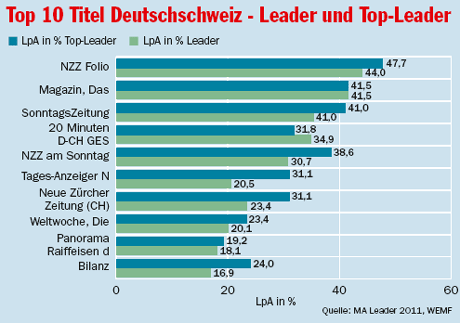
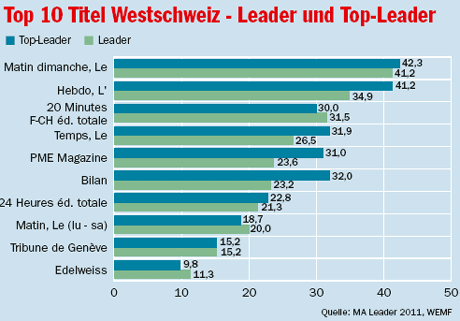
The ranking of Swiss-German titles in the MA Leader 2011 among the leaders remains almost unchanged compared to the MA Leader 2009: NZZ Folio is in first place with a reach of 44 percent, followed by Magazin (41.5%) and SonntagsZeitung (35.3%). Thanks to the withdrawal of Geo from the MA Leader, Panorama Raiffeisen was able to position itself in the top ten (see chart Top 10 titles in German-speaking Switzerland). In French-speaking Switzerland, Le Matin Dimanche leads the top ten with a reach of 41.2 percent, followed by L'Hebdo (34.9%) and 20 minutes with 31.5% (see chart Top 10 titles in French-speaking Switzerland).

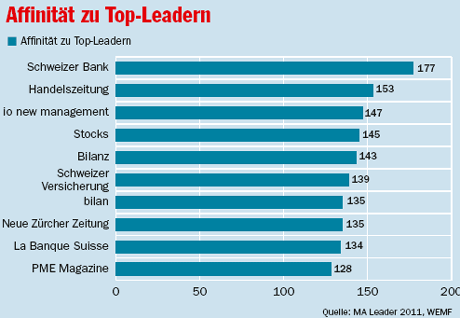
In terms of affinity with the top leaders, the specialist media are clearly in the lead: in terms of Switzerland as a whole, Schweizer Bank is way out in front with an affinity of 177, followed by Handelszeitung with 153 and io new management with 147. NZZ is the only daily newspaper in the top ten with an affinity of 135 with the top leaders (see chart Top 10 titles affinity top leaders). Karin Jost

MOST IMPORTANT NEW FEATURES OF THE MA LEADER 2011

The MA Leader 2011 questionnaire was expanded and adapted in the following areas in particular:

The socio-demographic characteristics now include the place of education for the first 12 years of schooling (Switzerland, Europe, overseas). The age of the company was also newly recorded for self-employed entrepreneurs and freelancers so that start-up companies can be identified. Adapted to the changes in location-independent media usage habits, the location of Internet use (at home, at work, on the move via public Internet access, on the move via smartphone, iPhone, etc.) was also surveyed in a differentiated manner. The topic of "paid content" was also expanded further with the question of willingness to pay for individual articles or subscriptions on the internet or for apps. The watches section with information on brands is also new: In addition to brand awareness, ownership and purchase intention, 27 new watch brands were surveyed. In addition, MA Leader continues to collect data on around 40 car brands and 30 airlines. The questions on attitudes were also greatly expanded to include quality awareness for consumer products, clothing, consumer electronics and technical devices. In addition to the appreciation of quality and price, the leaders were also asked about sustainability and the importance of the latest technology. Individual lists on consumption and possessions were adapted to reflect current market trends. In the area of valuables, for example, respondents were now also asked about the ownership of tablet PCs and e-readers.

ma1
ma2
ma3

MA LEADER 2011

Basic population
The population of the MA Leader 2011 - like that of the Leader 2009 - is based on the "Swiss Labor Force Survey 2007 (SLFS)" conducted by the Federal Statistical Office. There are a total of 302,000 leaders in German- and French-speaking Switzerland; 233,000 of these leaders live in German-speaking Switzerland and 69,000 in French-speaking Switzerland. The top leaders are a subgroup of leaders with additional qualifications. There are 103,000 top leaders in total; one in three managers in Switzerland is therefore a top leader.

Participant title
A total of 38 individual titles, combinations and complete editions. Some titles were surveyed in both language areas.

Definitions Leader:
resident in German or French-speaking Switzerland, at least 20 years old, employed full or part-time (at least 50%), decision-making authority in at least one area of the company, gross personal annual income of more than CHF 100,000

Top leader:
Criteria similar to Leaders, except: personal gross annual income of at least CHF 140,000 and at least one personal employee. For self-employed entrepreneurs, freelancers, senior executives/civil servants and academics in the private/public sector, additional qualifications apply to both the group of Leaders and Top Leaders.

New survey model
Until the 2009 survey, the entire interview was conducted by telephone (CATI). With the MA Leader 2011, respondents were given the opportunity to complete part of the questionnaire online (CAWI) for the first time, and two thirds of all respondents made use of this option.

Survey area
German- and French-speaking Switzerland
Survey period
September 27 to November 28, 2010

Field work
ISBA GmbH, Hamburg (evaluations), LINK AG, Lucerne and Lausanne (sample, fieldwork and evaluations)

MA Leader sponsorship
The MA Leader is conducted by Wemf AG für Werbemedienforschung on behalf of the participating titles and publishers. MA Leader 2011 was developed in close cooperation between Wemf and the "MA Leader 2011" project group. Wemf is responsible for the research design.

Forms of publication
Product brochure with the most important results (free of charge) or code card for NEXT>LEVEL (subject to a charge) for detailed analyses without media planning. Available via Wemf,
[email protected]. Evaluations including media planning are possible with a data and program license (annual or daily license).
 

SFLB: Suva as a new customer

Two of Suva's four brands will now be working together with Spillmann/Felser/Leo Burnett.

The agency is now responsible for the long-term communication strategy and the appearances of Suva Pro and Suva Risk. The first work for both brands will be seen in the second half of 2011.
 

Last but not least: Already "scented" today?

Duff Beer is well known to all viewers of the American animated series *The Simpsons*. Now Homer's favorite drink is coming to Switzerland and causing a stir with its «questionable» advertising.

Duff Beer is not just a fantasy drink from the cartoon world. "The legendary Duff Beer" is a mild lager. It is brewed by a German brewery according to German purity laws. Last year, "The legendary Duff Beer" was among the most successful new products of the year in Germany. This was announced by Spar and Eurospar in a communiqué on Thursday.
Now this beer is also available in Switzerland, in the range of Spar and Erospar. To promote this in a contemporary way, cardboard figures are currently being used in addition to discounts. However, the Simpsons cardboard figures in the Spar store in Männedorf are not only well received. The Blue Cross finds them extremely questionable. Now, an internal directive has been issued that the alcoholic beer may not be advertised with the children's figures. This was explained to Radio Zürisee by Thomas Weilenmann, CEO of Spargruppe Schweiz. Therefore, the cardboard displays in Männedorf will be removed today. A small step for Spar - a big one for alcohol prevention?
 

Cooperation between CR Kommunikation and Avenir Consulting: Employer branding

The laws of supply and demand not only apply to companies' sales markets, they also apply to the search for and recruitment of the right employees. In collaboration with Avenir Consulting, CR Kommunikation now offers a service called Employer Branding.

The employer value proposition (EVP) is intended to define the individual strengths and uniqueness of the employer brand. This is what the CR Kommunikation agency wrote in a press release on Thursday. The development of the EVP not only defines the strategy and messages for employer communication, but also analyzes where gaps or deficits in the employer profile or in behavioral branding can be identified.

Employer branding focuses on questions such as: "What makes me attractive as an employer? What is my employer promise? How can I develop, communicate and live my USPs as an employer? How can I ensure that the employees I really want to keep stay? How do I use digital media, social networks, tweets, feeds and blogs to do this?"

CR Kommunikation implemented one of the first projects in this area 10 years ago in a telecoms company. It was led by the same people who are now responsible for the cooperation between Avenir Consulting and CR Kommunikation.
 

"We have a rock-solid starting position in Switzerland"

In an interview with Markus Knöpfli, Affichage CEO Daniel Hofer explains why he wants to restructure sales in Switzerland, why some members of the new management team—like himself—come from the NZZ and Publigroupe, and where he still sees opportunities for growth in the poster advertising business here.

hofer

WW: Mr. Hofer, you became CEO of Affichage without any poster experience. What is easier now: selling posters or advertising space in newspapers?
Daniel Hofer: The basic mechanisms are the same. It is an intermedia competition for advertising money with clients and agencies - with different performance values and functionalities. There are also new aspects for me, such as street furniture and comprehensive logistics. It's an exciting and great job in the out-of-home market.

You want to restructure sales at Affichage. What does that mean in concrete terms?
With its various subsidiaries, Affichage Holding is the clear market leader in the out-of-home sector in Switzerland. We want to try to coordinate our comprehensive range of services even better in the future. The aim is to make it even easier for advertising clients and agencies to make cost-efficient and effective use of out-of-home media. To this end, we will optimize our internal processes and structures where necessary.

Measured against Affichage's total turnover, foreign business still accounts for around 15 percent. How much time are you currently investing in this?
We are in a challenging turnaround situation in our international business. It is therefore only natural that, as CEO, I should devote my personal working time to areas where there is an immediate need for action. Since taking up my position, I have therefore been primarily involved in international activities. This allocation of resources is also justifiable for the time being because we have a rock-solid starting position in Switzerland.

Are you present at all negotiations in the countries of South-East Europe?
Thomas Rainer, our new Head of International Markets, and I are currently spending a considerable amount of our working time in Greece, Romania, Serbia, Bosnia, etc. in order to be able to represent our interests directly on the ground.

Affichage still generated 45 million francs abroad in 2010. You want to sell everything except Serbia and South Tyrol by the end of 2011. If you succeed, how much foreign turnover will be left?
I don't want to specify today which branches abroad we will actually divest, where we might enter into joint ventures and which international operations we will keep. That would be too early. However, we can say with certainty that we will significantly reduce our foreign involvement. We will only remain where we can assume, based on current knowledge, that we will achieve good and sustainable results. This will involve a corresponding reduction in foreign sales.

Back to Switzerland: you worked at Publigroupe for 20 years, two other people on the new Affichage management team are also former Publigroupe employees, as is Robert Schmidli, who has been proposed for the Board of Directors. What can former P employees bring to the poster business?
Markus Ehrle, Daniel Strobel and myself came to Affichage Holding from the NZZ Media Group, having previously worked for Publigroupe in a variety of roles. However, I did not bring Mr. Ehrle and Mr. Strobel to us because they came from the NZZ Media Group or P, but because they have been very successful in media marketing for over 20 years. Marcel Seiler will also be joining us as our new Head of Human Resources, having worked for many years in HR management positions at Migros and ABB, among others. I am looking forward to working with the new management team, which is made up of excellent long-standing members of Affichage's management team as well as new external talent.

For his part, Mr. Robert Schmidli brings with him extensive sales, marketing and management experience from Xerox, Bertelsmann-Fachmediengruppe, LTV/Gelbe Seiten and Publicitas. He is certainly one of the highest-profile marketers in Switzerland. And this is in line with the new strategic focus on the local market.

Regarding the focus on the domestic market: where do you still see opportunities for growth? Back then, when Affichage entered the foreign market, it did so because Switzerland was becoming too small for competitive reasons.
Of course, Switzerland is a saturated, well-developed market with very intense intermedia competition. And we are the absolute market leader in all segments of the out-of-home business. Of course, there is not the same growth potential as abroad. On the other hand, we will undoubtedly always have the opportunity for organic growth through product innovations, digitization and other new offerings.

You have announced 43 new e-panels in stations for the current year: can you say more about this?
We will be installing these e-panels in Zurich, Bern, Basel, Lucerne, Lausanne and Geneva stations over the course of the summer in addition to the existing big boards. These are 2 square meter 82" LCD screens in full HD quality, a premium offering that will be installed in highly frequented locations with good lighting conditions. We will be investing a sum in the low single-digit million range for this. The new screens will increase the attractiveness of our medium and offer clients additional added value, as they can be booked on a daily basis and guarantee increased attention thanks to the animation in portrait format.


A clear yes to spring

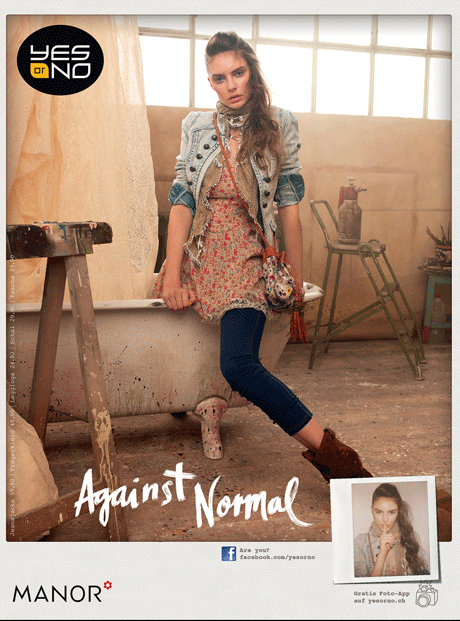
Rod relies on social media for the Manor label Yes or No. An app for the iPhone was also created for this purpose, with which you can photograph yourself in the style of the campaign.

Wild Romance" is the theme for the spring fashion season at Yes or No. This means that the "Against normal" leitmotif introduced for advertising in fall 2010 is also entering a new round. Following a video clip last October, in which the winner of a model competition determined via Facebook had to fight his way through an urban backdrop, the creatives at Rod Kommunikation are continuing to focus on social media for the young brand. Rod has developed a campaign for Manor's in-house fashion label that reinterprets the central theme of the collection and implements it for various channels. In addition to advertisements, an app for the iPhone is also used, with which you can photograph yourself in a vintage look true to the campaign motto. As a label that demands clear answers - yes or no - for or against a trend, Yes or No aims to set an example against fashion monotony. pan

manor1
manor2

Last but not least: The look recommends

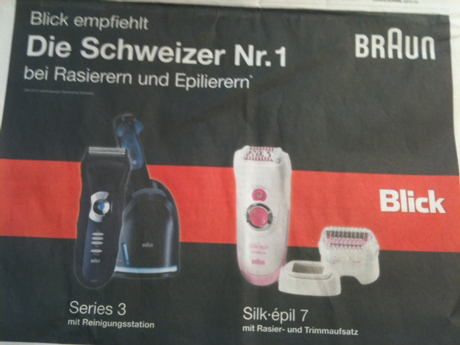
Anyone who has been reading *Der Blick* closely over the past few days has come across an ad with content that’s not exactly run-of-the-mill.

Shavers and epilators from Braun are advertised. The special thing about it is that Blick has obviously already tested the devices and recommends them to its readers. This ad is a special and unique cooperation with a major customer, Ringier said in response to an inquiry from Werbewoche. It is an individually tailored and unusual campaign that is not part of the standard offer.

Whether a recommendation by the tabloid helps the general image of the devices remains an open question. One thing is certain, however: The ad attracts attention, and that is the main thing.

blick

Swiss Market and Social Research Association under new management

In mid-February, the members of the Swiss Association for Market and Social Research (VSMS) elected a new board of directors for the 2011–2012 term.

Roland Rosset, Business Expert at GFK Switzerland in Hergiswil, was elected President and Wolfgang bump, head of data mining/statistics at Helsana Insurance in Zurich, as vice chairman. Both are long-standing board members and proven experts in the industry, according to a statement on Wednesday. Together with Thomas fox, member of the management at Am Puls Marktforschung in Lucerne, they form the presidium of the association.

Thomas Fuchs has been in charge of the VSMS Swiss Interview Institute collective brand since 2009. The other five board members were all newly elected. They are: Marco Buscher, Head of the Household and Personal Surveys Section at the Swiss Federal Statistical Office in Neuchâtel, Mitja Ruggle, Head of Market Research at Tamedia in Zurich and Marcel Zbinden, Head of Market Research at Emmi Switzerland in Lucerne, representing the client side. As representatives of the institutes were Stefan Hitz, Managing Director of Jeko Market Research Institute in Bern and Stefan Oglesby, Chairman of the Board of Directors of the Link Institute for Market and Social Research in Zurich and Lucerne.

The Swiss Association of Market and Social Research is the sole representative body for market and social research in Switzerland. As an industry and professional association, the VSMS stands up for the interests of the institutes as well as the professional market researchers. Over 300 individual members and 35 renowned institutes are organized in the association, with the institutes jointly operating the VSMS Swiss Interview Institute quality label.
 

Internettv.ch launches its own TV magazine on Tele Züri

With the program «Internettv.ch – the Magazine,» the editorially independent web TV portal Internettv.ch is launching its own TV magazine.

Moderated by Michael Wieland (formerly Tele Basel), Christina Varveris (formerly Tele Bärn) and Michael Peterer (Radio Toxic.fm St.Gallen), the most popular, craziest, most exciting and most impressive videos from the various special interest channels of Internettv.ch such as Buuretv.ch (Swiss Farmers' Union), Airporttv.ch (Zurich Airport), Issdichfittv.ch (Swiss Sports Television, Fit for Life), Fürstenlandtv.ch (Fürstenland region) - in the spirit of living media convergence, according to a Tele Züri statement. Studio guests with a connection to Internettv.ch or the world of new media round off the 30-minute TV magazine.

"The combination of Web TV and classic TV is unique in Switzerland," producer Michael Wieland is quoted as saying in the release. "Furthermore, the show demonstrates that television with solid content is also possible on the Internet." In addition to being broadcast on Tele Züri, the show will be available on its own channel on Internettv.ch on the web and on mobile devices, as well as being available as a podcast for Apple TV. The show will be recorded at weekly intervals and broadcast daily at 5 p.m. on Tele Züri. Pascal Jenny, Director of Arosa Tourism and operator of the Web TV channel Arosatv.ch, will be Michael Wieland's first talk guest on March 21, 2011.

The magazine is produced by Ipmedia, the publisher of Internettv.ch.

internettv1
internettv2
 

National Council and Council of States in favor of device-independent reception fees

In the future, even those who do not own a radio or television set will be required to pay radio and television license fees. Following the National Council, the Council of States also voted in favor of this measure on Wednesday. However, the Council of States would like to exempt small businesses from the license fee requirement.

The current system is no longer up to date because radio and television programs can also be received via cell phones and computers. However, when the federal government announced that it would charge fees for reception via cell phone and computer in future, this met with criticism. At the behest of Parliament, the Federal Council presented alternatives - and argued that in future every household and every business should pay radio and TV fees. The industry protested, which in turn led to motions in parliament.

Avoid "unfair double burdens"

According to the SDA, everything will now revolve around the question of exemptions for businesses. Both councils are now demanding - in line with the Federal Council - fees that are not dependent on devices. However, the Council of States wants small businesses to be exempt from the obligation to pay fees. It has amended a corresponding motion from the National Council. The Council of States would like to exempt small commercial, manufacturing, service and agricultural businesses from the obligation to pay fees. Christoffel Brändli (SVP/ GR) said that this would avoid "unfair double charges". This refers, for example, to farmers whose business is also a private household.

However, it remains to be seen how exactly the exceptions will be defined. It is clear that there will be demarcation problems, said Brändli. It will be up to the Federal Council to specify the exceptions. However, there were also critical voices against special rules. It was no secret where this concern came from, said Peter Bieri (CVP/ZG). The trade association's tones were "loud and aggressive". The appeals for a boycott of fees and the general agitation against Billag, which was merely fulfilling its legal mandate, were "not a sign of a mature understanding of the state".

Many black listeners and viewers among the companies

Federal Councillor Doris Leuthard was also annoyed by the industry's protest: "Today, only a fraction of businesses pay the license fees. In the case of TV fees, only 28,000 out of around 300,000 businesses pay them. The situation is different for private households: Over 90 percent pay radio and TV fees. Due to the large number of black listeners and viewers among businesses, the Federal Council also expects fees to fall under the new system, by around CHF 100, with no exception for small businesses. Today, the fees for radio and TV reception amount to CHF 462 per year.

According to the Federal Council, only socially disadvantaged people should be exempt from the fees. However, Leuthard expressed her willingness to accept the wishes of Parliament: The Federal Council would submit a proposal regarding exemptions for businesses. (SDA)

Matter & Gretener: Campaign realized for Siemens Switzerland

The Zurich-based agency Matter & Gretener has developed a new campaign for the Mobility Division of Siemens Switzerland, which develops connected transportation systems for the efficient transport of people and goods.

According to the agency's press release, the intelligent mobility solutions from Siemens Switzerland ensure our mobility and therefore have a major impact on our lives. However, this influence usually goes unnoticed - until the "Siemens Switzerland moment", which is dramatized in the campaign developed by Matter & Gretener. In it, a person becomes aware that Siemens Switzerland ensures a high level of travel comfort, a reliable timetable, quiet rolling stock, environmentally conscious mobility and much more that makes Swiss public transport so outstanding.

The campaign can be seen on advertisements, posters, rail posters and streetcar posters.

Responsible at Siemens Switzerland: Beatrice Müller. Responsible at Matter & Gretener: Daniel Matter (CD), Dominik Imseng (text), Urs Hartmann (AD), Julia Batzlen (graphics), Marcus Gretener, Simone Frei (consulting). Photography subject "St. Jakob Stadium": Roth-Schmid.

get_footer();