SF: Inappropriate Simpsons episodes removed from the program

Due to the nuclear disaster in Japan, Swiss television does not want to broadcast any inappropriate programs. For this reason, Simpsons episodes dealing with nuclear accidents and other disasters will be removed from the program until further notice.

An SRF spokeswoman confirmed a report from Radio 24 on Friday that sensitive episodes of The Simpsons that had already been programmed would be replaced. This mainly concerns scenes in which Homer, the father of the family, who works as a security guard in a nuclear power plant, is responsible for various incidents. There have been no complaints due to the socially critical content of the animated series, the spokesperson told SDA. However, the program management is now checking the content of all Swiss television programs and replacing them if necessary. This includes The Simpsons. However, the series will remain in the program despite the catastrophe in Japan, she emphasized.

Several programs have been cancelled on Swiss television since last weekend, such as Musikantenstadl and the satirical show Giacobbo/Müller. Instead of focusing on humor and coziness, SF is currently focusing on many monothematic programs with a focus on nuclear power and energy.
 

Advico Young & Rubicam serves up joie de vivre

Barilla is known for Italian pasta and pasta sauces. To bring the authentic taste of Italy to Switzerland, Advico Young & Rubicam adapted a TV commercial.

The commercial shows step by step how to bring Italian joie de vivre to the table: with spaghetti al pesto alla genovese from Barilla. The new TV commercial can be seen from March 21.

Responsible at Barilla Switzerland: Christoph Birchler. Responsible at Advico Young & Rubicam, Zurich: Dominik Oberwiler (CD), Marietta Mügge (text), Carmela Dias (consulting), Hastings AG/Ultra Images AG (production).
 

170 complaints about radio and television broadcasts in 2010

The number of complaints against radio and television broadcasts fell slightly last year. The Swiss ombudsman offices received a total of 170 complaints, six fewer than in 2009. Most of the cases were resolved by the ombudsmen. In 14 cases, the complaints were referred to the higher instance, the Federal Independent Complaints Authority for Radio and Television (UBI).

The number of complaints against radio and television broadcasts fell slightly last year. The Swiss ombudsman offices received a total of 170 complaints, six fewer than in 2009. Most of the cases were resolved by the ombudsmen. In 14 cases, the complaints were referred to the higher instance, the Federal Independent Complaints Authority for Radio and Television (UBI).

Among other things, the disputed broadcasts dealt with swine flu, the pharmaceutical lobby, street prostitution, the minaret initiative and the sperm quality of Swiss men. As the UBI announced on Friday, it upheld three of the 14 complaints. In all three cases, the UBI found a violation of the principle of fairness.

A total of two Swiss television reports were reprimanded. These were a Tagesschau report on the case of private banker Oskar Holenweger, which did not provide balanced information, and a report from 10 vor 10 on the FDP's links with the pharmaceutical lobby. The UBI found that the connections criticized in the programme were based on insufficiently meaningful facts. The body also upheld a complaint against an interview broadcast by Cash TV on the vote on the minimum conversion rate for occupational pensions. A representative of a pension fund was interviewed in this program, which also happened to be the main sponsor.

Both 10 vor 10 and those responsible at Cash TV took the appeal to the Federal Supreme Court. Of the 14 cases that the UBI had to deal with, eleven concerned German-language broadcasters and three French-language broadcasters. No complaints were submitted to the UBI from Ticino.

The number of complaints against Swiss television fell significantly, as the annual report shows - from 11 cases in 2009 to six cases in 2010.

SRG: No reference to the ombudsman's office
In the current year, one of the UBI's aims is to ensure that the 70 radio and television broadcasters in Switzerland are better informed about the possibility of lodging a complaint with the ombudsman's office. In the foreword to the annual report, UBI President Roger Blum writes that the information is poorly visible for 22 broadcasters and simply does not exist for 30. This includes all SRG channels. This basic information needs to be improved.

The UBI is an extra-parliamentary commission of the Swiss Confederation. It consists of nine honorary members and is chaired by media scientist Roger Blum. The hearings of the appeal body are open to the public.

Pro Infirmis relies on Jung von Matt/Limmat

Jung von Matt/Limmat develops new communication measures for the largest professional organization for disabled people in Switzerland. Within the framework of an agency evaluation by Pro Infirmis, the Zurich-based communications agency was successful.

After the last campaign almost two years ago, the new communication measures are intended to once again draw more attention to the fact that disabled people are a normal part of society, according to Mark Zumbühl, member of the Executive Board and Head of Communications and Fundraising at Pro Infirmis. The works will be on display at the end of March.
 

ZurichTokyo: 3D space created for Sony

Sony has commissioned the agency ZürichTokio to eliminate any gaps in knowledge and uncertainties that end consumers may have about 3D. To this end, the agency designed a 3D room at Media Markt Sihlcity.

The room is designed to impart knowledge in a fun way. In addition to the latest games, Sony 3D hardware such as televisions, cameras and the PS 3 can also be tested.

Responsible at Sony Europe Limited, Weybridge: Patrick Owen Meier (Head of Retail Marketing). Responsible at ZurichTokyo: Daniel Donati (Creative Direction), Karin Glarner (Art Direction/Graphics), Laura Donati (Consulting) Werktag (Realization).
 

Publigroupe in the black for the first time since 2007 - Further job cuts planned

The advertising agency Publigroupe is seeing success with its push into online media and directories. With reduced reliance on the print media, the company reported a profit of 42.6 million Swiss francs for 2010.

In the two previous years, Publigroupe had suffered losses of CHF 20 million and CHF 42 million respectively. Last year, the sale of minority shareholdings in publishing houses and two properties contributed CHF 28.1 million to the return to the black. This was announced by the company headed by Hans-Peter Rohner on Friday.

Sales shrank by 8.4 percent to 1.474 billion Swiss francs. Turnover in the Swiss press business fell by 14.3 percent following the end of the exclusive collaboration with three publishing groups, in particular Edipresse in French-speaking Switzerland. Costs in the media business have been reduced by CHF 116 million since 2007 and 677 jobs have been cut, according to the Publigroupe press release. Group-wide, the number of jobs fell by 269 to 2349 last year alone.

The turnaround of the media division was achieved faster than planned with an operating result (EBIT) of CHF +0.5 million (previous year: CHF -28.6 million). The most important profit contribution came from the search services segment with EBIT of CHF 27.7 million. The downward trend has been halted and the course has been set for profitable growth, according to the statement. Shareholders are to receive a dividend of 6 francs per share for 2010 after having received nothing in the previous year. The company expects double-digit growth in operating profit for 2011. Publigroupe's successful realignment will allow it to benefit from the expected slight upturn in the advertising markets and drive forward the development of its marketing and online services in all areas.

Job cuts continue
However, the job cuts, which cost 750 positions on balance, are not yet complete. As CFO Andreas Schmidt told the media in Zurich on Friday, another 100 jobs will be cut this year. At the end of the year, Publigroupe had 2350 full-time positions.

Growing online
The company, which includes the advertising space seller Publicitas, has also gained momentum thanks to the more positive situation in the Swiss media industry following the recession. Press advertising is on the rise again and the Group has been able to renew its cooperation with all major publishers on the basis of a new business model.

Publigroupe's declared future market, the online business, is now an important driving force. This service sector grew by a third across all divisions.

Publigroupe shares were a big hit on the stock market. At times, the share price shot up by more than 10 percent. In the late afternoon, the share was trading at CHF 115.4, 7.4 percent higher than the previous evening. Meanwhile, the overall SPI market was up almost 1 percent.
 

NZZ correspondent Victor Kocher killed in an accident

Victor Kocher, the Middle East correspondent for the Neue Zürcher Zeitung (NZZ), has died. He was killed in an accident on Thursday afternoon while on vacation in Valais, during a hike in the mountains.

Victor Kocher slipped and fell on an icy surface during a walk in the mountains in Val d'Anniviers. This accident led to his death, writes the NZZ in a press release. The editorial team has lost an outstanding expert on the Middle East and an extremely amiable colleague.

Kocher was the NZZ's Middle East correspondent for many years. He has been reporting on international organizations and the Maghreb from Geneva for two years. During the last two months, Kocher has been extremely busy professionally due to the current events in North Africa. His last commentary appeared in the print edition of the NZZ on Friday. The NZZ readership will miss Kocher's analytical, always enlightening and never polemical contributions on events in the Arab world in the future, the NZZ continues.
 

Guave Studios: Meinlieblingsplatz.ch realized

In collaboration with Möbel Pfister, the Gottlieb Duttweiler Institute is researching the living habits of people in Switzerland. For this purpose, Guave Studios has realized a competition on Meinlieblingsplatz.ch. 

Participation in the online photo contest is open to everyone. With a picture of your personal favorite place you can take part and win prizes. Participation is also possible via smartphone.

Responsible at Pfister: Patrick Sassine (Head of E-Commerce). Responsible at Guave Studios: Sandro Wellenzohn (concept, design), Gebhard Nigsch, Martin Muther, David Fritsche (development). Responsible at the Gottlieb Duttweiler Institute: Frerk Froböse (responsible for the study).
 

SRG partnership with Swiss-Ski and Infront Sports & Media extended

SRG Swiss-Ski and Infront Sports & Media have renewed their three-way partnership regarding the production, broadcast, and marketing of FIS World Cup events in the disciplines of alpine skiing, ski jumping, cross-country skiing, freestyle, ski cross, and snowboarding through the end of the 2015–16 season. The parties have agreed not to disclose the financial terms of the agreement.

The partnership was renewed at the World Cup finals in Lenzerheide at the end of the alpine ski season until 2015/16. The agreement between SRG and Swiss-Ski for the next five seasons includes the productions of all Swiss FIS World Cup events in the disciplines of alpine skiing, ski jumping, cross-country skiing, freestyle, ski cross and snowboarding. SRG acquires from Swiss-Ski the worldwide media exploitation rights of all FIS events in Switzerland for radio and TV stations as well as multimedia platforms.

The contractual agreement between SRG and Infront governs the acquisition of the rights to broadcast the international FIS World Cup events for all radio and television stations as well as SRG's multimedia platforms. The rights package includes up to 50 Alpine skiing races per season. In return, SRG licenses the media rights of the Swiss FIS World Cup events to Infront for international television marketing.

The parties have agreed not to disclose the financial compensation and contractual details.
 

Syndicom on fixed book prices

With both chambers’ approval of the Fixed Book Price Law, a long-running dispute has come to an end. Syndicom, the Media and Communications Union (formerly Comedia), has been advocating for fixed book prices since 1999 as the labor organization representing book industry employees.

Fixed book prices promote cultural diversity, a dense bookselling network and interesting jobs. Syndicom is very pleased with this decision. The majority of parliament has thus taken account of the dual nature of books as cultural assets and commodities, the union writes in a press release.

However, the new law does not simply mean a return to the time before fixed book prices were abolished in 2007. The price watchdog will now play a prominent role in pricing, and there will be more discount options. What the price supervisor cannot change, however, is the different cost structure in Switzerland and in our neighboring countries. Anyone who ignores this wants the "sausage" and not cultural diversity. Last but not least, the example of Great Britain shows that the new opponents of the law are thinking very short-term. Studies from the UK, where fixed prices were abolished in the mid-1990s, showed that books had not become more expensive on average with fixed book prices, but cheaper.


To the point: Too much

Last Saturday, a terrible disaster struck Japan. A powerful earthquake, followed by a devastating tsunami, not only destroyed entire regions but also killed tens of thousands of people.

The natural disaster also damaged the nuclear power plants in Fukushima. That the disaster, followed by a nuclear threat, would become a major media issue was clear to everyone.

But what has been going on in the media for a week now is beyond all scope. Daily special broadcasts in the electronic media, the same pictures of the raging tsunami, fleeing people, damaged reactors. Overstrained experts have to answer the same questions on all channels. Discussion groups discuss questions to which no one knows a definite answer. Many things are assumptions and conjectures.

The same images and film snippets can be found on all online portals. Constantly updated news tickers create a kind of artificial terrible topicality.

The printed press publishes several pages on the subject every day. Here, too, the same pictures, the same statements, the same horror. But here, too, the danger of overinformation, of too much.

In the Swiss Media Database (SMD), there are 2143 entries on earthquake and Japan, 2109 on nuclear power plant and Japan, and 1871 on tsunami in the last week. Mind you, these are only the articles that appeared in the Swiss media.

All this adds up to a cacophony of horror. The concentrated load of devastation, human suffering and misery turns into the opposite, it dulls and leaves no room for the actual horror.

Politicians are profiting from the moment by questioning nuclear power. Whether justified or not is not the question here. The exploitation of the Japan disaster for one's own political convictions must leave everyone - whether supporters or opponents of nuclear power - with a sour feeling. Thousands and thousands of dead, injured and missing are at stake here. God knows, political attitudes and ideologies are out of place.

And one more thing. The mad dictator in Libya continues to slaughter his population. He can do this in peace under the protection of Japan's reporting: SMD has only 750 entries on the Libyan drama.

Pierre C. Meier, Editor-in-Chief
[email protected]

Perfect ambassador

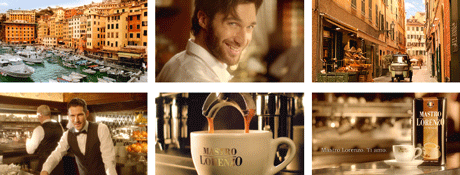
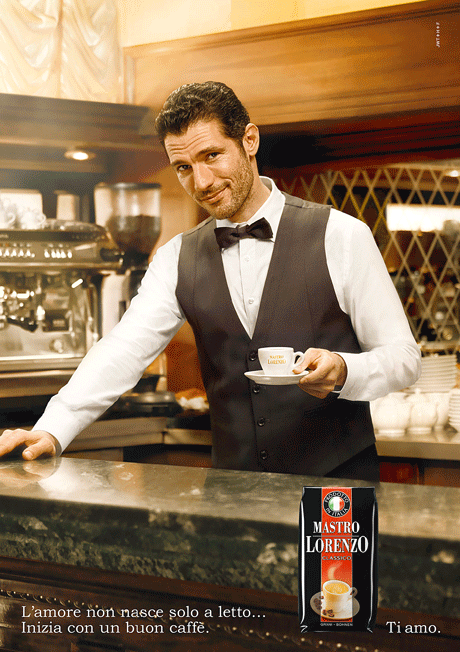
JWT+H+F has created a new campaign for Maestro Lorenze as a tribute to Italian culinary culture, featuring a commercial and a cover version of Umberto Tozzi’s hit «Ti amo.».

Maestro Lorenzo has been one of the most popular coffee brands in Switzerland for years. The quality product from Andezeno in Piedmont represents the highest Italian coffee-making art. In order to further sharpen this image, the agency JWT+H+F carried out a comprehensive brand analysis to identify the essence of the brand and established that Maestro Lorenzo contains everything that the Swiss appreciate about Italy: The passion for the finer things in life is expressed in the use of the best raw materials as well as in the time that is taken to produce and enjoy them. With a new campaign, JWT+H+F is now making "a veritable declaration of love to the Italian culture of enjoyment", as Remy Fabrikant puts it. Real Italian baristas also make an appearance in a commercial by Reto Salimbeni's Manifesto Films. pan

lorenzo1
lorenzo2
get_footer();