Montreux Jazz Festival advertises with a naked man

On Thursday, the Montreux Jazz Festival unveiled the poster for the 46th edition of the music festival: a naked man—photographed by renowned U.S. photographer Greg Gorman.

This year's Montreux Jazz Festival takes place from June 29 to July 14. The music programme has not yet been announced, but the organizers are already providing something to talk about with the poster.

For the second time in the history of the Montreux Jazz Festival since 1967, a photographer has been awarded "carte blanche" to design the poster. The American Greg Gorman staged a sculptural-looking male nude in front of a sand dune in black and white, according to the festival management.

Greg Gorman, born in Kansas City in 1946, has published nine books and realized hundreds of film and advertising campaigns in the fields of cinema, music and sport. He has photographed countless musicians, including Michael Jackson, Frank Zappa, David Bowie, Nina Hagen and Crosby, Stills and Nash. (SDA)

montreux

"Permanent employment is (not) antiquated" - A dispute

Trend researchers such as Matthias Horx and David Bosshart see more flexibility and fewer permanent positions as the working model of the future. Pascal Geissbühler from Branders takes a closer look at their ideas.

WW: What do you have to say to David Bosshart's theories?
Pascal Geissbühler: I found the core thesis that permanent employment is antiquated a very exciting hook to take a closer look at whether this is also true in our industry. I am referring less to the advertising industry than to my working environment in branding and corporate design. Current trend research with David Bosshart predicts a profound change for the future of work: the shift from an industrial to a knowledge and service society is blurring the boundaries between the home and working worlds, while mobility and flexibility are replacing the idea of the physical workplace. In Bosshart's view, lifetime employment is disappearing, as is permanent employment in general. A catchy thesis, but I experience the current reality differently.

How specifically different?
A look at the ten largest branding and design agencies in Switzerland, each with between 20 and 40 employees, shows that many companies still rely mainly on permanent staff. Yet these branding and design agencies are all companies at the interface between business and creativity. They are knowledge companies and bring strategies to life visually and communicatively. We are therefore precisely the representatives of this knowledge society that Bosshart and other trend researchers are referring to. Nevertheless, permanent employment with us is by no means antiquated. Part-time work is also only partially widespread in our company.

Where do you see the reasons?
The tenor in most cases is: Under 60 to 80 percent, the development and management of demanding customer projects can only be guaranteed to a limited extent. Increasing customer requirements demand more presence and only allow companies to provide part-time positions to a limited extent. Practice may vary from company to company. However, the majority of providers still seem to be convinced by the permanent employment model. A good number of permanent employees are also needed to be able to deliver the required quality in the required time - despite increasing competition.

The opposing theses come from trend researchers. So are design agencies moving against the trend?
No. The point is not to refute the thesis completely, but to mirror the trend thesis against reality. The developments described are not wrong in their basic tendency. But we should not forget that, in addition to buzzwords such as mobility and flexibility, at the end of the day we also need solid ground under our feet. The permanent employment model is still the reality for the majority of our industry and a dominant element. Of course, there are many companies that work with freelancers. Especially to respond to the volatility of the industry. They use freelancers to help out. But in the long term, this is only of limited interest to a company.

Isn't it also an economic consideration that it is cheaper to pay a fixed wage than to have to fly in expensive freelancers?
More importantly, it is incredibly costly for a company to build up knowledge. A lot of time and effort is invested. It can take around a year before new employees are well "on board". That's why the company is interested in retaining this knowledge and thus the employees. This is one of the main reasons why permanent employment is still attractive.

What else speaks in favor of a permanent position?
Standards and quality. We speak the same language. Quality is also due to a certain continuity in the composition of teams. This cannot be established again and again over a short period of time. Companies not only live from their services, but also with and thanks to the values they live by, which are shared by their employees. A permanent position makes it easier to create identification with the company. A corporate culture cannot be created with freelancers alone. Finally, at project level, permanent positions help to ensure operational management more easily. The people are on site and present. There is a faster flow of information. In addition, the customer prefers to deal with people who are a permanent part of their partner's team.

Is it different for advertising agencies?
Working with freelancers has long been established there. However, the permanent employment model is far from obsolete in advertising agencies too.

Google has permanent people - but in a completely free environment. Is this a model for the future?
It's an exciting model: freedom is celebrated there as part of work design. But it is also a different business. It involves a lot of research, development and new technologies. Whereas we, as a people business, have a lot of direct customer contact.

Where can freelancers be useful?
They are useful when specific tasks need to be solved and the expertise is not available in-house. For tasks that are not commonplace and where specialist knowledge is required. Or for a short-term peak in orders.

Interview: Andreas Panzeri

Is permanent employment a discontinued model? Is the "patchwork employer" coming soon?
David Bosshart, CEO of the Gottlieb Duttweiler Institute for Business and Society in Rüschlikon since 1999, has already presented interesting theories about our working world in various presentations. "International influences are changing our working world, flexibility and mobility, but also the merging of work and leisure are shaping the future of work," says Bosshart, for example. "We have changed from an industrialized nation to a laptop society. More people than ever are now doing their work on the move and are no longer dependent on a physical workplace," Bosshart also predicted at an anniversary event organized by the Swiss Employee Association KV Schweiz. In such a laptop society, the boundaries between home and work, between leisure activities and physical presence at the workplace will become increasingly blurred. Working time models that are already flexible today will become even more variable. According to Bosshart, the proportion of people who work in the same job for their entire lives or work in the same job for a very long time will decrease. "In future, we will have several jobs, not one after the other, but in parallel. There is nothing more antiquated than saying you have a permanent job," was also written in an article in the newspaper "Der Arbeitsmarkt".

p_geissbuehler
Pascal Geissbühler, Strategy Director at the consulting firm Branders in Zurich, is often confronted with personnel issues and therefore thinks about possible working models in a wide variety of directions.
 

Profeta: Two mailings created for Novasol

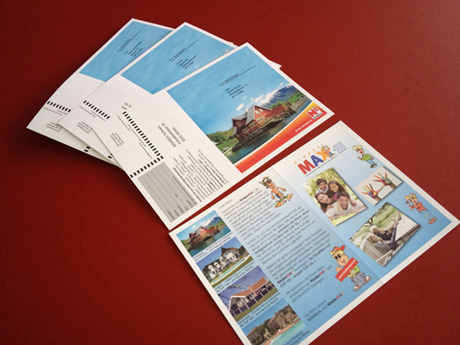
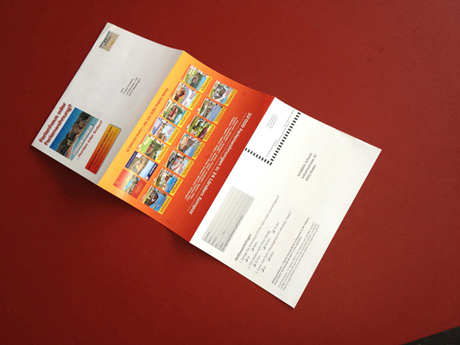
As part of a CRM concept for Novasol Switzerland, Profeta Kommunikation realized two specific mailings.

Customers who have made a booking in the last five years were contacted via a direct self-mailer. To intensify the response activities, a competition was also integrated. The main objective was to persuade the customers contacted - whether online, by telephone or via a travel agency - to make a booking. The mailing was also sent out at different time intervals. The first wave before Christmas and then two waves in January.

As part of a co-marketing campaign with Kinder Max, a specific direct response card was developed and sent to approximately 20,000 addresses. The aim of this campaign was to stimulate families with children to respond. On the one hand, they could order the subscription of Kinder Max at a reduced price and on the other hand, they could request vacation home catalogs from Novasol. This action was incidentally flanked by advertisements in the Kinder Max brochure as well as by online buttons and an e-newsletter.

Responsible persons: Eugen Profeta (concept and consulting), Corina Eberhard (photos), Jeannette Schade (texts), Othmar Gübeli (layout/design/litho), (Studiotextart, Conrad Müller (Studiotextart, editing/proofreading), Mike Kypreos (overall responsibility at Novasol).

mailing1_0
mailing3
 

Striking: Green is a color of hope

Small gifts keep friendships alive. That's what they regularly say at the Bern-based agency Formel 3.

After white slippers, a ping-pong bat and a rather quirky hat, three green ties have now surprised us in the editorial office. Are we supposed to bring some different colors into the generally fashionable black of the advertising industry? We asked the agency for clarification: By enclosing a 3D article, a mailing simply has a better chance of being read before it is disposed of. In addition, Formel 3 believes that such a neck tie also makes a better impression on customers. Even if the supplied tie can only be worn with an elastic band. "Nobody can do the right button for us," Formel 3 tries to justify.

aufgefallen

Tweeting was yesterday, pinning is today

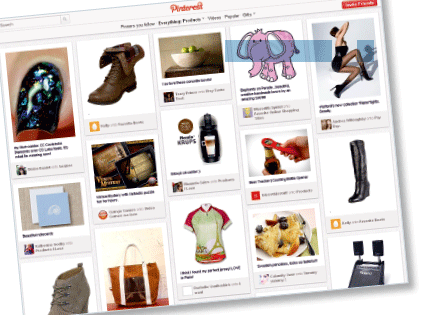
Thanks largely to its appealing design, the social media innovation Pinterest is a huge hit in the U.S.—and here in Germany, clones are trying to replicate the phenomenon.

The site is addictive: you can surf effortlessly through a never-ending stream of images that is constantly being compiled by users of the service. Once you've started, you can't get away from it for a whole 15 minutes and 40 seconds, if the data from Google's Doubleclick Ad Planner for an average session length is to be believed. It is not only the unusually long duration of use that is remarkable, but also the fact that women make up the majority of users.

Once a browser extension is installed, all you have to do is select a visual element of a website to immortalize it on a virtual pinboard on Pinterest. Short comments and keywords (tags) can be added and, above all, the image can be assigned to a category (noteworthy: the audience curates content). And many things work in the same or a similar way to other social networks: Anyone who likes a user's collection on a topic can subscribe to it, comment on the individual content and, above all, share it themselves on their own pinboard. The iPhone app can also be used to pin pictures from out and about (e.g. with inspiration from a shopping trip). And to increase the reach of your own pinning activities, new pins can be shared via Facebook or Twitter. Because it's so easy and playful, many see pinning as the new tweeting.

The site has long since found numerous applications: Artists (such as creative advertisers) use it to organize inspiring images, professional and amateur chefs use it to keep a collection of recipes, shopping lists can be kept visually, as can ideas for decorating different rooms in a home. It is already common for bridal couples in the USA to use Pinterest instead of thick ring binders to elegantly organize their wedding planning online and share it with friends and family. Individual pinboards can be shared by several users, allowing the service to be used for project collaboration. In the 21st century, visual communication dominates, especially when it is effortless to use: Pinterest is a simple and enjoyable pastime for people who like to be inspired by excursions into worlds of images. This makes it a pleasant alternative to the verbose flood of information that we are exposed to everywhere on the Internet (news sites, Twitter, Facebook, etc.). Above all, it makes it easier to participate, because pinning is enough - additional comments are useful, but optional. Pinterest is based on visual impressions and, from a popular psychological point of view, appeals to people with a dominant right brain, which is responsible for emotional, creative, pictorial and artistic aspects. And that also explains why not everyone thinks Pinterest is great: Where the world is primarily understood and handled with the left brain (logically, analytically, linguistically), the extensive lack of abstract information only generates a perplexed and dismissive shake of the head.

Money is already being earned
Pinterest was launched in December 2009 and was initially intended as a recommendation site for shopping (so-called social shopping). Although the site is still not freely accessible to the public, but only by invitation (so-called private beta), it has recorded steep growth rates in the USA since the summer of last year. Exact figures are not available, but in December the online market research company Hitwise reported that Pinterest receives 11 million visits per week, placing the start-up among the ten largest social media networks. A report by Shareaholic (a leading provider of an online sharing tool) recently attracted attention, stating that Pinterest generated more web traffic in January than Google Plus, YouTube and LinkedIn combined.

While the three Pinterest founders and their company Cold Brew Labs, a start-up in Silicon Valley near Palo Alto in California, were initially able to raise 10 million dollars from venture capitalists and a further 27 million in October, industry observers began to puzzle over how the site would ever make money. The usual recipes were offered: Stay free for as long as possible and without annoying advertising in order to achieve the widest possible reach, which can then be marketed. Or: generate revenue with advertising and sponsorship and highlight entries in return. Or: Selling apps and premium features. Or: selling processed usage data for targeting. A particularly clever variant has recently come to light: Pinterest is already earning money by changing users' pins. If a pinboard entry has a link to a product, which is very often the case, this link is exchanged for your own links with an affiliate tracking code. In this way, the start-up receives a commission on all sales made in this way. The idea is not the result of the company's own efforts and is also not new, but is an offer from Skimlink, which specializes in this form of website commercialization. It will therefore be interesting to see whether Pinterest will get off to a flying start with such social commerce activities alone. It also remains to be seen how the company will deal with accusations of copyright infringement.

Others are convinced that there is money to be made with this concept. The Pinterest concept has already been copied several times, sometimes with a strikingly identical layout. Because the original mainly attracts a female audience, there is Gentlemint, for example, which is primarily about "male things". Pinspire was launched in Germany and a lot of German content is also available on Openpin. These clones take advantage of the fact that the technology behind Pinterest is generally available. Part of Pinterest's success lies in the fact that two independently developed methods are used here in combination: Firstly, the technique of endless scrolling, as new content is continuously reloaded from the server without the user having to keep clicking on a link to go to a new page. On the other hand, solutions for a so-called masonry layout, as differently sized image elements are arranged in such a way that a seamless display is always created. There are already voices that consider this type of web design to be forward-looking.

Even if it is still unclear whether the Pinterest phenomenon can be classified as temporary hype or a permanent trend, the question for companies is what benefits can be achieved here and how best to proceed. There are already numerous insights and considerations on this in the American industry blogs.

Difficult Switzerland
It is now questionable whether Pinterest, like Facebook, will make the big breakthrough in Switzerland and become a mass phenomenon. Similar to Twitter, with which it can be compared, a hesitant spread is to be expected, mainly due to its US origin and orientation. For worldly avant-gardists, this may be the attraction, but it hinders access for a mass audience. Especially as the name of the site is also at odds with the local linguistic landscape, it is to be expected that Swiss content will be slow to appear and spread on Pinterest. It would therefore be easy to launch a clone for Switzerland. As described, this is not a major technical challenge and could even work - except for the commercialization: this requires quite extraordinary ideas for our small and fragmented market area.

Christoph J. Walther

pinnen
 

Top of the week: Major Swiss companies on the social web

91 percent of the largest Swiss companies are now active on the social web. This is shown by a follow-up study based on Barbara Kunert's master's thesis at the HWZ (Zurich University of Applied Sciences in Business Administration).

The social media engagement of Swiss companies has increased by a significant 29% compared to 2011. Facebook is maintained most frequently and has remained the frontrunner with 68%. YouTube follows close behind with 66%. With an increase of 38% compared to the previous year, the video platform has the highest growth rate of all social media channels. Twitter has doubled its activity to 53%. A major change can be observed in human resources. In 68% of large Swiss companies, employees are responsible for social media activities (up 29%). Overall, 57 percent of management members are involved in social media. Surprisingly, however, 36% of the largest Swiss companies state that their executive board members are not interested in playing an active role.

Media Focus: Advertising print only minimally down on previous year

In January 2012, advertising spending totaled 326.4 million francs, slightly lower than the previous year. However, the «Vehicles» sector—which accounted for the largest share of advertising spending—posted a 10.8 percent increase compared with the previous year.

With an increase in advertising pressure of just under 11 percent year-on-year (+4.1 million Swiss francs), the vehicles sector got off to a cold start, so to speak, in January 2012, Media Focus said in a statement. As can be seen in the list of the top 10 products, two car brands - the "smart PKW (neu) Leasing" and the Opel Corsa - made it among the most advertised products of the month. Both brands attracted with special offers.

Looking at the advertising volume in January 2012, one could say that the "Pharma + Health" sector was slightly ailing in terms of advertising behavior, or perhaps still in hibernation. Compared to the previous year, the gross advertising volume at the beginning of the year was reduced by 23.7 percent to 12.1 million Swiss francs (-3.8 million Swiss francs). The "OTC Pharma Products" division reduced its advertising print in January 2012 by 3.6 million Swiss francs year-on-year (-29.2 percent) and reported a volume of around 8.8 million Swiss francs. "Cough and cold remedies" and "Combination and multivitamin preparations" were advertised significantly less intensively this January. The "cold and flu remedies" segment, on the other hand, manifested itself as the most important segment within the "OTC pharmaceutical products" product group, with an advertising volume of CHF 1.8 million (+7.4 percent).

> To the Advertising Market Trend Report 2012/1 (PDF)

Dreipol: App for Appenzeller cheese realized

With the Talerschwingen app, a 19th-century tradition from the alpine herding culture around the Säntis is making its way into the App Store.

Appenzeller Käse commissioned the app, and the Zurich agency Dreipol is responsible for the concept, design and development. The app can be downloaded immediately here can be downloaded.

Responsible at Appenzeller cheese: Monika Storchenegger (Head of Marketing & Communications), Chris Gatsas (Project Manager Online Marketing). Responsible at Dreipol: Nino Cometti (Project Management), Philipp Läubli, Nino Cometti, Mario von Rickenbach, Michael Burgdorfer (Idea & Concept), Alain Groeneweg, Nino Cometti (Design), Gregor Falk, Simon Müller, Philipp Läubli (Game Development).
 

Waldemar Hartmann becomes SF expert at the European Football Championship

Waldemar Hartmann has already provided commentary for five World Cups, nine Olympic Games, and other major sporting events on ARD—and now SF is bringing him on board for the 2012 European Soccer Championship.

This is reported in the latest editions of the TV magazines Tele and TV-Star. Hartmann's expert appearances on the occasion of the FC Zurich - FC Bayern Munich duel in the Champions League qualifiers in August 2011 impressed those responsible at Leutschenbach so much that they immediately asked him for a further engagement. He will be analyzing several matches for SF at the European Football Championship in Poland/Ukraine. The 63-year-old Waldemar Hartmann was born in Nuremberg and has lived in Chur since 2000.

(Image: Keystone)
 

By Heart: Campaign created for Paul Kehl

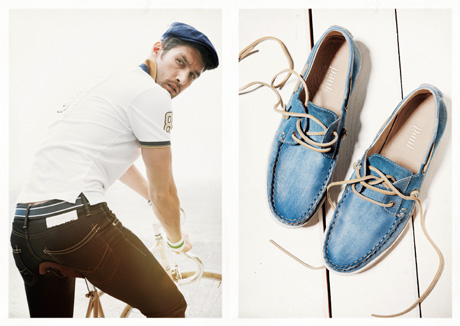
By Heart designs Paul Kehl’s seasonal campaigns. Under the title «Swiss Sports Club,» the current collection is presented season after season within a masculine sports theme; this spring, it’s set in a biker-themed world with a subtle vintage appeal.

Images were produced for a new brand booklet, but also a video of several minutes, which will find its use at the POS and on various online platforms. The Paul Kehl brand will thus step up another gear in the coming season.

Responsible at PKZ Burger-Kehl & Co: Ph. Olivier Burger (owner), Simone Schäfer (communications manager), Nadine Pless (communications planner). Responsible at By Heart: Hans Siegwart (CD), Markus Bircher (Strategy/Text), Nonda Coutsikos (AD), Natascha Breu (Realization), Misha Gambetta (Account Direction). Photo: Romeo Mori. Litho: RTK, Kloten. Video: Simon Jaquemet. Media: Thomas Rüttimann, Zip Media.


kehl1
kehl2
kehl3
kehl4
kehl5

Teleboy launches replay function

Starting immediately, users of the online TV portal Teleboy can access a replay library where, once activated, all programs from the 30 most popular channels are automatically recorded and stored for 30 days.

This means that users have 21,600 hours of TV programs at their disposal with full memory - including more than 1,200 feature films and more than 5,000 episodes of various series. In addition to the search function, various intelligent sorting mechanisms are available to the user: Content can be sorted by genre, by channel or by editorial tips. Additional filters are also available, for example if you are looking for programs in a specific language or from a specific broadcast date. This makes it easy to find the latest English-language action films, the best nature documentaries or the most popular TV series of the last month. Interesting content can be saved in the personal watchlist and can therefore be accessed quickly at a later date.

In addition to the replay function, the Teleboy Plus subscription, available for CHF 7.50 per month, offers the option of receiving 74 channels in the highest quality without advertising when changing channels. All programs can be recorded for an unlimited time in the online memory with a capacity of 20 hours and are then available for offline use as a download.

The replay function is initially available on Teleboy.ch (accessible via PC/Mac). Integration into the existing apps for iPad, iPhone and Android smartphone will be implemented shortly.


Google+: US users stay only two minutes

Google+ isn't really taking off. Although the number of users has reached impressive levels in a short time, activity still leaves much to be desired.

According to a survey by Statista, Google+ was by far the last most popular social network in the USA in December 2011, with an average visit time of two minutes. Although this figure also fell for Facebook in 2011, the gap remains enormous. The main beneficiary is Pinterest, the new star in the social media sky.

"Google+ simply hasn't caught on yet. The added value compared to the competition is currently not clearly evident, neither for companies nor for private individuals. Facebook has also quickly copied the unique selling points of Google+. Quantitative growth is not enough to convince the advertising industry. Quality in the form of active users is important," says Ed Wohlfahrt from edRelations to Pressetext.

The average time spent by users on Facebook fell from over 25 to under 20 minutes last year. Pinterest was able to keep its fans on the site for just under 15 minutes on average in December 2011. This represents an enormous increase. At the beginning of the year, the average user stayed on the platform for just five minutes. Even Google+ only managed to reach this figure once for a short time, shortly after its launch in the summer of 2011. Since then, the time spent on Google+ has been bobbing along, with a downward trend.
 

get_footer();