Prospects for older employees in advertising agencies

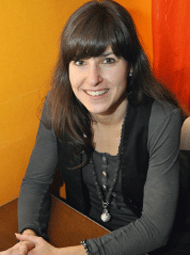
Ursula Krebs, a former advertising director, is seeking advertising professionals working with the 50+ age group for her thesis toward a Master of Advanced Studies in Gerontology at the Bern University of Applied Sciences. *Werbewoche* is supporting this broad-based survey.

The survey aims to identify action strategies for the professional future of older employees in advertising. Anyone wishing to take part in the computer-assisted survey will find here the link to the questionnaire. All information will be treated confidentially.

Subjects are still being sought for the qualitative interview with people 45 and older. They can contact [email protected]

An interview with Ursula Krebs as well as statements by Swiss advertisers on the subject of age and advertising can be found in the latest Print edition of the advertising week.

Prospects for older employees in advertising agencies

Categories

Uncategorized

New Bern online magazine: launch planned for June

Funding for the launch of the planned Bern-based online magazine has been secured. The new online newspaper plans to go live next June.

The Bernese Online Media Association received substantial donations from the Foundation for Media Diversity in Basel, the Ursula Wirz Foundation in Bern and other private individuals. This has secured the start-up phase, writes the association in a press release on Thursday.

Further financing is still open. The aim is to finance the project in the medium term through membership fees, the press release continues. The association is convinced that a committed readership is also prepared to pay for content. To secure further funding, it would need around 1,500 association members who pay an annual subscription of CHF 250. Since the project was launched last fall, over one hundred private individuals have made an initial contribution of 500 francs, according to the association. The association currently has around 150 members.

In terms of technical implementation, the association is aiming to cooperate with Tageswoche in Basel, which was launched last year. There are currently no plans for editorial cooperation with Tageswoche.

The next step is to fill the position of editor-in-chief. This will be headed by a five-strong editorial team, who will share 3.5 full-time positions. The search for suitable premises is also underway.

The new magazine aims to contribute to the diversity of opinion in the federal city. The board of the supporting association includes city councillors Urs Frieden (Greens) and Thomas Göttin (SP). Numerous creative artists and politicians from the left-green camp are on the initiative committee. (SDA)
 

Budgets of the week

Ogilvy Interactive, Numéro10, Comqed Dialog, Future Connection

Ogilvy Interactive: Helvetic Tours won
Ogilvy Interactive created an online decision-making tool for undecided beach vacation customers for the Facebook page of Helvetic Tours. And was thus able to secure the pitch for the promotion of the beach holiday catalog.

Numéro10 for ImmoStreet in German-speaking Switzerland
The French-speaking Swiss real estate portal wants to gain a foothold in German-speaking Switzerland and has commissioned the bilingual communications agency Numéro10 in Bern with the mandate. TV commercials, advertisements and posters are planned. The campaign is scheduled to start next spring.

Comqed Dialog defends GE Money Bank account
The development of a new website was put out to tender by GE Money Bank Switzerland as a pitch. Comqed was also allowed to take part in the competition as the existing lead agency. The agency successfully defended the account.

Future Connection wins Uroviva
The Zurich-based communications agency Future Connection has won Uroviva - a specialist in urology - as a new client. The budget includes the new concept, design and implementation of all communication media.
 

Heads of the week: In the Wild West

Reto Steiner and Daniel Scheuzger have transformed Bern’s first advertising agency into a startup. The new Hofer Kommunikation is a full-service agency with 12 employees located in Westside.

kdw3

Anyone who clicks on their website first lands in a Wild West movie. A group of dynamic horsemen blasts through the picture, pursued by a Travelling. The cowboys are chasing west. Above them, the opening reads, "Hofer Kommunikation was the first advertising agency in Bern and has been nurturing local and national brands with fresh ideas and compelling campaigns for over 60 years." The film images are kept in a historical-looking black and white. The medium on which they are shown is the modern Internet. In this tension lies the concept for success.

Two years ago, Hofer Kommunikation, rich in tradition, once again mutated into probably the "oldest start-up" in Switzerland. At the beginning of 2010, Reto Steiner and Daniel Scheuzger each took over half of the former Hofer on Bern's Stauffacherstrasse. With the new management, a fresh wind soon blew through the time-honored agency. As a sign of this new beginning, Hofer Kommunikation moved to the promising district in Bern West a few months ago. As the first tenants in an open-plan office, the advertisers have a direct view of the consumer activity in the Westside shopping and experience center, which opened in 2008. The center was built by star architect Daniel Libeskind, and its modernist style clearly radiates its power to Hofer's workplaces. "You feel like you're at the gateway to something new here. The area is also known as the Wild West of Bern. There is a bit of a gold rush atmosphere ", interpret Daniel Scheuzger and Reto Steiner and thus once again create a bridge to the introductory film on their website.

Images from times long past and modern media: this tension between innovation and tradition is also evident in the interior design of the agency's new rooms. Airy vistas and elegant metal contrast with a wooden floor full of knotholes and computer desks made of rustic tree trunks. This tension is also intended to resonate in the work: Contemporary new ideas for clients who have been loyal to their old Hofer for many years.

Hofer is Bern's first advertising agency and was founded by Max Hofer. The story of the "Reklamebüro M. R. Hofer" began in 1950 with an advertisement for the then already prestigious Toblerone brand. Also in the first year, the traditional company created the entire advertising for the watch brand Roamer Watch. This work went around the world. Later clients were Vespa or, in the sixties, the detergents of the Schnyder soap factory in Biel. For these, for example, Hofer had Sibonet itself foamed in seawater. With Dan Air, the first flight connection from Bern to London was advertised in 1970. In 1980, the Hofer slogan "Say it quickly by phone" became a catchphrase. From the 1990s onwards, Hofer increasingly became a specialist in public relations. The agency was considered a safe address for conservative values. Nevertheless, in 2000, as a novelty at the time, the creative people at Hofer dared to win over young customers for SBB with a cartoon character. That was the time when Daniel Scheuzger - just returned from abroad - sought his re-entry into Switzerland at Hofer.

Daniel Scheuzger first completed an apprenticeship as a draftsman. There he discovered his desire for somewhat freer design. Scheuzger decided to emigrate to Hamburg to study graphic design. After completing his training, the freshly graduated advertiser from Switzerland earned his spurs in the advertising mecca. In addition to engagements at other agencies, he finally landed at Springer & Jacoby. There, he was able to learn a lot about creative advertising from some of the industry's luminaries. Back in Switzerland, however, Scheuzger did not want to continue working for one of the hot agencies in Zurich. He was more tempted by a new challenge: as AD, he wanted to lead Hofer Kommunikation in Bern to success with fresh ideas. It was there, after nine years, that he met his current business partner Reto Steiner.

After training as a primary school teacher, Reto Steiner studied at the Swiss Jazz School in Bern. He then trained as a drawing teacher SLA at the University of Bern and worked as a drawing and music teacher. In addition, Steiner devoted himself to his passion for comics. Together with the well-known "comic freak" Fiscalini, he won several prizes at the international comic festival Fumetto in Lucerne. His passion for music was not without consequences either: Steiner played in various bands from jazz to funk to SKA to rock. With his band Anshelle, he released the debut album "Neuland" on BMG Ariola.

Steiner then supplemented all this creative work with management training: In 2007, he graduated from the Bern School of Design with a federal diploma as a media manager. He gained further experience in the advertising business at two smaller agencies before joining Hofer in 2008.

It was there that Daniel Scheuzger and Reto Steiner first met about three years ago. Very quickly they discovered that it was not only their former passion for music that connected them - Daniel Scheuzger also studied classical clarinet at the Bern Conservatory for eight years. As a duo, however, the jazz musician and the classical musician harmonized even better in advertising: "We immediately discovered that we find the same ideas creative - just as we find similar proposed solutions useless. In addition, we are united by the will for entrepreneurial thinking."

Naturally, the two young entrepreneurs considered whether it made more sense to lead Bern's oldest advertising agency into a new age or perhaps it would be better to make a completely independent fresh start with their own start-up. However, a number of long-standing, loyal clients were in favor of the takeover, and they were quite willing to look for future-proof strategies for their communications tasks, even with a young creative leadership.

The new management duo has retained the name. The newly created H is the distilled essence of the Hofer brand. On the one hand, they want to go "back to the roots" - back to the pioneering work that the Hofer advertising agency did in the 1960s. At the same time, they want to bring "these true values" into the age of the Internet, YouTube and guerrilla marketing. "Steiner and Scheuzger are convinced that "throughout history, the only thing that counts in all media is the idea. But this must of course also be able to be sold. In their presentations to customers they were able to take over from the "old Hofer" portfolio, the new wilds from the Westside in some cases come up with two proposed solutions - a traditional one as well as a somewhat bolder idea. "And more and more, we are able to win over our customers for the younger solution," the new bosses are pleased to report.

The advertisers at Hofer Kommunikation work according to the "cherry principle". On the one hand, the cherry stands for the ultimate in freshness, taste, naturalness and perfection of form. "That's how our work should be, too. On the other hand, the cherry is the perfect analogy for our working methodology. Only when we know the core, the hard-researched facts, do we envelop it with the fruit, the crisp idea," Scheuzger and Steiner explain. Daniel's business card says Creative Director. Reto is Managing Director. But the division of labor is fluid. Hofer Kommunikation currently employs twelve people. This size is ideal for Scheuzger and Steiner. In addition to their responsibilities as agency heads, there is still enough room in this group for active involvement in the creative process.

Andreas Panzeri

kdw2

New start at Westside
Hofer Kommunikation's offices are located around the Center Westside and exude a modern glamor. Hofer's new clients include Migros with the Voi store concept, which Hofer helped develop in 2008 and continued in 2011. The campaign for the login training association was a success story: In this trilingual campaign, young people are inspired to take up one of the 22 professions at the SBB or other transport companies - of course in a youthful, target group-oriented manner. The new Hofer campaign for Sana24 is just as unpretentious, using an online game to draw attention to the savings potential offered by this health insurance company. For Lindenhofspital, Hofer Kommunikation is responsible for the concept and design of a specialist magazine for doctors and one for patients. The agency is also active in the health sector for Amavita, the largest pharmacy network in Switzerland.
 

Practical training - even more so today

She’s 24, he’s 44. She graduated in 2011, he in 2004. Seven years, as sales experts Andrea Preid and Daniel Käch know, is a long time. For Swiss Marketing, these two talented professionals are looking back on their careers. And they agree: The training period was tough. But the hard work was definitely worth it.

Daniel Käch went back down to the cellar. He found folders and loose sheets of paper, neatly arranged in a carrier bag. There they are again, all the case studies he wrote during his time at school in 2003/2004. Back then, when (in addition to a 100% workload) two evenings a week and the whole Saturday belonged to SAWI Dübendorf. "I underestimated this training," summarizes Käch. "But it was a positive kind of drill. I'm still proud of what I achieved back then."

The Stäfner decided to train as a sales coordinator (VKO), as today's sales specialists were called at the time, because he wanted more background knowledge on sales topics. "And because at the time everything was moving in the direction of marketing planners (now marketing specialists), I deliberately chose the other path."

University of Applied Sciences: Not practical enough
When Käch sweated through her exam in 2004, Andrea Preid from the Zurich Oberland was just in her second year of her commercial apprenticeship. Ambitious even then, she embarked on further training as a sales and marketing specialist at the Zurich Swiss Marketing Academy in 2010. "I didn't want to lose touch and wanted to complete further training that was federally recognized and worth something in the business world." The double training package seemed suitable to her, "because it allowed me to further improve my understanding of the interrelationships in sales and marketing". A university of applied sciences was out of the question: "I wanted a practical qualification in a short space of time."

New name, new disciplines
A lot has changed since Daniel Käch graduated eight years ago - and not just the different name. "Instead of eight, we now have 13 examination subjects," adds Hans-Jürg Gehri, who has been president of the examination board for 18 years. "But the examination time still lasts 13 hours." The result: more work for the experts. They also have to stop working when they reach retirement age: "It's not acceptable for a 22-year-old candidate to be questioned by a 68-year-old expert." This is also because the field of information technology (IT) has developed rapidly and is now integrated into all subjects. Topics such as self-management, rhetoric and personal leadership skills are much more important today than they were at the beginning of the millennium.

High hurdles for practical specialists
The requirements for practical knowledge have been significantly increased. The MarKom hurdle is also new: Only those who pass the pre-test are allowed to take the professional examination at all; and those who have not acquired 24 to 36 months of experience in sales with customer contact are not admitted. But one thing, says Gehri, has remained the same: "The case studies are based on daily business, because we want to train specialists from and for the real world."

Since 2004, around 400 candidates have taken the exam each year. Of these, around 1750 sales coordinators, or sales specialists, have been newly certified since Käch's year.

On the right pile thanks to training
Seven years is a long time. A lot has changed - new topics and terms have been added. When Käch and Preid talk - they met for the first time for the Swiss Marketing Talk - the similarities still outweigh the differences. Even today, people still write by hand at school - especially in preparation for exams. Even today, you still sharpen your business sense with case studies. And even today, school is still a slog: "It's all work and study. You give up your hobbies almost completely. And for a year, I practically only shopped via LeShop," says Preid. Both agree that the diploma counts for a lot. "Without this paper, I wouldn't have had many career opportunities," says veteran Käch. "The diploma helps you land in the right pile when applying for jobs," says Preid.

Personal, technical and professional benefits
In view of the new disciplines of rhetoric, self-management and personal leadership skills, Käch almost feels a little envious: "That didn't exist back then. But of course these are subjects that make perfect sense." Like the entire training, they both agree. They have been able to fill their personal knowledge backpacks: "A complete package of sales knowledge, a more profound understanding of market research," says Käch. "I now know exactly what the professionals are talking about and understand the interrelationships in marketing and sales," adds Preid. Or to put it more succinctly: it was a tough case study for life.

ausbildung1_0_300x170
The generation talk shows differences, but above all many similarities
Sales experts Daniel Käch and Andrea Preid are convinced that they made the right choice with their further training.

d_kaech
"Without this paper, I wouldn't have had many career opportunities"
Daniel Käch, Stäfa ZH, age: 44, career: Apprenticeship as a cook and service specialist, then in the event and catering sector, call center supervisor, event sector, currently customer advisor at a cantonal bank, sales coordinator certificate (VKO) obtained: June 2004

a_preid
"I didn't want a university of applied sciences, I wanted a practical degree in a short time"
Andrea Preid, Dürnten ZH, age: 24, career: commercial apprenticeship with vocational baccalaureate, then in event management, currently key account manager at a business travel specialist, specialist certificate for internal sales specialists (VFL) and marketing specialists (MFL): June 2011 and September 2011
 

Sunrise dresses Cobra streetcar

Starting February 17, 2012, Sunrise will put a tram fully branded with the company’s «look and feel» on Zurich’s tram tracks. The tram will serve as a brand ambassador for one year.

VBZ has approved five of its current Cobra streetcars for a complete livery, Sunrise wrote in a press release on Thursday. Sunrise has seized the unique opportunity for an unconventional appearance on the streetcar track as the only telecommunications provider in Switzerland and branded a "Züri-Tram" completely in the Sunrise world.

The streetcar will be on Zurich's streetcar tracks for a whole year as a brand ambassador for Sunrise, according to the press release. It will be integrated into the regular transport operations of the VBZ network on various routes. The Sunrise streetcar is dressed in the company colors both inside and out. Passengers will be informed about new products, promotions and other news from the Sunrise world on six permanently installed screens. The screens in the streetcar also show the specially produced making-of film, which documents the transformation of the ordinary VBZ streetcar into the colorful Sunrise streetcar.

sunrise

Webguerillas Zurich with new managing director

Philippe Stuker is the new managing director of Webguerillas Zurich. He replaces David Eicher, who continues to head the agency's Munich office.

Stuker has been working in online marketing as well as in classic advertising for 13 years, as the agency writes in a statement on Thursday. In the process, the business economist has held various management positions in Germany and Switzerland. In 2002, the now 38-year-old founded the advertising agency Phil & Co, specializing in interactive and cross-media marketing strategies. In 2007, he was awarded the "Best of Swiss Web Award".

In 2008, the Zurich native moved to the advertising agency DD Com as head of department. His responsibilities included the strategic and operational development of the new media department as well as project management for new media and classic communication. Stuker looked after clients from a wide range of industries, including Skoda, SV-Group, Jelmoli and Swissbau.
 

Swiss Marketing Day with many celebrities

Why should you attend Swiss Marketing Day? Because 1,000 people from across the industry—from all sectors and at all levels—gather there to network, say some. Because the speakers open up new perspectives for the audience and surprise them with their ideas and experiences, say others. That’s why everyone is gathering again this year on March 6 at the KKL Luzern when the Swiss Marketing Day opens its doors. This year’s theme is «Doers, Power, and Markets.».

How do market innovations work? How do you create your own market? These questions are answered by prominent movers and shakers. They create markets that never existed before. And they extend the power of products and services to these new markets. Six renowned speakers will take a closer look at these questions and share their successes with the audience.

The spirit of sport
Lord Sebastian Coe's life reads like a Hollywood movie: as an athlete, he set eight world records for the middle distance. From 1992 to 1997, he campaigned for the Conservative Party in the British Parliament. His crowning achievement was bringing the 2012 Summer Olympics to London. An event of this magnitude opens up new sources of economic revenue. Coe explains how a new mega market is being created with marketing and know-how.

From market driven to market driving
Professor Nirmalya Kumar has defined the perspectives of market orientation. The leading strategist and marketing expert explains how to become a driving force instead of being driven by the market. He illustrates his explanations with examples, videos from the world of consumer goods, services and business marketing.

About learning, living and enjoying
"Moral feelings. Why we act differently than we think." Dr. Richard David Precht will be speaking and philosophizing about this at the Swiss Marketing Day. He will reveal how to learn, live, enjoy and protect children from attention hogs. These speakers will also explore the secrets of (successful) living: Prof. Dr. Claus Hipp, who has developed the HiPP brand into a leading manufacturer of baby food. Philipp Justus, CEO of zanox, will guide the audience through the electronic jungle and show that not all online is the same. And as punctual as a Swiss watch, Jean-Claude Biver, CEO of Hublot SA, answers questions from presenter Susanne Wille.

The trophy
Who will receive the coveted Marketing Trophy this year? So far, only the jury, which awards prizes to marketing projects in the categories of small, medium-sized and large companies, non-profit organizations and a gold winner, knows. With Niina Eschmann, Sabina Furler and Christine Hallier Willi, three women have joined the expert jury.

Further information and tickets at: www.marketingtag.ch

smt1
smt2
 

Kommtech study: How Switzerland uses electronic devices

The Kommtech study by Publica Data, in collaboration with IGEM, once again provides this year’s key figures on the use of the Internet, television, radio, telephones, movies, video games, and consumer electronics.

The results show that traditional forms of use are still strong. Although time-shifted television consumption continues to increase, more than half of the Swiss do not want to know anything about it. A classic desktop PC is also still the most common form of Internet use at home. However, the mobile laptop has almost caught up here, while tablet computers are only used by a small proportion of the Swiss despite a sharp increase. The Swiss continue to obtain their daily news from the traditional media (television, radio, paid newspapers), while the Internet and free newspapers are in a neck-and-neck race for fourth place.

The trends over the years clearly show that the much-cited change is particularly relevant among young people, but is taking place less quickly than expected in the population as a whole. In Switzerland, there are still three times more people who use a cassette player to listen to music than those who use an iPad. For the first time, the current edition of the KommTech study also includes figures on social networks. When asked about the most important network, almost three quarters of the users surveyed gave only one answer, namely Facebook.

How often social network users can be found on their profiles, what is purchased where on the Internet and what the Swiss prefer to play on can be found in the study, as can the most common cell phones used by the Swiss and their favorite functions. The study thus provides a comprehensive insight into the use of electronic media, which is of great importance for advertising planning and media analyses. A total of 2,500 people aged 15 and over were surveyed by telephone in all three parts of the country. The results of the study can be downloaded from  Publica Data in the form of a standard report or as online access for individual analyses.
 

Spiked: Brand ambassador with a bad image

Simone Fankhauser on prejudices against car brands.

Stuffy, unathletic, arrogant, not environmentally conscious, unattractive and serious. Do these characteristics apply to you? Then you probably have a Mercedes in your garage. Or would you rather describe yourself as a cosmopolitan, attractive, sporty, slim and cheerful personality with a slight tendency towards arrogant behavior? Then you are probably driving a Mini. If you buy a car, you get numerous prejudices for free. This is confirmed by a study conducted by Progenium GmbH, a Munich-based company specializing in management consultancy. Last November, it asked 1000 Germans what attributes they ascribe to drivers of selected car brands. The result was that Mercedes drivers are the bogeymen and women on the roads. In terms of arrogance and lack of environmental awareness, they are beaten by Ferrari drivers. However, the latter are considered to be less stuffy and, above all, attractive, slim and sporty, which is why they come off slightly better in the overall rankings. Is it all just prejudice? Unfortunately, this is only part of the truth.

A few examples: A friend of mine was recently hit by an off-roader while walking in a parking garage. The driver neither apologized nor asked how she was. Or my neighbor, the proud owner of a Maserati. When I push the baby carriage into our Honda Jazz in the parking space next to her and greet her politely, the most I get is a grim look. The door slams shut and she speeds off with a roaring engine. Arrogant, stuffy, serious, not environmentally conscious. That's how prejudices are formed. Or when adrenaline junkies start criminal overtaking maneuvers in their Seat on the highway on Saturdays. Or when the Audi driver sticks to the back of you even though you're already traveling at maximum speed. If I try really hard, I can hear my mind whispering that not all off-roader drivers are reckless, Maserati drivers arrogant, Seat owners speeders and Audi buyers tailgaters. But these images are ingrained in my mind. Even worse: the behavior of the drivers influences the image I have of the car brand in question. In view of the study mentioned at the beginning, I'm obviously not the only one who feels this way. This fact must be correspondingly bitter for the car manufacturers. Millions are invested in the brand image and the buyers, to put it bluntly, make a mess of it. When a company chooses a brand ambassador, it chooses them carefully. Who embodies the same values? And who can credibly communicate these to a broad public? But that doesn't seem to play a role when buying a car, even though the drivers are brand ambassadors in the broadest sense. Shouldn't car dealers be obliged to feel out potential buyers? To check whether their values match those of the brand? This much is certain: a corresponding approach would solve many problems at once. No more traffic jams, considerably less particulate pollution, fewer traffic fatalities, fewer parking spaces and therefore more green spaces. Yes, the number of vehicles registered would be drastically reduced - in any case, I am not aware of any car brand that positions itself as stuffy, unsportsmanlike, arrogant, not environmentally conscious, unattractive and serious.
 

Not all crises are the same

When is a crisis a crisis? Not every misfortune or negative headline automatically leads to a reputational crisis—and only such a crisis is truly dangerous for companies and individuals in positions of responsibility: People can be forced to resign, and in extreme cases, companies can even be destroyed. It is therefore worth analyzing an event carefully before taking the appropriate communication measures. Patrick Rohr on crisis communication.

p_rohr_0
A crisis is, by definition, the "break in a continuous development" or the "disruption of the process that could normally be expected". The cause of a crisis is always "an internal or external irritation, a disturbance or a problem". In other words, before a crisis can occur, something has to happen that disrupts the usual course of events.

An event can actually lead to a crisis for the company. Let's take the example of a fire in a joinery and imagine that the entire stock and practically all production equipment and the production hall are destroyed.

This event meant a major crisis for the company: it could no longer supply the products it had already manufactured, production at its own site was out of the question for the time being, customers had to be put off and major losses had to be accepted.

The event does not necessarily lead to a reputational crisis, which would have a lasting negative impact on the company. In an initial phase, the media report on this type of event neutrally and stick to the facts. If, at a later stage, no self-inflicted fault or negligence is established as the cause of the accident, the public reacts to the event with lasting concern and regret, which can even be beneficial to the company's reputation.

The opposite is true for the following (real-life) example: A patient died during a routine operation at Langenthal Hospital. The reason: an operating nurse had mixed up two blood reserves. Blick reported on the incident on its front page.

Such an event does not represent a crisis for the company. As tragic as it is, deaths are part of everyday life in a hospital and do not disrupt operations. And even if there is an investigation after such a case: Hospital operations are not affected.

However, such a headline can be very damaging to the hospital's reputation. If a company fails to communicate quickly and correctly in such a situation, it suffers a serious reputational crisis which, in the worst case, can even destroy its existence.

Communicating correctly means that the hospital management, which must take the lead in communication in such a situation, must take the lead,
- discloses all known facts
- shows a willingness to take responsibility ("We are doing everything we can to find out how this could have happened, we must prevent it from happening again").
- Demonstrated leadership ("We immediately ordered an investigation and tightened the safety regulations.")
- expresses regret and sympathy ("We are very saddened by this incident, our thoughts are with the relatives of the deceased patient").
It is fatal if the hospital management
- shows no willingness to communicate
- shows no concern
- assumes no responsibility
- does not strike the right note ("Something like this can always happen.")
- claims ("Our quality management has not failed").
- Salami tactics (only just admitting what the media can prove anyway).
So when a company cries out "Crisis!", it is our job as communication experts to help it analyze the event and choose the right communication measures. Not all crises are the same, and not all crisis communication is the same.

Patrick Rohr (43) is a communications consultant and author. The company of the former TV presenter ("Arena", "Quer") offers media and crisis training and makes video and TV productions ("Basler Zeitung Standpunkte"). His guidebooks "Reden wie ein Profi" and "So meistern Sie jedes Gespräch" (published by Beobachter Buchverlag) have become bestsellers. www.patrickrohr.ch.

buchtipp
Book tip
Concise statements in interviews, media releases that get published, crisis communication that convinces: Patrick Rohr reveals the secret of successfully dealing with the press, TV, radio and the new media. His guide is aimed at entrepreneurs, politicians, representatives of associations and authorities. 224 pages, Fr. 45.- 1st edition, 2011 ISBN 978 3 85569 464 8
 

get_footer();