"What needs to be learned is self-marketing"

Following Maggi and Migrolino, this year marks the third time a spot by Manifesto Films—this time for UPC Cablecom—has won the «Campaign of the Year» competition. Director Reto Salimbeni takes this success as an opportunity to share a few thoughts on Switzerland as a film production hub.

r_salimbeni
WW: Since your success in Werbewoche's "Campaign of the Year", you have already delivered another three films for upc Cablecom. Other local filmmakers complain that more and more commissions are going abroad. And rightly so?
Reto Salimbeni: The commercial film business is basically an international one. We also benefit from American or German clients, for example, for whom we shoot. But it is a bit special that there are well-known Swiss companies that generate 100 percent of their turnover in Switzerland and have hoisted the Swissness flag on their roof - and then still consistently have their advertising films produced abroad.

You also have a production company in Vancouver, shoot a lot abroad and have filmed for major British and American agencies. What is different from Switzerland?
The differences in production have become marginal. Today, there is an international production standard that is similarly high everywhere. We shoot abroad if the location or the talent requires it or if it's a foreign client. But we also like to shoot frequently in Switzerland, where a lot has happened in recent years. I have also founded a service production company here that brings orders from foreigners to Switzerland through acquisitions. I found it significant that three of the four nominated spots in the "Campaign of the Year" competition were shot by Swiss productions with Swiss directors. Each of these commercials has an international format and could have won.

Do Swiss filmmakers enjoy too little trust?
There is a lot of talent and potential in Switzerland. What we need to learn is how to market ourselves. We were brought up by our parents to be modest and reserved. Those were the virtues of the last 40 years. Because we had lived in a lush meadow where there was enough for everyone, we could afford to cultivate this relaxed attitude. But this virtue is no longer of any use to us, times have changed radically. There are many more competitors crowding onto the field. We have to show our colors, be self-confident and represent our own interests with commitment.

We often hear that production abroad is cheaper?
Eastern Europe is certainly cheaper for certain concepts - for example with elaborate decor buildings - because we lack the corresponding studio culture. But otherwise the price differences have become small.

After your Manifesto was able to present Claudio Zuccolini and Kaya Yanar for the "Campaign of the Year" in recent years, this year it is Carlos Leal. Are commercials with celebrities more successful?
You can't say that across the board. The important thing is that the brand and the star are compatible. The star must come across as credible and must not bend over backwards. The Swiss don't like puffery, they appreciate charming irony. If this is the case, then a celebrity advertisement inherently attracts a little more attention. This is also reflected in the increased interest of the media. Online media in particular like to report on such commercials. However, if the commercial is not good, the audience gets annoyed with a star much more quickly. This is bad for all parties.

You have just delivered three new commercials with Carlos Leal. How does this star fit in with upc Cablecom?
upc Cablecom is a very dynamic company which, after the problems of the past few years - or more recently these days - is consistently working on a high-quality offering, looking to the future and facing up to the challenges of the market with a clear, transparent and entertaining communication strategy. That suits Carlos. He has also set off for new shores with his Hollywood adventure, is optimistic and, thanks to his multicultural past, is a credible representative of Switzerland today. He even speaks all three languages. For example, we can shoot all the commercials in German, French and Italian. This is much more time-consuming than dubbing, but we want the commercials to be perceived as authentic in all parts of the country.

Does the director need a special concept when filming with Carlos?
Carlos was a musician, and he brings an incredible energy from this period of his life. The "live animal" still beats inside him. I call his type of actor the "Vesuvius type". Whatever we discussed beforehand, in the studio, when he's in front of the camera, something unexpected will happen. That's why I let the cameras roll during rehearsals. You never know.

Can't the vision of the concept be neglected in the process?
I see such moments as gifts that need to be accepted. They often result in something much better than you originally thought - you just have to be open to it. I manage that well today. As a young man, I was of course still climbing the walls because I considered my ego to be more important than the situation at hand. But luckily you learn as you go along ...

Great expectations are attached to a commercial in this competitive situation, as in telecommunications. Plus the whims of the stars. How do you deal with the pressure?
I've shot with rock stars in sold-out stadiums and the singer wanted to completely change the shooting concept five minutes before the start of the shoot ... I'm used to a lot and have learned to combine the energy of the moment, which is actually wonderfully creative, with the original concept in such situations. You need a mixture of maximum concentration and composure at the same time.

Who was the rock star?
I just forgot ...

You have worked with Til Schweiger, Matthias Schweighöfer, Nora Tschirner and many other big names. What is special about working with celebrities?
All the stars I have worked with have been characterized by one thing in particular: an extremely high level of perception and knowledge of how they affect the audience. It is important to respond to this. Because someone is a star because they seem to do exactly that with success. I take this know-how seriously and deal with the celebrity. What do they expect? Can they fulfill the requirements of the job in the way the customer thinks they can? It's like having two customers. Because if the star isn't happy, then ultimately you don't have a good product.

Interview: Andreas Panzeri
vb

Vizner Borel: Three new spots for UPC Cablecom
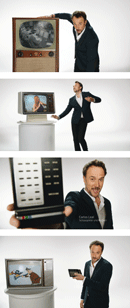
On February 29, 2012, SF DRS, TSR and RSI will switch to HD. The prerequisite for this is a digital connection from upc Cablecom. Vizner Borel is communicating this for upc Cablecom with three new TV commercials from Manifesto Films.

The main actor this time is Carlos Leal. The actor and musician turns back the clock on the television age for all viewers, presents the greatest milestones in television history and makes it clear to everyone that HD quality is guaranteed with upc Cablecom. The commercials can be seen on all major television channels and are accompanied by various measures.

 

"Journalism and the media need a more important status"

Hugo Bigi—media scholar, journalist, and host—on the role of journalism schools in Switzerland and why media literacy should be a political issue.

bigi_0

WW: Hugo Bigi, have you ever attended a journalism school?
Hugo Bigi: Visited no. I am one of those who entered journalism 30 years ago via university studies. I was lucky enough to learn the journalistic trade from scratch with Roger Schawinski and his still small Radio 24 team in the early 1980s.

In your dissertation, you examined the diploma training at the MAZ School of Journalism. What are the benefits of such training for individual journalists?
I did not examine the MAZ, but the journalists who attend this school. A journalism school like the MAZ teaches a newcomer the professional craft and promotes self-confidence. After such training, the graduate feels more like a journalist than before. Networking with lecturers and journalists from all over Switzerland makes young journalists aware of who they are and where they can position themselves within the media industry. In this respect, MAZ graduates have a great advantage over those who complete a purely theoretical education, such as journalism students at the various universities. The MAZ graduates are already in the industry.

The training helps students to feel more like journalists. What does this mean in concrete terms?
Students have knowledge of the Swiss journalism market. They gain insights into other functions. Many lecturers at the MAZ are recognized journalists and editors-in-chief in the industry. The newcomer learns how journalism works as an industry, gets to know the system, the mechanism. This is helpful for their own assessment. What are my chances? Is it worth changing jobs now? Many of the students therefore think very economically.

Journalists only think about money and careers?
No, not only. But my study shows that the social responsibility that journalists traditionally have or should have is not the top priority for many students. It is primarily about getting fit for the market, benefiting in terms of career and salary and building up a network of contacts. Journalism training alone can hardly contribute to making current journalism more democratic, as postulated by Professor Kurt Imhof from the University of Zurich, for example. This is simply not possible in this context.

What do you mean by promoting democracy?
This is a very broad term. I would like to put it in simple terms here: First and foremost, a journalist has a responsibility to society and only secondarily to his company, his employer. His watchdog function obliges him to keep an eye on the powerful and favored and to report when political, social and cultural guidelines are disregarded.

And journalism schools are not ensuring that journalism becomes more democratic?
Ultimately, the conditions in the workplace determine the extent to which a journalist can bring critical thinking, which is certainly addressed in a journalism school, into practice. If a journalist's own editorial team is closed to self-critical thinking, the transfer will not work. In individual cases, it may happen that a single journalist takes a critical look at his or her role and vows to live not only from journalism, but also for journalism. From an idealistic point of view, this would be a very good thing, but it is not the result of journalism training. The structural and economic conditions and constraints in everyday editorial work are decisive.

Enrico Morresi, former member of the Press Council, criticizes the fact that journalistic ethics are neglected at journalism schools. The emphasis is on the know howwhile the know why left to the left.
Knowing how rather than knowing why is a clear priority in practice-oriented journalism training. The MAZ, for example, positions itself as practice-oriented and is therefore also close to the journalists' employers. The fact is that the MAZ, as a school that only receives a small amount of public funding, is ultimately dependent on publishers regularly sending their young journalists for training. This means that the MAZ is to a certain extent financially dependent on the industry. The suspicion could easily arise that the editorial offices influence what is taught at the school and how because of the school's dependence. The argument would be simple: if the journalists come back to the editorial office after their training and question everything, there will soon be problems. However, my study shows that students also want to learn those practices that they know they can implement in the newsroom.

So journalism schools are dependent on the industry. Can the industry regulate itself?
As far as journalism training is concerned, I think this is the wrong approach. News journalism today produces news and reports in accordance with economic laws. However, the journalistic product has a different value than, for example, a refrigerator. If you produce a journalistic product, you have a social responsibility. The refrigerator manufacturer, apart from the usual ecological aspects that he has to comply with, hardly does. On the other hand, it is also clear that a commercially minded publisher cannot be expected to primarily promote normative values and an understanding of democracy with their products. He needs a return on investment. And apart from that, good journalism is expensive and has to be refinanced.

What role do journalism schools play in this?
A journalism school should ask itself: How can we contribute to the transfer of not only technical but also critical, socially relevant knowledge from our teaching into journalistic practice? Otherwise, it primarily contributes to reproducing the status quo by teaching students those practices that correspond to the prevailing esprit and the required guidelines of the editorial offices. However, this is difficult to achieve if the school is financially dependent on the industry.

Do you mean direct funding by the Swiss Press Association or the SRG, among others?
Rather indirectly. For many of those who complete the diploma course, the training is co-financed or paid for in full by the editorial offices. If the editors found out that the journalist had not learned what they wanted, they would hardly send anyone else to journalism school. That's how the mechanism works. In my opinion, a school like the MAZ should be supported more by the public sector. But the exact opposite is the case. If public funding is cut or even withdrawn from a school of journalism that, in addition to professionalizing the craft, can also raise awareness of social responsibility, this is an own goal in terms of state policy. Journalism and the media need a more important place in education. Just like sport or culture, two systems that are much more firmly anchored in society. If journalism is really to be an element that promotes democracy, it needs to be addressed at a social level much earlier. Keyword media literacy.

Do we need to start at elementary school?
Absolutely. I find it incomprehensible that media literacy is not a (school) policy issue in our medialized age. At the moment, media literacy is only taught in elementary school if the teacher has a certain affinity with the media. However, our children should not only know how to use media technically, but also learn to understand what media means, who uses it and with what intentions, and what effect it has. What happens when you hear a news item on the radio? When you read 20 minutes online? Journalism itself cannot and does not want to do this educational work. It needs new structures and, above all, political pressure. But media literacy is not at the top of the agenda for any political party. I don't see any serious measures being taken.

Are you calling for a law?
The first step is to raise awareness of the importance of the issue: in schools, among teachers, with the authorities and, of course, with parents.

Can media education alone really do the job? How do you see the role of media science?
There is still a big gap between media studies and journalistic practice. I experience this time and again, both as a practicing journalist and from my 15 years of teaching and working as a media scientist. If the medical profession listened as little to medical science as the media industry listens to media science - then good night! Of course, media entrepreneurs have other interests than scientists. That is legitimate. But both are needed: scientists and practitioners.

There is room for improvement in the dialog between science and practice. You have access to both sides. What do you gain from the dissertation?
I see myself as someone who can promote dialog. My doctoral thesis has no direct influence on my journalistic work. I don't approach the "Talk Täglich" program with a scientific focus. But my experience with media and journalism research, the findings from it, generate a valuable fund for me that I am happy to pass on in a practice-oriented way.

How?
For example, as a lecturer at the MAZ, where I sensitize young journalists to become aware of their individual responsibility. Even if they are in good hands in their editorial office and there is a responsible boss on duty. The new generation of journalists should not just produce, but also ask about the meaning and impact of the production. Many practitioners say: "You have to smell the story." Of course, that's not enough. Output must not only be produced around the clock, but reflection and self-reflection must also be practiced. You have to think about it: Is it the right thing to do? Is it right?

Are journalists not doing enough for themselves?
Practicing journalists are too involved in the work process. Self-reflection is first and foremost part of every editorial code of conduct and is therefore a matter for the boss. Then the topic must be an even greater part of public media criticism. However, with the exception of the NZZ, hardly any mass media in German-speaking Switzerland writes regularly and self-critically about the media. 20 Minuten should have a media-critical page, a forum, not for media scientists, but for dialog and discussion with the target audience. Once a week, a school class could produce its own page, both online and on paper, ask questions, recapitulate the reporting of the past few days from its own perspective, criticize it and introduce new points of view. That would be exciting! Such measures would do more to encourage a critical approach to the media than me visiting schools and saying: "Don't believe everything the media says."

Interview: Isabel Imper

bigi2

Swiss graphic: a solid thing

The Museum für Gestaltung Zürich is dedicating an exhibition to the theme of Swiss graphic design. Through early June, visitors to the museum on Limmatstrasse can view graphic design masterpieces from the past 100 years—ranging from posters to flyers and logos to commercials.

Swiss graphic art achieved international fame in the 1950s and 1960s. It was considered the export good par excellence. Even though national thinking is long gone, Swiss graphic art still enjoys a very good reputation. And it's not just within the graphics community that interest is high. "We sense a sensitization for designed things among the general public," explains Karin Gimmi of the Museum für Gestaltung, who is curating the exhibition together with Barbara Junod. "It's in the air: graphics are pretty cool."

The museum's current exhibition is aimed at the public interested in graphics. It offers an insight into outstanding graphic works and lines of development, with the poster occupying an important position and acting as a constant companion: A frieze of around 100 notices from the poster collection of the Museum für Gestal-tung Zürich adorns the upper part of the winding exhibition space. Arranged chronologically from 1912 to 2012, they lead through the collection in a counterclockwise direction. Posters by Emil Cardinaux, Max Bill and Herbert Matter are followed by advertising posters by Globus, Henkel, Cynar, PKZ, Bally and Wernli. The sequence illustrates how important and present the poster medium is - both at the beginning of the last century and today. "The poster is still unique in terms of its ease of use and enormous effectiveness," says Gimmi, explaining the medium's success.

To the point
A look at the present and the past shows that although design has changed fundamentally as a result of the media and much work is now done digitally, the quality of the works has remained as a characteristic of Swiss graphic design. The works are characterized by precision and reduction to the essentials. "Swiss graphic design is a solid thing," Gimmi said. Showing this, he said, is one of the concerns of the exhibition.

The curator attributes the fact that the works are outstanding in terms of design and craftsmanship to the professional training in Switzerland. She sees it as an advantage that graphic designers in this country not only complete an artistic education at universities, but also complete an apprenticeship. This leads to quality in the area of craftsmanship. They are graphic designers who, especially in their exchange with the print shop, have a precise sense of what is possible. This leads to more precise and possibly more varied designs.

Advertising classics, typography and signal ethics
In addition to the posters, the visitor's tour reveals the breadth of visual communication across thirteen thematic focal points. In the case study Swissair, for example, the appearance of the legendary Swiss airline (1931 to 2002) is presented - from the winged arrow with the fantasy lettering designed by Rudolf Bircher in 1953 to the signet with the Swiss cross, which was created in 1978 after the renewal of the corporate design by Karl Gerstner. Right next to it shines the big orange M of Migros, above it hangs the old neon sign of its competitor Coop, on the other side the SBB signet. Alongside the popular Knorrli and Globi advertising figures are design classics such as the ABM plastic bag designed by Ernst and Ursula Hiestand in the 1960s.

The exhibition pays tribute to the ubiquitous Swiss typography with its own areas - the thematic focus "Typo-Graphics" and a corner for the grotesque Helvetica font. An explicit space is also dedicated to commercial advertising. Here, the exhibitors were not primarily interested in showing award-winning advertising, as Gimmi explains. Instead, they have selected campaigns that have a high impact on the public and are known to the general public. The legendary Toni yogurt campaign by Aebi & Partner from 1982, advertising for Sinalco and classics by the advertising agency GGK will be on display. Also present is Swissmilk's sporty dairy cow Lovely, with which Advico Young & Rubicam originally began advertising almost 20 years ago and which even made it onto the cover of Annabelle magazine in 2009 thanks to Ruf Lanz. An entire series is shown - from the tetrapack to the poster to the commercial.

While many of the exhibits belong to the museum's collections - for example, the sample collection of graphically important exhibits that the museum maintains for the students of the Zurich University of the Arts (ZHdK) - others were provided by advertising agencies. The museum has been in contact with many of the major agencies for some time. This also applies to the Wirz agency, which opened up its entire digital archive for the exhibitors. In addition to APG, Advico Young & Rubicam and Spillmann Felser Leo Burnett also support the museum as partners.

Isabel Imper

grafik_0_300x170

Content is still king, but …

As the third event in the Techno-Update series, IGEM members were invited to tpc’s Media Future Day. There, they learned that even experts don’t really know where things are headed. It also became clear, however, that content remains king—though not necessarily when it comes to making money.

With the Techno-Updates, the Interessengemeinschaft elektronische Medien (IGEM) aims to provide its members with knowledge about important technical developments in the field of electronic media and the Internet. This knowledge is intended to help them recognize new business areas as early as possible and assess the consequences for existing business areas.

The future of television is already here
The presentation by video expert Bertram Gugel, in particular, provided an insightful overview of the current situation (http://www.gugelproductions.de) from Deutsche Telekom AG. He began by stating: «The future of television is already here.» However, while the focus so far has been on bringing existing content to new devices, the focus in the future will be on bringing both existing and new content to television. This also raises the question of what defines a broadcaster. Is it the medium or the content? For Gugel, it’s clear that the distribution channel is secondary. Today, however, TV broadcasters still invest 90 percent in traditional distribution channels—even though the importance of traditional broadcasting is set to decline. The SRG has already recognized this. According to Adrian Zaugg, head of strategy, the SRG is already considering broadcasting additional content via the Internet. He cites as an example a soccer game taking place at the same time as a game being broadcast through traditional channels. However, the SRG is also considering advertising. For instance, it would be technically possible, at the very least, to tailor advertising to individual users for programs broadcast over the Internet.

New Access
Another challenge for advertising is that audiences are gaining increasingly direct access to individual shows. As a result, the programming lineup as a whole is losing its significance. Gugel believes it won’t be long before (much like with the iPhone 4) you’ll be able to simply say «crime drama» to your TV, and a selection of crime dramas—both currently airing and those saved somewhere—will appear on the screen. Philipp Riederle, a German high school student who was also present at the event, considers this utter nonsense. But even without this gimmick, Gugel sees an end to the remote-control chaos in living rooms. For him, the logical remote control of the future is a smartphone app, from which programs can then also be streamed to the TV.

One thing is certain: the ability to find content is becoming increasingly important due to the growing volume of content available. In this regard, Frank Wolfram, CTO of Syzygy AG, called for videos and movies to be consistently tagged with keywords in the future. These keywords should not only relate to the content itself but also to the user’s current mood. This would allow users to receive suggestions on how to cheer themselves up when they’re feeling down. It wouldn’t matter whether the content is broadcast live or pre-recorded. Since traditional TV advertising would lose its significance under these circumstances, Wolfram sees an opportunity for intensive product placement, in which users can click directly on products to obtain additional information. This additional information can, of course, also be displayed on a second screen. However, this only works in large TV markets. Added to this is the problem that the computer-based assignment of keywords has not yet been solved.

New Context
Social media is also giving television a new meaning. According to Bertram Gugel, instead of sitting together in the living room to watch a show, people will form ad hoc communities to watch something together, even though they are in different locations. Facebook already offers this option today for recorded music.

Twitter offers an interesting opportunity for qualitative «market research.» During live broadcasts, it triggers veritable storms of comments at specific moments, which can be analyzed. Smartphones—and tablets as well—also open up new possibilities for interacting with TV content. According to a study, 86 percent of smartphone owners and 70 percent of iPad users in the U.S. use their devices while watching TV. This is a behavior that the new youth channel Joiz, in particular, is banking on heavily.

New Content
There is also an increasing amount of completely new types of content. For example, following his feature film on climate change, *An Inconvenient Truth*, Al Gore has now released a kind of book for the iPad. It makes excellent use of the new device’s capabilities and contains about an hour of video footage. You could call it a digital «film book.» It’s available on iTunes for $4.99 and has already been downloaded 170,000 times. Increasingly, however, films are also being produced exclusively for the web—not least thanks to YouTube, which Google refers to as «Cable 2.0.» The video platform is investing no less than $100 million in content production. This is due in no small part to the extremely complicated international legal landscape, which can be clearly regulated from the outset for in-house productions. Based on similar considerations, an American comedian produced his own show for $200,000 and offered it on his website for $5. He earned $1 million in just 12 days. But streaming platforms are also increasingly becoming (competing) producers. Gugel therefore sees Facebook as a “TV Guide 2.0” with all the EPG data for TV channels. In his view, media consumption will increasingly center on this social network.

New Providers
The Xbox has emerged as a new provider, with users already watching 30 hours of video per month—and in HD quality. Google also wants to be more than just a search engine. Although Google TV is still experiencing some teething problems, Google is convinced that the search engine giant will ultimately prevail. Apple will also join the ranks of device providers as a new entrant. And as we’ve come to expect from this company, its TV set will certainly include some completely new applications—perhaps even voice-activated search. What’s clear, however, is that convergence is also taking place within TV sets themselves.

Content is still king, but not when it comes to monetization. Reto Hufenus, Head of Business Development at Publisuisse, finally addressed the issue that today, the ones reaping the rewards are those who have the direct connection to media consumers. And those are primarily Google, Apple, Facebook, and Amazon. Producers, on the other hand, are inadequately protected, primarily due to globalization. This is because our legal system still doesn’t take digitization seriously enough. Gerd Leonhard, an American media futurist living in Arlesheim, strongly disagreed with this view. For him, everything on the internet is «copy.» He therefore took the radical view that copyright is unnecessary altogether. Everything becomes content, and «public» becomes the new standard. Demanding improvements to copyright law is just a waste of time.

Ueli Custer, Managing Director of IGEM

content

SF zwei launches six new formats in early evening programming

Schweizer Radio und Fernsehen will be showing six new programs in its early evening schedule, which will be broadcast from Monday to Friday at 7 p.m. from 1 March 2012 until the European Football Championship in June.

Schweizer Radio und Fernsehen is launching two new, low-cost in-house productions as part of SF's repositioning, according to a press release issued on Thursday. These formats will mainly feature young presenters. In addition, "Box Office" will be broadcast on Wednesday, featuring an adapted concept.

"Focus"
"Focus", the renowned talk show on DRS 3, is now visible in a 25-minute version of the radio program on SF zwei. Whether politics, business, culture or sport - "Focus" aims to find out their stories, motivations and limitations in dialog with personalities. "Focus" asks not only how, but also why.
Broadcast: weekly on Monday, from March 5, 2012

"Winter Challenge"
In "Winter Challenge", the audience experiences three sporting and human adventures in a breathtaking setting and gets to know new sports and people who are completely dedicated to their sport. Winter is their season, the Alps are the place of their passion. Two athletes and a team of two take viewers on a very special winter journey. In a three-part series, the audience learns what snowkiting is, how to climb up icicles and how sled dogs are encouraged to perform at their best.
Broadcast: weekly from Tuesday, March 6, to March 20, 2012

"The course of events"
The program "Lauf der Dinge" takes place at flea markets and second-hand stores and is about giving away and buying used goods. From the house clearance, the items are sold or bought at flea markets and second-hand stores - and from there into a new apartment, into new hands - and bring new happiness. The focus is on stories about this course of events: melancholy, slightly shocking, rather shrill and quite romantic.
Broadcast: weekly from Tuesday, March 27 to Tuesday, May 1, 2012

"Box Office"
"Box Office" expands its spectrum and increasingly includes multimedia topics. The film magazine reports on films in cinemas, on television and online and offers guidance and discoveries, be it on film releases, series highlights or YouTube hits. Reporting on Swiss filmmaking remains at the heart of the magazine. The team is also working more closely with the specialist digital editorial team and the online culture editorial team.
Broadcast: weekly on Wednesday, starting February 29, 2012

"wild@7"
"wild@7" is a scene talk show that focuses on young people's attitude to life, their wishes and visions, their lifestyle, surface and depth. The presenters are where the young generation is on the move: on public transport, at schools and universities, in bars, clubs and at private parties. "wild@7" is realized in partnership with SEAT.
Broadcast: weekly on Thursday, from March 1, 2012

"Virus"
"Virus" puts music in the picture, presents people from the music circus from their other side, indulges in musical memories and challenges guests and the audience. On "Virus", the TV audience is up close and personal when music greats and newcomers talk about their lives in the studio, make music with the presenters and allow themselves to be visited at home and backstage. The audience can get involved directly via Facebook and Twitter. After the TV program, the show continues on the Virus radio station: the guests take over the Virus radio studio for half an hour and grace the audience with their own personal radio show.
Broadcast: weekly on Friday, from March 2, 2012


Flop of the week: Rumors of a round of savings at Ringier intensify

There are growing signs that Ringier is facing another major round of cost-cutting. According to *Dem Sonntag*, figures are reportedly being circulated behind closed doors within the company itself, fueling employees’ fears of a wave of layoffs.

There is talk of the need to cut costs by ten percent across the Group. Ringier CEO Christian Unger's statement in an interview with the business magazine Bilanz that the company would be making further cost reductions did not exactly help to reassure staff. In addition, Ringier employees are said to repeatedly come across employees of a strategic consulting firm at the company's headquarters. Sonntag asked Ringier spokesman Edi Estermann whether it was true that the group wanted to make linear savings of ten percent. According to Estermann's answer, Ringier is constantly and consistently reviewing the efficiency of its business divisions and various holdings. As part of the Group-wide increase in profitability, Ringier is currently examining ways to improve efficiency. Ringier is doing this in an effort to "continue to grow and diversify".

Swiss Photo Award: The category winners

On February 10 and 11, the EWZ.Selection jury in Zurich reviewed 637 entries and 4,800 images and selected 18 entries for the photography awards.

The Opening and Award Night will take place on Wednesday, May 16, at 7:30 pm in Zurich. On this evening Madeleine Schuppli (Director Aargauer Kunsthaus), Henry Leutwyler (Photographer, New York) and Jann Jenatsch (CEO Keystone) will award live the EWZ.Selection-Award in the amount of 15'000 Swiss Francs.

All submitted works will soon be displayed in the newly designed, public Image archive of Switzerland is presented. On the one hand, the archive is a tool for photographers and image searches, on the other hand, it carries the discussion about Swiss photography out into social networks and communities at the push of a button.

The winners of the competition are:

Advertising:
- Milo Keller, Fribourg
- Bruno Kuster, Lucerne
- Chris Tribelhorn, Zurich

Fashion, Beauty, Lifestyle
- Daniel Bolliger, Zurich
- Amanda Camenisch, Schaffhausen
- Yann Gross, Chexbres

Editorial photography
- Mark Henley, Genève
- Nicolas Righetti, Genève
- Simon Tanner, Wabern

Architecture
- Alexander Gempeler, Bern
- Achim Hatzius, Berlin
- Susanne Strauss, Zurich

Fine Art
- Stéphanie Marie Couson, Zurich
- Patricia Hämmerle, Berlin
- Augustin Rebetez, Mervelier

Free
- Anne Golaz, Helsinki
- Sandra Kennel, Zurich
- Simon Näher, Zurich


To the point: Missed opportunity

Last week, the Communication Summit 2012 took place. It was organized by the Zurich Press Association and the Zurich Public Relations Society. 600 people made the pilgrimage to ETH Zurich.

No wonder, since the topic "Service public in the digital age" promised a lot. After an uninspired 08/15 speech by Prof. Dr. Heidi Wunderli-Allenspach, rector of the ETH, and the welcome by ZPV president David Strohm, the presentation by SRG director general Roger de Weck was on the agenda. Rhetorically perfect as always, he explained to the audience why online is becoming increasingly important for the public service. Afterwards, there was a roundtable discussion in which de Weck, AZ media boss Christoph Bauer, PR entrepreneur and social media expert Marcel Bernet, award-winning blogger Michèle Binswanger and media lawyer Philip Kübler took part. SF presenter Reto Lipp introduced the conversation with a provocative question to his top boss, asking why SRG needed to offer entertainment formats. The answer from de Weck didn't really surprise any of the participants. He pointed out that for every broadcaster it was a question of the mix of the program; if you came along exclusively with public service programs, you would have no viewers. Kübler countered that the Internet would become the dominant medium in 25 years, and that watching a program at the same time would therefore become less important. On the Internet, TV stations would no longer appear as entire channels, but rather there would be individual formats. Then the argument that the SRG must offer other programs in addition to the public service programs would no longer apply. However, De Weck said that the channel principle would continue for the next 10 to 20 years.

So much for the actual conference topic, which was then quickly left in the further discussion to turn to a simpler topic: the future of new media. The participants agreed that the new technical possibilities, social media and changing media consumption would present providers with new challenges. A truly surprising conclusion! Only at the very end did Lipp come to talk about the online dispute between SRG and the publishers and demanded an assessment from Bauer and de Weck. But there, too, the answers were banal and unproductive. But they were diplomatic.

Too bad for the missed opportunity. I had expected more, but apparently the participants were satisfied, one could greet old acquaintances and laugh at de Weck's joke: "I would so like to be a neoliberal - there you can judge everything without expertise." Something, after all.

Pierre C. Meier, Editor-in-Chief [email protected]

Last but not least: Watch out, woman at the wheel!

Women have a reputation for not necessarily being queens when it comes to parking. Now they have the unique opportunity to fight against this evil prejudice.

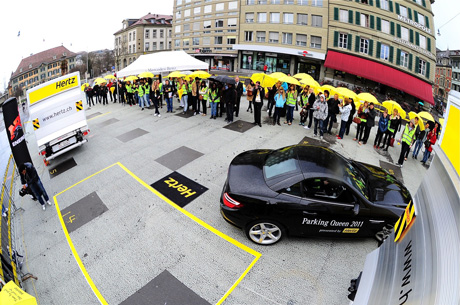
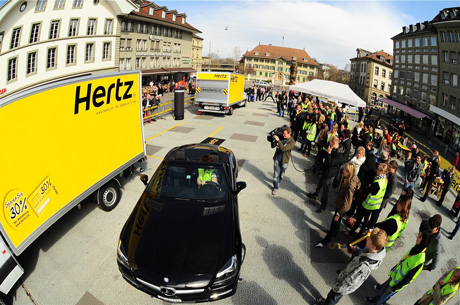
Last year, the Women Parking Challenge took place in Switzerland for the first time. According to a press release, the participants in Bern proved that they can park at least as well as men. Now the somewhat different championship is taking place again - this time in Zurich. On Saturday, March 17, from 10 a.m. on the Kalanderplatz in front of the Sihlcity shopping mall, the participants will have to demonstrate their dexterity and speed.

The task is to steer the Mercedes-Benz SLK Roadster backwards into a parking space as well as possible. The difficulty here is that the parking space is between two vans parked to the side. The participants will be scrutinized by a "competent jury": successful motorcycle racing pro Tom Lüthi and the somewhat successful presenter Claudia Lässer will keep an eye out for any parking mishaps.

The fastest and most precise "parker" will take home the Mercedes-Benz SLK Roadster as the main prize. Unfortunately, she doesn't get to keep it, but has to hand it in again at the end of September. It is not clear from the press release whether the winner will have to drive a dented and scratched sled if it turns out that one of her competitors has not mastered the art of parking quite as flawlessly as she has.

> More information

zgl1_3
zgl2_3
zgl3_3
zgl4_1
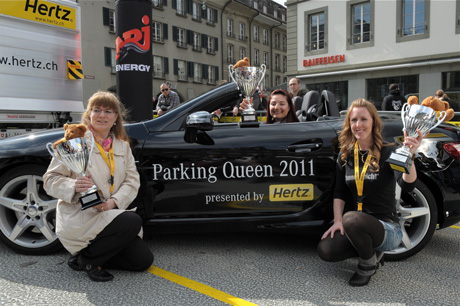
The proud winners of the 2011 competition.

Facebook's filter trap

Many Facebook posts aren't shown to fans but are filtered out—if you want to overcome this hurdle, you'll have to work really hard.

Anyone who runs a company page on Facebook is aiming for the widest possible reach, especially in the intended target group. However, both Facebook friends and Facebook itself stand in the way of this goal: friends can unfriend, but they can also unsubscribe from all or part of the messages on a fan page. Unsubscribing reduces the friend counter accordingly, but how many friends have switched to mute can now only be determined in a roundabout way using Facebook's analysis tool (Insights). So anyone who has got on their fans' nerves too often with too many irrelevant posts has been discreetly but permanently punished for it - and may be under the mistaken impression that all their friends are still on full reception.

For private users and companies alike, the news page is one of the most important functions on Facebook. However, not all status updates appear here. What a user sees is monitored by Facebook's Edgerank algorithm, which separates posts that are important to the user from those that are not. If a status update fails at this hurdle, it is very unlikely that a user will see the post at all. It is no secret that the Edgerank algorithm exists and how it basically works. A developer conference at the end of April 2010 provided the first detailed information about this new unit of measurement on the Internet. These three factors play a role:
1. affinity: The closeness or connection between two users as measured by Facebook. The more frequently and above all regularly a user comments on posts on a fan page, clicks on "Like" or looks at the wall, the higher the affinity score.
2. weighting: This is about the potential of a wall message to trigger further interactions. Messages with a link, an image or a video are rated better than pure text. However, it is also important how intensively a particular status message is actually reacted to.
3. expiration time: Recent wall posts have a higher chance of being displayed in the main notifications of friends. After a few hours, a Facebook post is hardly visible anymore.
Just like the mechanisms used by search engines to rank websites (most famously Google's PageRank), Facebook's EdgeRank also secretly destroys the best-intentioned marketing intentions. Various studies have recently been published on this subject, all of which have come to a sobering conclusion: Only around 5 to 20 percent of updates posted online make it into the newsfeed display of fans - whether they are then noticed there is yet another question.

Tangible effects
Given the drastic effects of Facebook's news filtering, it is surprising that in a survey of social media practitioners conducted by Werbewoche, several participants admitted that they had not yet dealt with the Edgerank algorithm: "We are still at the very beginning when it comes to Edge Rank" or "We have not yet dealt with this topic in enough depth" and "To be honest, we have not given this topic much thought either". Others can report specific observations. Florian Wieser from the online marketing agency Coundco, for example, states: "We have not noticed an extreme drop in engagement on any of the pages we manage." However, he reports other effects: "It is sometimes difficult to understand why a post has just made it to the top again, even though Facebook's rules seem logical. Especially in the usually smaller interaction spheres of likes or comments, 10 or 20 suddenly become extremely significant. An old post can suddenly be top again, even though this information is long gone. Such incidents disrupt a well-planned editorial plan and an orchestrated dramaturgy. It tears apart serially posted stories and is therefore of little use for storytelling." Moritz Adler, Product Manager Mobile Team at Local.ch AG, also says: "We feel the filtering" and adds, "I don't think the filtering is bad. It tends to lead to writing less, but better content. We think this is ultimately also in the interests of our readers, who we don't want to spam." Dominique Locher, Marketing & Sales Director at LeShop SA, comes to a similar conclusion: "Whether with or without a news filter, information and offers on social networks must be relevant, emotional and attractive for customers. We work on this every day throughout the company - not just in the networks. In my opinion, it would not be sustainable to focus too much on search engine or network algorithms."

No chance for beginners?
However, the effect of the Edgerank algorithm has serious consequences for small and, above all, new Facebook presences, as Marie-Christine Schindler, PR consultant and author of specialist books, notes: "The hurdle for getting started has increased. An organization that runs a fan page on Facebook must first prove itself." Anyone starting out will first have to get their affinity rating up. This can be done by launching polls on controversial topics and inviting people to comment, as well as posting articles with pictures and videos. If new posts now regularly appear in the newsfeed of friends and the ground has been prepared, it is worth spreading the actual content that would previously have simply gone under. But even now, the ball must be kept constantly in the air and the Edgerank rating must be maintained. This includes keeping a close eye on which posts trigger the most interactions, likes and comments and when the page's Facebook fans are most active. In order for a fan page to attract visitors, it must be marketed. Marie-Christine Schindler advises doing this cross-media outside of Facebook. "First and foremost, through proper integration into the website, but also in all communication measures from the footer of the email, to mentioning it in print products and linking it in the newsletter."

Do without Facebook?
It is clear that setting up and maintaining a fan page on Facebook is hard work. In the long term, a tactical approach to content is required, which in many cases must first be learned and for which investments in new resources will be necessary in many places. Empty one-way communication and pseudo dialogs do not lead to the desired target group, but social media managers are forced to engage in real dialog and community management. Not all companies regularly have such content for fans that encourages interaction and cannot or do not want to afford the effort required to be as successful as possible against the EdgeRank algorithm. Take ARGUS der Presse AG, for example, where Social Media Manager Michael Wuschech came to the conclusion: "This initial situation is one of the reasons why we have decided not to have a Facebook presence."

Christoph J. Walther
 

Of sons and daughters

Lenzlinger Söhne, an internationally active interior finishing company, has been making history for 150 years. Walder, Werber designed and implemented a comprehensive anniversary communications campaign for the company.

Lenzlinger Söhne AG, one of the most important Swiss companies in the finishing trade, is celebrating its 150th anniversary in 2012. In spring 2011, following an agency evaluation, the company commissioned Walder, Werber with the entire anniversary communication, from brainstorming, conception and planning to the realization and implementation of all measures. The work began with the creation of a motto and the matching key visual around the new claim "Solution, performance, passion". Walder, Werber then developed the golden nail as a consistent key visual, in line with the motto: Lenzlinger Söhne AG has been doing nails with heads for 150 years. With a wide range of measures to mark the anniversary, the agency is giving life and value to these three terms from the claim. At the heart of the anniversary communication is the animated anniversary film, which Walder, Werber produced in cooperation with Encore Pictures and Le Mob. The film tells the 150-year story in 140 seconds and can be seen on the anniversary microsite, among other places www.lenzlinger150.ch. The microsite serves as a hub for the entire anniversary communication, as an information platform for the historical background of the company, the five Lenzlinger generations and the anniversary events. Another highlight is the multimedia journey through time, a three-dimensional exhibition for all the senses with numerous interactive panels that are used at events and trade fairs.

Walder, Werber designed around 20 panels that directly invite exhibition visitors to discover and participate. In addition to these core measures, all accompanying communication measures were created - from the anniversary logo to the complete anniversary branding, event invitations, various DM campaigns, an anniversary calendar, special building and vehicle signage and PR work. All in all, a moving anniversary year, emotionally staged as a world of experience for all the senses. Numerous activities for 2012 kicked off at the end of January with the opening of the anniversary book, which was produced by the Association for Economic History Studies and published in the "Swiss Pioneers of Business and Technology" series. (pan)

lenzlinger
Since 1862, Lenzlinger Söhne AG has developed from a small sawmill and carpentry business into an internationally active company in the finishing trade. Today, with over 250 employees, 5 branches in Switzerland and one each in Vienna and Shanghai, it is one of the most important players in its sector. The company has remained in family hands since it was founded. Now in its fifth generation. Dr. oec. Karin Lenzlinger Diedenhofen manages the company operationally and her sister Dr. iur. Annette Lenzlinger Vandebroek chairs the Board of Directors.
 

Freicom for Bedag Informatik

Bedag Informatik is looking for IT professionals for the new location in Aarau in collaboration with the Zurich-based HR consultancy Humanis. Recruitment is to be supported by a communication offensive in the area of employer branding.

Freicom designed and implemented the communication measures. The aim is to emphasize the attractiveness of the employer with a central message via various channels: We go for IT. In AG.

At the same time as the site was opened, the website Go-for-it.ag launched. Interested parties will also be addressed via a large poster with the URL and QR code hanging on the façade of the new location at Aarau main station. The campaign was supported by Freicom with advertisements, media work and a press conference.

bedag1
bedag2
get_footer();