Startbahnwest: Strategy development for Tamia

The Zurich agency Startbahnwest has taken over the strategy development for the medical product Tamia for the company Vipon Operations. Based on the strategic positioning for the market launch, Startbahnwest has given this new product a name.

We also developed the logo and CI for the entire packaging mix, the packaging design, the leaflet and the stationery. With the calming green and the moving circle, the logo is intended to visualize the pain-relieving and gentle properties of Tamia. This is emphasized by the harmonious sound of the name and rounded off with the feminine purple, the agency said in a press release. Product design specialist Designculture developed the primary packaging based on Startbahnwest's strategic guidelines.

Responsible at Vipon Operations: Sibylle Hurni (Marketing & Sales Manager), Patrik Wettstein (Managing Director). Responsible at Runway West: Chantal Weibel and Kim Grenacher (consulting), Hartmut Vetter (strategy), Eva Bajer (creative direction), Maria-Sol Burgener (graphics), Dominique Wirz (text/concept). Responsible at Designculture: Lionel Eaton (product designer), Felix Keller (CEO, product designer).
 

Last but not least: a few pictures say more than a thousand words

The Source agency has designed an unusual form of press release for Opel Adam: A multi-part photo novel. This was initially produced in two episodes and 23 languages.

The story is structured in three parts - the first part, entitled "It's just a code name", is dedicated to finding a name and communicating the facts about the new car. Three weeks later, in the second part, the name "Adam" was unveiled and explained. The third part, which is currently being prepared, communicates the first press images and explores the myth surrounding the name Adam.

The stories were communicated exclusively online and via various below-the-line measures. The photo novel was used to communicate the name of the new Opel Adam vehicle throughout Europe. The Source agency developed the content and design concept and implemented it with photographers on location. The primary target group was automotive journalists in 27 European countries as well as various web communities.

All of the people involved are real characters who are involved in the development of the new vehicle at Opel. They were directly involved with their character traits. The result is a Bravo novel that, for once, is not about the sexual difficulties of teenagers, but about the name of a car. Instead of a concise press release in 4 sentences, the car journalists are presented with a photo novel. It's a good thing that car journalists, unlike the rest of the industry, are not under time pressure.

Opus 1 "It's just a code name"
Opus 2 "The unveiling"
Opus 3 "Adam's music"
 

SKWJ: "Science journalists are not just mouthpieces for researchers".

The Swiss Club for Science Journalism (SKWJ) held its general meeting on June 15 in Bern. For the first time since 1986, a person from French-speaking Switzerland was elected president: Olivier Dessibourg, head of the «Science and Environment» section at the daily newspaper «Le Temps.».

On the occasion of the General Assembly held on June 15 at the Federal Office of Metrology METAS in Bern, the Swiss Club for Science Journalism SKWJ renewed its Board of Directors. In addition to the new president Olivier Dessibourg, the other members of the board are Natalie Bougeard (French-speaking secretariat, RTS-La Première/Impatience), Fabio Bergamin (German-speaking secretariat, ETH Life), Pascal Biber (editor Bulletin SKJW, Radio SRF), Christophe Ungar (Internet SKJW, RTS-36.9°C), Beate Kittl (SDA), Hanna Wick (Neue Zürcher Zeitung) and Felix Straumann (Tagesanzeiger).

"Thanks to numerous new members from French-speaking Switzerland since 2009, the SKWJ has become an association with truly national appeal," says a delighted outgoing president Irène Dietschi. "Thanks to this support, we will work even harder to promote high-quality science journalism in the Swiss media," says Olivier Dessibourg. He adds that the club will continue to advocate for science journalism to accompany the scientific enterprise with a healthy skepticism and to preserve its independence. "Science journalists not just mouthpieces for researchers," says Dessibourg. The new president wants to pay particular attention to three aspects during his term: He would like to favor the cooperation of the members from western and German-speaking Switzerland, increase the public perception of the SKWJ, and begin to work with partner associations from Germany and France.

The SKWJ has existed since 1974 and offers its members services such as discussion events on journalistic and scientific issues, excursions, a job exchange and scholarships. With this and its publication organ, website and bilingual newsletter, it aims to promote networking among Swiss science journalists. The SKWJ is also a member of the European Union of Science Journalists' Association EUSJA and now has around 370 members. Of these, two-thirds are regular members who work full-time on science topics either on an editorial staff or as freelance journalists. About 130 associate members work as communications professionals in scientific institutions or companies. In addition, the SKWJ has about twenty patron members from the media, academia and business.


More profile, more differentiation

Thurgauer Kantonalbank has commissioned Branders, a consulting firm specializing in branding, to provide comprehensive support for a rebranding process

Unbenannt-5_12

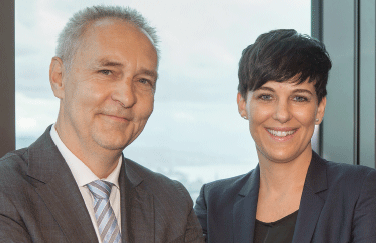
WW: What task did Branders have to solve for Thurgauer Kantonalbank?
Pascal Geissbühler: Thurgauer Kantonalbank has formulated a new corporate strategy, which formed the basis for the assignment to Branders. The bank wants to strengthen its customer focus even more in the future and has set itself the goal of becoming the most customer-oriented bank in the canton. One element that is particularly emphasized in the strategy is differentiation.

That's not easy in the banking world.
At least its main competitor, Raiffeisen, has done a lot for its brand image in recent years - the Raiffeisen brand has a strong presence. The image of Thurgauer Kantonalbank was originally very heterogeneous, around 20 values were defined and each brochure looked different. The aim was now to sharpen the brand's profile in terms of content: What does the bank stand for? Together with the CEO and the Executive Board, we defined the basics of the brand strategy. Based on this, we developed the brand identity. At the very least, we had to take the ASCB logo system into account.

What is the outstanding element that Branders was able to contribute?
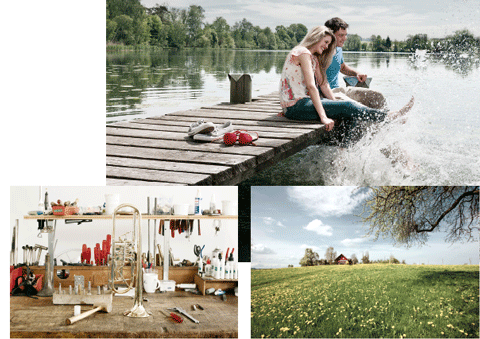
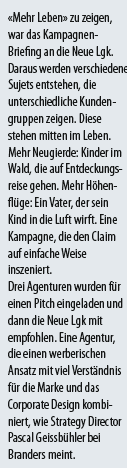
Various aspects. Firstly, the focus on content and the commitment to the claim "More from life". We find this quite bold, because "More of life" is an attitude to life and goes quite a long way beyond the products and service promises offered by banks. But it reflects exactly what Thurgauer Kantonalbank intends to do, namely to create real added value, become more customer-oriented and thus place the customer more at the center of the advisory process. The branding attempts to take existing values into account - and yet be much fresher, more emotional and more consistent than before.

Is it even possible to do something independent here? After all, bank customers are the same everywhere and everyone wants to be close to their customers?
Customer proximity alone is not a unique selling point - Raiffeisen is also close to its customers. In order to be independent, it is important to take equal account of our own strengths and the needs of the market. The canton's high quality of life meets the sustainable business model and the comprehensive expertise of Thurgauer Kantonalbank. This combination sets it apart from the big banks and Raiffeisen. For the CEO, the quality of life was an important attraction factor for his commitment to Thurgauer Kantonalbank - a place with an optimal life balance. It is therefore exciting that the claim also positions Thurgau as a location. After all, it is precisely the cantonal affiliation that distinguishes the individual institutions. The color combinations and images in the brand identity are unique. We play with the green of Thurgau, but contrast it with different shades of green to make it look even fresher. A design element was also defined - the focus frame. This can be used to focus the main message of the communication. With the claim "More of life" as a binder.

What's next for the brand templates?
In addition to a classic campaign in the region, there are also explanatory brochures for employees to introduce themselves. It's not just about the image. Branders is also working on communicating the brand to potential and existing employees. Internal branding and employer branding in the sense of labor market positioning. The claim "More from life" also plays into the employer's promise. "Achieving more together" is the motto, especially in contrast to the big banks, where an elbow culture prevails in many places. Thurgauer Kantonalbank is a small bank where everyone relies on teamwork and can achieve much more together. With visible results in the market.
Interview: Andreas Panzeri

Unbenannt-4_11
Unbenannt-6_11
 

In Basel on the beautiful Rhy

Two print publications—once classified as left-liberal—have undergone a sharp shift toward the «far right» in recent years. In both cases, they are run by financiers operating on the far right of the political spectrum. How much capitalism can the media tolerate? By Hans Stutz, journalist and member of the Cantonal Council (Green Party), Lucerne.l

No, the Basler Zeitung BaZ was not expropriated, but the new owners have used their capitalist right to dispose of their new property without restriction. True to the patriarchal motto: What I have acquired in good faith, I may also destroy! Whether it's a profitable print shop, a listed villa or a state-politically relevant medium, who cares! Cynicism does indeed make it easier to read the new book by Christian Mensch: "Enteignete Zeitung. Die Geschichte der Basler Zeitung - ein Lehrstück über den Medienwandel". He also unflinchingly demands that the media - and their publishers - should provide a public service. Just as many have demanded in recent years at the many panel discussions on "media quality".

But the more quality is talked about publicly, the more endangered it must be! The situation in the media industry is too difficult. This, too, has been lamented without result at many panel discussions in recent years. Keywords: In recent decades, capital requirements and the importance of advertising revenue have increased, and the party press has slowly disappeared. It is questionable whether this has improved the journalistic supply for national political debates. Take the BaZ: for many years - according to Christian Mensch - there was a secret agreement with the Chamber of Commerce that gave the latter a say in exchange for advertising. In other words, the dismantling of party ties increased the influence of advertisers or business-related associations. And also: the fight for private radio and television was always also a dispute about the understanding of the role of journalism, public service or service publicité.

An understanding of roles that was also controversial among the Forum newspapers. Nevertheless, many editorial offices achieved greater freedom - as publisher president Hanspeter Lebrument has repeatedly lamented. Many editorial offices were even able to secure this for a time in the 1970s/1980s through editorial statutes.

Christian Mensch is right, the Basler Zeitung is an example - as is Weltwoche. The bourgeois mainstream in Switzerland has changed, slowly but steadily. Since the FDP demand for "more freedom - less state", which always included a weakening of social partnership obligations and aimed at dismantling the public service. Further driven by the neoliberal white papers of the 1990s. Today, it is the national conservatives - economically liberal and defamatory towards the socially disadvantaged, regardless of nationality - who set the political pace for the bourgeoisie, not only in asylum policy, but most obviously there. Although the clock setters speak of "democracy" on a daily basis, they do so more as a simulation. In plain language: they mean acclamation of the Board of Directors' decisions. Media that are primarily committed to public service can be a hindrance in this respect.

The reversal of polarity from Weltwoche and Basler Zeitung to campaign papers is therefore not a sign of the "erosion of an epoch-defining bourgeois culture", as media sociologist Kurt Imhof believes. Nor is the end of the Enlightenment in sight, as Imhof embellishes the past. Enlightenment has always been an unstable state: some media are its lubricant, but others were agitators or simply money machines. One example: Hugenberg Verlag, which dominated the market at the time, played a key role in the end of the Weimar Republic. We are a long way from such conditions. And the future in Basel on the beautiful Rhy? The BaZ counter-project Tageswoche is a foundation and therefore a reliable partner for the public service. The extent to which the project will weather the economic storm remains to be seen - as with all other media projects. However, the public service is having a hard time, and not just on the "market".
 

Goldbach Group: User behavior in electronic media

Since the beginning of this year, the Goldbach Group—a marketing agency specializing in electronic, digital, interactive, and mobile media—has been conducting surveys on electronic media usage six times a year. The survey covers TV, radio, online, in-store radio, and Adscreen. The survey also covers activities on social media and search, as well as online shopping and gaming.

Following the baseline survey in February 2012, the second survey was conducted at the end of April. The Marketagent.com agency conducted the surveys directly among 500 web-active people between the ages of 18 and 65 in German-speaking Switzerland in the form of online interviews. The respondents are asked about their media usage and activities on the Internet the previous day.

The results of the first two waves of the survey are now available: A first baseline survey in February and a comparative survey in April 2012. What is striking is the agreement between the two surveys in TV use, at around 79 percent. In contrast, the use of radio and online newspapers and magazines is reduced by around 5 percentage points each. The same can be said for Internet activities, where social media remains stable at around 53 percent, while search engines, online games and online shopping have suffered losses.

The next wave of the survey will be conducted during the European soccer championship in June and published in July. Detailed results of the "Electronic Footprint" study on the individual media and activities, as well as demographic characteristics, are presented by the Goldbach Group in the Goldbachguide.ch available.
 

Consumer data that pays off

A wide range of user data is available for online marketing, making it possible to tailor websites to users’ needs and requirements. Google Analytics, the Swiss market leader, provides us with this data free of charge and is continually expanding its list of features. There is a commercial strategy behind this expansion.

Google Analytics recently launched five new features. The "Digital Attribution" feature is reserved for companies that are willing to pay $ 150,000 per year to use Google Analytics Premium. Of the remaining four, three features are particularly valuable: "Browser Size Analysis", "Event Flow User Timings" and "Content Experiments".

What do visitors see on the screen?

The content "above the fold" (in the direct viewing area in the browser window) is, among other things, a decisive Google ranking criterion. Due to the numerous devices with different resolutions, it is difficult to determine what the "average" visitor sees. The "Browser Size Analysis" feature visualizes the viewing areas "above the fold" and provides important input for the design and search engine optimization of the website.

What leads to higher conversion rates?

Experience and common sense reveal the obvious optimization potential of a website, but when it comes to details such as the color of the shopping cart button, even experienced conversion optimizers are often surprised. Comparing two static versions of a page with A/B testing reveals visitor preferences. The new "Content Experiments" feature simplifies such A/B testing. Code adjustments are hardly necessary, the set-up is simple. At the moment, the functionalities are still limited, but according to Google, they will be continuously expanded.

Applications that get on your nerves

Slow websites are not only annoying, they also have a hard time appearing at the top of the search results. The "User Timings" feature measures the time span of actions on the website, for example:
- Loading time of plug-ins
- Duration of actions such as processing a search query
- Loading time of AJAX content.

This feature is particularly valuable for responsive design websites that
Dynamically reload content via AJAX.

Google makes itself indispensable

Attractive features are used to expand the Google Analytics market share at the expense of competitors. Analysis features are integrated into Google Analytics. The paid premium feature "Digital Attribution" is a first indication that Google will charge money for the still free business-relevant features as soon as its market position allows. In the absence of equivalent alternatives, we will follow Google down the path it has laid out for us, for better or worse.

The blog entry provides detailed information about all the new Google Analytics features:
Blog.dotpulse.ch
Imre Sinka & Nicolas Kaufmann
dotpulse web agency AG
www.dotpulse.ch
 

More impact for advertising

A generational change on the BSW Board. Nadine Borter is the new president following Peter Felser’s complete resignation from the board. In this interview, the owner and managing director of Contexta shares her vision for the BSW and advertising in Switzerland.

WW: Did Nadine Borter have to be persuaded to accept the chairmanship, or was it just a matter of time? has this been a secret wish for a long time?
Nadine Borter: Neither. Peter Felser's time as Vice President was very exciting and successful. Being elected President is now a great honor and a wonderful challenge for me. I am very much looking forward to working with the new composition of the Board of Directors.

What motivates you to take on this task?
I love our industry and am therefore very happy to stand up for it. I want to motivate and mobilize the next generation of advertisers. Just as I was able to do myself.

What does this job give you?
It gives me the opportunity to regularly exchange ideas and network with my esteemed colleagues. With the common goal of strengthening and advancing our industry.

What are upcoming problems that need to be addressed?
The constantly growing demands on our industry require excellently trained employees. For a successful future, it is imperative to invest in the training and further education of committed and motivated top performers. Another challenge is the major differences we have identified in the quality and impact of communication solutions. Too much money continues to be spent on inadequate - because ineffective - advertising. The power of strong ideas makes the difference. And this is exactly what the bsw stands for.

Is there an area in which BSW needs to be even more present in the public eye in the future?
The topic of advertising bans will certainly continue to occupy us in the future. To this end, we would like to increasingly demonstrate to clients the high level of investment security that results from working with a bsw swiss leading agency.

As BSW President and owner of Contexta, what do you think of the fact that today many budgets are also awarded across borders, for example Swisscom?
Specifically, there are not many, but just this one that we are talking about here. As an agency owner and BSW President, I very much regret it when Swiss companies outsource their budgets abroad. Especially because I know how high the domestic quality is.

How do you currently assess the order backlog and capacity utilization in the industry?
The BSW agencies assess the economic outlook for 2012 as slightly cautious to stable. This is the result of a survey of the 25 largest communications agencies. How the economy will actually develop is more uncertain than ever before. It is never easy. But good agencies will continue to work successfully and grow even in difficult times.

The BSW has now accepted 3 digital agencies. What do you think about this opening?
This is not an opening, but a logical development. The BSW is a reflection of the industry. And this has always included the specialist agencies. Dear Marcos from Publimedia It's not the length that counts, but the reach! That's why we are delighted to welcome three leading digital agencies to our circle.

Where do you still see potential for the development of the industry in Switzerland?
Despite global networking, people's real living conditions are very different. It can therefore be a competitive advantage to focus entirely on national and local conditions - on all communication channels that are available to us. And nobody can do this better than a bsw swiss leading agency.

Interview: Andreas Panzeri

Peter Felser handed over the BSW presidency to Nadine Borter at the BSW Leading Swiss Agencies AGM in the Prime Tower - in an environment with the best prospects. The Managing Director and owner of Contexta had previously acted as Vice President. The new Vice President is Andreas Widmer, Y&R Group. Chris Flückiger, Mediatonic, Geneva; Michael Hählen, In Flagranti, Lyss; Roman Hirsbrunner, Maxomedia, Zurich; Curdin Janett, Publicis, Zurich; Andy Stäheli, Spillmann Felser Leo Burnett, Zurich were newly elected to the Board. Fredy Collioud, Publicis, and Dominique von Matt, Jung von Matt, will step down.

Unbenannt-10_9


Serranetga launches environment-specific video seeding

Serranetga is expanding its viral marketing offerings: The Zurich-based digital agency is introducing context-based video seeding. Viral video campaigns are targeted at various relevant topics, such as sports, home, and lifestyle.

In addition, current events can be specifically taken into account in the context of the respective campaign. For example, companies that position themselves around current sporting events are given the opportunity to address their relevant target groups with video seeding in this environment as well. "The use of environment-specific video seeding greatly reduces wastage," says Remo Prinz, Partner at Serranetga, about the new offering.

Award Corporate Communications 2012: Final countdown underway

UN wants to improve protection for media professionals

A significant number of journalists are killed worldwide—yet in most cases, these crimes go unpunished. Members of the UN Human Rights Council were therefore called upon to take measures to better protect media professionals around the world.

In two separate reports published during the current session of the UN Human Rights Council in Geneva, the rapporteurs on freedom of expression and arbitrary executions - Frank La Rue and Christof Heyns - condemned the lack of political will on the part of some states to comply with the applicable laws. The rapporteurs Frank La Rue and Christof Heyns spoke out in Geneva in favor of drawing up a protocol for the protection of media professionals - comparable to the UN declarations for human rights activists or the declaration on the rights of indigenous peoples. During the debate, the Swiss ambassador to the UN, Dante Martinelli, expressed his support for the issue.
 
At a parallel event organized by Austria in Geneva, the representative of UNESCO, Sylvie Coudray, recalled an action plan adopted by the UN organizations in Paris in April on the issue of the safety of journalists. Another conference involving non-governmental organizations is to take place in November in order to implement the action plan.

In the first five months of the year, at least 65 journalists lost their lives worldwide, an increase of 50 percent compared to the previous year. At least 15 of them lost their lives in the conflict in Syria, 7 in Mexico and 6 in the Somali civil war. Others were attacked or arrested. (sda)

SDA Board members re-elected

The SDA's general meeting took place in Bern on Wednesday. At the meeting, Hans Heinrich Coninx, chairman of the board of directors of the Swiss News Agency, and the seven members of the board of directors were reelected for the 2012–2013 term.

In addition to Coninx, the SDA Board of Directors includes Valérie Boagno, Walter Bachmann, Matthias Hagemann, Eric Hoesli, Hanspeter Lebrument, Albert P. Stäheli and Pietro Supino. SDA wrote this in a communiqué on Wednesday. SDA shareholders approved the annual report, the annual financial statements and the consolidated financial statements.

Following cost-cutting measures in the previous year, SDA returned to the black in 2011. With slightly higher sales of 26.67 million Swiss francs, an operating profit (Ebit) of 302'000 Swiss francs resulted. In 2010, the SDA had still posted an operating loss of 716'000 francs.
 

get_footer();