Use of electronic media declining despite Olympics

The third comparative survey of the Goldbach Group AG's Electronic Footprint Study examines consumer usage patterns with regard to electronic media and online activities during the 2012 Summer Olympics in London.

Compared with the last survey conducted during the European soccer championships in June of this year, there was a decline in the use of all electronic media. Vacations, good weather and perhaps also the respondents' own sporting activities competed with the use of electronic media during this year's Summer Olympics. This conclusion is suggested by the results of the current comparative survey. Across all target groups, electronic media use declined during the Summer Olympics compared to the European Football Championships. Television consumption fell by 2.9 percentage points overall, with only the 18-39 age group showing a slight increase of 1.5 percentage points. A similar picture emerges for Internet TV. Only Wilmaa is able to maintain the usage level of 31.3 percent achieved during the European Soccer Championship, Teleboy loses around 11 percentage points, and Zattoo records a drop of a whole 20 percentage points. Online reading of newspapers and magazines also fell by 3.5 percentage points, with men being an exception, with an increase in their electronic reading consumption of 4.6 percentage points. Radio usage was a full 5.4 percentage points lower than in the same period last year. There was also significantly less activity on the Net. Social media fell again by 2.9 percentage points following the increase during the European soccer championships. Access to search engines fell by 6.3 percentage points, and online shopping also lost 1.9 percentage points.

london
Overall and among all demographic groups except 18- to 39-year-olds, the share of TV viewers is falling. Overall, 2.9 percentage points fewer respondents say they watched TV the day before. Only the young in particular show a slight increase of 1.5 percentage points.

london2
The Olympics do not seem to be an eye-catcher for mobile usage. Only Wilmaa was able to maintain the usage level of 31.3 percent achieved at the European Championships. Zattoo lost around 20 percent, and Teleboy also lost a good 11 percentage points.
 

Swiss Radio Day: New division of roles between Bakom and private radio stations

The division of roles between the Federal Office of Communications and private radio stations is being completely overhauled. OFCOM is stepping back from its role as the planning authority.

Radio stations are now playing a "planning, shaping role". In the future, they will take care of frequencies and reception quality themselves, as Nancy Wayland Bigler said on Thursday at the Swiss Radio Day 2012 in Zurich. The new Bakom deputy director spoke of a paradigm shift.

Bakom devotes itself to core tasks

In the future, Bakom will concentrate on its core tasks: It is the arbiter and guardian of Swiss interests vis-à-vis foreign countries. And it will continue to be responsible for processing applications. Here, an acceleration in the process is planned.

Bakom examines applications for compatibility with the existing frequency network and the applicable media policy requirements. If an application is approved, the radio license is granted immediately. This innovation is effective immediately, according to Wayland. If the application shows deficiencies, the applicant is now only allowed to make one more improvement. If necessary, however, a new application can be submitted, Wayland said.

Opening of frequency database

As part of the new role allocation, Bakom will open its frequency database to the public by the end of the year. It will be made available on the Bakom website, Wayland told the SDA news agency. Bakom, on the other hand, will keep its planning tools for itself. These will not be made available to third parties. However, Bakom will continue to be available for consultation.

Only the change in the awarding of concessions will take effect immediately. The other changes - "moderate, planned adjustments" - would be introduced gradually at the beginning of 2013. Towards 2019, when the current licenses expire, thought would have to be given to the future of FM. (sda)

"As a managing director, you have to have a vision".

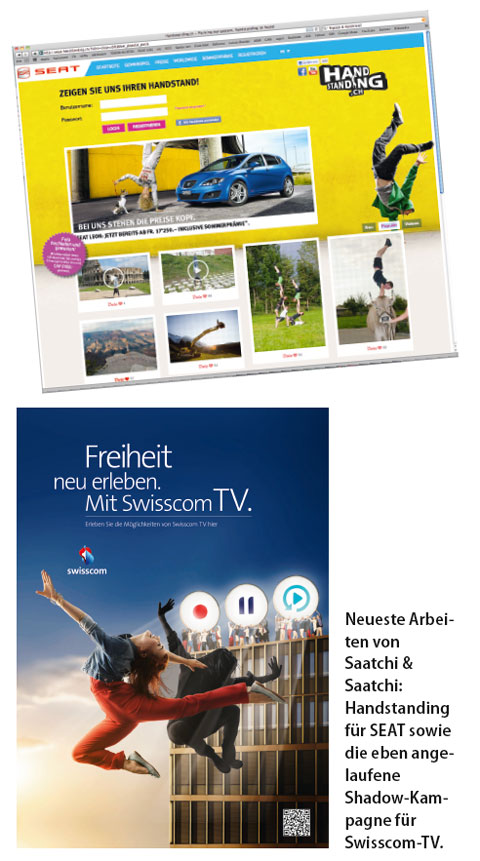
After just under four years, Petar Dakovic is leaving Saatchi & Saatchi Zurich. Pascal Schaub, Chief Strategy Officer for the Zurich and Geneva offices, has temporarily taken on the additional role of Managing Director in Zurich.

WW: A Planner as Managing Director: What is the background to this strategy?
Pascal Schaub: Strategists as managing directors has a lot of potential. Last but not least, a highly regarded and successful colleague, Peter Felser, comes from Strategy and is also a member of the Account Planning Group, as is Christoph Bürge, for example. I think it makes sense for the Saatchi & Saatchi brand. But also - and I notice this very clearly - for our clients.
 
Why?
You have a direct contact person at eye level at the brand level. In addition, the client can talk to a strategist with someone for whom the target audience is the most important focus. This is crucial for our clients: reaching target groups and getting the investment mix right.
 
Did Pascal Schaub's appointment as Petar Dakovic's successor come as a surprise?
We planned this carefully internally and discussed how best to do it within the network. It's surprising for me, of course, because I really enjoy my job as a planner. I'm still leaving myself a window of time for this, but I'll be bringing in additional planning resources. I see the new role as a uniquely wonderful opportunity. Saatchi & Saatchi has placed its trust in me. That is courageous. I am happy to accept the challenge with courage.
 
How long-term is this interim solution planned?
We have mutually agreed that it will apply until December 31 of this year.
 
What appeals to Pascal Schaub about this job?
The vision of taking Saatchi & Saatchi another step forward in Switzerland. The Lovemarks philosophy has so much potential, I get goosebumps when I think about what is still possible for Swiss clients. I'm also getting to know completely new aspects of agency life. I'm not talking about the numbers, you can learn that, but rather the social, the emotional side. With my employees and my clients. That's something I'm extremely interested in. As a Planner, I was perhaps more of a lone fighter. As Managing Director, I am more of a team player.
 
They have to act as motivators and make personnel decisions.
I have to be an inspirer. For the extraordinary. In an increasingly interactive and participative world. I want our employees to be able to play to their strengths even more. That's what makes a great team. We have talents that you will see a lot more of. The Saatchi & Saatchi spirit is more multicultural, playful and across the kender than a beery classic agency. Saatchi & Saatchi is visionary, that's in the DNA of our agency brand.
 
Saatchi & Saatchi has moved into larger offices in Zurich Binz: Preparing for the future?
A year ago, we moved from Bäckerstrasse to Binz because we needed more space due to growth with existing customers, but also because of the acquisition of Swisscom. We think that there is an extremely innovative environment here in Binz. There are a lot of young people working in social media, digital and interactive design. It's life in the midst of Twitter, Google, Facebook and Pinterest.
 
How is the growth of the unit planned?
When I joined Bäckerstrasse in January 2008, we started with zero people. Now we're 20 and we're looking after beautiful and large Swiss blue-chip accounts such as Swisscom, Manor and SEAT, with whom we're continuing to grow together. That seems to me to be a very healthy development. Petar Dakovic has just done a great job. The consolidation phase is now over and we will now focus on qualitative, creative output. We have the unique advantage over our competitors that we are very flexible and agile for Swiss brands in Zurich and have a lot of capacity and expertise in Geneva, as well as being able to call on international specialists via our network. It's like a trident: agility, capacity and experts.
 
There are also setbacks: The departure of Swisscom?
A misunderstanding. There is no question of a setback, on the contrary. We were brought in as the lead agency for Swisscom, responsible for brand communication. The positive thing is that we are now also allowed to do product communication with the shadow campaign that started this week. We will be on air this week with an overall campaign for Swisscom TV. In this context, I can also say that the collaboration with the German agency Heimat - with whom, funnily enough, we speak a lot of English - is very good and very productive. This manifests itself in workshops that we hold with Heimat in Zurich and Berlin. It's a mutually beneficial collaboration.
 
Pascal Schaub used to be invited to Paris or London for workshops organized by the network. Will there still be time for this?
In the last four years at Saatchi & Saatchi, I have probably worked more internationally than any other planner in Switzerland. I have created strategies for Sara Lee's coffee brands for our office in Brussels, for fruit juice in Warsaw and for Nestlé Waters in Paris. I was also sent to Poland and Germany. I gained insights in Singapore, Orlando and Oslo for brands such as Union Bancaire Privée, Davidoff Cigars and Alcon contact lenses. This has given me experience that is absolutely invaluable. From now on, my focus will be entirely on Switzerland and our Zurich office, where I want to bring this experience to bear. That's what's special about Saatchi & Saatchi: we can bring in creative people from the network for a specific task. We can ask for strategic specialists or get support in the areas of interactive and social media. That's what makes the difference for me: I know these people, have already worked with them and can now use their potential for our clients in Switzerland. By the way, as a native and genuine Swiss, all Schaubs without exception come from Sissach near Basel, while my Francophile first name builds a bridge across the Röstigraben.
 
Goals with the Zurich location?
When I look back at the three pieces of work from our Zurich office that I am particularly proud of over the past six months, they are the ones that have moved people in Switzerland beyond advertising. Our idea for the fan bell app for Swisscom ski fans. Over 600 million enthusiastic people shook their hands back and forth and rang the bell for all it was worth. Then there was our SEAT summer campaign, called Handstanding, which generated over 100,000 views for consumer-generated content of people in Switzerland doing the handstand. For the joy of life and inspired by SEAT's brand motto Enjoyneering. Or the invention of the "Leopardino" by Swisscom, the first mobile film award for short cell phone films, officially supported by the Locarno Film Festival and presented there on the last evening. The launch of the new Manor fashion trends also has exactly the same three goals that I have for Saatchi & Saatchi in Zurich: To create things that I would like to see again, things that people would like to share, and also things that I and my target audience would like to play around with - to improve and restage. Creative ideas that allow co-creation. This is how successful brands interact today.
 
 Interview: Andreas Panzeri

dakovic
dakovic2

Setaprint and Cavegnwerbung design poster presence

The Swiss poster printing company Setaprint and the advertising agency Cavegnwerbung have collaborated to design a poster campaign. “At Setaprint, no poster has anything to be ashamed of”—that’s the campaign’s slogan.

The visual implementation of this idea is summed up in the claim: "Setaprint. With all the care". The best art direction, the most expensive photographer, the cleverest strategy - they all come out flat if the print shop doesn't work with the same professionalism, according to a campaign statement.

Responsible at Setaprint: Pierre Marti (overall responsibility). Responsible at Cavegnwerbung: Markus Cavegn (art direction), Thomas Schöb (text), Sarah Hepp (graphics), Daniel Belet (image editing).
 

Time for animations

The industry is evolving, and the demand for animations has increased significantly. This trend goes hand in hand with the growing diversity of media, the development of communication channels, and the need for content tailored to these media.

Need for animations

There is hardly a world, hardly any themes, fantasies or dreams that are not visualized or created by the film industry in a powerful and impressive way. A film industry that supplies all areas of communication from art, entertainment and information to advertising with new contributions on a daily basis using state-of-the-art production and post-production techniques. However, the supply is no longer sufficient to meet the rapidly growing demand for high-quality, dynamic content. Triggered by the emergence of new media and especially by the creation of complementary digital offerings within traditional media, a media arms race has begun. Flowing messages, cross-media communication and dynamic content are increasingly winning out over static dominance in the competition for attention and involvement. In addition, the question of topicality arises in today's fast-paced world. But what if there is no film material available, the audio part is superfluous and the message is based on purely static communication elements? Then it's time for animation!

Bringing messages to life

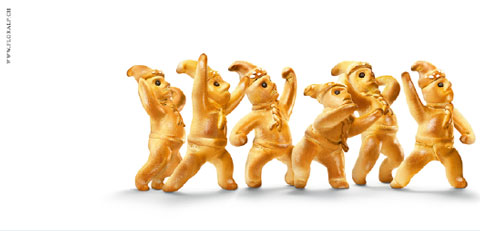
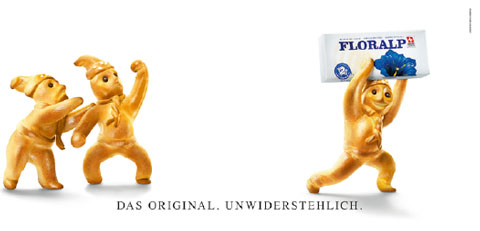
The memory of the flipbook may have faded, but the fascination remains. Among other things, for how easily static barriers can be circumvented and the most amazing effects can be achieved using the right techniques. Animations are subject to the same principle of dynamic movement, and the sequence of images still defines the illusion of movement. With static messages and in contrast to film, it is not a selection from a large number of frames that defines the movement, but the logic of artificial key frames created from at least one original image and the so-called tweening/rendering for the automated generation of the intermediate images required for the movement. Computer-aided and using sophisticated tools and innovative techniques, messages are thus brought to life. Depending on the requirements and application, each message can be animated multi-dimensionally for all output channels and prepared in the appropriate output format. For eBoards, ePanels and other screens, for the web, cinema or mobile devices. The most important finding is that animations are more premedia than post-production and primarily require the skills of image specialists, retouchers, graphic designers and typographical designers. 

Origin and ingredient

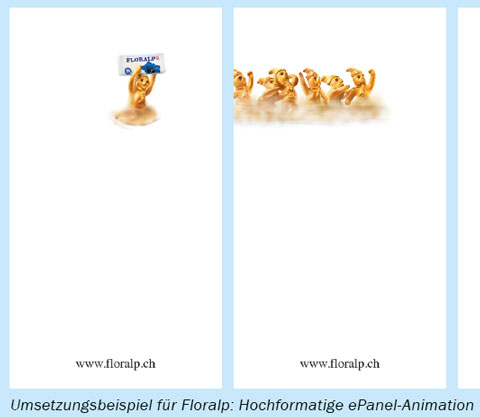
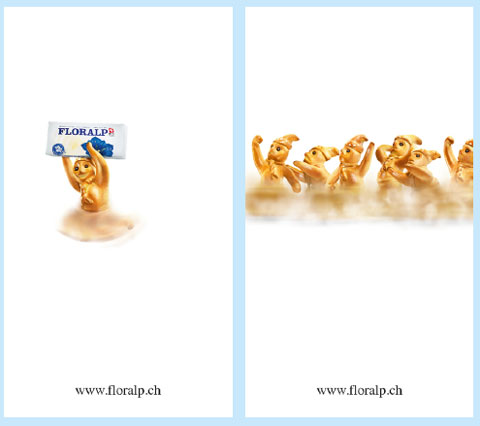
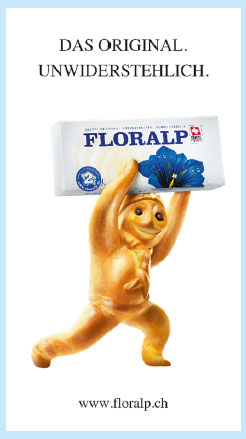
Animations thrive on the examination of the source material and the message, on further ideas and on creativity. Animations emphasize statements, highlight them, reinforce them and compensate for media shortcomings. However, this is only possible if the framework conditions of the desired communication channel, such as output format, viewing distance or viewing angle, are taken into account. A storyboard also ensures a structured process when animating, whereby attention is paid toImplementation example for Floralp: Portrait ePanel animation It is important to ensure that there is enough creative and experimental freedom within the development process. Rough visualizations at an early stage help to align the design. Classic, typographic design elements, combined with time, space, perspective or, increasingly important, interaction, serve, for example, to create dramaturgy, moments of tension, provocation and tangibility by overcoming the virtual inertia of static messages. 

10 animation offers

1. choose the right partner - not every one who is riding a horse is a jockey.

2. provide high-resolution source material - it can always be reduced depending on the channel.

3. animations should be short, because the behavior of the viewer rarely corresponds to that of the TV viewer.

4. do not allow any overall alienation and come back to the origin after the enriched animation part.

5 Recognition increases the overall impact of your message.

6. less is more and subtlety often has a stronger effect than the frantically realistic.

7. position the sender/brand more intensively and avoid the final mention often used in the TV sector - it may then be too late.

8. use the entire spectrum of appeal, from humorous and whimsical to realistic, to seduce the viewer.

9. blurring can help to sharpen the movement in animations.

10. animations are very cost-attractive.

Florian Walz, CEO, Daniel Straumann AG

ani01
ani02
ani03
ani04
ani05

Observer with new health platform

Since August, *Der Beobachter* has been available on a new online platform. To promote the platform, WVC developed an advertising campaign that is being featured in select magazines and online via banners.

On the new Platform you can find information on all aspects of health. Interested parties can obtain detailed and competent information on topics such as pregnancy, nutrition, illnesses and symptoms in language that is also understandable for laypeople.WVC developed an advertising campaign to publicize the platform, which is used in selected magazines and online via banners.

Responsible at Axel Springer Switzerland: Monica Muijsers (Head of Online & Digital Media). Responsible at WVC: Kurt Wettstein (overall responsibility), Stefan Fleischlin (AD), Kevin Wettstein (DTP), Michael Jud, Kai Kehrer (Online).


Radio 105 and WRS are "Radios of the Year" 2012

The two radio stations 105 and World Radio Switzerland WRS were awarded the title "Radio of the Year" 2012 at Thursday's Swiss Radio Day in Zurich. The two radios recorded the biggest increase in net reach.

SRG's largely English-language subsidiary WRS in Geneva posted a 40 percent gain, winning for Latin Switzerland. First place in German-speaking Switzerland went to Zurich's private station 105, which grew by 35 percent.

Each year, the winners are determined in German-speaking and Latin-speaking Switzerland (French and Italian). The net reach figures for the first half of the current year and the previous year are compared. The winners were announced by Jean-Paul de Weck, CEO of Swisscom Broadcast, which is the patron of the awards.

Second place in German-speaking Switzerland went to Radio Central (+13 percent), followed by Radio Argovia (+9 percent). In Latenine Switzerland, Radio Fiumeticino (+20 percent) and Radio 3i (+17 percent) came in second and third. (sda)

Meta Design designs online annual report for Adecco

Adecco once again commissioned the Zurich-based branding specialists to conceptualize and design its latest annual report. This time, however, the goal was to incorporate changes in communication and take advantage of the opportunities offered by online media.

The result is a report that goes beyond a mere financial publication and is intended to function as an integral corporate communications tool. In addition to analysts and investors, clients and employees are also addressed. In particular, the 700,000 external employees who are in daily contact with clients around the globe for Adecco, as the agency writes in a statement on Thursday.

The new annual report is a combination of a classic print report and a multimedia online report. The digital section is intended to appeal to all target groups with a quick overview of all topics. Statements, including those from the CEO and CFO, address visitors personally. Testimonials from external employees give interested parties an impression of the company. And an animated film provides an entertaining explanation of what the company does. Presented in this way, the content should appear more attractive, appeal to several senses and be better retained.
 

Follower fetish

Categories

Uncategorized

Last but not least: Arctic Volume sleekly staged

Stockholm-based fashion photographer Matthias Sparreskog has stylishly captured the new fall campaign, «Create Volume,» for Arctic Volume. But Arctic Volume isn’t a hair salon or a hair color...

Arctic Volume is a "high-volume and fully coated graphic paper" from Arctic Paper, as described in a company press release. The task of photographer Matthias Sparreskog was to showcase the benefits of Arctic Volume in the new campaign. He was to photographically present the "Create Volume" theme in the right light.
"Volume is a concept that is difficult to portray," says the Swede, who has made a name for himself as a fashion photographer. As creativity, volume and tinting are also in demand for fashionable hairstyles, the decision was made to use hair models. Sparreskog was professionally supported during the shoot: Hairstylist Dejan Cekanovic created imaginative hairstyles, make-up artist Sofia Eriksen and stylist Christopher Insulander took care of the striking styling.

The hair campaign has been running since mid-August.
 

Erdmannpeisker: Rivella quenches thirst at workplaces

Rivella teamed up with the agency Erdmannpeisker to create a refreshing campaign that quenched thirst in the workplace. The campaign was carried out in collaboration with various Swiss radio stations.

Roofers, ironworkers and office workers were invited to apply to be the sweatiest job in Switzerland. The winners were then surprised by the Rivella thirst quenchers at their workplace. The thirst-quenching team, which toured Switzerland in a Rivella-red thirst-quenching vehicle, delivered a refreshing load of Rivella to the winners for the entire workforce.

Responsible at Rivella: Cornelia Marending (Head of Marketing), Beatrix Grosso (Senior
Brand Manager Rivella), Susanne Hohler (Product Manager Rivella). Responsible at Erdmannpeisker: Gabriel Peisker (CD), Patrick Fawer, Daniel Hesse, Christina Weisser
(AD), Selina Helbling, Rainer Neusius (consulting), Daniel Kunz (making-of), Felix
Reidenbach (illustration), Radio Energy (production of radio spots). Responsible for online: Daviesmeyers (social media), Seitenkick (online banner). Responsible for media planning: OMD Lake.

Antalis exhibits at Umwelt Arena

The Umwelt Arena opens in Spreitenbach on August 24, 2012. One of the partners of the new competence center for ecology is the Aargau-based company Antalis, which is exhibiting a world of experience on the subject of "paper recycling".

The European wholesaler for paper and packaging materials is helping to design the paper recycling area at the Umwelt Arena. Interesting facts about paper and cardboard will be presented interactively and in a playful way at two information stands and in two display windows. A special feature is the specially produced paper book, which allows visitors to experience paper in an impressive way, writes Antalis in a press release on Thursday.

The Umwelt Arena in Spreitenbach will celebrate its opening on August 23, 2012 and will be open to the public for the first time on August 24, 2012. The exhibition area is an experience and event platform for sustainability and environmental technology. A total of over 90 partners will present 25 exhibitions on the topics of construction, financing, building technology, mobility, energy, household, nutrition and recycling.
 

get_footer();