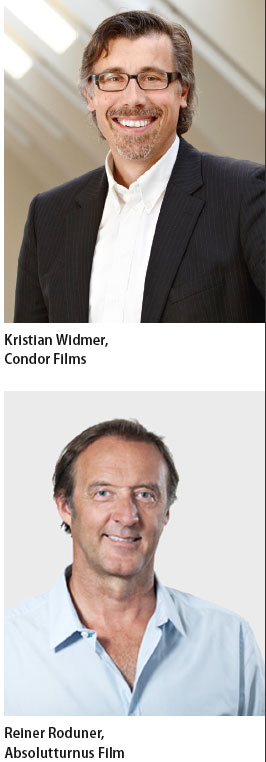
WW: In which areas do Swiss film producers see their opportunities in the future and where their impending dangers?
Roduner: In the field of commissioned film - and in the following we will only talk about this - we are in the midst of change. The structures of client, agency and production have become overlapping. New opportunities for new media and platforms are merging hierarchies. Everyone is doing everything. The opportunity for us producers lies in consistently addressing the issue and having the courage to initiate change and go down paths that no one else wants to go down yet, because there are no guardrails in place yet.
Kristian Widmer: The threats are identical to the opportunities: new products, changing value chains, new rules of the game.
Levente Paal: Both can be found in the diversity of applications. But I see it primarily as an opportunity. Conceptually, we need to set everything up in such a way that it all fits together in the end, regardless of the area. That corresponds to the general contractor "film producer" anyway.
Nadia Rosasco: In flexibility, in customer proximity and in understanding towards the client. We Swiss are different, unique. And only those who grew up and have roots here, who know the mentality of the Swiss, have the necessary background to support customers in their projects in a Switzerland-related way.
What are current challenges for Swiss film producers?
Rosasco: To still produce high quality films in a high price country with ever dwindling budgets.
Paal: Nothing should cost anything anymore. With this attitude, appreciation for the complex work is also lost. Maintaining motivation for oneself and an entire team under these conditions is very demanding.
Reiner Roduner: Primarily redefine its own areas of competence. We must embrace the current changes. Offer new solutions.
Widmer: The challenge is to recognize with the necessary serenity what remains and to accept with the required consistency what changes.
How does our quality compare internationally?
Paal: The fact that Swiss films keep winning prizes at international competitions shows that there are no differences. We usually only see the best works from foreign productions. Therefore, the impression is created that only excellent films are made abroad. But you only need to look at foreign TV commercials and image films on websites to quickly realize that this is not the case.
Widmer: Due to the size of the market, the volume of productions from Switzerland is significantly smaller than that of other nations. This alone reduces the number of outstanding films statistically. Viewed in a differentiated way, Swiss commissioned films can be seen in the truest sense of the word. Those who know this can also dive for pearls in Switzerland.
Roduner: I think the award-winning EDI films are in no way inferior to an international comparison. There are many reasons why clients and agencies often choose to work abroad. The price pressure can be one, the choice of the advertising agency, which is domiciled abroad, or the choice of the director, who is often tied to foreign productions.
How do Swiss producers experience internationalization in the advertising film market?
Roduner: The pressure has become enormous. Unfortunately, a lot of things are now only about price. Quality becomes secondary. We have a bad hand when it comes to budget comps with our colleagues from abroad, which then often forces us to produce abroad - and that in turn weakens our own market.
Widmer: Positive, because thanks to internationalization the number of available talents for Swiss customers is also growing. Negative, because the current € exchange rate tempts people to demand know-how abroad. This problem affects film productions as well as agencies.
Paal: It is always difficult to accept when the prevailing tenor is that everything and everyone is better abroad. At the same time, you have to face the situation and accept the challenge, or start something else.
Rosasco: The price pressure is massive and it is becoming increasingly difficult to compete with our neighbors. But here, too, I am relying on our roots. The trilingualism, the Röstigraben, all peculiarities that only we Swiss know. That's why I think we will always prevail against foreign competition.
Haller: The market has become increasingly international in recent years. I see it as a challenge - and also as an opportunity - for Swiss producers to optimally combine international and national production so that the best possible film can be made.
Switzerland would have all the possibilities: Money, landscape, talent. Why are we still not a leading film nation?
Paal: Switzerland has no film industry. That is why it is not perceived by the public. If Swiss television shows up somewhere and sets up three lamps for some interview, people already perceive that as "Hollywood". Even people from the advertising industry often can't separate the wheat from the chaff. The phrase "label drinker" comes to mind.
Haller: Compared to many countries, Switzerland - by its standards - unfortunately has few training centers for filmmaking. Nevertheless, there are many talented people who train themselves as an alternative, either self-taught or abroad. Likewise, there are producers who follow young interested people. Unfortunately, this is only possible to a limited extent for most productions.
Roduner: No, we are not a film nation. We are not, because we generally look abroad and often just copy and adapt. There are exceptionally creative agencies in Switzerland that deliver great new ideas. But they often fall through because people prefer to take the safe route. In our country, commercials are generally a means to an end and not a matter of the heart - and that's why we're not a leading film nation.
Widmer: Neither in feature films nor in commissioned films are money, landscape and talent the ingredients that make a country a leading film nation!
Rosasco: We can hardly be called a great film nation. No. Swiss clients lack courage and humor. No one dares to laugh at themselves. It's a matter of mentality. The trilingualism doesn't make it any easier to produce a national campaign that is equally well received in all parts of the country. This usually results in a compromise. And compromises are usually unsatisfactory.
Are there too many film producers in Switzerland - measured against the small market?
Rosasco: In my opinion, the number of serious competitors is healthy.
Widmer: This question will and must be answered by the development of the market. The opinion of an individual market participant seems irrelevant to me, because he will naturally want fewer competitors.
Haller: Yes and no. In Switzerland, there are many smaller "boutique productions" that can devote themselves fully to a project, which I also see as an advantage.
Paal: That brings us back to the introductory question: Are there any film producers left at all? Add to that the fact that the small market is being expanded to Europe - and then the competition is definitely too big.
How have budgets for commissioned films changed and how will that evolve?
Widmer: When it comes to budgeting, clients no longer focus solely on a film's impact objectives, but increasingly also on the distribution channels. Creation, production and distribution are increasingly merging in image and product films.
Haller: Budgets have tended to become smaller, but this is also related to technological progress. However, the market ultimately regulates prices.
Paal: It can't cost anything more. Budgets have become incredibly tight, according to the motto: three for two. But there are also professionals among the customers who know that quality has its price. That's why there will be more and more "cheap" films and a smaller proportion of high-quality ones. The cost gap is getting bigger.
Rosasco: Budgets are getting smaller and smaller. Virals are still seen as small, cheap "Internet films" that should cost nothing. But they should still spread by themselves. A film is a film. Whether it is shown on the Internet, on TV or in the cinema. And if a film is supposed to spread by itself, then it has to be cheeky. Which is unfortunately very rarely the case here.
How have the demands and perhaps false expectations of clients changed?
Haller: The standard for commissioned films has always been high. There has been very good Swiss filmmaking in the past and we are always trying to improve in order to keep up with the international level.
Roduner: Confusion about the effectiveness of the Web and Internet and their possibilities are the big issue at the moment. The right weighting of spending has become a central question. TV - cinema - web and internet? The expectations of the clients are mostly clear. Achieving them more difficult than ever.
Paal: There is no internal debate. To exaggerate: You want a film, but you don't know for whom and where it should be shown. The main thing is that it is ready next week and costs as little as possible.
How has Youtube changed the market?
Paal: Youtube has made films internet-ready. More is being produced thanks to Youtube.
Rosasco: Customers expect their films to spread by themselves like Youtube films. But this ignores what makes Youtube films: wit, courage, irony, schadenfreude ... attributes that are unfortunately very rare in Swiss advertising films! Simply producing a "visually bad film in the style of home made", which may cost nothing and has a script that is not funny: that is not enough for independent distribution.
Widmer: Thanks to Youtube, clients are becoming more aware that not every moving image moves. The measurability of the effect can hurt, but there's no way around it in the long run.
Haller: Youtube is a great information platform for us; everyone can see what's currently "hot" on a topic. I find that exciting.
All companies want moving images on their websites. Are professional film producers feeling any of this boom, or is it going through a different market?
Roduner: We feel that quite enormously. The market is open. Currently, agency and film people are merging. New companies are being founded, new markets are being explored and a lot of pioneering work is being done. The first ones are already plowing the way.
Widmer: The demand for moving images for the web is clearly noticeable. However, production requires different workflows than classic commissioned and commercial film production. A production company is faced with the question of whether it can and wants to adapt its processes to this.
Haller: It depends on the client. There are very nice websites that are equipped with professional footage and just as there is the opposite. So it is partly noticeable for us.
Rosasco: We feel this development strongly. However, it is rare that "only" such material is produced. Very often, additional material is requested after a shoot, which can be used for the webpage, the app, the banner.
Paal: So-called Internet films have had, or in some cases still have, the status of "cheap film". On Youtube, the whole range is visible. There are films for no money up to very very expensive productions everything. There the film producer already starts with school children.
The development of digital photography has permanently changed the profession of photography. Only the best still have jobs. The jobs in the midfield are taken over by professionally equipped amateurs. Is such a development also emerging in the film business?
Paal: There is indeed content that can be executed by ambitious amateurs. But as soon as it comes to film that wants to do more than document a state of affairs, it needs film producers, concepts, scripts, directors, cameramen, outfitters and so on. And then we're back at it.
Roduner: In the low budget area, definitely. There is a lot of production in this area, precisely because the web offers so many possibilities. But here the circle closes and that's why there's an Edi. He wants to promote creative filmmaking and pull exceptional productions out of the mud of mediocrity. But he gives everyone a chance, even a professionally equipped amateur.
Widmer: I expect that in the future, as in every industry, there will be three groups: the quality leaders, companies with price leadership, and a group in between that is either able to pursue a niche strategy or can only hold its own in the market with difficulty.
Rosasco: I don't see such a development. Without being disrespectful to photography, film is a much more complex matter. In film, a dramaturgy is needed so that the goal, the consumer's attention, is awakened. And dramaturgy has to be learned, it's not for amateurs. Due to the constantly growing technical possibilities, many new young talents are emerging in this field. But it would be wrong to call them amateurs.
Haller: The biggest changes I see are the costs and the time factor. The pressure has become greater here. But making a film depends above all on the people. My concern is that today anyone can claim to be able to make a film professionally - but it's really like a good book: everyone has a computer and paper. Still, not everyone can write a good book. The positive thing, however, is that young talents can become self-taught.
What would be a nice and what a concrete wish of the film producers to the Swiss advertising agencies and clients?
Rosasco: More courage, more irony in the scripts. This is especially true for the clients. Because as you learn again and again, there are definitely funny scripts that then unfortunately have to give way to compromise.
Widmer: I would like to see agencies and film productions working hand in hand to prove to their clients what outstanding films can achieve.
Haller: It is in the interest of all of us to promote filmmaking on our own doorstep, so that it will continue to be possible to make outstanding films in Switzerland.
Survey: Andreas Panzeri
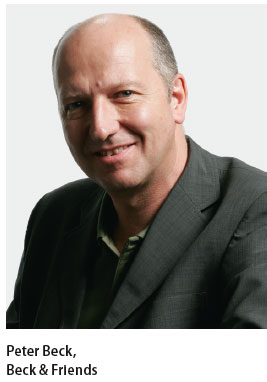
Peter Beck, Beck & Friends, President Swissfilm Associati on
WW: What developments have led to discussions within the industry when planning and defining the criteria for EDI competition?
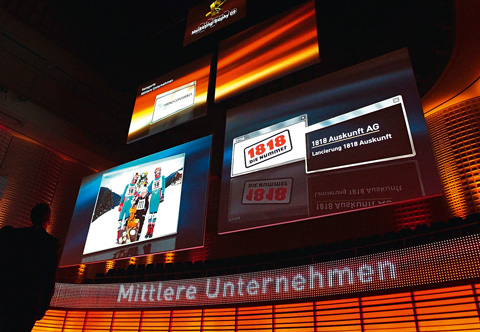
Peter Beck: From the very beginning, 12 years ago, it was clear that the Edi should be a national competition. It was to become a showcase for the quality and creativity of Swiss commissioned and commercial film production. This claim was clear for the organizers as well as for the EDI and is still valid today. The definition of the individual areas and criteria is more difficult. The communication with film and moving image, the emergence of completely new channels and countless new possibilities requires a flexible adaptation of the categories.
What circumstances had to be specifically considered?
It's not that difficult to create a new category like multimedia and interactive, for example. The question is, is this area really developing in this direction or is it just a flash in the pan? Then it needs an appropriately professional jury. And then it also needs enough suitable entries in this category.
Does the Edi also have something to do with "homeland security"?
I don't understand the question. Edi is a national competition under the patronage of the Federal Department of Home Affairs and honors Swiss achievements. This competition does not protect anything, it is the benchmark for films and productions of our creative industry in Switzerland. Those who want to compete internationally have many other opportunities to do so.
How does our quality compare internationally?
Switzerland can compete very well internationally in the area of quality. Measured against the small market and thus also the selection of productions, the proportion of high-quality productions is large. In the area of corporate film, Swiss productions have also performed above average in international competitions in recent years.