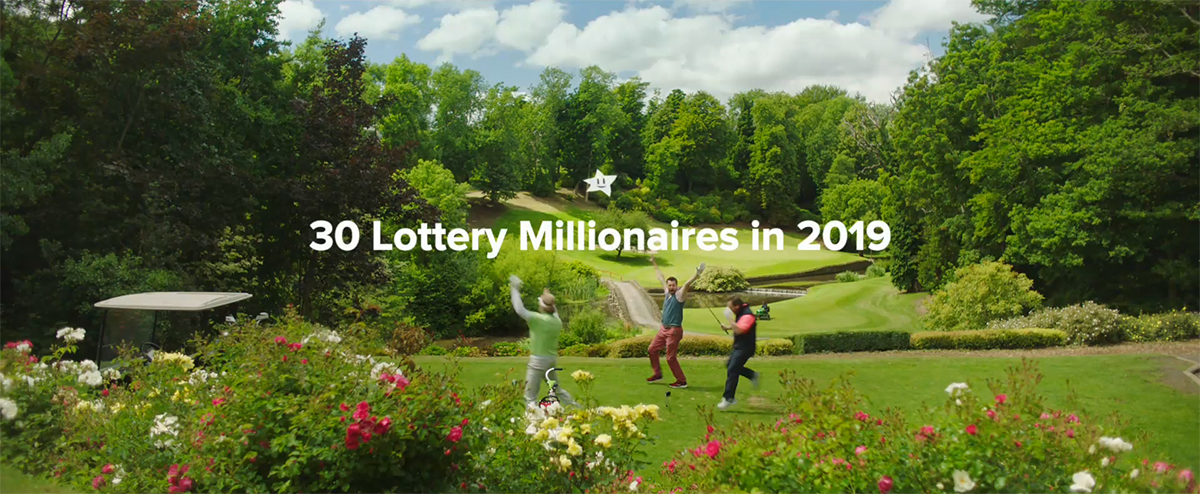
There are just some things you’re not cut out for. When even the worst golfer manages to hit a hole-in-one, it’s like hitting the jackpot—which is exactly what The Irish National Lottery and Core had in mind.
Editorial
-
August 14, 2020
The TV commercial for the Irish lottery tells the story of a not very talented golfer to whom all kinds of misfortunes happen. There is no sign of success. The ball lands everywhere - in the lake, in the sand or even in a tree - but not in the hole.
Despite everything, the golfer with the strange tee shot persists and keeps trying until he succeeds in what he thought impossible: the ball flies over various detours, including a sign, a bridge and a lawnmower, with both halves into the hole. Sometimes dreams do come true. And sometimes it is possible to become a lottery millionaire.
The idea came from the Irish agency Core. Arrow Films produced the film in collaboration with director Damien O'Donnell.
The Internet does not forget
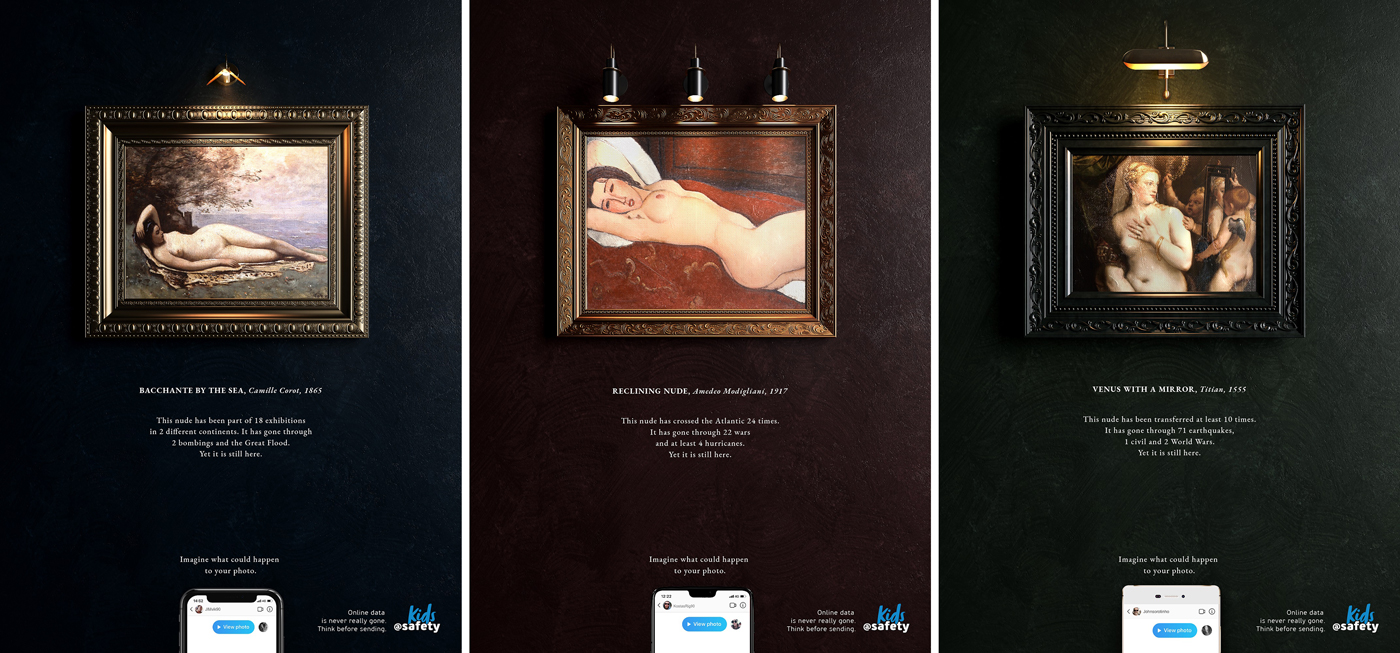
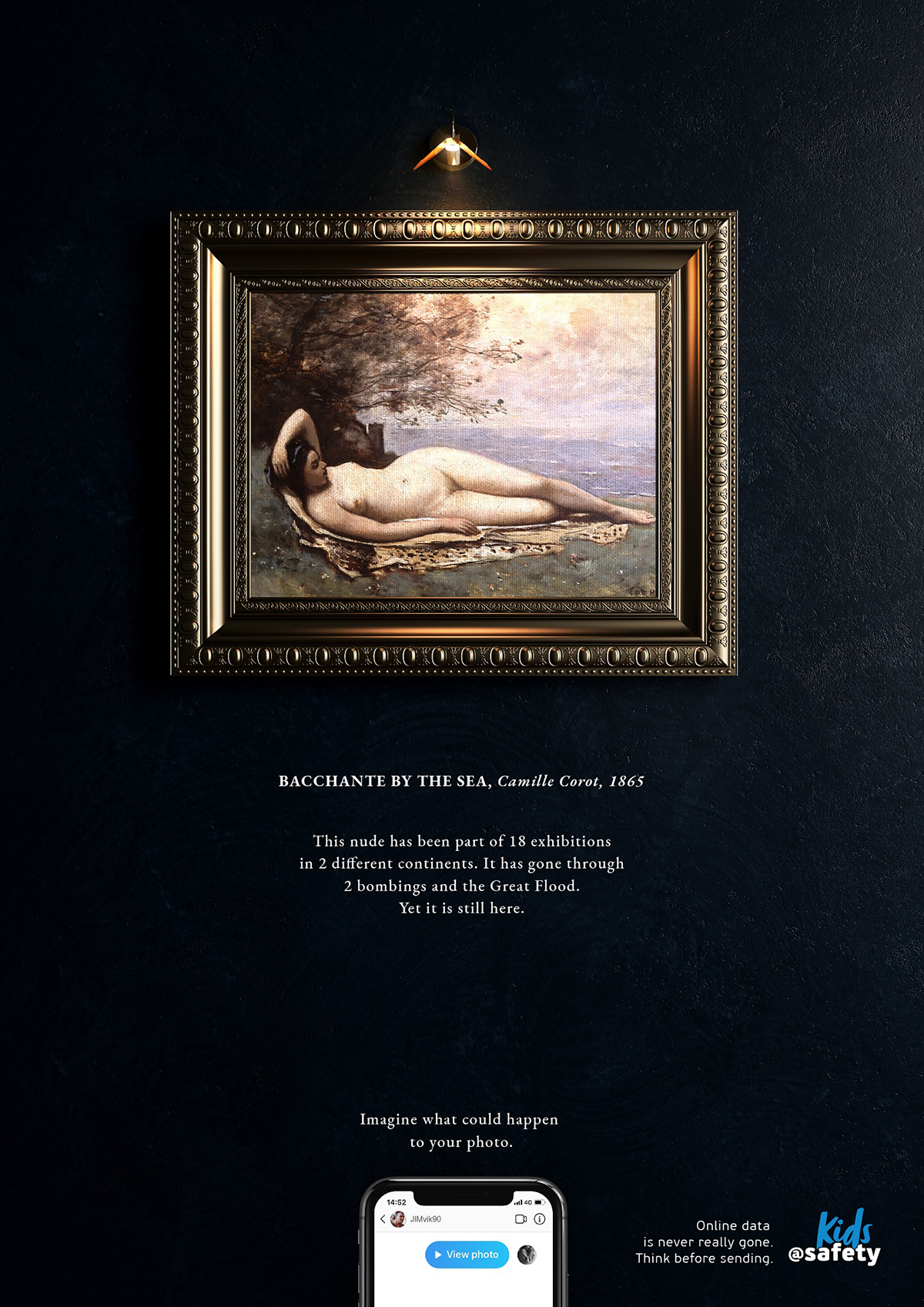
A print campaign by The Newtons Laboratory for Wind Telecommunications Greece highlights just how far-reaching the consequences of a thoughtless upload can be.
Editorial
-
August 13, 2020
As quickly as a nude picture of oneself is taken and sent to another person, the corresponding material can remain on the Internet afterwards and end up in many hands. In this age of TikTok, Instagram, Snapchat and the like, it is important to raise awareness and make it clear, especially to the younger generations, how serious the consequences of such an ill-considered and often impulsive act can be.
The Newtons Laboratory builds a clever thematic bridge to nude portraits of various painters who have traveled widely and even survived several natural disasters and wars. Analogously, data - once on the Internet - never remain completely erased. Therefore: Think before you press "Send."
Travel tips from dogs for dogs
Visit North Carolina posted a job opening that was a little out of the ordinary and was looking for an animal travel consultant.
Editorial
-
August 12, 2020
According to a U.S. study, 45% of pet owners take their dogs with them for at least two nights when they travel. To a large extent, only the owner's travel needs are taken into account.
That's why Visit North Carolina and LGA have launched a search for the perfect canine travel consultant. And no one understands our faithful, four-legged companions better than a dog. Out of hundreds of applicants, Mo was ultimately chosen as the Top Dog. At Dogtravelagent.com the five-year-old dog gives travel tips to her fellow dogs and helps with travel planning.
This transport company promotes walking
To promote social distancing during the COVID-19 pandemic, the Swedish transit agency Västtrafik is asking passengers to walk instead of taking the bus. The initiative was conceived and implemented by the Swedish agency Forsman & Bodenfors.
Editorial
-
June 29, 2020
The special Corona route that Sweden has chosen has been the subject of controversy since the beginning of the pandemic. In order to comply with the recommendations of the Swedish health authority, Västtrafik in Gothenburg wants to do something to prevent further spread of the virus.
To prevent buses and streetcars from becoming overcrowded in Gothenburg's city center, passengers are encouraged to forgo public transport and walk more often. To this end, the company has expanded the route map for the streetcar and bus network into a walking map.
The map, which shows the number of steps between stops, is a reminder that distances in downtown Gothenburg are actually relatively short and it's perfectly possible to simply walk from A to B. "In this way, we want to make it safer for those who really need to use public transport," Lars Backström, CEO of Västtrafik, is quoted as saying in a statement.
The newly designed map is advertised in print ads and on billboards at tram stops in the city of Gothenburg.
Burger King ensures safety on board
Once again, the fast-food chain Burger King is using humor to convey COVID-19 safety information in a campaign. Buzzman France brought French comedian Frédéric Testot on board for the project.
Editorial
-
June 26, 2020
French fast food fans can now enjoy their burgers and fries in Burger King restaurants again. And they can do so with complete peace of mind, because Burger King is committed to safety and hygiene.
In the style of a safety instruction on board an airplane, French comedian Frédéric Testot guides the viewer through an almost 80-second information video and shows what is (not) done behind the counter to ensure hygiene standards - drones, flamethrowers and Star Wars references included. Smiles guaranteed.
Make taste great again
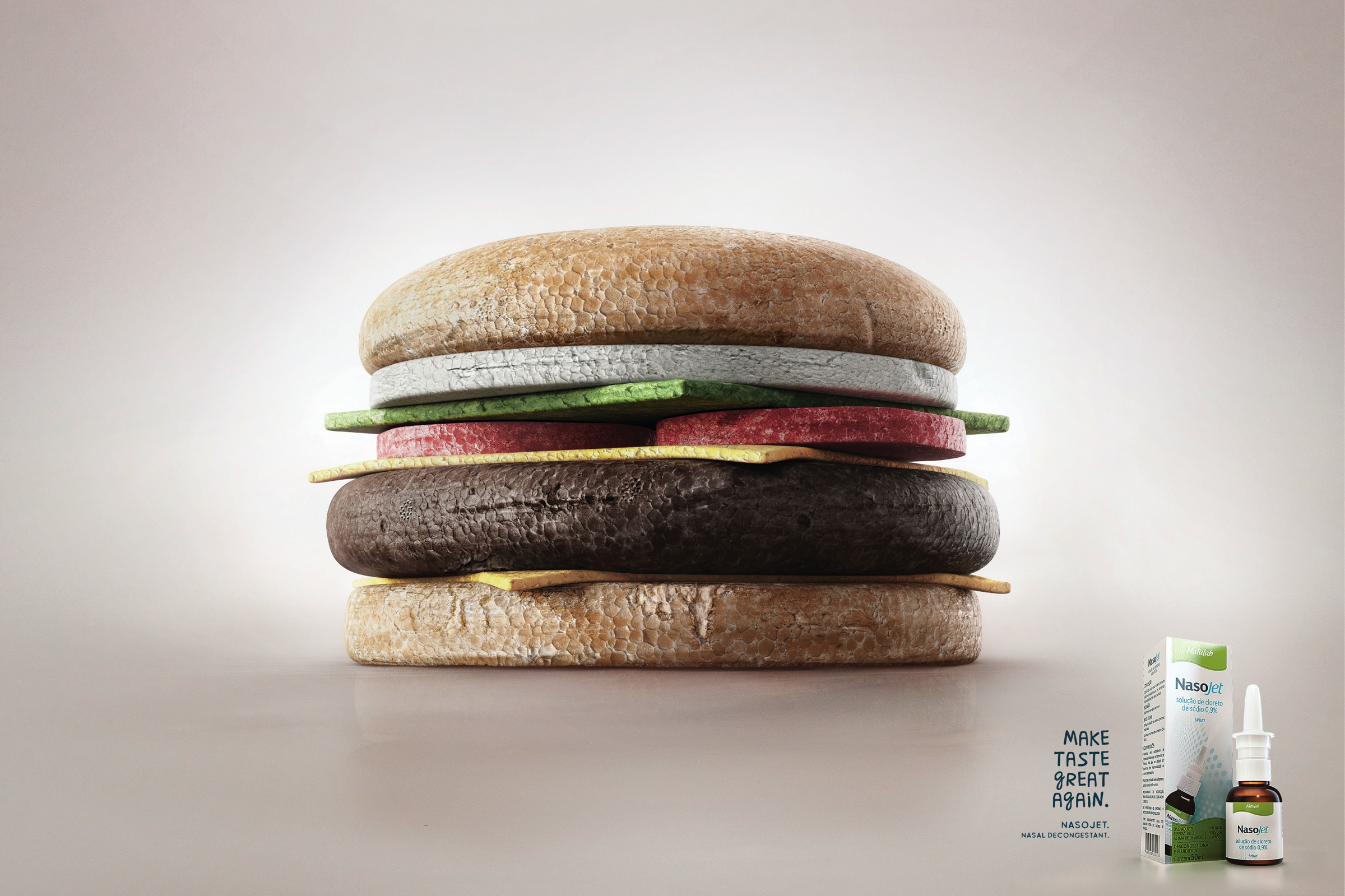
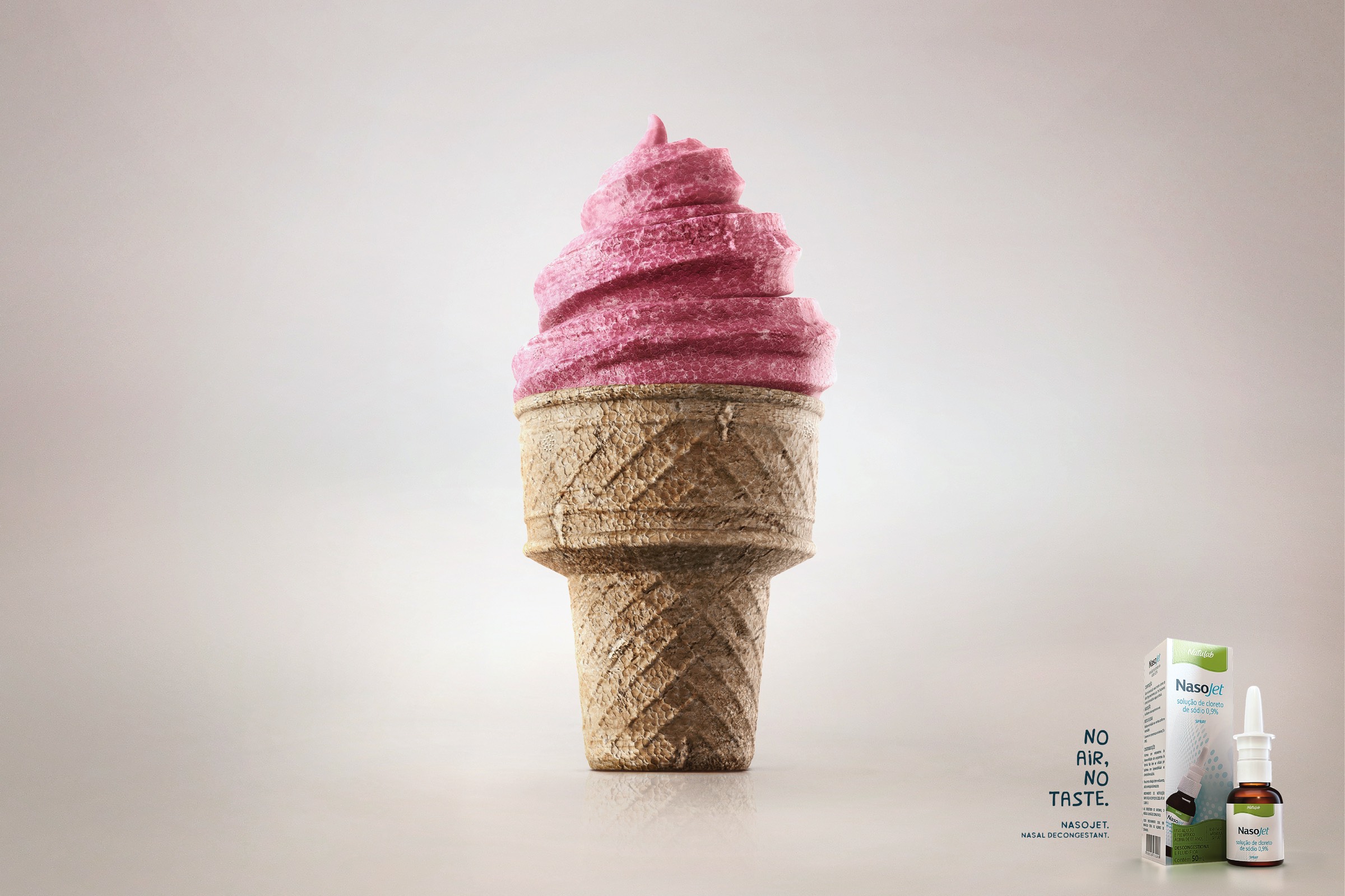
When you have a cold, even the juiciest burger or the fruitiest ice cream can taste like cardboard. McCann Health illustrates this in a campaign for Nasojet.
Editorial
-
June 22, 2020
Mainly in winter, but also in summer, people are repeatedly afflicted by a persistent nuisance: The common cold makes us tired, listless - and often we temporarily lose our sense of taste. You could actually just eat cardboard, because you don't taste any difference anyway.
McCann Health Brazil picks up on this aspect and uses hamburgers, hot dogs and ice creams made of Styrofoam and cardboard in its poster campaign for Nasojet. At least there are antidotes such as soothing nasal sprays that quickly provide relief. So the meal can soon be fully enjoyed again.
With "natural repellents" against the coronavirus
To ensure that everyone follows social distancing guidelines, Wunderman Thompson Italy and Burger King are relying on tried-and-true «natural» defenses: raw onions galore!
Editorial
-
May 22, 2020
In Italy, the total lockdown is over. The population is currently allowed to move around freely again, although the social distancing rules of conduct still apply, of course.
Wunderman Thompson and Burger King's new prank goes beyond traditional behavioral communications and aims to help drive compliance with a new product.
The result is the "Social Distancing Whopper. A truly unique burger that - topped with three times more onions - may not necessarily appeal to the taste buds of all consumers. Nevertheless, the burger will probably deliver what it promises: distance and thus protection for the consumer and his periphery. People are happy to take the stairs instead of the elevator.
Wrong and tasteless: VW apologizes for commercial
After heavy criticism of a commercial for the new Golf posted on Instagram, Volkswagen has apologized for the video. The short sequence triggered strong reactions on social networks.
Editorial
-
May 20, 2020
It shows a black man being pushed through the frame by a giant white hand and then flicked into the entrance of a house. "Without question, the video is wrong and in bad taste," the company said in Wolfsburg on Wednesday.
The fact that the clip caused outrage and anger among many observers is understandable, he said. "We distance ourselves from it and apologize for it. We will clarify how this could happen - and draw consequences from it."
For a moment towards the end of the commercial for the new Golf model, a sequence of letters could also be seen, the insertion of which suggested the word "Negro". "Already against the background of our own corporate history, Volkswagen positions itself against any form of racism, xenophobia and discrimination," the Wolfsburg company explained. The clip had also been seen on Twitter.
An initial apology had previously been circulated on Instagram. "As you can imagine, we are surprised and shocked that our Instagram story can be so misunderstood," VW initially wrote there.
This was once again met with criticism in places. One user wrote: "So it's all imaginary and a misunderstanding? Sorry, but we are not imagining racism. VW then clarified its apology. The company also emphasized: "Many initiatives within the company and in our global workforce promote diversity, integration and prejudice-free cooperation." (SDA)
Nutshell Films narrates gruesome costumer journeys for BSI
What makes for a perfect customer journey? In a four-part video series featuring Tim, a fictional «typical» retail customer, Nutshell and BSI show how things should definitely not go.
Editorial
-
May 15, 2020
BSI's vision is also the dream of every marketing expert: every company can offer its customers optimally tailored costumer journeys and experiences without having to accept major wastage.
In their second joint work, BSI and Nutshell show what can go wrong with online marketing - and why it's better to use BSI's solutions. With the BSI Customer Suite, the Swiss software manufacturer BSI offers a holistic platform for the digitalization of customer relationships. For retail, banking, insurance and energy & utilities, BSI offers everything needed for an excellent customer experience. With this campaign, the company wants to increase awareness of its products and services in Germany.
Consistent communication across all digital channels, 24/7 customer service or target group-specific targeting - these terms should be all too familiar to all marketing professionals. And this is exactly where the "Mach`s besser" campaign comes in. At the heart of the campaign are four digital marketing challenges to which BSI has answers.
Responsible at BSI: Charlotte Malz (Marketing & Communications Manager), Bernhard Egger (Retail Community Manager), Isabelle von Burg (Digital Marketing Manager), Gesa Rasch (VP Strategic Marketing). Responsible at Nutshell: Yves De Prà (Creative Direction), Andreas von Muralt (Concept, Text), Magnus Langset (Art Direction, Edit), Andreas von Muralt (Strategy), Justin Stoneham (Direction Film), Pascal Reinmann (Director of Photography Film), Roman Surber (Photography)
How the Corona Crisis Affects Information Behavior
The COVID-19 crisis is influencing how Swiss people consume information. The representative, neuroscientific online study «Coronavirus and Media Use» by independent market researcher Ursula Kaspar examines which media have seen an increase in usage during the crisis and which have lost audience share, as well as the role of the limbic system in this process.
Editorial
-
May 14, 2020
In times of crisis, the advertising and media industries have a hard time, as budgets in these areas are almost reflexively the first to be cut. The current study by Ursula Kaspar aims to show why anti-cyclical advertising is worthwhile these days, because various media brands and channels have seen a significant increase in usage since the start of the Corona crisis. This can be explained by the fact that our general need for information is influenced by the current situation, and media consumption has also become more important for spending time at home.
24 Media brands were consumed more frequently in some cases
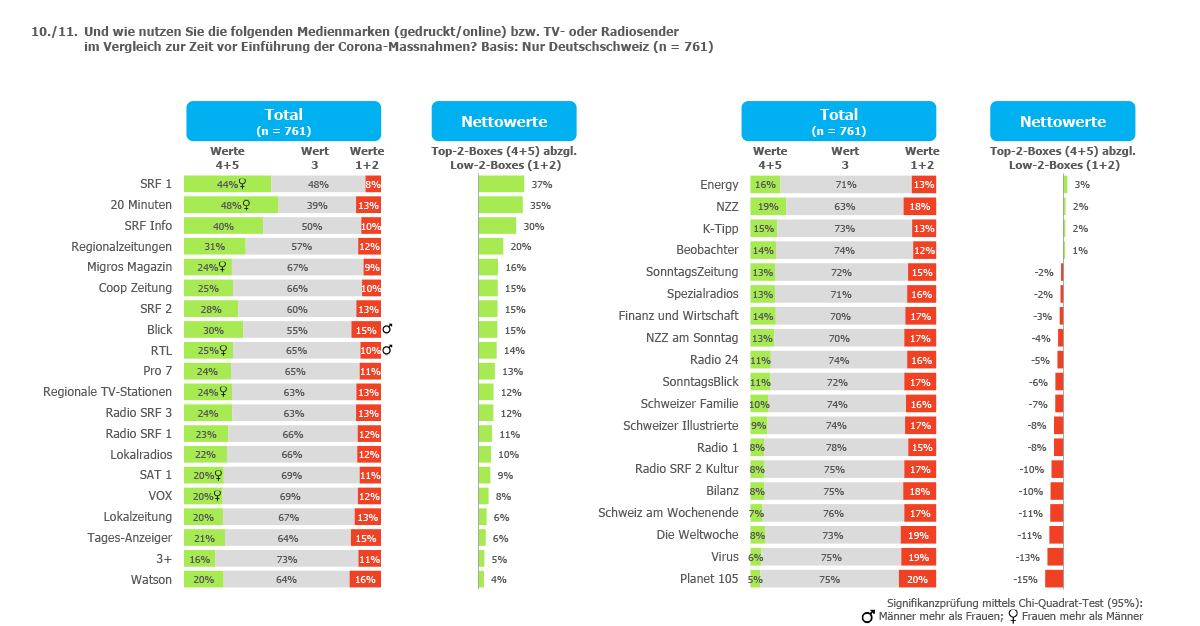
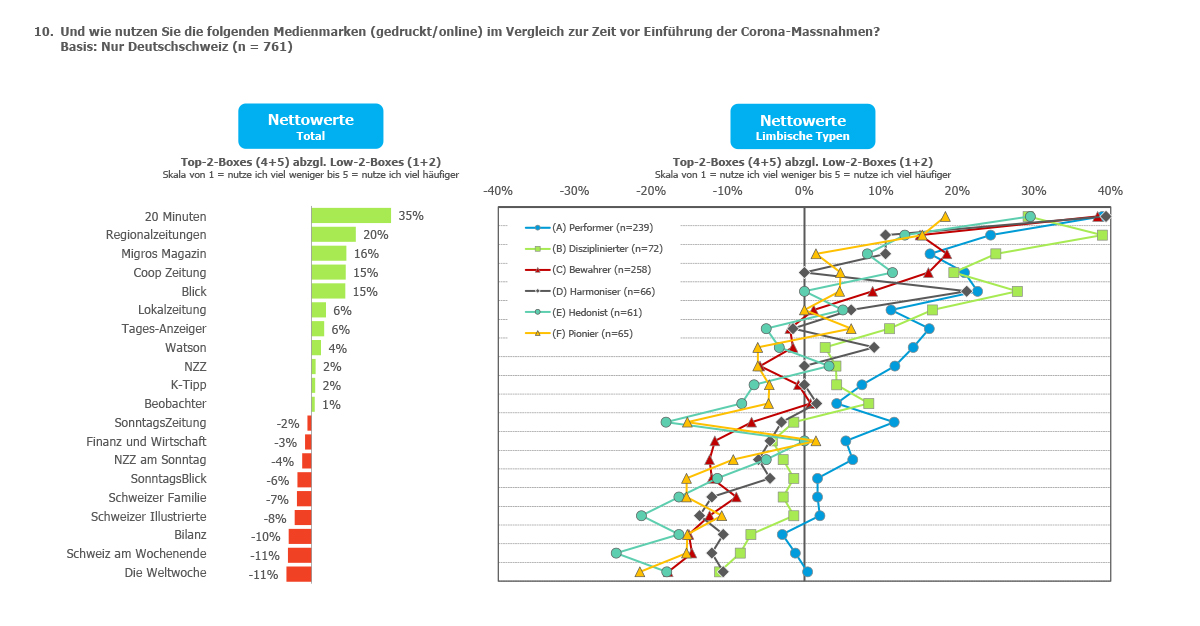
Of 39 media brands surveyed, 24 were consumed significantly more frequently during the crisis than before the crisis. The frontrunner - used more frequently by 37 percent of the population in net terms - is SRF 1, ahead of 20 Minuten (35%) and SRF Info (30%). Regional newspapers (20%), the Migros Magazine (16%), the Coop Newspaper, SRF 2 and View (15% each), RTL (14%), Pro 7 (13%), various regional TV stations as well as Radio SRF 3 (12% each), Radio SRF 1 (11%) and local radio stations (10%) made the biggest gains.
Slightly lower net growth was shown by Sat 1 (9%), VOX (8%), local newspapers and the Tages-Anzeiger (6% each), 3+ (5%), Watson (4%), Energy (3%), NZZ and K-Tip (2% each) and the Observer (1%). In particular, Sunday newspapers, business media and specialty radio stations lost net audience share during the crisis.
Online media and TV top
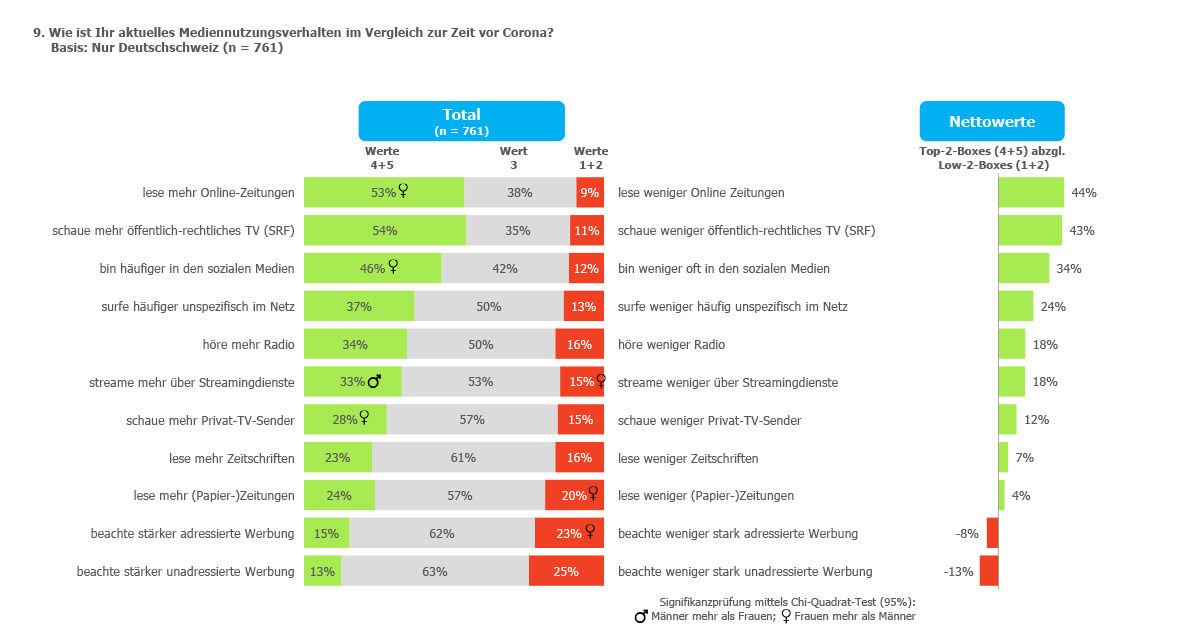
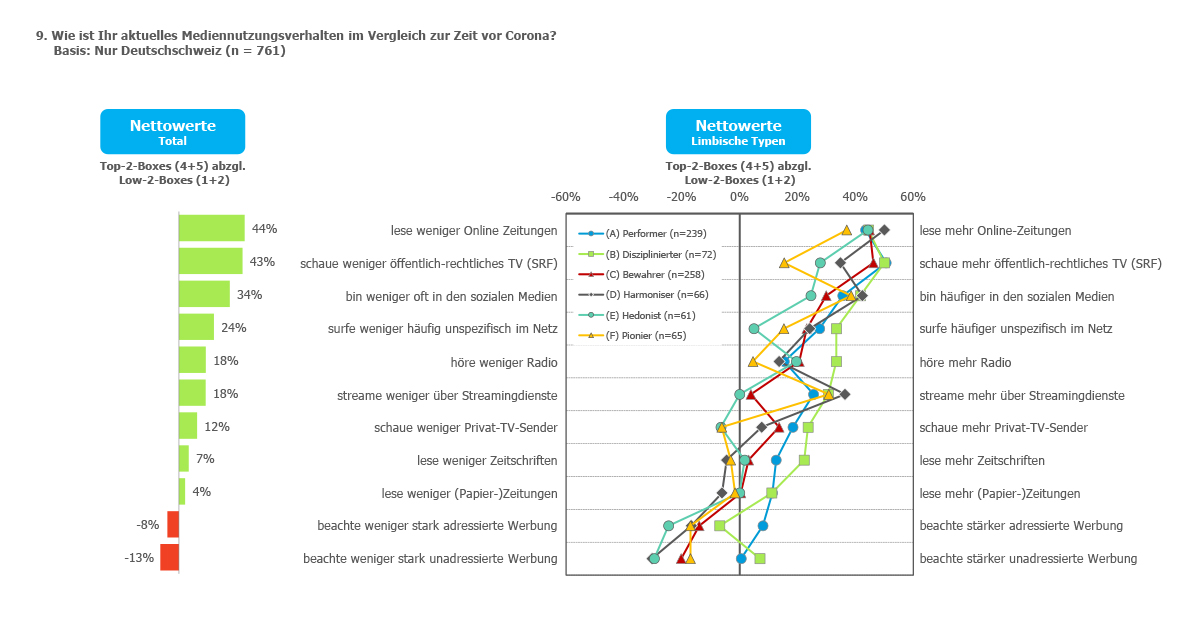
When asked which media channels are now used more frequently by Mr. and Mrs. Swiss compared to "before Corona," public television, online newspapers and social media can clearly count themselves among the winners. When we look at which communication channels were used more frequently during the crisis, online newspapers are at the top of the list with a net increase in usage of 44 percent.
This is closely followed by public TV (SRF) (43%) and social media (34%), non-specific web surfing (24%), radio and streaming services (18% each) and private TV (12%), magazines (7%) and paper newspapers (4%). Addressed advertising (-8%) and unaddressed advertising (-13%) attracted less net attention than before the crisis.
Values and motives influence usage behavior
According to the aforementioned study results, the environment for paid media - whether online or in paper form - is significantly tougher than for free newspapers or radio and TV with automatic fee collection. This development can be explained from a neuroscientific perspective. Namely, an online paywall subconsciously activates the "punishment center" in our brain, and a physical purchase in a store manifests itself in our subconscious as a "danger" during the crisis, which negatively influences the desire to buy.
Around 90 to 95 percent of all decisions are made in the part of the brain that works unconsciously, the limbic system. The limbic system is responsible for emotions and influences our motives and values. It explains why human views, insights and memories sometimes differ so greatly - as does media usage behavior.
An analysis of media usage and users on the basis of a limbic motive and value structure shows, for example, that Sunday or business newspapers were nevertheless used more frequently by their limbic core target groups than before the crisis, despite poorer values overall. This can play an important role in the battle for advertisers in the "appropriate limbic target group". But how is such a limbic target group defined?
Three basic instructions influence human behavior
Generally important is that information which either indicates a threat, promises a reward, or is new and therefore needs a risk check. What someone perceives as reward, threat or novelty depends on one's own personality profile as well as individual experiences and imprints - which is influenced by the limbic system.
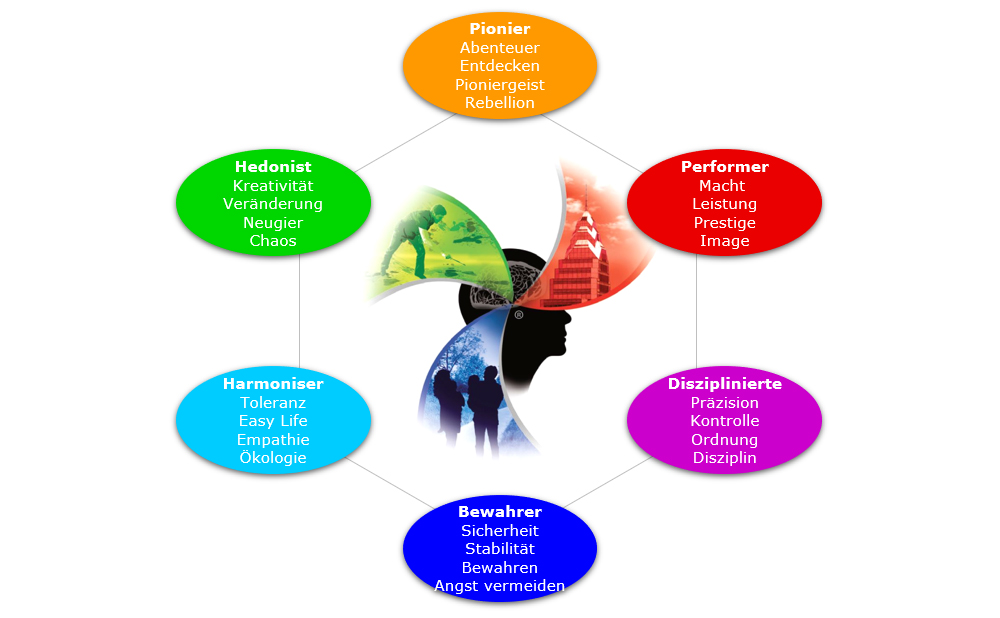
Three basic instructions of the limbic system underlie our personality: The Balance-Instruction wants to avoid fear, uncertainty and change, needs security, constancy and community. The Dominance-instruction strives for power, autonomy and territory expansion, using struggle, prestige and oppression. The Stimulant-instruction seeks changes, surprises and new things, and takes risks to do so.
Six limbic types
The expression and interaction of the basic instructions are different for each person. However, the Institute for Limbic Communication has identified six simplified cluster types for daily research and communication work: Preserver (with high balance instruction), Performer (high dominance), Hedonists (high stimulus) and the intermediate types Disciplined (high balance and high dominance), Pioneers (high dominance and high stimulus) and Harmoniser (high stimulus and high balance). Certain basic values and motives are attributed to each limbic type.
Individuals with profiles opposite each other in the hexagon have strongly divergent to opposite motive and value structures; profiles lying next to each other have common values.
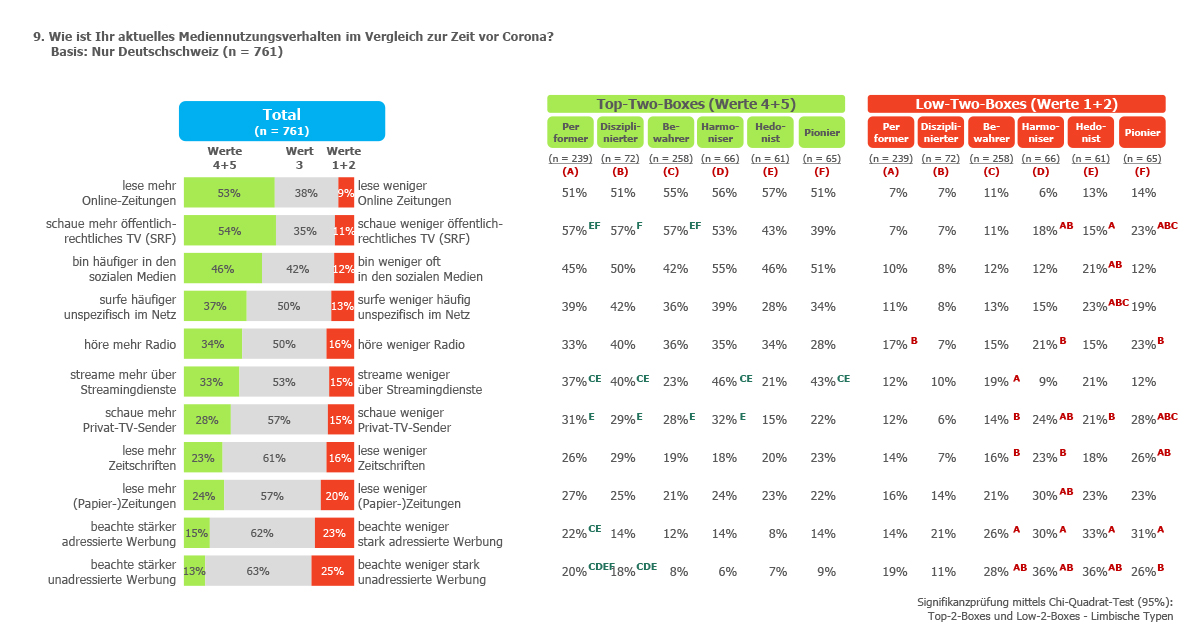
If media use and users are analyzed on the basis of the limbic motive and value structure, differences from the basic segmentation explained earlier become apparent. Online newspapers, for example, were read more frequently by 53 percent of the population, but without significant differences between the limbic types.
Public TV: Growth among performers, disciplinarians and preservationists
For public television (net +54%), however, exciting differences emerge: performers (high dominance), disciplinarians (high dominance and balance), and preservers (high balance) watched public television significantly more often than hedonists (high stimulus) and pioneers (high stimulus and dominance).
With its programs, public TV appeals in particular to the traditionally oriented balance audience, which makes up the largest part of the population in Switzerland. Based on their characteristics, this audience group wants to avoid fear and uncertainty, needs stability, security and constancy. Fear - especially of diseases, viruses and germs - thus spurs their media interest.
The dominance audience, on the other hand, is fundamentally much more media-savvy than other limbic types and, based on their value and motive structure, is particularly interested in the political, economic, and financial implications of Covid 19 measures.
Significant decrease in stimulant individuals
The highest proportion of those people who consume almost all media less often during the crisis than before are those with high stimulant content. Since variety and the desire for novelty are an important part of their personality structure, and stimulant individuals are generally less anxious than limbic types with a high balance content, corona themes can only encourage them to consume more media in the short term.
Nevertheless, to survive the constraints and monotony of self-quarantine, Pioneers (high Dominance and Stimulance) and Harmonizers (high Balance and Stimulance) are among the populations that use streaming services the most, especially more often than Preservers and Hedonists. However, the selection of streamed series and movies is likely to differ greatly between Harmonizers and Pioneers due to their contrasting personality structures.
Media brands under the limbic magnifying glass
Newspapers and magazines were read significantly more frequently by performers (dominance) and disciplinarians (dominance-balance) during the crisis than by preservers (balance), harmonizers (balance-stimulance) and hedonists (stimulance). Here, too, the explanation for the increased interest lies in the performers' need for information on the economy, politics and finance. Disciplined people additionally seek fact-based Covid 19 background reports due to their high balance proportion and the resulting fear of diseases and viruses.
Paywall as punishment
Paid newspapers and magazines suffer particularly. This is because - as already indicated - a paywall activates the "punishment module" in the brain, which has a particularly negative effect on usage among people with high balance instruction - the largest population group. These individuals orient themselves to free media because of its easy availability.
Nevertheless, there is a small consolation for certain paid newspapers and magazines: They were also able to make some gains in the core limbic target groups interested in media, which is a good advertising argument for customers with suitable limbic target groups.
At the Sunday newspaper (net -2%), Hedonists (-19%), Pioneers (-15%) and Preservers (-8%) in particular reduced their consumption. Performers (net +12%), however, read newspapers more frequently than all other limbic groups.
Finance and economy (net -3%) is read more frequently by performers (net +5%), and significantly less frequently by preservers (-11%).
The NZZ on Sunday (net - 4%) is read more frequently by performers (+11%) and hedonists (+3%). Preservationists consume this newspaper less frequently (-6%).
The representative study "Corona and Media Use." was conducted by independent market researcher Ursula Kaspar together with the Institute for Limbic Communication among 761 people between the ages of 14 and 69 in German-speaking Switzerland. The interviews were collected via online survey between March 31 and April 7, 2020.
Holes to
Apparently, there are people who manage to wear their face masks incorrectly. A prevention campaign by Helsi and Havas aims to put a stop to this.
Editorial
-
May 12, 2020
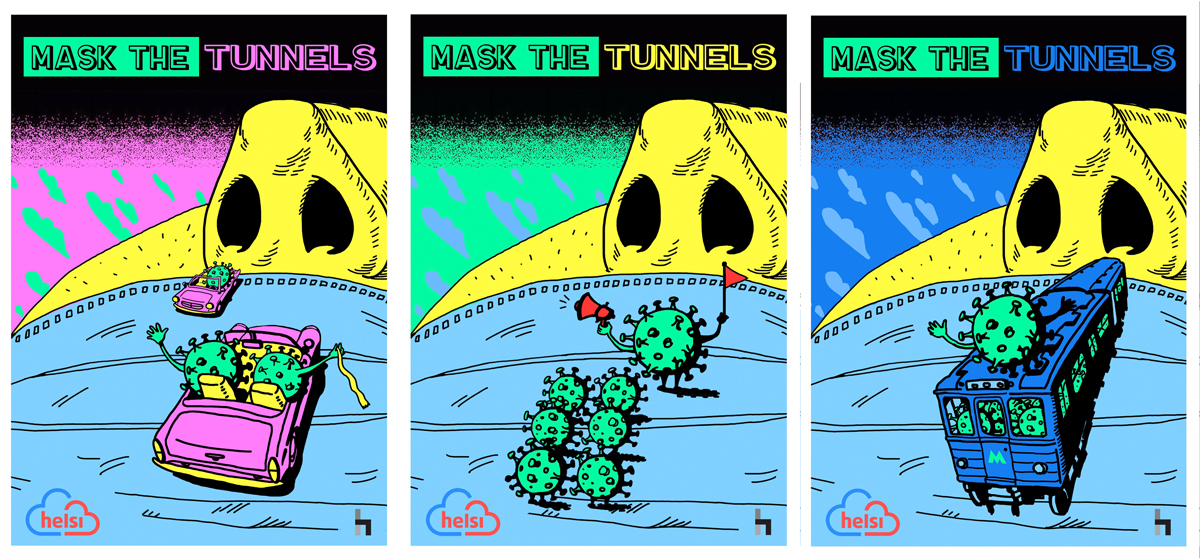
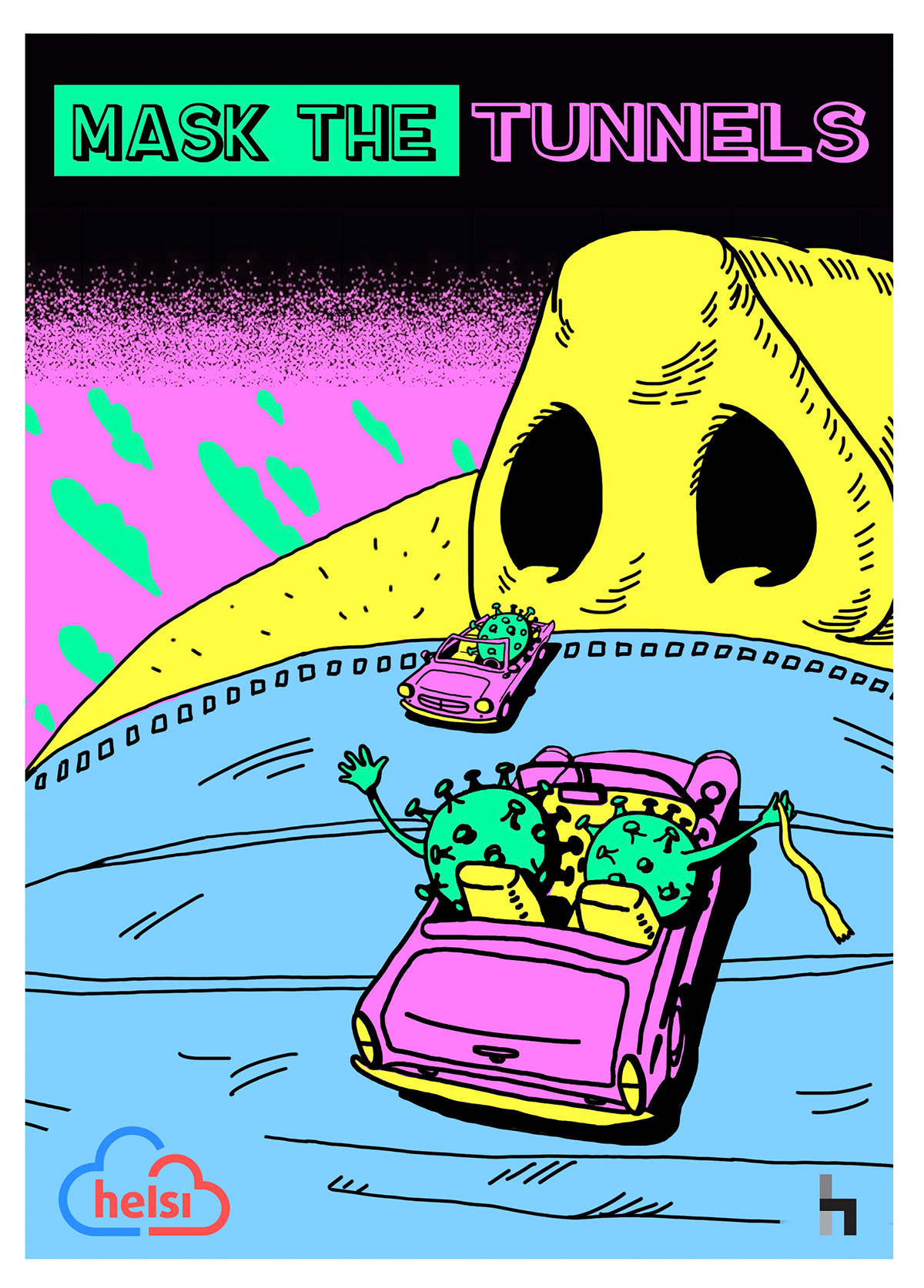
The IT company Helsi usually prohibits people with medical institutions and provides support to both parties in various health issues. In Ukraine, the current problem is allegedly that many people do not know how to wear a hygiene mask properly: many masks are pulled only over the mouth, but not over the nose, which ultimately nullifies the effect of the protective mask.
That is why Helsi, together with Havas Ukraine, wants to raise awareness among the population about the proper wearing of protective masks. A campaign has been developed to show what a real viral traffic exposed nostrils can bring.
Currently the most valuable investment
With a creative idea, McCann Italy and Fineco are urging the Italian public to continue following social distancing guidelines.
Editorial
-
May 11, 2020
After around two months of curfew, the first relaxations are now being made in Italy. Freedom of movement is no longer so severely restricted, and people are allowed to leave the house again. Provided, of course, that everyone continues to comply with the social distancing rules.
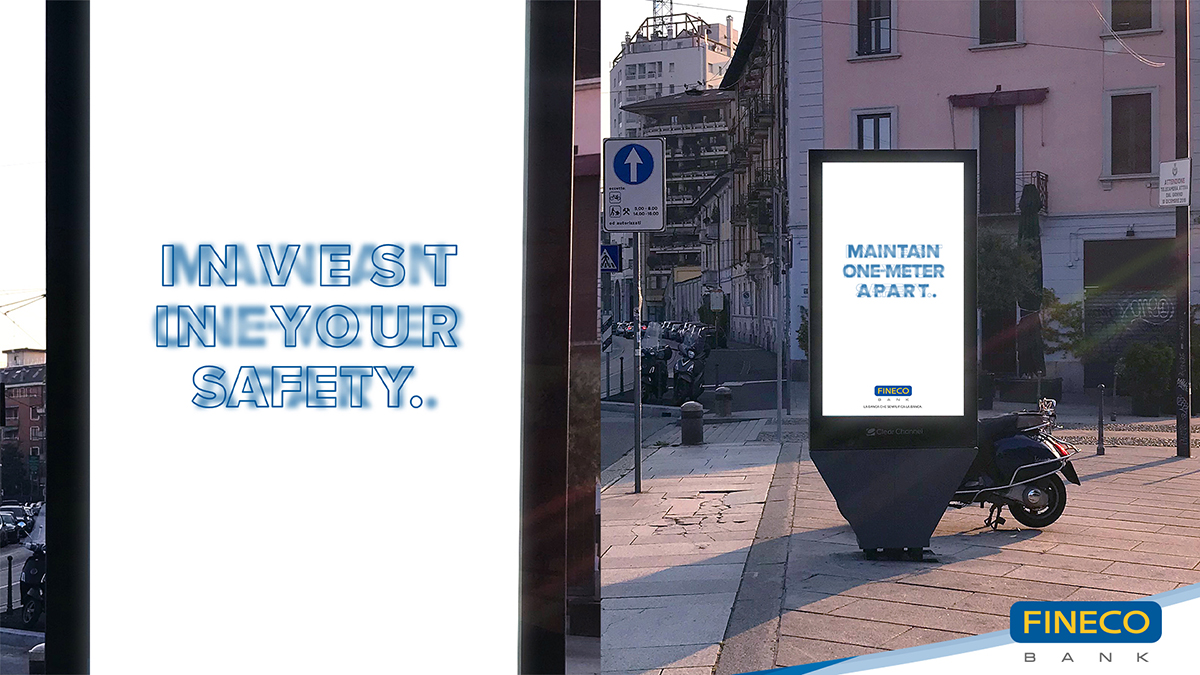
With a DOOH campaign, McCann and Fineco Bank want to remind the Italian population to always keep their distance. Through an optical trick, the subject can only be read if one maintains the prescribed distance. After all, security is probably the most valuable investment at the moment.






 1-0 screenshot.png)