"Our normality is extremely fragile"

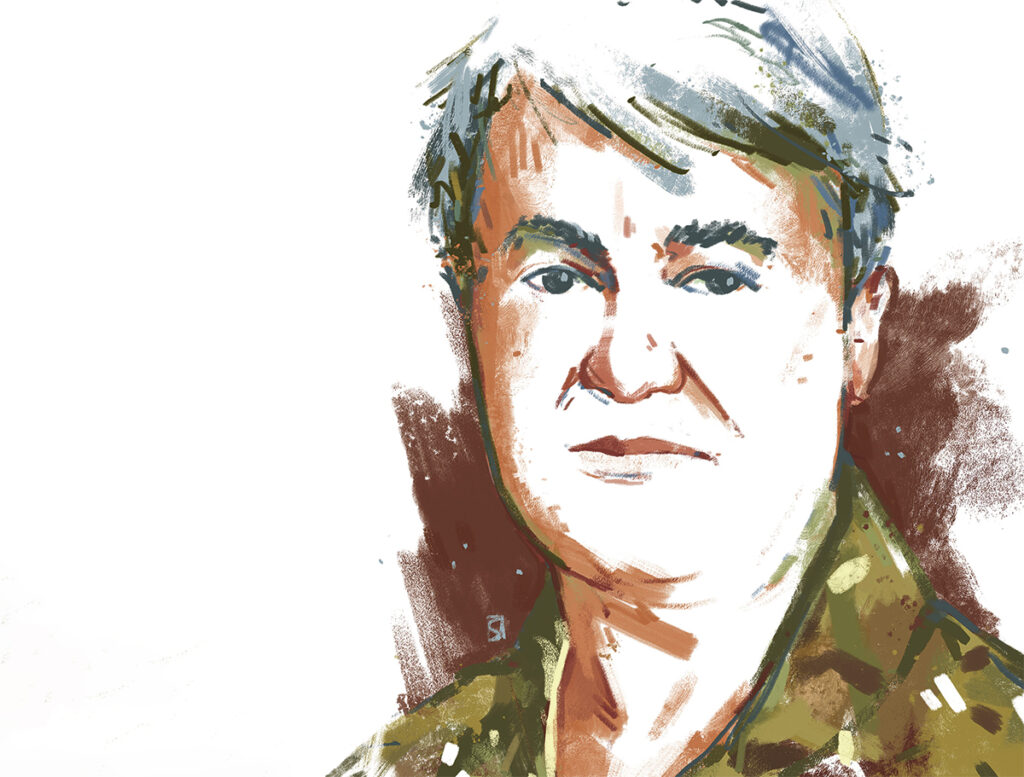
General Sir Richard Barrons led British Army operations in Bosnia, Northern Ireland, and Iraq; he was one of the United Kingdom’s highest-ranking officers. In an interview with m&k, he says the pandemic must make us more resilient.

Illustration: Silvan Borer.

m&k: Sir Richard Barons, you were one of the highest-ranking officers in the British Army before you were honorably discharged in 2016. Which of your duties were particularly challenging over the years?

General Sir Richard Barons: I was Chief of Staff during the first British deployment to Bosnia in 1991, where we got off the plane and immediately had to get to work under rather difficult conditions. Later, as a colonel, I served as Chief of Staff at the British divisional headquarters that launched the first operation in Kabul—that was Christmas 2001. In Kabul, we had to improvise; at first, we slept on the floor of some old stables, and then we had to assemble, organize, and command a multinational force in the blink of an eye. The following year, I established a multinational division in southern Iraq. As a major general, I created structures to negotiate with the Taliban and try, above all, to get the young people there out of the fighting; that was a rather long-term project, incredibly fascinating. You know—in a profession like mine, if you’re lucky, you can find yourself at the forefront of history.


Do you still remember how your career in the military began?

The honest truth is: I’m still not entirely sure how I ended up in the army (laughs). As a boy, I was definitely «crazy about the army» and joined the so-called «cadet unit» at school—which gave me some insight into the army. Before I went to university, I took part in an «academic cadet program,» which took me to Sandhurst for a short time and also kept me quite involved with the military while I was studying at Oxford. At the end of my studies, I enlisted in the armed forces for five years.
But to be honest, I didn't expect to stay in the military for almost my entire working life. As you can imagine, a military career isn't all sunshine and roses. There are different phases, from the early days as a young officer working at the unit level, through a period where you have more contact with command … and then some pretty interesting staff positions. I was particularly fortunate with some of the jobs I had quite early on in the operational field, which then evolved into senior command and staff positions. Every time I encountered a hurdle and overcame it, I was tempted to stay on for a few more years. And here we are now (laughs).


What aspects of your career did you find particularly appealing?

I think the first thing to mention here is … that life in a volunteer army is a calling. It’s not like many of the commercial ventures I’m involved in now, which are fun but also inherently transactional. In the military, you’re committed to an entity; you’re committed to and connected with the people around you. You feel a tremendous sense of purpose when you play at least a small role in defending your nation and your family. But there’s also a strong conceptual dimension to the whole endeavor. I know that for anyone who’s only seen shows like the British series *Black Adder*, there’s a perception that military personnel aren’t particularly smart and spend all their time doing drills (laughs), but the reality is that military life is a very complex undertaking that requires you to work with thousands of people. For example, I led an operation in Iraq where we had to coordinate 50,000 soldiers from various nations and many Iraqi security forces. You’re dealing with people, you’re dealing with complex equipment, you’re dealing with a complex organization, and you’re dealing with complex processes—whether that’s tactics, procurement, or intelligence. There aren’t many other professions where you can do something like this on such a large scale.


As someone who has participated in various international Firsthand Experience of Crises and Wars has: How do you assess the situation? related to the COVID-19 pandemic?

I think this is a turning point—especially in terms of how European countries view their way of life and their place in the world. We must keep in mind that while the pandemic is a shock, it can’t really be called a surprise. Many, many experts had been predicting for years that a pandemic was possible and was becoming increasingly likely given our globalized way of life. And yet we all failed to prepare adequately. Consequently, we found ourselves in a situation where a natural disaster—the virus—was exacerbated by inadequate human interventions. This is a stark reminder of the fragility of what we call civilization, and of the way our rather complex, very comfortable, very well-equipped societies in Europe function. They are based on countless mechanisms that must operate every day in a spirit of broad cooperation and harmony. We have now seen how easily that can fall apart.


I assume you have that fragility Have you experienced this in other situations as well?

Yes. I had my first experience of this kind in Bosnia in the 1990s, where Sarajevo felt like a very Western, cosmopolitan metropolis—just like the places where we all live. But as soon as the fighting broke out there, people were fighting over food and water outside, despite the danger of being shot by a sniper on the street. It takes about two weeks for our civilizations to collapse once the water is cut off, the power goes out, and the supermarket shelves are empty. The pandemic has shaken what many people—and many, many companies—considered a sort of inherent guarantee: that our lives will be a permanent, peaceful, prosperous, and harmonious flow of events, in which each generation is slightly better off than the one before. That is likely to prove a misconception.


So—is this really the end? our «comfort zone»?

Take a look at how we’ve lived our lives. We’ve been pretty easy on ourselves; we’ve paid ourselves good salaries; we’ve accepted a lot of government assistance, which has forced our countries to take on massive debt. And that will likely no longer be sustainable in the future. We’ll have to introduce leadership, organization, and processes that meet the demands of a tougher world. In politics, the focus will no longer be solely on the next election, petty cliques, or money, but on a return to statesmanship and rigor—on tackling problems on the scale at which they arise. At all levels of politics and society, we will have to renegotiate the meaning of resilience, civic responsibility, and the role of the individual. The pandemic has shown us that we must improve our resilience to natural and human-induced disasters, but people like me continue to argue vigorously that we must also improve our resilience against actors who wish us harm. The way we confront these threats has changed because technology has changed. So we also need cyber resilience and resilience against manipulation on social media.


What qualities will leaders need to navigate their companies through the coming years?

The primary duty of corporate leadership is to «make the horizon their own.» They must understand the context in which their company operates. And they must pay close attention to how this environment creates opportunities they can capitalize on, but also presents risks they must mitigate. In the military, this is called «intelligence»; in most companies, it is referred to as the strategic context. Intelligence requires the absolute commitment of executives, because often only they have developed the experience-based intuition that is needed. And even if there is a brilliant vision for the future, there must also be a method for translating it into brilliant action. I’ve noticed that many companies lack such a method and use vague terminology: when they say «strategy,» they often mean nothing more than a list of desirable outcomes. And when they say «plan,» it’s merely a statement of intent. A military campaign, on the other hand, is the orchestration of all available resources: you know exactly where you want to go, and you design a campaign with a sequence of measures and all the resources you need to reach your goal.


Many companies are currently facing the reality that long-term planning no longer seems possible—or do you see it differently?

If you have a good plan, then at least you always have something to deviate from (laughs). No, seriously: It’s essential to create an organization that doesn’t act like five-year-olds playing soccer—where everyone is constantly chasing after the same ball. You need a structure where the people fighting the fire actually fight the fire, but where leaders are also already thinking beyond the immediate problem to decide how to adjust the plan. In the military, «Mission Command» would be responsible for strategic adjustments. In response to changing circumstances, the entire machinery is optimized so that every level delivers the maximum performance it can at any given moment—and in a way that everyone understands, with clear communication. Most companies have really been doing a poor job of this so far.


Let's talk a little more about Decision-making. How As a general, with your enormous Responsibility for Decisions How was it handled?

You can imagine that this was sometimes complex and difficult. However, I believe that, whether you are a leader in the military or in business, you will not succeed unless you possess a certain degree of ruthlessness.


At first glance, this word does have rather negative connotations. So what exactly do you mean by it?

When I speak of situational ruthlessness, I mean that you must distinguish between what is in the best interest of your company or your country and what is in the best interest of the individuals under your command. To put it more bluntly: You cannot weigh an individual tragedy against an institutional tragedy. In war, it is unfortunately necessary to send people on dangerous missions from which they may not return. There are few officers who have never had to do what we call «walk up the garden path»—that is, ringing a family’s doorbell in uniform and telling them that a soldier will not be coming home. But unfortunately, such things happen and cannot become the guiding principle for decision-making. It’s similar in business. You won’t succeed in a very difficult environment if the only thing you’re obsessed with is making every single member of your organization satisfied, happy, and fulfilled. Because if you did that, you’d never fire anyone, for fear that it would have negative consequences for the individual.


Intellectual rigor, however, means It's not that you become indifferent. What So, for an example, you wanted to use Lead by example with your leadership style—which You have been guided by principles, sir Richard?

I believe that integrity and courage must be at the heart of successful leadership in every area of life. «We must recognize that the world we all live in is becoming much more challenging and unstable.» These words can mean many things: For me, they have always meant setting a good personal example. I particularly dislike companies where there are rules set by top management that bosses demand employees follow—but which they themselves do not adhere to. That destroys an organization.


Toward the end, would you mind First, your vision of a world of Reveal it tomorrow?

I think we need to acknowledge that the world in which we all live and work will be much more challenging and unstable. In Europe, we are accustomed to the idea that bad things only happen abroad or affect us only marginally. But we no longer have control over the major dynamics of the world. Whether it’s trade conditions, sources of financing, the ability to access raw materials, or the ability to rely on the enforcement of laws within our country and the way we conduct business… all of this seems more fragile. As I’ve already said, companies therefore urgently need to become more resilient. Having cash on hand is a good thing; planning for contingencies is a good thing. Having a sound balance sheet is important when you need to navigate a few months of rough terrain and simply hang in there. The second point is that the winners in the business world of the future will be those who opt for radical transformation rather than gradual reform. Markets will emerge and disappear before our very eyes, in a world that is beginning to waver. I actually believe that living in such an environment can even be fun. It offers a certain freedom—there are enormous risks, but also enormous opportunities. You know, people really need to be motivated if they want to succeed in this environment. And they need to be able to take a few serious blows.


General Sir Richard Barrons Served until April 2016 as Commander of Joint Forces Command, one of the six «Chiefs of Staff» who lead the British Armed Forces. He was responsible for 23,000 personnel worldwide and a budget of 4.3 billion GBP. His area of responsibility included intelligence, special forces, operational command and control, as well as information systems and communications. Sir Richard Barrons’ military career spans positions from captain to general in military operations in Bosnia, Kosovo, Northern Ireland, Iraq, and Afghanistan.

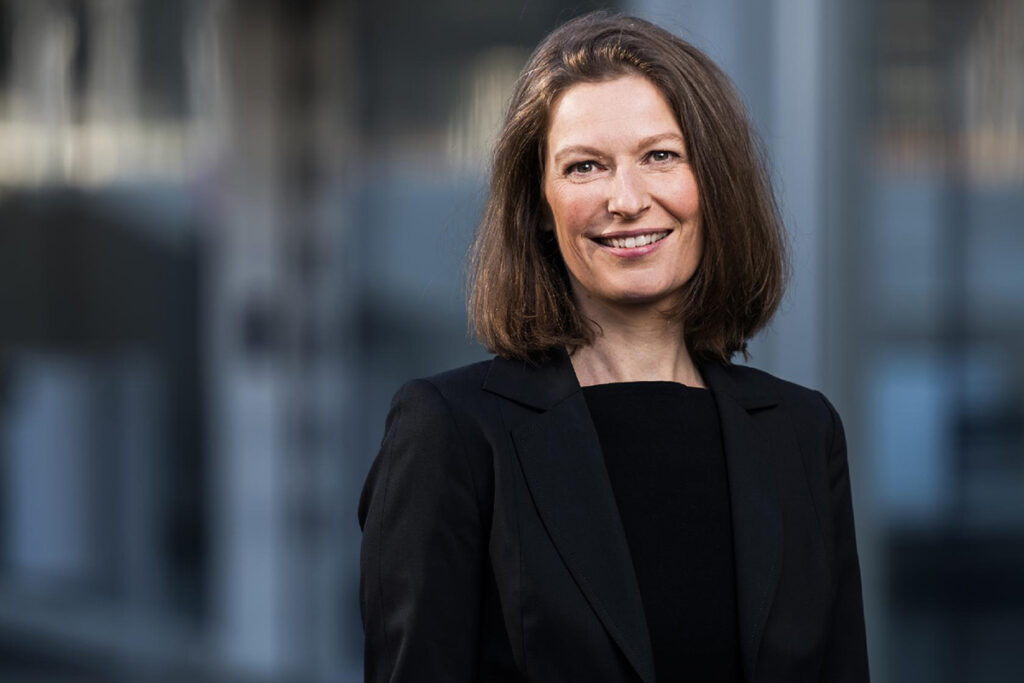
Zimmermann Communications shows how fast you are now in Ticino

Ticino Turismo launches a campaign with Zimmermann Communications at the start of the season to attract guests in German-speaking and French-speaking Switzerland. The focus is on sustainable mobility through the newly opened Ceneri Base Tunnel.

With slogans such as "Faster in Ticino" and "Experience more #ticinoments", the campaign designed by zimmermann communications focuses on the speed of the new connections from German-speaking Switzerland to Ticino and within Ticino.

Based on the actual SBB departure and arrival times, nine subjects were realized in a first wave, which are played out location-specifically and, depending on the opening strategy of the Federal Council, are also only used when the restaurants, bars and leisure facilities are open again. A total of around 50 different versions are to be played out.

In the first phase, the campaign will appear primarily in digital media, on digital posters at selected train stations, in social media, and in the Sunday press. Various other, target group-specific measures flank the campaign and will be continuously adapted to the situation and further expanded in the coming months.


Responsible at Ticino Turismo: Manuela Nicoletti (Director of Marketing); Jutta Ulrich (Head of Communications). Responsible at Zimmermann Communications: Christoff Strukamp, Marietta Mügge (Creation); Ramon Alder (Art Direction); Florian Bieniek (Consulting); Kim Corpataux (Digital Content Creation); Rolf Zimmermann (Strategy and Media). Film and photo production: Truecolorfilms Lugano.

Simone Fatzer becomes new radio correspondent for Germany at SRF

Simone Fatzer will be a new radio correspondent for SRF reporting from Germany from fall 2021. She succeeds Peter Voegeli, who will move to Rome as a correspondent for Radio SRF after the federal elections in September.

In 1998, 49-year-old Simone Fatzer joined the then Radio DRS as a trainee and initially worked for the Regionaljournal Bern/Freiburg/Wallis. From 2006 to 2016, she hosted "Echo der Zeit. Since then, the historian and political scientist has been working intensively on Germany in the foreign editorial department.

Simone Fatzer, who will already help shape coverage of the 2021 federal elections for Radio SRF and SRF News, will take up her post in fall 2021. Peter Voegeli, previously Germany correspondent for Radio SRF, will replace Franco Battel in Rome from fall 2021. The latter will return to the Bern radio studio as producer of "Echo der Zeit" and foreign editor.

Maocial supports the Migros "Bridge" concept

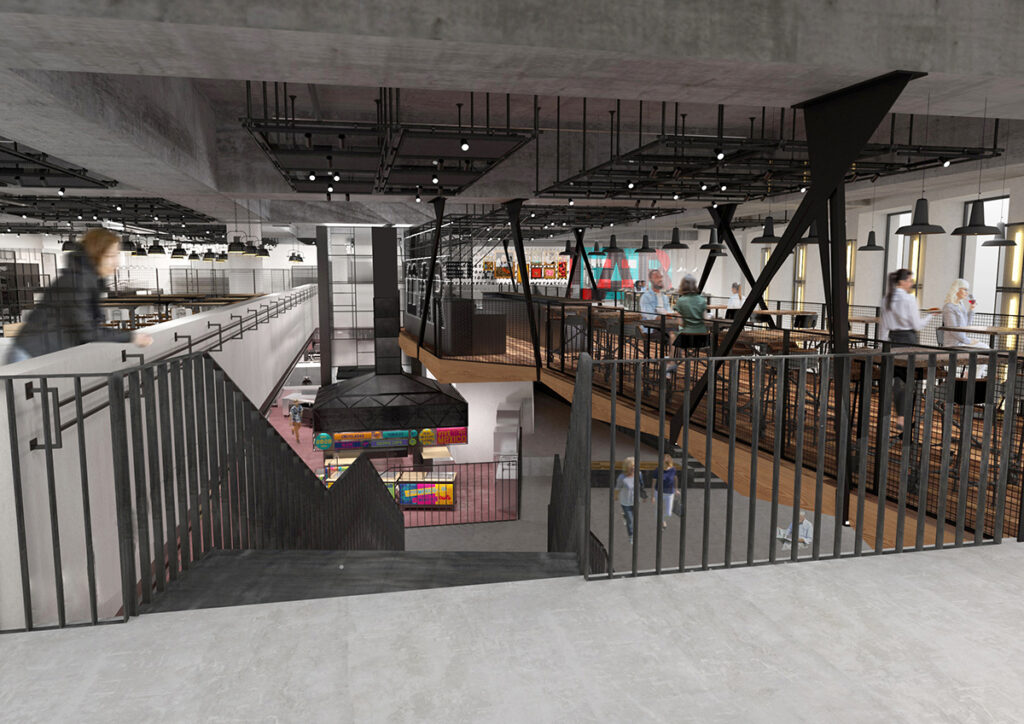
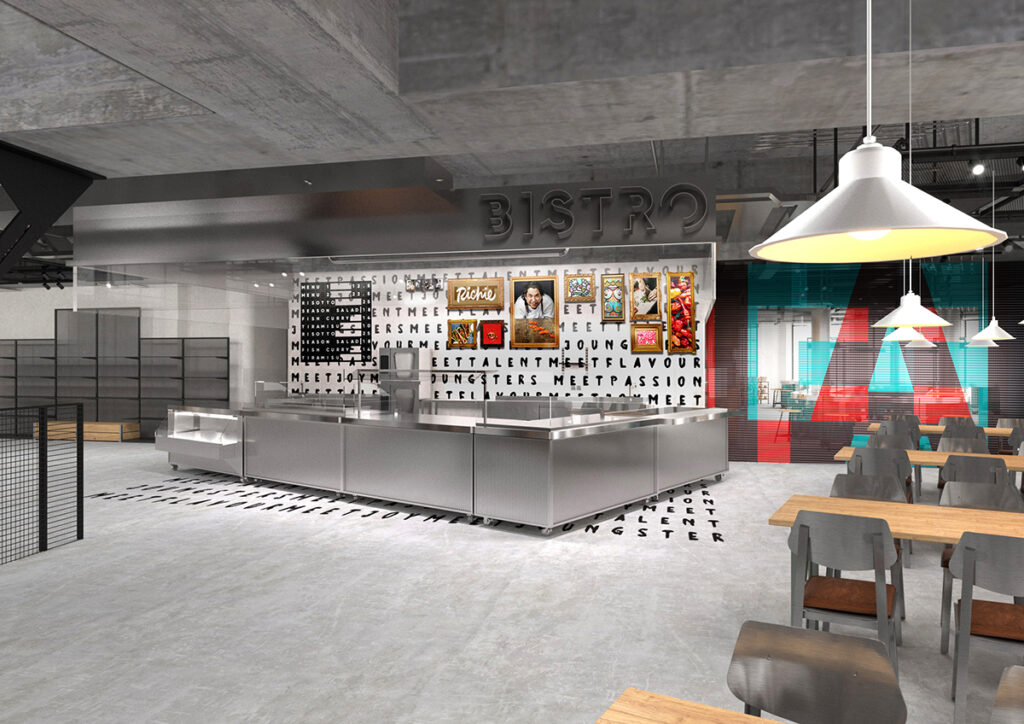
Bridge opens its doors in April. The new Migros concept is designed to attract food enthusiasts with a combination of fresh food market, creative gastronomy, events, changing motto themes and a pop-up store. Maocial is assisting Bridge as a partner in the area of influencer marketing and events.

On 2,000 square meters, Bridge is an urban meeting place where discovering, shopping and eating are combined into an experience under one roof. As of now Maocial as a partner in the field of influencer marketing.

The agency has a great deal of expertise in influencer marketing campaigns and events and will support Bridge in these areas in the future. Already during the opening campaign, in cooperation with Maocial digital ambassadors will be involved. Campaigns will also be designed in the future to present the various offers or store areas, among other things.

Facebook reaches agreement with Murdoch media in Australia

Against the backdrop of the controversial media law in Australia, Facebook and News Corp have reached an agreement on content payment.

"The agreement with Facebook is a milestone in shaping the framework for journalism and will have a significant and meaningful impact on our Australian news businesses," News Corp chief executive Robert Thomson said Tuesday.

The deal would give Facebook's 17 million users in the country "access to premium news articles and breaking news in video form across News Corp's network of newsrooms from all cities and rural areas," according to Andrew Hunter, Facebook's head of news partnerships in Australia. Media mogul Rupert Murdoch's company and the social media giant did not disclose further details of the agreement.

In Australia, a new law now requires Internet platforms to pay for media content that brings users and advertising revenue to their platforms.

Facebook in particular had sharply criticized the regulations. The dispute had escalated when the world's largest Internet network had blocked all media links as well as several authority and disaster pages (Werbewoche.ch reported).

Australia is the first country to pass a law of this kind. Around the globe, governments have been looking for ways to curb the influence of the US technology giants for years. (SDA)

Advertising does not take advantage of the strengths of the advertising media

MediaAnalyzer analyzed usage and advertising perception across various channels to highlight their strengths and weaknesses. The study shows that there are significant differences in how consumers perceive the media. Furthermore, advertising appears to have so far failed to fully capitalize on the strengths specific to each channel.

In the last 20 years, the media landscape has undergone as much change as it did the last time private television was introduced. After online initially took many users away from print, it is now clear that linear television is also losing users from year to year.
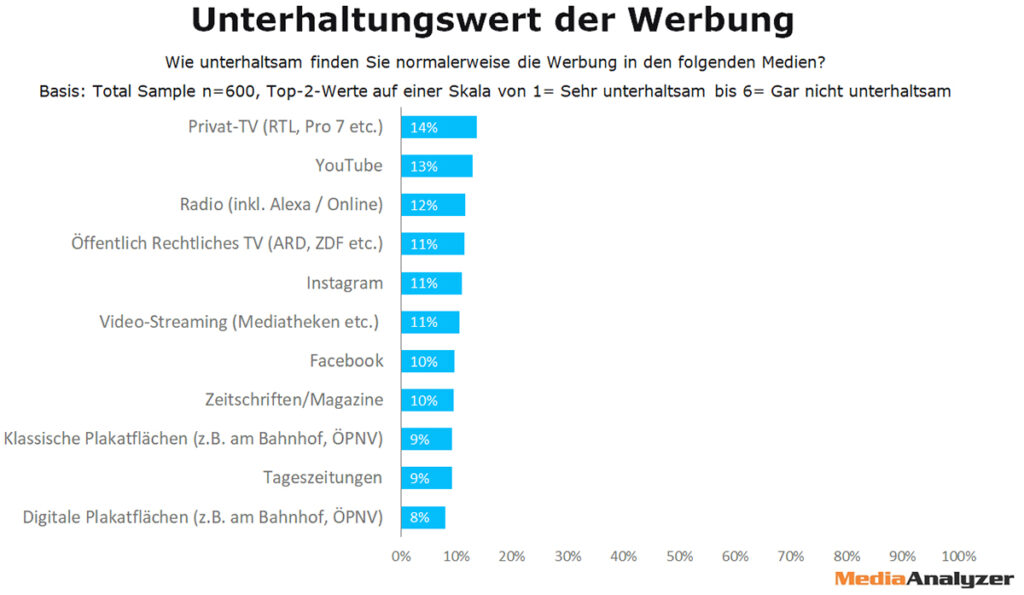
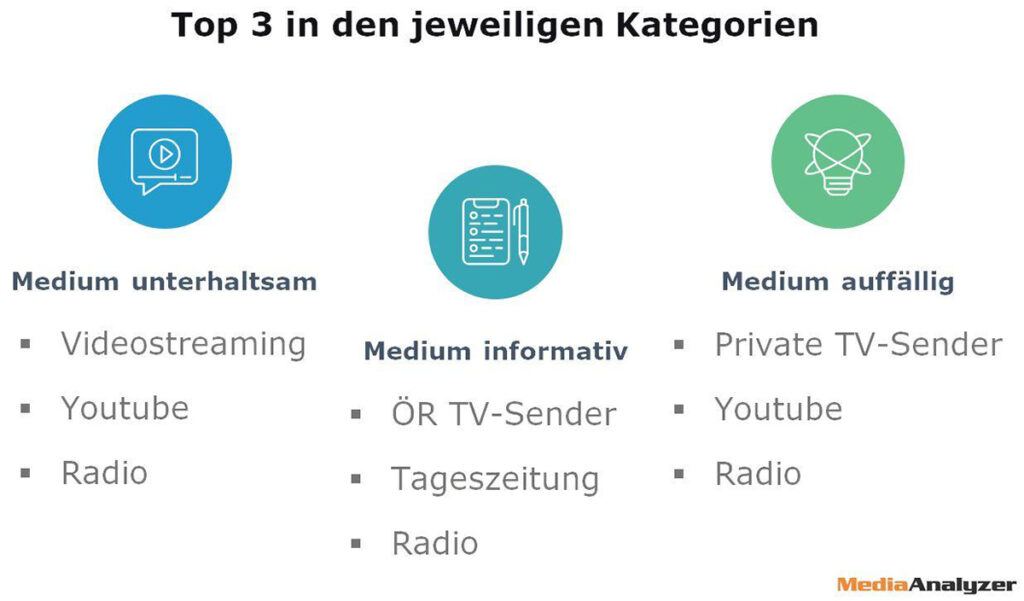
MediaAnalyzer has therefore examined this development from the perspective of advertising research: How do the channels perform when it comes to conveying messages, for example? And how conspicuous is advertising in the channels from the consumer's point of view? These questions are examined in the study both for classic channels such as TV or OOH, as well as for new channels such as streaming and Instagram.

The results show that streaming and YouTube are ahead in terms of entertainment value. The variety of the offer and the free choice are appreciated. Facebook and magazines are clear losers in the ratio and apparently no longer offer much entertainment from the point of view of many consumers.

The entertainment value of advertising in the respective channels is naturally much lower. Advertising on YouTube and media libraries obviously can't take enough advantage of the entertainment factor of these channels - there's room for improvement.

Although there is no such thing as a "perfect all-rounder" in the overall picture, radio in particular does remarkably well. If you want to place moving images in a conspicuous, entertaining medium, we recommend YouTube, which fulfills both criteria well.

However, public TV and daily newspapers also continue to be a good choice if a rather serious, informative environment is sought. Advertising on private television continues to be perceived as particularly conspicuous by comparison. Time will tell how the opportunities for advertising in streaming will develop.

Overall, it can be seen that, from the consumer's point of view, the real advertising placed does not reflect the entertainment value and information content of the advertising media. In particular, the high entertainment value of online media is not yet sufficiently exploited by advertising in these channels and is thus unfortunately not transmitted enough.


MediaAnalyzer is a German market research institute and a specialist in advertising effectiveness. The institute helps brands achieve optimum impact from their campaigns by means of detailed analyses and actionable recommendations.  

For the Study MediaAnalyzer surveyed 600 people in Germany about their media usage, their perception of the media channels, and advertising perception within the individual channels. Further results and information on the study can be found at Mediaanalyzer.com can be viewed.

Grüezi, Ciao, Bonjour, Hello! Werbewoche.ch is now quadrilingual

Werbewoche.ch has been publishing in four languages since early March. This is intended to make it easier for readers in Italian- and French-speaking Switzerland, as well as an international audience, to access industry news. Other new features include a visual redesign and an online store.

Since the beginning of March there are Advertisingweek.chthe leading online portal for the marketing, communications and advertising industry, in four languages. Readers can now choose between German, Italian, French or English - to consume news, background reports and interviews in exactly the way they are most comfortable.

Smooth visual relaunch and store

Most people have already noticed, but the linguistic evolution is accompanied by a gentle visual relaunch that also expands the options for playing and tracking modern advertising formats. Also new is the store, where print and online subscriptions as well as individual print special editions can be purchased.

Print: Same same, but different

While Advertisingweek.ch For several years now, the joint online umbrella for reports from the media m&k - The magazine for marketing and communication as well as Advertising Week the two magazines were previously published separately on a monthly basis. Since m&k - The magazine for marketing and communication received the Q-Award as the best trade medium in Switzerland after its relaunch in 2020, the joint editorial team of both magazines decided to focus the print focus in the future on m&k to lay.

Subscribers benefit

In these times of corona pandemic, home offices and limited resources, the Advertising Week will no longer appear in print on a monthly basis, but on special occasions (creative ranking, advertiser of the year). Advertisingweek.ch and in the monthly magazine m&k takes place. Subscribers benefit from more efficient use of editorial and production resources thanks to attractive price conditions.

If you have any questions, please feel free to write to [email protected], assistant to the group management of Galledia.

Friendly greetings for Baloise: The home office as a think tank

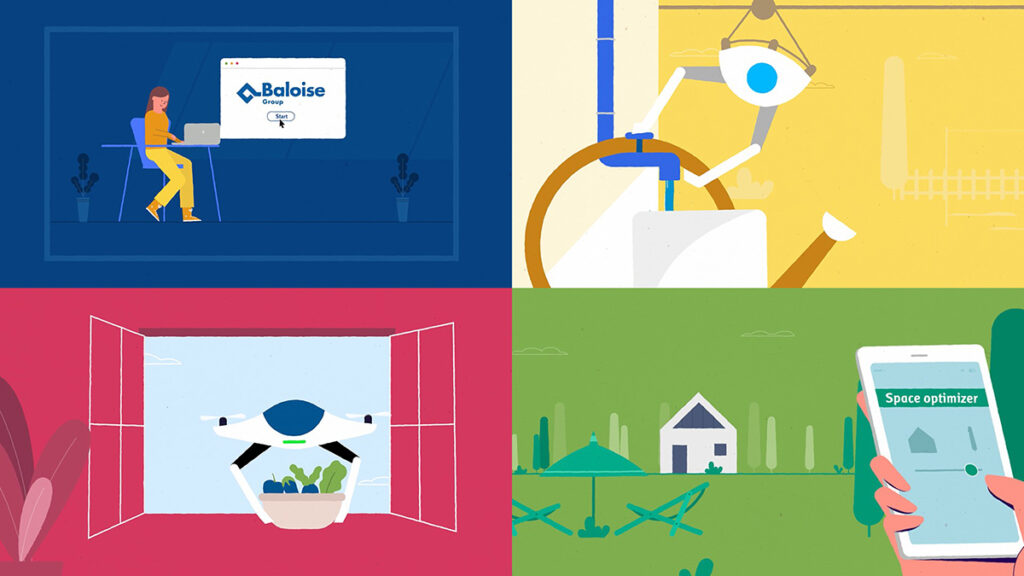
Baloise is calling on its employees to participate in the Kickbox ideas contest and develop innovative concepts for the home and living spaces. The Zurich-based agency Freundliche Grüsse created the campaign for Baloise Kickbox using colorful and humorous visions.

Why not use the creative potential within the company and at the same time give employees a chance to surpass themselves? With the Kickbox program, Baloise is once again taking an unusual approach. In keeping with the last few months, in which most people have spent more time at home, the competition has the generic term "Home". Ideas for offers, services or inventions with a focus on real estate ownership, renting and real estate business are being sought.

"Imagine a Better Place" is the campaign motto that is reflected in the illustrated key visual: a head in which a multitude of ideas take place. The implementation is enhanced by an inspiring animated film that shows more or less crazy inventions in the home and garden. The topics addressed are home office, fitness, energy, sustainability, digital service and home ownership. The film is imaginatively narrated and immediately motivates viewers to develop their own ideas.

The campaign is aimed at Baloise teams in Switzerland, Germany, Belgium and Luxembourg and will be implemented in German, French, Dutch, Italian and English. Baloise is using social media, newsletters, physical mailings and the landing page for this.


Responsible at Baloise Holding: Katarina Miljkovic (Open Innovation Developer), Laura Seiler (Innovation Manager). Responsible at Friendly regards: Samuel Textor, Pascal Deville (Creative Direction), Bernhard Brungs (Text/Concept), Maude Mahrer (Art Direction), Andrea Aegerter, Käthy Känzig (Consulting). Production: Outfits.studio (film and key visual).

SRF: Niedermann becomes new TV correspondent in Ticino

SRF is making a change to its TV correspondent position in Ticino. Starting in July 2021, Marcel Niedermann—not Stefan Reinhart—will be reporting from the region. He currently works in the business news department and brings many years of experience as a domestic correspondent.

Niedermann, 42, holds a master's degree in business administration, media studies and economics from the University of Bern and has worked at SRF since 2012. After a short stint at the news magazine "10vor10," he worked as an editor for "Tagesschau" until 2014. He then reported from eastern Switzerland as a TV domestic correspondent for more than four years before moving to the newsroom in Zurich at the end of 2018 as a reporter and coordinator in the specialist business editorial department. In July 2021, Marcel Niedermann will now take over the position of TV correspondent in Ticino.

"Beautiful landscapes, Mediterranean climate - that's what Ticino is known for in German-speaking Switzerland. A superficial view that often filters out the 'bella vita' side of the canton and hides the social, economic and political background. Looking behind the obvious, diving deeper and challenging and surprising stereotypes. This is the task that appeals to me as a Ticino correspondent," says Marcel Niedermann about his return to a correspondent post.

As communicated in January, Stefan Reinhart was originally intended for the TV correspondent position in Ticino (Werbewoche.ch reported). For personal reasons, however, the latter has gone back on his decision and is now staying on as a producer in the video editorial department in the newsroom in Zurich.

Rocket becomes lead agency of Livit

Lucerne-based agency Rocket wins the agency pitch for the communications mandate from Livit Real Estate Management. The first joint works are already in use. This includes the new Livit imagery.


"The Lucerne agency convinced with a clear and independent concept and the broad range of services," says Barbara Buchegger, Head of Marketing and Communications at Livit Real Estate Management.

"Certainly, in addition to the focus on digital media, the many years of experience in the field of real estate was also a decisive factor. And Rocket's down-to-earthness and reliability in central Switzerland was no disadvantage either," Mathias Schürmann, Managing Partner of Rocket, is convinced.

The new imagery and other initial joint works are to be used for the first time in the coming weeks.

Sironia wins the YES Media Award

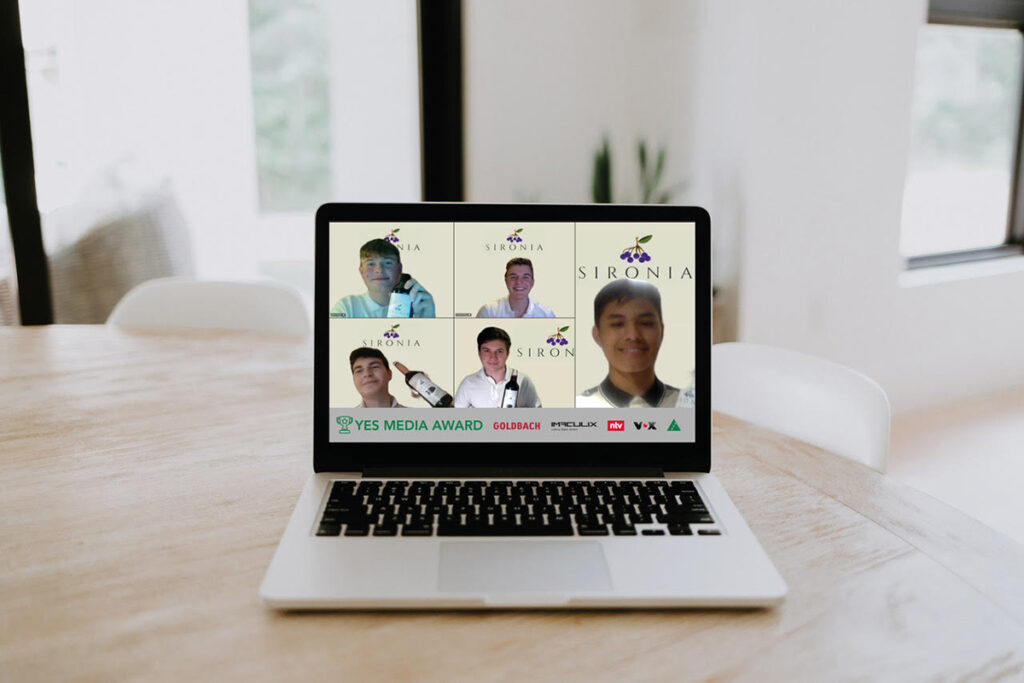
For the second year in a row, Goldbach, Ntv, Vox, Imaculix, and Young Enterprise Switzerland (YES) hosted the YES Media Awards ceremony for up-and-coming companies in a virtual format.

The Sironia team is delighted to receive the YES Media Award.

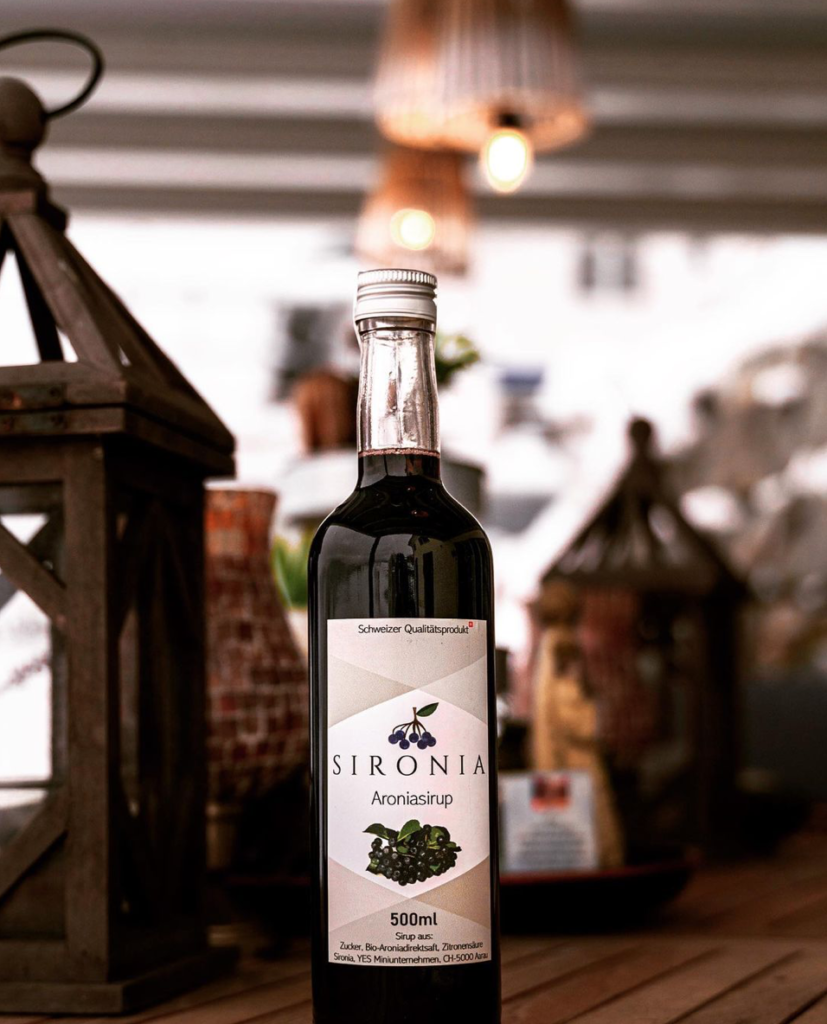
The Winning team Sironia from Aarau scored points with the jury with its organic syrup made from aronia berries, which is produced locally at the Dietisberg social institution. The winners will now be given the opportunity to produce an individual TV spot for their product, which will be broadcast on the Ntv and Vox channels in the coming months.

For seven years now, students who participate in the "Company Program" of the non-profit organization YES have been given the chance to present their independently founded mini-company at the YES Media Award to a jury of experts from the media industry. Over the course of a school year, they were able to give free rein to their own creativity both in business lessons and in their free time.

The goal was to independently create, produce and market products or services. Particularly during Corona, ingenuity and technical expertise were required in this regard. Due to the current pandemic situation, the award ceremony on March 12, 2021, was again implemented completely digitally.

Creative submissions

The jury of experts was spoiled for choice - from sustainable cardholders and vegan dishwashing soaps to fancy spreads, everything was represented. In the end, Sironia emerged as the winner.

"Of course, we were all a bit sad at the beginning that this event could only be realized virtually again," explains Noémie Duschletta, CEO of YES. "But we didn't let that slow us down, and we managed to make the best of this initial situation and even expand the digital aspect. So this year, the winning Sironia team can look forward not only to the individual TV spot and a trophy, but now also to a virtual award."

Studio Daniel Peter sets the scene for the NL's "Meat" exhibition

Studio Daniel Peter designed the promotional materials, the exhibition catalog, and the exhibition graphics for the Swiss National Library’s exhibition «Fleisch.».

From March to June 2021, the National Library will be focusing on the topic of meat: from the plate to the butcher's shop and the slaughterhouse to the cowshed. It will show what is in meat, where it comes from and where its future lies.

This is done using various exhibits from the collections of the Swiss National Library, such as Friedrich Dürrenmatt's butcher's visions, Daniel Spoerri's art of eating, sausage advertisements from Bell and many more. Studio Daniel Peter designed and implemented the key visual, the communication and the exhibition graphics.

The subject deals with the question of what happens to meat as a product. "Meat" poses the question of the right life. Be it building muscle mass in strength training, reducing body fat in fitness classes or being transformed into a sacred substance in religious rituals. In view of climate change and the animal rights debate, biting into a Cervelat or grilled cheese becomes a question of identity. The key visual, in the form of a 3D mortadella pill, is based on the historical posters of "magical realism", which has been translated into the future.


Responsible at the Swiss National Library: Hannes Mangold, Michèle Thüring. Scenography: Swiss National Library. Studio responsible: Studio Daniel Peter.

get_footer();