Publicis and Swiss celebrate the value of travel

With its new platform and imagery, Swiss International Airlines is focusing on personal reasons for travel - and a whole lot of inspiration. The Zurich agency Publicis is responsible for the implementation.

Publicis und Swiss zelebrieren den Wert des ReisensThe Corona pandemic has shown many people what the true value of travel is. But only those who actually travel get something out of it, according to the main message of Swiss' new communication platform "Travel is what you make of it," which was launched back at the end of October.

On the one hand, Swiss wants to focus on travel inspiration and, above all, the "why" of travel. On the other hand, it is also specifically about the fact that traveling today is more personal than ever, as Stefan Vasic, Head of Marketing at Swiss, explains: "We want to show our guests the real value of traveling again. And this value of travel is as individual as one's own values. Especially in difficult times, people should know that Swiss supports them in this."
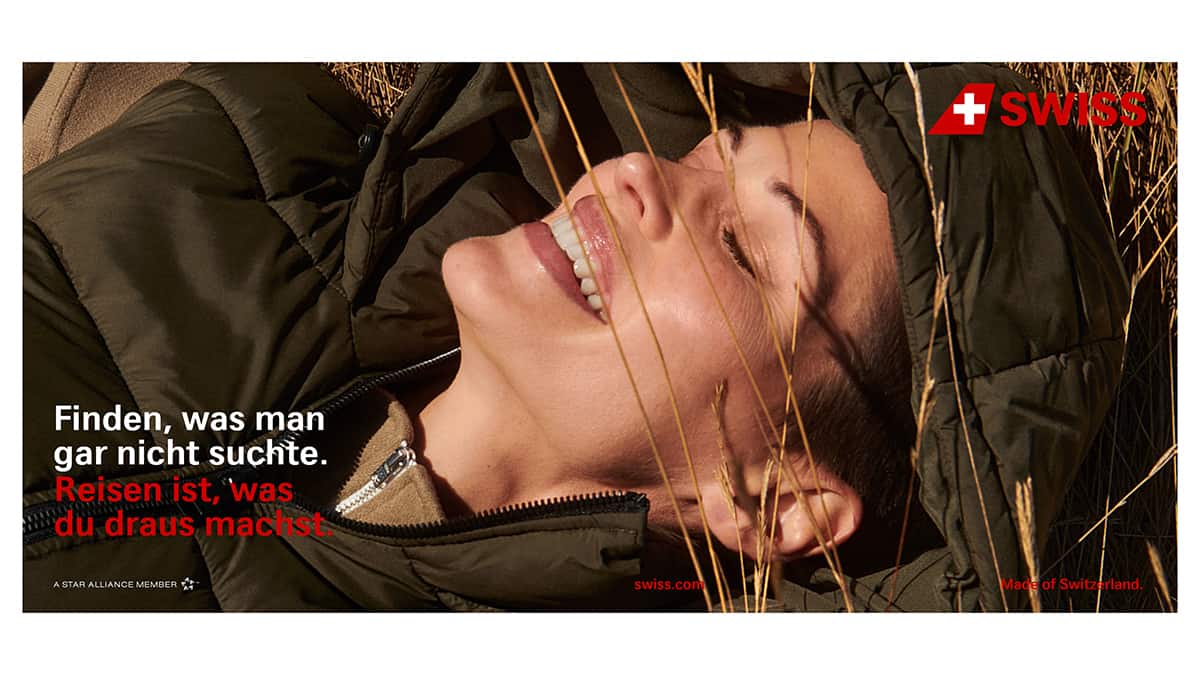
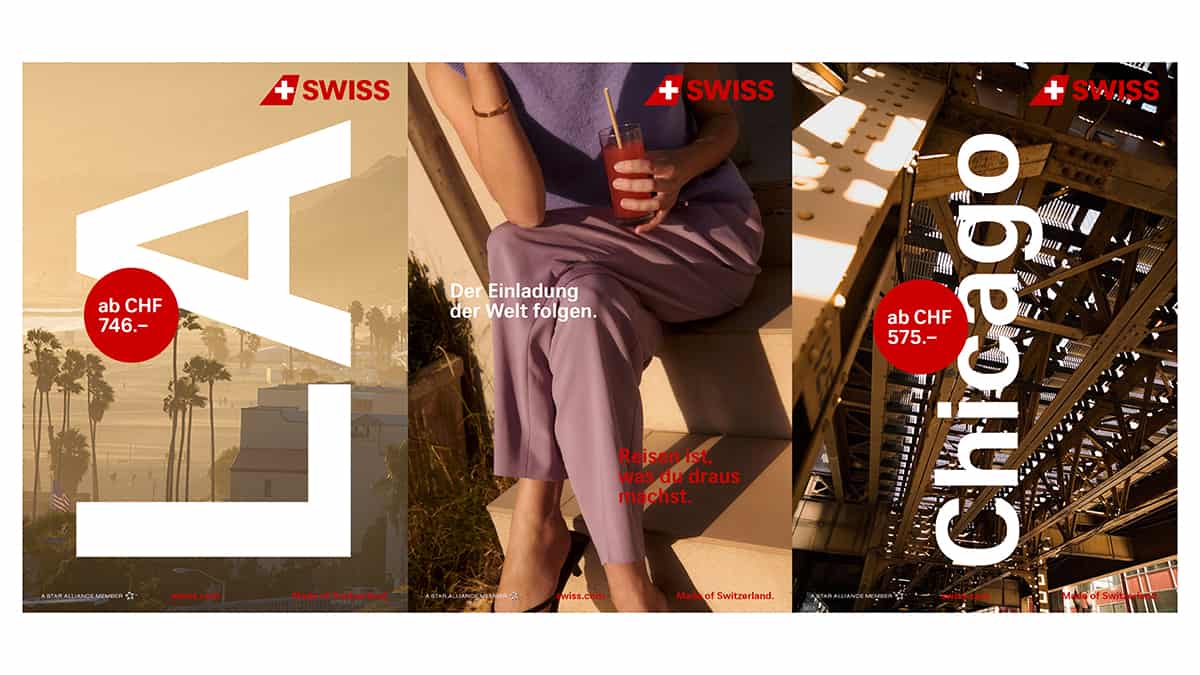
New imagery to bring closeness and emotion

When traveling, it's often not the big experiences and planned excursions that bring the greatest joy, but the small mental snapshots of fleeting moments that you bring home with you, explains Cornelia Späth, Head of Marketing Communication Campaigns at Swiss: "The new imagery reflects this and is close to the people - either in the form of portraits or as small glimpses of everyday experiences while traveling: feet in the sand, playing on the beach, strolling through town while shopping, enjoying an ice cream. We were able to capture these moments spontaneously and emotionally."
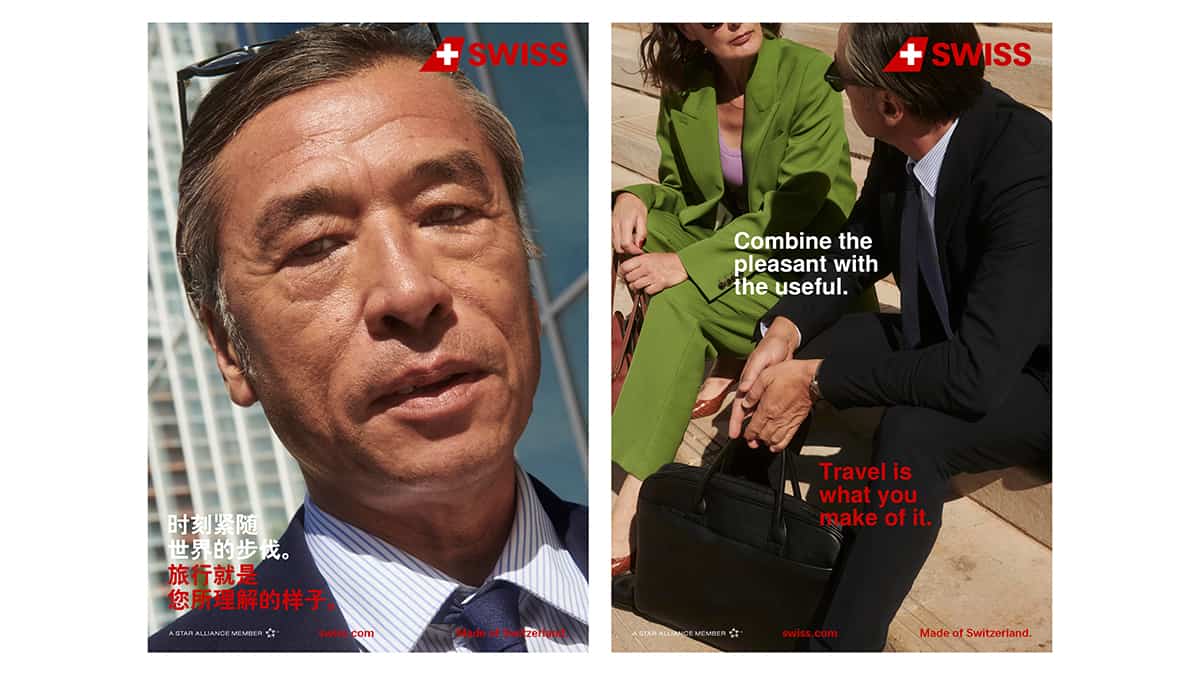
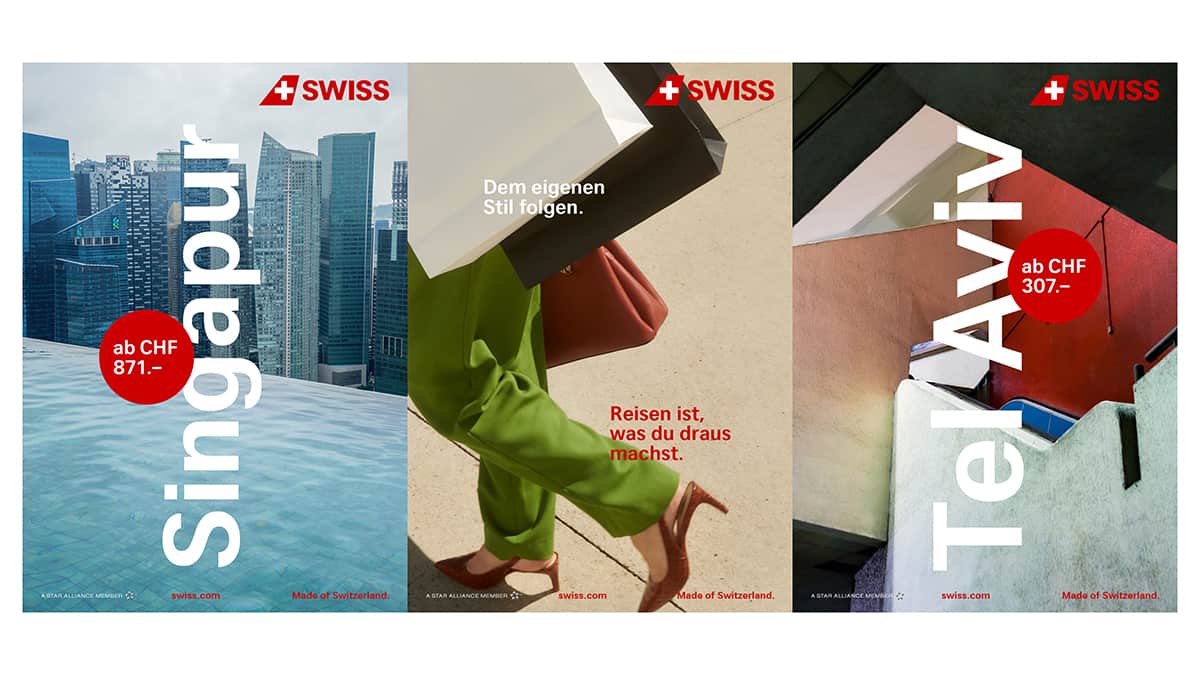
Capturing these moments was also one of the biggest challenges for the production. All the moving image material was therefore shot in analog, explains Priska Meyer, Senior Art Director at Publicis: "Together with Director of Photography Matthew J. Smith and photographer Laura Coulson, we decided to shoot with the Swiss cult camera Bolex H16, because it allowed us to be very flexible and fast - documentary and with as little distance as possible between Laura and the protagonists. The results are correspondingly intimate snapshots. In addition, the grain and the special colors of the film material helped us to create our own, authentic and intimate look."

The first measures under the new platform were already seen in Switzerland and abroad in November. More will be rolled out in the coming months.


Responsible at Swiss: Stefan Vasic (Head of Marketing), Cornelia Späth (Head of Marketing Communication Campaigns), Roman Glauser, Kim Vetter (Project Manager Communication Campaigns), Nadja Griehl (Head of Social Media). Responsible at Publicis Zurich: David Lübke (Creative Director), Priska Meyer (Senior Art Director), Anatole Comte (Art Director), Desiree Stocker (Junior Copywriter), Jonas Koutrios, Yoel Inderbitzin, (Graphic Designer), Gvozden Milosevic (Graphic Apprentice), Sandro Looser (Client Service Director), Adrianna von Moos (Account Director). Advertising production and image editing: Prodigious. Photo/Motion Picture: Studio Voile LLC (Production), Lina Baumann (Producer), Laura Coulson (Photography), Matthew J. Smith (Cinematography).

Solutions for a world without cookies

Third-party cookies are finally on the chopping block in 2023. In the second half of the year, the new Swiss Data Protection Act (DSG) will also take effect. So there’s a lot of work ahead for marketing professionals. Patrick Mohr from Mohrstade presents technologies and tools for tracking and personalization in the post-cookie era.

Third-Party-CookiesAlmost all solutions in the field of digital marketing, analytics and personalization work with cookies. Particularly affected by the change are solutions that collect user data across domains, such as affiliate marketing, data management platforms, programmatic advertising, retargeting, and search engines.

These solution providers need the cookies to be able to establish a connection between the placement of advertising and the success of the measure with their customers, or to target customers who have responded to certain advertisements, visited a certain website and are to be retargeted based on their behavior there.

Different approaches to solutions

There are various approaches and providers for the time without cookies. Google in particular has developed some solutions to meet the new requirements.

The "Privacy Sandbox" in Google Chrome is intended to enable users to determine via their browser which advertisements they want to see. A so-called token system is also intended to ensure that a user's behavior on various websites is that of a real person, not a machine, in order to prevent fraud.

The new "Google Topics" compiles an interest profile in the Chrome browser based on the pages actually visited locally on the user's computer, which can then be used as the basis for more targeted advertising. In combination with the new browser-based "Fledge" technology from the Privacy Sandbox, Google can thus move the familiar auction market for search terms on Google Search to users' computers via the Chrome browser, so that bids can be made without further integration of third-party solutions or cookies.

In Google Analytics 4 (GA4), the anonymization of data is already preset. Since personal data continues to be processed in the background and sent to US servers, a Consent Management Platform (CMP) should also be used when using GA4.

Server-side tracking

Currently less affected by the browser blocking of cookies is server-side tracking. In this case, the data is transmitted to a central server, which then sends this information to the connected servers or solutions such as Google Analytics.

Data such as the IP address of the incoming request or a user agent sent along can be removed before forwarding. For Google Analytics, this option is already offered in the predefined tags. Thus, for example, the server-side Google Tag Manager (GTM) offers the option of anonymizing or removing the IP address of the client before the request is received on the desired endpoint. Also, a check and removal of PII data can be done more scalably on the server-side GTM. If third-party scripts are no longer executed on the website, but the functionality is mapped via the Google Tag Manager, more control is given when setting cookies - especially third-party cookies.

Graphic: Functionality of Serverside GTM. (Source: Mohrstade)

Customer Data Platform

With the help of a Customer Data Platform (CDP), advertisers can store the first-party data of their own website and app visitors in a customized format, merge it with data from other data sources, and use it for cross-channel, real-time personalization of user targeting. By using first-party cookies and their own keys for matching user data, advertisers can somewhat counteract the loss of information from third-party cookies here and are less dependent on the profile information of the large networks.

The issue of data protection plays a central role in the use of a CDP. Simple consent management as part of the collection of first-party data is not sufficient here. As already described, a CDP aims to link online usage data and personal data from user profiles. The collection, linking, processing and use of sensitive data requires separate information and consent from the user. This requires clearly defined permission management, which defines the scope of data collection under data protection law on the basis of the architecture plot.

As part of the consent process, it must be made transparent to users what data is being collected and for what purposes it is being used. The following basic questions should be considered:

  • How is the data processed in the CDP?
  • Does the processing of the data comply with the applicable data protection conditions?
  • How are identifiers passed to the different marketing tools processed in the respective marketing tools?
  • What purposes do I pursue with my CDP use cases?
  • What permissions must be obtained from the user for these purposes (collection, processing and use of personal data)?
Graphic: How CDP works. (Source: Mohrstade)

Conclusion

Current developments mean that the Internet will change fundamentally. Companies must develop new strategies to close their growing data gaps. Those who do not do so will have to buy access to their customers from the major platforms at a high price.

In the current situation, companies are therefore well advised to rely on permissions, first-party data and server-side tracking in order to be able to continue to operate, measure and optimize targeted and personalized online advertising.


* Patrick Mohr is Co-Founder and Managing Partner at the marketing technology consultancy Mohrstade. In 2017, he established Trakken's Munich office. In parallel, he works as a lecturer at universities. Furthermore, he is co-organizer of Analytics Community "Analytics Pioneers" with over 6'000 members.

Heads wins Gryps mandate

Following an agency evaluation, the SME procurement portal Gryps decided to commission Heads Corporate Branding to formulate their repositioning and update their corporate identity.

Heads gewinnt Gryps-MandatGryps was acquired in the fall by Ringier Axel Springer Switzerland (Werbewoche.ch reported) has taken over. The company aims to evolve into a comprehensive, digital service platform for Swiss SMEs in 2022, with synergies from the collaboration with the Observer and the Handelszeitung are to be used.

The Rapperswil-based company, which specializes in brokering products and services for SMEs, was founded in 2010 and has now established itself on the market with more than 45,000 customers.

In the future, this offering is to be supplemented with even more editorial service content, further consulting and digital tools, so that Gryps can grow into a comprehensive service platform for Swiss SMEs. Accordingly, the positioning and appearance will have to be adapted to the new offering.

"Heads proposed a sound joint process for repositioning the Gryps brand and we had the impression that the agency was particularly competent in meeting the specific focus on the needs of Swiss SMEs. These are reasons why we made a convinced decision to work with Ralph Hermann's team," says Urs Gysling, CCO of Gryps.

Teleboy expands Internet subscription offer

Teleboy is launching two new offers in addition to its four existing Internet subscriptions. With these, the Internet, telephony and TV provider wants to cater more specifically to the needs of its subscribers.

Internet-Abo-Angebot
(Image: Pascal Wasinger)

Checking social media, working in the home office or gaming with friends: The way Swiss people use the Internet varies. For this reason, Teleboy now has a total of six different offers with different Internet speeds.

In addition to the four existing Internet offers with maximum speeds between 25 Mbit/s and 10 Gbit/s, two further subscriptions are being added: a 10 Mbit/s and a 500 Mbit/s subscription. The cheapest subscription is available from CHF 28.

Subscriptions for single and family households

The additional offers are intended to cover the needs of users even better, as Teleboy CCO Michael Wendt explains: "Precisely because Internet use is so individual, we also want to make our customers more individual offers. Our portfolio is now even better tailored to current Internet needs in Switzerland."

The new subscription with up to 10 Mbit/s for CHF 28 per month - the first Teleboy subscription under CHF 30 - is aimed specifically at individuals who use their Internet connection primarily for e-mails, social media and simple surfing.

For family households, there is also a subscription with "more speed," as the provider writes. For 45 francs a month, the subscription is available with speeds of up to 500 Mbit/s. "We noticed that the gap between 100 Mbit/s and 1 Gbit/s was too big. Many customers wanted an Internet subscription that fell in between. With the new offer, we want to close this gap," adds Wendt.

As part of the launch of the new subscriptions, Teleboy is also reducing the price of the 100 Mbit/s subscription by CHF 5.

Coca-Cola campaign puts gaming fans in the spotlight

2021, Coca-Cola launched the "Real Magic" brand platform. On Monday, the associated campaign "It Must Be Real" was launched in Switzerland. The Swiss German voice-overs are spoken by Chiara Castelli and Kevin Lütolf.

Coca-Cola-Kampagne

The video for "It Must Be Real," which is also the centerpiece of the campaign, shows young people who like to spend their time in front of the screens of their mobile devices. They play games or watch movies and feel a range of emotions - euphoria, fun, excitement. Coca-Cola is staged as a beverage that provides refreshment during breaks. Scenes from the mobile game "Wild Rift" by Riot Games are also shown.

The cast of the commercial is made up of real players from around the world. "The voiceovers in the local version are spoken by singer Chiara Castelli and influencer Kevin Lütolf," explains Marco Manzo, Brand Manager Coca-Cola TCCC Switzerland.

In addition to TVC, OLV, traditional and digital OOH advertising, the "It Must Be Real" campaign will also launch influencer marketing and a store floor activation on the 330-mililiter can. On a local level, there will also be an online promotion in the Coca-Cola app where participants can win prizes.

Hillton realizes mystical image film for The Dolder Grand

For the current image film of the Zurich 5-star hotel The Dolder Grand, the Zurich film production Hillton tells a love story of a somewhat different kind.

The Dolder GrandThe barely two-minute image film "Metamorphosis" was implemented at the end of 2021 under the direction of Jannis Davi and is intended to showcase the elegance of the famous 5-star hotel.

The story is told of two lovers who experience the hotel with all its mystique and unique facets. At the same time, however, the viewers are also left room for interpretation.

"I decided to tell the story of a couple who meet at the Dolder. An abstract interpretation that represents an inner journey for the protagonists," says director Davi. "The film is meant to mysteriously evoke the idea of finding out more about the hotel and wanting to explore it for yourself."


Responsible at Hillton (Production): Jannis Davi (Director), Mona Bertschinger (Producer), Lou Staub, Julia Hallasch (Production Assistant), Fabio Tozzo (Camera), Sven Uhlman (1st AC), Carla Maiolino (2nd AC), Adrian Bretscher (Drone), Francisco Marfella (Gaffer), Myrionymos Baikouzis / Jose Otero (Best Boy), Amanda Brooke (Styling), Sarah Ciarrocchi (Makeup), Billy Bains (Post Producer), Jannis Davi (Editor), Milos May (VFX), Manuel Portschy (Colorist), Rob Buechel, Jingle Jungle (Sound Design & Mix), Ryan Taubert - Lux (Music), Ava Tao via Scout Model Agency (Cast), Carlos Valencia via Option Model Agency (Cast), Octamas (Camera Rental), FTK (Light Rental).

Daniel Hackiewicz returns to Studio Thom Pfister

Studio Thom Pfister is continuing to expand its creative team. Daniel Hackiewicz is returning to the Bern-based agency after a brief stint elsewhere.

Studio Thom Pfister
Daniel Hackiewicz returns to Studio Thom Pfister. (Image: zVg.)

At the beginning of January, Studio Thom Pfister had already reported on two new additions to the creative team. At that time, Roland Zenger and Armin Oppliger had newly joined the agency (Werbewoche.ch reported).

Now, senior designer and web developer Daniel Hackiewicz is also returning to the agency. With Hackieqicz, Studio Thom Pfister is further expanding its creative team and strengthening its expertise in the area of web development, according to a statement on Monday.

The 37-year-old experienced graphic designer and web developer studied in Warsaw and worked there in several large agencies.

SSM expects solidarity-based pay cuts for SRG cadre

The trade union Schweizer Syndikat Medienschaffender SSM regrets that SRG did not also reduce the salaries of management and the Board of Directors at the same time as it adjusted the management salary system. In this way, they could have expressed their solidarity with the staff and contributed to cost reduction at SRG.

SRG-Kader
According to the annual report, SRG Director General Gilles Marchand earned more than CHF 530,000 in 2020. (Archive image)

The Board of Directors of SRG had decided in November last year to integrate a previous so-called "variable" salary component into the fixed salary of the cadres from 2023, as the media office of the news agency Keystone-SDA announced on Monday upon request. Over the weekend, CH Media had reported on adjustments to the salary system.

In the past, however, the variable component had "not been a bonus dependent on the company's results and paid voluntarily," but part of "the contractually agreed and insured salary." Accordingly, it amounted to around 20 percent.

This percentage was usually achieved, but in the new system it is now fixed at 100 percent. For this reason, the average salary of management staff and the total salary sum have not changed.

Staff salaries decreased

In a statement on Monday, the SSM union welcomed "the end of the archaic system". This was because the variable component had sometimes allowed for the rewarding of goals that could not be controlled, such as savings achieved through job cuts.

However, it regrets that "in this time of crisis" management salaries have not been reduced "significantly" at the same time. In fact, staff salaries have declined overall in recent years. The union therefore expects SRG's senior management "to also reduce their salaries in solidarity," it said.

Also in other companies

The Federal Office of Communications Bakom wrote in response to a request that SRG had informed the Department of the Environment, Transport, Energy and Communications Uvek in December about the system change in executive compensation.

The integration of the variable component into the fixed salary had also been decided in other Swiss companies. However, the determination of the compensation of the SRG Executive Board members is not a matter for the federal government, but for the SRG itself.

According to SRG's annual report, Director General Gilles Marchand earned CHF 532,857 in 2020, while Chairman of the Board Jean-Michel Cina earned CHF 153,300 per year with a 50 percent job. The seven members of the Executive Board received an average of 389,702 francs. (SDA)

Maybaum Film directs "joy to go" for Selecta

The workplace of the future must be flexible enough to adapt to a wide variety of needs. To ensure that refrigerators and coffee stations are always stocked with fresh supplies, Selecta offers a range of solutions. The product video by Maybaum Film aims to show that this creates a positive atmosphere in the office.

Maybaum Film inszeniert «joy to go» für SelectaWhether early or late shift, mini-workload or online meeting marathon - everyone needs a little refreshment from time to time. You can get them at the Selecta Foodies Micromarket, in smart refrigerators or at the coffee stations of Starbucks, Pelican Rouge, Lavazza or Nescafé.

On two days of shooting at the new Selecta headquarters in Cham, Maybaum Film realized the claim "Joy to go" and staged Selecta's wide range of products. The focus was on joy - in lively situations real employees* meet each other at different food and beverage offers.

We all need our moments of joy," says the film. And it is precisely this joy that the film is intended to bring to life," explains Sarina Künzli, Group Communication Selecta. "Although we show how our products work, we didn't want to focus on the technology, but on the joy of life it spreads."

The film can be used in a variety of ways and is intended to help demonstrate that Selecta has the right solution for every type of business. From the small coffee corner to the fully developed Foodies-Micromarket.

Planning for a sequel to the film is already underway. In it, an even broader product range is to be depicted and the international positioning strengthened.


Responsible at Selecta: Sarina Künzli (Group Communications & Engagement Manager). Development, concept and production: Maybaum Film. Voice recordings: Bluebox Recording Studios.

Link study: Corona continues to negatively influence fears and worries

A recent study by Link, a market and social research institute, examines the effects of the corona pandemic on the mental health of the population and shows: The negative effects are still strong.

Link-Studie: Corona beeinflusst Ängste und Sorgen weiterhin negativAfter two years, the Covid 19 pandemic remains an omnipresent issue in society. In addition to the impact on the economy and the healthcare system, the population has also experienced mental health impairments since the beginning of the pandemic.

In order to investigate this, particularly through observations in their own immediate environment, Link conducted a study in January 2021 on the mental state of the population during the pandemic. A second wave of the population-representative survey, now conducted in January 2022, provides information on how Swiss people experience and assess the current situation.

Still strong impact on mental health

Among other things, the study participants were asked what developments they had observed in their own environment over the past twelve months. This shows that a large proportion of the population still observes, for example, increasing self-isolation or a deterioration in mental health.

Growing aggressiveness is currently perceived even more strongly than in the first survey in 2021 - currently by 22 percent of respondents. These results show particularly clearly how strongly the pandemic has affected and continues to affect the mental health of the population.

If the results are split according to the age of the respondents, it becomes apparent that increasing self-isolation, for example, is perceived by about one third of all age groups in their own environment. A deterioration in mental health is perceived particularly by 15- to 29-year-olds, with 37%, as are increasing depression (26%) or considerations of going to a psychiatrist (19%). These results may be an indicator that younger generations in particular are more vocal about mental health issues.

Just under a third report an increase in fears and worries

Fears and worries about oneself continue to be reported more frequently, but at 31 percent, the figure is lower this year than in the first wave. It can be seen that this trend occurs in all age groups.

At 37 percent, 15- to 29-year-olds currently report the greatest increase in fears and worries. Many respondents also report more fears and worries among parents and grandparents, as well as among children in their own environment, but these values are lower than in last year's survey.

Jyounger generation: Strong increase in digital media consumption

A particularly significant increase was perceived in the area of digital media consumption - by 44 percent of respondents. Although the perceived increase here is lower than in wave 1, it is still most clearly perceived by 15-29 year-olds - at 51 percent, more than half of them report a perceived increase in digital media consumption in their own environment.

Professional aspects

Although people who work with other people generally observe a greater improvement in all the factors surveyed, such as the productivity of colleagues or their own productivity, than in the previous survey, the proportion of respondents who see a deterioration in all aspects is still high. For example, 29 percent of respondents observed a deterioration in the mood of their superiors, and 35 percent perceived the working atmosphere to be worse.

Generally asked about their own quality of life, respondents report balanced, but in all three areas of nutrition, sleep and partnership, a substantial proportion of participants still report a deterioration.


For the Link Study 1024 respondents were asked via interviews to compare their current situation with that in January 2021 (or January 2020 in the first wave). The survey was conducted between January 19 and 24, 2022.

For more insights and the full charts on the study, visit Link.ch.

Six tips for a successful press release

Press releases—often referred to simply as «PMs»—must be up-to-date, easy to understand, written in a journalistic style, and provide value to journalists in order to be noticed and covered. Michaela Krause offers tips for writing effective press releases on your own.

Sechs Tipps für eine gelungene Pressemitteilung1. a press release informs

Press releases inform journalists, content creators and interested parties about news and facts relevant to the respective target group. By communicating this information to the press, the sender makes a topic offer that the recipient can share with the target group in a further processed, abridged or integrated form. In this way, a press release helps to increase the visibility of the sender in the media and builds reputation and expert positioning.

The most important factors for the success of a press release are the topic, the text quality, the timing and the exact addressee. If relevant information is prepared in a concise, target group-oriented and journalistically helpful manner and sent to well-researched journalists at the right time, the probability of publication increases. Even if press releases are not used immediately for publication, they are also used subsequently as research sources by journalists.

But how do you prepare a press release? What size should it have?

2. news follow the news value theory

An effective press release first needs a concrete and relevant topic. And it needs to be relevant to the recipient and the target group - not just to the economic interests of the company.

The news value delivered with the press release is decisive. Only if relevant information is provided for the target group is a news item considered newsworthy. Relevance, timeliness and timing are the most important points for finding topics and editing press releases.

  • Relevance - will anyone be affected by this information? Does this information have added value for the target group?
  • The timeliness - is it urgent/new news?
  • Good timing - is your message competing with other issues that threaten to overshadow it?

In addition to relevance and topicality, news factors also include, for example, personalities, celebrities, curiosity, emotion or drama. The guiding principle when writing a press release must be to support the journalists in their work so that they can provide the respective target group with interesting and, above all, relevant content in a simple and correct manner.

3. keep it simple

Journalists receive hundreds of e-mails from agencies, companies and other organizations every day. So they have to decide very quickly which topic suggestions they want to deal with in more detail. Therefore, headlines should be short, crisp and meaningful, and reflect the actual content of the message - in other words, direct and to the point.

For inspiration, it's worth studying exactly how media headlines are constructed, or how other companies approach the press. To give you an idea of our own "best-of list" of successful headlines, here are some sample headlines:

  • Muscles instead of farting! - New cricket protein powder from Sens is good for body AND environment
  • Christmas for gamers and techies: These gift ideas belong under every tree
  • Climate-neutral NFTs meet wild carrots
  • LivingPackets unveils second generation of its intelligent packaging
  • Winter Chai from Heydrate - water in the mood for Christmas
  • New study shows what Gen Z wants from their job

4. answer crucial questions for a message

A press release communicates - that is already in its word. It is not a novel and does not require any derivation. So communicate the news factually as such. You can do this easily by answering the W-questions clearly and precisely in the first paragraph of your press release:

  • Who does something?
  • What does she/he do?
  • When does this happen?
  • Where does it happen?
  • How does this work / does it work?
  • Why is it done?

You must outline all of this in the first four to five sentences; go into detail later. Make sure that the text is not promotional and avoid overused words like disruptive, unique or revolutionary. Focus on the facts and put them in order.

5. you want to be seen - show yourself!

The goal of the press release is to crystallize all the relevant details of the information and the position as a brand with the text. Working with diverse keywords is an important part, not only to write a fluent, readable text, but also to be search engine relevant.

The keywords should be words that potential customers associate directly with the company, the brand, or a specific product. Depending on the company or product, words such as best practice, certification, platform or tool can be used as examples for the tech platform area.

In the paragraphs that follow, you can refer back to the structure of an inverted pyramid. The most important details are at the top and the less important information, background and explanations appear at the bottom and are dealt with concisely.

Visualization is one of the most important aspects in the press release. Because a story rarely works these days without visual, video or audio material. Photos, video clips or infographics are always a good "eye-catcher". When it comes to the basic structure, you can follow a tried and tested basic framework:

  • Image (not necessarily in the first place)
  • Attention grabbing headline
  • Small explanatory preamble
  • Continuous text including quotations
  • Binder/Boilerplate - a brief summary from the company
  • Press contact

6. give statements, name contact persons

We all want to know who we are dealing with - therefore, one or two central statements should be made in the form of statements by an authorized person and a concrete contact person who can actually be easily reached by journalists should be given at the end of the press release with a telephone number and e-mail address for the press. If there is a need, journalists need a contact person quickly because they are currently working.

Conclusion: Oldie but Goldie

The press release is still a very important tactical element of press relations for companies in order to be noticed in the daily flood of information. While there is no quick secret recipe and no guarantee of success that every topic will always "sit" right away, with a little practice, this format should come off quickly.


* Michaela Krause is a PR professional with over 13 years of experience in the DACH market. Her work ranges from product and corporate communications to crisis communications and event PR. Krause founded the company Laika Communications.

Renato Kaiser talks about tax fears for Kernbrand

In St. Gallen, tax returns can now be filed entirely online. To raise awareness of this new feature, Kernbrand collaborated with St. Gallen-based stand-up comedian and satirist Renato Kaiser to produce a series of short videos.

Renato Kaiser spricht für Kernbrand über Steuerängste

With "eFiling", the canton of St.Gallen is making a new tool available for the 2021 tax period that allows tax returns to be completed purely digitally. In addition, the cantonal tax office of St.Gallen will provide information on questions regarding the tax return via live chat - a nationwide innovation, according to a statement.

For the communication, the Kernbrand agency brought comedian Renato Kaiser on board, who was awarded the Salzburger Stier in 2020. With his fine sense for human sensitivities, he gets to the heart of our "tax fears" in a pointed video.

In two accompanying explanatory videos, Kaiser also shows how the new tool works. All of this is done with a wink of the eye and the realization that the tax office will do anything to get its hands on taxpayers' money.


Responsible for core fire: Oliver Fehr, Sandra Green (consulting); Alexander Raschle (concept); Felicia Aepli (design); Stefan Kellenberger (programming).

get_footer();