Swisscom earns more than expected in the starting quarter

Swisscom posted surprisingly strong results at the start of the year. Switzerland's largest telecommunications group generated more profit than expected in the first three months. According to CEO Schaeppi, a solution to the fiber-optic dispute is also in sight.

Although Swisscom reported a 30 percent dip in bottom-line profits to CHF 447 million for the first quarter of 2022, this was due to special factors resulting from revaluations at the Italian subsidiary Fastweb and the sale of a stake. However, this was due to special factors resulting from revaluations at the Italian subsidiary Fastweb and the sale of an investment, which had boosted the result by CHF 207 million last year.

Excluding special effects, net income would have increased, Group CEO Urs Schaeppi said in a conference call on Thursday. The result was strong, he said. Swisscom had been able to make gains in the highly competitive market in Switzerland and Italy.

Expectations clearly exceeded

Operationally, the business was robust. Sales decreased by 1.2 percent to 2.77 billion Swiss francs due to the weakness of the euro. Excluding the currency effects, sales would have remained stable.

This showed the usual pattern: business is eroding in Switzerland, while it is growing in Italy. Operating profit before depreciation and amortization (EBITDA) rose by 1.2 percent to CHF 1.14 billion. The "Blue Giant" is sticking to its targets for the year as a whole.

Swisscom's figures exceeded the expectations of the financial community. The share climbed by almost two percent by midday in a slightly firm overall market.

Solution in fiber optics dispute looms on the horizon

The Federal Competition Commission (Comco) and Swisscom are moving closer together in the dispute over fiber-optic expansion. Solutions are on the horizon, said Schaeppi: "We are in very intensive talks with the Weko."

The Weko had stopped the fiber optic network expansion because it considered Swisscom's modified network architecture with only one feeder line from the telephone exchange to the street duct to be anti-competitive. (Werbewoche.ch reported). The Weko requires a four-fiber rollout.

In February, the telecoms group was still threatening to reduce its fiber rollout. In the worst case, if the Weko insisted on a four-fiber rollout, Swisscom would only be able to connect 1 million households with the ultra-fast lines by the end of 2025. That would be 500,000 households and businesses fewer than planned.

This would mean covering only 50 percent of the population instead of 60 percent. A solution with the Weko is most likely somewhere between the worst and best scenario, Schaeppi explained on Thursday. The CEO did not want to specify in which direction the company was moving. However, he no longer expects a solution by the summer.

This is now the job of Christoph Aeschlimann, the current head of networks and technology, who will succeed Schaeppi as Group CEO on June 1.

No decision yet on compulsory advertising on TV

Schaeppi did not yet want to be specific about the implementation of the new tariff in the television business (GT12) from the agreement between the telecom providers and the TV broadcasters and advertising marketers, which would actually have come into force at the beginning of the year. "We have not yet decided how to deal with it."

Swisscom is examining various options, he said. Whether this means compulsory advertising for customers when they fast-forward through commercial breaks or an exemption from this through a price surcharge, "I don't want to comment on that," said Schaeppi.

Salt has reduced the previous replay duration from seven days to just 30 hours as of May 1 and has eliminated the fast-forward function. Those who still want to continue using these functions will have to pay more. In addition to Swisscom, Sunrise UPC has also not yet announced how GT12 will be implemented. (SDA)

Mario Borri becomes Editor-in-Chief of Auto&Wirtschaft

Effective early May, Mario Borri will assume the position of editor-in-chief of the industry magazine *Auto&Wirtschaft*. He succeeds Isabelle Riederer, who is striking out on her own with a content agency after more than four years.

With Mario Borri, the trade magazine gets Car&Economy a new editor-in-chief as of the beginning of May 2022. Since September 2017, Borri has been managing editor at Car&Economy, since June 2018 he has also been editor-in-chief of AUTO&Body. Borri has known the automotive industry and the aftermarket for many years and is to serve as the new editor-in-chief of Car&Economy important and innovative impulses, according to a press release.

His predecessor Isabelle Riederer led the fortunes of Car&Economy as editor-in-chief for four and a half years. In the future, Riederer will take care of setting up the agency Erste Sahne Content, but will continue to support the A&W publishing house as an editor. Erste Sahne specializes in creative writing, storytelling and content creation with a focus on automotive, mobility and aftermarket.

Mona and Mateo designs new appearance for TIE

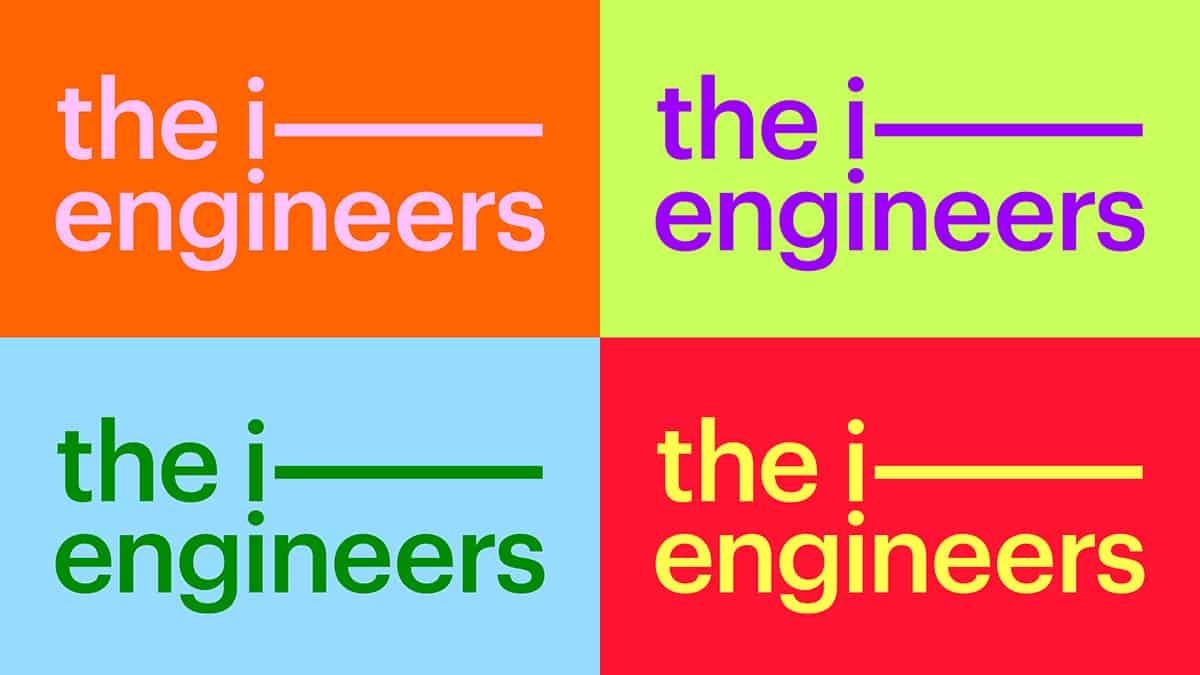
The Basel-based agency Mona and Mateo carried out a rebranding for The I-Engineers TIE.

TIE has been dedicated to software development in the solution areas of enterprise content management (ECM), workflow and process management with a special focus on the digitization of hospitals since 2002.

Despite the complex environment, the Zurich-based company has successfully held its own on the international market for 20 years - with professional composure and craftsmanship brilliance. Now Mona and Mateo has transformed this successful mix into a new brand identity.

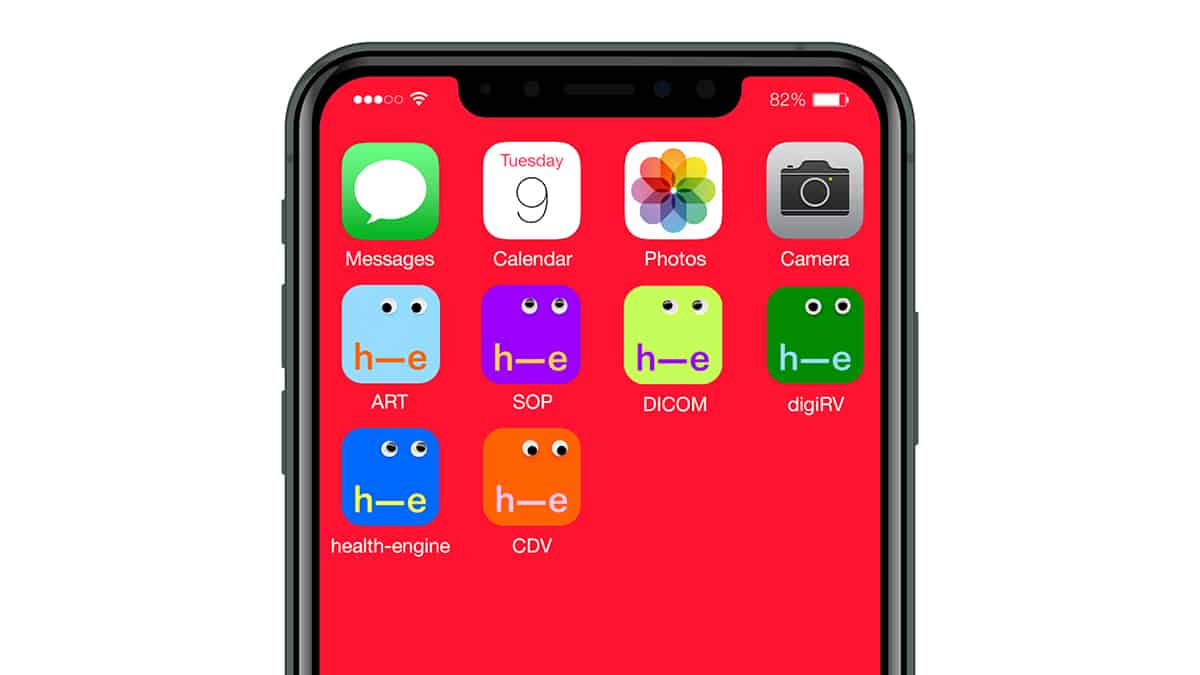
TIE's founding appearance served as a springboard for the rebranding. At that time, handmade clay figures conveyed the company's services and values and ensured great differentiation from the competition. Under the new claim "When life becomes digital", the existing appearance was reinterpreted and made ready for the future of the company.

The I-Cons - quasi the mascots of The I-Engineers - are now used as 3D animated clay figures and convey the brand values of simplicity, speed and flexibility. The active color world in combination with the I-Cons is intended to ensure a high level of attention on the market.

In addition to the new CI/CD and claim, Mona und Mateo also developed far-reaching B2B communication measures for all channels for TIE.


Responsible at TIE: Severin Summermatter, Selina Kindt. 3D Artist: Vincent Schwenk. Responsible for concept and implementation: Mona and Mateo.

Blick and Ochsner Sport continue "26 Summits" hiking campaign

For the third time, the Blick Group and Ochsner Sport are launching their joint nationwide hiking campaign, «26 Summits,» this Sunday. With every summit you climb, you can win prizes and do something good for the mountains.

(Image: Valentin Lüthiger)

With "26 Summits", the Blick Group and Ochsner Sport are once again setting out for new summits and launching a competition that also aims to ensure the preservation of Swiss mountains.

With every scanned summit sign and completed registration, points can be collected for the overall ranking and instant prizes. In addition, the Blick Group and Ochsner Sport also pay 1 Swiss franc per scan to the nature conservation organization Pro Natura.

Past campaigns were a success

In 2021, more than 570,000 users visited the campaign site. 26summits.ch, around 40,000 QR codes were scanned across Switzerland at one of the 26 summits.

"'Switzerland is our sports ground' is the claim of Ochsner Sport. And since hiking is the most popular sport among the Swiss, Switzerland's largest sports retailer is of course once again a partner in 26 Summits," says Marco Greco, Head of Marketing at Ochsner Sport.

To kick off the campaign, a 74-page magazine will be dedicated to the SonntagsBlick and L'lllustré which is dedicated to the focus on sustainability in the mountains. In addition, the topic of nature conservation is covered editorially on all Blick channels. On the occasion of the national holiday on August 1, the "26 Summits" community will meet for a hike: together, they will climb four summits in all language regions.

Goldbach markets LG Ads in the DACH region

Goldbach and LG Ads Solutions, the TV media platform of TV manufacturer LG, are extending their partnership and will be working together in the area of Connected TV Ads with immediate effect. This makes Goldbach the exclusive sales partner of LG Ads Solutions in the DACH region.

Example of a home launcher ad. (Image: zVg.)

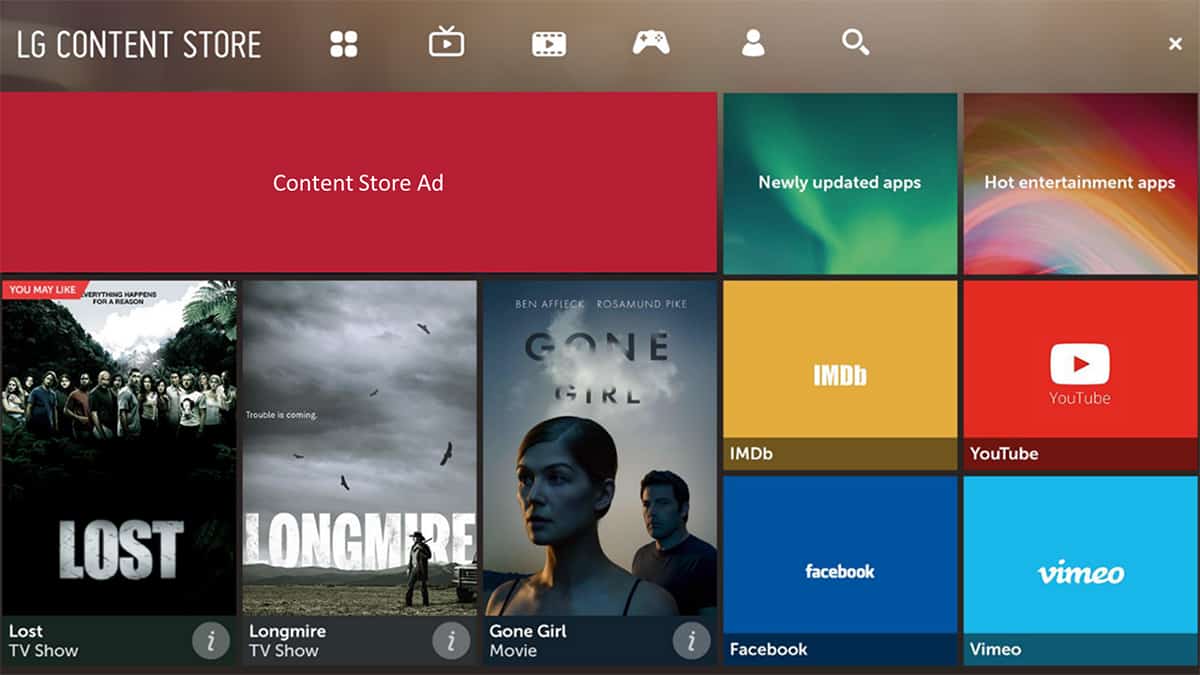
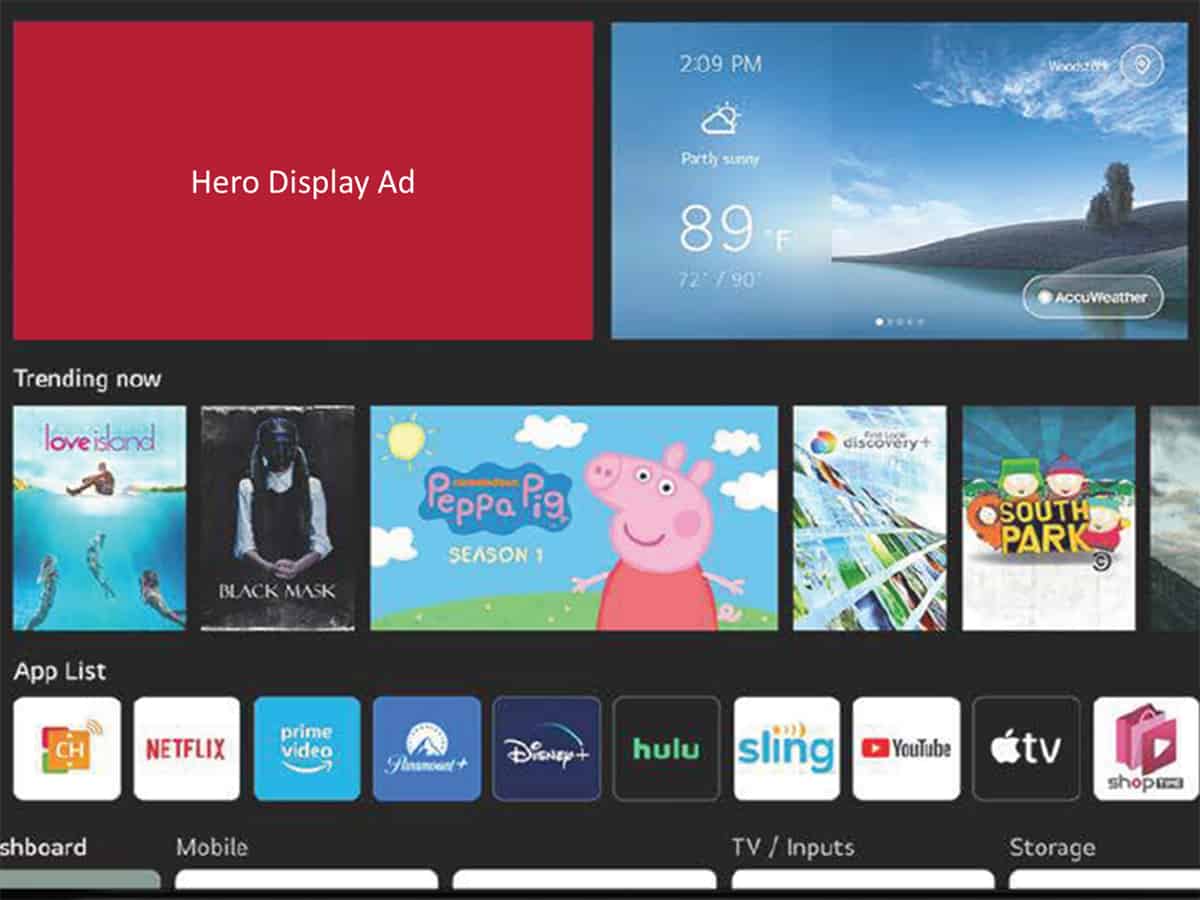
The advertising spaces can be booked in the form of an "Ad Package" consisting of the formats "Home Launcher Banner", "Hero Display Ads" and "Content Store Ads". These are played on the user interface of the LG Smart TVs. According to the current "Goldbach Advanced TV" study, just over half of viewers already use the user interface of their smart TV as their "home screen. 

In this way, brands would benefit from a monthly gross media reach of over 54 million impressions, as Goldbach writes in a statement. In addition, the Connected TV Ads make it possible to address target groups that were previously difficult to reach with TV advertising. This includes, for example, "heavy streamers" or so-called "cord cutters" - users who cancel their cable TV connection and only use moving images in the form of VoD offers and live TV streams via the Internet.

Example of a content store ad. (Image: zVg.)

Extensive targeting options and interactivity 

Various targeting options are available for precise campaign control. Target groups can be formed according to socio-demographic criteria. It is also possible to address viewers with relevant content according to contextual criteria, such as sports, music or family.  

Another special feature is the interactivity of the advertising spaces, which enables a link to additional content. Viewers can thus interact with additional content, such as a video, a website within LG WebOS or their own app, without a media break.

Example of a Hero display ad. (Image: zVg.)

20 Minutes is now available in Ukrainian

20 Minuten now automatically translates its editorial content into Ukrainian and Russian.

(Image: 20 Minutes/Michael Scherrer)

20 minutes and 20 Minutes are now making the editorial articles of their app available to registered users in Ukrainian and Russian.

The app has been available in English since November 2021, followed by Portuguese at the beginning of December. Albanian, Serbian, Croatian, Bosnian and Spanish were added in the first quarter of 2022. Switching languages is done via a language selection button in the app's settings, and immediately all editorial text articles currently available in the app are transferred to the desired language by an automated translation service. Videos, advertising and surveys are not translated.

"With our Multilanguage App, we have a proven technology and already thousands of users every day," explains Marco Di Bernardo, Chief Technology & Product Officer 20 minutes. "With the introduction of Ukrainian, we offer the daily increasing number of refugees in Switzerland orientation and information in their national language. At the same time, we are also introducing Russian so that we can also offer the many Russians living in Switzerland a comprehensive news and entertainment service on the issues that affect Switzerland."

Racerfish realizes short feature film for PSP Swiss Property

The film agency Racerfish shot a homage to the "workplace" for the real estate company PSP Swiss Property. The result is an image film with a difference.

When most employers were forced to send their employees home due to the COVID-19 pandemic, Racerfish was commissioned by PSP Swiss Property to create a film. This was to show all of PSP's key locations and offices, while putting the spotlight on its employees and corporate culture.

Due to the lockdown, the idea of a classic image film was rejected. Instead, a script was created for a short feature film that turns PSP's employees and properties into the protagonists of a story about everyday life at the real estate company once the restrictions have been lifted.

The short feature film "The Assignment" tells the story of an intern who is given a not entirely trivial task on his first day at work and therefore travels across Switzerland. While the main character is played by the young New York actor Gershon Tarablus, all other roles are played by PSP employees who impersonate themselves.

The most important supporting actors are PSP's offices, which bear the creative signature of Zurich interior designer Roger Bächtold, who is responsible for the design and implementation of the offices with his company P.5. This means that the short feature film "The Assignment" is not just an image film - it is also a team-building event of a different kind: following the suspension of the obligation to work from home, PSP employees reconnect with each other by shooting a film at their workplace and return to the office with this experience.

The film is now available at Theassignmentfilm.com can be streamed.


Responsible at PSP Swiss Property: Giacomo Balzarini (CEO), Stefan Kaufmann (Head of Business Development). Responsible at Racerfish: Celine Luetolf, Oreito Pfluger (Directors), Anahi Rodriguez (Producer), Tom Behrens (Supervising Producer).

Kuble launches Metaverse Academy with two courses

To promote understanding of the metaverse, Kuble has launched the Metaverse Academy. Through two courses, the Zurich-based agency aims to impart expertise on this new technology using immersive methods. m&k spoke with the initiative’s founder, Gustavo Salami.

The Kuble agency recognized early on that far-reaching changes were on the horizon in the online world with the metaverse and Web3. The team has therefore already in the Year 2021 first events carried out and moved into virtual premises.
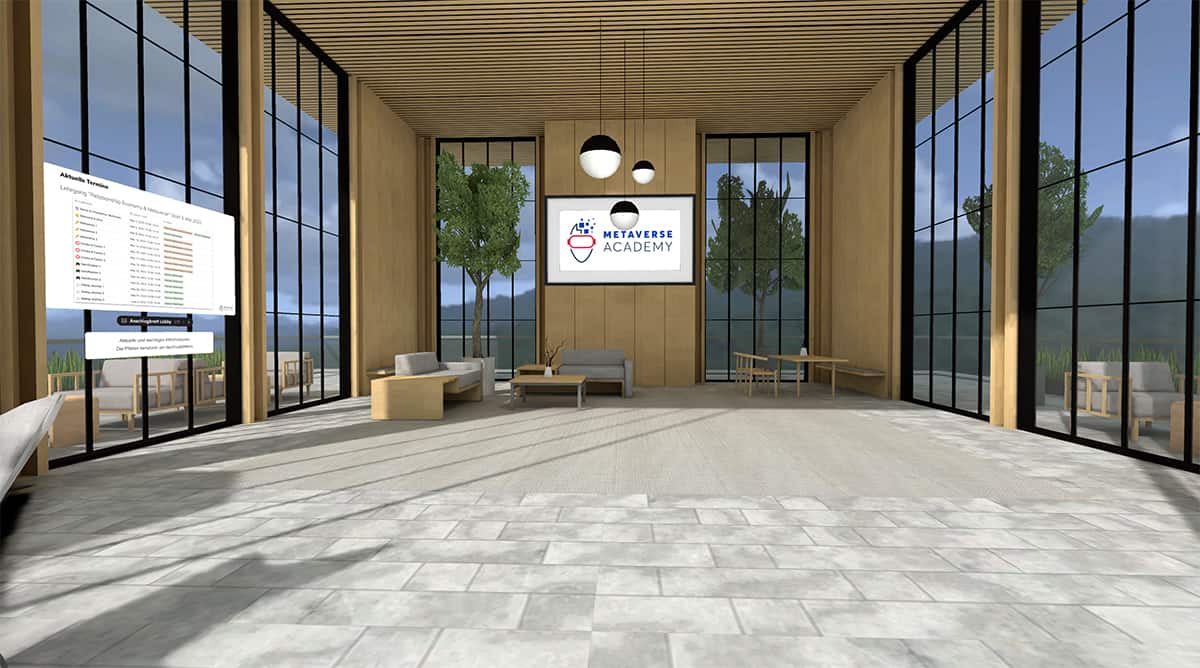
Due to the great demand for knowledge that facilitates the entry and enables the understanding of the new technology, the agency launches the Metaverse Academy. Experts from various fields impart their expertise in courses using immersive methods: All participants wear Oculus glasses and meet in the Horizon Workroom at noon from 12:30 to 13:15. All courses culminate in NFT certification.

The "Relationship Economy & Metaverse" course starts on May 3. It consists of four modules and is aimed at people who are interested in a new era in dialog marketing. "In a Relationship Economy, it is relationships, credibility and trust that make up the value of offers," explains expert Marion Marxer. "How can we use the Metaverse to strengthen our relationships and credibility? That's exactly what we show in the Metaverse."

The "Web3 & Metaverse Strategist" course starts on May 30. Six modules will cover topics such as how to create an avatar, how wearables and NFTs work, and how to design and implement specific use cases. Participants will learn how to strategically assess the new environment. From June 27, this course will also be available in English.

The Academy's lobby at the Metaverse. (Image: Kuble)

INTERVIEW

"We want to be pioneers for a new way of imparting knowledge".

Gustavo Salami, founder and partner of the Zurich agency Kuble, talks to Anna Kohler of m&k about the newly founded Metaverse Academy. 

Anna Kohler: Gustavo Salami, as founder and partner of Kuble, you recently founded and conceived the Metaverse Academy. How did that get started?

Gustavo Salami: Since we bought land on Decetraland in November 2021, we as an agency have been immersed in the topic and have studied it intensively. In the process, we became aware of how different and limited the understanding of the topic is - at the same time, the interest is very great. So it quickly became clear to us that an academy was needed to impart the relevant knowledge. We four partners then decided to pursue the idea. A month later, the academy was up and running.


You are offering two courses starting in May. Who is the offer aimed at?

Basically to all people who are curious and want to understand the metaverse better - both privately and professionally. The first two courses are related to the communication industry. But soon more courses will be added, which will also address other industries. No prior knowledge is assumed. But because the lessons take place with the Oculus VR goggles, you should already own or purchase a pair of goggles and gain initial experience with them as soon as possible.


Participants wear Oculus glasses and meet in immersive spaces. How can I imagine this?

We have chosen two Metaverse applications. On the one hand Workrooms from Meta and on the other hand for Spatial. Workrooms is better in terms of avatars and spatial sensation. Spatial, on the other hand, has better features to take advantage of the new possibilities of the virtual world. You can think of it as everyone being in a virtual room together, seeing each other and being able to communicate with each other. Like a training room - but in the metaverse.


After completion of the modules, there is an NFT certificate. Is this recognized or do I still need a classic version?

If someone wants or needs a classic version, we can of course do that as well. The point here is to familiarize the participants with the subject matter. To get the NFT, they need to have understood certain basic Web3 topics.


Is the metaverse a relevant marketing tool of the future - or just a small river in the stream of Marketing measures?

The metaverse will have an important role in our lives and therefore also in marketing. At the moment, it is hardly possible to place advertisements as we are used to. But there are of course many new possibilities on decentralized platforms because of the blockchain with wearables and NFTs for the avatars. A lot of traditional marketing measures will certainly be replaced with that. Other marketing measures that we already know today will be used in the metaverse as soon as good coverage can be achieved and certain standards have become established.


How do you assess the metaverse and its consequences for the world? Will we all eventually live only as avatars in the metaverse and let our analog world become deserted?

No, on the contrary: the analog world is becoming more interesting because of the virtual world, and vice versa. But of course it depends on whether the pioneers of the metaverse - i.e., companies and agencies, among others - manage to appeal to and inspire as many people as possible with their use cases.


If you want to play at the top, you can't get around the Metaverse.

It has always been the case that companies get into trouble if they miss out on technological change - and not just since the Internet. Those who get there early gain advantages. And you have to make mistakes in order to learn and develop. At the moment, you also still have a first-mover advantage in almost every industry.


Where do you see the Metaverse Academy in the future? What is the vision?

Our vision is to inspire people to learn from and with each other. The Metaverse is not only a learning object, but also a learning tool. In this respect, we want to be pioneers for a new way of imparting knowledge and we are open to exchange with schools and universities in this regard.


TBWA\Zurich shows how McDonald's makes a sustainable difference

A CSR campaign is to publicize the commitment of McDonald's, its licensees, restaurant employees and guests. TBWA\Zurich is responsible for the 360-degree communication. The press work was done by Farner.

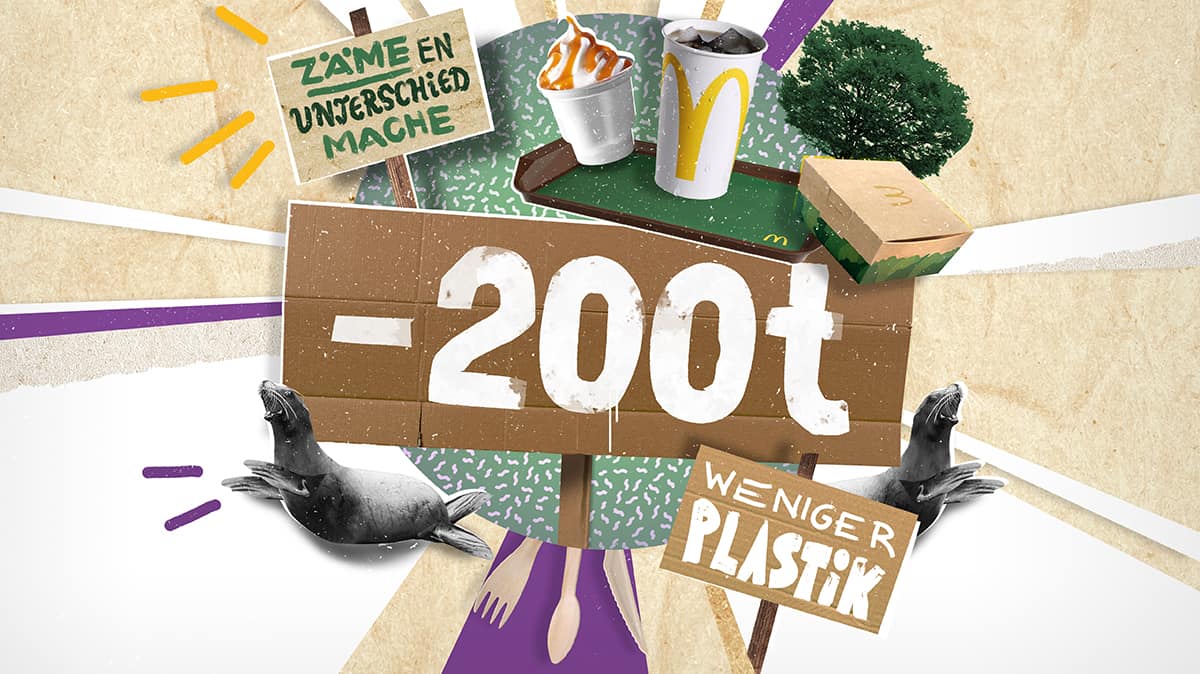
Sustainability and responsibility for people, animals, and the environment have long been a top priority at McDonald's. In 2022 alone, an additional 200 tons of plastic will be saved: McDonald's is therefore thinking even bigger than before when it comes to its commitment to sustainability.

Plastic lids and tubes are no longer available in restaurants, salad boxes are now made of cardboard, and cutlery is made of wood. While 91 percent of all packaging was already made of paper or cardboard, the path to a plastic-free future is now being pursued even more consistently. In the end, only 2 percent of all food packaging will remain plastic. As the most important partners, the licensees of McDonald's Switzerland, the restaurant employees and the guests support the innovations and thus make more sustainability possible in the first place.

TBWA\Zurich is therefore bundling this commitment to people, animals and nature under the claim "Zäme en Unterschied machen" (Making a difference together). In the first campaign, two spots focus on the most important differences in packaging and Happy Meal toys. Collage animations explain the innovations and make the commitment to a sustainable future visually unmistakable. The visual upcycling also formally reflects the core idea of the campaign.

The films were conceived and realized in Switzerland. The stop motion studio Tiny Giant was responsible for the two TVCs and Plan B Film for the production.
The campaign was launched as part of Earth Day on Friday and is present on TV, OOH, print, web and social media. The company's own content hub "Engagement 2022" uses animated videos and tutorials from TBWA\Vido to show in detail the changes for the benefit of the environment. The multi-year campaign will be continuously supplemented with further corporate and social responsibility chapters.


Responsible at McDonald's: Jean-Guillaume Bertola (Chief Marketing Officer); Deborah Murith (Head of Corporate Relations Department), Jae Ah Kim (CR Senior Consultant), Sandrine de Cerjat, Severine Caspard, Inga Roxburgh (Marketing Manager). Responsible TBWA\Zurich: Manuel Wenzel, Tizian Walti, Calvin Kröhne, Mathias Bart, Reto Clement, Mark Levay, Davide Schenker, Louise Zoeckler, Mario Hipleh (creation), Nadine Müller, Clara Burki, Benjamin Eugster (strategy), Nadja Stickl, Renata Catambas (consulting) Toni Rubera, Noemi Rubera (DTP), Pierre Copsey, Domenico Catena, Fabrice Studer (TBWA\VIDO). Film production: Plan B (production), Jessica Sonderegger (producer), Tiny Giant (animation studio), Claudia Röthlin, Yves Gutjahr (direction), Corina Vögeli (illustration), Jingle Jungle (audio post-production), Federico Bettini, Jingle Jungle (music/composition). Responsible at OMD: Alexander Schmitt, Alina Punz, Bernhard Gschwandtner, Peter Hartmann (Media Planning). Responsible at Farner: Nina Krucker, Sarah Buehler (PR).

Four books that might interest you

In cooperation with GetAbstract, we present four books from the field of marketing and communication. This time: "The Change Code", "Psychological Security in Companies", "Learning Hacks" and "Boost - Thinking like Elon Musk and Co".

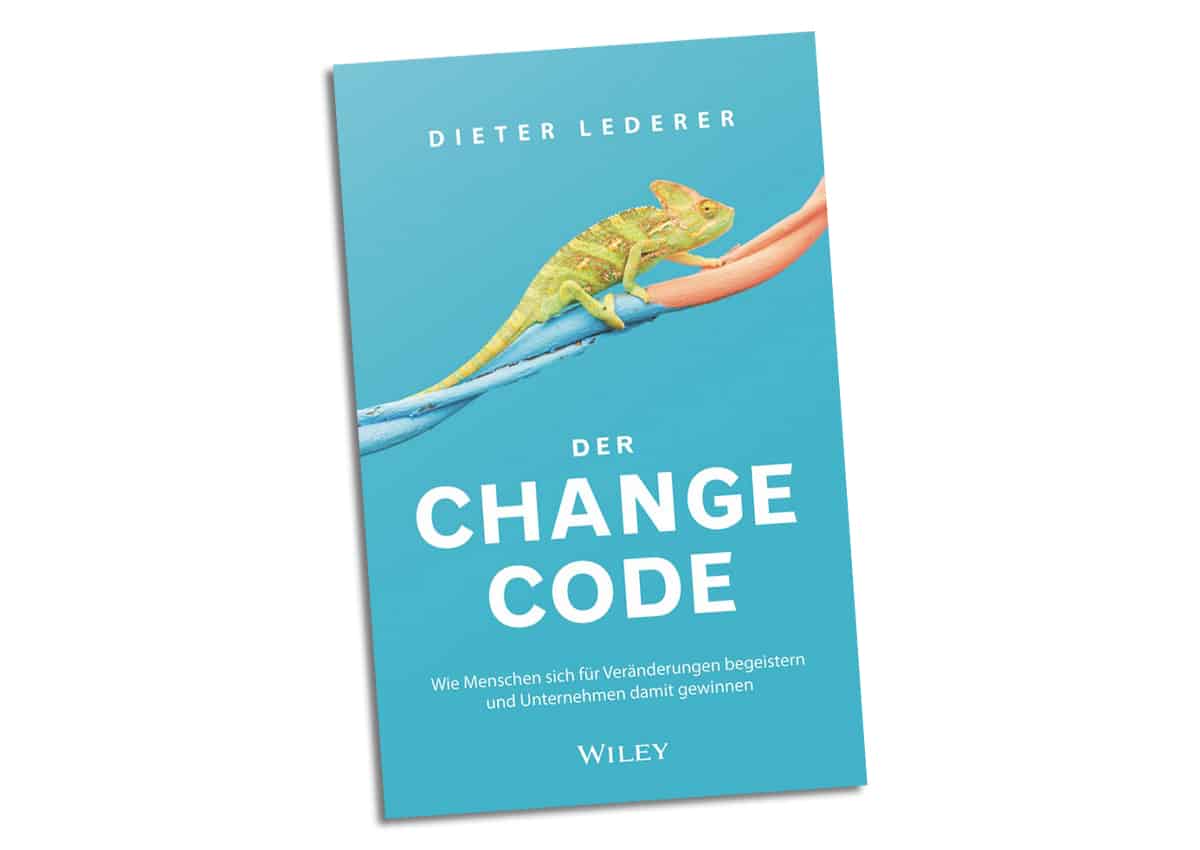
The Change Code

How people get excited about change and win companies over with it.

  • Author: Dieter Lederer
  • Publisher: Wiley-VCH, 2022
  • Pages: 262
  • ISBN: 9783527511075

Change projects fail because they are not people-oriented and ignore the feelings of employees. This is Dieter Lederer's central thesis. From it, he derives his "Change Code," which consists of three elements: a meaningful and understandable change strategy, the cohesive appearance of managers, and the appreciation of feelings. The book's target audience is primarily second-level managers. It is up to them to persuade their employees to follow the path.

Psychological safety in companies
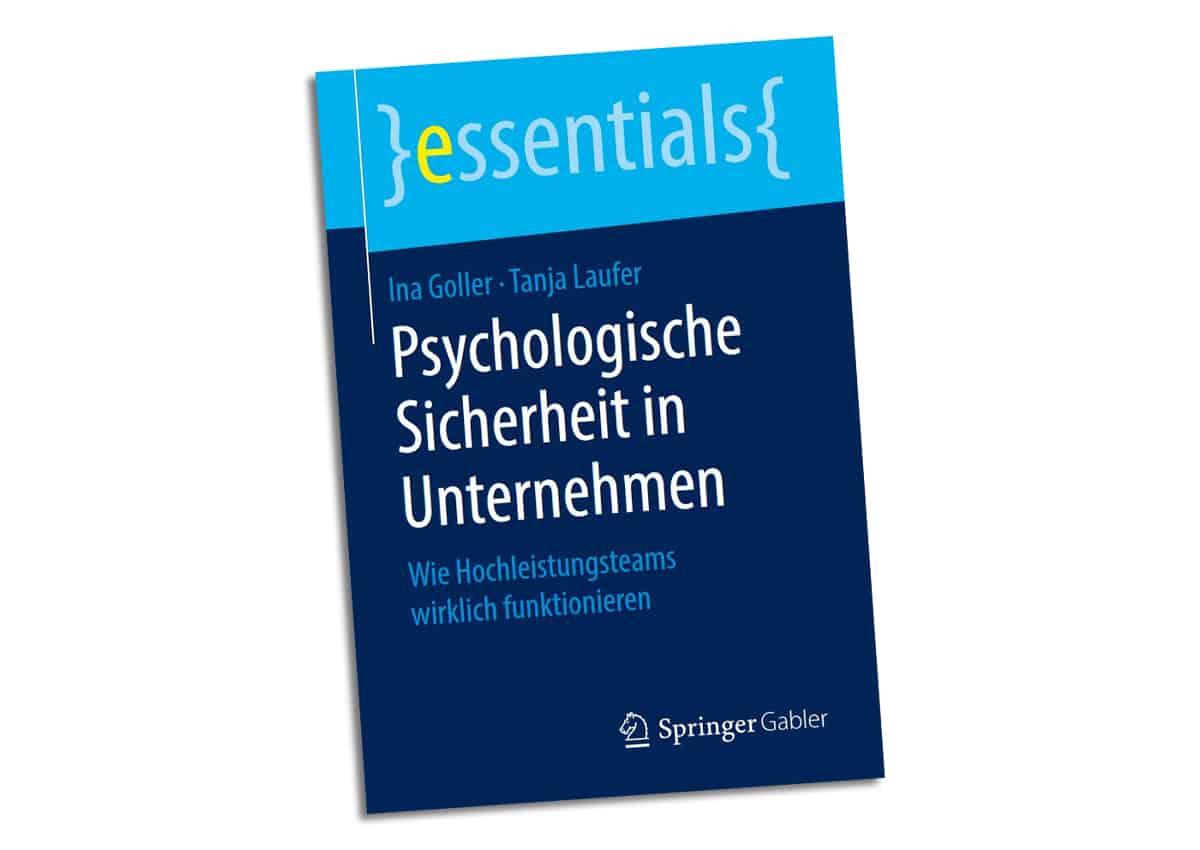
How high performance teams really work.

Author: Ina Goller and Tanja Laufer

Publisher: Springer Gabler, 2018

Pages: 56

ISBN: 9783658213374

Psychological safety is crucial when it comes to motivating teams to perform at their best. But unfortunately, the reality in many companies is different - those who address problems earn silence or aggressive reactions. As a result, motivation and innovativeness, among other things, decline. The authors explain how it is possible to create a safe working environment, and why it is the managers who are most important. This is a book that is well worth reading, packed with practical tips, but with plenty of theoretical background as well.

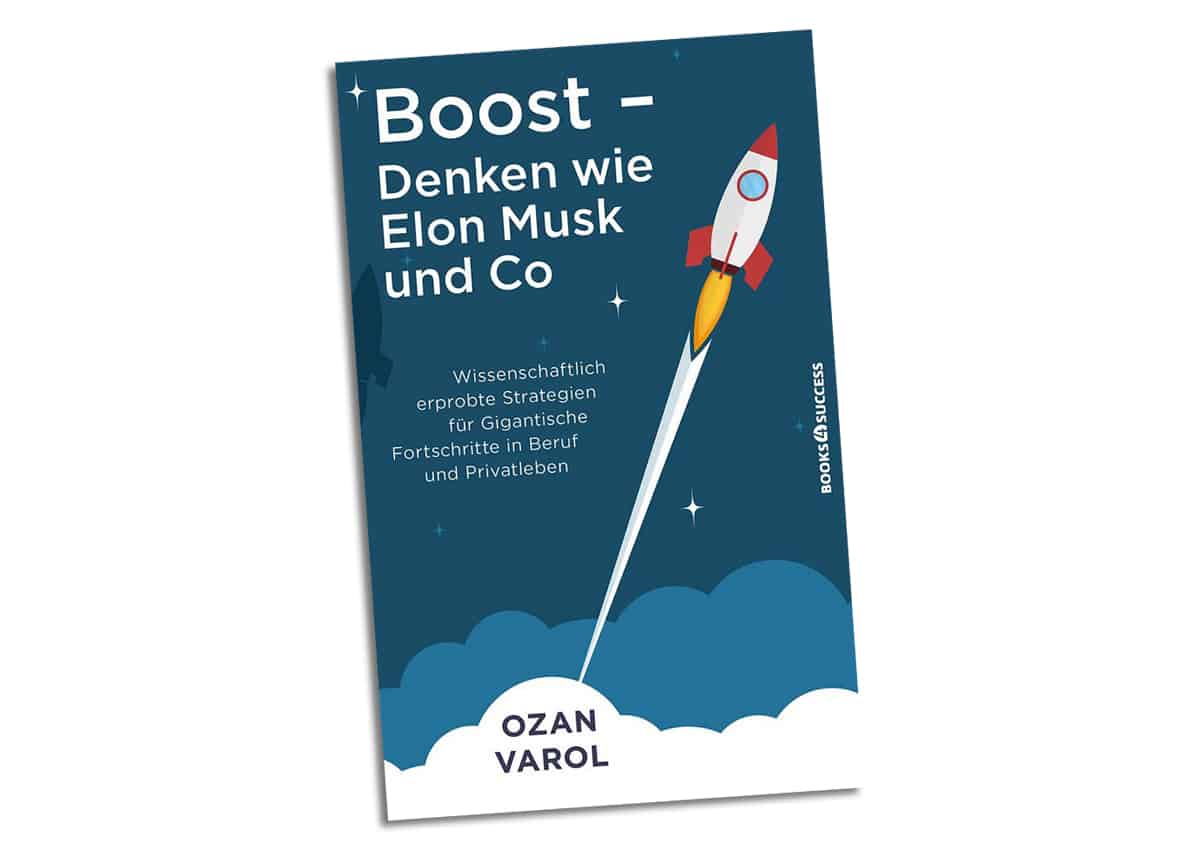
Boost - Thinking like Elon Musk and Co.

Scientifically proven strategies for giant strides in work and personal life.

Author: Ozan Varol

Publisher: Books4Success, 2021

Pages: 416

ISBN: 9783864707315

The book is called "Think Like a Rocket Scientist. Former NASA employee Ozan Varol explains why it's not that difficult to think like a rocket scientist - but above all, what advantages it brings for product developers in the private sector. Loose in tone and enriched with many anecdotes, the book gives you tools with which you can leave well-trodden paths of thought and specifically question seemingly given facts. An inspiring book for those working in the field of innovation.

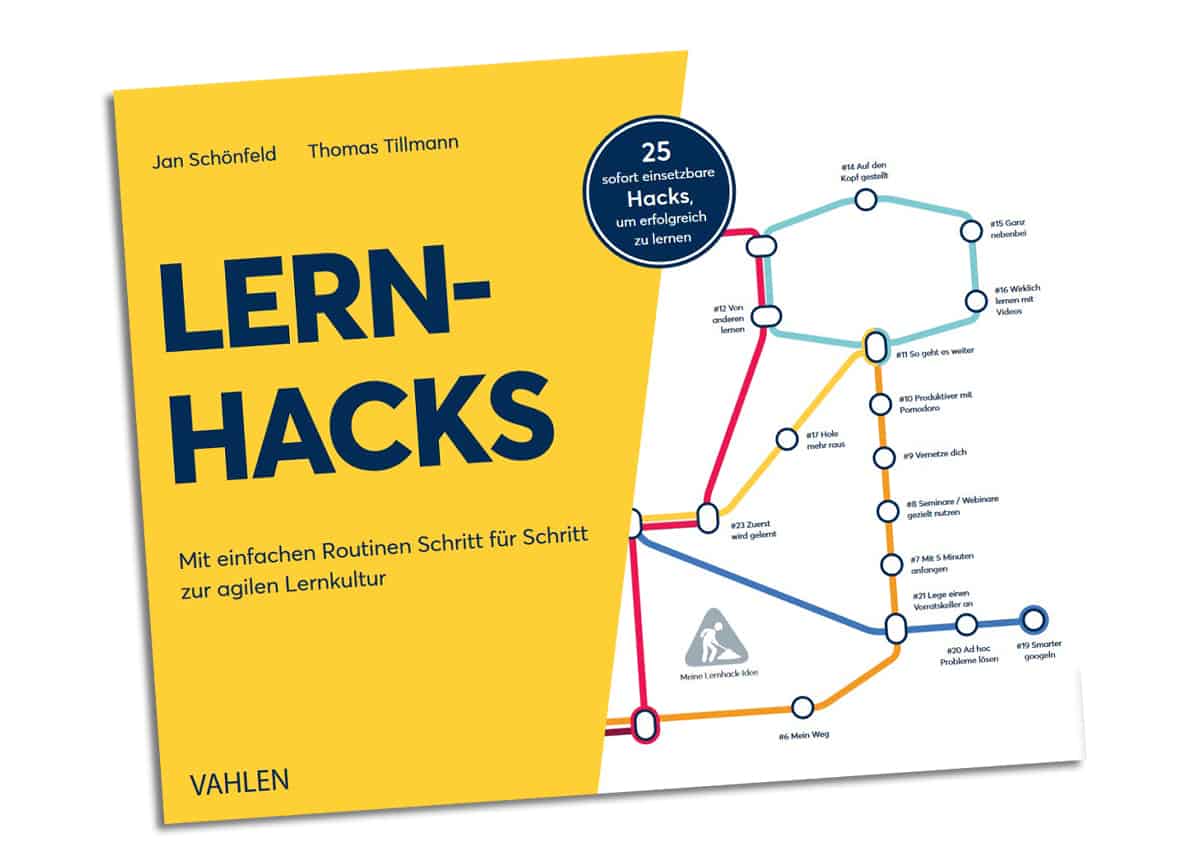
Learning Hacks

Step by step to an agile learning culture with simple routines.

Author: Thomas Tillmann and Jan Schönfeld

Publisher: Vahlen Verlag, 2021

Pages: 215

ISBN: 9783800664986

With their company Lernhacks, the authors have accompanied companies such as Porsche, Bosch, and Deutsche Bahn on their way to an agile, autonomous learning culture. They have compiled the best learning routines in this book. The result is a useful compendium with a beautiful, clear design. It offers many practical tips, methods and inspirations for everyone who wants to fill the phrase of lifelong learning with life - fun and success are guaranteed.

Spotify grows despite controversy over podcast platform

Music streaming market leader Spotify continued to grow last quarter, despite the controversy surrounding its podcast star Joe Rogan. The Swedish company ended the quarter with 182 million subscription customers. That was two million more than at the end of 2021.

Spotify thus also digested the abrupt loss of 1.5 million customers in Russia, where the service ceased operations in the face of international sanctions due to the war in Ukraine.

For the second quarter, Spotify expects growth to 187 million subscription customers. The forecast remained below the estimates of analysts, who rather assumed a good 189 million customers. Subscription fees are still Spotify's most important source of revenue, even though the service is now earning more and more from advertising in podcasts, among other things.

Revenue grew 24 percent year-on-year in the first quarter to 2.15 billion euros, Spotify reported Wednesday. Bottom-line profit shot up to 131 million euros from 23 million euros a year earlier.

Popular US podcaster Joe Rogan, who publishes his talk programs exclusively on the Spotify platform, had recently brought negative headlines to the service. After a debate about false information on the corona virus in his podcasts, he also had to apologize for racist remarks. One focus of the quarterly figures was whether the controversy had hurt Spotify's business. (SDA)

Nico Nabholz strengthens the TeleZüri team

Starting in early May 2022, TV journalist Nico Nabholz will join the news anchor and "TalkTäglich" editorial team at CH-Media's regional television station, TeleZüri.

The 40-year-old Nabholz brings with him a broad range of journalistic expertise. He started his career as a media professional around 16 years ago at Tages-Anzeiger and gained his first TV experience at Tele Top, where he worked as a reporter for almost two years until the end of 2012. After that, the Zurich native with a bachelor's degree in journalism and organizational communication from ZHAW worked for TeleZüri as a reporter and presenter of live events for six years. Nico Nabholz then helped to set up Blick TV, where he worked as an anchor in the studio for the first two years. Most recently, he worked as a media spokesman for Coop national.

As of Monday, he will start in his new functions as news presenter and TalkTäglich producer for TeleZüri. In his new job, he reports to Seline Meier, editorial director of "SonnTalk"/"TalkTäglich" and Claude Winet, editor-in-chief of TeleZüri.


get_footer();