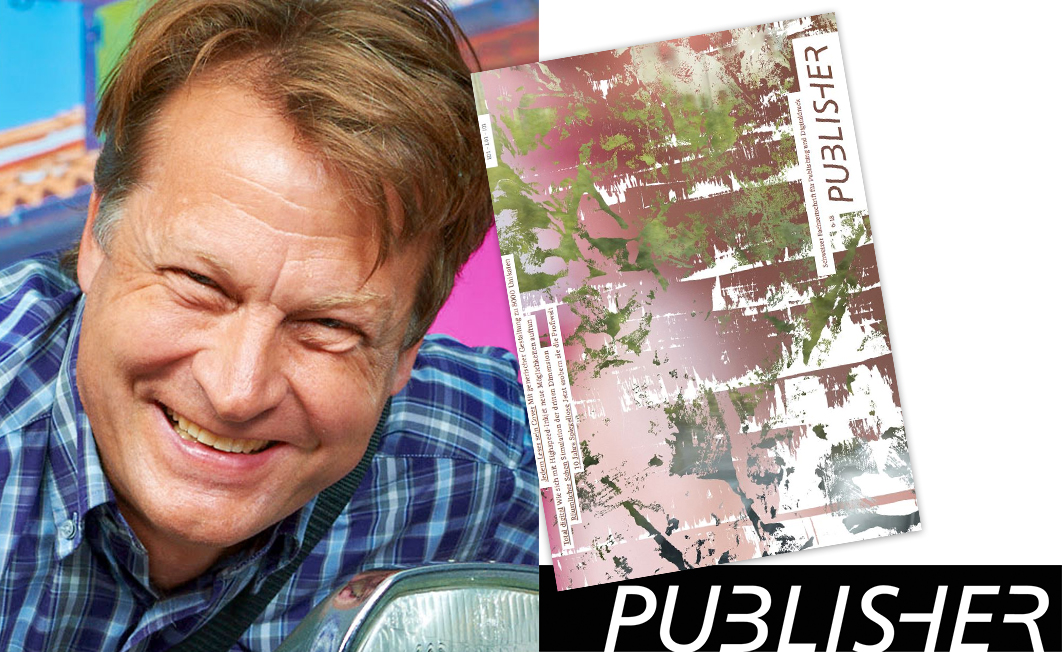
Handover at Publisher: Martin Spaar is succeeded by two young entrepreneurs

Effective March 1, 2019, after 25 years as publisher, Martin Spaar is handing over the trade journal *Publisher* to two young entrepreneurs.

publisher-t

"I'm really looking forward to starting a new round of Publisher-"I want to usher in the pioneering spirit of the Publisher by handing the title over to David Maissen and Laurent Gachnang, two proven thoroughbred publishers," says Martin Spaar. He continues: "As digital natives, the two are predestined to set the right course for digital transformation and successfully develop Publisher as the leading trade journal for publishing and digital printing."


Laurent Gachnang

The 33-year-old from central Switzerland is the founder of the e-book service provider Mbassador and has been working in the media and entertainment industry for over 15 years. He is an expert in digital publishing and online marketing. Most recently, he was a member of the management team at the Basel-based media company Schwabe. There, as marketing manager, he developed the new appearance of the production divisions of Die Medienmacher and played a key role in the launch of a change process. He is also a guest lecturer at various universities of applied sciences and a volunteer mentor at the Startup Academy Basel. Laurent Gachnang is married and has a two-year-old daughter.


David Maissen

The 31-year-old from Aargau has spent his entire professional career in the graphic arts industry and can look back on fifteen exciting years as a polygrapher. In addition to his experience in publishing and digital printing, he discovered scripting and designing workflows through his training in IT. In addition to these more technical aspects, he is also passionate about good design and topics such as user experience. Like Laurent Gachnang, he most recently worked in the management of Die Medienmacher and was jointly responsible for media production.

Martin Spaar will remain with the Publisher and will actively support them with his experience and network in the further development of the magazine.
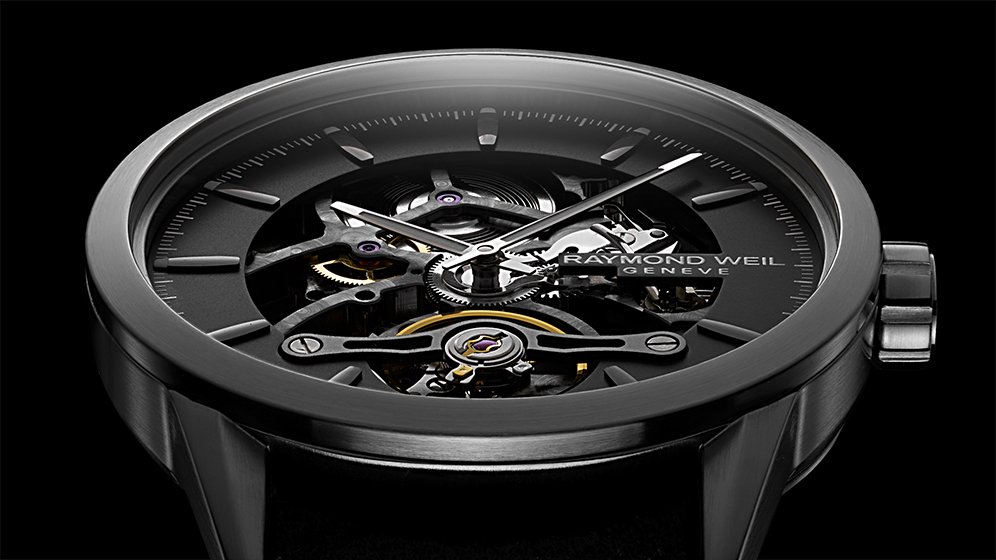
Geneva watch brand Raymond Weil wants to win over young customers

The Geneva-based watchmaker Raymond Weil wants to focus more on attracting young buyers in the future. These days, it’s no longer a given that children wear watches. The company is therefore investing in the brand’s online presence and relying on social media influencers and bloggers.

freelancer_2785-tic-60001_2000_2000_300_rvb_social_lowangl

Trade fair appearances, on the other hand, will play a subordinate role in future. Accordingly, the company will only be appearing in passing at the SIHH watch show in Geneva, which begins on Monday, and will not be present at the Basel watch fair at all.  


Presentation of watches away from trade fairs  

By withdrawing from Baselworld, the company wants to take a new approach, said Elie Bernheim, the head of the family-run company from Lancy, in an interview with AWP. "At major trade fairs, I was often only able to meet with our partners for around fifteen minutes," explained the Raymond Weil boss. This year, the company is inviting retailers throughout the year to present the collections to them over several days. This also happens on the fringes of the SIHH, for example.  

This is also about being able to make the necessary adjustments to the watch models promptly and launching collections on the market quickly. Until now, the company has waited until spring, at the start of Baselworld in March, to do this. "We want to spread the launch of new models throughout the year and react more quickly to market requirements," said Bernheim.  


More e-commerce  

From 2019, the watchmaker wants to appeal to young consumers in particular. The brand's target groups and themes revolve strongly around the younger generation aged 18 to 30. "Today, it is no longer a matter of course for children to wear a watch," says Bernheim. Smartphones are increasingly serving as a "replacement" for the traditional watch. To appeal to young buyers, Raymond Weil now spends more than 30 percent of its marketing expenditure on digital communication. Influencers in social networks, bloggers and other digital channels are essential.  

The price segment of Raymond Weil watches, which generally cost between 1,500 and 2,000 francs, is generally predestined for young customers - and the range is being expanded accordingly on the online sales channels. According to Bernheim, Raymond Weil currently generates around 10 percent of its sales in e-commerce. This is set to grow to a quarter by 2025. In contrast, the number of points of sale has been reduced in recent years from around 4,000 to 4,500 to around 3,000 today.  

In terms of business performance, things are apparently going satisfactorily for Raymond Weil. Things went "pretty well" last year, said Bernheim. Turnover had increased by 3 to 5 percent. The company does not provide detailed information on the business figures. Raymond Weil is estimated to sell around 150,000 watches a year and generate sales of over 200 million Swiss francs.  


Brexit and the trade dispute  

And Raymond Weil wants to continue to grow in the future. According to Elie Bernheim, the company would be "quite satisfied with growth of between 1 and 7 percent" in the current year. However, the uncertainties on the market remain great. For example, the British market, the second largest for the company, is suffering from the turbulence in connection with the planned Brexit.  

The weakness of some currencies, such as the Turkish lira, and the Sino-American trade dispute are also cause for concern. Meanwhile, Bernheim sees Japan, where the Geneva-based watchmaker has been present for two years, and Australia as future growth markets. (SDA)

The advertising agency is the new lead agency for Orangina

The Zurich-based advertising agency won a pitch last year and is already working on the new special edition bottle, which will hit stores this spring.

orangina

The idea behind it is based on the basic idea #BetterDaysWithOrangina, which further establishes Orangina as a Love Brand and makes every day a little highlight.

In the conception, great emphasis was placed not only on unique design, but the focus is on a clear and easily transportable message that should create a great impact at the POS, on the streets and in social media.

Above all, the versatile concept and the resulting multipliers, which are networked across channels, were decisive in winning the account, according to the statement. The launch will also be accompanied by a digital campaign at all major train stations in Switzerland. 

For the management of the social media channels, Monami Content was newly evaluated, which stands for exciting content management and thus represents the perfect complement to the advertising agency. The implementations are planned, created and realized hand in hand.
 

Ikea relies on virtual reality in training

To get employees excited about this sustainability strategy, IKEA is turning to virtual reality. De-Lay, Frame Engine, and Bandara are responsible for the VR film.

IKEA360_Still_Intro

Sustainability is a central issue at Ikea. With its "People & Planet Positive" strategy, the Group has formulated ambitious sustainability goals that are in line with the UN's Sustainable Development Goals.

To get employees excited about this sustainability strategy, Ikea is using virtual reality: they can now experience the company's commitment to sustainability first-hand with the help of VR glasses. A ten-minute VR film teleports employees to a Polish forest, a refugee home in Bern, and the world's most sustainable Ikea store in Kaarst, Germany, among other places. The VR film was conceived and implemented by Swiss companies De-Lay, Frame Engine and Bandara.

The big challenge for the producers, according to the statement, was to pack a wide variety of topics and activities into one story. To give the film a common thread, they therefore told the story from the perspective of a "Poäng" chair, which is "reborn" as a kitchen front at the end - proving that at Ikea, topics such as circular economy are already more than just buzzwords.

For field hockey moms, eternal optimists and casual fans

PAM Advertising conceived and produced three commercials on behalf of the sponsor, EWZ, to promote the ZSC ticket discounts.

zsc-optimist-PAM

EWZ customers get a 20 percent discount on ZSC Lions home game tickets. To draw attention to this, EWZ thanks ZSC supporters with an ode. The ZSC field hockey mom who works her butt off for the fan-favorite family. The eternal ZSC optimist who sees the good even in defeat. And the ZSC casual fan who has only been a fan since the last championship win. The spots can be seen mainly on social media.


Responsible at PAM Advertising: Parvez Sheik Fareed, Miro Pfister (creation, strategy, consulting). External partners: Shutt Erstock (camera); Hastings (sound studio); Team Tumult (animation).

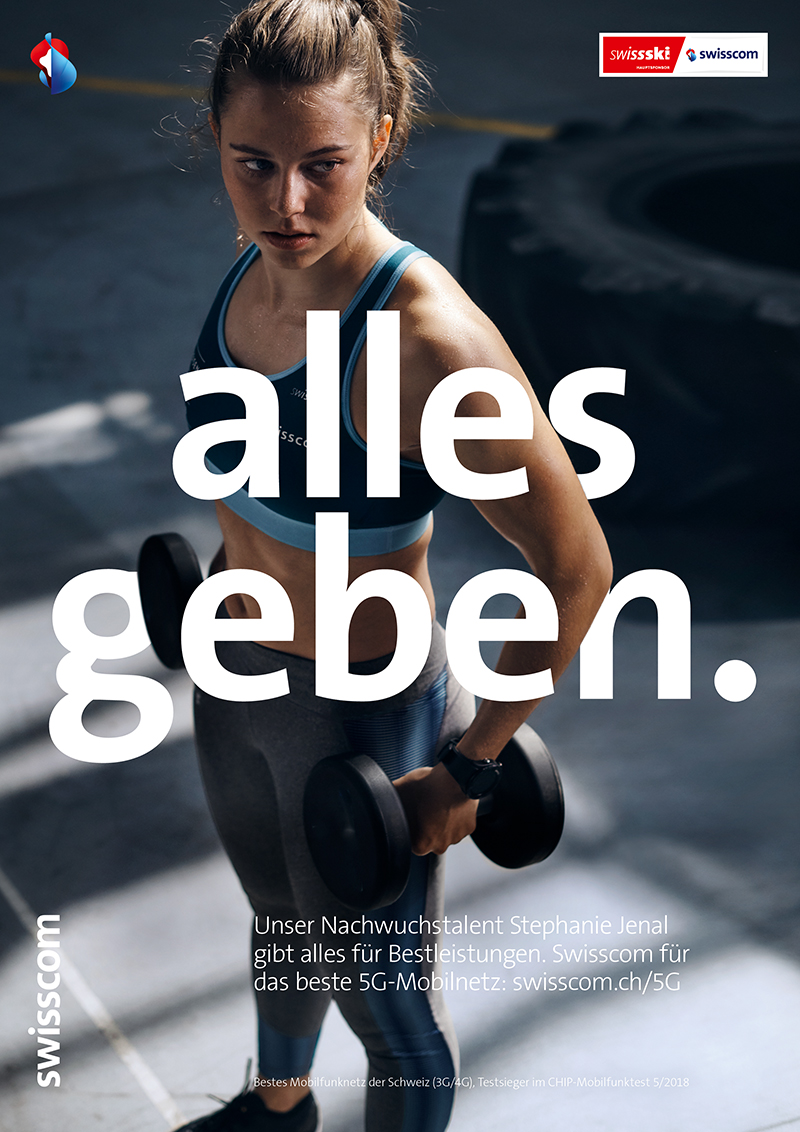
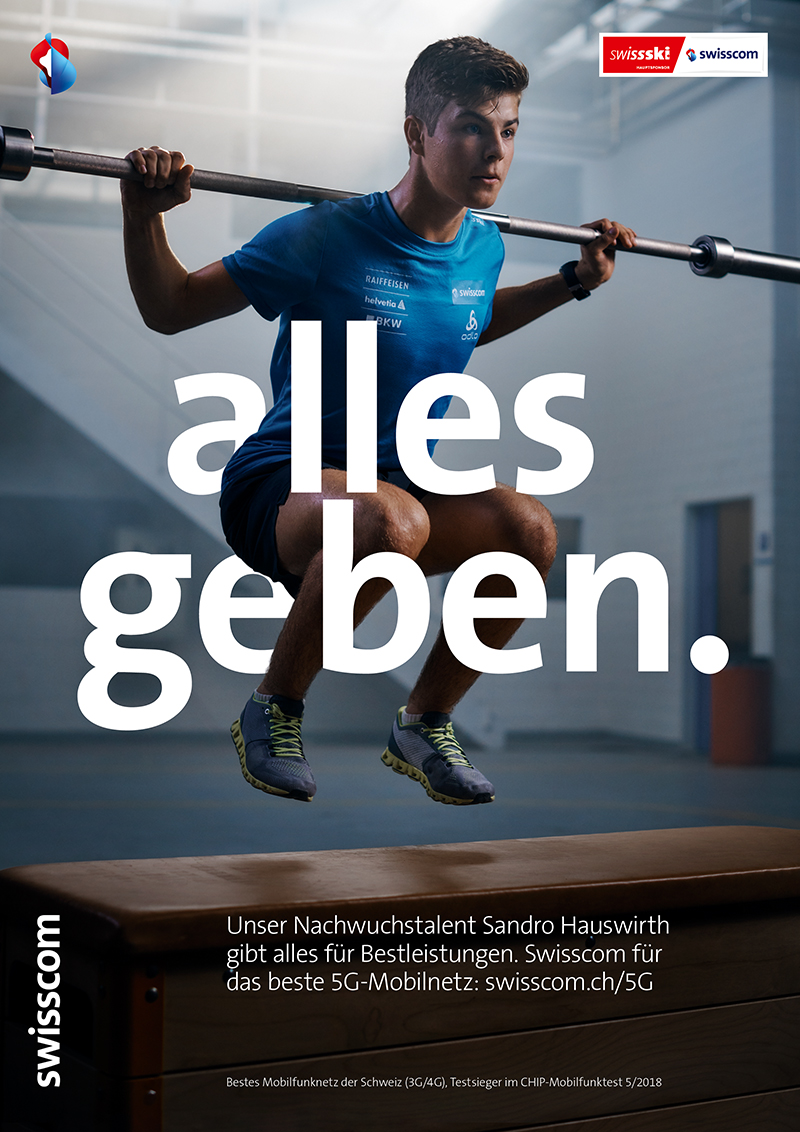
When the best give it their all: Heimat launches sponsorship campaign for Swisscom

Heimat Zürich's new sponsorship campaign shows: Like Swiss-Ski's athletes, Swisscom as Swiss-Ski's main sponsor gives its all for top performances.

182719_SC_Schneesport_Plakate_F12_APG_de_Lara_Gut_small

As Swiss-Ski's main sponsor for many years, Swisscom supports athletes in over 11 disciplines on their way to top performances. The comprehensive commitment to snow sports provides targeted support in the areas of elite sports, junior sports and mass sports.

The new campaign shows (on TV around the live broadcasts, on posters in the ski resorts and online with video ads in the snowsports environment) what top athletes such as Lara Gut-Behrami, Iouri Podladtchikov, Fanny Smith, Dario Cologna and Beat Feuz have in common with Swisscom: They all give it their all. Every day.

Responsible agency: Home Zurich. Photography: Per Kasch. Film production: Shining Pictures. Directed by: Mitch Bekk. Media Planning: Mediaschneider, Zurich.

182719_SC_Schneesport_Master_A4_Stephanie_small
182719_SC_Schneesport_Plakate_F12_APG_de_Beat_Feuz_small
182719_SC_Schneesport_Plakate_F12_APG_de_Dario_Cologna_small
182719_SC_Schneesport_Plakate_F12_APG_de_Fanny_Smith_small
182719_SC_Schneesport_Plakate_F12_APG_de_Iouri_Podladtchikov_small
182719_SC_Schneesport_Master_A4_Sandro_small

The online magazine Republik takes positive stock after one year

One year after its launch, the team behind the Swiss online magazine Republik is reporting positive results. More than half of the approximately 16,000 original subscribers have since renewed their subscriptions, as the magazine notes on its website.

republik

"Otherwise it would have been tight," co-founder Christof Moser told news agency DPA. The Republic was launched on January 14, 2018 as an ad-free magazine with around three articles per day. More than 6,000 additional readers had taken out subscriptions over the course of the year.

The Republic founders had raised around 3.4 million francs in the 2017 crowdfunding campaign, four times as much as they had hoped. In total, the project had 7.7 million francs at the start, thanks to contributions from investors. At the time, it was said that this would secure operations for at least two years.


More subscribers needed

In the long term, the magazine needs more than 25,000 subscribers. It is also looking for another investor. "We will now invest more in marketing and cut about ten percent of costs," Moser tells DPA. "It's a difficult, rocky road we have ahead of us."

In the fall, no less than four members of the management Republic leave: Of the original founding team, only Constantin Seibt, Christof Moser and Clara Vuillemin will be on board in the future.

The departures had simple reasons, wrote the Republic at the time. The Herculean task of building up the company had been completed, and now a new generation was needed. In short: less founder-era romanticism and less pioneering spirit, but more day-to-day business and better organization.

Financially, Republic did as expected in its first year: it posted a loss. The consolidated loss was 2.85 million francs, according to the annual report published in the fall. The largest expense item, at 3.5 million francs, was personnel expenses.


36 full-time positions

The Republic has 50 employees in 36 full-time positions. It could also imagine expanding abroad. "We would like to expand into Germany," Moser said in this regard.

But there are no concrete plans. The media landscape in Germany is different from that in Switzerland. While practically three large houses dominate the Swiss market, there are more publishers with quality products on the market in Germany. (SDA)

Welcome to the club: James launches new image campaign for One

The Zug-based agency James is promoting the rebranding of the One fitness center through print ads and radio spots.

Welcome to the club: James launches new image campaign for ONE Already last year, One Training Center chose James as its new agency. The new campaign "Welcome to the Club" pursues two goals: on the one hand, the image change from a classic fitness center to a versatile fitness club, and on the other hand, the positioning as the largest club in Central Switzerland. One is home to the largest fitness community with over 20,000 members.


M1
M2
M3
M4
M5
M6

The campaign kicks off with six advertisements that are published in various daily newspapers, on posters, and online. In addition, various radio spots will promote the USP to a wide range of target groups from young to old. Further campaign pillars will be developed in the coming weeks and months to further expand the market leadership in Central Switzerland.

A brand identity to make well-informed decisions on health issues

The Careum Foundation and the Canton of Zurich’s Department of Health are joining forces in an initiative to improve health literacy in the canton. MetaDesign is developing the brand identity for the joint program.

MetaDesign_Gesundheitskompetenz_Zuerich_Logo

The options for medical care and the roles of patients and service providers have changed significantly. Everyday life constantly demands decisions from each individual that also have an impact on their health. At the same time, the information available is increasing exponentially. Health literacy is required in order to obtain the right information and take the right action. 

This is where the "Health Literacy Zurich" program of the Careum Foundation and the Department of Health comes in; both for people and for the healthcare system. MetaDesign was commissioned to develop the brand identity and design the website for GKZ. The central aim is to provide orientation in the canon of information. The population, but also other stakeholders, should be able to act competently and independently in health matters. 

MetaDesign develops a matching Performance. The focus is on making information easy to understand. Different text levels deliberately give information weight. A line acts as a guidance system that provides orientation and connects. The logo sets the tone in each case. The dominant colors blue and white underline the connection to the canton. The clear and accessible appearance also appeals to patients, health organizations, scientists and doctors. Government President Thomas Heiniger on the project: "We all have to decide for ourselves what we do and what we don't do. The state enables us to act on our own responsibility by providing suitable framework conditions." 

Yawn: When zoo animals give up hibernation

Process Brand Communication is launching a new social media campaign for the Goldau Nature and Wildlife Park titled «We’re giving up hibernation for you.» The campaign features animals yawning.

wolf-t

The Nature and Animal Park Goldau is the family-friendly recreation area of Central Switzerland. On 42 hectares, deer, wolves, bears, lynxes, birds of prey and many other animals can be observed at close range. The Nature and Animal Park Goldau is a scientifically managed zoo, which is committed to the breeding and reintroduction of endangered species. 

Many visitors do not know that the zoo is also open in the winter months. More than 800 animals do not hibernate and can also be observed during the cold season. The creatives at Process Brand Communication dramatize this with a broad-based campaign. 

At the beginning of 2019, the big social media campaign "For you, we do without hibernation" will start. Humorous films featuring yawning animals that stay awake in winter especially for zoo visitors even when it's hard for them will be played out as Youtube pre-rolls, on social media channels and on ePanels. Posters complement the campaign.

In addition, photos of animals that do not hibernate are being sought and published under #wachimwinter. A competition uses Instagram Story Battles to determine the winning images.

Interaction increases advertising recall, even with short visibility

Interactive display ads ensure maximum recognition of the advertising message, even if the ads are only visible for a short time. This is what the global media platform Teads found out in an extensive eye tracking study of 538 Internet users in Germany.

The debate about the visibility of advertising media (viewability) laid the foundation for the new view of online advertising in 2018. The Media Rating Council's 50:1 standard for display ads (50 percent of the ad in the visible area for at least one second) continues to be offered in Germany. However, the call for standards for the visibility of ads falls short. Even if an ad stays in the user's visible area for a long time, the recall of the advertising message can be very low. For example, in Teads' research, a sticky skyscraper that remains visible when scrolled along the right edge had a viewability duration of 98.6 seconds. However, the proportion of users who viewed the ad was only 34 percent and the average viewing time was only 0.5 seconds.
 
"Online users usually have a very short attention span. They focus on the content of a website," says Björn Radau, Marketing Director DACH at Teads. "While classic banners sometimes remain in the visible area for quite a long time, the attention and thus the recall is comparatively low. This is different with advertising media that address the user directly in the editorial content and entice him to interact. This is because users themselves become actors and control the content of the advertising material."

werbewirkung1

Interactive advertising formats that are located directly in the editorial content of a website significantly increase recall among users. In the eye-tracking study, subjects were shown the viewable display format inRead Flow from Teads. Although these ads were only in the viewable area for an average of 3.3 seconds, they were viewed almost the entire time (95 percent conversion from viewability to viewing time). This format, in which the ad is constantly changing as it scrolls, automatically attracts eyeballs. The reason: movements strongly attract our visual attention for evolutionary reasons. 60 percent of the study participants were able to recall these interactive ads. Other formats such as billboard (53 percent), skyscraper (50 percent) and medium rectangle (33 percent) achieved significantly lower recall values.


These 10 tips will help increase user interaction with the ad: 
 

  1. Involve media planners and conversion experts right at the start of the creative process. Only then can an interactive component be developed according to the medium.
  2. Test all advertising content before and after playout. Use digital channel analytics options such as dwell time or view-through rate and avoid burning budget on ineffective campaigns.
  3. Make sure your ad content is optimized for smartphones. This is important both in terms of format, image detail, importance of sound or spot length, but also for the actual message. The car brand Jeep, for example, has had very good experience with this.
  4. Adapt the advertising medium to the usage situation. During the day, many users do not turn off the sound, but they are usually in a usage environment where sound is distracting.
  5. Especially short-content formats of only six seconds playing time should offer users interactive elements so that they stay engaged with the ad for longer.
  6. Use data strategically to increase the relevance of your message. For example, device type, location, date and time of day, and topic of the ad environment should be included in the call-to-action to emphasize relevance to the user. The spot from "E Like Simple" was only played out within the opening hours of the call center, which could be called directly from the advertising material.
  7. Add interactivity to display ads as well. For example, an ad can change with just a slight movement of the mobile device, immediately grabbing the user's attention. McDonald's, for example, has used this feature to great effect. (Here you can try it yourself by means of smartphone)
  8. Show users what happens next. For example, those who see a short video spot could be offered the sequel, making-of, or other related content right away. KIKO has done this for makeup vividly implemented.
  9. Benefit from the growing chatbot trend. Direct dialog with the user is now possible in advertising media, as Teads and Tommy Hilfiger have shown. Users can talk directly to the brand and, for example, browse through the product range immediately and without a media break.
  10. Try Augmented Reality. Smartphones are getting better and better technically at projecting elements into the real world. Virtually "putting" a pair of glasses on your face or testing the color of your lipstick can now happen right in the mobile ad and immediately engage the user on a very personal level. (Here you can try it out for yourself using a smartphone).

 
The study "What's the truth about the myth of banner blindness?" by Teads can be ordered free of charge in exchange for contact data.  downloaded be


About the study

Between October 10 and 16, 2018, the market research company Eyesquare conducted a survey among 538 participants in Germany on behalf of the media platformTeads. Participants were recruited online and took part from their personal PC at home. Eye tracking and emotion analysis, as well as subsequent recognition questions, were used to record how different display ads affect users.
 

MCH Group: Florian Faber to succeed Jean-Marc Devaud

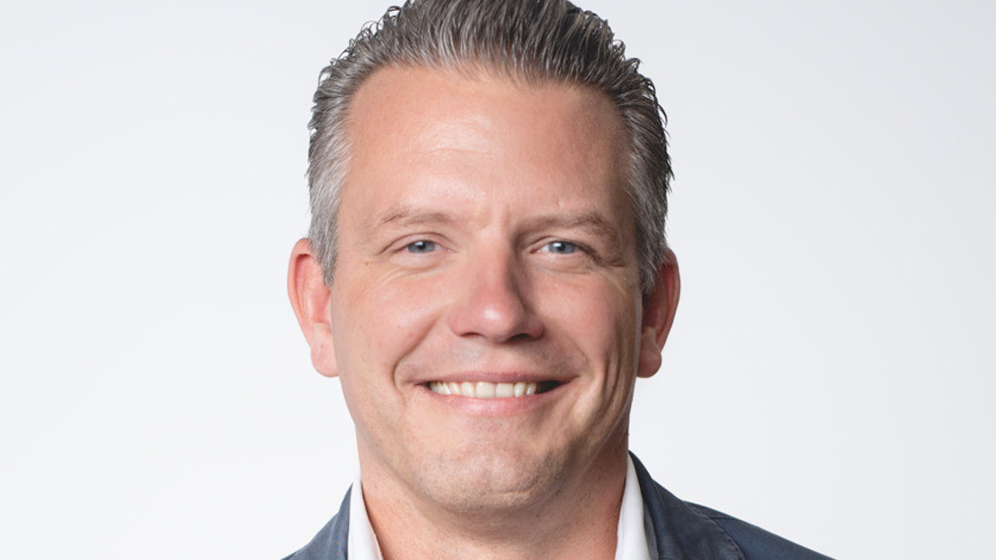
The Board of Directors of MCH Group has appointed Florian Faber, Managing Director of Expomobilia in Effretikon, as a member of the Executive Board and CEO of the Live Marketing Solutions division. He will take over the responsibilities of Jean-Marc Devaud effective immediately, as Devaud has decided to leave the MCH Group for personal reasons and pursue a new career path.

"In Florian Faber, we are delighted to have an extremely competent internal successor who has worked with Jean-Marc Devaud for many years and who will continue to pursue the path taken by the Live Marketing Solutions Division", emphasizes Hans-Kristian Hoejsgaard, CEO a.i. of the MCH Group, in a press release issued on Friday. The Chairman of the Board of Directors, Dr. Ulrich Vischer, emphasizes: "The Board of Directors and the Executive Board very much regret Jean-Marc Devaud's decision. The MCH Group thanks Jean-Marc Devaud for his great commitment and wishes him every success in his future career."

Florian Faber holds an Executive Master of Business Administration (MBA) from the University of Zurich. He was responsible for trade fair participations in Europe at the car manufacturer Nissan before joining the MCH company Expomobilia as New Business Manager in 2009, where he took over the role of Head of Sales as a member of the Executive Board in 2011. In summer 2014, he was appointed Managing Director of Expomobilia, which was renamed MCH Live Marketing Solutions in November 2018. As Managing Director of Expomobilia, Florian Faber has played a key role in the successful development and expansion of the exhibition, event and pavilion construction division in recent years and was involved in the strategic repositioning of the Live Marketing Solutions division. He was born in 1979, is a German citizen and lives with his family in Winterberg (ZH).

Jean-Marc Devaud joined the MCH company Expomobilia in 2008 and was appointed a member of the Executive Board and CEO of the Live Marketing Solutions Division on January 1, 2009. In this function, he has intensively promoted the internationalization and expansion of the range of services in this business sector over the past ten years, in particular with the establishment of branches in Shanghai and Dubai, the acquisition of the American MC2 Group and the development of MCH Global as a full-service agency for experience marketing.

florian-faber
get_footer();