Christian Baertschi becomes new Chairman of the Board of Serviceplan - Peter Felser sells his shares

Management changes at the Serviceplan Group Switzerland’s House of Communication: Christian Baertschi succeeds Peter Felser as chairman of the board of directors of Serviceplan Group Switzerland. Peter Felser is stepping down from the board of directors. Pam Hügli and Raul Serrat are increasing their stakes in Serviceplan Suisse.

serviceplan2

The Annual General Meeting of Serviceplan Group Switzerland has elected Christian Baertschi, head of the Zurich-based Haus der Kommunikation, as Chairman of the Board of Directors. With his retirement from the Board of Directors, Felser is also selling his shares in the agency. These will be purchased by Pam Hügli, CEO and Raul Serrat, Executive Creative Director of Serviceplan Suisse. This will allow them to increase their shares and become even more involved in the company.

Peter Felser has supported Christian Baertschi as a member of the Board of Directors in the development and expansion of the Serviceplan Group in Switzerland for six years. Felser on his departure from Serviceplan: "The last six years have been extremely exciting. The development of the agency group has been brilliant. I am pleased that I was able to pass on some of my experience in building and expanding a successful agency." Felser remains positive about the Group's prospects for success in Switzerland: "The combination of entrepreneurial local managers with a strong international network is unique. With Christian Baertschi, Pam Hügli, Raul Serrat and Balz Lendorff, the local agencies in the House of Communication are down-to-earth and entrepreneurial. Clients appreciate this entrepreneurial understanding."
 

Portrait_Christian_Baertschi

Christian Baertschi, new Chairman of the Board of Directors of Serviceplan Group Switzerland: "Peter Felser has shaped the advertising market over the last few decades and has always kept his feet on the ground. We will miss him as Chairman of the Board of Directors, but will continue to see him regularly as a friend." Pam Hügli, CEO of Serviceplan Suisse: "I had the pleasure of working with Peter Felser for many years. He was always a mentor who always encouraged and developed colleagues in the best possible way."

And Raul Serrat doubles down. "Pam Hügli, Christian Baertschi and I enjoy working together successfully today because we got to know each other in business at Peter Felser's agency at the time."

Increased focus on strategic work

Christian Baertschi emphasizes to Werbewoche.ch that his daily work will not change too much - as CEO/partner of the agency group, he has already been responsible for the coordination and strategic direction of the otherwise relatively autonomous companies Serviceplan, Plan.Net, Solutions and Mediaplus. By taking over as Chairman of the Board of Directors, his activities in this area will be further intensified. At the same time, he will continue to oversee "a few mandates in day-to-day business" and devote himself to "scenario planning for possible industry upheavals". 

Incidentally, the new Chairman of the Board of Directors does not believe that shorter decision-making paths will now lead to the agency group acting faster: "The last seven years of development have certainly given me some experience that will also have a significant influence on my strategic decisions. They will not be made any faster, as we have already been moving at a rapid pace and will certainly continue to do so," says Christian Baertschi.

Oscar Ferrer becomes new Managing Partner of Jeff

Oscar Ferrer, former Marketing Director of Mercedes-Benz and former Head of Marketing at Red Bull, is shedding the business suit and moving to the agency side as Jeff's new Managing Partner.

Ferrer-JEFF_quer_klein

Ferrer will join the current management team, which includes Michael Meyer and Linus Eidenbenz, in January 2020. The graduate business economist has held various leading marketing positions over the past 18 years - most recently he was responsible for the brand rejuvenation of the automotive brand with the star.

"The addition of Oscar Ferrer, a long-time marketing professional and former executive board member of Red Bull and Mercedes-Benz Switzerland, is a very valuable asset for us and a clear signal of Jeff's strength and positioning," says Michael Meyer. Ferrer will also ideally complement the agency due to his comprehensive track record and further strengthen and expand important areas such as strategy, media and storytelling, Linus Eidenbenz continues.

"Jeff has transformed over the past few years from an event specialist to a very strong and innovative agency that is a 'one-stop store' mastering and successfully implementing all disciplines of the marketing keyboard," said new co-owner Ferrer.

Ad.X settles succession: Moreno and Elvira Cavaliere take over

Werner Baumann is handing over his company, which he founded in 2000, to new owners. Ad.X, which specializes in the classifieds market, will be taken over by Moreno and Elvira Cavaliere effective January 1, 2020.

Moreno-Cavaliere-1

Change of baton in the management: Moreno Cavaliere takes over for Werner Baumann (from left to right).


Moreno and Elvira Cavaliere will act as members of the Board of Directors. Markus Bucher, Managing Director of Publiconnect for many years, will lead the company operationally as Managing Director from March 1, 2020 at the latest. Werner Baumann will be available to Ad.X in the future as Senior Advisor in a part-time mandate.

Werner Baumann: "As founder, owner and board member, I was able to shape an extremely exciting 19 years, due to the digital transformation and the change in the media. With Moreno Cavaliere, I can now present a successor who fully shares my high quality standards. As a member of the Board of Directors, he will contribute his many years of expertise in the media industry in the strategic area. Through my work as Senior Advisor, customers and partners will continue to benefit from my experience. Continuity is therefore assured."

Management buyout at Republica - Furrerhugi acquires stake in agency

The Bern-based communications agency Republica will once again become an independent, owner-managed agency on January 1, 2020: CEO Bala Trachsel and the management team will take over the shares currently held by Bernexpo Holding.

Repubblica_Ist-so

The Republica team at the new Matte Lab location.


As of January 1, 2020, Republica will once again be managed independently by its owner: Bala Trachsel, together with the management, will take over the shares currently held by Bernexpo Holding. Republica became part of Bernexpo Groupe at the beginning of 2016 in order to complement the then traditionally oriented trade fair business with its core competencies in strategic marketing, branding and live communication. Conversely, Republica has been able to deepen its experience in the leisure, vacation, construction, industry and education sectors in recent years.

"We benefited enormously from each other and fully achieved the objectives we set for the merger at the time," says Bala Trachsel. In the meantime, Bernexpo has been able to build up and establish the know-how that was lacking at the time internally.

Republica has a 35-strong interdisciplinary team, has just moved into new premises in the Matte Lab in Bern and, together with a collaborative network, wants to develop further as a content and campaigning agency with a high level of digital expertise. "We are not focusing on silo thinking, but on holistic consulting and cooperation," says Trachsel. Republica will be able to do this more efficiently and freely as an independent agency. "We will continue to work closely with Bernexpo in the future," says Bala Trachsel.

As part of this transaction, Furrerhugi Holding will become a new minority shareholder in Republica. The holding company is significantly influenced by the Furrerhugi agency, which specializes in public affairs, public relations and corporate communication. The two Bern-based companies Republica and Furrerhugi have been working together for many years - not least through their joint client Bernexpo, which they will continue to support in the future and for which they will launch new formats and campaigns.

Republica will thus strengthen the Comfederation brand alliance initiated by Furrerhugi on January 1, 2020, which was formed in May 2019 by the six companies Furrerhugi (Bern, Zurich, Lugano, Brussels), Crausaz stratégie et Communication (Fribourg, Lausanne), Narwal (Zug), Evenjo (Bern), Mindnow (Zurich) and Clé de Berne (Bern).

A good digital strategy with more focus on mobile is becoming increasingly important

In their study titled «Your Customers Put Mobile First. Do You?», Bain & Company and Google Switzerland demonstrate that a successful mobile user experience increases revenue potential. For this reason, the «mobile-first» approach must be given increasing priority in digital strategy.

mobile-first-digital

In future, companies will increasingly have to take the requirements of mobile users into account (Image: Pixabay).


For the study, the 100 most-visited websites in Switzerland from ten sectors were examined. The result: although more and more consumers are surfing and shopping with smartphones or tablets, many companies are still far from exploiting the potential of the mobile channel.

Only around 10 percent of all mobile websites in Switzerland open on a smartphone in less than three seconds. Mobile websites load too slowly, content is difficult to find, disgruntled customers drop out and switch to the competition.

"The mobile channel is the most important access channel for customers in many industries today, but many companies underestimate its importance," explains Sebastian Walter, Expert Vice President at Bain and co-author of the study. "This means they are losing out on business potential."

According to analyses by Bain and Google, more than half of mobile users leave a website if it takes longer than three seconds to load. In fact, around 50 percent of websites in Switzerland take five seconds or longer to display meaningful content on a mobile device.


Taking into account the requirements of mobile users

The use of mobile devices is increasing continuously. According to the study, more than five billion people around the world are already surfing the web on smartphones and tablets every day; by 2025, this figure will rise to six billion. In Switzerland alone, mobile devices account for up to 70% of online traffic in some sectors, with the average being around 60%. At the same time, around 40% of all online sales in Western Europe are generated via smartphone and tablet.

This makes it all the more important for companies to adapt to this. "The desktop and mobile versions of many companies' websites are still poorly integrated," says Gregor Doser, Industry Leader at Google Switzerland and co-author of the study. "Websites are often still far too slow on mobile devices. As a result, customer satisfaction suffers and sales figures and revenue can fall."

As part of the study, Bain and Google identified three key topics that significantly improve the customer experience on the mobile channel:

  • Customer-oriented design. The customer journey must be geared towards actual user needs. A website should be designed to be as simple as it is effective, while still providing detailed information. Simplicity is all the more important for websites for access from mobile devices due to the smaller screen area. 
  • Up-to-date technological design. Fast loading times and smooth transitions are also the result of good technology. Inappropriate image sizes should be avoided and unnecessary code shortened. Customer-oriented load optimizations accelerate the loading of relevant content. 
  • Regular measurement of performance. One reason for the often inadequate performance of mobile websites is that key performance indicators are not measured. Basic elements such as customer satisfaction, the bounce rate or the proportion of sales should be determined for the mobile channel.


Comprehensive digital strategy of essential importance

Companies should therefore continuously work on their mobile websites. "Around 40 percent of websites are significantly slower again six months after they have been revised," says Bain expert Walter. "It is crucial to set up the organization in such a way that the individual channels are kept at a high performance level in the long term. To do this, the digital business units often have to be adapted."

Four fields of action should be considered for this transformation:

  • Adapting to digital reality and the future. In the medium term, optimization should be aligned with the development of technology and competition, changing customer behaviour and the development of internal company competencies. Accordingly, improving the performance of (mobile) websites must be enshrined in the corporate strategy and objectives. 
  • Business model. Digital initiatives follow the business objectives, not the other way around. They only make sense if they not only fulfill technical criteria, but also create value for customers - and therefore also for the company. All changes should therefore focus on the key customer segments and business areas.
  • Organizational necessities. In addition to technical requirements, managers should also keep an eye on the company organization and culture. The biggest challenge is often hiring the right talent and developing long-serving employees. The IT infrastructure also needs to be adapted in many places. 
  • Orchestrating the transformation. Only if top management actually sees the improvements as a priority and communicates this within the company will changes become noticeable. The necessary financial resources must also be available. 

Flexible and long-term thinking is necessary if companies want to keep pace with the rapid change towards "mobile first". "Because consumers are increasingly using mobile devices, companies should constantly review their online presence in terms of mobile user-friendliness and optimize it where necessary," emphasizes Gregor Doser from Google Switzerland. "Those who adapt to the needs of users, use the available tools in a targeted manner, measure success and always embed their digital roadmap in the corporate strategy will master the path to the digital future with confidence."

CH Media merges the TV and radio stations' technology divisions

Steve Handke is taking over overall technical management for TV and radio at CH Media. Previously the Chief Operator and Head of the Technical Department at the 3 Plus broadcasting group, he will report in this role to Pascal Scherrer (Head of Regional TV) and Florian Wanner (Head of Radio).

Portrait_Steve_Handke_AC21602_96dpi

Steve Handke has been appointed Head of Technology and Technology TV & Radio and in this position is responsible for the technology for the regional TV stations Tele Züri, Tele M1, Tele Bärn, TVO and Tele 1, for the national TV stations 3+, 4+, 5+, 6+, TV24, TV25 and S1 and the radio stations Radio 24, Radio Argovia, Radio FM1, Radio Pilatus, Virgin Radio Switzerland and Radio Melody. Handke is thus responsible, among other things, for the technical integration of the 3 Plus station group, the move to the new "Leonardo" location and the development of the cross-media technical infrastructure. Peter Canale, the previous Head of Technology and Production TV, will support Steve Handke with a well-founded handover until his operational departure in 2020. Canale will then accompany the "Leonardo" project until his retirement in mid-2021.

Since 2006, 44-year-old Handke has been Chief Operator and Head of Technical Department for the 3 Plus broadcasting group, responsible for live and non-live broadcast operations, management and organization of the technical team, office IT and remote monitoring. Handke was in charge of developing, setting up and operating the entire ingest and playout system. Previously, Handke was Chief Operator and Head of Production and Studio Manager at Viva Switzerland for seven years.
 

"Do you know it?": Advery launches campaign for the mental health of young people

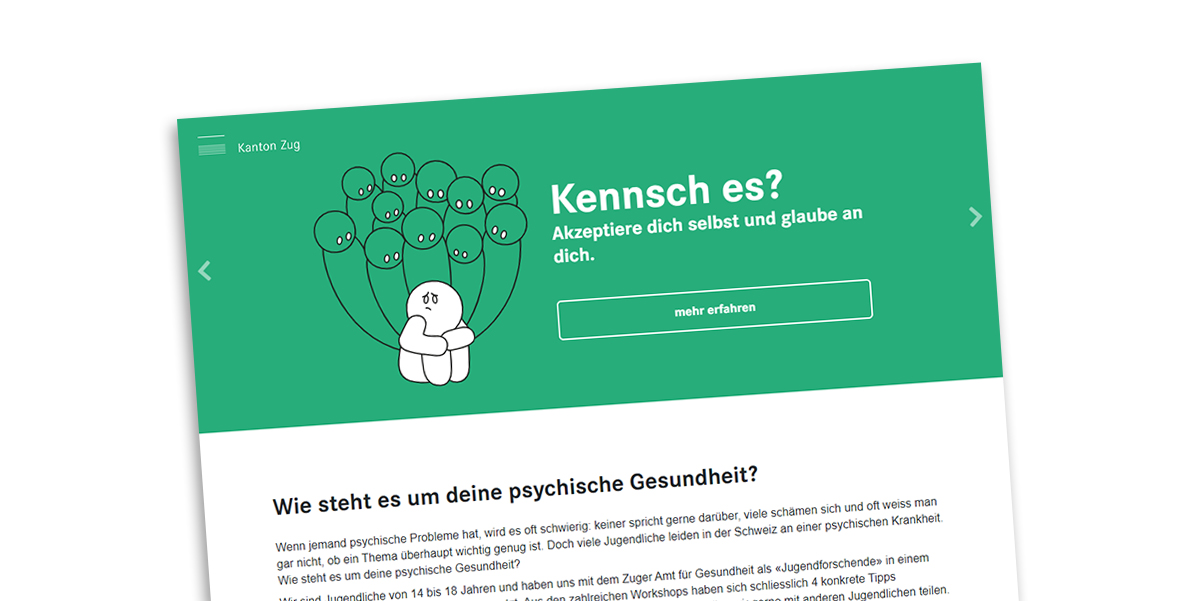
In a participatory youth research project, the Zug Cantonal Health Office investigated the question of what young people do to stay mentally healthy. The Eastern Switzerland agency Advery has now developed a campaign that takes the participatory approach a step further.

advery_sensibilisierung_kanton-zug

In a participatory youth research project run by the Zug Cantonal Health Office, 14 to 18-year-olds - known as youth researchers - investigated the question of what young people do to promote and maintain their mental health.

With a financial contribution and the support of the J&K Wonderland Foundation, the research team wanted to find out what situations and reasons there are that are good or not good for young people - and what strategies they use to be or remain mentally healthy. The Lucerne School of Social Work (HSLU) supported the office in the research process and in the implementation of the project.


Campaign for young people by young people

The project team led by Olivier Favre and Michèle Omlin from the Canton of Zug's Office of Public Health has now taken the idea of participation a step further. Together with Advery, which itself trains young people with mental health problems to become graphic designers and mediamaticians, an awareness-raising campaign on mental health has been developed.

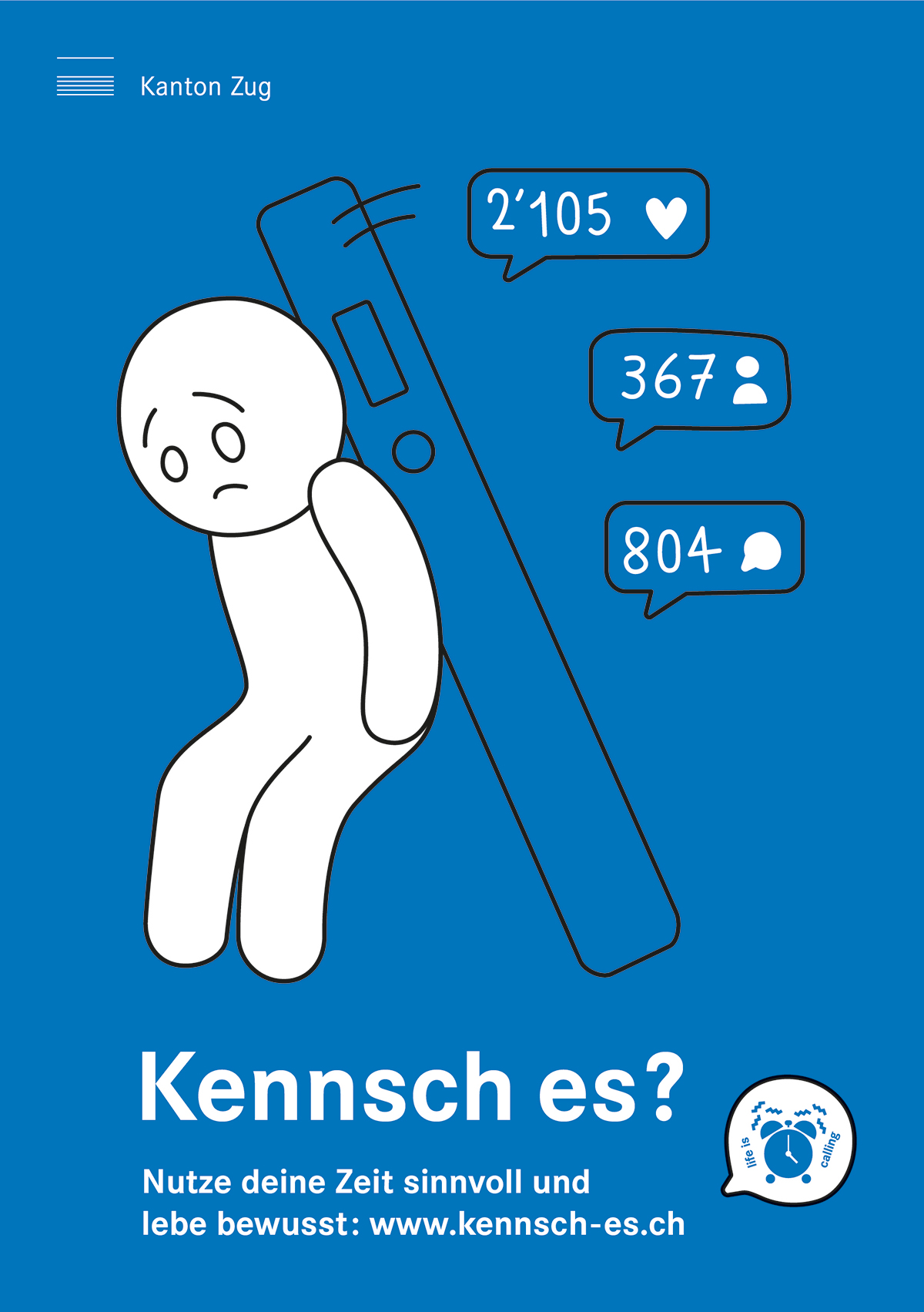
The campaign uses eye-catching illustrations and animations to draw attention to the four tips from the youth researchers. "The campaign was deliberately developed by young people for young people. The style and approach correspond to the needs and expectations of young people - this was important to us during implementation," explains Olivier Favre.


Four everyday situations as a starting point

The campaign is based on the question "Do you know it?", which, together with a dramatized illustration, is intended to draw young people's attention to a typical everyday situation. From December, the four main subjects can be seen at various locations in the canton of Zug - for example at selected poster sites, on buses and in Zug cinemas. In addition Know-it.ch a website with further information and links to specialist and advice centers.

advery-kennsches

Why customers will continue to store in stores in the future - despite online shopping

Shop online or browse in-store? The answer is: both. Online shopping offers a wide selection and flexible shopping, while in-store shopping provides customer service and a unique shopping experience. These findings come from the latest «Value of a Visit» study by the location platform GroundTruth, for which over 1,000 people were surveyed about their purchasing behavior between August and September.

sfw1

The study conducted in Germany shows that customers love shopping in stores: only ten percent of respondents agree that they will buy all the products they want online at some point. 50 percent would be disappointed if their store were to close. 56% also like to tell their friends and family about their shopping experience, whether good or bad. 55% decide on the basis of their experience whether they will continue to visit a store. An important link to the online world: 59% of customers research products online before buying in-store, 32% do so occasionally. When buying a car, as many as 73 percent research online first.


Why customers buy online: Choice, flexibility, convenience 

The majority of respondents (over 60% in each case) appreciate the flexibility of shopping online, regardless of opening hours, and being able to compare prices. More than 50 percent each like the wider range and the flexibility of location. Half of those surveyed are also inspired by other products when shopping and also value online product information and reviews. Women value these advantages more than their male counterparts. Incidentally, online shoppers are currently more likely to use their desktop than their mobile device, with one in three using both.


Why customers buy in-store: Experience and trust

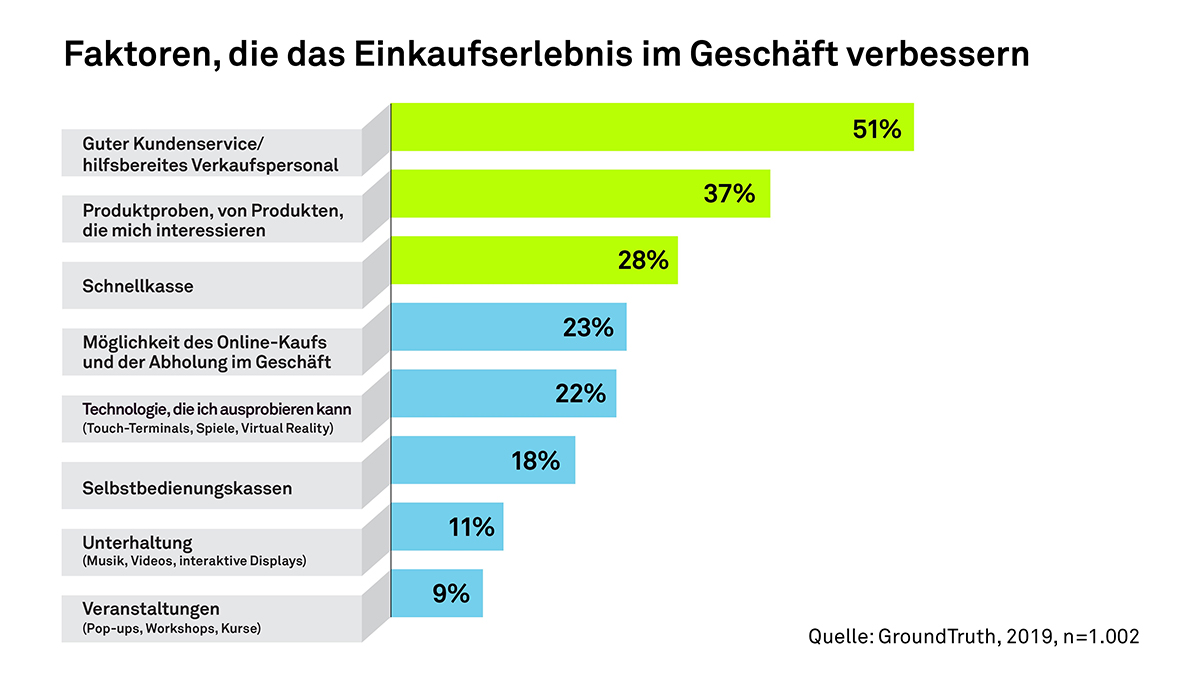
Despite all the online flexibility, over 60 percent of respondents are bothered by shipping costs, around 55 percent complain about waiting times and 41 percent report shipping problems. No wonder that almost three quarters of bricks-and-mortar shoppers (73%) appreciate being able to see, touch and take products directly from the store. Over 40 percent like the ease of returning products and also like to be inspired by other products in the store. Women generally appreciate these benefits more than men. At the same time, 35 to 65-year-olds prefer to "stroll around" and browse than the younger clientele aged between 18 and 35. But even die-hard online shoppers are drawn to the store on certain occasions: 60 percent are tempted by special sales, 39 percent visit stores during vacations and 37 percent store for gifts. For 29 percent, shopping is also a social experience with friends and family. Young people in particular also like entertainment and events in bricks-and-mortar stores. However, bricks-and-mortar retail is also ahead in terms of advice and trust: good customer service is important for half (51%) and 37% value product samples.


Come, see, take away: Products for daily use 

Everyday products in particular tend to be purchased over the counter. Around 90% of respondents prefer to buy food and personal care products in stores, while the figure is over 80% for household items, 58% for furniture and 49% for cars. Clothing, on the other hand, is already bought online by over 30%, and the same number use online and offline channels equally. Electronic items, on the other hand, are ordered online by 56%, with 21% using both channels. Incidentally, customers generally spend similar amounts online and offline.

Johannes Paysen, Country Manager Germany at GroundTruth, sums up: "Our study shows that most respondents will maintain their purchasing behavior in the future. The last few years have clearly shown that offline retail remains profitable and popular. More and more online retailers are opening brick-and-mortar stores, such as Mister Spex and Notebooksbilliger.de. They have understood that dovetailing online and offline can be used to exploit the advantages of both options."

About the study

In August and September 2019, 1002 Germans between the ages of 18 and 65 were surveyed in an online panel about their online and offline purchasing behavior as part of the "Value of a Visit" study by GroundTruth.


Meta Design sends Swiss Mountain Aid into the future with a new appearance

Schweizer Berghilfe has recently launched a completely revamped brand and is positioning itself for a mountain world that is changing with the times. MetaDesign is responsible for the implementation.

MetaDesign-Schweizerberghilfe-headergif

The economic and demographic conditions in the Swiss mountain regions are changing. Schweizer Berghilfe is responding to the new reality in its area of influence by sharpening its brand positioning.

As part of this process, MetaDesign rethought the entire website and developed it from scratch. The typography and the new logo cite trail markings and shapes that have been familiar to the Alpine regions for centuries. An anchoring in the mountain world, which should also be expressed concisely in terms of color.

At the same time, the elements of the new brand identity are constantly being recombined on a modular basis. For cross-media applications that set communicative signals for the entire mountain world.

Alexander Haldemann, CEO of MetaDesign: "Schweizer Berghilfe makes a tireless and valuable contribution to society by supporting the mountain regions. We are very happy to play our part in ensuring that this work continues to be fully recognized in the future."

meta-design_schweizgerberghilfe

Rosarot runs for Sponser

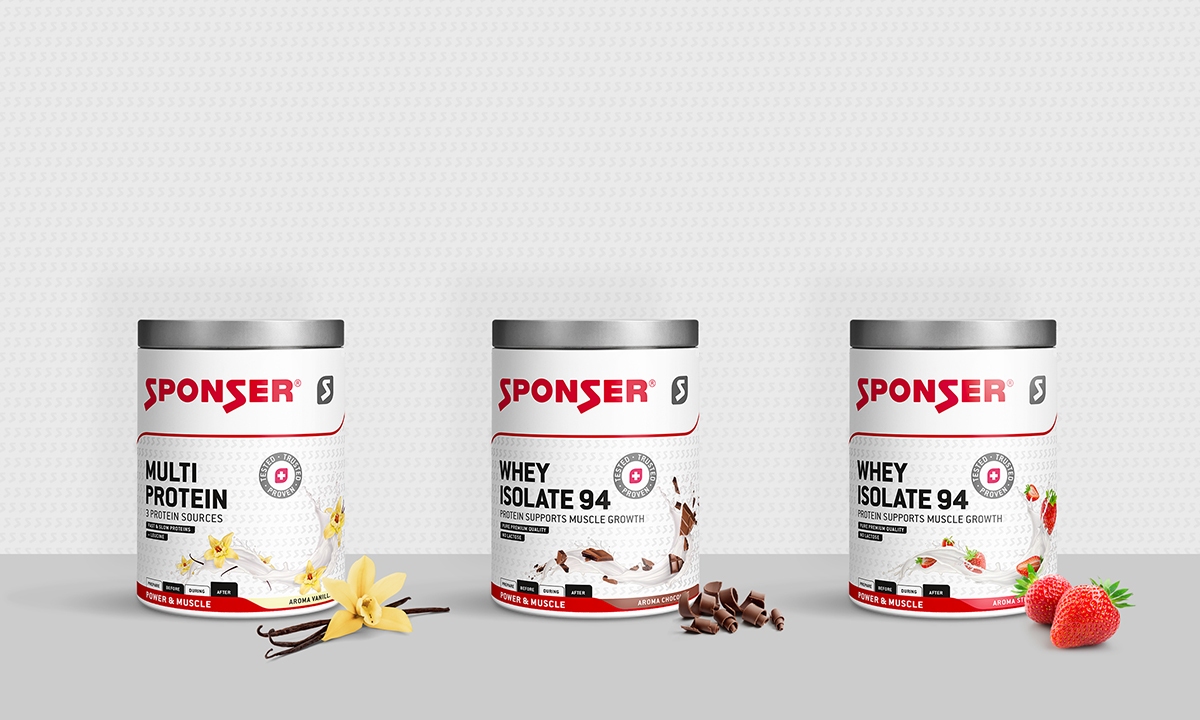
The Zurich-based agency Rosarot has revitalized a packaging subline for a selection of products from the Swiss sports nutrition manufacturer Sponser, based in Wollerau, Canton of Schwyz, available at Migros, and designed the new high-protein sparkling beverage.

Mockup_01

Rosarot was commissioned with a revitalization to increase the sales figures of the Sponser product selection on the Migros shelves. The brief was to optimize the design as part of Sponser's brand visibility to attract more attention and tell a tasteful story about the packaging. Overall, the products were to appear much "foodier", more appetizing and less technical.

Mockup_02

New lifestyle from the can

The agency has also given a completely new product, "Whey Protein Sports Water", a refreshing look.

Mockup_03

Responsible at SponserYvonne Forster, Remo Jutzeler (Project Manager). Responsible at RosarotRené Karrer (Creative Direction); Andrea Bissig (Art Direction); Florian Klein, Andreia Marques (Graphic Design); Stephanie Steimer, Flavia Hänni (DTP).

Switzerland's largest Advent calendar is digital

With 550 hotel rooms, the Sursee Campus is the largest conference hotel in Switzerland. So it stands to reason that Walder, Werber is thinking big when it comes to his Advent calendar, too.

sursee

With a digital and interactive web special that has not 24 doors, but 550 of them. If you are lucky, you will find attractive prizes behind the doors of the online Advent calendar. The campaign is aimed just as much at selected guests of the seminar hotel as at the general public, who have been involved via online and social media channels. Another highlight: At the reception, there's the Advent calendar as a huge 3D installation, where visitors can also try their luck on site. "At our Sursee campus, we always want to surprise and inspire our guests," explains Martin Schmid, marketing manager of the seminar hotel. "And walder,werber has succeeded in doing that with their idea. The start was fantastic and we already had a very big impact with the campaign in the first few days." 

Click here for the largest Advent calendar in Switzerland.
 

Responsible at Campus Sursee Seminar Center: Martin Schmid (Marketing Manager). Responsible at Walder,Werber: Sandro Walder (overall management), Anna Kindlimann, Stefan Moeschlin (creative direction), Manuela Schlumpf (consulting), Benjamin Kocher (digital management), Lea Baldinger (art direction), Flurina Decasper (text), Laurin Waller (programming), Corsin Kessler (production).

Marcus Hebein leaves Keystone-SDA

Marcus Hebein is leaving Keystone-SDA in December. Over the past ten months, as head of the multimedia newsroom and editor-in-chief, Hebein has done important groundwork for the newsroom of the future and would like to focus on his own media projects again in the future.

keystone-sda

Marcus Hebein joined Keystone-SDA in March 2019 as head of the multimedia newsroom. Previously, Hebein was deputy editor-in-chief of the Austrian news agency APA, where he was responsible in particular for building up multimedia editorial services and workflows. 

Hebein has put this knowledge and his experience at the service of Keystone-SDA over the past ten months and thus contributed significantly to the development of the newsroom of the future, according to the statement. During this time, the live and real-time services in text and video were developed and transferred to operational use, and the multimedia blog was set up as a new element of the basic service. 

During this time, important steps were also taken to integrate text, images and video spatially and organizationally in the newsroom at the Bern Wankdorf site. The set-up phase of the newsroom has thus been completed.

get_footer();