Karling and Sihlcity say "Welcome Back

The Zurich-based agency Karling has launched a reopening campaign for Sihlcity.

Sihlcity

After weeks of lockdown, stores, hairdressers, fitness centers, etc. are allowed to reopen - gradually and, of course, in accordance with the FOPH's hygiene recommendations. With the reopenings, some normality is finally returning to people's everyday lives. Because for many, their hair is already far too long, their muscles far too flabby, and their closet could also do with a few updates.

The gradual return to normality gives everyone a good feeling. That's why Karling has created a motto and a look for Sihlcity that express this joy: Welcome Back with a Heart. The reopenings of the stores are promoted with social media posts that tell with a smile why people are so excited about the return of the hairdressers, florists, fitness trainers and co. In addition, posters, e-boards and floor stickers in the form of oversized doormats are being used. Two distribution campaigns for employees and visitors round off the appearance.

Sihlcity

Responsible at SihlcityMarianne Guldimann, Jessica Graf, Corinne Wiederkehr. Responsible at KarlingRolf Helfenstein, Verena Bernasconi, Daniel Serrano, Patrick Suter, Gjin Paloka. Implementation Visual: Kattphatt.

Anti-bullying campaign: Back to school - Back to normal?

In the social media campaign «Back to school. Back to normal?»—which launched on May 15—the German anti-bullying campaign «Stoppt Mobbing,» led by prevention coach Carsten Stahl, and the creative agency Havas Düsseldorf are challenging the status quo.

Kampagne

The film produced for the project not only shows the underestimated confrontation with the issue of bullying. It is equally an appeal to use the time after the Corona crisis to create a new and better "normality" in which bullying no longer has a place.


Eric Schoeffler, CCO Havas Germany: "The film first outlines what is on the minds of the majority when it comes to "Back to school": The joy of returning to an old, familiar normality. However, a normality in which children are exposed to physical and psychological violence every day. We must not accept such conditions in schools. And that's why, with this film, we want to get the ball rolling to define a "new normal" for behavior in schools."

Kampagne

Credits:

Client: Carsten Stahl, Stoppt-mobbing.de
CCO Havas Group Germany: Eric Schoeffler
Creative Direction: Tobias Rabe, Tobias von Aesch
Copywriter: Leonid Ryazanskiy
Art Direction: Alex Aussem
Account Direction: Sofia Panek
Agency Producer (Film): Judith Löhe
Film Production: Studio6
DoP & Editor: Marcelo Alves
Audio Production: Audioversum

Screenforce study: Digital natives believe TV advertising

The Swiss Screenforce study shows that young adults between the ages of 16 and 29 not only pay close attention to TV commercials—but also place a great deal of trust in the content of those commercials. And this is despite the fact that they also make heavy use of other video platforms.

Digital Natives

Consumption of moving images is changing: Today, users watch their favorite series not only when and where they want, but also on the channel that suits them at the time. This change in usage habits automatically leads to a fragmentation of advertising channels. The big challenge for advertisers is to maintain an overview here. Today, some marketing departments are rightly asking themselves how and where the advertising budget should be invested. In this context, it is worth asking on which moving image channel the desired effect is achieved and the advertising message sticks.

The big challenge for advertising planners is the poor comparability of advertising effectiveness KPIs. Leads, conversions, last-click attribution or recall can hardly be lumped together in one and the same pot. Branding effects are often completely left out of the equation. A comparison of advertising perception on the different platforms is a good idea.

TV "reaches the young most effectively"

In addition to TV, Netflix, YouTube, Instagram and Facebook play an important role in the everyday lives of young adults aged 16-29. The Swiss Screenforce study* asks how digital natives perceive advertising on these different channels.

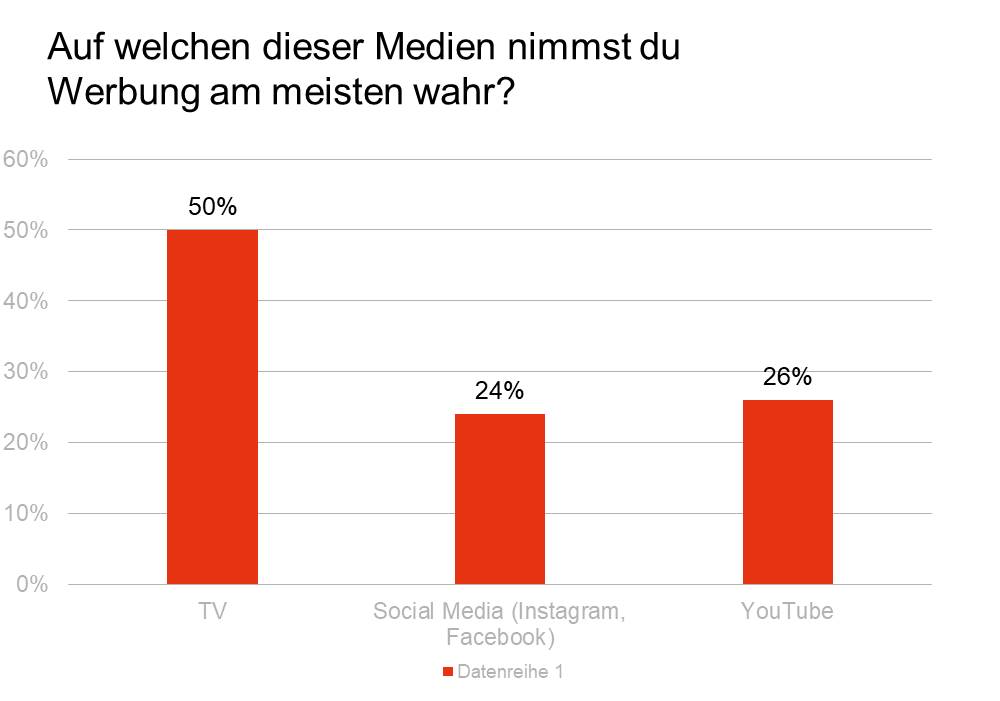
If you ask this generation where they perceive video advertising at all, TV comes out on top. Half of the respondents say they see advertising mainly on TV. In contrast, the perception of video advertising on YouTube is around a quarter, and the remaining 25 percent are distributed across Instagram and Facebook.

TV advertising "tells a story best"

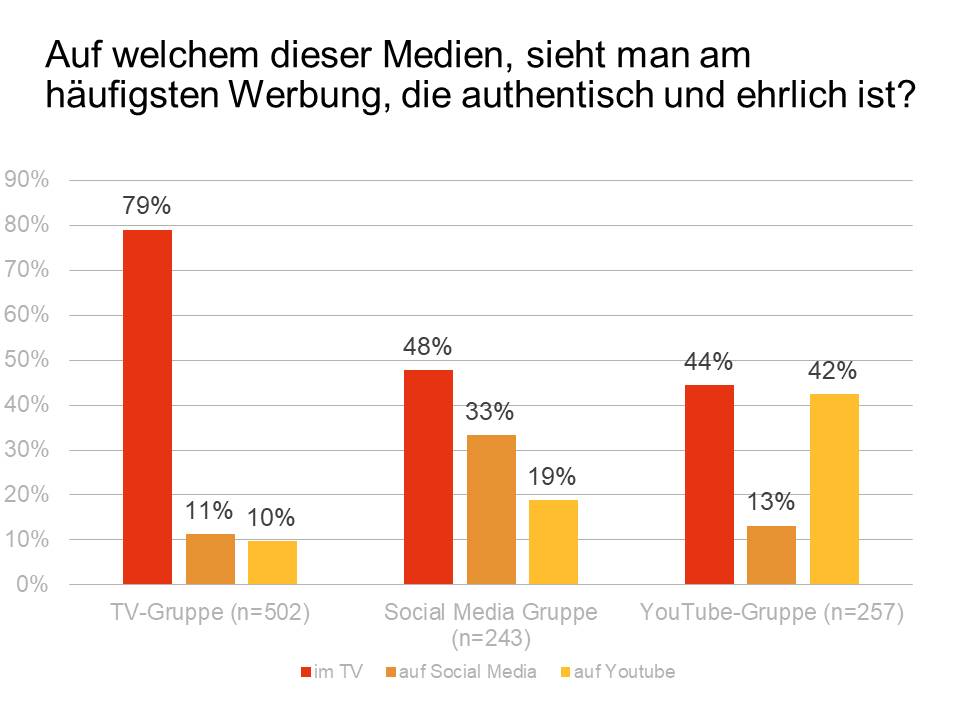
Of course, advertisers are not only interested in whether their advertising is perceived at all, but also how it is perceived, whether the advertising triggers something in the person watching it. Here, too, TV comes out on top in the Swiss Screenforce study. 91 percent of the people surveyed who see advertising primarily on TV say that the quality of advertising on TV is the highest compared to the other channels. 78 percent of these people believe that advertising on TV tells a story. 79 percent believe the advertising on TV because they say that TV advertising is authentic and honest compared to advertising on the other channels.

"Greater credibility on TV"

If we now ask which companies are rated as credible, the following results stand out: Companies that drive TV advertising are basically rated as credible by many. 38 percent of young adults subscribe to this. Whereas companies that run ads on YouTube are rated as untrustworthy by 45 percent of respondents.

* Screenforce Switzerland Study 2019, basis: n=1004 respondents aged 16-29 The representative survey was supplemented with qualitative individual explorations (n=18). The answer options were derived by the research institute from the qualitative part of the study. In addition to TV, Facebook, Instagram, Facebook and YouTube are perceived as moving image media. Other channels, such as video on news sites, are not yet perceived as a channel of moving image. The study was conducted by the research institute "Happy Thinking People".

Bild1_Screenforcestudie
Bild4_Screenforcestudie

Switzerland is thinking positively again

The OMG Corona Tracker is conducting a series of surveys to examine how Switzerland is experiencing the COVID-19 crisis, the lockdown, and the reopening. The latest figures show that optimism is returning among the Swiss population.

Now that the first exit measures from the lockdown have been implemented, optimism is spreading among the Swiss population that they will soon return to a new normal. At the same time, however, people are adjusting to longer-term consequences of the crisis. Concerns about health, jobs and the future are on the decline again. Only 27 percent (vs. 43 percent before Easter) are still concerned about family health. Only 11 percent (vs. 21 percent) say they are worried about the overall situation.

denkt wieder positiv

However, more people expect long-term effects than before the holidays (59 percent versus 50 percent). On the one hand, positive consequences are expected, such as advancing digitization, the establishment of home offices and thus, for many, the opportunity to spend more and more consciously with their families, but on the other hand, the Swiss also expect negative changes, especially restructuring in the labor market, loneliness among older people and psychological disorders.

Attitudes toward daily shopping reflect the developments of recent weeks very well. After hoarding purchases and self-restraint, people subsequently avoided rush hours and went to only a few stores. In the meantime, however, behavior is moving back toward "normality." In online grocery shopping, the number of decliners has continued to rise, while the number of potential new customers has fallen.

denkt wieder positiv

"All in all, there seems to be a growing feeling among the population that the situation in this country is well under control and that people have kept to the restrictions long enough, but that it is now time for more freedom. Switzerland wants to become "normal" again. The fourth wave of our study, in which we examine the consequences of the first loosening of restrictions, will show to what extent this has been achieved," says Michael Selz, Head of Insights at Omnicom Media Group, who is responsible for the study.


About the study

The OMG Corona Tracker examines in several survey waves how Switzerland experiences the Corona crisis, the lockdown and the reopening. So far, 3 waves have been conducted in late March, early April and late April. Further waves are planned.

Swiss Filmmakers implements "Collection Lockdown" project

The «Collection Lockdown» by Swiss Filmmakers is a project that emerged during the time when COVID-19 drastically changed our daily lives. Many industries came to a standstill, and no one knew what the future held. The same was true for filmmaking.

Collection Lockdown

Based on an idea by the French-speaking Swiss producer Frédéric Gonseth, the "Collection Lockdown" concept was created together with Anne-Laure Daboczi, the Swiss-German producer Michael Steiger and the Ticino producer Michela Pini. The project aims to enable Swiss filmmakers to contribute their personal artistic interpretation to this extraordinary situation.


Great response, lots of support

The concept was submitted to all Swiss filmmakers in the form of a competition. Despite the short submission period of less than a week, the response was enormous: over 80 filmmakers submitted their ideas.

Thanks to the support of SRG SSR/SRF/RTS/RSI, the Federal Office of Culture and Cinéforom, it was possible to realize 33 film projects from all parts of Switzerland. The entries were completed on schedule within 16 days using the filmmakers' existing resources.


Available online

The films have been available on SRG SSR's online platforms and social networks since May 11, 2020 - and have been very successful. The Swiss-German films were watched by over 10,000 people late on Wednesday, which is an above-average number of viewers for this time of day.

"Never before has a project been initiated and implemented nationally in such a short space of time," says producer Michael Steiger. "The Covid crisis has brought us all closer together. We got this project up and running together quickly and easily. It was an adventure and a great experience that we wouldn't want to have missed."


Keystone-SDA focuses on news and separates from PR

In the future, the Keystone-SDA news agency will concentrate on its main business: multimedia news in three national languages. The public relations and corporate production divisions are to be sold or spun off. This should, not least, pave the way for further funding.

Keystone-SDA

With the strategy adjustment, the board of directors wants to secure the future of the news agency, the company announced on Thursday. The agency, like all media companies, has been in a state of great upheaval for some time. The difficult situation of the entire industry was again strongly aggravated by the Corona crisis.

Therefore, the agency is to concentrate on its core business. The production of independent, multimedia news content in three national languages "is and will remain an indispensable part of the basic media supply in Switzerland," the statement said. Sports is also an important element that will be continued, it added.


Sell or outsource PR

On the other hand, the company intends to dispose of other business areas as part of its new strategy: The PR and Corporate Production divisions are to be sold or spun off. With the adjusted strategy, the Board of Directors wants to create the conditions for the national news agency to receive further promotion. The Board of Directors is convinced that Keystone-SDA should remain a full-service multimedia agency, the company writes: "The basic supply of news to the Swiss media is of central importance, especially in times of crisis."


Goodwill in politics

In mid-April, the Federal Council decided to provide greater support for the news agency in the future. The federal contribution will now amount to a maximum of four million Swiss francs per year instead of the previous two million. This is linked to a clearly defined performance mandate.

In their special session at the beginning of May, the Swiss parliament also adopted proposals for bridging aid to the media in the Corona crisis. These include temporary funds to enable the Keystone-SDA news agency to provide its basic text service free of charge to Swiss media customers in the national languages of German, French and Italian.

Keystone-SDA was created in 2018 from the merger between the Swiss Dispatch Agency SDA and the picture agency Keystone. The restructuring led to the elimination of 36 of the total 150 editorial jobs. The announcement of these cuts was followed by a labor dispute in early 2018 with a strike lasting several days. (SDA)

Serviceplan Suisse strengthens its management

Marcin Baba, Gaël Fuchs, Sonia Ducu, and Kerstin Schnyder, together with Pam Hügli and Raul Serrat, make up the newly formed executive team at Serviceplan Suisse.

Serviceplan

The first group picture of the newly established management of Serviceplan Suisse - in compliance with the social distancing rules.


The agency has grown strongly since it was founded seven years ago and now employs seventy people. Partners Pam Hügli and Raul Serrat want to invest even more resources in the future to bring their personal values to the agency. The expanded management team with its various professional competencies is intended to support them in this endeavor.

In the composition of the management team, care was taken to ensure that the chemistry was right as well as the qualifications. Pam Hügli explains: "Over the last few months, Raul and I have been working intensively on filling the new management team with the right people. We recruited the new management team from our own ranks and completed it with fresh, external people."

The management team from various disciplines is now made up of partners Pam Hügli, CEO, and Raul Serrat, Chief Creative Officer, as well as the new Executive Board members Marcin Baba, Executive Creative Director, Gaël Fuchs, CFO, and Client Service Directors Sonia Ducu and Kerstin Schnyder. Pam Hügli is particularly pleased: "the gender ratio is still 50:50; we advertise for all people, so we also want to have the views and competencies of both genders represented on the Executive Board."

Wunderman Thompson and UPC connect people in time of crisis

The #stayconnected campaign by Wunderman Thompson conveys the message: UPC is doing everything it can to make the current situation easier for its customers with the best services.

UPC

The coronavirus crisis is presenting people and companies with new challenges and making a reliably fast internet connection a fundamental necessity. After all, people want to stay connected with their loved ones and be able to work from home. UPC sees it as its duty as a partner to make the crisis easier for its customers. To communicate this, Wunderman Thompson implemented a multimedia campaign in a very short space of time.

Already at the beginning of the coronavirus lockdown in Switzerland, UPC increased the bandwidth to 100 Mbit/s free of charge for all customers who currently have a subscription with less than 100 Mbit/s... A clear step that shows that UPC actively supports our modern remote society. To create awareness for this, Wunderman Thompson developed a campaign within days under the hashtag #stayconnected.


"Together like never before, thanks to the UPC Giganet"

The main element of the campaign is an online video message that picks up on life in the current situation and communicates the emotional and social benefits of UPC as a reliable partner in this situation. "The idea of "Together like never before" is not only a central element of the campaign, but was also reflected in the way it was created: in very close collaboration within the agency, with the client and production. And all from the home office. A very special experience," says Swen Morath, CCO at Wunderman Thompson Switzerland.

UPC customers will not only be able to benefit from an Internet connection of up to 1 Gbit/s throughout Switzerland. UPC has also activated all children's channels and five Premium Plus channels free of charge for all customers. These benefits are the core message of the national #stayconnected print campaign.


Responsible at UPC: Nikki Constantine (Director Brand, Media & Communications), Laura Ballestrin (Manager Marketing Communication), Graziella Gut (Marketing Communication Manager).
Responsible at Wunderman Thompson: Swen Morath (Chief Creative Officer), Sandro Tschuor (Business Director), Sara Runggaldier (Account Manager), Davide Schenker (Art Director), Christian Schirmer (Copywriter), Julian Riegel (Copywriter).

Ruf Lanz gets VBZ back on track after lockdown

The Ruf Lanz agency is supporting its long-standing client, VBZ, with several creative initiatives.

VBZ

Life in Zurich is slowly picking up again. This also means that the VBZ are running at regular intervals again. But after the long weeks at home, the memory of which streetcar line has which color may have faded a bit. That's why VBZ is refreshing the memory with an entertaining streetcar line quiz on Facebook and Instagram, designed by Ruf Lanz. Four streetcar lines are depicted on each of four subjects, one of which is always in the wrong color. The quiz is currently attracting a gratifying number of followers.

To ensure that streetcars and buses reach their destinations not only on time, but also safely, VBZ is also showing its colors when it comes to rules of conduct. They recommend that their passengers wear a mask. Especially when the minimum distance of two meters cannot be maintained. The Cobra is setting a good example with a custom-made mask. This was cooked up internally by VBZ and lovingly implemented within a few days. Eight of these masked Cobras are currently on the road in Zurich. They have been picked up by numerous media and have become a popular photo motif among the people of Zurich. Ruf Lanz supports the VBZ with a full-page ad in 20 minutes in the additional dissemination of the important message.

VBZ

Responsible at VBZ: Corporate Communications Team. Responsible agency: Call Lanz.

How does Covid-19 affect markets and buying behavior?

The COVID-19 pandemic is having a significant impact on market trends worldwide. GfK has examined, from both a market and consumer perspective, how COVID-19 is affecting the Swiss retail sector as well as consumer purchasing behavior and attitudes. In addition, GfK experts provide an outlook on the post-COVID phase.

GFK

In the two months (March/April) that were affected by the lockdown, there were many negative areas as well as top performers. Nonfood retail suffered the most. The apparel, optical, and furniture and garden sectors all saw sharp sales declines. So did products related to travel, as they continue to face great uncertainty. 26 percent canceled or abandoned their travel plans. This is largely due to the fact that more than half of the Swiss fear that the borders will remain closed for at least another two months.

Health and hygiene products such as thermometers and disinfectants, Sport@Home products such as fitness equipment, and technical consumer goods for the home office and homeschooling benefited strongly. There was also growth in games, children's play equipment and electronic games and gaming devices.


New ideas and concepts in retail trade

While retailers have reached their capacity limits during the lockdown phase, new ideas and concepts have emerged in the stationary retail sector. There are regional SME initiatives with the intention of a joint customer approach and service offers as well as many individual concepts such as online 1:1 life consulting, click&collect or home delivery services from industries that had not practiced this before.


Changeover to "Home" also led to additional expenses

In the GfK Consumer Pulse survey, just under half (48%) of the Swiss said they had spent less money than usual during the lockdown in April. However, high-income earners or families with children spent more money than usual in some cases, especially on the products in higher demand mentioned above.


Dealing with the virus

The perceived threat from the virus is diminishing. More than half of the Swiss believe it is unlikely that they will become infected - especially those over 60. The vast majority nevertheless adhere to hygiene measures: wash their hands more often (76%) and avoid contact with other people (70%).

More than half of the Swiss believe that a second wave is quite realistic.

The Swiss feel well informed about the virus and the regulations and restrictions that apply in each case, but the proportion of people who feel very well informed about the virus and the measures is shrinking.


Outlook for the "new normal

Existing trends will intensify. Despite certain adjustments, attitudes and purchasing behavior will not change fundamentally. Ecological issues and also other customer needs will remain relevant.

More than half of the Swiss think that "work from home" will continue to be part of everyday life in the future. This brings with it certain changes in consumer and purchasing behavior.

Just under half of the Swiss expect to spend less money, 32 percent want to use delivery services more often and 27 percent avoid shopping in large malls.

The current crisis is the beginning of probably the biggest global recession in generations, bigger than the financial crisis in 2008/09 (IMF 14.04.2020). The lockdown measures are affecting not only retail trade worldwide, but a wide range of sectors, such as industry, banking, aviation, tourism and many more (OECD 27.03.2020).

An internal GfK study (GfK Europe POS Tracking) on the performance of Tech & Durables brands in Europe during and after the financial crisis shows that the future success of a brand is decided during such a crisis. Brands that made the right investments during the recession and thus increased their market share were able to maintain their competitive advantage in the decade after the crisis. Accordingly, it can be assumed that the onset of the new normal is the ideal time to review the target direction of marketing investments.

Information about the studies

The data presented in this article are taken from:


GfK COVID-19 Consumer Pulse Study

Study on consumer behavior, attitudes and values during the Corona lockdown. Online survey of 500 people each from German-speaking and French-speaking Switzerland per week for four weeks in April 2020.


GfK Market Monitor

GfK Markt Monitor Schweiz is a service provided by GfK Switzerland in collaboration with over 40 major Swiss retailers. These account for around 50 percent of total retail sales. Specialty retail is not integrated.

Ueli Weber is the new Managing Director of Media Focus

As of May 1, Ueli Weber has become the new Commercial Director on the executive board of Media Focus Switzerland and has assumed operational leadership of the company.

Media Focus

Together with his team, Ueli Weber will add products and services to Media Focus' existing media and advertising presence solutions in the Swiss market, expanding the digital product range in particular.

He has over 20 years of experience in digital and traditional advertising and communications. Most recently, he spent almost seven years at Argus Data Insights, where he was responsible for sales, analytics, marketing and language services and was a member of the Executive Board. Previously, he was COO and deputy CEO of Publimedia and CEO of the digital agency Web2com. He is Honorary President of the online industry association IAB (Interactive Advertising Bureau) and Vice President of the Chief Digital Club Switzerland (CDO Club).

Save the Children Switzerland shows that the coronavirus crisis also affects children

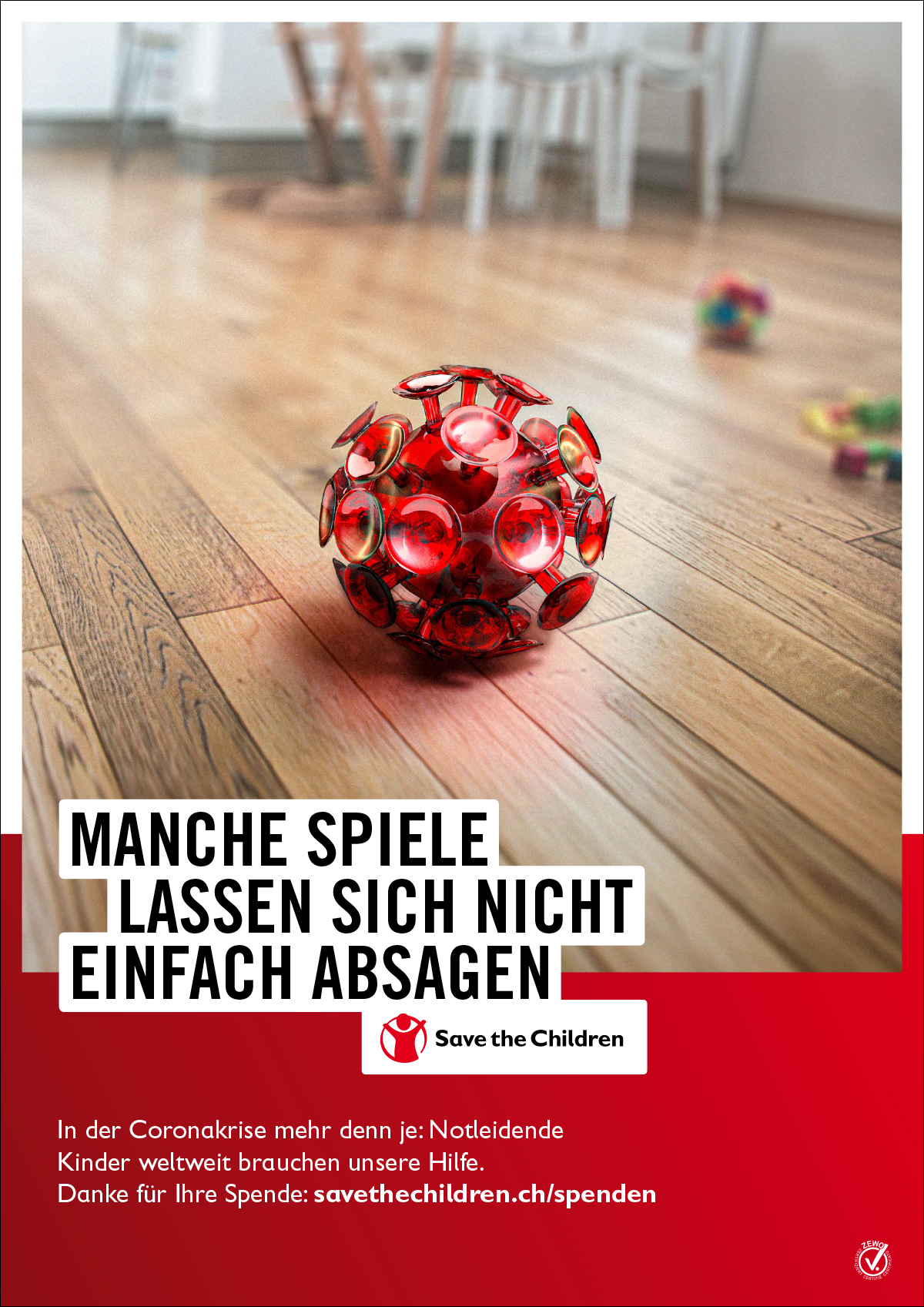
Save the Children Switzerland is launching a new campaign to support children in need. The children's rights organization is drawing attention to the fact that children around the world are being severely affected by the coronavirus pandemic.

Save the Children

The NGO Save the Children is now stepping up its commitment with an awareness campaign created in collaboration with freelance copywriter and concept developer Dieter Boller

The measures taken by the authorities to contain the coronavirus pandemic are numerous and range from calling on people to stay at home to canceling the European Football Championships and the Olympic Games. However, measures are not so easy to implement in all areas of society. Orders such as lockdown and stay-at-home orders are particularly problematic for families who have to worry about their income and food every day.

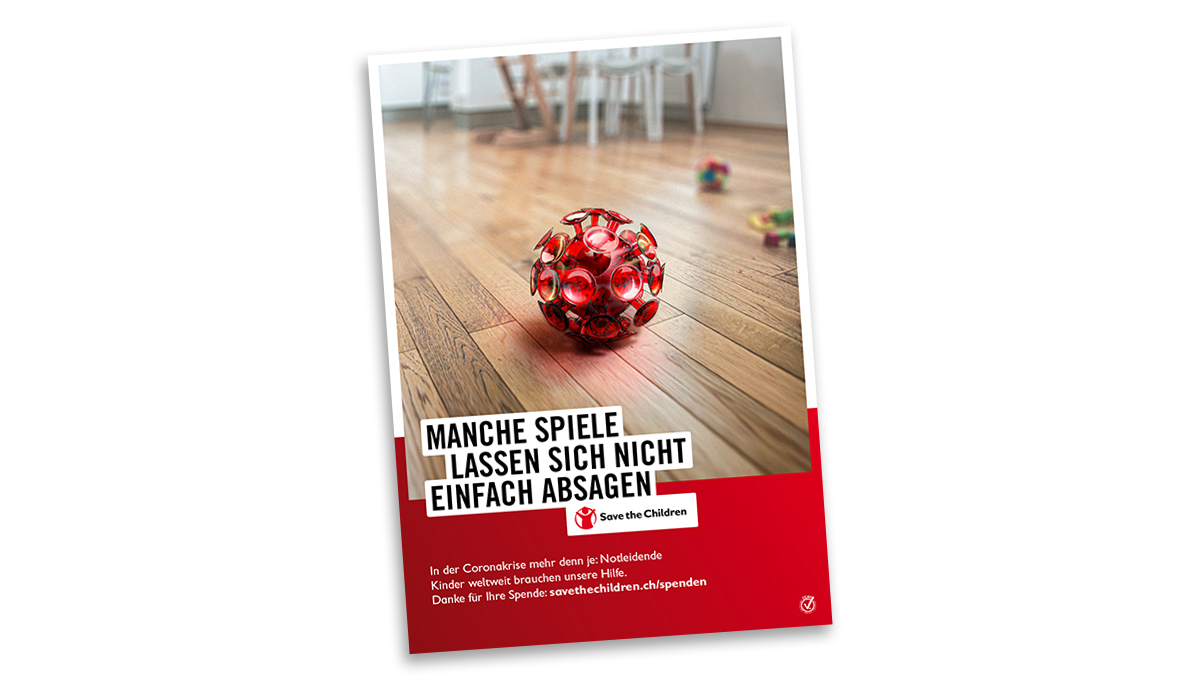
Even in times of corona, children must have space to play and learn. The campaign's key visual alludes to this insight, showing the virus as a plaything and thus expressing the immediate concern of the children.

The campaign, which was created on a pro bono basis, is expected to be seen in Swiss print media in the next few days and will be distributed digitally with an animated key visual in a second flight. In addition, the advertising material will also be shared with the international "Save the Children" network and may be used in other countries.

Save the Children

Responsible at Save the Children SwitzerlandLea Bachmann (Director of Philanthropy). CreationDieter Boller (text, concept); Lukas Wietlisbach (art direction, CGI).

get_footer();