Petition launched against advertising screens and illuminated columns in Zurich

IG Plakat/Raum/Gesellschaft has launched a petition on Schoenes-zuerich.ch against the City Council's decision to install ten advertising screens and thirty rotating light columns on public property.

In March, Zurich City Council decided to build ten advertising screens and thirty illuminated rotating columns in public spaces in 2016. Financed with over one million francs of taxpayers' money, as detailed in a press release on Monday. "The city council is thus breaking a taboo, as advertising screens were not permitted in the past. The city council is ushering in a new era of privatization of public space through outdoor advertising that will be irreversible," the press release continues. The basis for the city council's decision are two Street surveys as well as an unpublished energy balance of the test operation with two screens and five rotating columns. "On closer inspection, the surveys prove to be unscientific and tendentious and manipulative in many respects. Nevertheless, it has been shown that 57% of Zurich residents are of the opinion that there is too much advertising in Switzerland, and as many as 88% in some age groups." After a discussion with city councillor André Odermatt from the Department of Buildings did not lead to a rethink, the petition demanding that the city council dispense with the ten advertising screens and thirty illuminated columns was launched. (hae/pd)

Teaser image: Clear Channel

Wirz Corporate: New brand identity for Wenger Plattner Attorneys at Law

Berne Communication Award 2015 goes to track and field athlete Mujinga Kambundji

Sprinter Mujinga Kambundji has been awarded the 5th Bern Communication Prize. The Bern Public Relations Association (BPRG) is honoring her not only because she runs fast, but also because she communicates in a credible and authentic way.

The award ceremony took place on Monday evening at a ceremony with over 150 guests in the pavilion on the Gurten.

Unbenannt-21_17

Likeable, open, authentic - that's how family, friends and sports fans characterize Mujinga Kambundji. And that's exactly how the Bernese sprinter communicates - in victory and in defeat. At the 2014 European Athletics Championships, she went from being a good track and field athlete to a nationally known personality within just a few days. With her performances and her likeable manner, she thrilled the audience in the stadium and in front of the screen. She mastered her athletic mishap in the relay final with human and communicative bravura: by facing the cameras and the critical questions of the journalists and answering them authentically and convincingly. Cla Martin Caflisch, BPRG president, is impressed by how she mastered the crisis: "Instead of a tragic heroine, she became the queen of hearts and a figurehead of Swiss athletics."

Unbenannt-20_17

Every year, the BPRG awards the Communication Prize to a personality who has achieved exceptional communicative achievements without the corresponding professional training. The prize winner receives a specially created work by Bernese artist Kornel Stadler and demonstrates his or her communication skills in a talk with Ueli Schmezer.

Previous award winners

2011 Steff la Cheffe beatboxer and rapper
2012 Bernd Schildger Zoo Director
2013 Francis Foss Pauchard Olmo founder
2014 Hans Zurbrügg Founder and President International Jazz Festival Bern

The Berne Public Relations Society BPRG is one of the seven regional societies of the national professional association PR Suisse with over 1500 members.


Bell breaks new ground in mobile advertising

Bell is also launching a mobile-native advertising campaign for the grilling season and is now advertising in the shopping list app from Zurich-based startup Bring Labs. Bell aims to use this campaign to specifically target consumers with purchase intent in the steadily growing mobile channel.

Bell Switzerland is the largest meat products manufacturer and one of the best-known brands in Switzerland. The company recently started advertising in the Bring app. The shopping list app is developed by Zurich-based Bring Labs. Bring ("Bring!") offers Bell the opportunity to advertise its products and the Bell brand in a targeted manner in a mobile app. Thanks to Bring, Bell is also one of the first companies to promote its products on the new Apple Watch.

Bell_AppleWatch

The shift from desktop to mobile continues to grow rapidly in the advertising sector. Bring Labs is also following this trend and has recently started offering new, innovative advertising options for brands and retailers in its iOS and Android app. Bring has been working with Bell since May 1, 2015. "The cooperation with such an important company as Bell confirms that we are creating added value for brands with our targeted products" says Marco Cerqui, CEO Bring Labs. "We are very happy to be able to drive this campaign together with Bell. User experience is elementary on the mobile channel. The native integration of the Bell campaign respects the user experience and therefore makes the campaign more credible and efficient."

Bell_Grillliste_Grillfleisch

Consumers use the Bring app to plan their regular grocery and consumer goods purchases. Once in the store, users then shop in Bring based on the products they have selected. "The proximity to the consumer at the time of the purchase decision are advantages that we have only found in Bring in this way." confirms Daniel Kaufmann, responsible for online marketing at Bell. Another important argument of the Zurich-based startup is that consumers always have their smartphones with them. If they see a Bell ad on TV or in a newspaper, the Bell brand accompanies them all the way to their electronic shopping list. This means that multi-channel campaigns can be designed even more efficiently and have an impact right up to the point of sale.

Bell_Leporello_Summer_Goodies

Bring Labs is a Swiss startup based in Zurich. The company develops and markets the shopping list app Bring, one of the most popular apps from Switzerland. Bring is available for iOS and Android and is one of the first apps to support the new Apple Watch and Android Wear watches. Bring's concept differentiates itself from the competition through simplicity, functions for shopping in multi-person households (social shopping) and a high user experience. Bring Labs is already working successfully with several national and international partners from the IT, retail, consumer goods and advertising sectors and will continue to expand these collaborations.

N+S wins Swiss Print Award 2015

With the paperback book "100 things you should have done" created by Jung von Matt/Limmat for Migros, Neidhart + Schön Mediasolutions wins the Swiss Print Award 2015.

On around 140 colorfully illustrated pages, Migros suggested a wide variety of leisure activities for indoors and outdoors, for rain and sun, for young and old in summer 2014. For the summer idea book, Jung von Matt/Limmat came up with 100 tips against boredom (Werbewoche.ch reported). The work comes in a practical paperback format, so that it can be taken anywhere in everyday life. The book lives from the many pictures and illustrations, drawings and ideas. On the other hand, the feel, the many small inserts and the eye-catching panorama pages are inspiring. Printed tattoos that can be applied to any part of the body with a little water, scent cards that let you smell flowers and spices, seed paper that quickly dissolves in the bed and releases the flower seeds contained in the paper - there has been die-cutting, embossing, there are fold-out pages, special colors, varnishes, embossing and much more.

jvm-m-01
jvm-m-02
jvm-m-03
jvm-m-04
jvm-m-05

The Swiss Print Award 2015 is a fantastic journey across the paper landscape with all printing techniques, finishing and postpress ideas. The award ceremony took place on May 7, 2015 in Bern.

IMG_3658

The sponsors of the Swiss Print Award are Druckmarkt Schweiz and Viscom Print & Communication magazines, ASW Allianz Schweizer Werbeagenturen, GIB Zürich Kaderschule, the Academy Club of Skugra and Papyrus Switzerland.

Last but not least: 20 years in the Getty spotlight

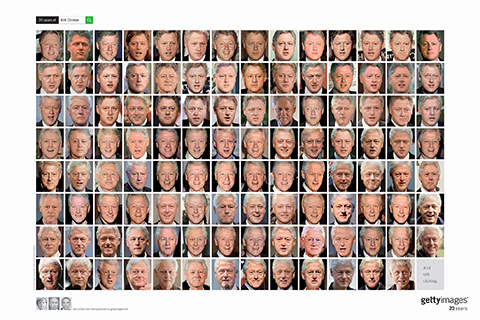
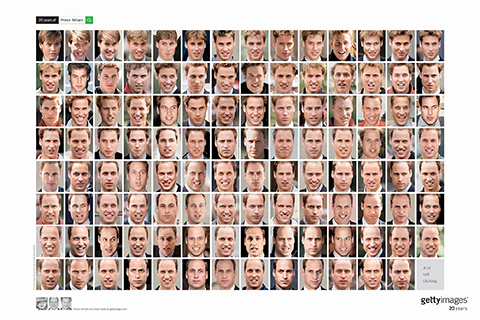
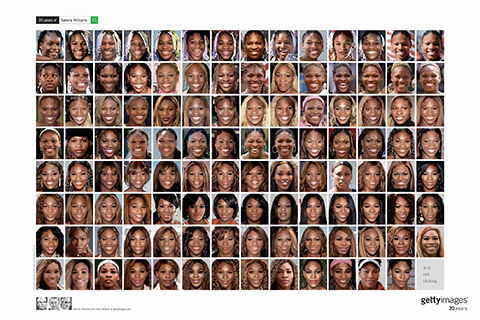
Getty Images is celebrating its 20th anniversary. A global anniversary campaign shows how celebrities such as Bill Clinton and Scarlett Johansson have changed over the years.

The photo agency has collected an incredible 80 million photos over the past 20 years. These include 32,246 photos of Bill Clinton, 54,831 of Serena Williams, 69,480 of Prince William and 23,570 of Scarlett Johansson. The Brazilian agency AlmapBBDO Sao Paulo has worked hard to transform a solid idea into an astonishing result and has neatly arranged over 100 portraits of each celebrity from the past two decades in chronological order. A 100 percent eye-catcher. The surprising conclusion: we are all getting older. And some of our contemporaries actually benefit from a little maturity. Royal hair on the head is overrated anyway. (hae)

SJ
BC
PW
SW

Publicis: Bibi presents Royal Babies in Switzerland with gifts

Publicis and Bibi are celebrating the birth of the royal baby with free pacifiers.

Princess Charlotte was born into the British royal family on May 2. But royal babies are not only born in the United Kingdom. Because every baby is a little princess or prince to its parents. Reason enough for Publicis to use the birth of Her Royal Highness Charlotte for a promotion of nuggis from the Swiss brand bibi: Bibi is giving all princesses and princes born in Switzerland on May 2, 2015 a pacifier. The promotion was launched online on the same day.

bibi_Anzeige_hires_150507

Responsible at Lamprecht: Nadine Lecler (Head of Marketing Baby & Mother Care). Responsible at Publicis: Ralph Halder (ECD), Mathias Kröbl (graphics), Marianne Zweifel, Albert Matzinger (text), Gina Armellino (consulting).


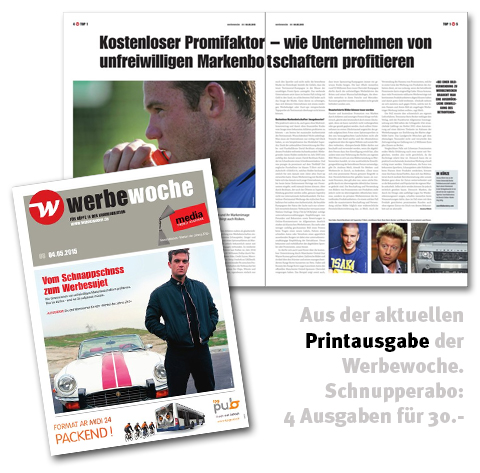
Free celebrity factor - how companies profit from involuntary brand ambassadors

Companies can gain invaluable exposure through famous clients and strengthen their brand image. But relying on the “celebrity factor” for free publicity is a gamble and also carries risks.

Celebrities and successful advertising - a combination that seems to be almost a law of nature for many marketers. At the very least, the number of testimonial campaigns is steadily increasing, as a current Study by CPI Celebrity Performance shows. Successful athletes in sports that attract large audiences are particularly popular, as they usually promise textbook testimonial characteristics: good looks, general awareness, a high reputation among the sports-enthusiast target group and, ideally, charisma. The typical image of a competitive athlete does the rest: (self-)discipline and ambition combined with youth and above-average success. What company wouldn't want these qualities to be transferred to its products or, in the best case, to the entire brand?

Unbenannt-3_61

Athletes - credible but expensive

Empirical studies seem to prove marketers who rely on the athlete factor right. For example, a study published in 2012 by the Harvard Business School put the average increase in sales from using star athletes as brand ambassadors at four percent. According to a study by the ESB Business School at Reutlingen University, athletes are also rated as more credible in conveying advertising messages than prominent actors, singers and politicians. However, the use of a top athlete as a brand ambassador is usually associated with exorbitant advertising fees. For example, according to Forbes, tennis ace Roger Federer earned a total of more than 40 million dollars through contracts with Nike, Credit Suisse, Mercedes-Benz and Gillette, among others. However, if there is not a sufficient fit between the product and the athlete, or if consumers eventually only remember the athlete and not the advertised brand when they see an athlete who has already advertised chips, sausages and headphones, there is a risk that the expensive testimonial campaign will be lost in the mass of countless celebrity commercials. In the best case, the advertising company then sinks a lot of money into the sand; in the worst case, the image of the brand also suffers. Not to mention that smaller companies with a low advertising budget or start-ups cannot afford top athletes as testimonials.

Free brand ambassadors: image booster?

How practical it would be to be able to profit from the image of a well-known athlete without a multimillion-dollar contract and thus without financial risk - ideally with maximum authenticity of the testimonial. Wishful thinking? Not necessarily. You just have to be really lucky as a company, like the fashion label Superdry, for example. Thanks to the unpaid support of advertising and soccer icon David Beckham, its products gained worldwide attention. In 2005, co-founder James Holder discovered the then-new David Beckham calendar in the window of a stationery store purely by chance. And what was prominently displayed on the cover? The English soccer star in a blue T-shirt with the inscription "OSAKA 6," which Holder himself had designed for his then two-year-old start-up. The then still young company, which to this day does not enter into endorsement contracts with celebrities, would probably never have been able to afford an advertising contract with Beckham. But Beckham, who would often be spotted in Superdry clothing, brought Superdry more than just international attention. The free "testimonial advertising" of the stylish soccer star also offered an authenticity that paid campaigns, by their very nature, struggle to convey: Consumers trust a Nielsen survey According to company-independent recommendations from friends and acquaintances, as well as ratings in online comments, are generally much stronger than classic forms of advertising. A more or less randomly taken picture of a celebrity wearing a new label, driving a fast car or eating an appetizing-looking burger is a top-class recommendation independent of the company. The better known and more exemplary the sportsman or celebrity pictured, the better.

Land Rover, for example, was probably delighted to receive free support from Manchester United star Wayne Rooney: Numerous pictures and articles about the striker and his customized Range Rover circulated on the net. Rooney is even said to have preferred the Range Rover to luxurious cars from the official Manchester United sponsor Chevrolet. The example thus also shows that expensive sponsorship campaigns always involve a certain risk. According to the Mail, the Chevrolet campaign, which cost around 53 million euros, was probably not helped by the involuntary promotional trips of the Briton and his teammates, who were also spotted in their Porsche and Mercedes cars.

Unauthorized images can be expensive

Passive and free promotion of brands by athletes and other celebrities sounds tempting, but in the end it resembles a game of chance, because of course it cannot be foreseen or even specifically planned. Nor should companies, in the first flush of happiness in view of the photo of a top athlete in newly released running shoes that has just surfaced, throw all caution overboard and uninhibitedly disseminate the "proof photos" via their own website and social media. "Appropriate images may only be procured and used if the person depicted has given his or her consent to do so; anything else would be a violation of the right to one's own image. If it is a question of using images for advertising purposes, an explicit declaration of consent from the person concerned is necessary," Dr. Andreas Meili, a lawyer for media and advertising law in Zurich, points out. "It is true that a prominent person must put up with greater encroachments on his or her personal rights than normal persons; however, this only applies if such encroachments are covered by an overriding public interest. However, the procurement and use of images of celebrities with products is not in the overriding public interest, but in the private advertising interest of the product supplier concerned." In such a case, the unauthorized procurement and use of such images consequently constitutes an unlawful violation of personality, Meili said. Even the use of the name of celebrities, which primarily serves to advertise the provider's products, is only permissible if the celebrity in question has consented to it. In addition, many celebrities have concluded exclusive advertising contracts with certain product providers and earn good money with them. "That's why they usually also defend themselves against third parties who want to use their name and image as unsolicited advertising media," says Meili.

The FAZ had to experience this painfully firsthand. Tennis star Boris Becker sued the publisher because the Frankfurter Allgemeine Sonntagszeitung had featured his picture alongside the headline "Der strauchelnde Liebling" ("The stumbling darling") without authorization on a fictitious front page in the fall of 2001 as part of the advertising campaign to launch the paper. The Munich Regional Court ruled in favor of the former tennis idol and ordered the newspaper publisher to pay Becker 1.2 million euros plus interest.

In Meili's experience, comparable cases with Swiss celebrities usually end in settlements, i.e. do not go to court, because the legal situation is relatively clear. Nevertheless, the free advertising that seems so practical can quickly become really expensive. Companies that discover photos of well-known athletes, actors or politicians using their products can certainly hope that the image material will spread through media coverage or social media without their intervention and thus boost the awareness and popularity of their own brand. However, from a legal point of view, you can hardly become active yourself. Nevertheless, brands that ensure recognition value through their design or eye-catching logos create the best preconditions for the fact that, in the case of a prominent customer seen with the product, a piece of the customer's awareness will radiate to them even without their own intervention.

Jessica Kliem studied political science at the Free University of Berlin. After a traineeship in the publishing industry, she is currently with the English agency Searchlaboratory active in the field of online marketing.

Unbenannt-4_85

Image: Keystone

JvM/Brand Identity develops fuel brand

"For effective protection, for effective care, with safety." is the product promise that Jung von Matt/Brand Identity developed for Socar Energy Switzerland and sums up what the new premium fuel does.

On the one hand, protective fuel additives cover the sensitive parts of the engine like a second skin. On the other, cleaning additives ensure that existing deposits caused by refueling with non-additive fuels are removed.

S-VELVET-98-Basics

Jung von Matt/Brand Identity developed the brand strategy, name and brand design. "We carefully selected the name from over 300 suggestions. Velvet associates care, is very memorable and has a strong independence in the field of mobility" explains Thomas Deigendesch, Managing Director of Jung von Matt/Brand Identity. The English word Velvet stands for velvet - a noble fabric with a delicate surface that needs to be cared for, just like the surface of the engine components.

S-VELVET-98-Plakat

Equally important was the appearance for the premium fuel. It had to complement Socar's image and generate visibility at the filling station. Central to this was the development of a key visual that combines various aspects of performance. "The flower in itself, is a symbol of protection and care, the futuristic shape associates technology and innovative power," explains Deigendesch. With the product color blue, a good contrast and attention is achieved in the environment of the Socar gas station.

According to the press release, the appearance is intended to be dynamic, fresh and valuable, thus strengthening Socar's quality positioning. In doing so, the branding specialists at Zurich-based agency Jung von Matt/Brand Identity are addressing the strongest need of the main target group: Trust in the expertise of a quality provider as well as in the functionalities of the selected fuel.
S-VELVET-Touchpoints-t2
S-VELVET-Touchpoints-t
S-VELVET-98-Nozzletalk
S-VELVET-98-Logo
S-VELVET-98-Car

Responsible at Jung von Matt/Brand Identity: Thomas Deigendesch (Project Management, Brand Strategy, Naming); Pascal Frey (Brand Design, Brand Implementation). Motion Design: Aldinger+Wolf Stuttgart.
 

Private radio and television stations promote new law

Private radio and television stations are advocating for the new law, which will be put to a vote on June 14. They argue that it will not only lower fees but also strengthen the position of private stations relative to the SRG.

A "No" to the new Radio and Television Act (RTVA) would have "catastrophic consequences" for the private radio and TV scene in Switzerland, the associations of the more than sixty Swiss private radio and television stations wrote in a statement on Monday. In the referendum campaign, the role of the SRG is being discussed above all. So far, it has hardly been mentioned that the law would also bring substantial improvements, especially for private radio and television stations. In the event of a "No" vote, the regional public service and thus also media diversity in the regions would be "seriously threatened.

Lower fee than today

With the new Radio and Television Act (RTVA), the previous device-based reception fee is to be replaced by a general fee, because radio and television programs can now also be consumed on a computer or cell phone. According to the Federal Council, the fee for households would drop from today's 462 to 400 francs. For companies, the amount of the levy depends on sales. Around three quarters of companies - those with sales of less than 500,000 francs per year - would not have to pay a levy.

More money for the private sector

Despite the lower fee, regional radio and television broadcasters would receive more money. Today, the private broadcasters with a public service mandate receive a total of around CHF 54 million per year. They could now receive up to an additional 27 million francs, as well as greater support for the training and further education of their employees and for the switch to digital technologies. The new law will ensure that regional radio and TV stations can keep pace with the technological development of national and international competitors, write the associations of private radio and television.

Criticism of the trade association

They call on the trade association, which had seized the referendum, to be more fair and objective. The fact that the media fee would rise to 1,000 francs was a "deliberately scattered and completely absurd false statement" by the opponents. It is much more the case that the fees will fall. In the case of a "No" vote, on the other hand, the current high fees would be cemented. According to the first SRG referendum poll, it could be a close call on June 14: At the end of April, 46 percent of those willing to participate were definitely or rather in favor of the proposal, 45 percent were definitely or rather against it, and 9 percent still had no opinion. The outcome is completely open, say the pollsters. (SDA)


Unbenannt-17_23

Velvet designed poster for weather exhibition

Velvet developed the key visual for the exhibition «Weather: Sun, Lightning, and Downpours,» which will be on display at the Forum of Swiss History in Schwyz starting May 9, 2015.

What's it like to be surprised by a downpour on a park bench? And how does it feel to dive into a cloud? The exhibition "Weather. Sun, Lightning and Cloudburst." at the Forum of Swiss History in Schwyz makes weather phenomena tangible to the senses, explains what weather is and how it comes about. The Lucerne agency Velvet developed the poster and the communication media for the exhibition. The poster motif "Lady wears rubber boots", can be seen in the city of Lucerne and in the canton of Schwyz from Monday.

FSG_Visual_Wetter_Text_300dpi

Responsible at the Swiss National Museum / Forum of Swiss History Schwyz (FSGS): Andi Spillmann (Overall Management), Marco Castellaneta (Head of Museum Operations and Head of Communication, Marketing & Sales Swiss National Museum), Peter Krebs (Head of Marketing), Karin Freitag-Masa (Head of Operations Administration / Marketing & PR at FSGS). Responsible at Velvet Creative Office: Jürg Schaffhuser (CD), Peter Moser (AD), Oliver Zwimpfer/Daniela Erni (picture montage and editing), Corinna Rota (consulting).


Rod sets the scene for SBB's sustainability message

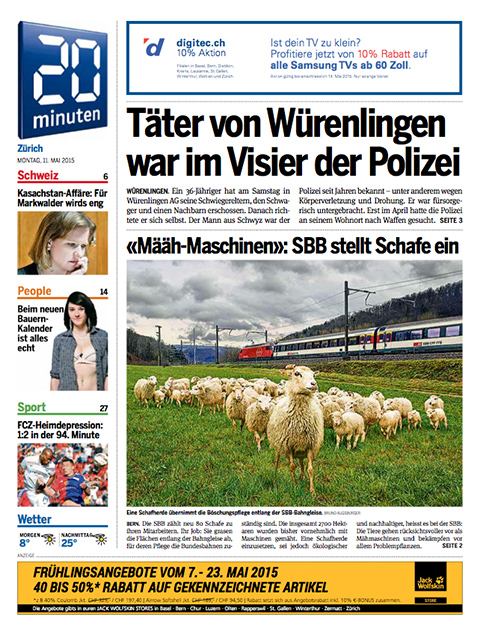
The SBB sheep generated considerable media attention on Monday. The Rod Kommunikation agency was responsible for showcasing these charming landscape conservationists.

SBB has a sustainability advantage that the company is consistently developing across all divisions and areas as a contribution to a sustainable Switzerland. As of now, this also applies to embankment maintenance - 2700 hectares along the railroad network are under control at SBB. With immediate effect, 80 sheep are being used by SBB to maintain the embankments along the tracks. The rare "Skudde" sheep have various advantages over mechanical slope maintenance: for example, they move more efficiently in impassable terrain, have a selective grazing behavior - they decimate overgrown problem plants, favor the growth of meadow plant species and at the same time spare the habitat of ground-nesting birds. During 22 hours a day, the SBB sheep accomplish a remarkable feeding performance of 1000 square meters. Through their efforts, they promote the biodiversity of nature and the preservation of their pro specie rara sheep breed.

Unbenannt-19_21
larger representation

The agency responsible for staging this sustainability message, together with SBB, is Rod Kommunikation, and the sheep were photographed by renowned photographer Bruno Augsburger. One day after the launch, many signs point to the popularity of the new SBB employees: in addition to the response in 20 Minuten and the German newspaper Die Welt, the hashtag #sbbmääh figured at times on Monday at number 2 of the Trend Topics on Twitter.

Bildschirmfoto-2015-05-11-um-21.58.08

Responsible at SBB: Jan-Hendrik Völker-Albert (Head of Strategy, Marketing & Sustainability); Christina Elisabeth Meier (Head of Sustainability); Christina "Shibby" Schmid (Social Media, E Business); Myriam Siksou (Head of Group Marketing).
 

get_footer();