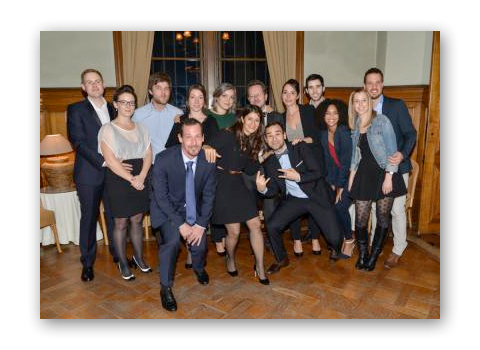
Daniel Pünter steps down as head of "Schweiz aktuell

Daniel Pünter, 47, is looking to pursue a new career path. He is stepping down as editor-in-chief of «Schweiz aktuell» at his own request. In the spring of 2016, he will take over as head of the media relations office at SBB.

After graduating in history, German studies and journalism, Daniel Pünter worked at Tele Züri/Tele 24 as a reporter, editorial manager and finally as program director. He began his career at Swiss television in 2001 as a trainer and editor/reporter on the program "Rundschau". From 2004, Daniel Pünter was responsible for the development of a new daily SRF people format. As editorial director of "Glanz & Gloria" and "G&G Weekend", he established the programs as a brand.

After four years, he took over as editor-in-chief of "Schweiz aktuell" in 2008. In addition to the daily programme, which reports from all language regions and cantons, he and his team produced several summer series with Sabine Dahinden as presenter. Equally successful topics, which were sometimes the subject of controversial public debate, were: "Die Alpenfestung - Leben im Réduit" (2008), "Anno 1914" (2014) and most recently "A1 - Die Raststätte" (2015).

After a total of 15 years at SRF, Daniel Pünter is leaving the company at his own request. He will take over as head of the media office at SBB next spring.

Daniel Pünter: "I look back on my time at SRF with joy and pride. I was part of a company that represents values that I fully share and produces meaningful content that is independent, colorful and relevant. Nevertheless, the time has come for me to take on a new challenge at SBB, a company that also provides a central public service on a daily basis."
 

Director leaves the Swiss Media Association

Director Verena Vonarburg has decided to leave the Swiss Media Association and take on a new challenge at Ringier.

Verena Vonarburg has headed the Swiss Media Association since March 2014 and will leave in spring 2016. The reason for the change at the top of the VSM is a difference of opinion on the objectives and strategic direction of the association's work, particularly since the Announcement of the joint venture SRG/Swisscom/Ringier and the subsequent Exit from Ringier from the association. Vonarburg said in a statement: "In my opinion, the association would do well to look more closely for allies and to be constructive and innovative in favor of Switzerland as a media center. I would like to specifically exclude President Hanspeter Lebrument, who has supported me at all times and with the greatest commitment."

Lebrument returns the positive words to Werbewoche.ch: "I worked well with Director Vonarburg. The reason for the termination lies in the differing views of the Presidium and the Directorate on the planned advertising alliance." Andreas Häuptli is heading the office on an interim basis. He has been with the association since 2014 and is responsible for marketing.

Vonarburg will move to Ringier in spring 2016. She will take on the new position of Head of Public Affairs Ringier Group, reporting directly to Ringier's Group Executive Board. She reports directly to CEO Marc Walder. Walder: "I am very pleased about the appointment of Verena Vonarburg. She is a proven public affairs expert with an excellent network and will be able to provide Ringier with active support both at the national level and in the context of our international activities."

The big publishing houses have repeatedly poached management staff from the association, association president Lebrument told Werbewoche. As examples, he cites former managing directors Peter Hartmeier and Hanspeter Kellermüller, who moved to Tages-Anzeiger and NZZ, respectively. "The association seems to have good people in management, otherwise the major Zurich publishers wouldn't keep poaching them from us," Lebrument smiles. Even if Lebrument does not deny that Vonarburg's move to Ringier, which has left the association, is somewhat explosive.

Vonarburg studied history, constitutional and international law, and political science at the University of Bern. She gained journalistic experience as a reporter and editor of the news magazine "10 vor 10" on Swiss television and as SRF Federal House Editor. From 2002, she held several journalistic positions, mainly as Federal House Editor, at Tages-Anzeiger and finally worked as Senior Consultant with a focus on political consulting and communication at the Bern-based public affairs and communications agency Furrer Hugi & Partner from 2011 to 2014. (hae)

Tree donation beats shopping voucher

Combating declining response rates with tree donations—what sounds like a utopian dream of making the world a better place is, according to a representative study, actually an attractive incentive for participants in online surveys.

According to the study conducted by market research start-up Greenadz, 64% of German online users would take part in an online survey in return for a tree donation. The only way to offer more incentive is to pay panel participants one euro per survey.

Market research gives companies a valuable insight into the customer perspective, be it on the success of a marketing campaign, the design of product features or the willingness to use a product. Companies no longer invest in products and brands without reliable figures. However, users are now tired of the flood of surveys. 40 percent of all German online users do not take part in online surveys. And even those who are generally happy to give feedback use their online time very consciously. Just 22 percent are satisfied with a thank you from the market research institute as an incentive for an online survey. More than three quarters expect to be rewarded for their feedback in the form of incentives.

And here, too, they have clear preferences. For example, a reward does not have to be expensive: a contribution of one euro is enough. The most popular incentive for eight out of ten respondents is the direct transfer of money to a PayPal account. In second place for almost two thirds is a tree donation - making it the most popular non-monetary incentive. Other donation-based alternatives such as a €1 donation to SOS Children's Villages or Greenpeace are still more popular than monetary rewards in the form of prize draws, vouchers or discount codes.

The most popular incentives at a glance

1. direct money transfer of 1 euro to a PayPal account (80 percent)
2. tree donation for a climate protection project (64 percent)
3. 1-euro donation to an SOS Children's Village (61 percent)
4. participation in a prize draw for 5×100 Euro Amazon vouchers (54 percent)
5. 1-euro donation to Greenpeace (52 percent)
6. 1-euro voucher for iTunes, Google Play, etc. (49 percent)
7. 10 percent discount codes for one provider (48 percent)

n=316. Question: For future online surveys, we, a new German market research institute, would like to reward the time for participation and would like to know what you would prefer as a thank you for taking part. The survey takes 3-5 minutes and is completely anonymous. How attractive would the following options be to you personally?
But why are donation-based incentives such as the tree planting campaign so attractive? Every second person is attracted by the contribution to environmental protection, and every fourth person finds the meaningful deed they are fulfilling appealing.

Sandra Gärtner, Managing Director, Greenadz, explains the added value of incentives for market research: "Incentives such as tree donations not only increase the willingness to participate and therefore the number of cases. A sustainable incentive concept can also convince people who would otherwise not take part in online surveys. This brings the sample even closer to the online socio-demographics and increases the quality of the study results."

If attractive incentives are accompanied by a high level of transparency, the willingness to participate increases further. Four out of ten respondents refuse to participate in online surveys primarily due to a lack of clarity about the client (81%) or the survey objective (74%). 78% are also annoyed by the invitation via pop-up windows.

About the study: The study was conducted on the basis of 512 online users in April 2015, recruited via Lightspeed GMI's online access panel, representative according to socio-demographics and cross-quotated according to age and gender. The presentation of the study results can be accessed via e-mail can be requested free of charge.

Image material:
Portrait Dr. Sandra Gärtner, Managing Director GreenAdz
www.frauwenk.de/mediaserver/Greenadz/Greenadz_Sandra_Gärtner.JPG
Portrait John Sasse, Managing Director GreenAdz
http://www.frauwenk.de/mediaserver/Greenadz/Greenadz_John_Sasse.JPG
Logo, GreenAdz
http://www.frauwenk.de/mediaserver/Greenadz/GreenAdz_Logo.jpg

APGS: Ester Elices becomes new president

At this year's annual meeting of the Account Planning Group Switzerland (APGS), members were confronted with a packed program. Ester Elices becomes President, Gordon Nemitz Vice President.

The evening began with a short talk by Peter Hogenkamp, Internet pioneer (currently at niu.ws), freshly crowned with the "Digital Marketing Award" from the IAB Switzerland, ex-digital head of the NZZ media group and now at Niu.ws, on the area of tension between media and brands or curated content and native advertising.

APGS_Vorstand_2015
The APGS board is composed of Ester Elices, Rainer Bühler, Marco Casile, Gordon Nemitz and Anne Langer.

The APGS Board of Directors is newly elected by acclamation: Ester Elices becomes president after Rainer Bühler, Gordon Nemitz vice president. Anne Langer joins Rainer Bühler and Marco Casile on the board. David Schäfer resigns from the board.

Rainer Bühler was President of the Account Planning Group for 4 years. During this time, the APGS has greatly expanded from 35 to 70 members, two new training and event formats ("Quick Learning Series APGS-How-To , International Strategy Slam) and a close cooperation with the Account Planning Groups from Germany and Austria were established.

Two major projects are coming up in 2016:

In cooperation with the newly conceived ADC/BSW creative school, a strategy course is to be offered in summer 2016. On the same scale as the creative school, this is intended to give all people from agencies interested in strategy the opportunity to learn strategic

planning. In addition to common topics such as strategic management, brand positioning and market research, the curriculum will also include topics such as gamification and innovation. In addition, it will be possible to attend subjects at the creative school and vice versa. Gordon Nemitz and Ester Elices are responsible for the strategy school.

In addition to the strategy course, the popular How-To series will be continued in 2016. After the premiere of the International Strategy Slam with 300 guests and 9 slammers in Berlin in January 2015, Strategie Austria, Account Planning Group Germany and the APGS are holding the second slam in Vienna in March 2016.
 

44 new PR specialists

A total of 55 candidates took this year’s professional examination. Of these, 44 earned the federal certificate (24 from German-speaking Switzerland and 20 from French-speaking Switzerland), representing a pass rate of 81.5 percent.

At last week's graduation ceremony in Thun, examination director Barbara Forster presented the 44 newly qualified PR specialists with their federal certificates. In keeping with tradition, the best students each year were honored: Karine Henchoz and Pauline Weber achieved the highest grade of 5.0, Ellen Brugger and Isabelle Koller scored 4.9, and Violaine Coard, Michèle Jöhr and Anna-Barbara Mertenat graduated with 4.8.
The quality of this protected title is guaranteed by the State Secretariat for Education, Research and Innovation (SERI). With their degree, the new PR specialists have the necessary theoretical knowledge and practical skills to professionally plan and implement planned PR measures in companies, agencies and organizations.

Unbenannt-4_121
Photos of the celebration can be found here

Airbnb: Swiss offer doubled

The number of listings on the online platform Airbnb in Switzerland is growing rapidly. A recent study by the Valais Tourism Observatory shows that the number of listings has doubled in one year, according to the latest issue of the Handelszeitung.

The trend is confirmed by the company: "Compared to November 2014, there has been a growth of 98 percent in Switzerland; there are currently just over 15,000 Airbnb properties in Switzerland," says Airbnb spokesperson Julian Trautwein. According to the Valais study, Geneva, Zurich and Basel have the highest number of Swiss Airbnb properties.

In addition to the growth dynamics, the Valais Tourism Observatory also examined the commercial relevance of Airbnb providers for the first time. "In addition to the doubling of the number of properties, the high proportion of professional landlords, which we identified for the first time this year, is particularly exciting," says study author Roland Schegg. For this purpose, providers who broker two or more properties were recorded. Schegg classifies 19 percent of the offer, i.e. around 2,500 properties, in the category of commercial offers. Airbnb itself does not want to comment on this specifically.

The Valais Tourism Observatory estimates that "at least one million overnight stays" were generated in Switzerland this year via Airbnb. "If you take the average Swiss price of 80 francs per night and bed, you get around 80 million francs," says Schegg.

On the subject: Airbnb plans Alpine offensive

Just one charger for all cell phones and tablets

From summer 2017, all cell phones sold on the Swiss market must be compatible with a standardized charger. The Federal Council revised two ordinances on Wednesday.

This brings the technical requirements in Switzerland into line with those in the EU. Not only cell phones, but also other mobile devices must be compatible with a standardized charger. As a result, there will be fewer chargers and therefore less electronic waste, writes the Department of the Environment, Transport, Energy and Communications (DETEC) in a press release. To ensure that the radio frequency spectrum is used efficiently, the requirements for the minimum power of receivers will be redefined. The obligations for manufacturers and importers will also be clearly defined and the rules on product traceability specified.

This is intended to improve market surveillance. In future, it should be easier for consumers to contact manufacturers and importers. The relevant addresses must be enclosed with the product. In the case of radio equipment, the performance and frequencies used must be listed in addition to any restrictions on use. Radio equipment may only be placed on the Swiss or EU market if it can be used legally in Switzerland or in at least one EU member state.

Finally, the Federal Council has given the Federal Office of Communications the authority to define the regulations for innovative equipment in more detail. This will ensure that the provisions can be quickly adapted to technological developments, according to the press release. The revised Ordinance on Telecommunications Equipment will enter into force on June 13, 2016. However, a transitional phase of one year is planned to allow the market to adapt to the new rules. The revised Ordinance on Electromagnetic Compatibility comes into force on April 20, 2016. The dates correspond to those set for the amendment of EU legislation. (SDA)

Online donations have increased by 30 percent

Swiss people are donating online more and more frequently. Within a year, the volume of digital donations has increased by a good third. Proportionally, however, online donations still account for only a small portion of the total.

This is the result of a study on digital donation behavior in Switzerland published by online marketing provider Raisenow in collaboration with Amazee Metrics and Getunik. Although online donations have increased by over 30 percent, their share of the overall donation market is still relatively small at 2.24 percent. "The positive trend of digital donations will increase due to the ongoing digitalization of all areas of life," Marco Zaugg from RaiseNow is certain. The study also shows that the most popular payment method for online donations is the credit card. The Swiss prefer to donate between 10 am and 2 pm from Monday to Friday. At the weekend and especially on Saturdays, however, the willingness to donate decreases.

More than 170,000 donations with a volume of around CHF 15 million from 2013 and 2014 were analyzed. However, not all online banking donations could be counted, as only transactions via the website's donation form were recorded. The proportion of digital donations would therefore be even higher, RaiseNow reported. In 2014, Swiss citizens donated more than 1.7 billion Swiss francs to various aid organizations. That is around one million more than in 2013 (SDA).

Image: ©Disney

Study: Swiss customers and their expectations are a digital challenge

Whether they're comparing health insurance costs, shopping for Christmas gifts, studying together, or watching their favorite TV shows online, Swiss people have the highest expectations for digital services in Europe.

In contrast to their neighbors in Germany, France or Italy, they already want ever faster access to information and online services at any time and any place. This is shown by the global study "Information Generation: Transforming the Future, Today" by EMC, which surveyed 3,600 executives in 18 countries.

For Swiss consumers, fast Internet access is an absolute priority. In fact, 71 percent of respondents in Switzerland say customers want faster access, compared with just 47 percent in Germany and 51 percent in Italy. Furthermore, the days of standardized online services and products are definitely numbered: 61 percent of Swiss executives confirm that personalized customer experiences are rapidly gaining in importance. In Germany, just under two-fifths (37 percent) and in Italy slightly less than half (45 percent) are of this opinion.

The progress of new technologies is also having an impact on how consumers access the Internet: 77 percent of executives say that Swiss customers want access to digital services via different devices. In France, 32 percent and in Germany 44 percent make this claim. At the same time, according to the respondents, 65 percent of the Swiss want to surf without interruption, 24 hours a day, seven days a week. By contrast, only 45 percent of Italian and 47 percent of German consumers insist on permanent Internet access.

About the study

The Institute for the Future developed the survey to identify and predict the requirements and changes in the new digital world. The survey was conducted by Vanson Bourne on behalf of EMC. It surveyed 3,600 executives in 18 countries across eight major industries. Half of the respondents (1,800) work in companies with 250 to 1,000 employees, while the other half (1,800) work in companies with more than 1,000 employees. The survey was conducted online from November 20, 2014, to January 15, 2015, and has a margin of error of 1.7 percent. The questionnaire is based on in-depth interviews and workshops conducted by the Institute with more than 40 influential decision-makers worldwide and with experts from numerous industries, academics, non-profit organizations and think-tank leaders.

More about the study (summary, report as PDF etc.)

Trimarca: Rebranding for Pius Schäfler

Trimarca, a marketing and communications agency based in Chur, has developed a new corporate strategy and a comprehensive rebranding initiative for Pius Schäfler, a long-established company in Eastern Switzerland.

Since 1965, the name Pius Schäfler has stood for a broad portfolio of office products in eastern Switzerland. Just in time for its anniversary, the company is taking a leap forward with the help of Trimarca. Strategic consulting, a stringent communications concept, and a convincing corporate design give the company a new spirit and the brand new momentum.

Web-Pius-Schaefler-1

In a workshop on corporate development, Trimarca owner Martin Hilzinger worked out the company's future strategy together with the management. The decision to bring the "Print Solutions," "Papeterie," and "Interior Design" divisions back together more strongly points the way forward for the development of the new brand. A common identity creates real added value and enables intelligent cross-selling. The first proof of this is the freshly remodeled branch in Gossau: here, you can examine a Vitra lounge chair while waiting for your spiral binding, and in the studio right next to you, you can already try out the latest creative concrete techniques. The Pius Schäfler brand thus becomes an experience - and a world of creation.

Web-Pius-Schaefler-2

The corporate design translates the brand's core values of high standard, established, locally rooted, and personal. The new logo, consisting of a word mark, a figurative mark, and a communicative addition, combines the name of the company's founder with the company's tradition and a strong symbolic animal: the ram. It stands for the progressive, the forward-thinking.

Web-Pius-Schaefler-3

In addition to a detailed corporate design manual, numerous applications have been implemented. The new brand and image are conveyed in numerous print products, a dedicated magazine, stationery, lettering, packaging and workwear, as well as the new website, a newsletter and an image spot. The image spot tells the company's story and presents the brand's core values audiovisually. For the first issue of the magazine, photographer Dolores Rupa staged timeless design classics in a barn as a picture spread. The elaborate shoot required logistical skill. The magazine conveys the new value of the brand and generates customer loyalty through real content.

Web-Pius-Schaefler-4

The brand was presented at an "Inspiration Day" in Gossau (SG) on October 27. Applications are being introduced on an ongoing basis. Trimarca continues to accompany the company in its strategic development and communicative staging.

Web-Pius-Schaefler-5
Web-Pius-Schaefler-6
Web-Pius-Schaefler-7
Web-Pius-Schaefler-8

Responsible at the Pius Schäfler: Patrick Ammann-Schäfler (Head of Marketing and Specialty Retail), Remo Waldburger-Streule (Head of Interior Design), Armin Würth (Head of Print Solutions, Chairman of the Executive Board), Roger Ziltener (Head of Interior Design), Markus Keller (Head of Finance, Member of GL/VR). Responsible at Trimarca: Martin Hilzinger (owner, strategic consulting), Hardy Hemmi (creative director), Vera Fetz and Silvana Venzin (project management), Raphael Müller and Nicolin Pfister (art director). Photography: Dolores Rupa. Website: Webstobe.
 

Wirz Corporate: Photo donation app for the Reformation anniversary

Serranetga brings on Fabian Habisreutinger as new Director Media

With the appointment of Fabian Habisreutinger as Director Media, Serranetga is investing further in expanding its expertise in the media and analytics area. The 29-year-old brings experience on both the customer and marketer sides.

Prior to Serranetga, Habisreutinger worked at Sunrise Communications in the Online Marketing & Sales department, where he was the project lead for various online campaigns and product launches in the areas of paid, owned and earned media. His responsibilities also included the development of various KPI frameworks and the implementation of various performance tools. Prior to that, he worked as Online Business Analyst & Supervisor Online Retailing at Swiss International Air Lines, where he was responsible for the analysis and optimization of global sales channels. Habisreutinger holds a Bachelor of International Management. He gained marketing experience at Adconion Media Group in Munich.

Fabian-Habisreutinger
get_footer();