SF: New presenter for "Tagesschau"

Mario Grossniklaus is moving from Radio DRS to Swiss television. Starting in February 2010, the 33-year-old will join the team of anchors on «Tagesschau.».

Mario Grossniklaus has worked for ten years as an editor, presenter and producer for various Swiss Radio DRS news formats, currently as producer of the early morning news program "Heute Morgen". After a training period - probably from March next year - he will present the "Tagesschau" editions at midday, 6 p.m. and at night.

Media associations found new umbrella organization

The three media associations—Forum Corporate Publishing (FCP), the Professional Association of Media Producers (f:mp.), and the Corporate TV Association (CTVA)—have decided to establish a joint umbrella organization in the first quarter of 2010. The new umbrella organization will bring together more than 700 companies and their communications representatives under a single umbrella.

The aim of the association is to establish a new community in the overall corporate communication market. In addition, common interests are to be represented by an integrated cooperation platform, while at the same time ensuring the autonomy of the individual member associations in terms of content. According to a communiqué issued on Monday, the foundation was prompted by the far-reaching changes in the media landscape. The range of available communication tools is expanding at an accelerated pace and the various forms of media are increasingly converging. Cooperation between the associations is therefore a logical conclusion.

About the associations
At Corporate Publishing Forum is an association of around 100 CP providers from Germany, Austria and Switzerland. They offer services for all areas of corporate communication. The Forum is Europe's largest association of corporate publishing service providers and is celebrating its 10th anniversary in 2009. The Corporate TV Association (CTVA) is dedicated exclusively to the topic of corporate TV and covers the entire spectrum of moving images in corporate communications through its approximately 70 members. The f:mp. is an independent professional association with around 520 members that supports media producers in their daily work. Its main task is to provide training and further education.

New postal legislation: SDV invites discussion

As senders of direct mail, the members of the Swiss Direct Marketing Association (SDV) and their advertisers are directly affected by the new postal legislation. The SDV is therefore hosting a seminar titled «Between Monopoly and Market: New Postal Legislation.».

The event will take place on Thursday, December 3, 2009, at the Mövenpick Hotel Zurich-Regensdorf. Further information and registration: Sdv-asmd.ch.

Radio 1: Marc Jäggi becomes head of moderation

Morning show host Marc Jäggi will now also take on the role of head of programming at Radio 1. The position of editor-in-chief is expected to be filled in the coming weeks.


In his new role as Head of Presentation, Marc Jäggi will be responsible for media partnerships and promotional activities, among other things, which are to be massively strengthened in the new large broadcasting area. The 34-year-old recently completed the VSK business specialist course.

Le Temps: Editor-in-chief Jean-Jacques Roth relinquishes functions

Jean-Jacques Roth, director and editor-in-chief of the French-Swiss newspaper *Le Temps*, is stepping down from his positions. Deputy Director Valérie Boagno will take over as managing director. The newspaper is seeking a new editor-in-chief to lead the editorial team.

Jean-Jacques Roth will remain in office until his successor is appointed, Le Temps announced on Friday. His main task will be to continue the process of reorganizing editorial activities that began this autumn. Roth has been both managing editor and editor-in-chief for five years. These two functions will now be separated. Roth told the SDA news agency that he himself had proposed the split to the Board of Directors because the workload had become too great. The new structure would allow him to concentrate fully on his editorial work. Roth left open the question of whether he would remain at Le Temps after giving up his position as editor-in-chief. The Geneva-based newspaper in French-speaking Switzerland is currently undergoing a reorganization - both in terms of structure and content.
Jean-Jacques Roth and Valérie Boagno were involved in the founding of Le Temps in 1998 and have managed the company in close collaboration over the past five years: she as Sales Director and then Deputy Director and he as Deputy Editor-in-Chief, then Editor-in-Chief from 2002 and finally Director and Editor-in-Chief since 2004.

Creative Ranking 2009

The annual creative ranking will be published in Werbewoche on December 17. Agencies or agency groups can enter the awards they have won until December 7.

Under the link Creative Ranking an Excel file can be downloaded in which the awards won by each agency or agency group can be entered. In addition to the predefined competitions (see list), each agency can select the two international and two national awards that should also count towards the ranking. These are: Epica, London International Award, Swiss Poster Award and Edi. The completed Excel file must be submitted to Werbewoche by December 7 at the latest ([email protected]) become.

Last but not least: Will home stories soon be a thing of the past?

Home stories, pictures of the wedding and later of the offspring - the main thing is to be in the media. This seems to be the credo of many Swiss politicians. One person who has made it to the top without these tricks is the newly elected President of the National Council, Pascale Bruderer. Is a turnaround in sight?

Chantal Galladé and Christoph Blocher are just two examples from the political landscape who are not afraid to open their front doors to the media and give an insight into their private lives. Presentation and staging are the be-all and end-all. If you want to make a career, you have to market your ego. But how did Pascale Bruderer make her way to the top? She is not available for home stories, she has repeatedly canceled the Schweizer Illustrierte and there was only a short notice about her wedding in the Sonntag newspaper without photos. According to the paper, the young politician owes her increased media presence above all to her election as the youngest member of the National Council in 2002. Otherwise, her restraint would probably not have brought her more media attention. Bruderer is therefore likely to remain an isolated case; there can be no talk of a trend reversal. So anyone who has no other ace up their sleeve will probably have to continue to fall back on conventional means. Consumers can breathe a sigh of relief, excitement is guaranteed.

Comedia: Green light for merger with communications union

At its convention in Bern on Saturday, the media union Comedia overwhelmingly approved the merger with the Communications Union. Of the 93 delegates, only one voted against the merger. In addition, the co-presidency of Danièle Lenzin and Roland Kreuzer was confirmed for another year.

The merger concept was approved after intensive discussions, Comedia announced. The ball is now in the court of the members of the larger communications union. They will meet in Bern at the beginning of next week to decide on a possible merger. According to Unia, a merger of the two unions would create the second-largest union within the Swiss Federation of Trade Unions. According to the merger concept, the united union would be founded on January 1, 2011. It would have 48,000 members.
The Comedia trade union is anchored in the graphic arts, packaging, media and book industries. It has around 13,000 members. The Communication union, for its part, has its roots in the employees of companies of the former PTT. It has around 35,000 members.

Tripartite merger failed in March 2009
In March, a three-way merger between the Association of Public Service Employees (vpod), the Communications Union and Comedia failed. The structures and needs of the three unions were too different, it was said at the time. While the communication union and Comedia worked nationally and supra-regionally and represented certain sectors, the vpod mainly organized the staff of regional and local employers who worked across all sectors.

Eurobest 2009: Best print advertising comes from Euro RSCG

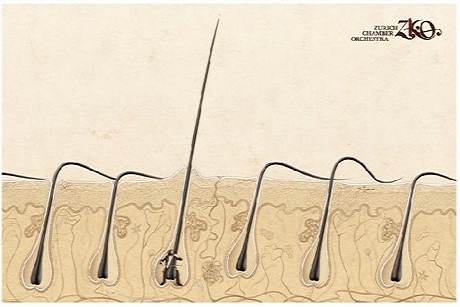
The winners of this year's Eurobest 2009 creative competition have been announced: The Zurich-based agency Euro RSCG won a Grand Prix in the «Print» category for its campaign for the Zurich Chamber Orchestra. Other Swiss agencies that received awards included Saatchi & Saatchi, SFLB, and Futurecom.

Saatchi & Saatchi made it onto the podium in several categories: The agency was awarded silver and bronze in the "Outdoor" category for its work for Novartis. The advertisers also won bronze in the "Radio" category. SFLB's campaign for Cabaret Voltaire was awarded gold in the "Media" discipline, while Futurecom's work for Reporters Without Borders was awarded bronze. The Grand Prix-winning campaign by Euro RSCG was also awarded silver in the "Outdoor" category.
This year, the jury had to evaluate over 4,200 entries. Around 665 made it onto the shortlist, with a total of 282 receiving awards: 37 in the "TV/Cinema" category, 30 in "Print", 34 in "Outdoor", 25 in "Direct", 13 in "Sales Promotion", 9 in "Radio", 37 in "Interactive", 48 in "Media", 22 in "Design", 21 in "Craft" and 6 in "Integrated".

>To the winners

1290581239_img091129_eurobest1a
1290581239_img091129_eurobest2
1290581239_img091129_eurobest3

SRG: annual shortfall of over 50 million francs

SRG lacks an average of CHF 54 million per year to fulfill its performance mandate in the period 2011-2014. This is the conclusion of the 2011-2014 financial requirements report submitted by SRG to the Federal Council on Friday.

Without the savings measures and efficiency projects that have already been introduced, the average funding gap would be more than twice as high, the company announced according to SDA. The Federal Council must now decide which revenue or expenditure measures SRG should take to restore balance to its finances.
According to SRG, two factors contribute to the funding shortfall: CHF 40 million alone is missing because many more people receive supplementary benefits and therefore do not have to pay fees than the authorities assumed and took into account when setting fees in 2003. In addition, inflation has not been compensated for since 2000. The Federal Council could enable the SRG to close its financial gap with revenue measures. The SRG is submitting several proposals to the Federal Council in this regard. These include legal requirements for generating additional commercial revenue, for example through advertising and sponsorship as well as in the online sector. The SRG is also proposing that the national government increase federal contributions for services abroad. This concerns the Swissinfo online platform as well as 3SAT and TV5.
If revenues cannot be increased, expenditure will have to be reduced further, SRG continues. However, with the savings and efficiency programs introduced since 2004 and currently underway, the limit has been reached where this can be achieved without compromising the range of programming. SRG will, however, only as a last resort abandon programs that are important and popular in terms of supply strategy. A reduction in services is ultimately the responsibility of the Federal Council, as only it can cancel licensed programs.
Goal-oriented and careful
In its 2006 report, the Swiss Federal Audit Office (SFAO) recognized that SRG was using the resources made available to it in a goal-oriented and careful manner within the given structures. In the meantime, thanks to the structural reform, SRG had set the course towards convergence and a nationwide optimization of support functions. This could significantly increase the efficiency of the overall organization in the medium term.
The equivalent public service offering in the four language regions generates costs amounting to 42% of SRG SSR's total expenditure. These costs are mission-related and can be attributed to the demographic and cultural characteristics of Switzerland.
A threat to program quality and jobs
The Swiss Syndicate of Media Professionals (SSM) considers the fact that there is a massive lack of funds for the normal continuation of current program services to be a threat to program quality and jobs. The savings potential has already been completely exhausted in recent years. The Federal Council responsible must now come clean on the issue of an increase in funding, the SSM announced on Friday. However, there are also interesting financing options without having to significantly increase fees.
The media consumer organization Arbus believes that increasing revenue through more advertising is wrong. If the SRG demands further legal requirements to generate revenue, it is embarking on an incomprehensible path, Arbus stated.
Media freedom campaign against fee increase
In the current economic situation, the Campaign for Media Freedom considers it inappropriate for consumers to have to cope with a further increase in fees after 2007. It sees the solution in additional increases in efficiency, which are also unavoidable for private media providers due to the massive drop in income caused by the economic environment. "In the current advertising crisis in particular, further advertising opportunities will lead to private providers being put at a further disadvantage and therefore increasingly experiencing economic difficulties," the association said in a press release. This would further distort competition to the disadvantage of private providers.

Weber Benteli: Bankruptcy petition filed

The printing company Weber Benteli in Brügg near Biel filed for bankruptcy on Friday. The takeover by an investor had previously failed. 270 employees are at risk of losing their jobs.

Director Martin Brawand told SDA on Friday that the competent judge had already approved the bankruptcy. A trustee will appear on Monday. All 270 employees in 250 positions must expect to be made redundant. The company was no longer solvent and is unable to pay the November salaries. The cantonal unemployment fund is now expected to pay for this, as the cantonal economic office Beco announced on Friday. According to Hans-Peter Graf from the Comedia trade union, a group of employees went outside the building on Friday to express their anger at the new situation. Comedia was not surprised - they had known about the difficulties, said Graf.
Everything done to reduce costs with restructuring program
The company ran into difficulties due to declining magazine print runs and far fewer orders for brochures, as Brawand went on to say. In a press release, the company refers to a difficult economic situation with a drop in turnover of 30 to 40 percent. The management had "done everything possible" to reduce costs with a "massive restructuring program". However, due to the "dramatic erosion of margins", a further adjustment of costs to the low level of earnings is no longer possible. For this reason, business operations had to be discontinued. Due to the economic environment and the "ruinous competitive situation", negotiations to take over the company had also failed. The bankruptcy petition had become unavoidable due to the high level of debt from previous years.
Largely in German ownership
Weber Benteli produces image, advertising, business and publishing stationery for agencies, service providers, trading and production companies in Switzerland and Europe, as well as for the public sector. The company was formed in 2008 from the merger of the Biel-based company Farbdruck Weber and Bern-based Benteli Hallwag. The latter was a merger of Benteli AG Bern, which dates back to 1899, and Druckerei Hallwag. Between 2006 and April 2009, Farbendruck Weber and Weber Benteli AG were owned by the German investment company Arques Industries. It sold the company last spring to the Munich-based financial investors ValueNet Capital Partners and the management. According to Brawand, the financial investors from Germany own the majority of the share capital.

Zurich cantonal council is "disconcerted" by concession transfer

The Zurich Government Council is "disconcerted" by the trade in FM radio licenses. For "fundamental considerations", it rejects the approval of the license transfer from Radio Monte Carlo Züri (RMC Züri) to Radio Energy Zürich.

The Government Council is proposing a new invitation to tender for the award of licenses. It also believes that the Radio and Television Act (RTVA) should be addressed. It considers the law to be "neither coherent nor desirable in terms of the rule of law if it allows such transactions after complex licensing procedures". According to SDA, this can be seen in the letter from the Government Council to the Federal Department of the Environment, Transport, Energy and Communications (DETEC) published on Friday. As part of the hearing on the possible transfer of the license from RMC Züri to Radio Energy Zurich, the Uvek has asked for a statement.
Energy Zurich was left empty-handed when the FM license was awarded a year ago. The Ringier station would therefore have to cease operations at the end of 2009. This could be prevented with the purchase of the license from Giuseppe Scaglione's RMC Züri.
get_footer();