Fairness Commission: Increasingly "aggressive sales methods"

Last year, the Swiss Commission for Fair Trading received 339 inquiries and 326 complaints were lodged. The number of cases involving "aggressive sales methods" increased significantly, while complaints about sexist advertising decreased.

If you look at the 2009 annual statistics of the Swiss Commission for Fair Trading (SLK), the record number of complaints proceedings is striking: the SLK had to deal with 326 proceedings in 2009 (compared to 311 in 2008), as the Swiss Commission for Fair Trading writes in a press release on Thursday. There have never been more cases in the history of the Commission for Fair Trading.
The most noticeable changes relate to "aggressive sales methods" and "sexist advertising". In 2008, the former still accounted for 19 percent of cases. In 2009, 34 percent of complaints were made in connection with "aggressive sales methods". There was a downward trend in sexist advertising, which fell by almost half from 13.5 percent in 2008 to 7 percent in 2009.
Among the other offenses, there are four in which conspicuous changes can be reported, according to the press release: For example, an increase from 8.6 percent (2008) to 11.1 percent last year can be seen in the area of "incorrect information". Fewer complaints were received in the area of "sweepstakes". Here, the percentage of all cases fell from 10.9 percent in 2008 to 7.7 percent (2009). The development in the area of "child/youth protection" is encouraging, with a decrease of 2.7 percentage points to 2.2% in 2009. Finally, the number of complaints relating to "risk of confusion" increased from 0.3 percent in 2008 to 1.2 percent in 2009. There were only insignificant changes in the other offenses, ranging between 0.1 and one percentage point.
Sharp rise in telephone cases
As far as the channels through which the offending advertising was disseminated are concerned, all but two have declined in percentage terms. In contrast, a considerable increase of 23.1 percentage points was recorded for "telephone/fax". Whereas in 2008, 16.4 percent of the commercial communication complained of was by telephone, in 2009 this figure was 39.5 percent. This is entirely congruent with the development of the offenses themselves. As mentioned, these are the "aggressive sales methods", which in the vast majority of cases are made by telephone. Complaints against flyers that fall under "distributed, posted" have also increased. These rose from two percent in 2008 to 8.1 percent in 2009. The "cleanest" medium in 2009 was the cinema. No complaints were received regarding advertising shown in cinemas.

New look for gourmet magazine Marmite

Marmite, a Swiss gourmet magazine founded a good 50 years ago, has been relaunched.

The structure of the magazine and the focus on one main topic are new. According to the press release, the focus is on a monothematic cover story, which is complemented by a sophisticated recipe section. The recipes are written by the Jeunes Restaurateurs d'Europe en Suisse. Topics from the world of wine will also be featured again. Tastings, reports, interviews and a wine competition provide a pleasurable balance. In the "Discovered" section, the well-known food hunter Richard Kägi, product planner at Globus, reports on new products and foods.
img100311_marmite

E,T&H: Campaign realized for Radisson Blu Hotel

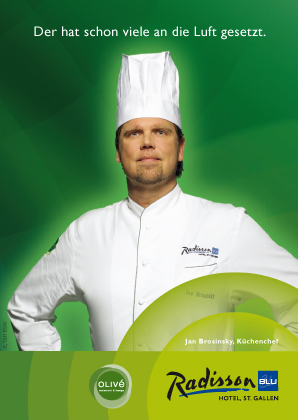
The E,T&H advertising agency has developed a campaign for the restaurant at the Radisson Blu, a four-and-a-half-star hotel in St. Gallen.

The star of the subjects is one of the region's top chefs, Olivé chef Jan Brosinski. After an initial wave of communication for the official opening of the restaurant and bar, further measures are currently being planned.
Responsible at the Radisson Blu Hotel, St. Gallen: Dany Lützel (Resident Manager), Karin Krawczyk (Sales & Marketing Co-Ordinator). Responsible at E,T&H Werbeagentur AG BSW: Radisson Blu Hotel Project Team. Photos: Alex Bayer, Vision Studios, Balgach.
1290581029_img100311_radisson1
1290581029_img100311_radisson2
1290581029_img100311_radisson3
1290581029_img100311_radisson4
1290581029_img100311_radisson5
1290581029_img100311_radisson6
1290581029_img100311_radisson7
img100311_radisson8

Last but not least: How the cruel advertising industry won't let Lindsay's past rest

Lindsay Lohan has been making headlines for years with her drug and alcohol binges. She recently admitted in a newspaper interview that she had repeatedly consumed excessive amounts of alcohol and cocaine. This is a goldmine for the advertising industry.

However, she has now learned from her mistakes and regrets her actions, says the 23-year-old actress. Remorse or not, the advertising industry shows no mercy and makes fun of her in a commercial. According to Welt Online, the film advertises the financial company E-Trade and shows babies chatting: a little girl asks a boy whether "milkaholic Lindsay" has been to visit him. "Lindsay?" asks the boy. "Milk-a-what?" says another baby. Lohan is outraged by this dialog and has called in a lawyer. She says that the play on words with the alcohol reference is clearly aimed at her client. The first name Lindsay is as well-known as Madonna, for example, and the company could have used a name like Susan. Yes, of course it could have. But where would the joke have been then? Although a spokesperson for the advertising agency claimed that they had simply chosen a random name. Well... Anyway, the starlet is serious, she has sued E-Trade for a whopping 100 million dollars in compensation.
Fittingly, a reader of Welt Online commented that Paris Hilton would probably soon sue the French state for decorating its shabby capital with her beautiful name...

Twitter: Only 21 percent active users

Although the microblogging service Twitter is often grouped with rapidly growing social networks and mentioned in the same breath as Facebook or MySpace, security experts at Barracuda Networks say the platform is actually evolving into a global news feed.

Only 21% of users are "true Twitter users" and make regular use of their account. The vast majority, on the other hand, are only part of the platform to read other users' short messages instead of writing them themselves.
"Twitter is an accelerator of communication," says industry expert Klaus Eck, owner of Eck Kommunikation, in an interview with Pressetext. According to the expert, a social network requires users to be able to have longer dialogs, which works better on other networks such as Facebook or Google Buzz. Twitter is suitable as a means of transporting news. However, users would also have to be provided with links and directed to external sources. What's more, users could only follow snippets of the flood of news anyway.
Around 75 million user accounts are now registered on Twitter. However, the majority of their owners are barely engaged. According to Barracuda, 34 percent of users have never "tweeted" since they have had their account. The figure has fallen by three percent since mid-2009, which indicates a higher level of user activity. Nevertheless, the proportion of news consumers still clearly outweighs that of news producers. 61 percent of users have fewer than five followers. The threshold of ten followers also appears to be difficult to overcome. According to Barracuda, 74 percent of accounts are below this threshold.
> To the Twitter page of Werbewoche

Blick Group: Integrated newsroom launched

After a planning phase of just over two years and a construction phase of ten months, the Blick Group’s Integrated Newsroom began operations on schedule during the second week of March. The editorial teams of Blick, Sonntagsblick, Blick am Abend, and Blick.ch, together with the Web TV Center, form the largest editorial team in Switzerland.

In response to changing media usage behavior and in preparation for future developments, Ringier Switzerland has merged the four editorial teams of Blick, Sonntagsblick, Blick am Abend and Blick.ch into one integrated newsroom.
will be merged. The aim of this new organizational form is to be able to offer media consumers information and entertainment around the clock on the most suitable channel, Ringier wrote in a press release on Thursday.
Great importance will be attached to maintaining the individual character of each title, the statement continues. This will be ensured by the four editors-in-chief Ralph Grosse-Bley (Blick, ad interim), Hannes Britschgi (Sonntagsblick), Peter Röthlisberger (Blick am Abend) and Rolf Cavalli (Blick.ch). Together with the department heads Andrea Bleicher (News), Hannes Britschgi (Politics), Daniel Meier (Business), Dominik Hug (People), Ilja Kaenzig (Sport) and Roland Grüter (Lifestyle), they manage the largest editorial team in Switzerland with around 200 employees.
The newsroom offers the journalistic and technical possibilities to optimally coordinate and further develop the offerings of Blick, Sonntagsblick, Blick am Abend and Blick.ch. Particularly in the area of the Internet and the increasingly popular mobile applications, the range of moving images, for example, is being expanded in a targeted manner. For this reason, one of the most modern web TV studios in Switzerland is an integral part of the Blick Group newsroom.
img100311_newsroom_blick

Matter & Gretener: Campaign for natural gas continues

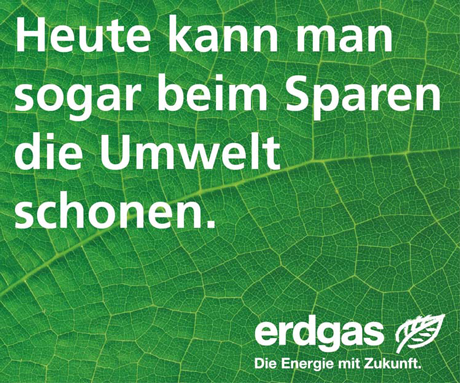
Following its successful launch in 2008, with a focus on TV and advertorials, the new brand identity for Erdgas—conceived by Matter & Gretener—is now entering its third year.

The agency is once again relying on the power of good arguments to highlight the numerous advantages of natural gas, according to a press release. Advertisements, posters and banners will be used - now also in the B2C sector. The aim is to make it clear how easily new good reasons for natural gas can be implemented. Even an additional application (mobility) and another sender (biogas) can be integrated. The thematic focus of the campaign: the environmental benefits of natural gas and biogas.
Responsible at the Swiss Gas Industry Association: Urs Zeller (Head of Marketing), Daniel Bissig (Head of Advertising). Responsible at Matter & Gretener: Daniel Matter (Creative Direction), Dominik Imseng (Text), Urs Hartmann (Art Direction), Marcus Gretener, Nicole Liebermann (Consulting); Photography: Stefan Minder; Banner programming: Hausheer AG.
1290581029_img100311_erdgas1
1290581029_img100311_erdgas2
1290581029_img100311_erdgas3
1290581029_img100311_erdgas4
1290581029_img100311_erdgas5
img100311_erdgas6

The cross with paradise

The Museum für Gestaltung Zürich aims to explore the myth of Switzerland.

Switzerland as a paradise is a projection screen for longings. Even the first travelers who visited our country from the 18th century onwards spoke of "discovering a Garden of Eden" in their journals. Since then, the Matterhorn, a cow or even the flag with the white cross have embodied typical Swiss values such as naturalness, tradition and quality. The effect of these subjects is also repeatedly exploited in posters for tourism, chocolate or cheese in a wide variety of forms. The "Paradise Switzerland" exhibition now aims to rediscover this myth across the ages. The first section of the exhibition focuses on the mountain motif. A second section is dedicated to traditional costumes as a possible area of identification for the homeland. The third section takes a look at the history of the Swiss flag. The exhibition is open from March 17 to July 25. Pan
1290581031_img100310_schweiz2
1290581031_img100310_schweiz1
1290581031_img100310_schweiz3
1290581031_img100310_schweiz4
1290581031_img100310_schweiz5

The advertising week on Star TV for the "Making-of - Red Bull Mobile"

On Thursday, starting at 7:00 p.m., Star TV will take you on a journey into the unique world of Red Bull and show you how Formula 1 star Sebastian Vettel takes center stage as the face of the latest Red Bull mobile ad.

This, the latest TV spots and a highlight from the Cannes reel can be seen exclusively on Star TV or streamed at any time on Startv.ch.
1290581032_img100310_startv9
The advertising week on Star TV: New every Thursday at 19:00 on Star TV and as a stream on www.startv.ch.

Ammarkt strengthens its team

After celebrating its 10th anniversary last year, Ammarkt, the Eastern Swiss agency for strategy, marketing, and advertising, has now further expanded its staff.

Despite the economic crisis, 2009 was a good year for Ammarkt. In addition to the agency's anniversary, the St.Gallen advertisers were able to toast more than ten new clients. These included accounts such as Lumimart, Krebsliga, Lungenliga and Shopping Arena St.Gallen. In January 2010, Swica also succeeded in winning a competitive presentation against well-known creative agencies.
In order to be able to optimally manage the growing portfolio, the agency has brought in reinforcements for creation and consulting. Nicole Bernhardsgrütter is the new Art Director. In addition, Jan Walser has been supporting the 10-strong graphics department since February 2010. In March, Fabian Bucher, another client consultant, joined the team. And Petra Moser, a junior consultant with agency experience, has joined the team.
Ammarkt now has a team of 26 employees and serves many national brands in addition to regional customers.
1290581035_img100310_ammarkt1
img100310_ammarkt2
Nicole Bernhardsgrütter and Fabian Bucher
1290581035_img100310_ammarkt3
img100310_ammakrt5
Jan Walser and Petra Moser

Fairness Commission: annoyance with competitions

Time and again, companies take advantage of people’s love of winning by promising prizes in their advertisements. Some of them, such as Möven-Touristik, however, use this only to lure recipients to a promotional event.

The statements on the flyer were unambiguous: "Last date to collect your prize", it says on the leaflet, which is headed "Prize draw 2007/2008". A consumer from Ebertswil in the canton of Zurich was surprised to receive the mailing, as he had just moved here and had never taken part in a competition. How could he be promised a prize? And the prizes to be won, which were undefined, were certainly tempting: up to 10,000 francs were promised. The person contacted was suspicious, as he could not find any of the "lucky winners" mentioned on the Internet and the company is not registered in the commercial register. He decided to lodge a complaint with the Swiss Commission for Fair Trading (SLK).
The Third Chamber examined the advertising statements and concluded on the basis of principle no. 3.9 no. 2 that "promises of winnings that are advertised as slogans and are only qualified at a subordinate point are unfair". The Commission also states: "The text promises a payout. Whether and what exactly the addressee has won remains unclear. This competition is therefore unfair."
Although this decision was communicated to Möven-Touristik in Baar, the company did not react. On the contrary, despite the condemnation, it continued to send out its unfair advertising. With practically the same text and even the same printing errors.
img100310_moeven

Corporate publishing: Being instead of appearances

An international update from eight countries on the era of corporate communications in journalism.

More and more companies are choosing corporate publishing as a contemporary form of communication, offering real and useful content instead of advertising promises. The target groups - customers, employees and partners - are increasingly being addressed with products from the field of corporate publishing, also known as customer publishing. These are journalistically prepared communication tools from companies. Instead of traditional advertising, corporate publishing is increasingly being used in all sectors: in print media, online and increasingly also in moving images. The International Customer Publishing Forum is an international umbrella organization that brings together trade associations and industry specialists from almost twenty countries.
USA: The triumph of branded content
The emergence of new digital distribution channels and advanced mobile technology, as well as the flood of social media outlets such as Twitter, Facebook and LinkedIn, have contributed to the growth of branded content in the United States. In a nutshell, this means: With more media channels, more content is being produced.
However, print media remains the dominant format, and 51% of spending is on this media. The average U.S. company spends US$1.8 million a year on branded content, and that number is expected to grow. While traditional media formats still face significant challenges and shrinking budgets, branded content is a positive exception to the media landscape as its market share grows annually. In addition, the growing importance of user-generated content on websites such as Wikipedia, Yelp! and YouTube has pushed the marketing industry further towards corporate media (custom media), where companies can effectively control their own content with innovative media programs.
United Kingdom: Consumer confidence in journalistic content
In the United Kingdom, consumer confidence was badly shaken by financial and political scandals in 2009 and sank to an all-time low. As a result, British consumers primarily took into account the views of people close to them and their own assessments when forming their opinions. This plays to the strengths of the corporate publishing industry, as editorial brand content has a trust-building effect, as the Advantage study by the British advertising association Association of Publishing Agencies (APA) showed. Increased investment is being made in the UK customer publishing industry, with new industry players such as Chestertons, Heals, Grant Thornton, Morrisons, Fiat and Fujitsu joining "long-established" companies such as John Lewis and Virgin. Brands that make the effort to understand their customers and the market, and focus on engaging with them in an honest and relevant dialogue, are now reaping the corresponding rewards. The key is relevance of communication, in terms of content, and also in terms of channels. Over the past twelve months, it is possible to identify an increasing interest among clients not only in print, but also in alternative distribution channels, such as e-commerce solutions, e-zines, podcasts, videos, websites and editorial TV content (cf. also a study by the market research institute YouGov on behalf of APA).
Spain: Online management of customer care
In the Spanish economy, the corporate publishing sector is breaking new ground, with promising results. In the world of digital media, the spectrum of content is being expanded. Relevant messages to customers can now be delivered through a variety of channels, devices and formats. Games, audiovisual content and tools are among the new channels through which a dialog with the target group and a relationship with the brand can be established; this can create bonds and generate enthusiasm beyond corporate boundaries. In this new age, corporate publishing is more important than ever as a means of building brands and loyalty and attracting new customers.
But above all, Spanish corporate communication is about a platform for customer care, so-called customer relations management. Branded content can be used for this purpose, using specific marketing methods to gather insights into customer behavior that enable a personalized exchange with the customer.
China: A growth market
The economic crisis has had a noticeable impact on the corporate publishing industry in China. Many corresponding communications orders have been canceled or budgets reduced; content and publication forms of lesser quality are being accepted as a result. Although the market for corporate publishing in China is growing overall, it is still mainly concentrated in the four major urban centers of Shanghai, Beijing, Guangzhou and Shenzhen.
Many interesting and promising projects were launched in China last year. For example, the Proctor & Gamble Group launched its new club magazine Living Artist in May, and the country's largest business-to-customer website, Taobao.com, introduced the brand magazine Taobao World Weekly in September. The demonstration effect of these projects is helping to encourage more ventures to build their own corporate publishing projects. But competition is fierce. Chinese corporate publishing service providers are facing increasing competition, and clients are extremely price-conscious.
Russia: New trends
In Russia, spending on journalistic corporate media increased significantly in 2009. Further growth is predicted for this sector, which is thus gaining ground over other channels such as TV advertising, commercials or traditional public relations methods. The beginnings of the corporate publishing sector in Russia date back to the circulars for factory workers under socialism. Today, the industry is far removed from that; it now represents an independent sector within the media industry. The difficult economic conditions of recent years have even spurred growth in this industry in some cases, as the new media formats offer many advantages over traditional customer magazines in terms of content, cost calculation and accessibility to the target audience. The fact that more and more Russian consumers have access to the Internet has led to greater interactivity, customer loyalty and control over brand positioning. At the same time, the corporate publishing sector has experienced a spectacular growth spurt in terms of creativity and experimentation with new formats. The proliferation of digital, web-based and mobile technologies has opened up new communication channels through social networks, games or proprietary video platforms, to name just a few examples. While online media used to be seen as supplements to print media, they are now perceived as the most important division within corporate communications.
Netherlands: Customer media still in good shape
In the Netherlands, corporate publishing continues to be a growing and creative industry, employing an estimated 7500 workers and posting annual profits of over 800 million euros. Every year, new companies invest in this form of communication. Every resident of the Netherlands receives an average of 40 different customer magazines per year. Within this spectrum, online media are playing an increasingly important role. At the end of 2009, the market survey conducted by the Sponsored Media in Netherlands (SMiN) association showed that industry sales were slightly up on the previous year. Considering the economic situation and in comparison with the communications industry as a whole, this is a remarkable result. Over the longer term, the forecast for this medium is favorable. The study showed that 79% of respondents believed sales would increase in the coming years. This growth is likely to be most noticeable in print and digital magazines. The retail, public sector and business-to-business market segments are currently seeing increased investment. In the automotive, construction, tourism and air travel sectors, budgets shrank last year.
Belgium: In the service of efficiency
The financial crisis has not affected the popularity of corporate publishing in Belgium. New distribution channels are also making strong inroads into Belgian corporate publishing. The Belgian corprorate pulishing association Custo and its eleven members expect further growth this year. Custo is investigating the effectiveness of corporate publishing in Belgium using a new method called Custo-metre: Methodology analyzes how readers use a magazine interactively, what attracts them to a magazine. The aim is to carry out at least ten customer studies per year and thus to draw up the first benchmarks this year on the basis of the data collected.
Switzerland: Stable, continuous business
In Switzerland, the economic crisis has helped to clean up the fragmented and overburdened communications landscape. Excessive budgets, especially in advertising, have dwindled. Corporate publishing as a contemporary and sensible communications discipline has gained serious ground. It should be noted, however, that publishing-based corporate publishing, which is poorly targeted for the publishers' brand and the utility value of the addressees, has also declined in Switzerland. On the other hand, corporate publishing in the service of the corporate communications strategy - with all the price sensitization - has expanded, and this in practically all sectors and visibly also more and more in the area of consumer goods. In international comparison, Switzerland has a rather reserved but stable corporate publishing scene as far as national projects are concerned due to its small home market; international and intercultural projects are carried out from Switzerland at a competitive level. Today, corporate publishing extends to diverse media carriers, increasingly to online publishing and, above all, to moving images. An example of this development is the prestigious Swiss film award Edi for the commissioned film, which was judged for the first time in 2009 in the category Corporate Film in differentiated subcategories.
This current overview was written on the initiative of Switzerland/Primafila AG by eight members of the umbrella organization "International Customer Publishing Forum" representing their countries, for Switzerland / for the association Forum Corporate Publishing by Viviane Egli, Primafila AG
get_footer();