Central Switzerland hopes for a broad advertising effect thanks to major sporting event

The bid committee for the 2021 Winter Universiade in Central Switzerland presented its candidacy on Friday. By hosting the second-largest winter sports event in the world, it is hoping for an advertising effect at home and abroad for the region.

Around 1,600 athletes aged between 17 and 28 and almost as many coaches and officials from 50 nations and 540 educational institutions take part in the biennial student sports games. With over 1,000 volunteers, the Winter Universiade is the second largest multi-sport event in winter after the Olympic Games.
 
It is almost certain that the event will be held in Central Switzerland in five years' time. There are no other candidates, said Guido Graf, Lucerne cantonal councillor and president of the "Winter Universiade Lucerne-Central Switzerland 2021" supporting association, at a media conference in Lucerne on Friday. The International University Sports Federation will officially decide on the awarding of the Games on March 5 in Brussels.
 
The venues for 2015 were in Slovakia and Spain, the next ones will be in Kazakhstan in 2017 and Russia in 2019. At the end of January/beginning of February 2021, it would be Central Switzerland's turn.
 

Motto: "Welcome home"
 

The Central Switzerland bid has the motto "Welcome home". Central Switzerland is the cradle of the Swiss Confederation and at the same time a birthplace of winter sports, said Guido Graf, President of the supporting association. The association is therefore looking forward to its role as host.
 
For the bid, the committee was able to draw on the preparatory work surrounding an earlier application. In 2013, Central Switzerland had its fingers crossed with ambitions to host the 2020 Youth Olympic Games. In the end, Swiss Olympic successfully sent Lausanne into the race.
 
The Universiade bid is backed by all six cantons of Central Switzerland and the city of Lucerne as the host city. Competitions will take place everywhere except in Nidwalden. The half-canton will be considered for supporting events on the Bürgenstock.
 
A total of eleven sports are on the preliminary competition program. The planned venues are: Andermatt/Realp UR (biathlon), Einsiedeln SZ (cross-country skiing), Engelberg OW (curling, freestyle skiing, snowboarding), Lucerne (figure skating, short track speed skating), Stoos SZ (alpine skiing), Sursee LU (women's ice hockey), Zug (men's and women's ice hockey).
 
The opening and closing ceremonies are to take place in Lucerne. The local universities are planning a scientific congress on sports topics.
 

Costs of 33.5 million francs
 

The costs for implementation are estimated at around CHF 33.5 million in total. Around half of this is to be financed by the federal government and half by the cantons. Added to this are funds from participants, sponsors and donors.
 
Urs Hunkeler, head of the bid committee, said that the Games could be held cheaply and sustainably, as little or no money would have to be invested in new infrastructure or accommodation. The athletes and guests would be accommodated in hotels in Lucerne and, in exceptional cases, in the Urseren Valley UR. Existing infrastructure will largely be used for the sports facilities and transportation, said Hunkeler. Investments are planned in Realp for additional biathlon targets, among other things.
 
The cantons of Central Switzerland and the city of Lucerne hope that hosting the event, which will be covered by up to 300 journalists around the world, will have a broad advertising effect. The event is expected to boost local businesses, the tourist regions and Central Switzerland as a cultural and university location.
 
A study by Lucerne University of Applied Sciences and Arts assumes that the CHF 33.5 million event will generate around twice as much gross added value, i.e. around CHF 70 million.
 
Ultimately, politics could also benefit, said Obwalden cantonal councillor Niklaus Bleiker, Vice President of the sponsoring association. The Winter Universiade would be a major joint project for all the cantons of Central Switzerland for the first time in a long time. This could be the impetus for further areas of cooperation, he said. (SDA)

Teaser image: Wikipedia.org

Noord wins IF Design Award

With the annual report for Kuoni, Noord wins an IF Design Award 2016.

Noord was commissioned to complete the GB trilogy "Workbook". The goal was to maintain design quality and sharpen conceptual approaches. The design agency reduced special cases, revised the structure, improved the reading guidance and optimized the dramaturgy. In short: everything was reduced to the essentials, with the aim of devoting attention to the things that are there anyway: The cover was printed via letterpress on a pure cotton paper and the illustrations retained their handwritten style - which visually and haptically inspires and makes the GB a tangible Kuoni Group travel experience in 2014.

Responsible at Kuoni Group: Peter Brun, Nina Frey. Responsible at Noord: Roger Mazzucchelli (Creative Direction), Markus Reichenbach, Katja Rüfenacht.

noord
(flnr: Markus Reichenbach, Roger Mazzucchelli, Nicole Trasatti, Katja Rüfenacht)


The design purist

As a trained electronics technician, Fredy Espejo found his way into the world of graphic design in an unusual way. His journey took him from post-production at Frame Eleven to becoming a partner at an agency. Together with Emanuel Gürth, he founded the design agency Januar Designbureau.

After his apprenticeship, Fredy Espejo did not work a single day as an electronics technician. "Having to make a career choice at the age of 15 is a thankless thing," he says in response. At that age, you haven't really developed your passions and skills. He himself would not have discovered a great love for design until he was 18. Fortunately, DVD technology came onto the market at that time, and with it the combination of graphic design, moving images and technical implementation. It was through this medium that the then street artist entered the world of graphics. After six years of post-production and graphic design for the film production company Frame Eleven, Fredy Espejo became self-employed in 2005. At that time he founded the design agency Gemdesign. Eight years later, he joined forces with Emanuel Gürth to found January Designbureau. They specialize in branding, visual communication and web design. Emanuel Gürth's path led him from graphic designer to art director of a Zurich-based full-service advertising agency. In 2010, he set up his own business under the name Gürth Design.

From chance to perfection

Before starting his own business, Espejo was increasingly commissioned by major record labels to design artwork for CD covers, posters and cultural flyers, which ultimately led him to start his own agency in the first place. "I simply didn't have enough time to take on all the project requests alongside my job, " he explains. But he enjoyed this work so much that one day he took the numerous calls for his own agency seriously and set up Gemdesign. Today, Espejo says, he hasn't had any more such cultural assignments for a long time. And he's glad about that, too. "That kind of design was always very arbitrary. All it had to do was look good. There were rarely specific briefings or conceptual approaches. "The way we work today is much more content- and concept-driven, more sophisticated and, especially for our customers, more sustainable as a result. The creation of a new corporate design pursues a very specific purpose, has a solid foundation and is ultimately based on an overall design concept. We first have to understand the client holistically with its strategic intentions, services and brand values before we start the creation phase," says Espejo, describing his enthusiasm for puristic design that is all the more perfect for it. As an example, Espejo compares a poster design that is conspicuous for its exaggerated Photoshop effects with a design that simply shows a logo with a headline that stands alone in empty space. In the latter case, the focus is much more on the details, Espejo said. "Any slightest disharmony would stand out and disrupt the overall image - the essentials stand out all the more for that. This reduction to perfection is what fascinates me." Espejo and Gürth both like to focus on maximum reduction. This same philosophy can also be seen on their own website. Only one font style ("light") of the geometric sans-serif font Effra is used, no "bold", no "regular" and certainly no "italic". The only structure is a small number of font sizes and a lot of white space - this creates a sense of calm and puts the focus on the content. There is no competition between the two. On the contrary. Although they both like to leave out anything unnecessary, their lines usually leave a different impression. "We like to inspire each other. During a design process, there are many conversations and looks over each other's shoulders, which decisively influences the level in each case." He also sees this design exchange as an important driving force of January.

Portrait_Espejo

In the beginning there was a blind date

With their different personalities, the two complement each other perfectly. "I'm not a salesman," Fredy Espejo says about himself. Agency presentations often make me nervous. Emanuel Gürth takes over this part with his self-confident and light-hearted manner, bringing ease and open-mindedness to every meeting. "As soon as it comes to presenting the actual design work, I feel extremely comfortable again." When talking about design and branding, Espejo is very extroverted and his fascination with design comes through. He talks at length and with enthusiasm about upcoming assignments and the merits of different design concepts for the same client. "We have some financial clients who seem to be attracted to our style and signature. That makes us happy, of course, because this industry allows for high-quality and purist design." Currently, for example, January is working intensively on the rebranding of a life insurance company and the brand communication of a Zurich multi-family office. The two corporate design specialists met a few years ago through Xing. At the time, they were looking for business synergies on social media platforms. "In that sense, our first meeting was a blind date," he explains with a grin. "We had many exciting conversations about design, workflows and design trends at that time." Topics that are still relevant and discussed at January today, "We like to observe national and international design trends when it comes to typography, branding and web design, and spend a lot of time on design blogs, awards sites and watching the international competition. Even in our sparse free time, this passion doesn't let us go. In the last few years, for example, the Scandinavian design style has had a strong influence on us," says Espejo. From their point of view, the Scandinavians are the most progressive when it comes to graphic design.

Ursina mason

1_4

Design and realization of a contemporary responsive website for the traditional international family office Marcuard Heritage. The chosen design language was perfectly adapted to the upscale demands of the target group.

2_2

A self-confident rebranding makes the software company Qumram fit for international expansion. The creation of the abstract imagery combined with a striking color palette promises an independent and convincing appearance.

3_1

The Zürcher Verkehrsverbund (ZVV) has entrusted the January Designbureau with the redesign of the "Strategy Report 2018-2021". In it, concise colors and icons combine with meaningful infographics to create a high-quality publication.

Murdoch becomes chairman of the board of Sky again

At the British pay-TV group Sky, the Murdoch family’s influence is on the rise again. James Murdoch, son of media mogul Rupert Murdoch, will once again head the board of directors, the company announced Friday in London.

Murdoch replaces Nick Ferguson, who will step down at the end of April. The Murdoch family's media empire owns around 39 percent of Sky. James Murdoch had already chaired the Board of Directors until 2012.

Meanwhile, the British group's turnover in the first half of the financial year (to the end of December) rose by five percent to 5.7 billion pounds (8.3 billion Swiss francs) after adjusting for currency effects. The operating result increased by 12 percent to 747 million pounds. Sky gained 337,000 new customers in the second quarter, bringing the total to 21 million. The Group is active in five European countries and also acquired Sky Germany and Sky Italy in the last financial year. The broadcaster is battling competition for feature films and series from new providers such as Netflix and Amazon, among others. (SDA)
 

Change of editor-in-chief at Petri Heil

Dominique Lambert will become the new editor-in-chief of the Swiss fishing magazine *Petri Heil*, published by Jahr & Co. VIP Media Verlag in Rapperswil.

The enthusiastic predator fisherman began his professional career as a proofreader and editorial assistant at Engeli Verlag and completed an extra-occupational course in journalism and public relations. He then worked as a specialist motorcycle editor for the most widely read Swiss motorcycle magazine Töff (Motorpresse Schweiz) and as a freelancer for the specialist magazine Moto Sport Schweiz. Lambert later took over the editorial management of Bodensee Nachrichten and shared responsibility for the content of three other weekly newspapers. He was managing director of a political party in the canton of St. Gallen and trained as a marketing specialist with a federal certificate while working as a communications manager at Kybun.

Petri Heil editor Hansjörg Dietiker: "With Dominique Lambert, we have a thoroughbred angler on board who not only turns his hobby into a profession, but also has the know-how to develop and expand Petri Heil as editor-in-chief."

The Swiss fishing magazine Petri Heil has been published for 67 years. Since 1996, it has been published by Jahr & Co. VIP publishing house. The magazine is printed eleven times a year with a print run of 14,500 copies and also maintains a Online platform.
 

Tamedia: Change in personnel management

Katrin Volery, Head of Human Resources Management at the Swiss media group Tamedia, is leaving the company at the end of January to pursue a new career in French-speaking Switzerland. Markus Zbinden will take over the management ad interim.

Katrin Volery joined Tamedia in March 2015, prior to which she had held management positions in human resources for national and international companies of various sizes since 2000. During her time at Tamedia, Katrin Volery has driven forward the integration of HR Management into the new Finance & HR division and positioned the department as a customer-oriented service and consulting center, Tamedia said in a press release on Friday.

Markus Zbinden will take over as Head of Human Resources Management ad interim. Zbinden has many years of experience in human resources. He was most recently Head of Human Resources at Zehnder Group International at various locations in Switzerland and abroad. Prior to that, he was Head of HR at Nobel Biocare, Mettler Toledo and General Motors Switzerland. The 57-year-old has been self-employed since 2014 and specializes in interim assignments and HR management consulting.
 

Digital strategy expanded

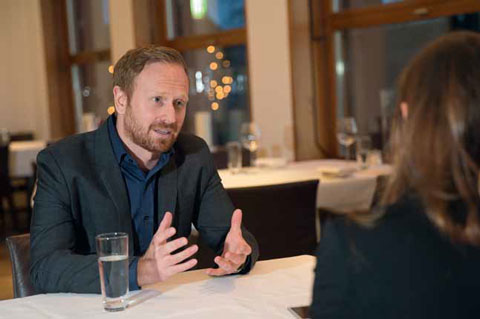
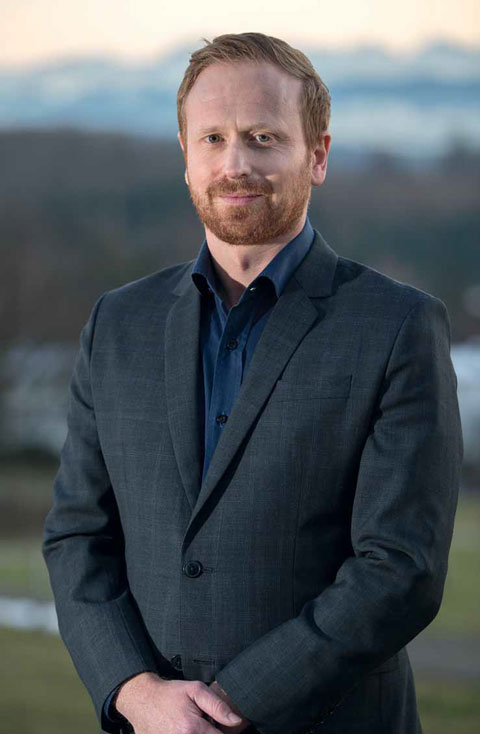
Rob Bradley, Head of Digital Advertising Revenue and Data at CNN International, speaks with *Werbewoche* at the fifth CNN Davos Debrief about the importance of digital advertising and the resulting changes in the media, as well as his vision for the future.

At the fifth CNN Davos Debrief, Alain Dehaze, CEO Adecco Group, Urs Rüegsegger, Group SEO Six, John Defterios, Emerging Markets Editor CNN with moderator Richard Quest, CNN International Business Correspondent, assessed current world events and took a look into the future. Also on site was Rob Bradley, Head of Digital Advertising Revenue and Data at CNN International. Advertising Week had the opportunity to talk to him about the new programmatic advertising department at CNN International and current trends in digital advertising.

Werbewoche_02_20160115_007

Could you quickly explain why CNN International established the section Digital Advertising?
Rob Bradley: CNN has done digital for many years. I suppose now it's ramping up its presence digitally, even further, mainly because we're moving towards thinking about audience first not individual platforms. Our audience views our content on TV on the phone on their tablet or desktop, at work on the train, when they're traveling. So we try to make sure, when we're presenting that content, it's in the right platform where people are actually consuming it. What I mean is, our advertising needs to represent this too. So we're moving to where the majority of our campaigns are cross-platform.
What is nice for me to see is that we're sometimes getting bigger digital spends as we are on TV. So combining the two is very unique for us.

So you're saying, digital is even more important than TV nowadays?
I wouldn't say digital is more important. TV is still the biggest platform we have. I'd say it's as important. What digital does is allow you to be incredibly targeted. Digital allows you to understand a lot of what is going on in a campaign, which you can't always do on TV. So it's a kind of harvesting the information you get from digital and that allows to give the client personalized information on that campaign. So the combination of the two is what's powerful.

Would you say, targeting and reporting is gonna be the main topic this year?
I'd say targeting is the first thing people look for in campaigning. But more and more with digital, it's branded content or sponsored content. We have a creative agency in the house, spread around the world in four different cities and they create content for the clients. This content is video-led normally. The client can have feature-pages, social-communities. So it's about getting targeting in place, yes, but also about delivering messages in a creative way.

How do you see Ad-Blocker - problem or chance?
I think it's a problem for the whole industry, a big education-piece needs to happen. Look at it this way: incredibly quality content, that comes at cost, right. And then we get to help fund that content. So internet-users need to understand that if they want that content they're gonna have to be shown adverts that allows us to sort of pay for the content. I think it's that way also to deliver the messages. Our user experience is paramount, so we're not showing ads to everyone in their face left right and center and doing this incredibly high-impact full amounts. So actually the thing is that people need to understand that if they're not gonna see ads they're gonna start getting less quality content, or content which didn't necessarily have the proper research into it.
Luckily for us, we have a huge scale, so the ad-blocker problems ar not hitting us massively. But we're definitely having a very close eye on and we'll create a strategy in place.

Don't you think people would rather pay more for the content than being forced to pay by watching a lot of not necessarily quality adverts?
Lots of companies are now doing that. But their subscription based model doesn't go so far though. I think their subscription is not enough to pay for the content, they still need advertisement. That's just part of it. So yes, people can start paying for content, like via micropayment. But I always think, people would still prefer to gain that content for free and put up with the adverts as long as they're not too intrusive or follow around too much.

You are concentrating on programmatic strategies and implementing data-oriented strategies, like integrating social media. What solutions for programmatic advertising are you developing right now?
Data's been around in the industry for a while now and we're very careful how we manage that data. People are interested in certain areas of content so we're showing adverts based on that interest.
One thing we're really pioneering is reporting. Reporting is basically trying to understand how deep we can go when it comes to clients campaigns and understanding how the campaigns performed. So moving away from just the CTR. I think the industries relied on the CTR for too long. So we're moving towards the point of reporting: the number of hours that ads had been viewed, the engagement, so the amount of time people consume that video or being on that page which has ad-features, the types of people being on that page. Reporting is also based on people's interest, like if they are reading sports for example, business, finance or news.
So reporting really is about to kick in to the industry. But very few media-owners do well at the moment. Most clients normally get a spread-sheet which says about the CTR and has the different ad-impressions and clicks and so on. So the reporting side, what people looking at, is gonna come into this year quite heavily - for the smart publishers anyway.

Do you see big differences in the US and Europe when it comes to reporting?
My role is very global so I see the differences in the markets very well. From that perspective I'd say London is not behind New York. It has advanced and sometimes even more advanced technology than NY. Well, NY leads the slight majority, but London is not far behind and Western Europe is the second most advanced market in the world. There are pockets, like Holland or France which are incredibly advanced.
Places like Asia, Africa, Middle East and South America are still quite far behind. A lot of things like programmatic or data-management, reporting - we can go there and influence the market. Meanwhile, in Western Europe there are many big media-owners trying to win the budget.

How about China?
We class China as a very key market. We have good reach in China, and it is advanced. If you look at some of the advertisement that comes out of Hong Kong, that leads the way, Shanghai and Beijing as well. Its got almost 650 million internet users. We see China as a big opportunity for us and they can be advanced, they are very good technical, so they're not far behind.
If you look at India and Africa: it's this new generation of millennials and young people, they may not even have a computer, but they've got a smartphone. And that smartphone is where they're reading all of their news, all of their content and keeping up to date. As a brand we need to ensure that we are delivering the right content and in the way they want to consume it. The way you deliver that content needs to be different and the way you actually deliver the advertisement needs to be different.

So, you're strategy for 2016 is mainly concentrated on mobile?
If you look at my strategy for 2016, half of it has to do with mobile. If you compare our desktop users to our mobile users, over 50 percent of our audience is now mobile, which is a huge amount. And if there are big stories, such as the Paris attack, it went up to 80 percent consumption on mobile. We need to make sure to deliver the information on mobile now as much as we are desktop.
We're living in a digital world now. Turner, who owns CNN, is in the state to moving away from traditional advertising on TV, even moving towards more long form native advertising. So that 30 seconds spot may start changing over the next few years. You will see more and more creative solutions on TV, just like you're seeing online right now.

What is your vision for the future for digital advertising?
I think what's gonna happen is; we need to get these personalized advertisements, but doing it in a way they trust the media-providers and then moving away from standard advertisement. There are very smart ways of delivering advertisement.
The future will be much more video when it comes to advertising, and much more mobile. Mainly it goes into the direction of being more creative. You know, an advert could be an information based video to be about the moon sponsored by one of the technical brands, like Microsoft. That would still be delivering a message, that Microsoft are doing technology but then also giving people kind of information, like who landed on the mars. That's the kind of thing I'd like to see more.

Interview: Ursina Maurer

Werbewoche_02_20160115_006

CNN International created the new Digital Advertising Revenue and Data department in spring 2015.Rob Bradley joined CNN International in May 2015 as Head of Digital Advertising Revenue and Data. In this role, he oversees the global optimization of CNN International's reach, the international expansion of the company's programmatic strategy and the implementation of modern, data-driven strategies, including social media integration. Bradley also leads a new team of experts working with CNN International's regional sales leaders to develop new digital components for integrated advertising and sponsorship solutions.
 

Youtube: Top 10 Video Ads 2015

Google has released the top 10 video ads on YouTube in Switzerland for 2015. In addition, Google analyzed the success factors for YouTube TrueView ads in a global study.

Why do users watch video ads at all if they can be skipped? This question was the focus of Google's current study, which identifies objective success criteria for trueview campaigns on YouTube. The study shows which creation criteria there are that are dependent on the view-through rate (VTR) and the brand lift, i.e. the increase in brand awareness and advertising recall. The following factors need to be considered.

The most important characteristic that leads to a higher view-through rate is humor. The study also shows that the use of celebrities has a positive effect on VTR. In addition, music can play a supporting role, provided it puts viewers in a good mood or perfectly underlines the arc of tension - but caution is advised here, because music per se is no guarantee of good results and can even have a negative impact on brand lift and VTR. Animations are also well received by users. This factor ensures that ads are not skipped. It is irrelevant whether the animations are cute, wacky or complex.

In trueview advertising videos, the first five seconds are crucial. They determine whether the user finishes watching the spot or skips the video. It is therefore extremely important for advertisers to arouse the viewer's interest in the first few seconds with interesting content. A study by Google has analyzed which factors are important for successful TrueView spots: Above all, the characteristics humor, celebrities and animations are relevant.

Of course, this study does not provide a secret recipe for the perfect ad. "But the success factors give advertisers clues on how to grab the user's attention and be remembered positively," says Oliver Rosenthal, Industry Leader Creative Agency at Google. "Well-crafted, intelligent video ads have the radiance to be seen by millions of users." (uma)

Google presents further study results on Think with Google.

The 10 spots in Switzerland in 2015 at a glance:

The top 10 includes a few very "Swiss spots" from Swiss brands or even Swiss celebrities like Roger Federer.

1. Zurich Insurance - "The Kinderviews

https://www.youtube.com/watch?v=aXW-YRY7ZqY

2. Swisspost - "Rolling parcels pursue pedestrians and surprise them."

3. YSL Parfums: "Black Opium Eau de Toilette - The New Feminine Fragrance".

https://www.youtube.com/watch?v=Y4iQpwyuWqo

4. sunrise - "Roger Federer and his new friend"

5. McDonalds Switzerland: "McDonald's Switzerland - If your body wants a Big Mac, give your body a Big Mac".

6. edeka: "#heimkommen"

7. Hyundai Worldwide: "Hyundai : A Message to Space".

8. pepsi max: "Drone Football | Pepsi Max | Genius. #LiveForNow"

https://www.youtube.com/watch?v=lX_DLdpygzw

9. coop: "BBQrew - Chill'n'Grill"

https://www.youtube.com/watch?v=ue2dFArVfho

10. H&M: "H&M Close the Loop - Sustainable fashion through recycled clothes"

Swiss success again in the "Year of Advertising

On Thursday, the Megaphone Award winners for the «Year of Advertising 2016» were honored in Berlin. Among them was the agency “am Flughafen,” which received the Bronze Megaphone Award for its B2B ad campaign for Lapp Tec.

The altitude is right: "Berlin, Berlin - here we come," said René Eugster, head of the agency at the airport, when he heard about the award from the Lapp Tec campaign with the bronze megaphone. "We are of course delighted to receive a megaphone again after a one-year hiatus. As a dialog agency that is repeatedly reduced to analogue and digital mailings in traditional advertising circles, we are particularly pleased that we won with a classic advertising campaign."

1-Bronze_Lapp_Inseratekampagne_Agentur-am-Flughafen-Kopie

This year's Grand Prix of the jury went to "The Great Easter Bunny Race" by Ogilvy & Mather for Media Markt. This campaign also won the golden megaphone in the Promotion and Integrated Campaign categories.

Heimat, Berlin, came out on top in the agency rankings. With awards for Hornbach (print, film, digital media and integrated campaign), the German Confederation of Skilled Crafts (digital media and integrated campaign) and Otto (film), the Berlin-based agency took the "Agency of the Year" award. Serviceplan followed in second place, with Ogilvy & Mather and Scholz & Friends tied for third place.

Megaphones in Gold were also awarded to Scholz & Friends for Fisherman's Friend (social media activities) and Adolf Würth "Hear the silence" (print) as well as Cheil for the Lufthansa CityNavigator (product and service website), and Leo Burnett and Thjnk for McDonald's "Popov, the Clown" (film).

Each year, the jury also honors a Newcomer of the Year agency. The Orange Council agency, founded in December 2014, was awarded this title. The agency distributes its creatives across offices in Hamburg, Berlin, Amsterdam and Hong Kong, making it the "smallest agency network in the world". Its client base already includes Detecon, Philips, Warner Music Germany and NDR. (afh)

New Children and Family Agency

Children's culture, children's and family marketing, shows, concerts, and management—Hotz'n'Plotz Entertainment is a joint venture between children's musician and educator Marius Tschirky and event manager and concept developer Joachim Bodmer.

Hotz'n'Plotz Entertainment is a matter of the heart of the two founders, as they write in a statement. The agency combines value with professionalism. Or in other words: "Hotz'n'Plotz is purposefully applied gun smoke and powder for children and families". And when the smoke clears, it should reveal the care with which Hotz'n'Plotz creates spaces for children. Each child should be picked up by Hotz'n'Plotz and taken along to the entrance into the realm of children's imagination. Every child has to enter by himself, no event agency has the key - anyone who says otherwise is lying. Hotz'n'Plotz is honest.

Hotz'n'Plotz realizes concepts, productions, events and concerts for children, their parents and families. The agency aims to be educational and rock'n'roll at the same time - wild, real and authentic.

Hotz'n'Plotz Entertainment was founded in September 2015 and is currently mainly involved in educational and marketing concepts, event planning tasks for clients, and building artists' careers.
 

Last but not least: Screech

In case you missed the start of the new German "Bachelor" season: A 30-second summary brings you up to date.

RTL is currently at a ratings high. The jungle show "Ich bin ein Star - holt mich hier raus" attracts almost as many people to the screens in Germany every evening as Switzerland has inhabitants - not including viewers in Switzerland and Austria. A look at Wednesday's ratings shows: Four RTL programs are in the top five places - only "Tagesschau" manages to attract comparable interest and at least still reaches just under two million people in the advertising-relevant target group.

Bildschirmfoto-2016-01-28-um-19.54.35
Source: Mediacontrol, via Horizon.net (Screenshot)

With a total market share of 13.2 percent and 4.3 million viewers, "The Bachelor" started the new season even better than last year (12.3 percent / 3.76 million viewers). Trash and shame are booming and have long since reached an educated audience.

In case you missed the start of the new "Bachelor": Don't be sad. The Übermedien website has created an informative summary to bring you up to date in just 30 seconds. So you can tune in to the second episode without any worries. Because: The jungle will soon be over - and life must go on after all. (hae)


For everyone who missed the start of the new "Bachelor" season yesterday (or didn't want to sacrifice two hours of their lives), we've summarized everything you need to know in 30 seconds.

Posted by Supermedia on Thursday, January 28, 2016

Viva Kommunikation: Day of the Swiss garage owners

In 2016, the Viva agency was once again responsible for the program and planning of Swiss Garage Owners' Day.

The year is still young, but the Swiss Automobile Trade Association (AGVS) has already successfully completed the first highlight of its annual program: the tenth Swiss Garage Owners' Day on 19 January 2016. What began as an annual meeting of AGVS members has become the largest specialist conference of the Swiss automobile trade within just a few years. This year, the conference at Emil Frey's Classic Center in Safenwil had to be announced as sold out at the beginning of December (for official reasons).

TdSG2016_Saal_300ppi_0

The Viva agency, which has been providing the AGVS with overall communications support for ten years, was once again responsible for the program and detailed content planning this year. According to the press release, the feedback from conference attendees, speakers and talk participants was very positive across the board. The statement by Jürg Röthlisberger, Director of the Federal Roads Office (Astra) and speaker and panelist at the conference, is representative of this: "I take part in up to 50 events a year, mainly as a speaker, but I have never experienced such excellent content planning and support."

The film produced by the Viva team in close cooperation with On Air Production about the Swiss car industry was also shown at the conference.

https://www.youtube.com/watch?v=4pvtOn-G-Z4

Finally, Viva's content management team was also responsible for reporting on the conference. Throughout the day, the conference landing page was continuously updated in three languages and accompanied via social media (Facebook and Twitter).
 

get_footer();