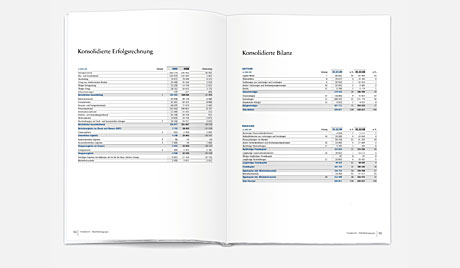
General Assembly in the sports studio

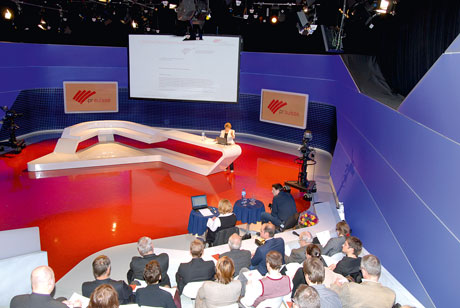
Zur ersten ordentlichen GV fanden sich 77 stimmberechtigte Mitglieder ein. Die als Interimspräsidentin gewählte Regula Ruetz begrüsste die Anwesenden am originell gewählten Austragungsort – in den Räumlichkeiten des Sportstudios des SF.

After thanking them for their hospitality, the minutes of the 17th Assembly of Delegates were unanimously approved.
The President's annual report focused on the new name, the new image and the restructuring of the SPRV. The most important changes:
-The SPRG is the umbrella organization for the seven regional associations and is being transformed into a national professional association.
- The new name is "Swiss Public Relations Association SPRV" in the three national languages under the uniform word and image brand "pr suisse".
- Each regional member is automatically a member of the national professional association, and uniform statutes are planned.
At the same time, the presidium and office are to be separated and a newly created office is to take over the operational work so that the presidium can focus on strategic tasks. Furthermore, the SPRG is to have an honorary council. As many PR organizations in Switzerland as possible (SPRG BPRA, Harbour Club, etc.) should be domiciled under one roof, the "Swiss House of Public Relations".
We will continue to work with Persönlich for communication purposes. At the same time, the SPRV is entering into a media partnership with Medien&Medizin Verlag MMV AG, the publisher of Werbewoche. Werbewoche will create a section where pr suisse can regularly publish its communications. In addition, members will receive a generous subscription offer. The President warmly thanked the publisher Eleonore E. Droux, who was present, for the attractive offers.
All items on the agenda for the statutory part of the meeting were adopted unanimously. The proposed Board members were elected unanimously. Regula Ruetz was elected President with warm applause.
Finally, the President thanked the Board of Directors and the Head Office for their hard work.
Eleonore E. Droux
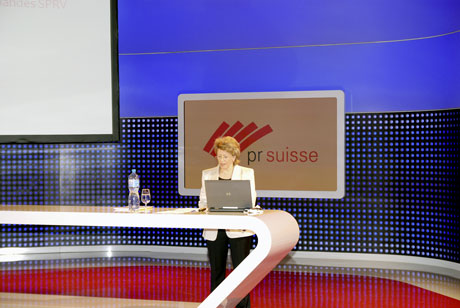
1290580935_img100505_pr1
Regula Ruetz during her speech.
1290580935_img100505_pr2
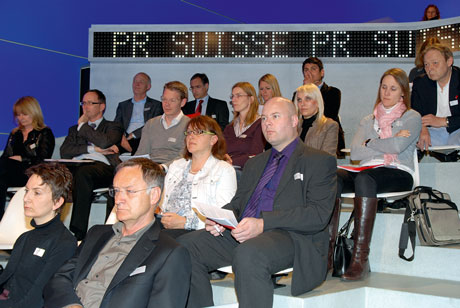
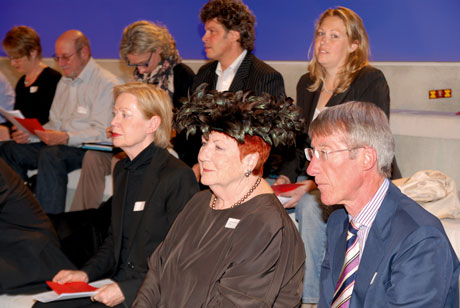
Attention in the sports studio.
1290580935_img100505_pr3
1290580935_img100505_pr4
The grande dame of PR: Doris Gisler.
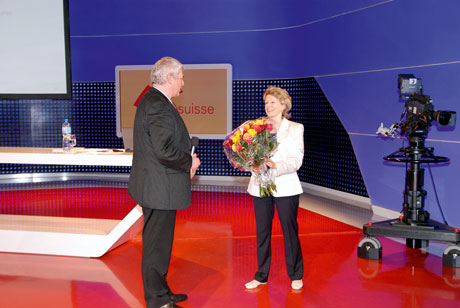
1290580935_img100505_pr5
Emil Annen congratulates the President.
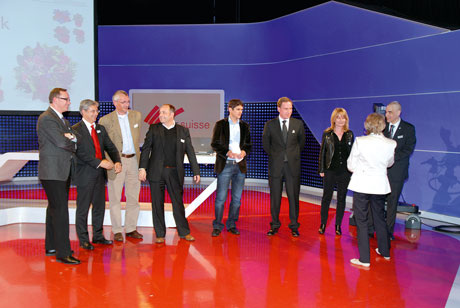
1290580935_img100505_pr6
The big thank you.

TBS Identity: It gets elementary in the mountains

TBS Identity has developed a new corporate design program and a campaign for the outdoor specialty retailer Ruedi Bergsport.

Posters in train stations and commercials in Zurich's cinemas are currently attracting the attention of trekkers, climbers and mountaineers. TBS Identity deliberately opted for a different visual language than other outdoor providers, the agency said in a press release. The subjects show extreme mountain athletes from earlier times and emphasize the elemental, archaic nature of mountain sports.
Responsible at Ruedi Bergsport: Ruedi Stolz. Responsible at TBS Identity (ASW): Christian Tobler (CD), Marco Donada (AD), Katrin Zbinden (project management).
img100505_bergsport2

Press Council: Complaint against Beobachter dismissed

The Press Council has rejected a complaint by the Swiss Association Against Animal Factories (VgT) against the Beobachter. The VgT offered the magazine extensive documentation on a cheese production label. The magazine subsequently published only a short article without mentioning the association.

The Press Council argued that the VgT should have been aware that the magazine would check the information it received and determine the direction and scope of a report on its own. It seems somewhat questionable that the Beobachter did not mention the VgT in the article. However, the magazine did not use any wording or photos from the VgT documentation.
Journalists must not use unfair methods to obtain information. However, anyone who entrusts information to media professionals cannot expect it to be published unchanged in terms of scope and thrust. This applies in particular to information from interested parties. Editorial offices should point out these rules to their informants.

Feldschlösschen has opened the lid hunt

Feldschlösschen has launched a promotional campaign to coincide with the World Cup: the 2010 Feldschlösschen Cap Hunt. The campaign is accompanied by TV commercials, posters, and promotions in large shopping centers.

There are now chances to win among the Deckeli on bottles in the brewery's special football packaging. The winning code is sent by SMS or on the website Feldschloesschen.ch entered. A series of four TV commercials, which can also be seen on the website, is also intended to establish Feldschlösschen as the beer of choice for Swiss football fans. Feldschlösschen worked with Spilmann/Felser/Leo Burnett to produce the TV commercials and with Valencia Kommunikation for the promotion and packaging.

> To the spots

1290580940_img100504_feldschloesschen2

Dachcom: When floors fall in love

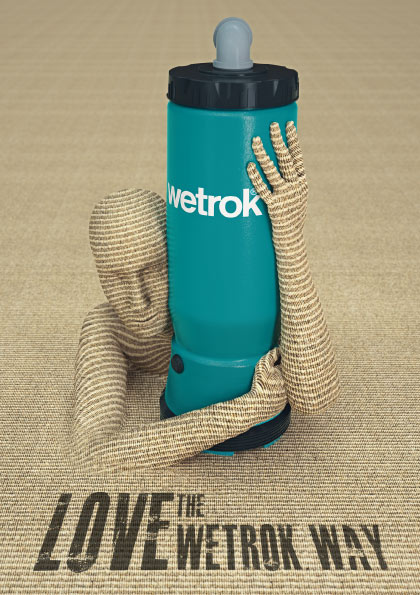
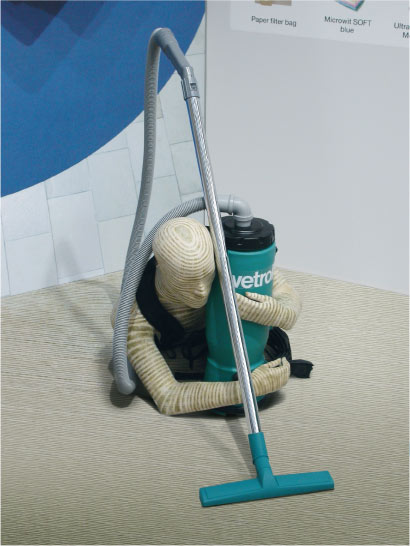
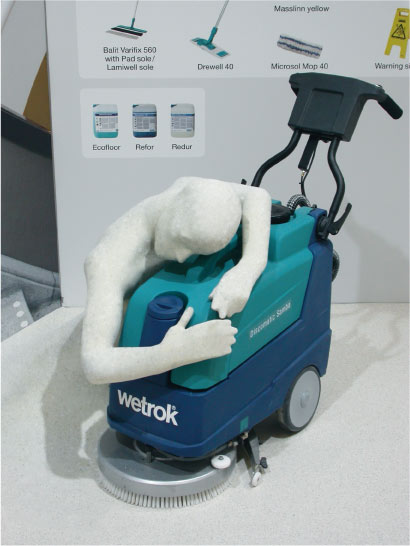
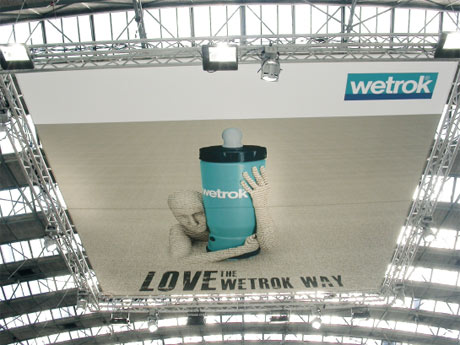
Wetrok bietet Reinigungsgeräte sowie Putzmittel und Anwendungsmethoden an. Um das Angebot im Bewusstsein der internationalen Zielgruppen zu verankern, hat Dachcom anlässlich der Interclean-Messe in Amsterdam verschiedene Massnahmen realisiert.

The idea: It is not enough to be a flooring specialist. The goal is only achieved when the floor falls in love with Wetrok and only lets Wetrok touch it. At the trade fair, it was possible to see how the flooring rises up from the ground and caressingly nestles against the Wetrok appliances.

Responsible at Wetrok: Branko Radovinovic (Head of Marketing Communication), Daniel A. Berti (Head of BU Systems & Methods), Kristopher Cleveland (Head of BU Machines). Responsible at Dachcom: Britta Egger (CD), Bernd Leisner (concept/text), Röne Bertschi (consulting/strategy).

1290580939_img100504_wetrok1
1290580939_img100504_wetork2
1290580939_img100504_wetrok3
1290580939_img100504_wetrok4
img100504_wetrok5

Last but not least: Away with mobile advertising

In Switzerland, there are recurring discussions about advertising bans. While the focus here is usually on alcohol or candy, in Tajikistan the issue is restrictions on cell phone advertising. Of course, this is being done without any public debate, but at the request of President Emomali Rahmon.

Since Tuesday, advertising posters for cell phones have been torn down in the ex-Soviet republic. The reason: The president considers cell phones to be harmful. Not because of the radiation. The - primarily rural - population spends too much time chatting on their cell phones. This destroys families because they spend far too much money on their phones. It is questionable whether the advertising restrictions will really achieve their goal and whether the population's affection for their cell phones will decrease as a result. But it is certainly worth a try, as advertising bans are considered a universal remedy.

Mainland: Playing with numbers for the NZZ annual reports

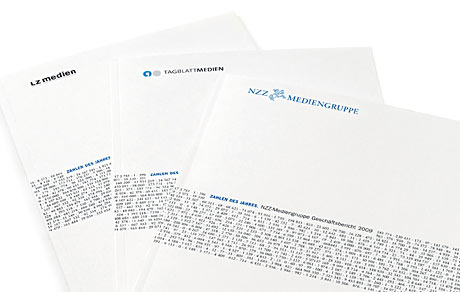
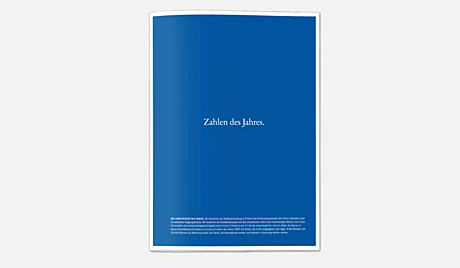
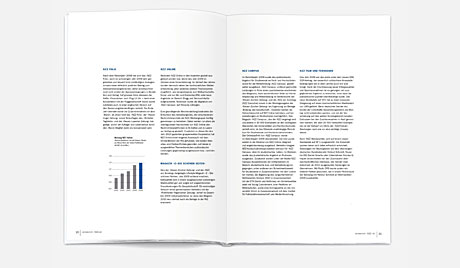
The advertising agency Festland has designed the NZZ Media Group's annual reports. These are intended to reflect the corporate strategy of an integrated and uniformly managed media group.

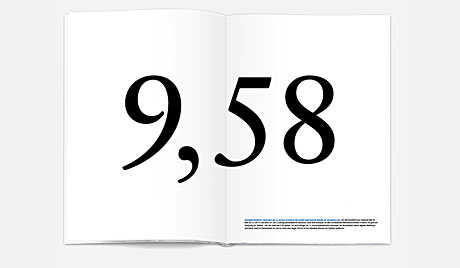
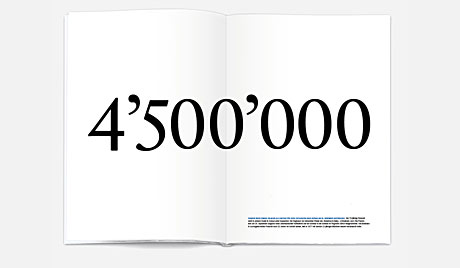
For the first time, the NZZ Media Group, Tagblatt Medien and LZ Medien are presenting reports that are standardized in terms of content and form, but which also take individual circumstances into account. Festland developed a modular design concept for this purpose. Figures play a key role in the current annual reports - and not just in the annual financial statements. Under the motto "Figures of the year", a review of the year presents figures that made the headlines - from Usain Bolt's world record of 9.58 seconds over 100 meters to the CHF 4,500,000 that Roman Polanski had to deposit as bail for his release to Gstaad.

Responsible at the NZZ Media Group: Bettina Schibli (Head of Corporate Communications), Hanspeter Kellermüller (Head of General Secretariat). Responsible at MDD, Management Digital Data: Nadine Künzli.

1290580939_img100504_nzz1
1290580939_img100504_nzz2
1290580939_img100504_nzz3
1290580939_img100504_nzz4
1290580939_img100504_nzz5
1290580939_img100504_nzz6

Futurecom: Foul what the stuff holds

Die Kreativen von Futurecom Mobile Studios haben eine iPhone-App entwickelt, mit der man ungeniert foulen kann. Mit «Superfoul 2010» kann man seinen Emotionen freien Lauf lassen und seinen Lieblings-WM-Gegner hemmungslos in den Rasen stampfen.

You can choose from the best teams taking part in South Africa. The Foul App is available free of charge in the iTunes Store. In the first three days, the app has already been downloaded over 1,000 times.

> To the iTunes Store

Responsible at Futurecom/Y&R Group: Andreas Widmer, Markus Gut (overall responsibility), Isabelle Bischoff (design), Marcel Berberich (programming), Thomas Steiner (consulting).

1290580940_img100504_foul1
1290580940_img100504_foul2
1290580940_img100504_foul3

iAd: Advertising is no bargain with Apple

Anyone who wants to place ads on the iPhone, iPod Touch, and iPad will have to dig deep into their pockets. According to a report in the Wall Street Journal, the few marketers who want to run ads at the launch of iAd will have to pay up to ten million dollars.

If you want to advertise via iAd in the first year, you have to book a package for at least one million dollars. For comparable campaigns via mobile devices, other mobile platforms only charge 100,000 to 200,000 US dollars, according to the report. The newspaper refers to an unnamed advertising marketer. Apple wants to be paid per ad impression as well as per click. With other advertising platforms, it is usually either or. When a user calls up an advertising message on a mobile device, Apple wants to charge the advertiser two dollars each time. One cent will also be charged per advertisement. The developers are to receive around sixty percent of the advertising revenue. The Group will keep the remaining 40 percent for itself.

Cosmic Bern: Too much hair on your head?

Cosmic Bern designed an advertisement for the hair salon Coiff your success. The ad draws attention to Coiff your success's new second location.

The hairdressing salon Coiff your success on Marktgasse has been in business for several years. Since last year, there has also been a second store in Ryffligässchen in the Fizzen fashion store.

Responsible at Coiff your success 2: Pino Zinna (Owner). Responsible at Cosmic Bern: Thom Pfister (CD), Tamara Janes (graphics), Simon Schatzmann (Head of Consulting), Photography: Beat Schweizer.

img100504_coiffeur

Basel: Government wants to allow posters on signal distribution boxes

Die Basler Regierung will künftig Plakate auf Verteilkästen von Lichtsignalanlagen auf Allmend zulassen. Sie wolle damit einem Bedürfnis nach kultureller Kleinplakatierung entgegenkommen. Illegales Plakatieren will sie stärker ahnden.

The new billposting option complements the detailed small billposting concept from summer 2009. The permit fees charged to the site operators are low, at around CHF 32 per year for an A2 format poster, which is in line with the approach in Zurich. The operators set their own prices for the posters. In contrast to poster spaces on sites owned by private individuals or independent companies, the traffic light control boxes on public land are now public spaces. Here too, the city canton wants a permit fee of CHF 32 per A2 site. The legal offer is intended to make illegal billposting unnecessary.
Illegally put up posters are also dealt with differently: The intention is no longer to criminalize the perpetrators with fines, but to charge them for the removal and cleaning costs. Illegal posters on Allmend will in future be removed without warning. The removal fee ranges from CHF 100 per poster up to CHF 10,000. Poster companies and event organizers in particular will be asked to pay.

SRG: Publishers identify savings potential in Ticino

SRG has to save over 50 million a year. Media Minister Moritz Leuenberger is considering massive cost reductions and can imagine entire programs or channels being discontinued. Publishers and politicians, on the other hand, see potential savings in Ticino, which benefits disproportionately from the redistribution of license fee money compared to other regions.

The entire second Ticino TV program could be cancelled without replacement, as Peter Wanner, publisher of the Mittelland Zeitung, told the Tagesanzeiger. According to the newspaper's estimates, this could save around 40 million. SP National Councillor Hans-Jürg Fehr can also imagine that radio and/or television programs in Ticino could be discontinued before cuts are made to German-language programming - where the majority of revenue comes from. Hanspeter Lebrument, publisher of Südostschweiz and President of the Swiss Press Association, is of the same opinion. According to Lebrument, the reduction of television and radio stations could be carried out without any loss of quality. After all, SRG has eight television stations and 18 radio stations. Like Weltwoche publisher Roger Köppel and price watchdog Stefan Meierhans, he also sees potential for savings in wage costs. SRG is the most generous employer in the media sector.
get_footer();