Corporate film on energy

Abu Dhabi, January 2010: At the invitation of Siemens Energy and on the initiative of Primafila AG, four renowned experts from the international energy sector exchanged views on the topic of «Optimizing the Energy Mix»: Ambassador Richard Jones of the International Energy Agency, Frank Mastiaux, CEO of E.ON Climate & Renewables, Khaled Abubakr, CEO of TAQA Arabia, and Andres Wijkman, Vice President of the Club of Rome (joining via video link from Stockholm).

The roundtable will be moderated by an American correspondent from Dubai, a longtime employee in Primafila's international network, filmed for the Siemens website (www.energy.siemens.com) and as the cover story for the spring issue of Siemens Energy's international magazine "Living Energy". Knowledge exchange at the highest level
High level, cross-media designed and implemented.
Information: Primafila AG, Dr. Viviane Egli, [email protected]

Sascha Borsai new to the team at McCann Erickson

With its move to the new address, McCann Erickson Zurich welcomed a new concept developer/copywriter on May 3.

During his part-time studies in journalism with a degree in persuasion research, Sascha Borsai spent four years designing campaigns at Exxtra Kommunikation. He then worked for Rod, where he was involved in the Effie Gold and Crossmedia Award-winning "Slow down. Take it easy" campaign, which won Effie Gold and a cross-media award.

The "Swiss Brands" magazine

A proud representation of Switzerland at the Expo 2010 world exhibition in Shanghai/China.

From May to October 2010, "Swiss Brands" by Primafila AG and China Communications will represent Switzerland as the official magazine in the Swiss Pavilion at Expo 2010 in Shanghai and at other distribution locations in Shanghai and China. The ambitious project has come a long way.
Spring 2008: The consulting agency China Communications and the corporate publishing agency Primafila AG in Switzerland decide to publish a magazine called "Swiss Brands" for the first time to coincide with the Shanghai World Expo 2010. An ambitious project: co-branding publishing with the proudest Swiss brands. The biggest challenge is to ensure targeted and quantitatively affordable distribution. And: it has to be interculturally appropriate for the Chinese readership on the one hand and for the "Swiss Brands" partners to be won over on the other.
Skepticism, an inviting dummy and paved distribution channels
Autumn 2008, economic crisis: the majority of potential "Swiss Brands" partners contacted wave goodbye for the time being. China is not in focus at the moment, they have other concerns. Nevertheless, media designer Horst Moser in Munich, a long-standing business partner of Primafila AG, creates an inviting dummy based on the concept. The Federal Department of Foreign Affairs (FDFA)/Presence Switzerland shows initial interest in the concept for the high-quality "Swiss Brands" magazine, and after a few months, in spring 2009, the FDFA/Presence Switzerland signs a contract with Primafila AG; an important part of the distribution is now secured through the planned presence in the VIP area and sales in the pavilion store in the Swiss Pavilion at Expo 2010 Shanghai. Switzerland Tourism is formulating a small but qualitatively interesting distribution in China (a good 5000 copies). Thanks to the cooperative attitude of printing partner Ringier International in Shanghai, the distribution solution for the planned print run of 150,000 copies can be completed: A personally addressed mailing to 50,000 top decision-makers in China, distributed in 40 five-star hotels in and around Shanghai, will be organized with Ringier
agreed. With the dummy, the still skeptical Swiss companies with activities in China will now also be presented with media data. Stories in the sense of a fully formed corporate
Publishing is possible in addition to classic advertising appearances.
19 "Swiss Brands" partners
Summer and fall 2009: Talks with potential "Swiss Brands" partners are in full swing. China Communications and Primafila AG listen to the needs of Swiss companies operating in China and identify opportunities for interesting stories. In the end, 19 partners from French- and German-speaking Switzerland from the consumer goods, business development and tourism sectors are won over for the innovative joint project. Most of them have ordered a story. Of the total of 68 pages, only 9 pages have been booked by six partners for advertisements.
During the winter months, the stories of the "Swiss Brands" partners and other magazine articles are realized in Switzerland and China. Faithful collaborators of Primafila AG and China Communications begin to work: Alberto Venzago photographs a fascinating series of pictures of landscapes for three mountain railway regions, illustrator David Boller creates a manga with a new Heidi for Shanghai 2010, and the Chinese ambassador in Bern gives his time to talk to the Chinese journalist (there are not too many of them in Switzerland) about innovations and economic products in the canton of Bern as well as his personal preferences in and around the Swiss capital. Conductor Muhai Tang shares his preferences for Swiss culinary delights with the editors. Each "Swiss Brands" partner's contribution is conceived and implemented with intercultural sensitivity, whether it is a sustainability project such as the "Green Roofs" in China (the Swiss pavilion also has such a green roof!), pocket knives demonstrating Swissness, pans or the new business class seat that is being tested for "Swiss Brands" at Zurich Airport by the young circulation specialist Dr. Zijiang Yang, who is currently working in Bern. The foreword by the President of the Swiss Confederation, Doris Leuthard, is a special honor.
An intercultural team
Zurich - Zug - Munich - Beijing - Shanghai: story after story for the new magazine is created in close and well-coordinated collaboration. Simon Wong in Beijing, in the office of China Communications and Primafila in China, develops the Chinese cover typography to match the design from Munich and the concept and photography from Switzerland and ensures the production interface to the printing plant in Shanghai. In the last three weeks of production, work is carried out almost around the clock, made possible by the locations in the different time zones: The Chinese editorial team and (for the shortest texts in English) also the English editorial teams in Switzerland and the USA put the final touches to the now proudly designed pages - and on April 1, all 19 partners give their approval for printing after 24 hours without any problems. On April 2, the draft is already with the project manager at Ringier Shanghai, who still has to submit it to the authorities before printing. In the meantime, the online version of the magazine (www.swissbrands.org) is being pursued in Zurich.
Despite all initial resistance, "Swiss Brands" is a unique intercultural corporate publishing product: a co-branding presence from Switzerland for a discerning Chinese readership and clientele.
1290580934_img100505_swissbrands

Coaching comes from way out

Crisis, cramp, family fever: Shortly before burnout, it's high time for coaching - both very fashionable. Those who have benefited from coaching often train to become coaches themselves. After all, retraining also helps against inner emptiness. Is coaching just expensive jabber, or does it really bring something?

80 percent of all Xing users declare coaching as one of their services in their profile: From dog and brand coaching to hypnosis, health, charisma, beauty, stress and patient coaching to holistic coaching, it's all there. Coaching seems to be a panacea for bad manners, declining brand power, insomnia, wrinkles, too much work and various other aches and pains. However, the inflationary use of the term for any kind of consulting does not generate trust, but rather a pronounced distrust of anything called coaching.
"The fact that coaching is considered a universal drug does not suit the subject," said Reinhard Vissa during a presentation for the IAA Young Professionals. Vissa is a MAS Master of Coaching in Organizations ZHAW. That also sounds pretty much like empty words, but Vissa, who has worked as an advertiser, marketer and manager for a long time, seems to know something about putting people and organizations back on track. "Coaching usually reflects a person's professional situation, rarely their personal situation," Vissa explains. "The area of concern and the specific issue at hand are determined by the coach and coachee during the first session. The goal of coaching is to improve learning and performance, support professional happiness and avoid professional suffering."
Profession and psyche
The most important tool in coaching is dialog. "But the coach is not merely a conversation partner and listener to whom the coachee can get his worries off his chest because he has no one else to talk to," Vissa emphasizes. "A coach leads the dialogue and applies professional questioning and analysis methods that make it easier for his client to get to the bottom of his difficulties and overcome them himself." Structured conversation management also includes a clear introduction and conclusion at each session, as well as tasks or questions for the client to think about until the next session.
If someone has psychological difficulties or even a tendency to depression, they better go to a psychiatrist or psychotherapist. Doctor and therapist explicitly tell their patient what he has to do to get well again. In coaching, the client plays himself free, the coach is "only" his trainer. Before Vissa accepts a client, he checks to see if the client is receiving other supports, such as training programs or even psychological support. "If so, it is important that this support is compatible with coaching," the expert stresses. "It may make sense to postpone coaching until a later date."
The boundaries between the tasks of a coach and a psychotherapist or psychiatrist are fluid, because the path from high performance to burnout and depression is short. Moreover, the five pillars of human identity - body and corporeality, network of relationships, work and performance, material security, and values and norms - are intimately intertwined: If someone is not healthy, they cannot work full time and subsequently suffer from material insecurity. If someone suffers from material insecurity, their relationship network gets holes and their value system starts to crumble. And that makes people ill. The best way to distinguish between coaching and the treatment of the psyche is as follows: Coaching refers to the professional context, psychotherapy to the private. Coaching tries to solve difficulties and conflicts at work, psychotherapy treats trauma, depression and addictions.
Helping with dialog
Coaching is consulting without advice. And that is a good thing. Because many coachees seek help because they are completely overwhelmed with social and professional processes and the organization of their resources. They are under enormous pressure, their energy reserves are at zero. Good advice or recipes for happiness would only build up more pressure. That would be counterproductive. That's why a good coach helps his client to find his own way out of the jam. If the client makes decisions on his own initiative and sets deadlines by which he wants to have implemented his plans, he is more likely to persevere. The prerequisite for successful coaching is that the person being coached really wants help and is willing to work out the solution himself, flanked by his consultant. Although this misconception is persistent: The coach does not deliver the solution to the problem on a silver platter like a doctor delivers a few pills.
Because the client's participation is so important to the success of a coaching session, Vissa reacts skeptically when a boss sends his employee or even an entire team to him. "An employee who is sent to coaching by the boss is usually very passive during the sessions and not necessarily willing to cooperate," says the coach. Clearly. Those who are prescribed self-help from above bring the buck to the first session right away. "And if a boss sends his team over without coming along himself, he's usually the one who needs counseling," adds Vissa. Every now and then, he has the unpleasant task of pointing out this error in thinking to the head of a company.
Typically, coaching needs arise during mergers, management buyouts, the sale of a company or succession management. Whenever possible, Vissa does not conduct his individual and team coaching sessions or mediations within the company. "A certain distance from the environment that needs to be clarified is important," he stresses.
Define roles
Most of the coaching sessions are about personality development, specific leadership tasks, clarifying role conflicts, self-management, burnout prevention, team or career development, communication problems between employees or technical coaching. "Professional competence and organizational structure are rarely a topic in my sessions," Vissa says. "Most of the time, it's about difficulties with work organization and dealing with conflict or coworkers. I look at where my client is losing energies and where he could pick them up again. And then together we try to reorganize resources."
Role conflicts and problems with self-management are Vissa's daily bread: "It often happens that employees are not clear about their role in the company," the coach explains. "They don't know exactly what their tasks are, what they are responsible for, and what roles their colleagues fill." This creates high tension between the employee's expectations of his or her work and his or her performance for the company.
Older executives in particular are candidates for this problem: They have often passed through several stations in the company, feel responsible for everything and are asked for advice and support from many sides. In the process, they can no longer set priorities, get bogged down, wear themselves out between the various stakeholders, and at some point can no longer manage their own work. When Vissa asks such clients, "What would it take for you to be comfortable at work again?" they often don't know the answer. In this situation, it is the coach's job to work with the client to find the ideal situation. Because if you don't know what the (working) world should be like in which you would feel comfortable, you can't change the actual state in this direction. Vissa: "My goal is to make my coachee fly again."
Coaching in self-experimentation
The self-experiment proves: Coaching really does the trick. If you catch a good coach, you get the chance to untangle your thoughts, desires and feelings with a borrowed brush and to style a pretty hairstyle again that will withstand the wind of the future. The idea is not to blindly follow advice from a stranger, but to find out what you actually want yourself by asking the coach specific questions. The solution is usually already in the coached person's head, stomach or heart.
But how do you find a good trainer? Optimally by recommendation. If a person with whom you get along well recommends a coach, it is relatively likely that you yourself will also be satisfied with that coach. There is no fear that the coach will share details from the session with the person you know, because coaches have a duty of confidentiality. If you don't know anyone who knows you, it's best to choose a coach who is registered with the "BSO Berufsverband für Supervision, Organisationsberatung und Coaching" (BSO Professional Association for Supervision, Organizational Consulting and Coaching), advises Reinhard Vissa: "There's a right uncontrolled proliferation of professional trainings. If you want to be sure, choose a coach registered in an association - because associations check professional qualifications before accepting a new member."
If you want to be coached, you have to be prepared for surprises. Because it can happen that you find out more about yourself and your behavior than you would like. This does not necessarily mean that you are a new person after coaching. On the contrary: Often you are back to your old self. A surprise can be, for example, that an uncomplicated way can be found to cope better with a situation with which one had previously struggled. In other words, not a big departure, not everything new - but simply a different way of dealing with what has been. Which nevertheless feels like a new beginning.
Anne-Friederike Wilhelm
1290580937_img100505_top2

Last but not least: Murdoch ousts Titanic

The resounding success of the 3D fantasy film *Avatar* and the strong performance of its cable channels have filled the coffers of the U.S. media conglomerate News Corporation. The empire controlled by Rupert Murdoch posted a net profit of $839 million in the third fiscal quarter.

No other content provider is stronger, Murdoch jubilated in New York on Tuesday. Nevertheless, News Corps was unable to match the result of the same period last year. A tax credit and a divisional sale had boosted profits to 2.7 billion dollars. Leaving these special effects aside, however, the Group was able to triple its earnings and also exceeded analysts' expectations.
In the Hollywood business, News Corp recorded a jump in operating profit of
76 percent to 497 million dollars. The 3D film Avatar was released in mid-December and became the most commercially successful film of all time. It displaced Titanic
from first place. News Corporation, controlled by Rupert Murdoch, benefited from the 3D film, which generated revenues of 2.7 billion dollars. As the television and newspaper business and book sales also picked up again, the entire group's turnover jumped by 19 percent to 8.8 billion dollars.
News Corp. owns the film studio 20th Century Fox, the Fox television chain, newspapers such as the Wall Street Journal or the British Times and Sun as well as book publishers. Murdoch's media empire also includes Sky pay-TV channels in various countries.

Snowflake relaunches Baslerhofmann.ch

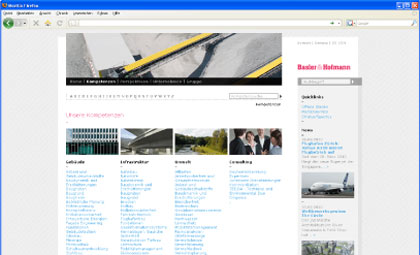
The engineering, planning, and consulting firm Basler & Hofmann is relying on TYPO3 and the Swiss open-source agency Snowflake for a relaunch of its website.

Based on the new corporate design created by Meta Design Zurich, Snowflake developed a new website. The focus was on a complete overhaul of the content. The aim was to enable user groups to find the content relevant to them quickly and intuitively. The solution is a skills and project database, which the agency developed as a TYPO3 extension. Each competence is enriched with a description, references, complementary competencies and the appropriate contact person. The application then lists the skills on the website. In addition to the keyword search, there is also an alphabetical table of contents. If you move the mouse over a letter, the corresponding entries are displayed immediately thanks to AJAX functionality.
Basler & Hofmann's new internet platform is intended to provide a uniform and easy-to-manage group presence across all national subsidiaries. A new website is being created on the basis of a single TYPO3 installation, which uses the design, structure, functionalities and, if required, content of the main site.
1290580936_img100505_snowflake5
img100505_snowflake7

Kathrin Amacker becomes Swisscom Head of Communications

Kathrin Amacker, a CVP National Council member from Basel-Landschaft, will become Head of Corporate Communications at Swisscom and a member of the Group Executive Board in the fall of 2010. She will therefore step down from the National Council.

Amacker was elected as the new Head of Communications by the Board of Directors. She will succeed Stefan Nünlist, who will be leaving Swisscom at the end of May 2010 to join SBB. This was announced by Swisscom on Wednesday. Until she takes over, the division will be managed with an internal solution. The exact date for the change in the fall has not yet been determined, Amacker told SDA on Wednesday. Amacker currently holds a management position in the Human Resources department at Novartis.

The Bühler anniversary book

150 Years of Innovations for a Better World - an international publishing.

The international technology group Bühler is celebrating 150 successful years. To mark the occasion, the company has published a 230-page anniversary book. In 68 stories with photo portraits of current and former employees from all over the world, the background to the development of a company that has successfully established itself on the global market over the past 150 years is recorded. It has become a very personal book about the great commitment of the people behind the success, who have wisely and sensitively upheld and developed the quality and solidity of the core business worldwide in changing markets. The portraits, researched and photographed on site, are framed by milestones from the company's 150-year history. The anniversary book is supplemented with an extensive photo section of selected reference machines and systems.
Today, Bühler is a global leader in process engineering, particularly in production technologies for the manufacture of food and technical materials. The company is active in over 140 countries and employs around 7500 people worldwide. This book is a fascinating reflection of this global expertise and activity.
Corina Atzli, Head Corporate Communications Bühler Group, was responsible for the concept of the anniversary book, supported by New Identity Ltd, Basel. The employees in Switzerland and Germany were portrayed by journalist Sarah Jäggi and photographer Anne Morgenstern. Primafila AG supported the process with its internationally established expertise and its network of journalists and photographers, so that Bühler's global presence could be authentically captured in the book.
1290580934_img100505_buehler

Not like that! Or is it?

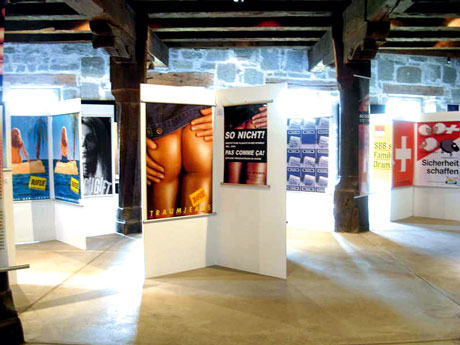
The Gutenberg Museum is exhibiting provocative poster art.

Poster advertising is one of the oldest forms of advertising. It is particularly suitable for conveying short and simple messages. In order for these to have a "striking" effect, the poster must cause a stir. For this reason, posters are sometimes deliberately designed to be provocative - even if the client does not always like to admit it.
Female figures have been a popular subject in this context for over 100 years. As much nudity as possible always causes a stir. Sometimes it also causes a stir. As recently as 1974, a visible breast had to be covered with a star. In the 1980s, Peter Marti's design of several posters with bare bottoms caused a huge stir. Other posters caused a stir for political, religious or ethical reasons. Posters are rarely banned for legal reasons. In 1947, for example, landlords feared for their good business with alcohol because Eptinger had the slogan "Trink lieber Eptinger" printed on the poster. In 1990, however, the same idea was no longer objected to. The misuse of Leonardo's Last Supper for advertising kitchen appliances was also undesirable. "Blasphemy" was the verdict for the naked backside of a priest who wanted to advertise ambiguously with "Hakle...luja".
These and other curiosities can be found in the exhibition "Not like this!" at the Musée Gutenberg in Fribourg. On display until June 27 are "controversial posters" from Switzerland from 1883 to 2009: Benetton, Stop Aids, Sloggi, Rifle and, time and again, the SVP are featured in the collection of over 60 subjects. The posters on display come from the holdings of the Basel Poster Collection of the School of Design as well as from the agencies directly "involved". More information and opening hours can be found at www.gutenbergmuseum.ch. pan
1290580936_img1005050_sonicht1
1290580936_img100505_sonicht5
1290580936_img100505_sonicht6
1290580936_img100505_sonicht3
1290580936_img1005050_sonicht2

Free art and culture

Cards For Free: Masani's Ambient Media has gained new momentum with Livio Fazio and is ready for the World Cup.

How does the message reach my target group? And with an idea that is as appealing as possible? Many consumers, especially in a young target group, can hardly be reached using traditional instruments. In addition, most media are also in a fierce competition with each other.
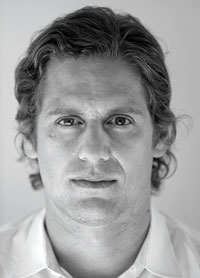
Cards For Free is a channel that has been reliably transporting such messages to customers for years. In Switzerland, this form of advertising is offered by Masani's Ambient Media. The trendy company has been serving the urban scene for over 15 years with its appealing collectibles. The company was taken over by Livio Fazio at the beginning of 2009. In the wake of a generational change, "new momentum is now being generated once again", as Fazio promises. The young entrepreneur, who runs the business himself, used to score points as a professional ice hockey player, then got his first opportunity in marketing and made the most of it.
Masani's Ambient Media employs three permanent staff in its new office in Cham/Zug.
To this end, the card publisher works closely with Mediabox for marketing purposes. The cards are distributed, refilled and maintained in Masani's stand according to professional criteria by bicycle couriers every week in the fine tradition. Professional printing has been carried out on the same machines for years. The advertising agency therefore only needs to deliver the idea and the motif. However, the specialists at Masani's can also act as consultants when it comes to brainstorming and design. "From our experience with hundreds of successful card projects, we know which elements and at what volume a message needs to be placed to create the greatest impact," promises Livio Fazio. The most popular are, of course, cheeky sayings that can be used by card collectors for their own purposes outside of advertising. Cards that link to other channels in a cross-media network are also useful.
Cards For Free generates 1,200,000 contacts per month with a national campaign. The network currently has over 900 locations in all parts of Switzerland. The Masani's stands are present at tested locations with high footfall. The targeted lifestyle ambience takes place in trendy restaurants, bars, clubs, cinemas and spots in an exclusively urban environment. Taking into account modern leisure behavior, around 70% of the target group between the ages of 18 and 35 are reached. This urban target group shows a pronounced interest in trends, which reflects a high level of brand awareness. For example, 74% of Cards For Free fans buy designer clothes. A trendy 73% regularly store online. In addition to fashion and trends, people also have an affinity for sport, travel and all pleasures. Cards For Free are a legal and accepted medium in this area when it comes to creative advertising for alcoholic beverages. Political advertising is not permitted, despite the great interest shown by political parties.
The advertising actively promotes art. Masani's approached leading art schools early on to offer students an attractive platform for their ideas. Thanks to cards, art students often find a broad public for the first time. This "art promotion" is supported by Livio Fazio through active competition. Every two months, a new theme is launched at the major art schools in Switzerland. The best works are then rewarded with a free print with generous distribution. Promoting culture also means attractive discounts for theaters or concerts. Cards For Free is the ideal meeting place, as it takes place during leisure time in an attractive environment. In addition, the target groups are precisely targeted. As "early adopters", the collectors of these cards are also a particularly interesting audience. Cards For Free therefore achieve a high level of consumer acceptance. They usually initiate an interactive engagement with the message. And "last but not least": the consumer is left with a small feeling of happiness because they have received something for free.
It is often the case that a whole pile of flyers can be found in the vicinity of the cards in demand. However, the experience of those in charge of the specially marked distribution stands shows that party flyers are increasingly ending up on the floor. "Cards for free, on the other hand, are collected," says Fazio. An estimated 34 percent of the cards are actually sent on. The rest end up at home on the pinboard or on the fridge. There, the card often spreads its message every day for months. All this data is backed up by market research. The high level of user acceptance and the intensive engagement with the message are the decisive arguments. The success is based on the fact that users take, send or collect the cards of their own free will. In addition, information inflation through text messages and e-mails has made sending cards with handwritten messages particularly valuable. The cards often achieve cult status. Conversely, the pubs and restaurants that post them can offer their guests and visitors an additional attraction free of charge. Art and culture to go.
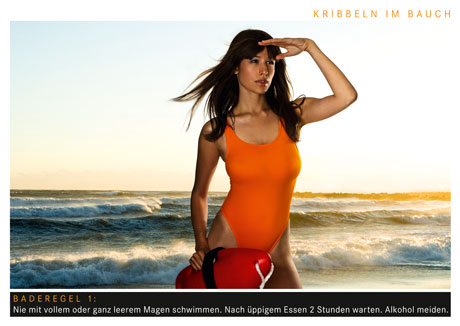
The cards were introduced in Switzerland by Walter Hügli. One of the first locations was the Helvti Bar. Nowadays, the free cards can be found from neighborhood cafés to the opera house. The creativity on the cards never ceases to amaze with some crazy ideas. When advertising a Ford convertible, a sample with sun protection was welded into the card for potential test drivers. For the 15th anniversary, which also marked the 100 million Cards For Free mark, 15,000 exclusive cards were decorated with Swarovski crystals at selected locations in 2008.
Livio Fazio now wants to launch a special campaign for the World Cup in South Africa. "An important part of the World Cup is taking place in the bars in Zurich. We naturally want to take advantage of this for our customers."
Andreas Panzeri

Cards for Free scrapbook
Masani's Ambient Media and Herzglut Verlag are breaking new ground. For the first time, an exclusive limited Cards-For-Free collector's album is being published for the Football Heroes Card Edition. 7 postcards of football legends from the history of the World Cup and a mini-album specially designed by Jerzovskaja revive the great era of postcard albums from the 1950s. The footballers will soon be available in all Masani's dispensers until the final match.

1290580937_img100505_livio_fazio
Livio Fazio manages Masani's.
1290580937_img100505_top1_1
1290580937_img100505_top1_3
1290580937_img100505_top1_4
1290580937_img100505_top1_5
1290580937_img100505_top1_6
1290580937_img100505_top1_7
1290580937_img100505_top1_8
1290580937_img1005050_top1_9
1290580937_img100505_top1_10
1290580937_img100505_top1_2

The responsible particulate matter or the value of words

News language is a good training ground for semanticists. From misleading imagery to intentional or unintentional value judgments, it has it all. Guest commentary by Karl Lüönd, freelance journalist and author.

For Goethe's sake! Pay a little closer attention to the news language on the radio, television and in newspapers for two or three days and you will remember what semantics means: the study of the meanings of words and sentences. Semantics also includes the experience that what is said or written on paper is not always and not exclusively what is meant. Sometimes the nuances and underlying meanings (Germanic: the "connotation") characterize the sender's thought process, without always providing clarity about the object or process being described. Such deliberate double meanings and ambiguities are often expressed by good speakers through emphasis, accent and ironic or derisive modulation. For example, listening to a Blocher speech in the Albisgüetli is a semantic "aha" experience that cannot be compared with reading the text of the speech silently.
The choice of words and the evaluations that resonate with them always indicate the position of the reporter. The fact that Radio DRS speaks of the "arch-conservative Austrian priest" who will not become the auxiliary bishop of Linz after all is probably an acceptable assessment because it is acceptable to the majority - but it is certainly an assessment. Actually, such an assessment has no place in news language, at least not if one were to apply the strict American agency rules. The Landbote trial report has often said that the defendant "protested his innocence" (the liar!), but he was "rebuffed by the court" (oh well, serves him right!). Does anyone take the "self-proclaimed animal rights activist" (Tages-Anzeiger) seriously?
The "Tagesschau" reports on the Mujaheddin. What actually distinguishes the "Tagesschau" spokesperson, who calls them "freedom fighters" at one point and "rebels" at another, from the PR genius who changed the "bonus" to a "variable salary component"? Remember: the "cat" can also be called a "pussy" at any time.
The (buzzword) that comes at the right time presupposes - as Mephisto said and also meant - a "lack of concepts", which in most cases is linked to inadequate research and/or careless thinking. "Particulate matter is responsible for 6000 deaths a year", reports the "Tagesschau" and, strictly speaking, creates an absurd salad of values with this routinely careless choice of words. As if the dead matter of particulate matter would ever be able to satisfy the ethical and moral category of responsibility!
The unintentional daily record for cynicism was set by Radio DRS, which normally strives for linguistic precision and conceptual accuracy. The 10 o'clock news reported on a boat accident involving North African refugees off Gran Canaria. This drama came about because nobody wants these refugees. Morocco is happy to get rid of them, the smugglers have cashed in and left them to their fate, the Spanish marines are chasing their holey nutshells, and the people on the mainland are exploiting those who have managed to immigrate illegally before they send them packing like dogs.
And against this appalling backdrop, the message ended with the almost eerie sentence: "20 more boat people are still missing."
As if anyone in this terrible world would miss boat people!
These and over 50 other columns, essays, commentaries and background reports on media topics published in Werbewoche and elsewhere will be published in May as Karl Lüönd's latest book by Rüegger Verlag Zürich. Constantin Seibt has written a critical portrait of the idiosyncratic author as an epilogue, and Nico caricatures the circumstances to the point of recognizability. Karl Lüönd: Power and honesty. Columns from the media circus, approx. 230 pages, CHF 28, Rüegger Verlag, Zurich.

To the point: border crossing

Der Kampf um die mediale Aufmerksamkeit der Zeitungskonsumenten am Sonntag ist hart. Die Frage, welcher Titel die meisten Primeurs hat und welches Blatt am meisten zitiert wird, scheint überlebenswichtig zu sein. Dieses Rennen um Aufmerksamkeit führt naturgemäss zum Mid-Risk-Journalismus.

Many years ago, this was introduced by the SonntagsZeitung. Andreas Durisch was heavily criticized for this, as mid-risk journalism had previously been considered the domain of the tabloids. In his blog Neiniger's Diary, which is always worth reading, Norbert Neininger states ironically that "Durisch was a trendsetter. He's right, because mid-risk journalism is apparently part of the good tone today. And not only in the Sunday press.
But what is mid-risk journalism actually? Mid-risk journalism is based on the fact that only about 50 percent of an article has to be based on facts and the remaining 50 percent can be pure speculation. Former NZZ editor-in-chief Hugo Bütler put it more harshly a few years ago: "From mid-risk journalism, it's only a small step to crossing the border, which leads to simple deception or falsification.
Two recent cases caught my eye last week. First: In Sonntag, there is a lurid front-page lead story entitled "Dramatic drop in ratings on SF1" followed by an article in the media section entitled "Rätselhafter Zuschauerschwund - Das Schweizer Fernsehen verlor jeden zehnten Zuschauer - eine Erklärung dafür gibts nicht". If one delves into the article, one quickly realizes that while some of it is true, some of it has been left out for the sake of a coherent story. Some things were simply not understood: Logically, one does not replace households that did not switch on their TV set (!!), but those that technically could not be measured. It can also be assumed that not only the change in the weighting method, which tended to result in younger test subjects, is to blame for the decline, but also other factors such as the ever-increasing spread of digital television, which leads to greater viewer fragmentation, or external circumstances such as the Winter Olympics.
Second: A report in the weekly gossip column by Hildegard Schwaninger in the Tages-Anzeiger. Under the lurid title "Zürcher Starwerber haut ab" (Zurich star advertiser leaves), things are reported that do not stand up to closer scrutiny - a simple phone call would have sufficed - and, strictly speaking, could even be damaging to business. Gossip or crossing the line?
Pierre C. Meier, Editor-in-Chief
[email protected]
get_footer();