Publicis launches booted advertising for "Z" magazine

"Z" is published eight times a year as a supplement to the "Neue Zürcher Zeitung" and the "NZZ am Sonntag". Publicis created an advertisement for the target group of advertisers and media agencies.

The ad is intended to show with rough boots and fine humor that the magazine "Z" is a stylish and therefore ideal environment for advertising high-quality offers.
Responsible at NZZ: Corinne Truttmann (Head of Marketing Advertising Market), Anouk Oetiker (Marketing Advertising Market). Responsible at Publicis: Ralph Halder (CD), Dani Kobi (AD), Sonja Gross, Romeo Bucher (graphics), Albert Matzinger (text); Sabrina Elsässer (consulting), Deborah Herzig (art buying), Andreas Caruso (production), Fabio Clerici (image editing), Raphaela Pichler (photography).

Affichage Group launches new websites

Affichage Holding and its subsidiaries have completely revamped their websites. The Zurich-based web agency Divio is responsible for developing the new websites.

The new websites of Affichage Holding and its subsidiary have been online in a revised form since May 31. Simple user guidance, a modern design and the use of the latest Internet technologies are among the most important new features, according to a statement from Affichage. Newsletters and various newsflashes from the subsidiaries are integrated into the new website and users can register online to receive them.
The web agency Divio from Zurich, founded in 2001, is responsible for the realization of the new websites. With "django CMS", the agency has opted for an open source CMS for which it is also the main developer. Divio is owned by partners Christian Bertschy, Simon Zmoos and Maik Lustenberger and employs a total of 13 web experts.
img00602_afficheweb

Globalized markets like bits and bytes

The communications industry supports media diversity with streamlined publishing processes, focuses on personalized marketing, and captivates audiences with its real-time presence.

New accents require that the workflow supports the fast processes with optimal interfaces, including quality standards. Digitized markets are evolving rapidly. Due to this reality, customers are looking for more flexibility and are focusing on intelligent content in all channels. In order to meet these new demands, time and budget resources remain in constant short supply, even in a tense economic situation.
Information technologies are inevitably having an increasing impact on the way companies handle documents and data, as well as on sustainable marketing.
The search for the best solution!
Increasingly complex processes in the publishing industry and numerous technical innovations demand more than ever solutions that make customers aware of the benefits and advantages of modern technologies and allow them to profit from them.
The creative agency IST Werbeteam AG from Tenniken recognized years ago that this change requires a rethink. That's why it broke new ground. With success, as can now be seen. "The decisive factors for our customers are productivity and efficiency, which lead to an increase in competitiveness," as the agency states. After extensive evaluation of various publishing systems and several test runs, they decided on one2edit in the high-end area.
"The application possibilities range across major international clients as well as various national and regional SMEs with different needs. The success confirms that we made the right choice," the agency continues.
High-quality documents such as advertisements, catalogs, flyers, packaging or magazines are simply edited, processed, corrected, translated and released online - without any knowledge of a layout program - via a common web browser in line with CI. Time-consuming correction cycles via PDF, Word and e-mail are a thing of the past. The customer can make his own changes and approve the document. Using a common web browser, the customer edits his document on the production server. Thanks to a unique technology, documents can be edited in real time and even at low bandwidth. In addition to the customer-specific assignment of roles and rights, the customer has a permanent status overview of his projects.
"The intelligent workflow supports customers where they need us. In this way, we create valuable resources for the essentials such as integrated campaigns, increased quality and attention through moving images as well as tightened content, etc.," explain the communication specialists of the IST advertising team. Significant cost reductions through time savings are particularly noticeable in correction-intensive processes.
Conclusion: Global networking, digitization and the ever-increasing diversity of media are moving prepress from the periphery to the center of the publishing process.
The customer needs greater flexibility and maximum automation at the same time and wants to intervene more and more - and at any time - in the process. They don't want hard boundaries between print and online. For them, the focus is on the platform and distribution options that best reach their target group. Publishing with the greatest market potential and growth is tailored to the needs of the clientele.
IS WERBETEAM AG
Hauptstrasse 44, CH - 4456 Tenniken
Phone: +41 61 976 99 99; Fax: +41 61 976 99 90
http://www.istwerbeteam.ch

Does Google make Netmetrix obsolete?

Werbewoche Survey on Decision-Making Criteria for Online Advertising.

When it comes to reach figures for websites in the Swiss media industry, WEMF's Netmetrix figures are regarded as the generally accepted benchmark. But will the monthly Netmetrix surveys still be needed in the future? This question has arisen since Google started offering online reach data for free with AdPlanner. This also provides information about websites that do not participate in Netmetrix (see "The leading dozen").
Read more in the print edition of Werbewoche.
To the online survey

Congratulations with a surprise effect

Whether for loyal subscribers, long-standing business partners, or new clients—the online portal revitalizes the network of relationships and, once set up, enables a fully automated process.

The advantages are obvious, especially for companies with a customer base of 1000 or more: the selection of suitable motifs is diverse and can be determined according to target group, gender or interests, the image personalization as well as various standard or individual texts, logos, signatures and addresses are automatically integrated via a corresponding database, managed and sent on time via the provider Smartmailer.ch. Customers receive A5-sized greeting cards in time for their birthday, which will certainly not be forgotten so quickly and will be a talking point at the next contact!
FO-Smartprint
Gewerbestrasse 18, 8132 Egg b. Zurich
www.fo-smartprint.ch, [email protected]
Phone +41 44 986 35 60
1290580884_img100602_produkte

Ivo Druck AG now offers lenticular printing

IVO Druck AG recently began operating a new sheet-fed offset press. IVO Druck consistently relies on modern technology and innovative production methods, making the addition of lenticular printing to its service offerings a logical step.

As a typical SME, IVO Druck also faces the challenge of surviving in the highly competitive printing market and always being an attractive provider for customers. In recent years, IVO Druck has consistently focused on modern technology and continues to do so.
IVO Druck significantly expanded its technical capabilities with the new printing press equipped with a UV coating unit, which went into operation last fall.
On the one hand, effect varnishing such as matt/gloss, also known as drip-off varnishing, can now be offered. This offers customers new opportunities to significantly enhance printed materials and make them more eye-catching. IVO Druck has also built up expertise in the field of lenticular printing, often referred to as wobbly cards or 3D cards. These trendy printed items can now be produced and delivered within a few working days at the company's site in Rümlang.
Markus Ineichen, Managing Director of IVO Druck AG, has never questioned the investment in this new product group. After all, the investment reaffirms the company's strategy of being an innovative print shop. "You can't just talk about it, you have to actually be it."
In addition to technical innovations, IVO Druck is best known for its cheeky slogan "The sharpest print shop in Switzerland". Are we no longer sharp? Even if lenticular printing is often colloquially referred to as "wobbly cards", sharpness is particularly important here: in order to achieve the various effects such as 3D, flip (= change between two images) or short animations as desired, all production steps must be carried out with more than 300th of a millimeter precision.
IVO Druck AG, www.ivodruck.ch

New Marketing appointment at Publicitas Media Sales

Othmar Fischlin is taking over responsibility for marketing at Publicitas Media Sales. He has been with Publicitas since 1990, during which time he has held various positions in Publigroupe's Swiss and international business.

The trained advertising and marketing specialist helped to build up the former Publimedia in the second half of the 1990s. He then worked for Publigroupe in China, among other places, and has been responsible for the entire area of market and media research for Publicitas Media Sales since 2007.

On trend and extremely tested

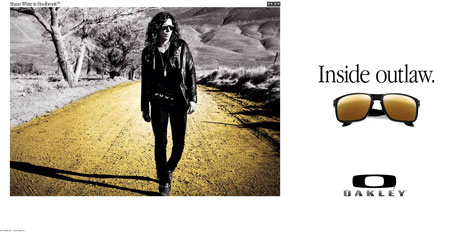
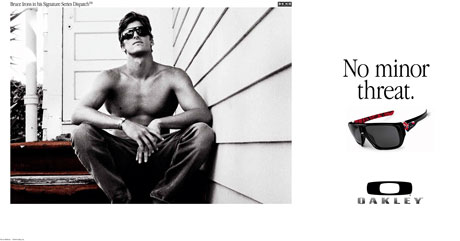
The Y&R Group has launched a rebellious campaign across Europe for the American eyewear brand Oakley.

Advertising with the active participation of the target group is increasingly the dream of trend-conscious strategists. Caspar Coppetti and his team at Advico Young & Rubicam are currently presenting a successful example. In their Europe-wide campaign for the US eyewear company Oakley, anyone can become an advertising star - if they have the tools to be a rebel.
The hip brand Oakley from Foothill Ranch in California is known for its watches, clothing, rucksacks and shoes, all of which are sporty but with a very futuristic design. The eyewear is particularly trendy. Oakley subjects these to extreme quality tests. Conventional industry standards count for little. For example, the ambitious US company shoots at the lenses to show that they can withstand the impact of the projectile without any problems.
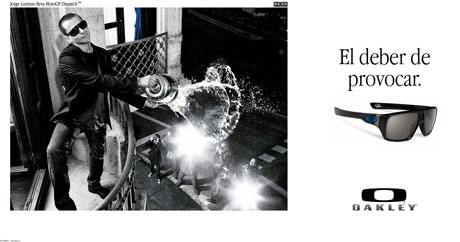
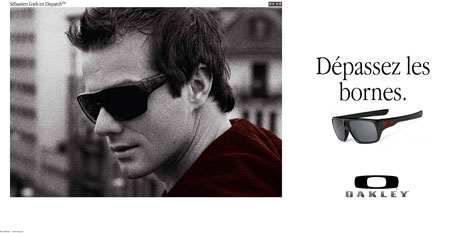
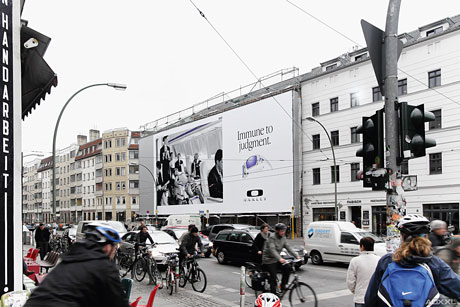
To date, the company has communicated these radical quality standards in the USA with athletes who are also known for their uncompromising attitude to life - the Oakley Rebels. Now Oakley wants to launch the rebel campaign in Europe too. Advico Young & Rubicam has developed the concept for the US company for the target markets of France and Spain. It features the world's best rally driver, Sébastien Loeb, standing on the edge of a roof as if it were a matter of course, and Jorge Lorenzo, shooting star of the Moto GP scene, dousing paparazzi with water from a balcony. The motifs can be found on advertisements and superposters throughout Europe. In Berlin, there are also stickers on buses and Oakley is occupying the entire subway station at Potsdamer Platz for a month. Another station branding is planned for June in Hamburg.
The Oakley rebels can also be seen online: Futurecom has developed a banner campaign with the Oakley rebels and the website Be-a-rebel.eu. There, anyone can become a rebel by creating their own Oakley banner. Anyone who uploads a photo and a personal statement as a "rebel" and puts on a pair of matching glasses electronically will be sent the address of one of the websites on which Oakley has posted banners. Instead of the official rebel subject, the user's own is then displayed there. With the tool and as much imagination as possible, an e-card with an action photo and rebel glasses can also be created and sent to friends. Of course, there are also interactive ways for the rebels to get in touch with each other.
Andreas Panzeri

1290580886_oakley4
1290580886_img100602_oakley5
1290580886_img100602_oakley1
1290580886_img100602_oakley3
1290580886_oakley6
1290580886_img100602_oakley2

The future or hype?

At the TPC's Media Future Day, attendees looked into the crystal ball for 3D.

3 D is coming, even on television. Whether we like it or not! This forecast was made public a few days ago by the trustworthy weekly newspaper The Economist. At Media Future Day, Alexander Kromholz, host at TV Studios and CEO of TPC, was the first to give his thoughts on the subject. "That it's coming is not a question. At most, how long it will stay," was the answer of the head of technology in Leutschenbach. In Zurich's Hallenstadion, the soccer World Cup is scheduled to dribble across the screen in 3D in a few days, provided the experiment is not whistled off by Fifa at the last moment. That wouldn't be a technical problem, though. Overwhelmingly in favor of a future of 3D also voted the audience, which has so far spent 2.5 billion francs at the box office for the film "Avatar" to be able to immerse themselves in the spectacle. But that the family will watch "Wetten dass..." in front of the TV in the future, equipped with two-tone glasses, is probably a hall bet that could make Gottschalk look pretty flat. "In television, a fairly revolutionary technology would still have to be invented in which viewers can stay on the potato coach without technical aids," was one finding at Future Day. Research is being done on various systems here. So far, however, no standard has been able to inspire the industry.
On the other hand, all the experts on the 3D panel agreed that tangible illusions will very soon find their acceptance, at least in advertising. A 3D film at a trade show or a virtual presentation of the latest products in space is "certainly an effect," as publicist and consultant Albrecht Gasteiner is convinced. In contrast to the past, where 3D was still a kind of experimental field for the exotic, the future must be interpreted quite differently today, because the industry will soon be ready to invest enormous resources in the new technology. Flat screens have been sold. The market is demanding new gimmicks. However, this topic also shows that the ideas of a common standard from Japan to America are still quite a bit more apart than the approximately 6.5 centimeters that are normally needed for the two lenses in front of a stereoscopic film camera.
"I could imagine watching a 3D movie once a month. But I don't need it every day, and certainly not in the news," said Hans Hoffmann, program manager of a newly founded study group for 3D TV at the EBU in Geneva. At the Media Day, a ski slope recorded with a 3D helmet camera showed in which areas the spatial development of television actually has a fascinating effect. Of course, animal worlds are even more colorful and vivid in 3D. There is also no doubt about the spatial future of Playstation and family.
The industry agrees that Blu Ray will remain the best medium for storing such content for the time being.
Simon Otto has already arrived completely in the 3D world. The Swiss designer is head of animation at Dreamworks in Hollywood and presented his latest work for the film "How to train your Dragon" at the TPC event. For technical reasons, unfortunately, only in 2D. pan

HesseGreutert Film realizes in Switzerland the first 3D feature film of Europe: "One Way Trip
In the USA, 3D movies can already be experienced in well over 900 3D-capable cinemas. In Europe, development is still a little way off. Switzerland, however, is at the forefront. The Zurich-based production company HesseGreutert Film wants to produce Europe's first "real" 3D film for the cinema. HesseGreutert Film will be doing pioneering work with this project, since many of the 3D films on offer today are only 2D films that have been subsequently pimped in the computer.
"One Way Trip" was presented at the Media Future Day by producer Valentin Greutert together with Roger Koller from postproduction On Line Video as well as director Markus Welter. The idea for the cinema was launched in 2006 as a 2D project as "the first horror film in Switzerland". In 2008 the script was ready and with it the idea to realize "One Way Trip" as a 3D film took shape. "Our horror film works like a roller coaster. That's why the third dimension is a promising addition," explains Valentin Greutert.
The feature film has already been financed to such an extent that shooting can begin in September. One challenge was to be able to convince the investors that there will be enough playback points later on. HesseGreutert relies on international marketing as well as home cinema with DVD and Blu Ray.
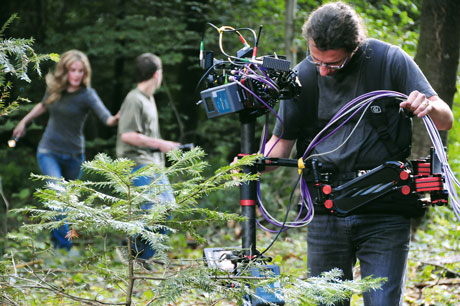
For the technical planning, the Swiss have contacted experts in the USA and Canada. The project is being implemented by Zurich-based On Line Video with Roger Koller as head of postproduction. To be on the safe side, a test shoot already took place almost a year ago. The horror film is set in a forest at night. Between the trees, the steady-cam will therefore be an important stylistic device. To make the most of the 3D effects, the test production installed a playback on the set to analyze the effect of the various images directly on location.
"This experience was also very valuable for the workflow as well as the calculation of the shooting times," explains Markus Welter. The 3D technology has no significant influence on his work with the actors. However, the image and its spatial dramaturgy must be built up in a much more complex way and ideally planned in a storyboard. The "point of interest" must be precisely directed. A new sense of rhythm is needed for action and panning.
For all this art, there is an important and new specialist on the set: the Stereographer. This calculates, for example, the most effective distance between the two cameras and thus also the complex aspects of the angle of view. For the cameraman, it is important to be able to adjust the colors of his two devices "completely identically.
The experience gained shows about 10 percent more time for setups. The plan for the upcoming production is 20 setups per shooting day. Overall, Greutert estimates the budget to be about 20 percent more than for a conventional film. In the process, "One Way Trip" will rely on a few so-called "money shots" - scenes in which a concentrated amount will be invested in order to make 3D look as amazing as possible. Many key scenes are to be additionally enhanced later in post-production by means of visual effects. The screen level, which is important for viewing, is also determined later in post. Here, it must be determined which action will remain in depth and what should "pop out" of the screen.
For the analysis and editing of the test footage, the postproduction team had worked with a monitor like the ones used in gaming due to the lack of professional equipment. For the upcoming postproduction of "One Way Trip," On Line Video now has a complete stereo workflow available, including HD stereo projection. And the makers of this film can already claim: "We went from amateurs to professionals in the course of the preparations."
Andreas Panzeri
HesseGreutert Film won the Film Award of the City of Zurich in 2009 with "Rocksteady - The Roots of Reggae" by director Stascha Bader as well as a nomination "Best Documentary" at the Swiss Film Award Quarz in 2010.

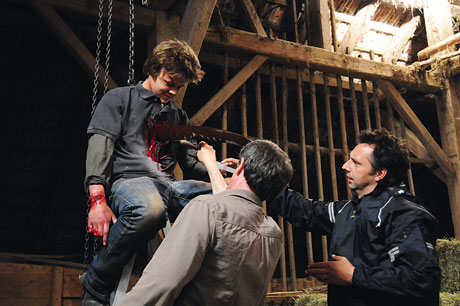
Test shoot for "One Way Trip": The 3D camera rig, Brian Goff at the steadycam, director Markus Welter and set designer Urs Beuter prepare the victim.

1290580887_img100602_top1_1
1290580887_img100602_top1_2
1290580887_img100602_top1_3
img100602_top1_4

The independent

Hans-Ueli Zürcher offers with The Cover Media in Basel all services of radio, TV and cinema advertising and has been able to steer the company, together with co-owner Nicole Willinger, successfully through the various waves of the media since 1996.

Planning, booking and analyzing radio spots is the core business of The Cover Media. The small but efficient company works "at the best possible conditions and performance values. If it has to be particularly fast, "we are happy to provide our services from one day to the next," promises Hans-Ueli Zürcher. The Cover Media has even had to prove this once before. A supplier of consumer electronics decided in the morning that it wanted to respond to the market with a national campaign in the afternoon. "At 11 a.m., the request came by phone. From 12 to 2 p.m., we wrote the copy. At 3 p.m., we booked nationally with 50 stations. Then we put the message on the air," Zürcher enthuses.
The longtime specialist sees such dynamism as one of the great strengths of radio as a medium. "That's why I don't understand why the radio stations are fighting each other so much." For him, the RTVG is "good for nothing." But he doesn't want to discuss it anymore. Hans-Ueli Zürcher believes in the possibilities of the pools. "But the industry is harming itself because it keeps changing the pools. New pools are constantly being offered. Because certain local lords or publishers sell radio absolutely below price and value." Radio is a cost-effective medium. Still, it shouldn't be constantly offered over the rummage sale table. "Tariffs exist, but almost all give under the hag by other conditions. Although many would not have it at all necessary", regrets Zürcher. This situation also complicates the planning of a national campaign again and again. "You have to get countless offers on the phone because you can't rely on the published prices."
In the wake of cross-media developments, demand for radio advertising is rising slightly. However, only 2.8 percent of the total advertising pie is still invested in this medium. "We still have a long way to go before we have a radio culture in advertising like the Germans." There, spots may also be placed on public broadcasters. "We lack that as a quality driver and, of course, in the overall budget." That's why The Cover Media is logically building on various pillars.
In addition to its core business of radio, The Cover Media in Basel is an independent marketer of TV and cinema advertising with total solutions. Its services include planning, booking and producing TV and cinema advertising. The Cover Media works regionally, nationally and internationally.
Hans-Ueli Zürcher started his career in shipping and then switched to advertising sales at Publicitas. "I'm still from the generation that wasn't so specialized and had to learn everything myself." Of the emerging developments, he quickly became fascinated with radio. Zürcher sold spots and usually also wrote the texts himself. "Radio advertising works less on complex ideas such as image advertising. What's needed is a quick response based on sales and promotions."
After a "step by step" development, Zürcher became managing director of a German radio station on the border with Basel. Over the course of 18 months, he had to make the station fit for sale. "People liked to sell frequencies back then, after all." With the success, of course, Zürcher also put his own job in question. Just in time for the deal to close, however, an offer came in as sales manager of Radio Basilisk. He later served in the same capacity at Raurach. When this radio got a new owner after some turbulences, the moment had come for Hans-Ueli Zürcher to take his fate into his own hands in the future.
He started The Cover Media 14 years ago, "with four partners, which I would never do again. Way too many discussions." The result was a crisis in 2000 that almost made the company a takeover candidate. "But we wanted to get ourselves out," Zürcher looks back combatively. Together with business partner from the early days, Nicole Willinger, who holds equal shares in the company, and with new employees, The Cover Media emerged from the trough after four years. Since then, the radio industry in Switzerland has "changed enormously" and there have been other concentrations. But The Cover Media has been able to develop stubbornly through all the waves. "Now we are ¬happy and it works."
Eight media people and specialists work at The Cover Media today. Three positions are dedicated to production/technology. A separate sales department was deliberately not installed. "Each of us can do everything and looks after our own clientele." When ideas are needed for creation, everyone is also allowed to contribute their imagination and thoughts. However, with the arrival of son Michel Zürcher two years ago, it has developed that the junior has taken over a bit of the job of a CD or conceptual designer. Michel is also a specialist for the important POS radio department.
The division that is growing fastest under the umbrella of The Cover Media is now the commissioned films. With the Internet and its constantly improving streaming services, the old photos on websites are increasingly being replaced by attractive moving images. As a result, the orders come "almost automatically." Customers who have had a good experience with The Cover Media producing a TV spot later also want a short film for the web or a clip for a trade fair. Because Zürcher knows that "the advertisers of Zurich" quickly become suspicious of quality when faced with such a "belly-load," he has created a separate unit TCM production for the commissioned films and spot production. "Many didn't want to accept that we offer production and planning in the same company, or didn't even suspect any production under the Media name."
While Zürcher sees The Cover Media as having reached "an ideal size" for flexible operation in the planning and marketing of TV and radio spots, he can certainly imagine some growth in production. "The requests are there." And likewise, the Basel-based company "doesn't want to completely rule out" the possibility that The Cover Media may also have a stronger presence in Zurich in the future. Currently, Felix Kilchsperger (kili) is on the road for The Cover Media in advertising Zurich. "It's not just because of my name that I like Zurich," grins Zürcher.
Andreas Panzeri

Does Google make Netmetrix obsolete?

Werbewoche Survey on Decision-Making Criteria for Online Advertising.

When it comes to reach figures for websites in the Swiss media industry, WEMF's Netmetrix figures are regarded as the generally accepted benchmark. But will the monthly Netmetrix surveys still be needed in the future? This question has arisen since Google started offering online reach data for free with AdPlanner. This also provides information about websites that do not participate in Netmetrix (see "The leading dozen").
With a Online survey we want to clarify the importance of reach data in the use of online advertising in Switzerland in general. We also want to find out how willing the media industry is to use a new currency for online reach. We are basing this on these three theses:
1. although there are seemingly precise reach figures for online media, they can hardly be used to reliably assess the performance of a website. The numerous metrics allow for too many different interpretations. What's more, they are recorded and evaluated differently by the various analysis tools.
2. because reach data is highly complex and at the same time not sufficiently reliable, it is not of primary importance when deciding on the use of online advertising. They are primarily used for general orientation.
3. since Google (Ad Planner and Analytics) has been offering reach data free of charge, it no longer makes sense for the Swiss media industry to collect its own data. This is mainly because Google's free tools provide additional information on demographic distribution or mobile usage, for example.
According to a study conducted by Angelink Yourposition in March of this year, 8 out of 10 Swiss websites that use a client-side tracking tool use Google Analytics. It is therefore clear that Google's free service has long since become the industry standard. It therefore seems obvious to use this data for media planning. The Google Analytics data is simply collected automatically and published regularly. The result is a solution that costs far less and is more complete than Netmetrix Audit, as it also takes into account sites that are not yet registered with Netmetrix. As Google AdPlanner does not report smaller sites, this gap can also be closed.
At the beginning of the year, we proposed a similar approach with the WEmad initiative in order to publish mobile reach data. Depending on the results of the survey, this approach can be extended to the entire online sector.
Christoph J. Walther

The leading dozen
Those who only consider the figures from Netmetrix-Audit can easily be misled, as the domestic data collection does not include many of the largest web destinations. The following ranking list illustrates where the attention of the surfing Swiss public is actually focused. Werbewoche has used data from Google Ad Planner (as of :
April 2010). The order is based on the values of distinguishable users per day (daily unique visitors, based on cookies), which Google only shows visually in a graphic and not as explicit figures. This measured value is most reminiscent of familiar parameters such as readers per issue or daily reach.
1st place: Google
If you search for something on the web, you google it - and often several times a day. The search engine giant does not publish its own reach figures, which is why we base our top ranking not only on our own experience and observations, but also on the Alexa search engine, which is not very widespread in Switzerland and also publishes a list of the top Swiss sites. Google's leading position is undisputed when the traffic of other Google sites, such as the video portal YouTube in particular, is taken into account.
2nd place: Facebook
The high-flyer among social networks records 1.4 million visitors from Switzerland every day, reaching almost 40% of the local online audience. It currently has 2.6 million unique users per month, who access an impressive 2.7 billion pages. While Google aims to send users to another address as quickly as possible, Facebook users spend a record average of 20 minutes per visit maintaining their virtual circle of friends.
3rd place: Microsoft
The software giant achieved 3rd place with its online portal Msn.com. If you add the user numbers for the email service Hotmail.com and the search engine Live.com/Bing.com, Microsoft almost catches up with Facebook, but then lags well behind in terms of page impressions.
4th place: Swisscom
Thanks in particular to the Bluewin online portal, the technology colossus has moved up to a top position. Its leading position among domestic offerings is also confirmed by the Netmetrix statistics.
5th place: Yahoo
Another online portal, with services such as e-mail, chat, news, search, etc., whose heavy use is surprising because it has never been particularly advertised in our country and, unlike Microsoft and Bluewin, does not benefit from default settings for new installations.
6th place: Wikipedia
If you want to know something in detail, you look it up on Wikipedia. As this need does not arise on a daily basis, the free encyclopaedia is slightly behind in the figures for daily users. In terms of monthly users, it is just ahead of Msn. com and just behind it in terms of page views.
7th place: Ricardo
Switzerland's largest auction platform benefits from its clear focus on Switzerland and leaves its competitor eBay far behind. Anyone looking for a bargain spends an average of 15:50 minutes on the site and generates so many page views that Ricardo is just behind Facebook on this criterion (albeit far behind).
8th place: Partypoker.com
The site has gained a significant number of users in recent months. It can be assumed that online poker games are used in some places to spice up everyday office life with (often only supposed) prospects of winning.
9th place: Search.ch & Local.ch (ex aequo)
The two services for telephone numbers and business directories are so close to each other in all comparative values that an ex-aequo ranking is obvious. This is remarkable because the two have different backgrounds: Search.ch was launched first and is now majority-owned by Tamedia, while Local.ch is operated by Swisscom and Publigroupe and has direct access to telephone data as well as a larger sales team.
Place 10: View
The leading news site in Switzerland is clearly ahead of arch-rival 20 Minuten in terms of daily users, but both news sites are almost on a par in terms of monthly visitors and page impressions.
11th place: 20minuten.ch
Even with the support of its French sister and the figures of the classifieds portal Piazza.ch, which are beaten by 20minuten.ch on Netmetrix, the online offshoot of the commuter newspaper has not yet managed to catch up with Blick Online.
12th place: Sf.tv
Thanks to an overall presence under one web domain, Swiss Television is ranked third among media websites.

The websites of the Confederation and its enterprises are in the following positions: Admin.ch, Sbb.ch and Postfinance.ch. And to prevent any accusations: it goes without saying that this ranking does not meet strict scientific requirements, especially as it was compiled manually. (The author welcomes any additions and criticism.) It is unclear, for example, how Google compiles which data for the Ad Planner. And while media offerings are geared towards just one language region, most other sites are accessed with their address from all language regions. Publishers that offer individual titles separately also perform worse than companies that appear with their company name. Sites such as Mozilla.com and Adobe.com were not taken into account, as they are mainly used for downloading software.

Council of States wants television channel for national cohesion

The Council of States wants to require Swiss television to broadcast programs from the other language regions, either with subtitles or dubbed.

Swiss television should do more to promote national cohesion. This is the view of the Council of States. On Wednesday, the Council of States adopted a motion to this effect by Theo Maissen (CVP/GR) by 22 votes to 7. According to the motion, the SRG should be encouraged to create a television channel to strengthen mutual understanding.
During the discussion, however, the proponents made it clear that they did not want a separate channel. Maximilian Reimann (SVP/AG) emphasized that the request should be fulfilled within the framework of the existing channels. Should this not be possible, he would not support it. Nevertheless, he criticized the SRG. It would rather broadcast expensive reports about the Mekong than pictures and reports from diverse, multicultural Switzerland. For his part, Dick Marty (FDP/TI) stated that the unity of Switzerland had to be re-established every day and that television played an important role in this.
Media Minister Moritz Leuenberger pointed out that the motion called for a new television channel, which is why the Federal Council is opposed to it. In the SRG's current financial situation, a new channel is not realistic. Furthermore, there was a risk that only those who already watched across the Röstigraben would be interested in this channel. However, the concern itself is justified - "so justified that we actually have to do something", said Leuenberger. In line with the existing concession, SRG must do more to promote exchange between the language regions and cultures. "It is important that viewers of the Tagesschau find out what is going on in French-speaking Switzerland or Ticino," continued Leuenberger.
get_footer();